皆さん、こんにちは!日本庭園・和服ウオッチャー&ガイドのミネです。加賀百万石の歴史と文化を今に伝える『兼六園』英語紹介ブログへようこそ。

🍃 峰(Mine)
日本庭園・和服ウオッチャー&ガイド
このブログでは、大切な海外ゲストから、この週末、兼六園に行ってみたい!と急に言われた場合でも、現場で『すぐに使える英語表現』をご紹介しています。
AIで公式情報が簡単に得られる昨今、ゲストは美しい景色や公式説明だけでなく、現場でしか聞けない「驚きと笑いの裏話」にもとても興味があります。多忙でなかなか準備のお時間が取れない皆さまの為に、ピンポイントでアクセスできるボタンもご用意していますので、皆さんのご興味やニーズに合わせて、ご気軽にご利用くださいませ。このシリーズでは私が最後まで分かりやすくご案内します。
📍 兼六園 英語案内 目次(クリックで各章へ移動)
👉タイトル各語について! 「石灯籠(いしとうろう)」”stone lantern”、「雪吊り(ゆきつり)」”the work of stringing ropes for snow”という言い方が可能です。
👉直接インバウンドに向けてまとめた英語版ご参照の際はこちらからどうぞ!
0. 本ブログの全体ガイド 🌸
本ブログは大きく分けて3つの階層で構成しております。皆様のその時々のニーズや目の前のゲストの様子に合わせて、目次からお好きな場所へアクセスしてくださいませ。
🔰 【Step 1】基本用語
まずは「これを知らなきゃ始まらない」庭園案内の必須ワードからご紹介いたします。「雪吊り」を英語で優しく説明するには?「徽軫灯籠」や「六勝」のニュアンスは? 混雑した現場でもパッと口から出るよう、使い勝手の良い単語を厳選いたしました。
🧭 【Step 2】スポット別の解説
各名所(兼六園全体、徽軫灯籠、霞ヶ池、唐崎松など)ごとに、状況に応じた切り口をご用意いたしました。現在の案内シーンに合わせてお選びくださいませ。
- 📚 基本情報(10項目)
「兼六園の歴史や背景を深く理解したい」方向けに、成り立ちや設計思想をまとめたパートです。 - 🗣️ 口頭説明用(10項目)
「混雑した庭園内を歩きながらテンポ良く伝えたい」という方に。思考を止めず、リズムよく話せる短めの表現集です。 - 🤣 インバウンド視点!笑いが取れるかも?(Mine’s Special)
「普通のガイドじゃ物足りない」というゲスト向けに。案内現場で磨いた、ゲストを唸らせ、時にクスッと微笑ませる「粋な裏話」と「比喩」を詰め込んでおります。
1. 押さえておきたい基本用語
現場でスムーズに言葉が出てくるよう、基本用語からご紹介します。日常会話で使える単語から、他の日本庭園んでも応用できる専門用語、兼六園ならではのキーワードまで3段階でまとめています。以下のボタンからご希望のレベルへジャンプできます。
1.1 庭園基本用語(日常会話レベル)
日常会話で良く使われる代表例として。
- Three Great Gardens(日本3大庭園)
- auspicious occasion(慶事)
- waterfall(滝)
- fountain(噴水)
- pond(池)
- stone bridge(石橋)
- tea house(茶室)
- seasonal view(四季の景色)
- pine tree(松の木)
- cherry blossom / autumn leaves(桜 / 紅葉)
1.2 庭園関連用語(庭園愛好家レベル)
日常それほど使われませんが、庭愛好家で使われる代表例として。
- 回遊式庭園(複数)!stroll-style gardens
- 石灯籠!stone lantern/ a kind of traditional Japanese lighting fixture
- 縮景!‘reduced landscape’
- 見どころ!must-see feature
- 借景!‘borrowed scenery’ / incorporating surrounding natural scenery
- 枯山水!dry landscape garden / Zen garden
- 造園技法!landscape gardening technique
- 人工の滝/池!artificial waterfall / man-made pond
- 曲水(小川)!meandering stream / winding stream
- 石組み(配石)!stone arrangement / rock placement
1.3 兼六園特有用語(高頻度使用)
他でも使われる用語もありますが、兼六園のイメージが強い代表例として。
- 雪吊り!the work of stringing ropes for snow/gardening methods using ropes for snow / ropes to protect branches from snow
- 👉全国各地の庭園毎に色々な英語表現がありますのであくまで一例として。日本語の「雪吊り」自体、正確な意味を表現できてませんので、直訳では当然通じず、日英共に補足が必要になります。
- 根上松(根が露出した松)!a pine tree with exposed roots,
- 繁栄と不滅を願って!with the hope of prosperity and eternal life.
- 👉前田家の兼六園に込めた願いです。
- 六勝「宏大、幽邃、人力、蒼古、水泉、眺望」!’spaciousness’, ‘seclusion’, ‘artifice’, ‘antiquity’, ‘water features’, and ‘panoramas’.
- 👉公式HPの兼六園の6条件の用語で、日本人でも口頭では中々伝わりにくいので、ネイティブには補足説明が必要です。
- 「日本三大庭園」の1つ!one of the ‘Three Great Gardens in Japan’
- 👉よく使われる表現ですが、もし他の2つを聞かれたら「後楽園」「偕楽園」言えるように。
- 徽軫灯籠!Kotoji Stone Lantern (two-legged stone lantern)
- 👉二股の脚が琴の弦を支える「琴柱」に似ていることから名付けられた兼六園のシンボルです。
- 唐崎松!Karasaki Pine Tree
- 👉琵琶湖畔から種を取り寄せて育てられた、兼六園の中で最も枝ぶりの見事な黒松です。
- 霞ヶ池!Kasumiga-ike Pond
- 👉兼六園のほぼ中心に位置する最も大きな池で、蓬莱島が浮かんでいます。
- 蓬莱島(亀島)!Horai Island (a sacred island symbolizing longevity)
- 👉不老不死の願いが込められた、カメの形を模した霞ヶ池内の中島です。
- サイフォンの原理(日本最古の噴水)!siphon principle (Japan’s oldest natural-pressure fountain)
- 👉動力を使わず、霞ヶ池との高低差(自然水圧)だけで吹き上がる仕組みです。
2.兼六園全体
”About Kenrokuen Garden”
ここでは兼六園全体をカバーします。用途に合わせて以下のボタンから直接アクセスできます。
2.1 基本情報(10項目)
インバウンド対応の前に押さえておきたい兼六園全体の深い成り立ちや解説ポイントです。🎧米国話者
- It Began as a Small Villa Garden / 始まりは小さな別荘庭園
EN: Kenroku-en began as a private villa for the feudal lord, surrounded by a small garden. Traces of this original garden can still be seen around present-day Hisago-ike Pond.
JP: 兼六園は、藩主が静かに過ごすための別荘と、その周辺に造られた小さな庭から始まりました。現在の瓢池(ひさごいけ)周辺には、初期の庭園の面影が残っています。 - Gradual Expansion Over Several Centuries / 数百年かけた段階的な拡張
EN: The garden was not completed overnight. Successive feudal lords expanded the grounds bit by bit over centuries, adding ponds, streams, and artificial hills to develop its current form.
JP: 一度に完成させた庭園ではありません。歴代の藩主が数百年かけて少しずつ敷地を広げ、池や曲水、築山などを加えながら、現在の姿へと発展させました。 - Fire and Reconstruction / 火災と再建
EN: Although parts of the garden were destroyed in a major fire during the Edo period, key features such as the pond, waterfall, and tea houses were later restored, allowing the garden to regain its beauty.
JP: 江戸時代の大火で庭園の一部が焼失しましたが、その後、池や滝、茶亭などが再整備され、庭園は再び美しさを取り戻していきました。 - A Name Embodying the “Six Beauties” / 「6つの美」を兼ね備えた名前
EN: The name “Kenroku-en” derives from six traditional attributes used to evaluate a garden’s perfection. Its true charm lies in combining qualities that are usually hard to reconcile—such as vastness and seclusion, or artifice and natural beauty.
JP: 「兼六園」という名前は、庭園の美しさを評価する6つの要素(六勝)に由来します。広大さと静けさ、人工美と自然の趣など、通常は両立しにくい特徴を兼ね備えている点が魅力です。 - Named by Renowned Scholars / 知識人による命名
EN: The garden was named by the renowned scholar(Matsudaira Sadanobu) at the request of the feudal lord. Drawing on a classic Chinese text on garden design, he chose a name reflecting the garden’s ability to combine all six seemingly incompatible landscape qualities.
JP: 庭園の名前は、藩主の依頼を受けた当時の知識人(松平定信)によって付けられました。中国の庭園論に記された「六勝」の考え方を踏まえ、相反する6つの景観美を兼ね備えていることに由来します。 - Located Adjacent to Kanazawa Castle / 金沢城に隣接する立地
EN: Kenroku-en is situated on a hill right next to Kanazawa Castle, connected by structures like the Ishikawa Bridge. The castle and garden are closely intertwined, offering insight into the lord’s lifestyle and castle town culture.
JP: 兼六園は金沢城のすぐ隣の高台に位置しています。城と庭園は石川橋などを介して行き来でき、藩主の暮らしや城下町の文化を理解するうえで密接な関係にあります。 - The Tatsumi Canal: Bringing Water from Afar / 遠くから水を引いた辰巳用水
EN: The ponds and streams are fed by the Tatsumi Canal, which draws water from the upper reaches of the Sai River. Built using advanced engineering techniques, including tunnels through the hills, this nearly 400-year-old waterway still supplies water to the garden and parts of the historic city.
JP: 兼六園の池や曲水には、犀川上流から水を引く辰巳用水が利用されています。山を貫くトンネルなどの高度な土木技術で造られたこの用水は、約400年経った現在も現役で金沢の街や暮らしを支えています。 - Designed to Be Enjoyed While Strolling / 歩きながら景色を楽しむ回遊式庭園
EN: Rather than being viewed from a fixed spot, Kenroku-en was designed as a strolling garden. As you walk among the ponds, bridges, hills, and tea houses, the changing perspectives continually reveal new facets of its beauty.
JP: 同じ場所から眺めるだけでなく、池や橋、築山、茶亭などを巡り歩きながら景色を楽しむ「回遊式」に造られています。歩くにつれて視点が変わり、庭園の異なる表情を発見できます。 - Dual Purpose: Water as Castle Defense / 庭園の水が城を守る防衛の役割
EN: It is said that the ponds were designed with a mechanism to discharge water outward during emergencies, raising the water level in Kanazawa Castle’s moat. The idea that this serene water feature was also integral to castle defense adds a fascinating dimension to its story.
JP: 兼六園の池には、非常時に水を流し出して金沢城の堀の水位を上げる仕掛けがあったともいわれています。美しい水景が城の防御機能も兼ねていたという説は、庭園と城の深いつながりを示す興味深いストーリーです。 - From Private Sanctuary to World-Famous Garden / 藩主の私邸から一般公開の名園へ
EN: Once an exclusive sanctuary reserved for feudal lords and distinguished guests, the garden was opened to the public in the Meiji era. Today, it is designated as a National Special Place of Scenic Beauty, welcoming visitors from all over the world.
JP: かつては藩主や限られた貴賓だけが利用するプライベートな場所でしたが、明治時代に一般公開されました。現在は国の特別名勝に指定され、国内外から多くの人が訪れる日本庭園となっています。
👤連続音声;1-5
👥連続音声;6-10
Glossary:用語集
private villa ☛ 別荘 / feudal lord ☛ 藩主 / be surrounded by ☛ ~に囲まれている / trace ☛ 痕跡・名残 / original garden ☛ 初期の庭園 / Hisago-ike Pond ☛ 瓢池 / gradual expansion ☛ 段階的な拡張 / successive ☛ 歴代の / grounds ☛ 敷地 / bit by bit ☛ 少しずつ / pond ☛ 池 / stream ☛ 曲水・小川 / artificial hill ☛ 築山 / develop its current form ☛ 現在の姿へ発展する / century ☛ 世紀
major fire ☛ 大火 / destroy ☛ 破壊する・焼失させる / key feature ☛ 主要な要素 / waterfall ☛ 滝 / tea house ☛ 茶亭・茶屋 / restore ☛ 復元する / regain ☛ 取り戻す / beauty ☛ 美しさ
derive from ☛ ~に由来する / traditional attribute ☛ 伝統的な要素 / evaluate ☛ 評価する / perfection ☛ 完璧さ / true charm ☛ 真の魅力 / combine ☛ 兼ね備える / quality ☛ 特徴・性質 / reconcile ☛ 両立させる / vastness ☛ 広大さ / seclusion ☛ 静けさ・隔絶性 / artifice ☛ 人工美 / natural beauty ☛ 自然美
renowned scholar ☛ 著名な学者・知識人 / at the request of ☛ ~の依頼で / draw on ☛ ~を参考にする / classic Chinese text ☛ 中国古典 / garden design ☛ 庭園論 / reflect ☛ 反映する / seemingly incompatible ☛ 一見相反する / landscape quality ☛ 景観美
be situated on ☛ ~に位置する / adjacent to ☛ ~に隣接する / hill ☛ 高台 / be connected by ☛ ~で結ばれている / Ishikawa Bridge ☛ 石川橋 / closely intertwined ☛ 密接に結び付いている / offer insight into ☛ ~への理解を深める / lifestyle ☛ 暮らしぶり / castle town culture ☛ 城下町文化
Tatsumi Canal ☛ 辰巳用水 / be fed by ☛ ~から給水される / draw water from ☛ ~から取水する / upper reaches ☛ 上流部 / Sai River ☛ 犀川 / advanced engineering techniques ☛ 高度な土木技術 / tunnel ☛ トンネル / waterway ☛ 用水路 / supply water to ☛ ~へ水を供給する / historic city ☛ 歴史都市
strolling garden ☛ 回遊式庭園 / fixed spot ☛ 決まった場所 / be designed to ☛ ~するよう設計されている / bridge ☛ 橋 / changing perspective ☛ 変化する視点 / continually ☛ 絶えず / reveal ☛ 明らかにする / facet ☛ 側面・表情
dual purpose ☛ 二重の目的 / mechanism ☛ 仕組み / discharge water ☛ 放水する / emergency ☛ 非常時 / raise the water level ☛ 水位を上げる / moat ☛ 堀 / serene ☛ 穏やかな / water feature ☛ 水景施設 / integral to ☛ ~に不可欠な / castle defense ☛ 城の防御 / fascinating dimension ☛ 興味深い側面
private sanctuary ☛ 私的な憩いの場 / exclusive ☛ 限られた人だけの / reserve for ☛ ~専用とする / distinguished guest ☛ 貴賓 / open to the public ☛ 一般公開する / Meiji era ☛ 明治時代 / designate ☛ 指定する / National Special Place of Scenic Beauty ☛ 国指定特別名勝 / welcome visitors ☛ 来訪者を迎える / all over the world ☛ 世界中から
2.2 口頭説明用(10項目)
ゲストと一緒に歩きながら、テンポ良く口頭で伝えるためのシンプルなフレーズ集です。🎧米国話者
- It Began as a Small Villa Garden / 始まりは小さな別荘庭園
EN: Kenroku-en began as a small garden attached to a villa for the lord. Traces of it still remain around Hisago-ike Pond.
JP: もともとは殿様の別荘に付いた小さな庭から始まりました。今の瓢池(ひさごいけ)あたりに、その名残が少し残っています。 - The Garden Grew Over Many Generations / 代々の藩主による拡張
EN: The garden grew slowly over many generations. The lords gradually added ponds, streams, and hills to create its current form.
JP: 一気に造られた庭ではなく、代々の殿様が少しずつ手を加え、池や小川、築山などを増やして今の形になりました。 - Fire and Reconstruction / 火災と再建
EN: Parts of the garden burned in a big fire, but they were later restored.
JP: 昔の大きな火事で庭園の一部が焼けましたが、その後、池や滝、茶亭などが再整備され、美しさを取り戻していきました。 - The Six Qualities of a Garden / 庭園の「六勝」
EN: The name Kenroku-en refers to six traditional qualities of a perfect garden. It uniquely combines features that are usually hard to reconcile, like spaciousness and tranquility.
JP: 兼六園という名前は、理想的な庭園が備えるとされた6つの特徴(六勝)に由来します。広さと静けさなど、普通は両立しにくいものを兼ね備えているのが特徴です。 - Named by a Scholar / 学者による命名
EN: The lord asked a scholar to name the garden, drawing on an old Chinese text about garden design.
JP: 殿様が学者に庭園の命名を依頼し、中国の古い庭園論を参考にして名前が付けられました。 - Right Next to Kanazawa Castle / 金沢城のすぐ隣
EN: The garden sits right next to Kanazawa Castle, on higher ground. It is closely connected to the life of the lord and the culture of the castle town.
JP: 兼六園は金沢城のすぐ横の高台にあります。橋を渡って行き来できるほど近く、藩主の暮らしや城下町の文化と深くつながっていました。 - Water Brought from Far Away / 遠くから水を引いた辰巳用水
EN: Water for the ponds comes from a canal built with advanced engineering, including tunnels through the hills. This canal still supplies water today.
JP: 庭の池や流れは、犀川の上流から水を運ぶ辰巳用水で支えられています。山を貫くトンネルまで使った高度な土木技術で造られ、現在も庭園や街に水を送り続けています。 - A Garden to Enjoy While Walking / 歩きながら楽しむ庭園
EN: The garden is designed to be enjoyed while walking. As you move around, the scenery constantly changes and reveals new views.
JP: 池や橋、築山などを歩きながら、景色の変化を楽しむ「回遊式」に造られています。歩くにつれて、新しい景色が見えてきます。 - Water That May Have Helped Protect the Castle / 城を守ったかもしれない庭園の水
EN: It is said that in an emergency, pond water could be released into the moat to raise its water level and defend the castle.
JP: 非常時には、池の水を城の堀へ流し、堀の水位を上げて城を守る仕掛けがあったと言われています。美しい水景が城の防御にも役立っていたという、興味深い話です。 - From a Private Garden to a Public Attraction / 藩主の庭から一般公開の名園へ
EN: The garden was once reserved for the lord and special guests, but it opened to the public in the Meiji era. Today, it is one of Japan’s most celebrated gardens.
JP: 昔は殿様や特別な客だけが入れる庭でしたが、明治時代に一般公開されました。今では日本を代表する名園として、世界中から多くの人が訪れています。
👥連続音声:1-10
2.3 笑いが取れるかも?
🌸一目みて素朴に思うであろう想定疑問への説明例として、基本的に前半部は説明にも使える真面目パート、後半部は雑談力UPの為のおふざけパートの2部構成になっています。以下のボタンから各ストーリーへ直接飛べます。
Q1: この目の前の兼六園って何?
“What Is This Garden, Kenroku-en, in Front of Us?”
👉とてもよく聞かれる質問をベースに纏めたお笑いネタです。前半(1-5)は説明につかえる真面目パート、後半(6-10)は雑談力upを意図したおふざけパートです。🎧英国話者
- This is Kenroku-en, a garden created by the lords of Kanazawa Castle for their enjoyment and to entertain their guests.
- ここは兼六園です。金沢城の藩主たちが、自ら楽しみ、客人をもてなすために造った庭園です。
- But it was more than just a beautiful garden.
- でも、単に美しいだけの庭ではありませんでした。
- Some of its features are said to reflect the lords’ wishes for prosperity and long life.
- 庭園の造形の中には、一族の繁栄や長寿への願いが込められているともいわれています。
- You can discover these wishes by looking closely at the garden’s individual features.
- 庭園のさまざまな造形をよく見ると、そうした願いを読み取ることができます。
- For example, even the stone lanterns, stone bridges, and simple rocks and pine trees—which are common features in other Japanese gardens—hold an incredible number of mysteries.
- 例えば、他の日本庭園にもよくある石灯篭や石橋や、ただの石や松の形には信じられないくらいの謎があるのです。
- Of course, simply looking at them won’t reveal their hidden meanings.
- 勿論、ただ眺めているだけでは、その隠された意味までは分かりません。
- The clues are right in front of you, but you need someone to explain them.
- 手掛かりは目の前にあるのに、その意味を解き明かす人が必要なのです。
- That’s exactly why we guides are here—to help you crack the code.
- だからこそ、私たちガイドがいるわけです。皆さんが、その謎を解き明かすために。
- It’s a bit like The Da Vinci Code, isn’t it?
- まるで『ダ・ヴィンチ・コード』みたいでしょう?
- But don’t worry, unlike the Da Vinci Code, no one has died, and there is no danger to you.
- でもご安心ください。ダビンチコードのように誰も死んでいませんし、皆さんに危険はありませんので。
Glossary:用語集
lord ☛ 藩主 / for one’s enjoyment ☛ 自ら楽しむために / entertain guests ☛ 客人をもてなす / beautiful garden ☛ 美しい庭園 / feature ☛ 特徴・造形 / be said to ☛ ~と言われている / reflect ☛ 反映する / wish ☛ 願い / prosperity ☛ 繁栄 / long life ☛ 長寿 / discover ☛ 発見する / look closely at ☛ ~をよく観察する / individual feature ☛ 個々の特徴・造形
stone lantern ☛ 石灯籠 / stone bridge ☛ 石橋 / pine tree ☛ 松 / common feature ☛ よく見られる要素 / incredible ☛ 信じられないほどの / mystery ☛ 謎 / of course ☛ もちろん / hidden meaning ☛ 隠された意味 / reveal ☛ 明らかにする / clue ☛ 手掛かり / right in front of ☛ ~の目の前に / explain ☛ 説明する / crack the code ☛ 謎を解く・暗号を解読する / guide ☛ ガイド
exactly why ☛ まさにその理由で / help A do B ☛ AがBするのを助ける / a bit like ☛ ~に少し似ている / The Da Vinci Code ☛ ダ・ヴィンチ・コード / don’t worry ☛ 心配しないでください / unlike ☛ ~とは違って / danger ☛ 危険 / no danger to you ☛ あなたに危険はない
Q2: 日本の三大名園とは何でしょうか?
”What Are the Three Great Gardens of Japan?”
👉頻繁に聞かれるわけではありませんが、歴史好きのゲストから時々聞かれる質問です。前半(1-7)は説明につかえる真面目パート、後半(8-10)は雑談力upを意図したおふざけパートです。🎧米国話者
- They refer to what are widely regarded as three of Japan’s most celebrated gardens.
- 日本で特に名園として知られている三つの庭園のことを指します。
- Of course, Japan is home to countless beautiful gardens, but these three hold a special place in the nation’s gardening tradition.
- もちろん日本には美しい庭が無数にありますが、この三つは特に伝統の中で特別な位置づけになっています。
- In Japan, the label “Three Great” is used in many fields, not just gardens.
- 日本では「三大〜」という呼び方は庭園だけでなく、いろいろな分野で使われます。
- For example, we have the Three Great Scenic Spots, the Three Great Hot Springs, and the Three Great Festivals, to name a few.
- たとえば「三景」「三名泉」「三大祭」など、いろいろな“三大シリーズ”があります。
- There are no official government criteria for selecting Japan’s Three Great Gardens, and the exact origins of the title remain unclear.
- 三名園を選ぶ公式な基準は国にもなく、その呼び名がいつ定着したかもはっきりしていません。
- What’s fascinating is how such labels, despite the lack of clear selection criteria, gradually gained nationwide recognition.
- 面白いのは、明確な基準がないのに、こうした呼び名が全国的に広まっていったことです。
- Today, “Japan’s Three Great Gardens” is so well established that it even appears in official tourism databases.
- 今では「日本三名園」という言葉はとても定着していて、公式の観光情報にも載っています。
- But if you think about it, it’s a bit cheeky, isn’t it?After all, there are magnificent gardens all across the country.
- でもよく考えると、ちょっと図々しい感じもしますよね。日本中に素晴らしい庭園がたくさんあるわけですから。
- That’s why, as a tour guide, the only time I can drop the phrase “Three Great Gardens” with total confidence is when I’m talking to international visitors.
- だからガイドとして「三名園です!」と胸を張って言えるのは、海外のお客様に説明するときだけなんです。
- After all, they have absolutely no competitive or financial interests in which gardens make the list.
- というのも、どの庭園が選ばれても、海外のお客様には競争心も利害関係もまったくありませんから。
Glossary:用語集
be widely regarded as ☛ 広く~と認識されている / celebrated garden ☛ 名園 / hold a special place ☛ 特別な地位を占める / gardening tradition ☛ 庭園文化・庭園の伝統 / countless ☛ 無数の
Three Great Gardens ☛ 三名園 / label ☛ 呼び名・称号 / field ☛ 分野 / Scenic Spot ☛ 景勝地 / Hot Spring ☛ 温泉 / Festival ☛ 祭り / to name a few ☛ ほんの一例を挙げると
official government criteria ☛ 公式な選定基準 / select ☛ 選定する / exact origins ☛ 正確な起源 / remain unclear ☛ はっきりしていない / fascinating ☛ 興味深い / despite ☛ ~にもかかわらず / lack ☛ 欠如 / selection criteria ☛ 選考基準 / gradually ☛ 徐々に / gain recognition ☛ 認知される / nationwide ☛ 全国的に
well established ☛ 広く定着している / official tourism database ☛ 公式観光データベース / appear in ☛ ~に掲載される / cheeky ☛ 図々しい・少し生意気な / after all ☛ よく考えれば・だって / magnificent ☛ 素晴らしい・壮大な / all across the country ☛ 全国各地に
tour guide ☛ 観光ガイド / drop a phrase ☛ 言葉を口にする・使う / with total confidence ☛ 自信満々に / international visitor ☛ 海外からの観光客 / absolutely no ☛ 全くない / competitive interest ☛ 競争意識 / financial interest ☛ 利害関係 / make the list ☛ ランキング・選定に入る
Q3: なぜ『兼六園』と呼ばれるようになったの?
“Why is this garden called Kenrokuen?”
👉これも時々聞かれる質問なので、6条件の内容を織り込んで纏めました。前半(1-6)の説明パートには公式サイトの6表現も織り込みました。音も付けてますので、すらすら言えるようになりたい方はご活用ください。後半(7-10)はいつものおふざけパートです。🎧インド話者
- The name Kenrokuen means “an ideal garden that possesses six beauties.”
- それは『六つの美を備えた理想的な庭園』という意味です。
- In ancient China, six essential features were required for a perfect garden.
- 古代中国では、完全な庭園には六つの必須条件が必要とされていました。
- Each condition contradicts the others, making it extremely difficult to satisfy them all.
- 六つの条件は互いに矛盾しているため、同時に満たすのは非常に難しいのです。
- It was actually almost impossible, but the castle lords tried to create a perfect garden.
- 実際にはほぼ不可能ですが、城主たちはその“完全な庭園”を目指して造ったのです。
- And a renowned scholar, asked by the lord, named the garden, drawing on an old Chinese text about garden design.
- そして或る著名な学者が、中国の古い庭園論を参考にして名前が付けたのです、殿様に頼まれてね。
- On the official website, these six conditions are described with difficult terms: “spaciousness,” “seclusion,” “artifice,” “antiquity,” “water-courses,” and “panoramas.”
- 公式HPでは、この六条件を「宏大・幽邃・人力・蒼古・水泉・眺望」と難しい言葉で表現しています。
- These are not words people in Japan use in daily life, so it’s hard to understand them just by hearing them.
- 普段使わない単語なので、日本人でも聞いただけで理解するのは難しいです。
- So, as a guide, I try to give explanations that people can understand just by listening.
- だから私もガイドとして、聞いただけで分かるように、できるだけ分かりやすく説明しています。
- For example, I sometimes explain it by focusing on the contradictions—“big and small,” “natural and man-made,” and “far and near.”
- 例えば、矛盾した要素にフォーカスして、「大きいものと小さいもの」「自然物と人工物」「遠いものと近いもの」の美がある、と説明したりします。
- And if such an over‑simplified explanation helps foreign visitors understand, does that mean I’ve achieved the difficult seventh criterion and become a truly great guide?
- もしこんな超デフォルメした説明で外国客にご理解いただければ、私は六条件の完璧な名園を説明する“困難な七条件”を達成した、偉大なガイドということになりますかね?
Glossary:用語集
ideal garden ☛ 理想的な庭園 / possess ☛ 備える・持つ / six beauties ☛ 六つの美 / ancient China ☛ 古代中国 / essential feature ☛ 必須条件 / perfect garden ☛ 完全な庭園 / condition ☛ 条件 / contradict ☛ 矛盾する / satisfy ☛ 満たす / almost impossible ☛ ほぼ不可能な / castle lord ☛ 城主・藩主 / create ☛ 作り上げる
renowned scholar ☛ 著名な学者 / draw on ☛ ~を参考にする / old Chinese text ☛ 中国の古典書 / garden design ☛ 庭園論 / official website ☛ 公式ウェブサイト / describe ☛ 説明する / spaciousness ☛ 広大さ(宏大) / seclusion ☛ 静けさ・奥深さ(幽邃) / artifice ☛ 人工美(人力) / antiquity ☛ 古雅さ・古さ(蒼古) / water-course ☛ 水の流れ・水泉 / panorama ☛ 眺望・見晴らし
daily life ☛ 日常生活 / just by hearing ☛ 聞いただけで / understand ☛ 理解する / as a guide ☛ ガイドとして / explanation ☛ 説明 / focus on ☛ ~に焦点を当てる / contradiction ☛ 矛盾 / natural ☛ 自然の / man-made ☛ 人工の / far and near ☛ 遠景と近景
over-simplified ☛ 極端に単純化した / foreign visitor ☛ 海外からの訪問者 / achieve ☛ 達成する / criterion ☛ 基準・条件 / seventh criterion ☛ 七つ目の条件 / truly great guide ☛ 本当に優れたガイド
Q4: 他の庭園とどこが違うの?
“What makes Kenrokuen Garden different from other Japanese gardens?”
👉これも時々聞かれる質問ですか、その美しさについて、他の庭園と比較する客観データは当然ありませんので、現場でも使える例文を交えてまとめてみました。前半(No1~5)は説明に使える真面目パート、後半部(No6~10)は雑談力upのおふざけパートです。但し、具体的な庭園名は控えておりますのでご利用の際は少しだけご注意くださいませ。(笑) 🎧米国話者
- Kenrokuen Garden is one of the “Three Great Gardens in Japan.”
- 兼六園は日本三大庭園の1つです。
- Many people consider this garden to be highly perfected as a Japanese garden.
- 多くの人が、日本庭園として完成度が高いと評価しています。
- Here, “perfection” refers to scenery that looks like a carefully crafted painting.
- ここでいう完成度とは、人が作り出した絵画のような美しさのことです。
- The garden designers tried to create many beautiful scenes based on the lords’ intentions.
- 庭園の設計者は、領主の意図を踏まえ、さまざまな美しい景色を描こうとしました。
- Here, you can see various garden techniques that were used to create that beauty.
- ここでは、その美しさを生み出すための多様な庭園技術を見ることができます。
- Other gardens are equally beautiful, but there is one big difference.
- 他の庭園も同じように美しいですが、一つ大きな違いがあります。
- Other gardens often have names that sound pleasant and are easy to use.
- 他の庭園は、名前の響きもよく、使いやすい単語なのです。
- So those names are often used for baseball fields, Chinese restaurants, yakiniku restaurants, ramen shops, and so on.
- そのため、野球場や中華料理店、焼肉店、ラーメン屋などで同じ名前がよく使われます。
- However, the name “Kenrokuen” is rarely used.
- しかし、「兼六園」という名前だけは、ほとんど使われません。
- Probably, no one feels confident enough to offer entertainment or cuisine that satisfies all six criteria.
- 6つの条件をすべて満たす“完璧な娯楽や料理”を提供する自信は、どこにもないのでしょうね。
Glossary:用語集
Three Great Gardens in Japan ☛ 日本三名園 / consider A to be B ☛ AをBだと考える / highly perfected ☛ 完成度が高い / Japanese garden ☛ 日本庭園 / perfection ☛ 完成度・完成美 / scenery ☛ 景観・景色 / carefully crafted ☛ 丹念に作られた / painting ☛ 絵画
garden designer ☛ 庭園設計者 / lord’s intention ☛ 藩主の意図 / create beautiful scenes ☛ 美しい景観を作り出す / garden technique ☛ 庭園技法 / produce beauty ☛ 美しさを生み出す / various ☛ 多様な
equally beautiful ☛ 同じように美しい / big difference ☛ 大きな違い / sound pleasant ☛ 響きが良い / easy to use ☛ 使いやすい / baseball field ☛ 野球場 / Chinese restaurant ☛ 中華料理店 / yakiniku restaurant ☛ 焼肉店 / ramen shop ☛ ラーメン店 / and so on ☛ など
rarely used ☛ ほとんど使われない / probably ☛ おそらく / feel confident enough to ☛ ~するだけの自信がある / offer ☛ 提供する / entertainment ☛ 娯楽 / cuisine ☛ 料理 / satisfy ☛ 満たす / criterion ☛ 条件・基準 / all six criteria ☛ 六つの条件すべて
Q5: 日本3大庭園ってどの様に決まったの?
“How Were the Three Great Gardens of Japan Chosen?”
👉日本三名園を使った時によく聞かれる質問です。今回は「しまった!」と思う前に読んでおきたい内容です。前半部(1-6)が真面目パート、後半(7-10)がおふざけパートです。🎧米国話者
- There was no official committee that selected Japan’s Three Great Gardens.
- 日本三大庭園を選定した公式な委員会があったわけではありません。
- The three gardens are Kenrokuen in Kanazawa, Kairakuen in Mito, and Korakuen in Okayama.
- 三つの庭園とは、金沢の兼六園、水戸の偕楽園、岡山の後楽園です。
- All three were created by feudal lords during the Edo period.
- いずれも江戸時代に大名によって造られた庭園です。
- After the Meiji Restoration, the feudal system disappeared, and these gardens gradually became public parks and popular attractions.
- 明治維新後、封建制度がなくなると、これらの庭園は徐々に公園として一般に開放され、人気の名所となりました。
- By the Meiji era, they were already being referred to as Japan’s Three Great Parks, although no one knows exactly who first grouped them together or why.
- 明治時代には、すでに「日本三公園」と呼ばれていましたが、誰が最初にこの三つを一組として選んだのか、その理由も正確には分かっていません。
-
Over time, they came to be widely recognized as Japan’s Three Great Gardens.時代とともに、日本三大庭園として広く認知されるようになりました。
- But there was no official committee or clear selection criteria, unlike UNESCO’s World Heritage system.
- しかし、公式な選定委員会も明確な選定基準もありませんでした。明確な基準があるユネスコの世界遺産制度とは対照的ですね。
- Well, that sounds like a very traditional Japanese way of doing things. Throughout Japanese history, there have been many important decisions whose details remain unclear.
- まあ、いかにも日本の伝統的なやり方らしいですね。日本の歴史には、誰がどのように決めたのか、詳細が分からない重要な決定が数多くあります。
- Why not nominate the name “Japan’s Three Great Gardens” for UNESCO World Heritage status?
- いっそのこと、「日本三大庭園」というネーミング自体を、ユネスコ世界遺産に申請したらどうでしょう?
- “Japan’s Three Great Gardens: A Thousand-Year Tradition of Decisions Behind Closed Doors!” How about that? (Laughs.)
- 「日本三大庭園――千年続く密室決定文化の象徴!」なんてね(笑)。
Glossary:用語集
official committee ☛ 公式委員会 / select ☛ 選定する / Three Great Gardens ☛ 三大庭園・三名園 / feudal lord ☛ 大名・藩主 / Edo period ☛ 江戸時代 / Meiji Restoration ☛ 明治維新 / feudal system ☛ 封建制度 / disappear ☛ 消滅する・なくなる / gradually ☛ 徐々に / public park ☛ 公園 / popular attraction ☛ 人気の観光名所
Meiji era ☛ 明治時代 / refer to A as B ☛ AをBと呼ぶ / group together ☛ 一まとめにする・セットにする / proposal ☛ 提案・説 / prove ☛ 証明する / link A to B ☛ AをBに結び付ける/
selection criteria ☛ 選定基準 / unlike ☛ ~とは違って / World Heritage system ☛ 世界遺産制度 / traditional Japanese way ☛ 日本の伝統的なやり方 / throughout history ☛ 歴史を通じて / important decision ☛ 重要な決定 / remain unclear ☛ 不明確なままである / details ☛ 詳細
nominate ☛ 申請する・推薦する / status ☛ 資格・ステータス / thousand-year tradition ☛ 千年の伝統 / decisions behind closed doors ☛ 密室決定 / how about that ☛ いかがでしょうか / laughs ☛ (笑)
3.徽軫灯籠(ことじとうろう)
“Kotoji-toro / Kotoji Stone Lantern”
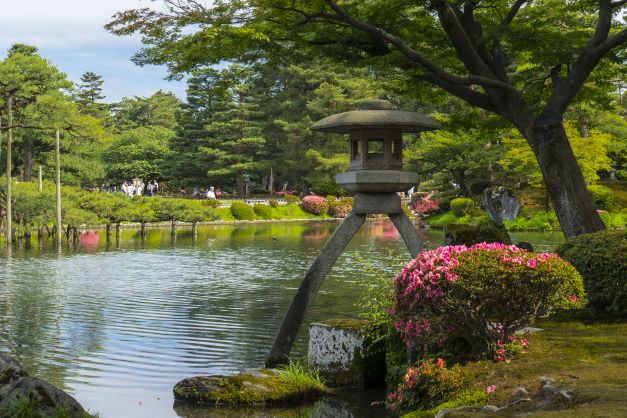
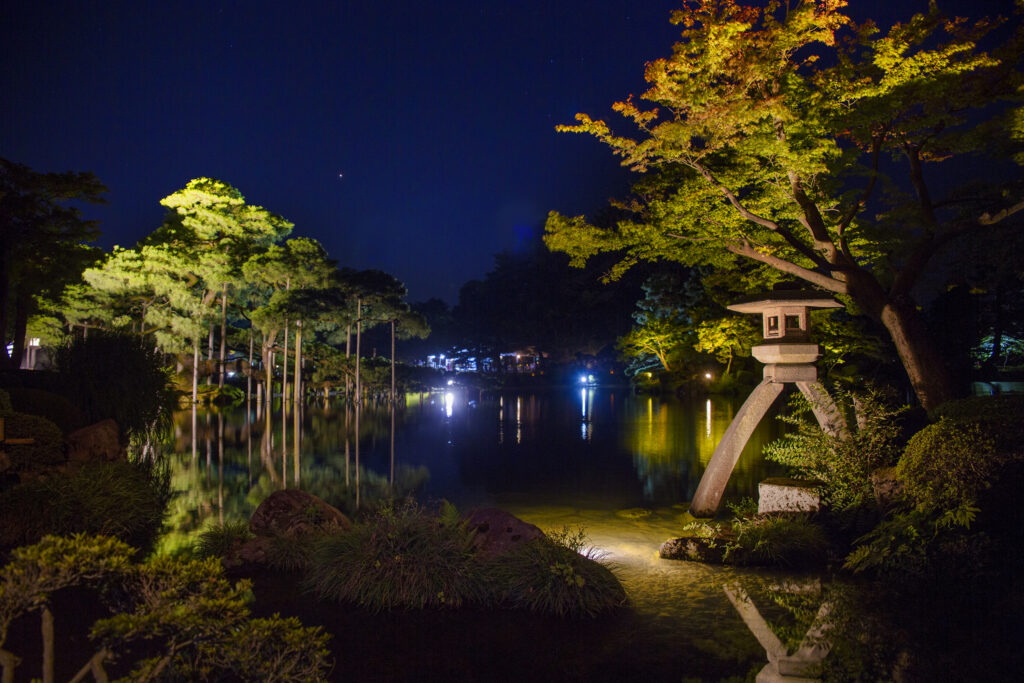
ここでは兼六園だけでなく金沢のアイコンとしても使われている、琴柱灯篭をカバーします。ここもお好みで下記ボタンからも直接アクセスできます。
3.1 基本情報(10項目)
インバウンド対応の前に押さえておきたい徽軫灯籠の深い背景や歴史的エピソードです。🎧米国話者
- Kenroku-en’s Top Attraction / 兼六園の最大の見どころ
EN: The Kotoji Stone Lantern is the most famous landmark in Kenroku-en, and many visitors come specifically to see it.
JP: 琴柱灯籠は、兼六園の中の最大の見どころで多くの観光客はこれを目当てに兼六園を訪問する特別な人気スポット。 - The Iconic Symbol of Kanazawa / 金沢の象徴
EN: Stone lanterns are common in Japanese gardens, but this one is known nationwide as the symbol of both Kenroku-en and Kanazawa, often appearing in travel brochures and social media posts.
JP: 日本庭園でよく見られる石灯籠だけれど、兼六園と金沢の象徴として全国に知られ、様々な媒体で、両者の紹介画像として使われている。 - Classic Photo Spot with Long Lines / 定番の記念写真スポット
EN: As the classic photo spot in Kenroku-en, long lines often form as visitors wait to have their photo taken while standing on the stone bridge, with the lantern and pond in the background.
JP: 兼六園の記念写真の定番スポットとして、石灯籠と池を背景に、手前の石橋の上に立った姿を写真に納める為に、多くの人々が行列に並ぶ。 - Unique Two-Legged Design / 珍しい二本足の構造
EN: While many garden lanterns (such as yukimi-toro) have three or four legs, the Kotoji Lantern stands on two legs of different lengths, inspiring various stories over time.
JP: 琴柱灯籠の様な庭園の石灯籠(雪見灯籠!ゆきみとうろう)の多くは3本や4本の足で構成されるが、琴柱灯籠は2本足である上に、両足の長さが違うので、色々な逸話が作られている。 - Name Derived from a Koto Bridge / 琴柱に由来する名前
EN: Its unique name, “Kotoji,” refers to the small bridge-like piece that supports the strings of a traditional koto harp.
JP: 最高の逸話は琴柱灯籠という他では使われないユニークな呼称で、伝統的弦楽器の琴の弦の糸を支える駒(琴柱=ことじ)を指している。 - The Two-Legged Frame and Stone Bridge / 二股の姿と石橋の見立て
EN: Because its two-legged stance resembles the koto’s string support, the stone bridge in front was likened to the body of the koto, giving the lantern its name.
JP: その二股で立つ姿が琴の糸を支える駒に似ていることから、その前にある石橋を琴に見立てて、琴柱灯籠と呼ばれる様になった。 - Tales Behind the Damaged Leg / 脚にまつわる様々な説
EN: Records show that both legs were originally the same length, but later stories claim one leg was damaged—either by vandalism or intentionally altered for aesthetic effect.
JP: 灯籠の両脚は元々同じ長さだった記録が残っているが、イタズラで壊された説や殿様が趣向を凝らす為に意図的に壊した説もある。 - Asymmetrical Wabi-Sabi Aesthetics / 非対称が引き出す独特の趣
EN: Shortening one leg and placing it on a stone beside the pond creates an asymmetrical look, giving the lantern a unique charm not found in other garden lanterns.
JP: 片側の足を短くして、池横の石の上に乗せることで、左右対称の単調な印象から脱し、他の灯籠には見られない非対称の独特の趣を出しているとも言われる。 - Differing Choices Among Visitors / 訪問客による行動の違い
EN: Many visitors wait in line to take a commemorative photo, while others choose to pass by without taking pictures when they see the long queue.
JP: 琴柱灯籠では記念写真を撮る為に列に並ぶ人はとても多いが、長蛇の列を見て、写真も撮らず行き過ぎる訪問客も少なくない。 - Quiet Times for Picturesque Views / 静かに絵画的景観を楽しむ時間帯
EN: Those who want to simply enjoy the picturesque view of the lantern, the maple tree, and the pond often visit early in the morning, near closing time, or during winter when the garden is quieter.
JP: 純粋に灯籠とモミジの古木と池からなる絵画的な美を楽しみたい人は人混みを避ける為、早朝や閉園間際の夕刻、冬季などに訪れる。
👤連続音声:1-5
👥連続音声:6-10
Glossary:用語集
top attraction ☛ 最大の見どころ / Kotoji Stone Lantern ☛ 琴柱灯籠 / famous landmark ☛ 有名なランドマーク / visitor ☛ 訪問客・観光客 / specifically ☛ わざわざ・特にそれを目的として
iconic symbol ☛ 象徴的存在 / stone lantern ☛ 石灯籠 / common ☛ 一般的な / nationwide ☛ 全国的に / travel brochure ☛ 観光パンフレット / social media post ☛ SNS投稿
classic photo spot ☛ 定番の撮影スポット / long line ☛ 長い行列 / form ☛ 形成される / wait to have one’s photo taken ☛ 写真を撮ってもらうために待つ / stone bridge ☛ 石橋 / background ☛ 背景
unique ☛ 珍しい / two-legged design ☛ 二本足の構造 / garden lantern ☛ 庭園灯籠 / yukimi-toro ☛ 雪見灯籠 / stand on ☛ ~の上に立つ / different lengths ☛ 長さが異なる / inspire ☛ 生み出す・触発する / various stories ☛ 様々な逸話
derive from ☛ ~に由来する / Kotoji ☛ 琴柱 / bridge-like piece ☛ 橋のような形の部品 / support ☛ 支える / string ☛ 弦 / traditional koto harp ☛ 伝統的な琴
two-legged stance ☛ 二股で立つ姿 / resemble ☛ ~に似ている / string support ☛ 弦を支える駒 / liken A to B ☛ AをBに見立てる / body of the koto ☛ 琴本体
record ☛ 記録 / originally ☛ 元々は / same length ☛ 同じ長さ / later story ☛ 後世の逸話 / damaged ☛ 壊された / vandalism ☛ いたずら・器物損壊 / intentionally ☛ 意図的に / aesthetic effect ☛ 美的効果
asymmetrical ☛ 非対称の / wabi-sabi aesthetics ☛ わびさびの美意識 / shorten ☛ 短くする / beside ☛ ~のそばに / unique charm ☛ 独特の魅力 / not found in ☛ ~には見られない
differing choices ☛ 異なる選択 / wait in line ☛ 列に並ぶ / commemorative photo ☛ 記念写真 / pass by ☛ 通り過ぎる / long queue ☛ 長蛇の列
picturesque view ☛ 絵画のような景観 / maple tree ☛ モミジ / early in the morning ☛ 早朝に / closing time ☛ 閉園時間 / quieter ☛ より静かな / winter ☛ 冬季
3.2 口頭説明用(10項目)
ガイドが歩きながら説明することを想定した、短く・覚えやすく・聞きやすい口頭用フレーズです。🎧英国話者
- Kenroku-en’s Top Attraction / 兼六園で一番有名な場所
EN: This is Kenroku-en’s most famous landmark. Many visitors come just to see this lantern.
JP: ここが兼六園で一番有名な場所で、これを見るために来る人も多いです。 - Symbol of Kanazawa / 金沢の象徴
EN: It’s the symbol of Kanazawa and appears everywhere—from brochures to social media.
JP: 金沢の象徴で、パンフレットやSNSでも必ず登場します。 - Popular Photo Spot / 人気の写真スポット
EN: People line up here to have their photo taken while standing on the stone bridge, with the lantern behind them.
JP: ここでは石橋の上で灯籠を背景に写真を撮るため、よく行列ができます。 - Two-Legged Lantern / 珍しい二本足
EN: Unlike most lanterns, this one has two legs—and they’re different lengths.
JP: 普通の灯籠と違って、これは二本足で、しかも長さが違います。 - Named After the Koto / 琴柱に由来する名前
EN: Its name comes from the small piece that supports the strings of a koto harp.
JP: 名前は、琴の糸を支える小さな部品「琴柱」に由来します。 - Koto Motif / 琴の見立て
EN: People later imagined the bridge here as the body of the koto.
JP: 後になって、この石橋を琴の胴に見立てるようになりました。 - The Short Leg Story / 短い足のストーリー
EN: Records say both legs were once the same length, but many believe one was damaged or changed later.
JP: 昔は両足が同じ長さでしたが、後に壊れたり、変えられたりしたようです。 - Asymmetrical Beauty / 非対称の美
EN: The uneven legs give it a unique, asymmetrical charm.
JP: 足の長さが違うことで、独特の非対称の美しさが生まれています。 - Photo or Pass / 写真か見送りか
EN: Some people wait for a photo, others skip it when they see the long line.
JP: 写真を撮る人もいれば、行列を見て通り過ぎる人もいます。 - Best Time for Quiet Views / 静かに楽しむ時間帯
EN: For a quiet view, early morning or late afternoon is recommended.
JP: 静かに楽しむなら、早朝か夕方が一番おすすめです。
👥連続音声:1-10
3.3 笑いが取れるかも?
このパートでは、琴柱灯篭を前にして、よく聞かれる質問に対する説明例をご紹介しています。前半部は説明にも使える真面目パート、後半部は雑談力UPの為のおふざけパートの2部構成になっています。以下のボタンから各ストーリーへ直接飛べます。
Q1: この琴柱灯籠って何?
“What is this lantern?” / “What is special about it?”
この様にストレートに言われることはあまりありませんが、その表情からは「これ何?」という思いがくみ取れるのです。前半(No1~5)は真面目パート、後半(No6~10)はおふざけパートです。🎧米国話者
- This is not just an ordinary stone lantern.
- これはただの石灯籠ではありません。
- Here, a symbolic scene wishing for happiness is expressed.
- ここでは、幸せを願うおめでたい場面が表現されています。
- It represents a koto performance, using a traditional Japanese instrument.
- それは日本の伝統楽器「琴」の演奏会です。
- The koto is often played on auspicious occasions, such as New Year’s Day and weddings.
- 琴はお正月や結婚式など、おめでたい席でよく演奏されます。
- The curved stone bridge resembles the body of a koto, and the lantern represents the “koto-ji,” the small piece that supports and tunes the strings.
- 手前の石橋が琴の胴体、そして灯籠は琴の弦を支える「琴柱(ことじ)」を表しているのです。
- However, after explaining this many times, my impression of the lantern has gradually changed.
- しかし、そんなおめでたい説明を何度もしているうちに、だんだんあの灯籠の印象が変わってきたのです。
- It’s far too big for a real koto bridge, and standing on two legs, it almost looks human.
- というのも、琴柱にしては大きすぎますし、二本足で立っている姿はまるで人間のようにも見えます。
- For many people, it may look like a gentle matchmaker or parents watching over a wedding.
- 多くの方にとっては、結婚式を見守る仲人や両親のような優しいイメージなのかもしれません。
- But perhaps I’m the only one who finds it a little intimidating.
- でも、この灯籠にどこか怖い印象を抱いているのは、きっと私だけなのでしょうね。
- To me, it looks like a strict music teacher watching over someone who can’t even play basic do-re-mi, let alone complex koto music!
- 難しい琴の演奏どころか、簡単なドレミすら弾けない私を見守る、厳しい音楽の先生のようにね!
Glossary:用語集
ordinary stone lantern ☛ 普通の石灯籠 / symbolic scene ☛ 象徴的な場面 / wish for happiness ☛ 幸せを願う / be expressed ☛ 表現されている / represent ☛ 表している / koto performance ☛ 琴の演奏会 / traditional Japanese instrument ☛ 日本の伝統楽器
auspicious occasion ☛ おめでたい席・吉事 / New Year’s Day ☛ 元日・お正月 / wedding ☛ 結婚式 / be played ☛ 演奏される / curved stone bridge ☛ 曲線を描く石橋 / resemble ☛ ~に似ている / body of a koto ☛ 琴の胴体 / koto-ji ☛ 琴柱 / support the strings ☛ 弦を支える / tune the strings ☛ 弦の音程を調整する
impression ☛ 印象 / gradually ☛ 徐々に / change ☛ 変わる / far too ☛ あまりにも~すぎる / real koto bridge ☛ 本物の琴柱 / stand on two legs ☛ 二本足で立つ / almost ☛ まるで・ほとんど / human ☛ 人間
matchmaker ☛ 仲人 / watch over ☛ 見守る / gentle ☛ 優しい / wedding ☛ 結婚式 / perhaps ☛ ひょっとすると / the only one ☛ 唯一の人 / intimidating ☛ 威圧的な・少し怖い
strict ☛ 厳しい / music teacher ☛ 音楽の先生 / let alone ☛ ~はもちろんのこと / basic ☛ 基本的な / do-re-mi ☛ ドレミ / complex ☛ 難しい・複雑な / koto music ☛ 琴の演奏曲
Q2: どうしてこんなに並んでいるの?
“Why is everyone lined up like this?”
これも、直接言われることはあまりありませんが、その表情からは「この行列、一体何?」という思いもくみ取れるのです。前半(No1~4)は真面目パート、後半(No5~10)はおふざけパートです。🎧シンガポール話者
- This is a famous spot where many people take pictures as a memory and proof of their visit to Kanazawa.
- これは金沢を訪れた思い出と証として、多くの人が写真を撮る有名スポットなんです。
- It is similar to the Little Mermaid statue in Denmark, the Merlion in Singapore, or Big Ben in England.
- デンマークの人魚姫像やシンガポールのマーライオン、イギリスのビッグベンに似ていますね。
- Japanese people have always appreciated the simplicity of landscapes, and the stone lanterns and pond in the background perfectly match their aesthetic preferences.
- 日本人はいつもシンプルな風景を好むので、石灯籠と背景の池は日本人の好みにぴったりはまるんです。
- Over the years, this view has become a symbol of Kanazawa, and many visitors now line up to walk on the stone bridge and have their photo taken here.
- 長年にわたり、この景色は金沢の象徴となり、今では多くの観光客が石橋の上を歩いてここで写真を撮るために列を作っています。
- I often tell my guests, “If you think it’s worth it, why not join the line? It will be a memory that lasts a lifetime.”
- 私はよくゲストに「待つ価値があるとお思いでしたら、列に加わられたら如何でしょう? 一生の思い出になりますよ」とお伝えしているんです。
- Many tourists line up for this experience, while some move on to the next spot—for instance, those who aren’t interested in trends, prefer to avoid crowds, or don’t like having their picture taken usually pass by without waiting.
- 多くの観光客は列に並んでこれを体験しますが、流行に興味がない人、人混みを避けたい人、写真を撮られるのが嫌いな人は、たいてい待たずに通過します。
- There are many different types of people, and after years of guiding visitors to this popular spot, I’ve noticed that their personalities often come through here. And, I discovered a particular type of personality—like myself.
- いろいろなタイプの人がいまして、この人気スポットを何年もご案内していますと、それぞれ個性がよく出ていることに気がつきます。そして、私は自分が当てはまる新しいタイプを見つけたんです。
- Probably they would wonder if the stone bridge has accumulated structural fatigue from the countless people who have crossed or lingered on it over the years.
- 長年、数え切れないほどの人々が渡ったり立ち止まったりしてきたため、この石橋には構造的疲労がたまっているのではと心配する人もいるでしょう。
- Being worried that the bridge might collapse one day, just by chance, this cautious type will never cross it, no matter how much I recommend it.
- ある日突然、橋が崩れてしまうのではないかと心配する用心深いタイプの人は、私がいくら勧めても決して渡らないんですね。
- It’s like the saying: ‘knocking on a stone bridge before crossing it—and then never crossing it at all!’
- まさにこの諺通り。「石橋を叩いて渡る、でも、決して渡らない」。
Glossary:用語集
famous spot ☛ 有名スポット / take pictures ☛ 写真を撮る / memory ☛ 思い出 / proof of one’s visit ☛ 訪問した証し / visit Kanazawa ☛ 金沢を訪れる
Little Mermaid statue ☛ 人魚姫像 / Merlion ☛ マーライオン / Big Ben ☛ ビッグベン / be similar to ☛ ~に似ている
appreciate ☛ 良さを理解する・好む / simplicity ☛ シンプルさ / landscape ☛ 風景 / stone lantern ☛ 石灯籠 / pond ☛ 池 / background ☛ 背景 / perfectly match ☛ ぴったり合う / aesthetic preference ☛ 美的感覚・美意識
over the years ☛ 長年にわたり / symbol ☛ 象徴 / visitor ☛ 観光客 / line up ☛ 列に並ぶ / stone bridge ☛ 石橋 / have one’s photo taken ☛ 写真を撮ってもらう
think it’s worth it ☛ 価値があると思う / join the line ☛ 列に加わる / last a lifetime ☛ 一生続く・一生ものになる / lifetime memory ☛ 一生の思い出
tourist ☛ 観光客 / experience ☛ 体験 / move on to ☛ 次の場所へ進む / trend ☛ 流行 / avoid crowds ☛ 人混みを避ける / have one’s picture taken ☛ 写真を撮られる / pass by ☛ 通り過ぎる / without waiting ☛ 待たずに
different types of people ☛ さまざまなタイプの人々 / guide visitors ☛ 観光客を案内する / personality ☛ 性格・個性 / come through ☛ 表れる / discover ☛ 発見する / particular type ☛ 特定のタイプ
structural fatigue ☛ 構造疲労 / countless ☛ 数え切れないほどの / cross ☛ 渡る / linger ☛ 立ち止まる / over the years ☛ 長年にわたり / collapse ☛ 崩落する・崩れる / by chance ☛ 偶然に / cautious type ☛ 用心深いタイプ / no matter how much ☛ どれだけ~しても
saying ☛ ことわざ / knock on a stone bridge before crossing it ☛ 石橋を叩いて渡る / cross it at all ☛ まったく渡らない
4.眺望台(ちょうぼうだい)
“Panoramic View Point / Panoramic Lookout”
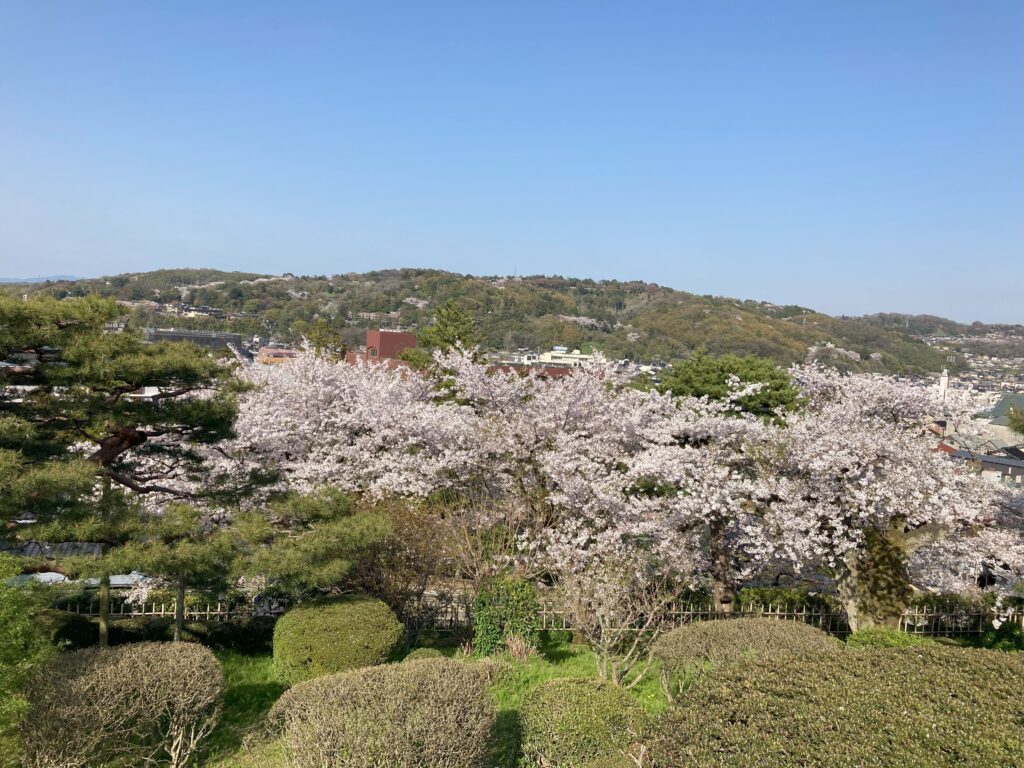
ここでは庭園内で唯一外部の景色を望める眺望台をカバーします。ここもお好みで下記ボタンからも直接アクセスできます。
▼ 笑いが取れるかも各トークへの直行ボタン
4.1 基本情報
このスポットで最低限押えておきたいポイントです。🎧英国話者
- EN: This is the only place in Kenroku-en where visitors can look out beyond the garden, and it embodies “panoramic view,” one of the Six Attributes of Scenic Beauty for which the garden is named.
JP: ここは兼六園で唯一、園外の景色を望むことができる場所で、兼六園の名の由来である六つの優れた景観(六勝)の一つ「眺望」を体現しています。 - EN: Because Kenroku-en was originally created as the private garden of the Kanazawa feudal lord and designed to be hidden from the outside, this spot allows guests to enjoy the “panoramic view” of the Six Attributes in the same way the lords once did.
JP: 元々、加賀藩主の私庭として外部から遮断されるよう作られた兼六園において、当時の藩主が楽しんだのと同じように「眺望」の景観を体感できる貴重な場所です。 - EN: The slope in front of the viewpoint is lined with cherry trees, and during the peak of spring many visitors gather here to enjoy both the distant scenery and the blossoms below.
JP: 目の前の斜面には桜並木が広がり、春の満開時には遠景と眼下の桜を楽しもうと多くの人々で賑わいます。 - EN: The hill in front, Utatsu-yama, lies to the northeast of Kanazawa Castle yet carries a name suggesting the southeast, and it is said that commoners were once forbidden to enter it.
JP: 正面にそびえる卯辰山は、金沢城の北東に位置しながら方角の「卯辰(東南)」の名を持つ神秘的な山で、かつては庶民の立ち入りが禁止されていたと言われています。 - EN: This viewpoint is one of Kanazawa City’s designated “Fifteen Scenic Views,” and can be regarded as part of the landscape heritage associated with the Maeda family, the lords of Kanazawa Castle.
JP: 金沢市が選定する「金沢景色十五景」の一つであり、加賀藩主・前田家の歴史を感じさせる風景遺産でもあります。
👤 連続音声:1-5
Glossary:用語集
look out beyond ☛ 園外を見渡す / embody ☛ 体現する / panoramic view ☛ 眺望 / Six Attributes of Scenic Beauty ☛ 六勝(六つの優れた景観要素) / be named after ☛ ~にちなんで名付けられる
private garden ☛ 私庭 / feudal lord ☛ 藩主 / designed to be ☛ ~するように設計された / hidden from the outside ☛ 外部から見えないようにされた / spot ☛ 場所 / guest ☛ 客人 / in the same way ☛ 同じように / precious place ☛ 貴重な場所
slope ☛ 斜面 / viewpoint ☛ 展望地点・眺望スポット / be lined with ☛ ~が並んでいる / cherry tree ☛ 桜の木 / peak of spring ☛ 春の最盛期 / gather ☛ 集まる / distant scenery ☛ 遠景 / blossom ☛ 花・桜の花
Utatsu-yama ☛ 卯辰山 / lie to the northeast of ☛ ~の北東に位置する / carry a name ☛ 名称を持つ / suggest ☛ 連想させる / southeast ☛ 南東 / commoner ☛ 庶民 / be forbidden to ☛ ~を禁じられる / enter ☛ 立ち入る
designated ☛ 選定された・指定された / Fifteen Scenic Views ☛ 金沢景色十五景 / scenic view ☛ 景観 / regard A as B ☛ AをBと見なす / landscape heritage ☛ 風景遺産 / be associated with ☛ ~に関連する / Maeda family ☛ 前田家 / lord of Kanazawa Castle ☛ 金沢城の藩主
4.2 口頭説明
基本情報をベースにゲストと歩きながら使える口頭説明例です。🎧オーストラリア話者
- EN: This is the only spot in Kenroku-en where you can see beyond the garden, embodying the “panoramic view” of its six qualities.
JP: ここは兼六園で唯一、園外の景色が見える場所で、六勝の一つ「眺望」を体感できるポイントです。 - EN: Since the garden was originally built as a private retreat, this spot allows guests to enjoy the view just like the lords once did.
JP: もともと藩主のプライベートな庭として作られたため、当時の藩主気分で外の景色を楽しめます。 - EN: In spring, the cherry trees on the slope below bloom, making it a popular spot to enjoy both the distant scenery and the blossoms.
JP: 春には目の前の斜面に桜が咲き誇り、遠くの山並みと足元の桜を同時に楽しむ人々で賑わいます。 - EN: The hill in front, Utatsu-yama, lies to the northeast of the castle despite its name, and was once off-limits to commoners.
JP: 正面の卯辰山(うたつやま)は、お城の北東にありながら「南東」を意味する名を持つ山で、昔は庶民の立ち入りが禁止されていました。 - EN: Designated as one of Kanazawa’s Fifteen Scenic Views, it’s a wonderful place to feel the landscape legacy of the Maeda lords.
JP: 「金沢景色十五景」にも選ばれており、加賀藩主・前田家の歴史的景観を感じられる特別な場所です。
👤 連続音声:1-5
4.3 笑いが取れるかも?
このパートでは、眺望台から風景を一緒に見ながら、よく聞かれる質問に対する説明例をご紹介しています。前半部は説明にも使える真面目パート、後半部は雑談力UPの為のおふざけパートの2部構成になっています。
Q1:ここは何が見所ですか?
”What is the main attraction here?”
通常はこの様にストレーには言われませんが、天候が悪くて肝心の視界がさっぱりの時には、素通りのことも多いので、それを元に纏めたトークです。
前半(1-3)が真面目パート、後半(4-10)がおふざけパートです。事情はどうあれ、接待係の貴方自身の気分が曇っていると、使えないネタかも、なーんてね(笑)🎧アイルランド話者
- EN: This is the only spot in Kenroku-en where people can enjoy a view of the scenery outside the garden—a place where they can experience the “panoramic view,” one of the garden’s Six Virtues.
JP: ここは兼六園で唯一、園外の景色を望むことができる、六勝の「眺望」が体感できる場所です。 - EN: Originally created as the private garden of the lord of Kanazawa, most of Kenroku-en was intentionally designed not to be visible from the outside.
JP: 元々、金沢領主の私庭として作られたため、兼六園の殆どの場所は外部から見られないよう設計されました。 - EN: Because of that, there are only a few places inside the garden where you can look outward, making this a rare spot where you can experience the “panoramic view” just as the lord once did.
JP: なので、庭園の内部から外をみることができる場所は限られていて、ここは当時の領主の気分で「眺望」を体感できる貴重な場所なんです。 - EN: Since you can take in a wide view of Kanazawa’s townscape from here, the lords may have literally looked down on the homes of their subordinates.
JP: 金沢の街を一望できるので、領主達は文字通り上から目線で部下達の家々を眺めていたかもしれません。 - EN: As a guide, I’m truly delighted to be able to welcome guests from many countries to such a special place.
JP: そんな特別な場所に様々な国のゲストをここにお招きできるのはガイドとしてもとても嬉しいことなのです。 - EN: After all, only a select group of VIP guests were allowed to stand here when the garden was first created.
JP: 何故なら、昔からこの場所に立てるのは限られたVIPゲストだけ。 - EN: When I weave that into my explanation, both I—the guide—and the guests listening tend to feel wonderful.
JP: それをトークに織り込めば、説明するガイドの私も聞くゲストも最高の気分になれるのです。 - EN: But after repeating this story countless times in this very spot, a certain overwhelming feeling gradually began to grow inside me.
JP: でも数え切れないくらい、この場所でこのトークを繰り返すうちに、私の中に何か抑えがたい感情が徐々に生まれてきたのです。 - EN: It’s the feeling of being a feudal lord welcoming guests. In recent years, millions of pairs—VIP guests and guides feeling like lords—have stood here.
JP: それはゲストを迎える殿様気分なのです。その様なVIPゲストと殿様気分のガイドのペアが近年は数百万人もここに立つのです。 - EN: So perhaps it’s a little unfortunate for modern Kanazawa citizens to be looked down upon day after day by so many “lord‑like” visitors. (laughs)
JP: こんな大勢の殿様気分の人達に連日上から目線で眺められる現代の金沢市民は可哀想かも、なーんてね。(笑)
Glossary:用語集
only spot ☛ 唯一の場所 / enjoy a view ☛ 景色を楽しむ / scenery outside the garden ☛ 園外の景色 / panoramic view ☛ 眺望 / Six Virtues ☛ 六勝・六つの優れた景観要素 / experience ☛ 体感する
originally created as ☛ ~として造られた / private garden ☛ 私庭 / lord of Kanazawa ☛ 金沢の領主 / intentionally ☛ 意図的に / visible from the outside ☛ 外部から見える / be designed to ☛ ~するよう設計される
because of that ☛ そのため / look outward ☛ 外を見る / rare spot ☛ 貴重な場所 / just as ☛ ~と同じように / once did ☛ かつて行ったように
take in a wide view ☛ 一望する / townscape ☛ 街並み / literally ☛ 文字通り / look down on ☛ 見下ろす / subordinate ☛ 部下 / home ☛ 家屋
as a guide ☛ ガイドとして / be delighted to ☛ ~できて嬉しい / welcome guests ☛ ゲストを迎える / special place ☛ 特別な場所
after all ☛ 何しろ・なぜなら / select group ☛ 限られた集団 / VIP guest ☛ VIP客・貴賓 / be allowed to ☛ ~することを許される
weave A into B ☛ AをBに織り込む / explanation ☛ 説明 / tend to ☛ ~しがちである / wonderful ☛ 素晴らしい / feel wonderful ☛ 良い気分になる
countless times ☛ 数え切れないほど何度も / overwhelming feeling ☛ 抑えがたい感情 / gradually ☛ 徐々に / grow inside ☛ 心の中で大きくなる
feudal lord ☛ 殿様・藩主 / welcoming guests ☛ 客を迎えること / in recent years ☛ 近年 / millions of ☛ 数百万人もの / pair ☛ 組み合わせ・ペア / feel like ☛ ~の気分になる
unfortunate ☛ 気の毒な / modern citizen ☛ 現代の市民 / day after day ☛ 来る日も来る日も / lord-like ☛ 殿様気分の / visitor ☛ 訪問客・観光客 / look down upon ☛ 上から見下ろす
Q2 ここは昔からこうだったの?
”Has this been here for a long time?”
今回は一緒に風景を見ながら時々聞かれる質問を元にしたストーリです。
前半(1-7)が真面目パート、後半(8-10)がおふざけパートです。現代サラリーマンのゲストにもわかってもらえたら良いけど。(密かにゲストの評価を気にする保身ガイドってか?)🎧米国話者
- EN: Local documents indicate that Kenroku-en was extensively landscaped during the reign of the 13th feudal lord (Nariyasu), taking on its current form.
JP: 兼六園は十三代藩主(なりやす)の時に大きく整備されて、現在の様になったと言う記録があります。 - EN: This observation point was likely built around that time as well, though no clear records remain.
JP: 恐らくこの眺望台もその頃と思われますが明確な記録は残っていません。 - EN: In any case, as this spot is the highest point in Kenroku-en, people may have enjoyed the distant views here even before it was developed into the panoramic viewpoint it is today.
JP: いずれにしても、兼六園の最も高台にあるこの場所は現在のような眺望台になる前から遠景を楽しまれていたのかもしれません。 - EN: On days with good weather and clear visibility, the Sea of Japan and the sand dunes might have been visible to the left.
JP: 天気と視界が良い日には左側に日本海と砂丘が見えていたのかもしれません。 - EN: There is nothing blocking the view ahead; only a series of gentle, low mountains stretch out before you.
JP: 前を遮るものは何もなく、眼の前のなだらかな低山が続くだけです。 - EN: Interestingly, the small hill-like mountain right in front of us (Mt. Utsu) used to be off-limits to the general public.
JP: 面白いことに眼の前の丘の様な低山(卯辰山)は、昔は一般登山は禁じられていました。 - EN: The main reasons were military and security concerns, since the townscape could be seen in its entirety from its summit.
JP: 主な理由は軍事的、保安上のもので、その頂上から市内が一望に見下ろせるためでした。 - EN: However, after guiding international guests here many times, I’ve come to believe there’s another reason.
JP: でも、何度もガイドとしてこの眺望台で説明をする様になって、別の理由を確信する様になりました。 - EN: After all—for the lords and VIP guests standing at this best position, being “literally” looked down upon by the common people from the top of that mountain would surely be unbearable.
JP: 何と言っても——この眺望台に立つ殿様やVIPゲストにすれば、あの山のてっぺんから庶民に“文字通り”見下されてしまうのはたまらないでしょう。 - EN: Furthermore, for the retainers and vassals, they never knew what kind of reprimand or punishment might be handed down by their lord. Both now and in the past, self‑preservation has always been more important than the security of the organization!
JP: 更に家来や従者にとっては、殿様からどんな叱責や処罰が下されるかわかりません。今も昔も最も大切なのは組織の保安より、自分の保身がですもんね!
Glossary:用語集
local document ☛ 地元の記録文書 / indicate ☛ 示している / extensively landscaped ☛ 大規模に整備された / reign ☛ 治世・在位期間 / feudal lord ☛ 藩主 / take on its current form ☛ 現在の姿になる
observation point ☛ 眺望地点・展望スポット / likely ☛ おそらく / around that time ☛ その頃 / clear record ☛ 明確な記録 / remain ☛ 残っている
in any case ☛ いずれにしても / highest point ☛ 最も高い場所 / distant view ☛ 遠景 / develop into ☛ ~へ発展する / panoramic viewpoint ☛ 眺望台
clear visibility ☛ 良好な視界 / Sea of Japan ☛ 日本海 / sand dune ☛ 砂丘 / be visible ☛ 見える
block the view ☛ 視界を遮る / ahead ☛ 前方に / gentle ☛ なだらかな / low mountain ☛ 低山 / stretch out ☛ 広がる・続く
interestingly ☛ 興味深いことに / hill-like mountain ☛ 丘のような山 / Mt. Utatsu ☛ 卯辰山 / off-limits ☛ 立入禁止の / general public ☛ 一般市民
military concern ☛ 軍事上の懸念 / security concern ☛ 保安上の懸念 / townscape ☛ 街並み / entirety ☛ 全体 / summit ☛ 山頂 / overlook ☛ 見渡す・見下ろす
international guest ☛ 海外からのゲスト / come to believe ☛ 確信するようになる / another reason ☛ 別の理由
after all ☛ 何と言っても / best position ☛ 最も良い場所 / literally ☛ 文字通り / look down upon ☛ 見下ろす / common people ☛ 庶民 / unbearable ☛ 耐え難い
furthermore ☛ さらに / retainer ☛ 家来 / vassal ☛ 従者・家臣 / reprimand ☛ 叱責 / punishment ☛ 処罰 / hand down ☛ 言い渡す・下す / self-preservation ☛ 保身 / organization ☛ 組織
5.霞ヶ池(かすみがいけ)
“Kasumiga-ike Pond”
ここでは兼六園の中心に位置する霞ヶ池をカバーします。ここもお好みで下記ボタンからも直接アクセスできます。
▼ 笑いが取れるかも各トークへの直行ボタン
5.1 基本情報
このスポットで最低限押えておきたいポイントです。
1. EN: Central Pond
In many Japanese gardens, a large pond is positioned near the center of the garden, and in Kenroku-en, Kasumigaike lies almost at the center, functioning like the heart of the garden.
JP: 多くの日本庭園では大きな池が庭の中心的存在となり、兼六園では霞ヶ池がほぼ中央に位置し、庭の「心臓」のような役割を果たしています。
2. EN: Strolling Features
Various distinctive garden features and scenic elements are arranged around the pond, allowing visitors to enjoy changing views as they walk.
JP: 池の周囲にはさまざまな庭園装置や景観要素が配置され、歩くごとに移り変わる景色を楽しめます。
3. EN: Reduced Landscape
A traditional gardening technique known as “reduced landscape” is often employed in Japanese gardens, where miniature representations of famous scenic places are incorporated into the design.
JP: 日本庭園では「縮景」と呼ばれる技法がよく用いられ、有名な景勝地を小規模に再現して庭の構成に取り入れます。
4. EN: Model of Lake Biwa
Kasumigaike is said to have been modeled after Lake Biwa, Japan’s largest lake, reflecting its cultural and historical significance.
JP: 霞ヶ池は、日本最大の湖である琵琶湖を模したものとされ、その文化的・歴史的な重要性を映しています。
5. EN: Cultural Center
Lake Biwa and nearby Kyoto have long been central to Japan’s politics and culture, and their prestige has inspired admiration since ancient times.
JP: 琵琶湖と隣接する京都は、古くから日本の政治と文化の中心であり、その存在は人々の憧れの対象でした。
6. EN: Island of Immortality
The small island in the pond represents an islet in Lake Biwa associated with a legend of immortality.
JP: 池に浮かぶ小島は、不老長寿の伝説で知られる琵琶湖の島を表しています。
7. EN: Turtle Symbolism
The shape of the islet resembles a turtle shell—an auspicious symbol of longevity—with a stone placed at the edge suggesting the turtle’s head.
JP: 小島の形は亀の甲羅を思わせ、縁起の良い長寿の象徴とされ、端には亀の頭を思わせる石が置かれています。
8. EN: Meaning of the Name
The name Kasumigaike, literally meaning “Hazy Pond,” expresses the idea of vastness, evoking an image of a distant shore softened by haze and disappearing from sight.
JP: 「霞ヶ池」という名は広がりのある景観を表し、霞によって対岸がぼんやりと見えなくなる情景を想起させます。
9. EN: Emergency Water System
It is said that the pond was designed not only for its scenic beauty but also with an emergency mechanism that allowed water to drain from the bottom and raise the water level of the castle moat.
JP: 見た目の美しさだけでなく、非常時に備えて池の底から水が抜けて城の堀の水位を上げる仕掛けがあったと言われています。
10. EN: Water Source and Circulation
Kasumigaike, which is supplied by water drawn from the Tatsumi Waterway constructed about four centuries ago, feeds other ponds and waterfalls throughout the garden, forming the central hub of Kenroku-en’s water circulation system.
JP: 約四百年前に造られた用水から水を引いて、この水は庭園内の他の池や滝にも流れ込んでいます。霞ヶ池は、庭園全体の水循環の中心的な役割を担っています。
👤連続音声:1-5
👥連続音声:6-10
5.2 口頭説明
基本情報をベースにゲストと歩きながら使える口頭説明例です。
- EN: Central Pond
Kasumigaike sits near the center of Kenroku-en and works like the heart of the entire garden.
JP: 霞ヶ池は兼六園のほぼ中央にあり、庭全体の「心臓」のような役割を果たしています。 - EN: Strolling Features
As you walk around the pond, you’ll see many distinctive garden features that create different views from every angle.
JP: 池の周囲には特徴的な庭園の要素があり、歩くたびに景色が変わして見えます。 - EN: Reduced Landscape
This pond also shows a classic technique called “reduced landscape,” where famous places are recreated in miniature.
JP: この池には、有名な景勝地を小さく再現する「縮景」という伝統的な技法が使われています。 - EN: Model of Lake Biwa
Kasumigaike is said to be modeled after Lake Biwa, the largest lake in Japan.
JP: 霞ヶ池は、日本最大の湖である琵琶湖を模したものと言われています。 - EN: Cultural Center
Lake Biwa and nearby Kyoto have long been cultural centers admired since ancient times.
JP: 琵琶湖と京都は、古くから文化の中心地として人々に敬われてきました。 - EN: Island of Immortality
The small island in the pond represents an island in Lake Biwa known for a legend of immortality.
JP: 池の小島は、不老長寿の伝説で知られる琵琶湖の島を表しています。 - EN: Turtle Symbolism
Its shape resembles a turtle shell, and the stone at the edge suggests the turtle’s head—a symbol of long life.
JP: 島の形は亀の甲羅に似ており、端の石は亀の頭を表す長寿の象徴です。 - EN: Meaning of the Name
The name Kasumigaike, or “Hazy Pond,” comes from the idea of a distant shore fading softly into the haze.
JP: 「霞ヶ池」という名は、霞で対岸がぼんやりと見えなくなる情景に由来しています。 - EN: Emergency Water System
It’s said that the pond once had a system that could release water from the bottom to raise the castle moat in an emergency.
JP: 非常時には池の底から水を抜き、城の堀の水位を上げる仕掛けがあったと言われています。 - EN: Water Source and Circulation
The Tatsumi Waterway, with centuries of history, supplies this pond and then feeds other ponds and waterfalls throughout the garden.
JP: 数世紀の歴史を持つ辰巳用水がこの池の源となり、池は庭園内の他の池や滝へ水を供給しています。
5.3 笑いが取れるかも?
このパートでは、霞が池を前にして、よく聞かれる質問に対する説明例をご紹介しています。前半部は説明にも使える真面目パート、後半部は雑談力UPの為のおふざけパートの2部構成になっています。以下のボタンから各ストーリーへ直接飛べます。
Q1: この池はどれくらい広いのですか?
”How big is the pond in Kenroku-en?”
ここでは池の広さが話題になった際のネタでまとめてみました。
前半(1-6)が真面目パート、後半(7-10)がおふざけパートです。
- EN: Although you can’t see its full shape from here, the pond stretches all the way to the tea house in the distance.
JP: ここからは全体の形がつかめませんが、向こうに見える茶室のあたりまで広がっています。 - EN: Its actual size is only slightly smaller than a soccer field, so it’s not extraordinarily large.
JP: 実際の大きさはサッカーコートより一回り小さいくらいで、そこまで極端に広いわけではありません。 - EN: Even so, a pond of this scale is quite rare in Japanese gardens.
JP: それでも、日本庭園でこれほどの規模の池はなかなかありません。 - EN: Many traditional gardens feature a central pond, and this is likely one of the largest examples of that style.
JP: 多くの庭園では中央に大きな池を配置しますが、その中でも最大級のスケールです。 - EN: The pond is named Kasumiga-ike, which literally translates to “Hazy Pond.”
JP: この池の名は「霞ヶ池(Kasumiga-ike)」といい、直訳すると “Hazy Pond” になります。 - EN: The idea is to evoke a serene scene where the opposite shore fades softly into the haze.
JP: 霞によって対岸がぼんやりと霞んで見えなくなるような、風情ある情景を想起させる意図が込められています。 - EN: But personally, I suspect the real intention was to make the pond feel so vast that the far shore seems to disappear.
JP: でも私個人としては、「対岸が見えないほどの圧倒的な広さ」を演出したかったのではないかと踏んでいます。 - EN: After all, it was modeled after Japan’s largest lake, Lake Biwa.
JP: 何と言っても、日本最大の湖である「琵琶湖」をイメージして造られたわけですからね。 - EN: If so, calling it “slightly smaller than a soccer field” sounds a bit less grand, doesn’t it?
JP: だったら、「サッカーコートより小さめ」なんて説明したら、ちょっとスケールが小さく聞こえてダメじゃないかと思われますよね? - EN: But if a guest comes from a country whose national team struggles in the World Cup, they might just nod and say, “Oh yeah, the opponent’s goal always feels miles away—this place is massive!” (laughs)
JP: でもワールドカップでなかなか勝てない国のゲストなら、「そうなんだよ、相手のゴールがあまりにも遠くて見えない…ここ、めちゃくちゃ広いじゃん!」って共感してくれるかもしれません。(笑)
Q2: この池の見どころって何ですか?
”What are the main must-see features around the pond?”
ここでは池の中の蓬莱島(亀島)や縮景の背景について触れる際のネタでまとめてみました。
前半(1-8)が真面目パート、後半(9-10)がおふざけパートです。
- EN: There are many highlights, but first and foremost, this pond is a prime example of shukkei, or a “reduced landscape.”
JP: 見どころはたくさんありますが、まずはこの池が「縮景(しゅっけい)」という技法で作られていることですね。 - EN: Shukkei is a traditional Japanese gardening technique that recreates famous scenic places on a smaller scale.
JP: 「縮景」とは、有名な景勝地をコンパクトに縮小して再現する日本の伝統的な庭園技法です。 - EN: Without an explanation, it might look like just an ordinary pond, but it actually depicts Lake Biwa—Japan’s largest lake.
JP: 説明がないとただの大きな池に見えますが、実は日本最大の湖である「琵琶湖」を再現しています。 - EN: Lake Biwa lies right next to Kyoto, the ancient capital, and has long symbolized history, culture, and prosperity for the Japanese people.
JP: 琵琶湖は千年の都・京都のすぐそばにあり、歴史と文化、知識と繁栄の象徴として日本人にとって特別な存在でした。 - EN: It might be similar to what the Mediterranean Sea meant to the people of ancient Europe.
JP: 古代ヨーロッパの人々にとっての「地中海」のような存在に近いかもしれません。 - EN: The small island in the center represents an island in Lake Biwa associated with the legendary realm of eternal youth and immortality.
JP: 池の中央に浮かぶ小さな島(蓬莱島)は、琵琶湖に実在する不老不死の伝説を持つ島を表現しています。 - EN: In this way, many features around the pond were designed with wishes for long-lasting prosperity and longevity.
JP: このように、池の周囲のさまざまな趣向には、繁栄と長寿への祈りが込められています。 - EN: Furthermore, the island is shaped to resemble a turtle—a creature believed in Japan to live for ten thousand years.
JP: さらにその島は、日本では「1万年生きる」と信じられてきた長寿の象徴である「カメ」の姿に似せて造られています。 - EN: The island itself represents the turtle’s shell, and the rock at the edge represents its head. Does it look like a turtle to you? Does it look happy, too?
JP: 島全体が亀の甲羅で、端にある岩が頭を表していますが…皆さんには亀に見えますか?ついでに、幸せそうに見えますかね? - EN: I couldn’t possibly endure staying still like that for 10,000 years! (laughs)
JP: 1万年間もあんな風にじっと動かずにいるなんて、私にはとても耐えられません!(笑)
Q3: この池の何が面白いのですか? / 何が特別な点ですか?
”What makes this pond interesting? / What makes it special?”
ここでは池の水深や金沢城の防衛機構についての話になった際のネタでまとめてみました。
前半(1-8)が真面目パート、後半(9-10)がおふざけパートです。
- EN: People appreciate Japanese gardens in various ways, but here at Kasumiga-ike, the main highlight is its stunning water scenery.
JP: 庭園の楽しみ方は人それぞれですが、ここ霞ヶ池の一番の見どころは、その美しい水景です。 - EN: Water is drawn from the upper reaches of the Sai River through the historic Tatsumi Waterway, filling this pond to the brim.
JP: 犀川の上流から歴史ある辰巳用水を経由して引き込まれた水が、この池をなみなみと満たしています。 - EN: From here, the water flows to other ponds and waterfalls throughout the garden, making this spot the heart of Kenroku-en’s water circulation system.
JP: ここから園内の他の池や滝へと水が巡っていくため、霞ヶ池は兼六園全体における「水系の中心」といえる場所です。 - EN: However, some guests aren’t quite satisfied with just a standard explanation, so depending on the audience, I sometimes share a few behind-the-scenes stories.
JP: ただ、こうした模範的な説明だけでは物足りないゲストもおられますので、時と場合に応じて「裏話」をお話しすることもあります。 - EN: As I mentioned earlier, this pond—the largest in the garden and holding a massive volume of water—is actually quite deep.
JP: 先ほどお話しした通り、豊かな水量を蓄える園内最大のこの池は、実はかなりの深さがあります。 - EN: One reason is that it needed to store a large amount of water for defensive purposes.
JP: その理由の一つは、軍事的な防衛目的で大量の水を蓄えておく必要があったためとされています。 - EN: It is said that there was a secret mechanism to drain water from the bottom during emergencies, quickly raising the water level of the castle moat.
JP: 非常時には池の底から一気に水を開放し、外堀の水位を跳ね上げる仕掛けがあったと言われています。 - EN: Kenroku-en was designed not only for scenic beauty but also to bolster the defenses of Kanazawa Castle, so many hidden mechanisms were built throughout the garden.
JP: 兼六園は美しさだけでなく金沢城の防衛機能も兼ねて造られており、園内にはそうした隠された仕掛けがいくつも存在します。 - EN: Actually, I do know all the confidential details, but given the current geopolitical climate, I’m refraining from revealing all our defensive strategies.
JP: 実は私もすべての詳細を知っているのですが、昨今の国際情勢を鑑みまして、これ以上の防衛上の仕掛けについてお話しすることは控えさせていただいております。 - EN: After all, you never know when a guest’s home country might become an adversary and attack Japan. Your country isn’t planning anything like that, right? (laughs)
JP: なぜなら、いつゲストの母国が敵国となって日本に攻めてくるかわかりませんからね。…皆さんの国は、まさかそんな計画ありませんよね?(笑)
6.唐崎松(からさきのまつ)
“Karasaki Pine Tree”
ここでは兼六園の名木・唐崎松をカバーします。下記ボタンからも直接アクセスできます。
笑いも取れるかも各トーク
6.1 基本情報
このスポットで最低限押えておきたいポイントです。
-
A Pine Tree Symbolizing Kenroku-en / 兼六園を代表する松
EN: The Karasaki Pine is a black pine known for its distinctive branching within Kenroku-en, and it stands as one of the garden’s best-known trees.
JP: 唐崎松は、兼六園の中でも見事な枝ぶりを誇る黒松で、兼六園を代表する名木の一つとなっています。
-
The Garden’s Centerpiece / 庭園の主役となる存在
EN: The Karasaki Pine is not merely one element of the garden; standing on the shore of Kasumi Pond with its wide-spreading branches, it makes a striking impression on the entire landscape.
JP: 唐崎松は、単なる庭園の構成要素でなく、霞ヶ池のほとりで大きく枝を広げ、周囲の景観に強い印象を与える存在です。
-
Branches Spreading Dynamically Sideways / 横へダイナミックに広がる枝
EN: While many pine trees grow upward in a triangular cone shape, the Karasaki Pine has a unique form in which its branches spread outward horizontally as if flowing.
JP: 多くの松は三角錐状に上へ伸びますが、唐崎松は枝が横へ流れるように広がるという独特の形状を持ちます。
-
Overwhelming Scale and Sculptural Beauty / 圧倒的なスケールと造形美
EN: Although there are other pine trees in the garden with horizontally spreading branches, the Karasaki Pine’s impressive 20‑meter span stands out from all the rest.
JP: 園内には他にも横に広がる松がありますが、唐崎松の約20メートルに及ぶ枝張りは他と一線を画しています。
-
A Pine with a Sacred Heritage / 神木に由来する松
EN: The Karasaki Pine is not a native species of Kanazawa; it was grown from seeds specially obtained from the sacred pine at Karasaki Shrine, a scenic site on the shores of Lake Biwa.
JP: 唐崎松は地元の松でなく、日本最大の琵琶湖畔の景勝地「唐崎神社」にある神木から、わざわざ種を取り寄せて育てた特別な松です。
-
Born from the Lord’s Passion / 藩主のこだわりから誕生
EN: The 13th lord of the Kaga Domain, Maeda Nariyasu, obtained seeds from Karasaki and had them carefully cultivated into the pine we see today.
JP: 種を取り寄せたのは13代藩主(なりやす)で、見所のひとつとして種から大切に育てられました。
-
A Landscape Cherished in History and Culture / 歴史と文化に愛された景観
EN: The original pine at Karasaki, on the shore of Lake Biwa, has a long cultural history. The famous scenic spot has been celebrated in classical waka poetry and depicted in ukiyo-e prints.
JP: オリジナルの唐崎松は、その神性と美しさから、浮世絵や和歌の題材として古来より愛されてきました。
-
The Skill Behind Maintaining the Pine / 松の姿を支える庭師の技術
EN: The pine’s shape is maintained through years of careful pruning and other gardening work. Its present beautiful form reflects not only natural growth but also the work of the gardeners who care for it.
JP: 松の樹形は、自然に成長するだけでなく、長年の手入れによって維持されています。現在の美しい姿には、庭師たちの仕事も反映されています。
-
The Traditional Starting Point for Yukitsuri / 雪吊りの作業開始地点
EN: Yukitsuri is the practice of supporting tree branches with ropes to protect them from heavy snow. The work normally begins with the Karasaki Pine on November 1.
JP: 雪吊りは、雪の重みで枝が折れるのを防ぐために縄で枝を支える作業です。兼六園では、例年11月1日に唐崎松から作業が始まります。
-
A Sign of Winter’s Arrival / 冬の訪れを告げる風物詩
EN: The start of yukitsuri on November 1 is a seasonal tradition in Kanazawa. Watching gardeners work on the Karasaki Pine offers a glimpse of the skills involved in preparing the garden for winter.
JP: 11月1日に始まる雪吊りは、金沢に冬の訪れを告げる恒例の風物詩です。唐崎松の雪吊り作業を見ると、冬支度を支える庭師の技術にも注目できます。
6.2 口頭説明
基本情報をベースにしたゲストと歩きながら使える口頭説明例です。
-
A Pine Symbolizing Kenroku-en / 兼六園を代表する松
EN: This pine is one of the most iconic trees in Kenroku-en, known for its beautiful branching.
JP: この松は兼六園を象徴する一本で、特に美しい枝ぶりで知られています。
-
The Centerpiece of the Garden / 庭園の主役となる存在
EN: Standing by Kasumi Pond, its wide branches shape the entire view of the garden.
JP: 霞ヶ池のほとりで大きく枝を広げ、庭全体の景観を決める存在です。
-
Branches Flowing Sideways / 横へ流れるように広がる枝
EN: Unlike most pines that grow upward, its branches spread out horizontally, almost like flowing water.
JP: 多くの松が上へ伸びるのに対し、この松は枝が横へ流れるように広がります。
-
A Stunning 20‑Meter Spread / 約20メートルの圧倒的な枝張り
EN: Its branch span reaches about 20 meters, far larger and more elegant than any other pine in the garden.
JP: 約20メートルに広がる枝張りは、園内のどの松よりも圧倒的です。
-
A Pine with a Sacred Heritage / 神木に由来する松
EN: It was grown from seeds taken from the sacred pine at Karasaki Shrine by Lake Biwa.
JP: 琵琶湖畔の唐崎神社の神木から取り寄せた種で育てられた特別な松です。
-
A Lord’s Special Project / 藩主のこだわりから誕生
EN: Lord Nariyasu obtained the seeds and had them carefully cultivated into the pine we see today.
JP: 13代藩主・斉泰が種を取り寄せ、兼六園整備の見所として大切に育てました。
-
A Landscape Loved in Art and Poetry / 歴史と文化に愛された景観
EN: The original pine at Karasaki has long appeared in ukiyo-e prints and classical poetry.
JP: オリジナルの唐崎松は、浮世絵や和歌に描かれてきた名景です。
-
A Symbol of Skill and Tradition / 庭師の技術が支える美しい姿
EN: Its beautiful shape reflects years of careful pruning and the skill of the gardeners.
JP: 現在の美しい姿は、長年の手入れと庭師の技術の賜物です。
-
The First Tree for Winter Yukitsuri / 冬の雪吊りはこの松から
EN: Every year on November 1st, winter preparations begin with yukitsuri on this pine.
JP: 毎年11月1日、冬支度の雪吊りは必ずこの松から始まります。
-
A Winter Tradition That Draws Crowds / 冬の訪れを告げる風物詩
EN: Media and visitors gather here on the first day, marking the arrival of winter in Kanazawa.
JP: 初日は多くのメディアや観光客が集まり、冬の到来を告げる一大イベントになります。
6.3 笑いが取れるかも?説明例
このパートでは、唐崎の松を一緒に見上げながら、よく聞かれる質問に対する説明例をご紹介しています。前半部は説明にも使える真面目パート、後半部は雑談力UPの為のおふざけパートの2部構成になっています。
Q1:他も吊るされてますが、この木は何か特別なの?
“Is there something special about this tree? Other trees’ branches are also hung like this.”
-
EN: Certainly, this snow‑protection method can be seen in other Japanese gardens, but there is something different here.
JP: 確かにこの雪対策は他の日本庭園んでも見られますが、ここには他とは違うところがあります。
-
EN: This is special black pine that the lord brought all the way from a distant pine forest famous for its scenic beauty.
JP: これは特別な黒松で、領主がわざわざ名勝で有名な遠方の松林から持ち込んだものです。
-
EN: Its meandering branches spread out like the petals of a large flower, creating a beautifully balanced shape loved by many visitors.
JP: 蛇行した枝を大輪の花のように張り巡らせる様は均衡が取れていて、多くの人に愛されています。
-
EN: Every year, this pine is the first tree to receive the ropes, so many people come to photograph the moment.
JP: 毎年ロープがかけられるのはこの松が最初で、多くの人がその瞬間を撮影しに訪れます。
-
EN: Starting with this pine, around 800 trees in the garden undergo the snow‑support work.
JP: この松を皮切りに、庭園内の約800本の木に雪吊り作業が行われます。
-
EN: The entire operation involves about 500 workers over a period of roughly one and a half months.
JP: この作業は延べ約500人が約1カ月半かけて行います。
-
EN: The core team of gardeners performing the most delicate work are directly employed by Ishikawa Prefecture.
JP: 繊細な作業を担う中心の庭師たちは、石川県に直接雇用されている職員です。
-
EN: As a public servant, being able to flatter pine trees instead of people sounds like a rather enviable job, doesn’t it?
JP: 公務員の仕事として、松のお世辞ができるなんて、ずいぶん羨ましい話ですよねえ。
-
EN: Did you think it was because they can look after beautiful pine trees like the ones in Karasaki?
JP: 唐崎のような美しい松の世話ができるからって思われました?
-
EN: No! After all, pine trees never complain.
JP: いいえ!だって松は苦情をいいませんもの。
Q2:松は強い木なのに何故そんなに世話するの?
“Why do people take so much care of pine trees when they are so vital and strong?”
-
EN: As you say, pine trees are vigorous trees that can grow on sandy beaches and rocks.
JP: おっしゃる通り、松は砂浜や岩の上でも生育する生命力の強い木です。
-
EN: For this reason, it has been cherished since ancient times as a symbol of “patience,” a virtue of the Japanese people.
JP: その為、日本人の美徳である「忍耐」の象徴として古来より大切にされてきました。
-
EN: However, the pine’s unique tree shape and beautiful, artfully arranged evergreen foliage are the result of human collaboration.
JP: ただ、松の個性的な樹形と芸術的に整えられた美しい常緑の葉は、人間とのコラボによるものです。
-
EN: Many people also mistakenly believe that the pine groves lining the sandy coastline are naturally this way.
JP: また、多くの人が、海岸の砂浜に並ぶ松原は自然にこうなったものだと勘違いしています。
-
EN: The beautiful pine forest landscape of the coast as well as the gardens is the result of many centuries of labor by the Japanese.
JP: 庭園だけでなく、海岸の美しい松林の景観も、日本人の数世紀にわたる労力の成果です。
-
EN: If the pine tree is a symbol of patience, then the Japanese who spare no effort in taking care of it may be said to be patience itself.
JP: 松が忍耐の象徴なら、その世話に労力を惜しまない日本人は、忍耐そのものと言えるかもしれませんね。
-
EN: Black pines, in particular, grow rapidly and, if left unmaintained, take on a wild, untamed appearance; therefore, not only patience but also a high level of skill is essential.
JP: 特に黒松は成長が早く、放置すると荒々しい姿になるため、忍耐だけでなく高度な技術が必須です。
-
EN: For example, even the basic tasks—such as protecting branches from snow damage, thinning out branches, pruning shoots and removing old leaves—require more effort with pines than with other trees.
JP: 例えば、雪から枝を守る作業、枝透かし、芽摘み、古葉取りなど、基本的な作業だけでも松は他の樹木より手間が多いのです。
-
EN: Therefore, the pine trees in Kenrokuen, the product of many years of gardeners’ skill and patience, are not just pine trees, but perhaps should be called truly “fine trees.”
JP: それ故、長年の庭師の技と忍耐の結晶である兼六園の松は、単なるパインツリー(松の木)ではなく、まさに“ファインツリー(素晴らしい木)”と呼ぶべきかもしれません。
-
EN: But for those who feel they are forced to take care of pine trees as their job, it may be a “pain tree” that requires a great deal of patience!
JP: でも、松の世話を仕事としてやらされている感のある人には、多大な忍耐を強いられる“ペインツリー(苦痛の木)”かもしれません!
7.根上松(ねあがりのまつ)
“Neagari Pine Tree”
ここでは兼六園の名木・根上松をカバーします。下記ボタンからも直接アクセスできます。
笑いも取れるかも各トーク
7.1 基本情報
このスポットで最低限押えておきたいポイントです。
-
Artificially Created Raised Roots / 人工的に作られた根上り
EN: The exposed roots were intentionally created by gardeners, using a method similar to “neagari,” a traditional Japanese root‑training style.
JP: 露出した根は庭師が意図的に作ったもので、日本の伝統的な根上り(ねあがり)技法の応用です。
-
One of the Largest Raised-Root Pines in Japan / 日本の根上松の中で非常に大きい
EN: It’s one of the largest raised‑root pines in Japan, standing about fifteen meters tall, which is unusually tall for this style.
JP: 高さ約15メートルあり、日本の根上松の中でも特に大きく、この高さは根上りとしては非常に珍しいものです。
-
Bonsai Technique Applied to a Full-Size Tree / 盆栽技法の大型化
EN: Its raised‑root appearance comes from bonsai techniques applied to a full‑size tree: the soil around the base is removed after the tree matures, exposing the roots.
JP: 根上りの形は盆栽技法を大木に応用したもので、木が十分に育った後に根元の土を取り除き、根を露出させる方法です。
-
Supported by Around 40 Underground Roots / 約40本の根で支えられている
EN: Although some roots are visible, around forty roots remain underground, a typical feature of mature black pines with wide lateral root systems.
JP: 根は露出していますが、地下には約40本の根が残っており、横に広がる根を多く持つクロマツの特徴がよく表れています。
-
A Relatively Young Pine at 200 Years Old / 約200歳の若木
EN: It’s about two hundred years old, which is still young for a black pine, as some can live close to a thousand years in Japan.
JP: 樹齢は約200年ですが、黒松は千年近く生きる例もあるため、まだ若木の段階にあります。
7.2 口頭説明
基本情報をベースにしたゲストと歩きながら使える口頭説明例です。
-
Artificially Trained Roots / 人工的な根上り
EN: These exposed roots were intentionally trained by gardeners.
JP: この根は、庭師が意図的に見せるように育てたものです。
-
Impressive Size for a Raised-Root Pine / 日本の根上松の中で大きい
EN: It’s one of the largest raised‑root pines in Japan, about fifteen meters tall.
JP: 日本の根上松の中でも大きく、高さは約15メートルあります。
-
Bonsai Technique on a Large Scale / 盆栽の技法を応用
EN: The style comes from bonsai techniques used on a full‑size tree.
JP: この形は、盆栽の技法を大きな木に応用したものです。
-
Over 40 Roots Keep It Strong / 地下に40本以上の根
EN: More than forty roots remain underground, so the tree stays strong.
JP: 地下に40本以上の根が残っているので、木はしっかり生きています。
-
Still Young for a Black Pine / まだ若い松
EN: It looks old, but for a black pine, two hundred years is still young.
JP: 古そうに見えますが、黒松としては200年んでもまだ若い方です。
7.3 笑いが取れるかも?説明例
このパートでは、根上がり松の前で、よく聞かれる質問に対する説明例をご紹介しています。前半部は説明にも使える真面目パート、後半部は雑談力UPの為のおふざけパートの2部構成になっています。
Q1: この松がどうかしたのですか?
“Is there anything special about this pine tree?”
-
EN: This pine tree is very unusual in Japan showing more than 40 roots raised about 2m on the ground.
JP: 40数本もの根が地上2mにまでせり上がった国内でもたいへん珍しい松です。
-
EN: This pine tree has been intentionally grown with exposed roots.
JP: この松は意図的に根を露出させたものです。
-
EN: This type of tree is often seen in bonsai.
JP: このような根上松は盆栽でよく見られるものです。
-
EN: Bonsai is a Japanese art form of growing and training miniature trees in containers.
JP: 盆栽とは日本式のミニチュア樹の育成法です。
-
EN: There is also another technique of wrapping wire around trees to grow them into unique shapes besides this way.
JP: この手法の他にも、木に針金を巻いて珍しい形に育てる手法もあります。
-
EN: But it seems cruel to twist the natural growth of trees for human convenience.
JP: でも、人間の都合で自然の成長を捻じ曲げられるなんて木が可哀そうな気もします。
-
EN: This uprooted pine tree seems to have been forced to stand on its tiptoes for years suffering greatly.
JP: この根上がりの松も無理やりつま先立ちをさせられて大変かもしれません。
-
EN: In another perspective, this pine tree might be happy to stand out and look beautiful.
JP: 逆に、美しく際立ってみられてこの松も喜んでいるかもしれませんが。
-
EN: Humans are also willing to stand on their tiptoes in high heels for long time to look more beautiful!
JP: 人間だって美しく見せるため自らハイヒールでずっとつま先立ちしているではありませんか。
-
EN: So, that means high heels might be more pitiable than this pine tree.
JP: ということは、この松よりハイヒールの方が可哀そうかもしれませんね。
8.噴水(ふんすい)
“Fountain”
ここでは兼六園の名所・日本最古の噴水をカバーします。下記ボタンからも直接アクセスできます。
笑いも取れるかも各トーク
8.1 基本情報
このスポットで最低限押えておきたいポイントです。
-
Japan’s Oldest Surviving Fountain / 現存最古の噴水
EN: Built in 1861 during the late Edo period, this is considered the oldest surviving fountain in Japan.
JP: 1861年(江戸末期)に造られた現存最古の噴水で、日本で最も早い時期の噴水とされています。
-
Prototype for Kanazawa Castle Water System / 金沢城の給水計画の試作
EN: It was reportedly created as a prototype for a water‑supply system planned for Kanazawa Castle, including the idea of installing a fountain inside the castle.
JP: 金沢城の給水設備(城内に噴水を設ける案を含む)の試作として造られたと伝えられています。
-
Gravity-Powered Fountain Without Electricity / 電気もポンプもない時代の重力式噴水
EN: Since electricity and pumps did not exist at the time, the fountain was designed to operate entirely by gravity using water from Kasumiga Pond, located about five meters higher.
JP: 当時は電気もポンプもなかったため、ここより約5メートル高い霞ヶ池の水だけで動く重力式の噴水として設計されました。
-
Reverse-Siphon Hydraulic Engineering / 伏せ越し(逆サイフォン)構造の歴史的実例
EN: It uses a reverse‑siphon “fusegoshi” system, where water flows through a pipe that dips once before rising—an important example of hydraulic engineering from the period.
JP: 配管が一度沈んでから上がる「伏せ越し(逆サイフォン)」構造で、当時の水路技術を示す貴重な実例です。
-
Height Controlled by Natural Water Pressure / 水位で高さが変わる自然水圧噴水
EN: Because it relies solely on natural water pressure, the fountain’s height changes with the water level of Kasumiga Pond, making it a rare surviving example of pre‑modern engineering.
JP: 自然水圧だけで動くため、霞ヶ池の水位によって噴水の高さが変わる、近代以前の技術を今に伝える貴重な例です。
8.2 口頭説明
基本情報をベースにしたゲストと歩きながら使える口頭説明例です。
-
Japan’s Oldest Fountain / 日本最古の噴水
EN: This is Japan’s oldest surviving fountain from the late Edo period.
JP: これは江戸時代末期に造られた、日本最古の噴水です。
-
Tested for Kanazawa Castle / 金沢城の試作と言われている
EN: It’s said to have been a test for Kanazawa Castle’s water system.
JP: 金沢城の給水計画の試作だったと言われています。
-
Powered Without Electricity / 電気のない時代の仕組み
EN: There were no pumps back then, so it works only with water from Kasumiga Pond.
JP: 当時はポンプがないので、霞ヶ池の水だけで動いています。
-
Driven by Natural Pressure / 自然の水圧で吹き上がる
EN: The water rises here by natural pressure.
JP: 自然の水圧で水が吹き上がっています。
-
Fountain Height Varies with Water Level / 水位で高さが変わる
EN: When the pond’s water level changes, the fountain’s height changes too.
JP: 霞ヶ池の水位が変わると、噴水の高さも変わります。
8.3 笑いが取れるかも?説明例
このパートでは、噴水の前でよく聞かれる質問に対する説明例をご紹介しています。前半部は説明にも使える真面目パート、後半部は雑談力UPの為のおふざけパートの2部構成になっています。
Q1: なぜ噴水がこの歴史ある公園にあるんですか?
“Why is there a fountain in this historic garden?”
-
EN: As you say, a fountain might seem out of place in a garden with more than three hundred years of history.
JP: 仰る通り、三百年以上の歴史がある庭園に噴水は少し場違いに見えるかもしれません。
-
EN: It’s said that this fountain is a remnant of a trial project carried out about 150 years ago to test a fountain for Kanazawa Castle.
JP: この噴水は約150年前、金沢城に噴水を作るための試作の名残りと言われています。
-
EN: That was during the samurai era, long before electricity, so they had to test whether water could really be raised using only physical mechanisms.
JP: 当時はサムライ時代で電気もポンプもありませんので、物理的な仕組みだけで水が上がるか実験する必要があったわけです。
-
EN: Fortunately, four hundred years earlier, water had been channelled from the upper river through an underground tunnel to Kenroku-en, so they knew it was possible.
JP: 幸い、四百年前に川の上流から地下トンネルで兼六園まで水を引いた実績がありました。
-
EN: If there is an elevation difference between the water source and the destination, water can be conveyed using the inverted‑siphon principle, so they applied that idea.
JP: 水源と目的地に高低差があれば逆サイフォンの原理で水を送れますので、その原理を使ったわけです。
-
EN: So the water here is pushed upward by the pressure created by the height difference between this fountain and the pond above it.
JP: この噴水の水は、ここより高い池との高低差による水圧で上がっているわけですね。
-
EN: The information board says this is Japan’s oldest fountain, and while that’s true, as a guide I sometimes find myself at a loss for words.
JP: 説明看板には日本最古の噴水と書いてありますが、事実ではあっても、ガイドとしては時々言葉に詰まることがあります。
-
EN: Even if it’s the oldest in Japan, at only about 150 years, I wonder if it really resonates with Western visitors who have enjoyed fountains since the Roman Empire.
JP: 日本最古といっても150年ほどでは、ローマ帝国の時代から噴水を楽しんできた西洋のゲストの心に響くのかどうか…。
-
EN: So every now and then, I feel like explaining it this way.
JP: なので、時々こう説明したくなるのです。
-
EN: This is the most profitable fountain in Japanese history—after all, it earns admission fees from millions of visitors every year without paying for an electric pump!
JP: これは日本史上もっとも利益率の高い噴水です。なんたって電気ポンプのコストなしで、毎年数百万人のゲストから入場料を稼いでいるのですから!
9.翠滝(みどりたき)
“Midori-taki Waterfall” / “Green Waterfall”
ここでは兼六園の名所・翠滝をカバーします。下記ボタンからも直接アクセスできます。
笑いも取れるかも各トーク
9.1 基本情報
このスポットで最低限押えておきたいポイントです。
-
Artificial Waterfall Utilizing Natural Terrain / 自然地形を生かした人工滝
EN: Sui‑taki is an artificial waterfall built by taking advantage of the natural slope between the upper and lower areas of Kenrokuen. The design blends human craftsmanship with the existing terrain.
JP: 翠滝は、兼六園の上段と下段の高低差を利用して造られた人工の滝で、自然地形と人の技を調和させた構造になっています。
-
Water System Design Connecting Ponds / 霞ヶ池から瓢池へ続く水系設計
EN: The waterfall forms part of a planned water system, carrying water from Kasumiga Pond down to Hyōtan Pond. This controlled flow helps maintain circulation within the garden.
JP: 霞ヶ池から瓢池へ水を導く水系の一部として設計されており、庭園内の水循環を保つ役割を担っています。
-
Stones for Acoustic Control / 滝つぼの石積みと音響調整
EN: The basin is constructed with carefully layered stones. Their placement controls turbulence, water speed, and resonance, functioning as an early form of acoustic engineering.
JP: 滝つぼには石が精密に積まれており、水の乱れ・速度・響きを調整する“初期の音響設計”として機能しています。
-
Seasonal Flow and Water Control / 水量調整と季節変化
EN: The waterfall’s appearance changes with seasonal water levels, rainfall, and upstream inflow. These variations were intentionally considered in its design.
JP: 水量は季節や雨量、上流の水位によって変化し、その変化も設計段階から織り込まれています。
-
A Sound Device for Yugao-tei Teahouse / 夕顔亭のための“音の装置”
EN: The waterfall was created specifically for Yugao‑tei, the nearby teahouse. Its sound served as an auditory backdrop for tea gatherings, enhancing the sense of tranquility.
JP: 隣接する茶室・夕顔亭のために造られ、茶会の際に静けさを演出する“音の背景”として機能しました。
-
Aesthetics of Sound in Tea Culture / 茶の湯における音の美学
EN: In tea culture, sound is part of the aesthetic experience. Waterfalls were often used to create subtle auditory cues that complemented the season and the host’s intention.
JP: 茶の湯では音も美の要素とされ、滝音は季節感や亭主の意図を補う繊細な演出として用いられました。
-
Inspired by the Sound of Nachi Falls / 那智の滝の音を模した可能性
EN: A long‑standing theory suggests that the designers attempted to imitate the sound of Nachi Falls, one of Japan’s most iconic waterfalls, reflecting the era’s refined aesthetic ideals.
JP: 日本を代表する名瀑・那智の滝の音を模したという説があり、当時の美意識の高さを示すものとされています。
-
Advanced Edo-Period Garden Engineering / 江戸後期の造園技術の応用
EN: The waterfall demonstrates advanced Edo‑period garden engineering, including water control, stone arrangement, and sensory design—techniques rarely combined at this scale.
JP: 水の制御、石組、感覚的演出など、江戸後期の高度な造園技術が複合的に用いられた希少な事例です。
-
Multisensory Garden Design / 視覚・聴覚を統合した庭園演出
EN: Unlike many garden features focused solely on visual beauty, Sui‑taki integrates sound as a deliberate design element, making it a multisensory attraction.
JP: 視覚だけでなく“音”を意図的に組み込んだ庭園要素で、兼六園の中でも珍しい多感覚型の名所です。
-
Scenic Connector Between Ponds / 庭園内の位置と景観効果
EN: Placed between two major ponds, the waterfall acts as a scenic connector, guiding visitors’ movement and framing views toward Yugao‑tei.
JP: 二つの主要な池の間に位置し、来園者の動線を導きつつ、夕顔亭への眺望を整える景観装置として働いています。
9.2 口頭説明
基本情報をベースにしたゲストと歩きながら使える口頭説明例です。
-
Man-Made, Yet Natural / 人工だけど自然に見える滝
EN: This waterfall is man‑made, but it uses the garden’s natural slope.
JP: 人工の滝ですが、庭の自然な傾斜を生かしています。
-
Water from Kasumiga Pond / 霞ヶ池からの水
EN: Water comes from Kasumiga Pond and flows down to Hyōtan Pond.
JP: 水は霞ヶ池から落ちて、瓢池へ流れていきます。
-
Stones Controlling Sound / 石で音を調整
EN: The stones at the base help control the sound of the falling water.
JP: 下の石積みは、滝の音を調整するための仕掛けです。
-
Designed to Enjoy Sound / 音を楽しむための滝
EN: This waterfall was designed so visitors could enjoy its sound.
JP: 音を楽しめるように設計された滝です。
-
Built for Yugao-tei / 夕顔亭のために造られた
EN: It was built for the nearby teahouse, Yugao‑tei.
JP: 隣の茶室・夕顔亭のために造られました。
-
Gentle Background Sound for Tea Gatherings / 茶会の背景音
EN: The sound was used as a gentle background during tea gatherings.
JP: 茶会では、この音が静かな背景になりました。
-
Inspired by Nachi Falls / 那智の滝の音の説
EN: Some say the sound was inspired by Nachi Falls.
JP: 那智の滝の音を参考にしたという説もあります。
-
Seasonal Changes in Flow / 季節で変わる流れ
EN: The flow changes with the seasons.
JP: 季節によって水の勢いが変わります。
-
A Rare Spot Made for Sound / 音の名所
EN: It’s one of the few spots made for enjoying sound.
JP: 音を楽しむために造られた珍しい場所です。
-
Connecting the Scenery / 景色のつなぎ役
EN: The waterfall connects the scenery between two ponds.
JP: 二つの池の景色をつなぐ役割があります。
9.3 笑いが取れるかも?説明例
このパートでは、翠滝の前でよく聞かれる質問に対する説明例をご紹介しています。前半部は説明にも使える真面目パート、後半部は雑談力UPの為のおふざけパートの2部構成になっています。
Q1: この滝にはどんな意味があるのですか?
“What is the meaning of this waterfall?”
-
EN: This waterfall is called Midori‑taki, literally “Green Waterfall,” a name so ordinary that you could find it almost anywhere in Japan.
JP: この滝は翠滝、つまり「みどりの滝」と呼ばれ、日本中どこにでもありそうなごく普通の名前です。
-
EN: But despite such a simple and familiar name, this waterfall hides a story far more unexpected than its calm, green appearance suggests.
JP: しかし、この素朴で平凡な名前からは想像できない、見た目以上に意外な逸話が隠れているのです。
-
EN: It is common to create a waterfall in a Japanese garden, but this artificial waterfall is the largest of its kind.
JP: 日本庭園に滝を作るのは定番ですが、この人工滝は最大規模のものです。
-
EN: Many Japanese people find solace in listening to the sound of waterfalls.
JP: 多くの日本人は滝の音を聞いて心を癒します。
-
EN: Some theory says that it was created to enjoy the sound in this tea room.
JP: この茶室(夕顔亭)で音を楽しむ為に作られたという説もあります。
-
EN: It seems that they tried to recreate the sound of the most famous waterfall with the largest drop in Japan.
JP: 日本で最も落差のある有名な滝の音と同じ音を再現しようとしたそうです。
-
EN: The gardener at the time reportedly received multiple rejections from the lord who ordered it.
JP: 当時の庭師はそれを命じた殿様から何度もダメ出しを食らったそうな。
-
EN: But back then, without digital equipment, how could they prove that it was the exact same sound as the waterfall?
JP: でも、デジタル機器のない当時、その滝と同じ音だとどうやって証明できたのでしょうね。
-
EN: Achieving a goal without objective and accurate data would have been difficult even for the gardener at the time.
JP: 客観的に正確なデータのない目標を達成するのは、当時の庭師も大変だったでしょうね。
-
EN: This small waterfall may have had a much greater drop than the tallest waterfall in Japan for the gardener.
JP: この小さな滝は庭師にとってその日本で最も落差の大きい滝より遥かに落差の大きい滝だったかもしれません。
10. 日本武尊像
”Statue of Yamato Takeru”
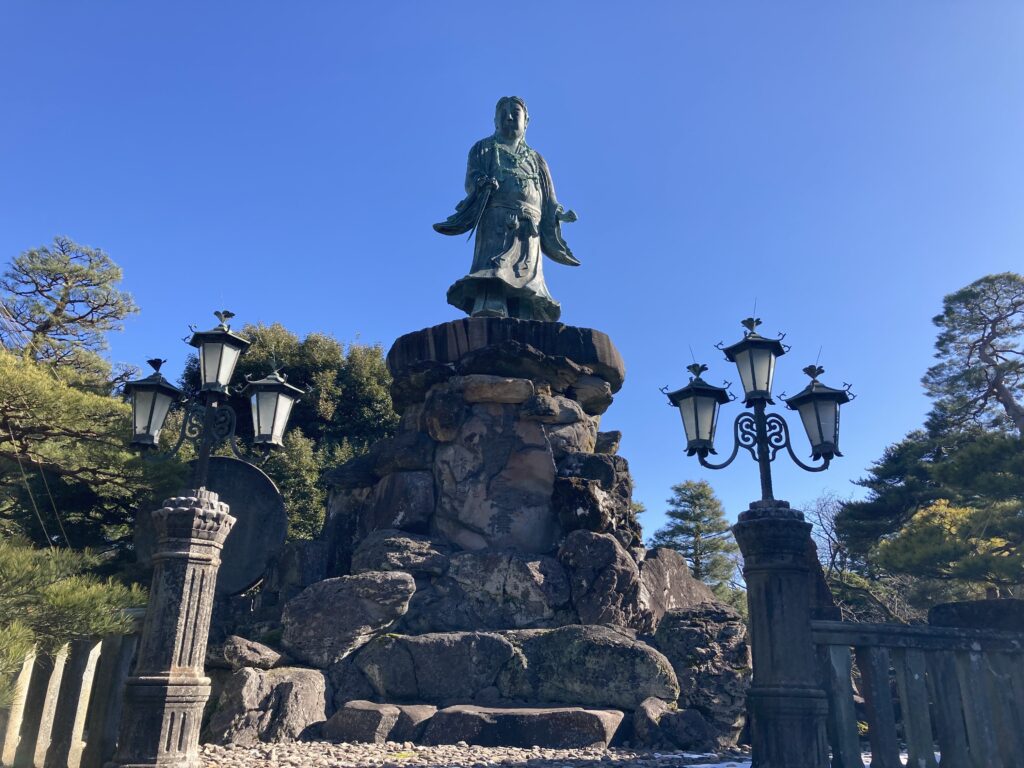
ここでは兼六園内の見どころ・日本武尊像をカバーします。ここもお好みで下記ボタンからも直接アクセスできます。
笑いも取れるかも各トーク
10.1 基本情報(5項目)
このスポットで最低限押えておきたいポイントです。
- Historical Purpose(歴史的目的)
EN: The statue was erected about 150 years ago to honor local soldiers from Ishikawa who died in the Satsuma Rebellion, the largest civil conflict in Japanese history.
JP: この像は約150年前、日本史上最大の内戦である西南戦争で亡くなった石川県出身の兵士を慰霊するために建てられました。 - Hero Depicted(モデルとなった英雄)
EN: It portrays Yamato Takeru, a legendary hero from ancient Japanese mythology who symbolizes bravery and national origins.
JP: 古代日本の神話に登場し、勇気と国家の起源を象徴する英雄・日本武尊(ヤマトタケル)がモデルになっています。 - Stone Base Design(台座の構造)
EN: The stone base uses snake-, frog-, and slug‑shaped stones arranged in a “three‑way standoff,” a traditional motif said to keep the structure stable because none can overpower the others.
JP: 台座にはヘビ・カエル・ナメクジに似た石が使われ、互いに動けず崩れないとされる“三すくみ”の配置が施されています。 - Arsenic & Ig Nobel Prize(ヒ素とイグノーベル賞)
EN: Later research revealed that the bronze contains arsenic, leading to an Ig Nobel Prize for the discovery that “birds won’t land on the statue.”
JP: 後の研究で銅像にヒ素が含まれていることが判明し、「鳥が止まらない銅像の科学的研究」としてイグノーベル賞を受賞しました。 - Postwar Survival(戦後の存続)
EN: After World War II, the occupying forces ordered its removal as a militaristic symbol, but strong local opposition succeeded in preserving it.
JP: 戦後、進駐軍から「軍国主義的」として撤去命令が出ましたが、地元の強い働きかけによって残されました。
10.2 口頭説明(5項目)
基本情報をベースにしたゲストと歩きながら使える口頭説明例です。
- Why it was built(建てられた理由)
EN: This statue was made to honor local soldiers who died in the Satsuma Rebellion about 150 years ago.
JP: この像は、約150年前の西南戦争で亡くなった地元の兵士を慰霊するために作られました。 - Who he is(誰の像か)
EN: It shows Yamato Takeru, a famous hero from ancient Japanese myths.
JP: 古代日本の神話に登場する有名な英雄、日本武尊の像です。 - The special stone base(台座の特徴)
EN: The base uses stones shaped like a snake, a frog, and a slug—placed so none can move or beat the others, keeping it stable.
JP: 台座にはヘビ・カエル・ナメクジの形の石が使われ、互いに動けず崩れない“三すくみ”の配置になっています。 - Birds won’t land on it(鳥が止まらない理由)
EN: Researchers later found arsenic in the bronze, and the study won an Ig Nobel Prize because birds won’t land on the statue.
JP: 後の研究で銅像にヒ素が含まれていることが分かり、鳥が止まらない理由の研究としてイグノーベル賞を受賞しました。 - Why it still stands today(今も残っている理由)
EN: After World War II, the occupying forces tried to remove it, but local people protected it and it stayed.
JP: 戦後、進駐軍が撤去しようとしましたが、地元の人々が守り、残されました。
10.3 インバウンドの視点(Q&A)
何も知らないインバウンドが像を見て素朴に思う想定疑問とその回答例です。特に➁はよく聞かれますが、固有名詞より、どのような人なのかが重要ですので、この例に拘らず、この章やネット情報を参考にご自分なりに即答しやすいセリフを用意しておくことをお勧めします。
-
-
- ① なんでこんなに大きい像なんですか?
- Why is this statue so big?
- 日本語回答 この像は、亡くなった兵士たちをたたえるために建てられた記念碑なので、強い存在感を持たせるために大きく作られています。
- English Answer It was built as a memorial to honor fallen soldiers, so the large size was chosen to give it a strong and dignified presence.
- ① なんでこんなに大きい像なんですか?
-
-
-
- ② これ、誰のつもりなんでしょうか?(意図している人物は誰?)
- Who is this person supposed to be?
- 日本語回答 日本武尊(ヤマトタケル)という、古代の神話に登場する日本の英雄です。
- English Answer He is Yamato Takeru, a legendary hero from ancient Japanese mythology.
- 👆補足:質問は“Who is this person?”が自然ですが、ここではユーモラスに「これ、誰のつもりなんでしょうね?」と少しひねってみました。
- ② これ、誰のつもりなんでしょうか?(意図している人物は誰?)
-
-
-
- ③ どうしてここに立っているんですか?
- Why is this statue placed here?
- 日本語回答 ここは兼六園の中心で、明治時代にこの場所が慰霊の場として選ばれたためです。
- English Answer This spot is the center of Kenrokuen, and it was chosen in the Meiji era as a place to honor the fallen soldiers.
- ③ どうしてここに立っているんですか?
-
-
-
- ④ 手に持っているのは剣ですか?
- Is that a sword he’s holding?
- 日本語回答 はい、剣です。伝説によると、日本武尊が危機を切り抜けた「草薙の剣」と呼ばれる名剣を表しています。
- English Answer Yes, it is a sword. It represents the legendary “Kusanagi Sword,” which Yamato Takeru is said to have used to escape danger.
- 👆補足:“Kusanagi Sword” では通じない場合もありますので”mowing sword,”とコメントするのも一策です。
- ④ 手に持っているのは剣ですか?
-
-
-
- ⑤ 台座の石って何か意味があるんですか?
- Do the stones under the statue mean something?
- 日本語回答 ヘビ・カエル・ナメクジに見える石が組み合わされていて、互いに動けず崩れないという縁起の良い伝承があります。
- English Answer The stones resemble a snake, a frog, and a slug. According to local legend, they balance each other so none can move, symbolizing stability and good fortune.
- ⑤ 台座の石って何か意味があるんですか?
-
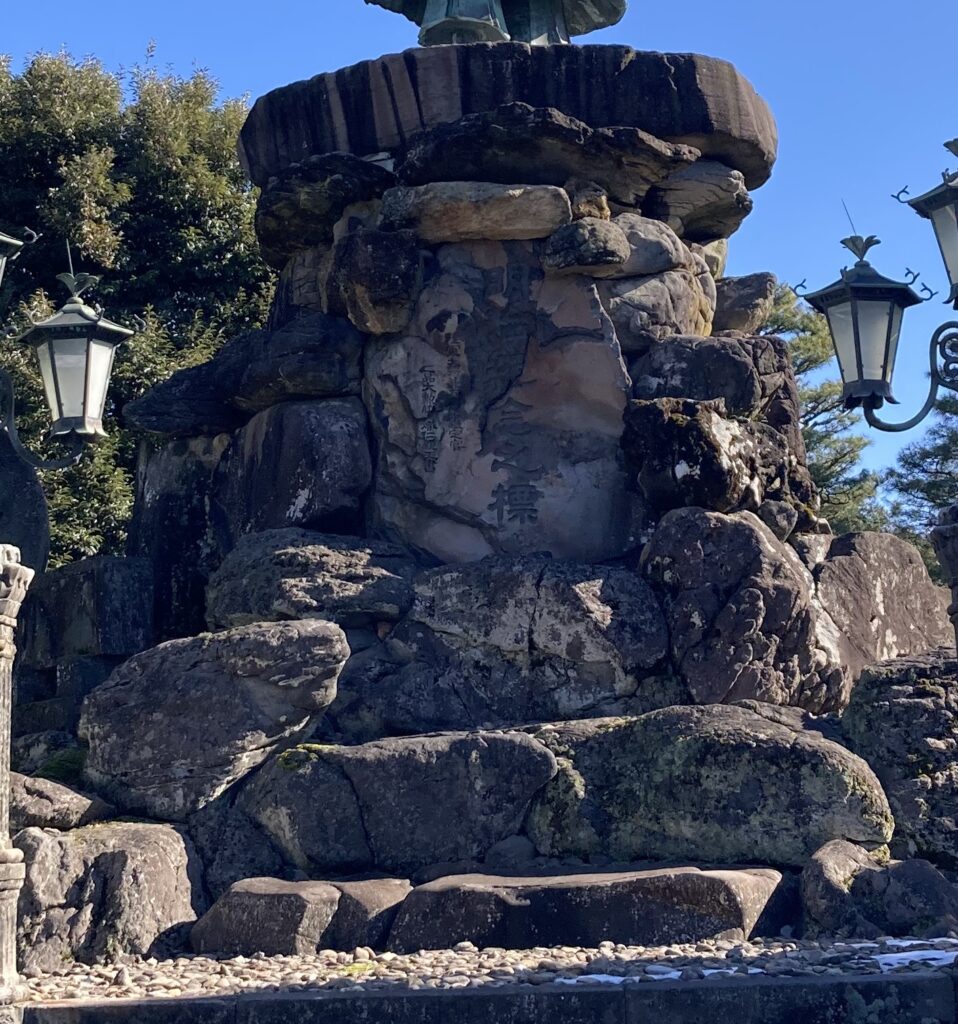
10.4 笑いが取れるかも?
このパートでは、日本武尊像を見上げながらよく聞かれる質問に対する説明例をご紹介しています。前半部は説明にも使える真面目パート、後半部は雑談力UPの為のおふざけパートの2部構成になっています。
Q1:この像はいったい誰ですか。
”Who is this statue?”
とてもよく聞かれる質問ですが、(歩きながら理解いただけるように)シンプルに説明するのは結構大変なので、その辺りの経験を踏まえてまとめてみました。前半(1-7)が真面目パート、後半(8-10)がおふざけパートです。
- EN: This is a legendary hero from mythology who is said to have subdued the whole of Japan about two thousand years ago.
JP: これは約二千年前に日本全土を平定したとされる、神話に登場する伝説的な英雄です。 - EN: It’s easier to understand if you think of him as the Japanese equivalent of Hercules, or similar to the heroic figures found in King Arthur legends around the world.
JP: 日本版ヘラクレス、あるいは世界各地にあるアーサー王伝説の英雄のような存在だと考えると分かりやすいでしょう。 - EN: He appears in Japan’s oldest historical texts and is even sometimes described as an ancestor of the current Emperor.
JP: 日本最古の歴史書にも登場し、現在の天皇の祖先として語られることさえあります。 - EN: His name is Yamato Takeru. It’s a long name, but it is made up of three parts, each with its own meaning.
JP: 名前は日本武尊(ヤマトタケル)です。長いですが、三つの意味から成り立っています。 - EN: “Yamato” refers to ancient Japan, “Takeru” means a brave warrior, and “Mikoto” is an honorific title meaning “one who is revered.”
JP: 「ヤマト」は古代日本を指し、「タケル」は勇敢な戦士を意味し、「ミコト」は「尊ばれる方」を表す敬称です。 - EN: This statue was erected to commemorate roughly four hundred local soldiers who lost their lives in a major civil war during the early years of modern Japan.
JP: この像は、近代日本の初期に起きた大規模な内戦で亡くなった、約四百名の地元兵士を慰霊するために建てられました。 - EN: Since he himself was a hero who died in battle—one who “gave his life” to “bring peace” in ancient times—he may have been considered the ideal figure to honor their memory.
JP: 彼自身、戦いの中で命を落とした英雄であり、古代に「命を犠牲にして」「平和をもたらした」人物だったため、慰霊の象徴として最適だったのかもしれません。 - EN: But to be honest, I always felt a strange hesitation about explaining this statue, for reasons I couldn’t quite identify.
JP: でも正直なところ、この像については昔からどこか説明しづらい気持ちがあり、その理由が自分でもよく分かりませんでした。 - EN: When guests asked, “Who is this?”, I only gave the opening explanation. Recently, I finally realized why I had been avoiding the rest.
JP: 「これは誰?」とよく聞かれるので冒頭だけ説明していたのですが、最近ようやく、なぜ残りを避けていたのか気づいたのです。 - EN: It was because I couldn’t use my favorite joke here.
Joking about the Emperor’s ancestors? Now that would be brave!
JP: ここでは私の好きなジョークが使えないんです。
天皇のご先祖をネタにするなんて、さすがに“勇者”すぎますからね。
11. Appendix / あわせて読みたい記事&旅の備え
🧭 あわせて読みたい!笑える通訳ガイド解説術シリーズ
💡 兼六園ガイドの後に特におすすめの3選:
- 🏯 金沢城を英語案内・笑いも取れる解説(兼六園の隣!前田家の居城へ)
- 🏮 成巽閣を英語案内・笑いも取れる解説(兼六園に隣接する奥様方のための優美な御殿)
- 🍵 茶道を英語で案内|笑いも取れる解説術(兼六園内の茶室・文化解説をさらに深く)
📋 エリア・テーマ別 全リスト:
- 兼六園を英語案内・笑いも取れる解説
- 金沢城を英語案内・笑いも取れる解説
- 成巽閣を英語案内・笑いも取れる解説
- ひがし茶屋街を英語案内・笑いも取れる解説
- 野村家を英語案内・笑いも取れる解説
- 鈴木大拙館を英語案内・笑いも取れる解説
- 茶道を英語で案内|笑いも取れる解説術
- お寺を英語で案内|笑いも取れる解説術
- 神社を英語で案内|笑いも取れる解説術
- 日本の城を英語案内・笑いも取れる解説
- 九谷焼を英語案内・笑いも取れる解説
- 山中漆器で笑いも取れる解説術
- 白川郷を英語案内・笑いも取れる解説
- 五箇山を英語案内・笑いも取れる解説
- 松本城を英語案内・笑いも取れる解説
- 高山陣屋を英語案内・笑いも取れる解説
- 二条城を英語案内・笑いも取れる解説
- 日本の地震を英語で・笑いも少しだけ?解説
🛡️ 広い庭園の飛び石や坂道も安心して散策するために
兼六園をはじめとする日本庭園や歴史的スポットは見どころが多い反面、美しい景観に気を取られ、段差や石畳で足元をすくわれるなど、思わぬ事故のリスクも隣り合わせです。海外ゲストが日本全国の歴史探訪を安心して楽しめるよう、急なケガや体調不良をカバーする旅行保険の準備を事前にお勧めしておくと安心です。
12. 公式HPのご紹介
本ブログではインバウンドと混雑した雑踏の中を歩きながら、極力思考力を相手に求めない簡単な表現を心掛けておりますので、詳細情報や高度な描写をご要望の場合は下記の公式サイトで直接ご参照下さいませ。(いずれもトップメニューの言語でEnglish版に設定できます。)
兼六園|観光・体験|【公式】金沢の観光・旅行情報サイト|金沢旅物語 (kanazawa-kankoukyoukai.or.jp)
13. 御礼&後書き

👆 今回も最後までお読みいただき、ありがとうございます。 本ブログに関するご意見やご要望がございましたら、下記より、お気軽にお声がけくださいね。