本ブログは観光業、企業接待、留学生対応等で英語案内が必要ながら、多忙で準備に時間をかけられない方々の為にすぐに使える情報を分かりやすく解説しています。
今回は、一緒に電車で移動中の重要顧客(訪日外国人)から『茶道体験をしたい』とリクエストされた際の『茶道』に関する英語表現をご紹介します。
👉️ここでは、茶道体験をする前の茶道に関する一般的知識を深めて頂くことを目的としていますので、具体的な各作法に関してご興味ある方は《茶道作法の英語説明|通訳ガイドも使う簡単例文【どうする日本文化体験シリーズ】》を読むへ。
0. 本ブログの基本構成
- 基本用語のご説明
- 《茶道》全体のご説明
- 基本情報(👉押さえておきたいポイント)
- 口頭簡単説明(👉カフェでの待ち時間でもできる簡単表現)
- Q&A #インバウンド視点(👉よく聞かれる質問への即答例)
- 笑いが取れるかも?(👉真面目な説明と雑談ネタ)
1. 押さえておきたい基本用語
ここでは、お相手のレベルに合わせられるように、頻出用語を3段階に分けてご紹介します。
1.1 日常会話・一般観光客向け (Casual & Descriptive)
まずはイメージが湧きやすい英語を添えて、難しそうな茶道へのハードルを下げます。
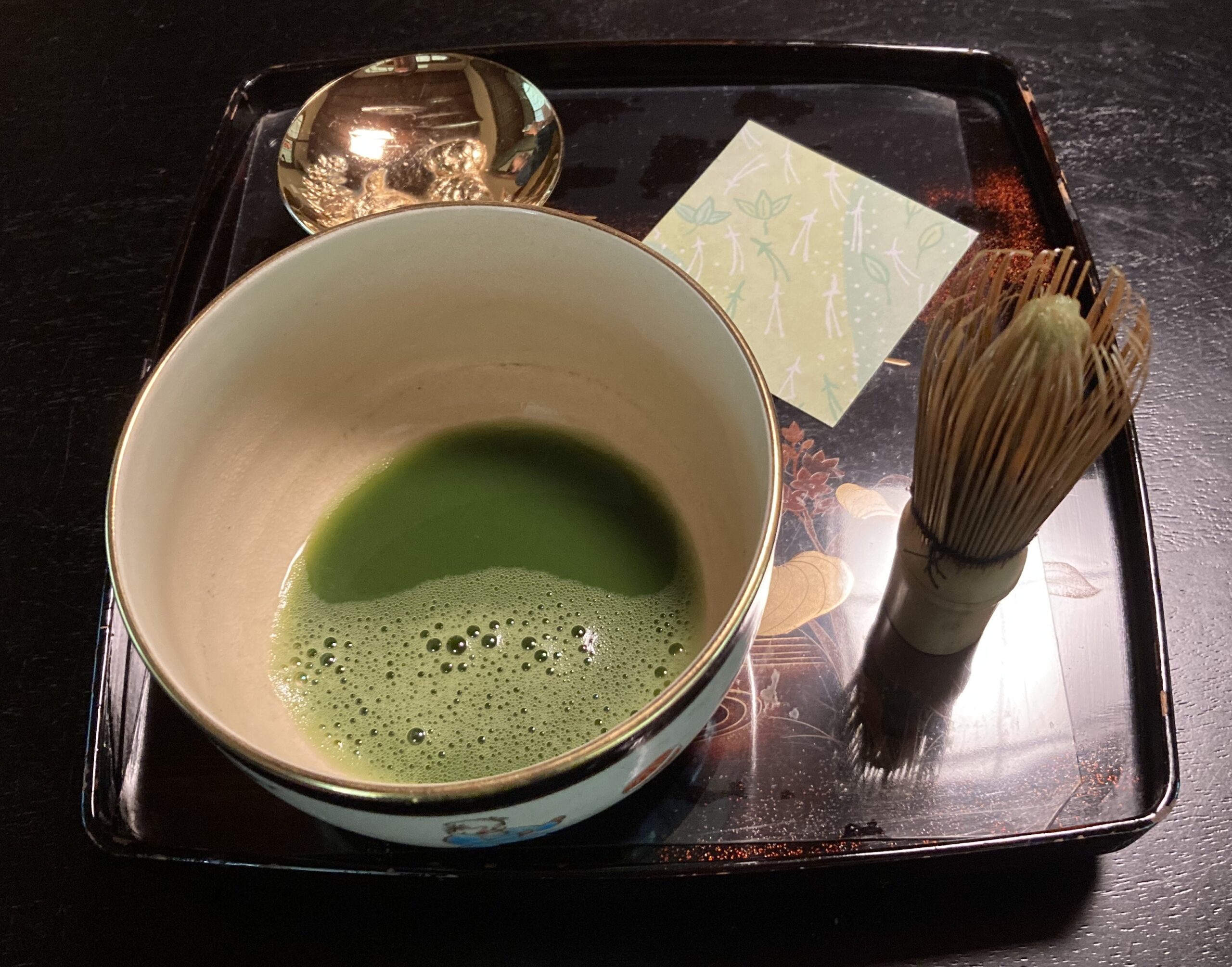
- 抹茶 (Matcha): 石臼で挽いた細かい粉末状の緑茶。 (Finely powdered green tea.)
- 茶碗 (Tea bowl): 抹茶を飲むための陶磁器の器。 (A ceramic bowl for Matcha.)
- お菓子 (Japanese sweets): 抹茶の苦味とのバランスを楽しむ伝統的な甘味。 (Traditional treats to balance the bitterness.)
- 泡 (Froth/Foam): お茶の表面に浮かぶクリーミーな泡。 (The creamy bubbles on top of the tea.)
- 苦味 (Bitterness): 抹茶特有のキレのある深い味わい。 (The distinctive sharp taste of Matcha.)
- お辞儀 (Bow): 相手への敬意を表す所作。 (A gesture of showing respect.)
- 正座 (Sitting on the floor): 日本の伝統的な、床に膝をつく座り方。 (The traditional way of sitting on the floor.)
- 着物 (Kimono): 茶道の席でよく着用される日本の伝統衣装。 (Traditional Japanese attire often worn for tea.)
- 茶室 (Tea room): 茶道を行うために設計された特別な空間。 (A dedicated space for the ceremony.)
- おもてなし (Hospitality): ゲストを心から歓迎する精神。 (The spirit of welcoming guests.)
1.2 茶道愛好者・文化ファン向け (Knowledgeable & Cultural)
日本文化に詳しく、背景ストーリーを知りたいインバウンドに刺さる用語です。
- 薄茶 (Usucha): 「うす茶」。一般的に知られている、泡立った軽やかな抹茶。 (“Thin tea” — the frothy, lighter Matcha most people know.)
- 濃茶 (Koicha): 「こい茶」。正式な席で供される、とろりと濃厚な抹茶。 (“Thick tea” — a deep, paste-like Matcha used in formal settings.)
- 茶筅 (Chasen): 竹製の泡立て器。お茶を点てるための象徴的な道具。 (Bamboo whisk — the iconic tool to froth the tea.)
- 茶杓 (Chashaku): 竹製のスプーン。抹茶をすくう道具で、名工の作も多い。 (Bamboo tea scoop — often hand-carved by masters.)
- 一期一会 (Ichigo-Ichie): 「一生に一度の出会い」。すべての瞬間を宝物とする精神。 (“Treasure every encounter, for it will never recur.”)
- わびさび (Wabi-Sabi): 不完全さや簡素さの中に美しさを見出す日本独自の美意識。 (Finding beauty in imperfection and simplicity.)
- 掛け軸 (Kakejiku): 床の間に飾る書画。その日の茶会のテーマを示す。 (Hanging scroll — it sets the theme of the day.)
- にじり口 (Nijiriguchi): 茶室特有の小さな入り口。謙虚さを象徴する。 (The small, crawl-in entrance to a tea room.)
- 茶花 (Chabana): 茶室に飾られる、季節感を大切にしたシンプルな花。 (Simple, seasonal flowers arranged for the tea room.)
- 釜 (Kama): お湯を沸かすための鉄製の釜。 (The iron kettle used to boil water.)
1.3 茶道実践者・体験ワークショップ向け (Instructional & Technical)
実際に点てる、あるいは本格的な作法を学びたい意欲的なお相手に響く専門的な言葉です。
- 点てる (Tateru): 茶筅でお茶を泡立て、準備する動作。 (The act of whisking/preparing the tea — not just “making.”)
- お自服 (Ojifuku): 自分自身のために、楽しみとしてお茶を点てること。 (Making a bowl of tea for oneself to enjoy.)
- 茶巾 (Chakin): 茶碗を拭くための白い麻の布。 (The white hemp cloth used to wipe the tea bowl.)
- 棗 (Natsume): 薄茶用の抹茶を入れておく、漆塗りの容器。 (A lacquered caddy for powdered thin tea.)
- 帛紗 (Fukusa): 道具を清めるために使われる絹の布。 (The silk cloth used to ritually purify the tools.)
- 蹲 (Tsukubai): 茶室に入る前に手や口を清めるための石造りの手水鉢。 (The stone washbasin for purifying hands/mouth before entering.)
- 正客 (Shokyaku): その茶会における主客(もっとも重要なゲスト)。 (The main guest — the VIP — of the ceremony.)
- 拝見 (Haiken): お茶を飲んだ後、使われた道具を鑑賞する儀式。 (The ritual of appreciating the tools after drinking.)
- お相伴 (Oshouban): 他のゲストと一緒に同席してお茶をいただくこと。 (Joining in the tea — often said by the second guest.)
- お点前 (Otemae): お茶を点てるまでの一連の決まった美しい所作。 (The specific sequence of movements to prepare tea.)
💡 ガイドのワンポイント・アドバイス
インバウンドの方には、❸の用語をあえて日本語のまま教えると「本物を学んでいる」という満足感が高まります。特に “Otemae” (The ritual performance) や “Chasen” (The bamboo whisk) は、現物を見せながら発音してもらうと、非常に喜ばれるキーワードです。
2. 茶道(Sado)全体
2.1 基本情報
詳細をご案内する前に頭に入れておきたい、茶道の基本スタンス10項目です。最初に日本語でコンセプトを掴み、英語でご自分好みのフレーズを選んで活用できるように構成されています。
《日本語》
- 抹茶と茶道の違い: 抹茶を「飲むこと」と、茶道を「体験すること」は別物。抹茶は飲料だが、茶道はその一杯を楽しむための「所作」と「哲学」の体系である。
- 茶道の究極の目的: 目的は単に喉を潤すことではなく、ホストとゲストが心を通わせ、互いに敬い合う「心の調和」を創り出すことである。
- 「一期一会」という考え方: 「この出会いは二度と繰り返されない」という考え方が根底にある。一瞬一瞬を、一生に一度の宝物として大切にする精神。
- 茶道の歴史的背景: 12世紀に「薬」として伝わった抹茶は、16世紀、千利休によって「芸術」と「精神修養」の域にまで高められた。
- なぜ現代に根付いているか: かつて侍が戦いの前に心を整えたように、現代でも、忙しい日常から離れて「自分を取り戻す時間」として必要とされている。
- 現代人の楽しみ方: 現代では本格的な茶室だけでなく、テーブルで行うスタイルや、マインドフルネスの一環としてカジュアルに楽しまれている。
- 茶室という特別な空間: 茶室は世俗から切り離された聖域。入り口(にじり口)が小さいのは、誰もが頭を下げて「謙虚な心」で入るためである。
- 茶道のレベル: 茶道には、味を楽しむ段階、ゲストとして作法を磨く段階、そして一生をかけてホストを目指す道など、多様な関わり方がある。
- 五感で楽しむ総合芸術: 単なる飲食ではなく、器、掛け軸、花、お湯の音、香りを同時に楽しむ「五感の芸術」である。
- 「型」が自由を創る: 厳しい作法(型)があるのは、それを身につけることで無駄を削ぎ落とし、究極の「もてなしの自由」に到達するためである。
《English》
- Matcha vs. Sado: Drinking Matcha is not the same as experiencing Sado. While Matcha is the beverage, Sado is a system of etiquette and philosophy.
- The Goal of Sado: The goal is not just to quench thirst, but to create “spiritual harmony” where the host and guest connect through mutual respect.
- The Spirit of “Ichigo-Ichie”: This underlying belief means “once-in-a-lifetime encounter.” It is the spirit of cherishing every moment as a unique treasure.
- Historical Background: Introduced as “medicine” in the 12th century, Matcha was elevated to an “art” and “spiritual discipline” by Sen no Rikyu in the 16th century.
- Relevance Today: Just as Samurai used it to calm their minds before battle, modern people use it to disconnect from a busy life and rediscover themselves.
- Modern Styles: Today, it is enjoyed not only in traditional tea rooms but also in modern table styles or as a form of mindfulness.
- The Sanctuary of the Tea Room: The tea room is a sacred space. The small entrance (Nijiriguchi) forces everyone to bow and enter with a “humble heart.”
- Levels of Engagement: There are many ways to engage: from enjoying the taste, to mastering the role of a guest, to pursuing a lifelong path as a host.
- Total Art for the Five Senses: It is a comprehensive art involving the appreciation of the bowl, scroll, flowers, sound of water, and aroma.
- Freedom through Form: Strict rules exist to eliminate unnecessary movements, ultimately leading to the “freedom of true hospitality.”
2.2 口頭説明
ここではゲストに直接語りかけるトーンで、上記基本情報の10項目を簡略文に置き換えています。内容は基本情報と同じなので英日セットです。
- “Sado is more than just drinking tea; it is a spiritual ceremony and a way of life.” (茶道は単にお茶を飲むだけでなく、精神的な儀式であり、一つの生き方でもあります。)
- “The ultimate goal is to connect with others and find peace in a single cup of tea.” (最終的な目的は、他者と繋がり、一杯のお茶の中に安らぎを見出すことです。)
- “We call it ‘Ichigo-Ichie,’ which means we cherish this exact moment as it will never happen again.” (これを「一期一会」と呼びます。この瞬間は二度とないので、今を大切にするという意味です。)
- “Matcha was used as medicine 800 years ago, but it evolved into a high art for Samurai.” (抹茶は800年前は薬でしたが、のちに侍たちのための高度な芸術へと進化しました。)
- “Modern Japanese people use the tea room as a place to ‘reset’ their busy lives.” (現代の日本人は、忙しい日常をリセットする場所として茶室を利用しています。)
- “You can enjoy it formally in a tea room or casually at a modern tea table.” (本格的な茶室で楽しむことも、モダンなテーブル席でカジュアルに楽しむこともできます。)
- “The entrance is small to remind us that everyone is equal once they enter the tea room.” (入り口が小さいのは、茶室に入れば誰もが平等であることを思い出させてくれるためです。)
- “Some people enjoy it just for the taste, while others spend their whole lives training to be a master.” (味だけを楽しむ人もいれば、一生をかけて「師範」を目指して修行する人もいます。)
- “Please enjoy the art on the wall, the flowers, and even the sound of the boiling water.” (壁の掛け軸や花、そしてお湯の沸く音までも、アートとして楽しんでください。)
- “Don’t worry about the rules. The most important thing is to enjoy the hospitality with an open heart.” (作法は気にしないでください。最も大切なのは、オープンな心でおもてなしを楽しむことです。)
2.3 QA #インバウンド視点(茶道編)
《日本語》
Q1: 茶道と抹茶、何が違うの? A: 抹茶は「粉末のお茶(飲み物)」そのもので、茶道は「そのお茶を点てて、客をもてなす儀式や精神」のことです。
Q2: ずっと正座をしていないといけないの? A: 本格的な場所ではそうですが、最近は椅子に座るスタイル(立礼)も多いです。しびれた時は少し足を崩しても失礼にはなりません。
Q3: 茶道の何が楽しいの? A: 友人とコーヒーを飲む楽しさと思ってください。ただ、よりマインドフルネスと芸術にフォーカスしている点が違います。
Q4: 日本人は皆茶道をするの? A: 日本人にとっても難しいイメージがあり、全ての人がするわけではありません。
Q5: 茶道と柔道は関係ある? A: 柔道と同じ「道(Do)」なんです。お茶だけでなく、一生かけて心を磨く修行のようなものですね。
Q6: 作法を間違えたら怒られる? A: 全くそんなことはありません。最も大切なのは「お茶を楽しもうとする心」です。ホストが優しくリードしてくれます。
Q7: 茶室の入り口がとても小さいのはなぜ? A: 「にじり口」と呼ばれます。どんなに偉い人も頭を下げて入ることで、茶室の中では全員が平等であることを示しています。
Q8: 茶室は茶道だけに使われるの? A: はい。ゲストへ最高のおもてなしをするために数百年かけて仕上げられた茶道の為の特別な空間です。
Q9: 茶道では抹茶しか飲まないの? A: 基本的には抹茶とお茶菓子の構成ですが、抹茶には薄茶と濃茶の2種類が楽しめます。
Q10: 自分で家でもできるの? A: もちろんです!茶筅(竹の泡立て器)とボウル、抹茶があれば、いつでもどこでも自分だけのマインドフルネスな時間を楽しめます。
《English》
Q1: What is the difference between Matcha and Sado? A: Matcha is the “powdered green tea” (the drink) itself, while Sado is the “ritual and philosophy” of preparing and serving it to guests.
Q2: Do I have to sit on my heels (Seiza) the whole time? A: Not necessarily. Many places offer chairs (Ryurei style) nowadays. If your legs fall asleep, it’s okay to adjust your position slightly.
Q3: What’s enjoyable about tea ceremony? A: Think of it as enjoying a coffee with a friend, but with more focus on mindfulness and art.
Q4: Do all Japanese people practice tea ceremony? A: It has difficult impression even for Japanese people, and not everyone does it.
Q5: Is there a connection between tea ceremony and judo? A: Like Judo, it’s a “Way”(Do). It’s not just about the tea; it’s a lifelong training to improve your heart.
Q6: Will the host get angry if I make a mistake with the etiquette? A: Not at all! The most important thing is your spirit of enjoyment. The host will gently guide you through the process.
Q7: Why is the entrance to the tea room so small? A: It’s called “Nijiriguchi.” It forces everyone to bow as they enter, symbolizing that everyone is equal inside the tea room regardless of their status.
Q8: Is a tea room only used for tea ceremonies? A: Yes. It is a special space dedicated to the tea ceremony, refined over centuries to offer the utmost hospitality to guests.
Q9: Do people only drink matcha in the tea ceremony? A: While the basic setup is matcha and sweets, matcha itself comes in two varieties: thin tea and thick tea.
Q10: Can I do this at home by myself? A: Definitely! With a bamboo whisk (Chasen), a bowl, and Matcha powder, you can enjoy your own mindful tea moment anywhere in the world.
2.4 笑いが取れるかも?
ここからは抹茶を一緒に飲みながら茶道について自然に湧き上がるお相手の疑問や好奇心を想定した説明例です。実際にこのような長い説明をすることはありませんし、その必要もありませんが、実際に使える表現を意図的に散りばめていますので、気に入ったフレーズがあれば現場でも試してみる、そんな感じで気楽に読んでいただければと思います。👉基本的に各Qの前半部は説明表現をベースとする真面目パート、後半部は雑談力upを意図したおふざけパートの2部構成になっています。
Q1. 茶道とは一体何でしょうか?
”What exactly is the meaning of the tea ceremony?
👆欧米系のゲストからよく出る話題のひとつですが、前半1-5を説明パート、後半6-10をおふざけパートで纏めました。
- Literally translated as “The Way of Tea,” it is the ‘Way’ of tea. 文字どおり「茶の湯の道」と書きますが、ここでいう「道」とは単なる“やり方”ではなく、心を磨き続ける一生の“旅”のようなものです。
- It signifies not merely a ‘method,’ but a lifelong ‘journey’ of continuous growth and refinement of the spirit. それは単なる「方法」ではなく、精神を磨き続ける一生の「旅」を意味しています。
- It is not merely about drinking. 茶道は、ただお茶を飲むだけではありません。
- It is a ‘total art form’ that integrates architecture, gardens, ceramics, and calligraphy. 建築、庭、陶芸、書など、さまざまな芸術が一体となった“総合芸術”です。
- In other words, drinking tea in a tea room is a wonderful experience where you can appreciate art with all five senses and your entire body. つまり、茶室でお茶をいただくということは、五感と全身で芸術を味わう、特別な体験なのです。
- That said, the etiquette is difficult for beginners, and at first, there’s no room for artistic appreciation. とはいえ、最初は作法が難しく、芸術を楽しむ余裕なんてありません。
- But hosts already know well but beginners dilemma, and accept guests accordingly. でも、亭主は初心者が緊張していることをよく理解していて、その気持ちごと受け止めてくれます。
- So you can be reassured, appreciating everything artistic around your. だからこそ、どうぞ安心をして、周りの美しさをゆっくり味わってください。
- But don’t forget to exclude one exceptional thing. ただし、一つだけ例外としてリストから外しておくべきものがあります。
- Not artistic one, sitting next to you. Your guide, me! あなたの隣に座っている、芸術とは程遠い存在――そう、ガイドの私です。
Q2. 茶道の作法には、いったいどんな意味があるの?
”What is the purpose of tea ceremony etiquette?
👆日本人でも偶に抱く疑問ですが、海外のゲストも素朴にそう感じられるようです。ご存じの通り作法の意味はたくさんありますが、最も無難な説明を1-5まで、6~10は現代のトレンドも含ましたので洒落のわかりそうなお相手の雑談用に。
- Modern businesspeople, who value rational efficiency, often wonder, “Why are there so many detailed rules?” 現代の合理性を重んじるビジネスパーソンの中には、「どうしてこんなに細かい決まりが多いのか」と疑問に思う人もいます。
- In fact, tea ceremony etiquette is an optimized design for delivering the ultimate cup safely and efficiently. It is the beauty of efficiency refined over centuries, with every unnecessary movement removed. 実は、茶道の作法とは、“究極の一服”を安全かつ効率的に届けるために最適化されたデザインなのです。無駄を徹底的にそぎ落とし、何百年もかけて磨き上げられた“効率美”とも言えます。
- Historically, serving tea in front of guests was also a way to demonstrate, “I am clean, trustworthy, and not trying to poison you.” そもそも客の前でお茶を点てる行為は、「私は清潔で、毒など盛っていませんよ」という安全性の証明でもありました。
- More importantly, etiquette is not meant to restrict participants. It is a form of nonverbal communication that helps everyone relax. さらに、作法は参加者を縛るためのものではありません。むしろ、皆が安心して過ごせるようにする“非言語のコミュニケーション”です。
- A shared format allows hosts to focus on hospitality without hesitation, and guests can predict what comes next, giving them peace of mind. 決まった型があるからこそ、亭主は迷わずもてなしに集中でき、客も次に何が起こるか予測できるため、心からリラックスできるのです。
- In that sense, it is the complete opposite of modern business life. Online communication overwhelms our senses with noise and unpredictability. そう考えると、これは現代のビジネスとは真逆の世界です。オンラインのやり取りは情報が多すぎ、五感を刺激しすぎ、予測不能。
- You never know what will happen next, and you can never fully relax. Perhaps that is why many busy professionals feel drawn to the quiet world of tea etiquette. 次に何が起こるか分からず、気を抜く暇もありません。だからこそ、多忙なビジネスパーソンほど、この静かな作法の世界に惹かれるのかもしれません。
- Interestingly, the tea ceremony’s etiquette was established during the Warring States period, a time when samurai genuinely did not know if they would survive until tomorrow. 興味深いことに、茶道の作法が確立したのは戦国時代。武士たちは本当に「明日、生きているかどうか分からない」日々を過ごしていました。
- Does that mean today feels like a modern Warring States period as well? Maybe that’s why the phrase “It’s tea” has become popular among younger generations. そう考えると、現代も“令和の戦国時代”なのかもしれません。だから若い世代の間で「とりあえず、お茶しよ」が流行っているのでしょう。
- Just remember one thing: no matter the era, etiquette always matters. ただし、一つだけ忘れてはいけないことがあります。どんな時代でも――作法は大事ということです。
御礼🔶後書き
🔶最後までご覧いただき、誠にありがとうございました! 本ブログに関するご意見やご要望がございましたら、メニューの📧Assistance & Services📞よりお気軽にお声がけください。🔶Gold🔶
($6%/S3)