本ブログは観光業、企業接待、留学生対応等で英語案内が必要ながら、多忙で準備に時間をかけられない方々の為にすぐに使える情報を分かりやすく解説しています。今回はビジネスで来日中の重要顧客を商談後、松本城へ、急遽ご案内することになった際の英語表現をご紹介します。
今回はアウェーでのご案内なので、地元でガイド業務に関わられる方々の様な詳細で行き届いた説明は当然できませんが、最低限お伝えすべき特徴をご説明をして、また松本に(家族や友達と)来たいと思っていただけることを目指します。(この様な主旨のブログですので高度で詳細な情報をご希望の場合は公式or専門サイトをご利用下さい。)
1.基本情報
まずは最低限押さえておきたい基本情報をご紹介します。いつも通り日本語で言えないことは英語でも言えませんので日英の順になります。👉英語音声は前半(1-5)は米国女性話者、後半(6-10)は米国男性話者です。
《日本語》
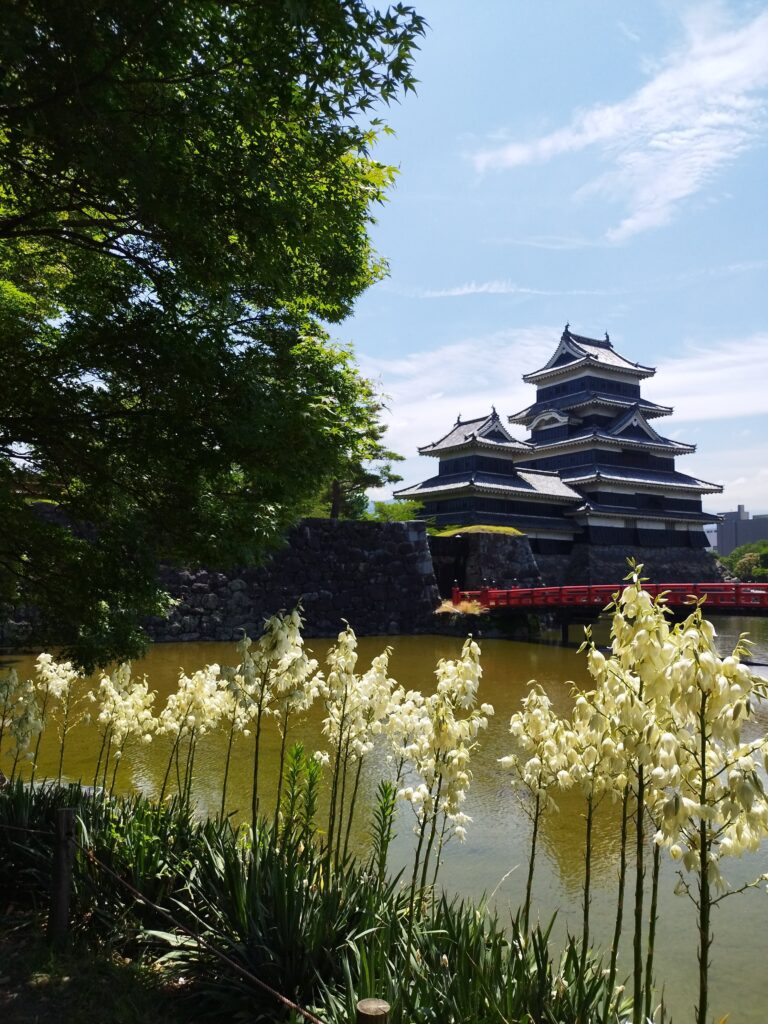
- 日本最古の「現存天守」: 松本城は現存する日本最古の天守閣を誇り、現存する12基の天守のうち五層構造を持つのはわずか2基のみである。
- 複雑な歴史:築城から約3世紀にわたり、この城は六家23人の領主によって統治されてきた。訪問客は城内に展示されている各家の家紋から、この入り組んだ歴史をたどることができる。
- 白と黒の美しさ:城の外観は白と黒のコントラストを特徴としており、非常に美しいデザインとなっている。多くの城が主に白い漆喰を基調としている中、松本城の印象的な美観は一目で他とは一線を画している。
- 戦闘用の防御構造:幸いにも城は実戦で試なかったが、城壁で当時の緊張感が伝わる。矢や銃火器用の開口部のさまと侵入者に石を落とすための開口部(石落とし)が多数設けられている。
- 五階建て六階構造の謎:外から見ると、天守閣は五階建ての構造に見えるが、実際には六階層で構成されている。その違いは「隠し階」にあり、これは包囲戦時の安全な避難場所として戦略的に設計されたものである。
- 急勾配の階段:天守閣内部の階段は驚くほど急で狭い。敵の侵入を遅らせる巧妙な防御策だったと考える者もいるが、実際には当時の標準的な建築様式であった。
- 五つの連結構造が織りなす独特の形状:中央の天守閣を核に、複数の塔が連結塔によって結びつけられ、城の建築構造が進化し完成した形態を体現している。
- 優雅な月見櫓(つきみやぐら):この櫓は防衛とは全く関係なく、月を楽しむためだけに建てられた。戦国時代の激動を生き延び、その後の平穏な時代へと城が存続したことを示す極めて貴重な証拠である。
- 「逆さ松本城」:城を囲む堀が天守閣を美しく映し出し、水面に浮かぶ「逆さ松本城」を生み出す——絶好の撮影スポットである。
- 民の城:武士時代の終焉とともに、多くの城は厄介者と見なされ解体命令が下された。しかし松本城は、市民自身の献身的な努力によって劇的に救われ、保存された。

《英語》
- Japan’s oldest surviving castle tower:Matsumoto Castle boasts Japan’s oldest surviving keep. It is one of only two five-story towers among the twelve that still exist.
- Complex History: Over approximately three centuries since its founding, the castle was ruled by 23 lords representing six different families. Visitors can trace this intricate history by viewing the crests of each ruling family displayed in the castle.
- The Beauty of Black and White: The castle’s exterior features a distinctive black-and-white contrast that makes it an exceptionally beautiful design. While many castles are based primarily on white plaster, Matsumoto Castle’s striking aesthetic immediately sets it apart.
- Defensive Structures Designed for Combat: Fortunately, the castle was never tested in real battles, but its walls still powerfully convey the tense atmosphere of the time. They feature numerous small openings (loopholes) for shooting arrows and firing guns, as well as openings for dropping stones on intruders (stone drop holes).
- The Mystery of Five Stories, Six Floors: From the outside, the keep appears to be a five-story structure, but it actually contains six floors. The difference lies in a ‘hidden floor’, which was strategically designed as a secure refuge during a siege.
- Extremely Steep Stairs: The stairs inside the keep are incredibly steep and narrow. While some believe this was a clever defense mechanism to slow down enemy intruders, it was actually the standard construction practice of the time.
- The unique shape of five connected structures: Centered around the main keep, multiple turrets are linked by connecting turrets, showcasing the evolved, completed form of the castle’s architectural structure.
- The Elegant Moon-Viewing Turret (Tsukimi Yagura): This turret was built solely for enjoying the moon—a purpose entirely unrelated to defense. It is a highly valuable evidence that reveals the castle’s survival through the turbulent Warring States period into the subsequent eras of peace.
- The “Inverted Matsumoto Castle” : The moat surrounding the castle beautifully mirrors the keep, creating the “upside down Matsumoto Castle” reflected on the water’s surface—a prime photo spot.
- The Castle of the People: With the end of the samurai era, many castles were seen as nuisances and ordered to be dismantled. Matsumoto Castle, however, was dramatically saved and preserved through the dedicated efforts of its own citizens.
2.インバウンドの視点!笑いが取れるかも?
ここからは実際に松本城を見ながら、各所を眼の前にして自然に湧き上がるお相手の疑問や好奇心を想定した説明例です。実際にこのような長い説明をすることはありませんし、その必要もありませんが、色々な使える表現を意図的に散りばめていますので、気に入ったフレーズがあれば現場でも試してみる、そんな感じで気楽に読んでいただければと思います。👉基本的に各Qの前半部は説明表現をベースとする真面目パート、後半部は雑談力upを意図したおふざけパートの2部構成になっています。
2.1 お城の全景
入口から入って全景を見た際の想定問答例です。
Q1.:お城の白と黒の外壁は何でできているの?
“What are the castle’s white and black outer walls made of?”
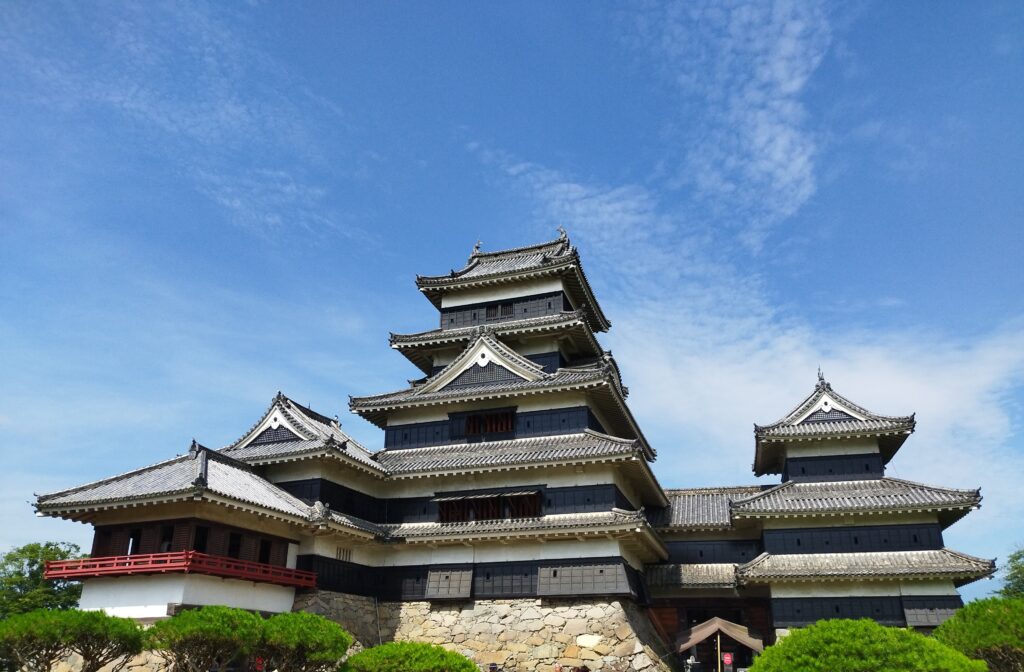
実際によく出る質問を元に纏めてみました。前半(1-5)は説明にも使える真面目パート、後半(6-10)は雑談力upの為のおふざけパートです。👉英語音声は前半(1-5)は真面目調の英国女性話者、後半(6-10)はおふざけ調のインド男性話者です。
《日本語》
- 上段は白い漆喰(しっくい)で、下段は黒く塗られた下見板で覆われています。
- このデザインは、地元の気候、特に雨と湿度に合わせて選ばれました。
- 城の外壁としては白い漆喰が一般的ですが、それを黒い板と組み合わせるのは非常に珍しいことです。
- 漆喰だけでは湿気で崩れやすくなりますが、防腐剤が塗られたこれらの黒い板は、50年も持つとされています。
- そして、城は単なる軍事拠点であるだけでなく、権威と富の象徴でもあったため、防御力と同じくらいその外観も重要でした。
- この印象的な白と黒のデザインは全国の城の中でも際立っており、多くの人々がこの城を「烏城(からすじょう)」と呼びます。
- しかし、これは公式な記録に残っている名称ではありません。実際、一部の役人は、国宝である城に「カラス」というニックネームが定着するのを避けたいと考えているようです。
- 「烏城」のイメージを完全に払拭するには、ニックネームを寄せ付けない案山子の様な仕組みが必要でしょう。
- しかし、城を管理する市役所の職員などの公務員がそれに関わることはできません。
- なぜなら、日本では古くから、かかしは「見かけ倒しで実体のない人間」を象徴しているからです。責任ある公の人達がそう見られたいはずないですもの!
《英語》
- The upper section is made of white plaster, while the lower half is covered with black lacquered boards.
- This unique design was chosen to suit the local climate—especially the heavy rain and humidity.
- Plaster alone tends to crumble in wet conditions, but these black boards, which get their color from a preservative dye, are said to last up to fifty years.
- Since the castle wasn’t just a military stronghold but also a symbol of authority and wealth, its striking appearance mattered just as much as its defenses.
- This dramatic black-and-white design stands out among castles nationwide, leading many people to call it the “Crow Castle.”
- However, this is not an official name found in historical records.
- In fact, some officials would prefer to prevent the “Crow Castle” name from becoming too established for a National Treasure.
- To truly banish the Crow Castle image, we’d need some kind of scarecrow mechanism to keep the nickname at bay.
- But there’s a problem: public officials, like the city hall employees in charge of the castle, can’t get involved in that.
- Because, in Japan, scarecrows have long symbolized people who are “all show and no substance”—the last thing a responsible public servant wants to be seen as!
Glossary:用語集
white plaster ☛白い漆喰/black lacquered boards☛黒漆塗りの板/tend to crumble☛崩れやすい/a preservative dye☛防腐性染料/banish the Crow Castle image☛カラス城のイメージを追い払う/scarecrow mechanism☛案山子の機能/keep ~ at bay☛~を寄せ付けない/all show and no substance☛(慣用句)見せかけだけで中身がない(見かけ倒し、役に立たない)
Q2.この城の何が凄いのですか?
“What’s so great about this castle?”
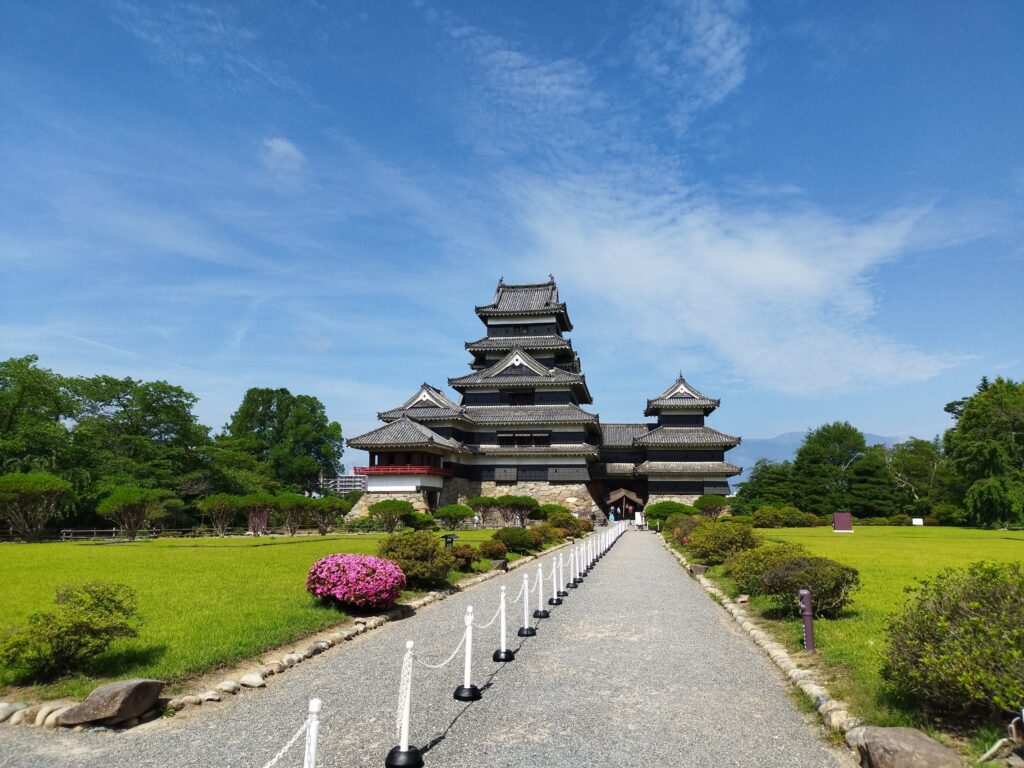
これもよく聞かれる質問ですが、前半(1-5)は説明にも使える真面目パート、後半(6-10)は雑談力upの為のおふざけパートです。👉英語音声は前半(1-5)は真摯調の米国男性話者、後半(6-10)は飛んでる調のオーストラリア女性話者です。
- 松本城が特別である理由はたくさんありますが、最も際立っている特徴は、日本に現存する最古の五重天守であるという点です。
- 世界遺産の姫路城も、外観五重、内部六階という同じ特徴を持っていますが、松本城の方がより古い構造だとされています。
- 構造上、このような背の高い城郭には、自然と余分な階、つまり隠された中二階が生まれます。
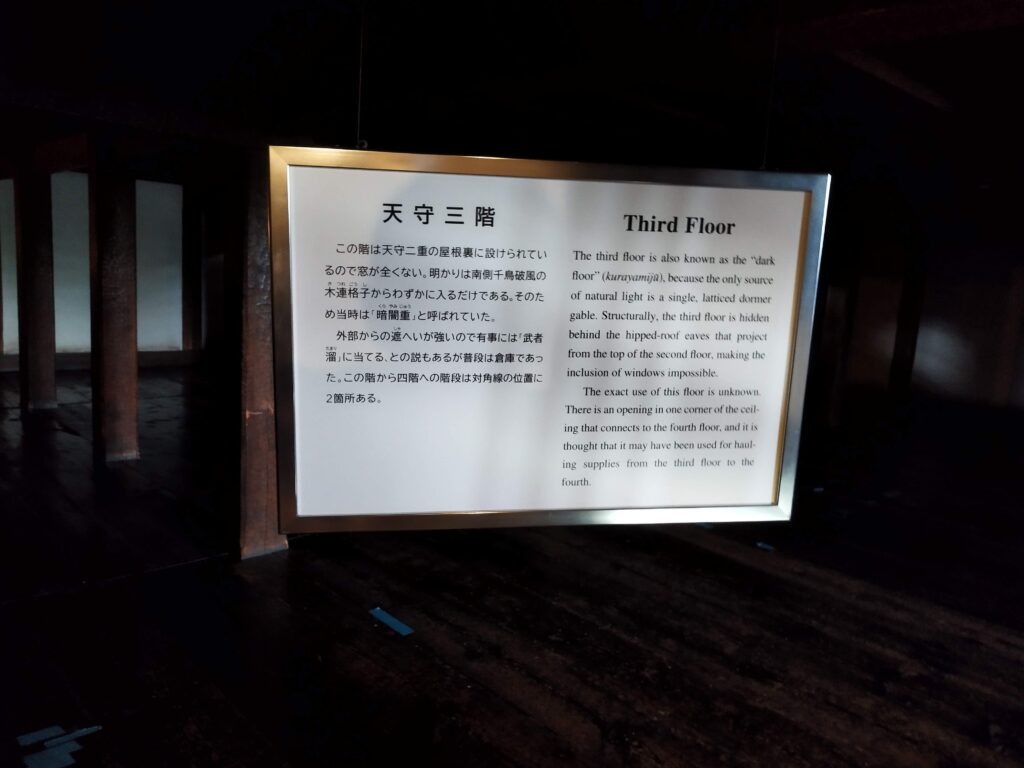
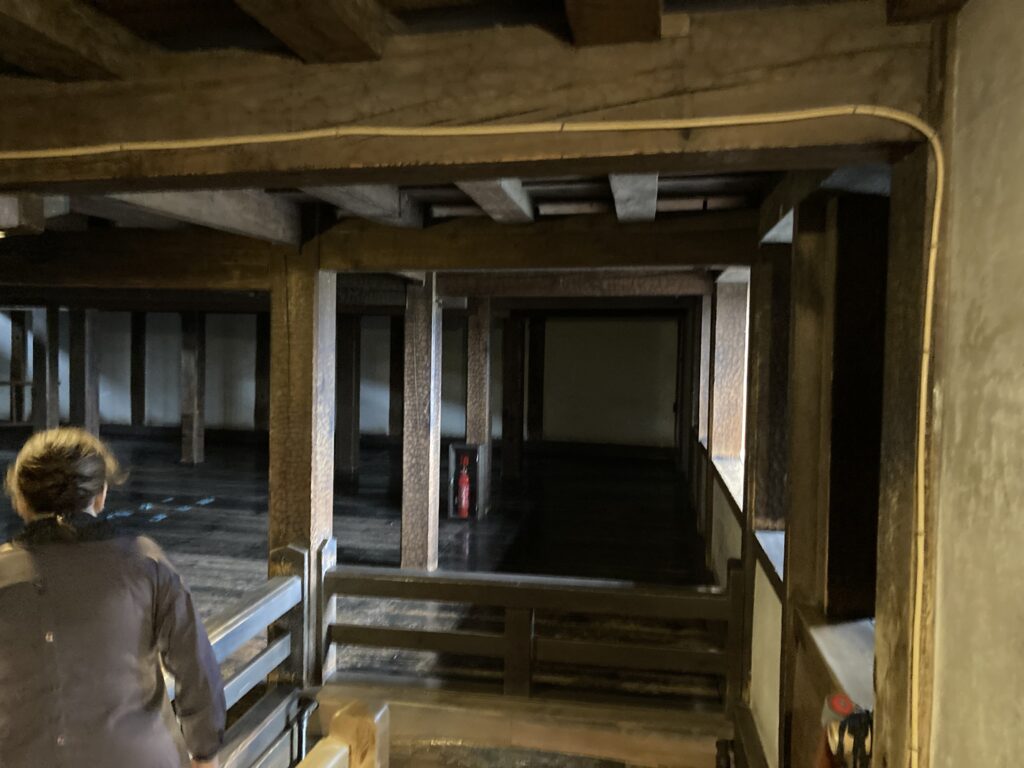
- 松本城の場合、この空間は中間の三階部分に現れ、倉庫や緊急時の避難所として使われることが意図されていました。
- このユニークな構造を考えれば、案内側は外国人観光客にもっと積極的にこの点をアピールすべきだと考える人もいるかもしれません。
- しかし実際には、天守の階段を上る誰もがその三階を通り過ぎるにもかかわらず、存在に気づく人はほとんどいません。
- 窓のない暗い部屋なので、明るく目立つ天守や石垣に比べて、注目されないのも無理はありません。
- 幸いなことに、このお城は現在に至るまで一度も実戦に巻き込まれていないため、目立たないままで良いのだと私は思います。
- この避難所が本当に必要になるのは、新たな戦いが起こった時だけです。
- だからこそ、この暗い部屋は文字通り、窓なしで暗くあり続けるべきなのです。二度と日の目を見ることがない”never see the light of day”ように!
《英語》
- There are many reasons why Matsumoto Castle is special, but its most distinctive feature is that it is the oldest existing five-tiered castle keep in Japan.
- The World Heritage site, Himeji Castle, shares the unique feature of having a five-tiered exterior yet a six-floor interior, but Matsumoto Castle is said to be the older of the two structures.
- Structurally, this type of tall castle naturally forms an extra, hidden floor, much like a mezzanine.
- At Matsumoto Castle, this space appeared on the middle third floor, intended for use as a warehouse or emergency shelter.
- Given this unique construction, some might think the guides should promote the room more actively to foreign tourists.
- In reality, everyone passes through that third floor while climbing the stairs, yet hardly anyone notices it exists.
- It’s a windowless, dark room, so it’s understandable that it doesn’t draw attention compared to the bright main keep and massive stone walls.
- Fortunately, this castle has never been involved in actual warfare up to the present day, so I think it’s fine to remain inconspicuous.
- The only time this shelter would be truly needed is if a new war broke out.
- So this dark room should literally remain windowless and dark, a symbol that this place will “never see the light of day.”
Glossary:用語集
a five-tiered exterior yet a six-floor interior ☛五層の外観ながら六層の内部/a mezzanine☛中二階/remain inconspicuous☛目立たないようにする/never see the light of day☛(慣用句)日の目を見ることはない
2.2 天守閣(内部)
Q1.床になぜ段差があるのでしょうか?@F1
”Why is there an elevation difference on the floor?”
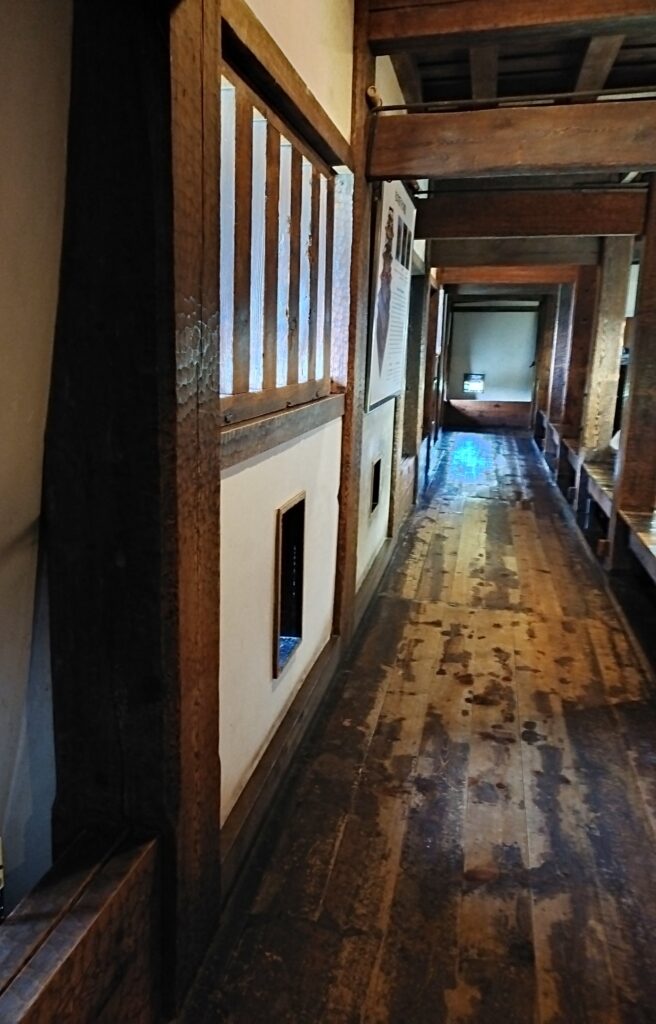
天守閣の中に入ってすぐなので多くの人は(そもそもお城の見所がわからないので)中々気が付きませんが、わかり易いところなので、それを元に纏めました。前半(1-6)は説明にも使える真面目パート(👉英語音声は武者走りの様にアップビート気味の米国男性話者)、後半(6-10)は雑談力upの為のおふざけパート(👉英語音声は武者震いなんか知らないって感じでのクール調米国女性話者)です。
《日本語》
- 外壁に沿って走るこの低い通路は、武者走り(むしゃばしり)と呼ばれ、文字通り「兵士が走るための通路」を意味します。
- 戦時には、兵士が障害物なく移動し、外壁を容易に防御できるように設計されました。
- 内側のエリアにだけ二重の土台があり、床が約50センチメートル高くなっているのです。
- 一般的に、こうした通路は城の内部に限定されず、例えば土塁の上など、城外にも築かれました。
- 松本城特有のものではありませんが、敵の侵入を防ぐために一階の防御力は特に重要でした。
- 通路に沿って石落としの仕掛けも見ることができます。
- しかし、実はこの通路に気づいて質問する外国人観光客は多くありません。
- 私たち地元ガイドは、ゲストがしばしば建築に深い関心や知識があること了解しています。
- そうなんです。この一階は、当時の武士だけでなく、ガイドにとっても重要な防衛ラインなのです。
- 多くのガイドは、こうした特別なゲストに対して気を抜けないとわかると、緊張で震えます。それがガイドの武者震です!
《英語》
- This low passageway running along the outer wall is called a musha-bashiri, literally meaning a “corridor for soldiers to run.”
- In times of war, it was designed to help the movement of soldiers without obstacles, enabling them to easily defend the outer wall.
- Only the inner area has a double foundation beneath the floor, raising it by about 50 centimeters.
- Generally speaking, these passageways weren’t limited to the castle interior; they were also constructed outside the castle walls, for example, on the ramparts.
- While not unique to Matsumoto Castle, the defensive strength of the first floor was particularly crucial for preventing enemy intrusion.
- And stone drop mechanisms can also be seen along the corridors.
- But actually, not many foreign tourists notice this corridor and ask about it.
- We local guides understand that our guests often have a deep interest in or knowledge of architecture.
- That’s right. This first floor is a crucial defensive line not only for the warriors of the time but also for the guides.
- We guides tremble with tension when we know the guests are particular here and we can’t let our guard down—it’s what we call musha burui, the samurai’s shiver… not musha bashiri, samurai running!
Glossary:用語集
elevation difference ☛ 段差/passageway☛通路/corridor for soldiers to run☛武者走り/rampart☛土塁/tremble with tension☛緊張で震える/let one’s guard down☛気を緩める/samurai’s shiver☛武者震い
Q2.なぜこのお城の階段はこんなに急なの?
”Why Are the Stairs in This Castle So Steep?”

多くのゲストの体感、実感を少し違った視点で展開してみました。前半(1-5)は説明にも使える真面目パート(👉英語音声は階段にない平たん調の英国男性話者)、後半(6-10)は雑談力upの為のおふざけパート(👉英語音声は着実に語るインド女性話者)です。
《日本語》
- 松本城に限らず、大抵の日本の城の階段は驚くほど急で、上り下りはかなりの難関です。中でも松本城は五重の天守に多くの急階段で有名です。
- 天守閣の直下の階段は傾斜が60度以上で、まるで登山で岩場の梯子を登っている感じです。
- この極端な急勾配は敵の侵入を遅らせるために作られたという人気のある説を生み出しました。
- しかし、専門家は、この傾斜は攻める側だけでなく、守る側の動きも同様に妨げるからと退けました。
- 天守は基本的に籠城の為に設計されていて、動き易さを考慮した階段は全く必要とされなかったのです。端的に言えば、正解は、当時の建築基準では偶々松本城の一部の階段が急になっただけのようです。
- とはいえ、こうした説がオンラインで広まることは、観光業界にとっては朗報かもしれません!
- あのスリル満点の階段を体験するためだけに、松本城を選ぶ観光客が少し増えるかもしれません。
- その反面、高齢者や体力に自信のない人は完全に避けてしまい、階段の急勾配とは裏腹に、訪問者数の伸びは「平坦」になるかもです。
- しかし、それで良いのかもしれません。階段は目的ではなく手段なので。
- ですから、私たちガイドは、このような些末なことで本質を見失ったり、文字通り足元をすくわれてはいけません。私たちは、階段を上る”take the stairs”ように地道に進まねば。
《英語》
- It’s not just Matsumoto Castle; the stairs in most Japanese castles are notoriously steep, making climbing up and down quite a challenge. Matsumoto Castle is especially famous for this, featuring five tiers and numerous steep staircases.
- The stairs directly beneath the castle keep have an incline of over 60 degrees, giving you the sensation of navigating a ladder on rocky terrain during a mountain hike.
- This extreme steepness even gave rise to a popular theory: that the stairs were built to slow down invaders.
- However, experts dismiss this, pointing out that such an incline hinders the defenders’ movement just as much as the attackers’.
- Castle keep designs were fundamentally built for siege defense, making stairs designed purely for accessibility entirely irrelevant. Simply put, the correct answer seems to be that, by the construction standards of the time, some of the stairs at Matsumoto Castle simply happened to be that steep.
- But the spread of these theories online might be welcome news for tourism professionals!
- Perhaps a few more tourists will choose Matsumoto Castle specifically to experience those exhilarating stairs.
- On the flip side, older individuals or those lacking confidence in their physical strength might avoid it entirely, leading to a flat growth in visitor numbers, quite unlike the steep climb of the stairs themselves.
- But perhaps that’s all right. Stairs are a means, not an end.
- So, as guides, we mustn’t let this minor challenge cause us to lose our focus—or, quite literally, lose our footing! We must, quite simply, take the stairs steadily.
Glossary:用語集
an incline of ~☛~の傾斜/a ladder on rocky terrain☛岩場の梯子/siege defense☛籠城(ろうじょう)の防御/on the flip side☛その反面 (逆に言えば)/flat growth☛横ばいの成長(伸び悩み)/lose one’s footing☛(慣用句)足場を失う(足元を疎かにする)/take the stairs steadily☛(慣用句)階段を着実に登る(基本を忘れない)
Q3.何故この部屋に御簾(すだれ)があるの?@4F
“Why is there a reed screen in this room?”
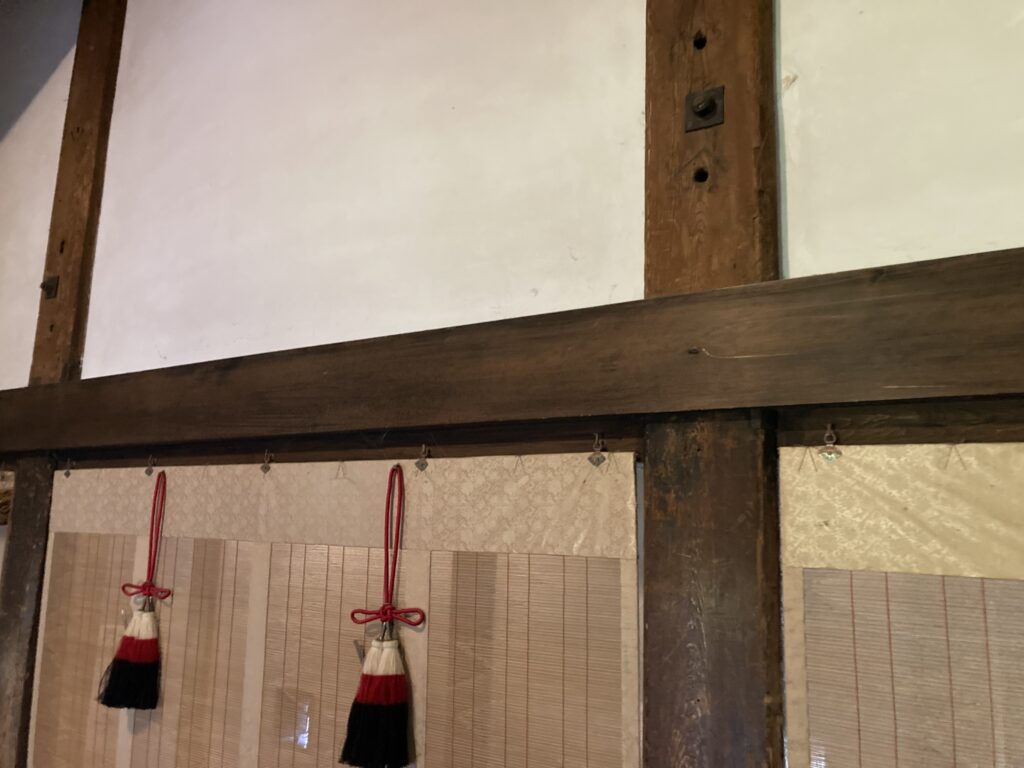
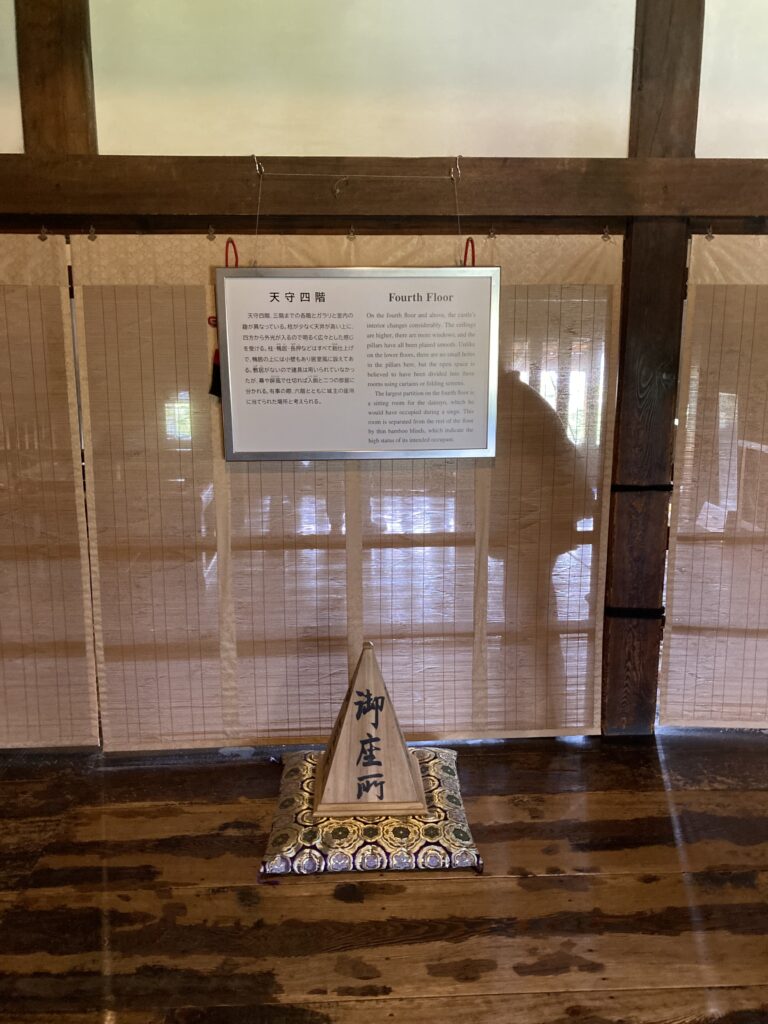
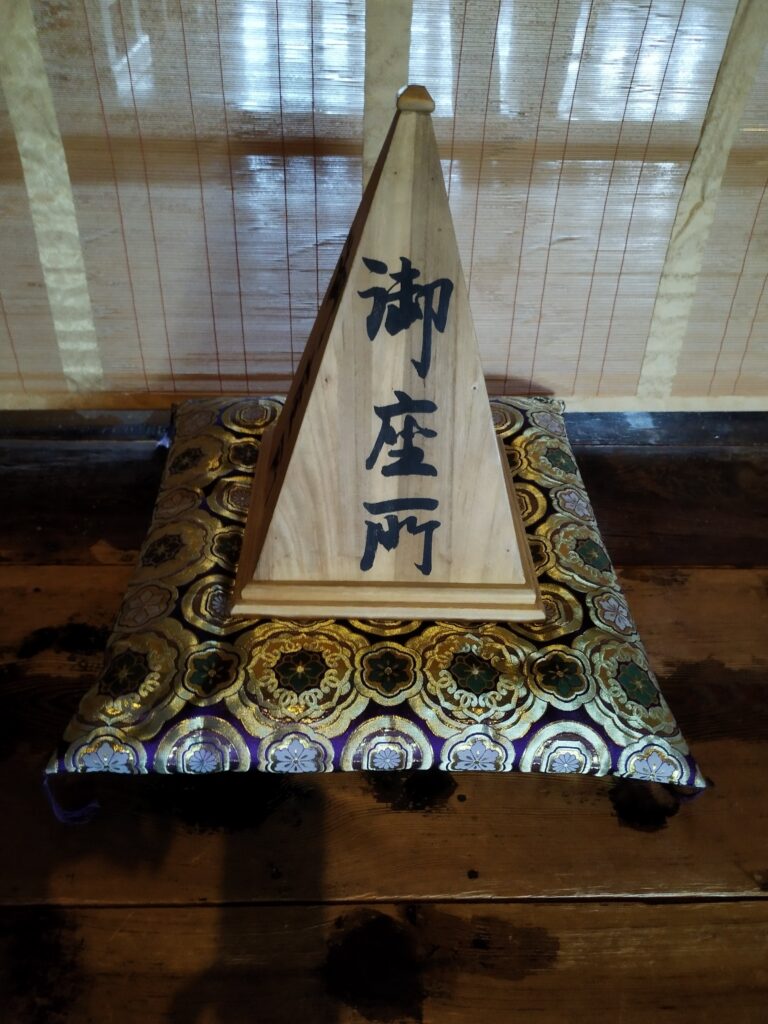
天守閣から難所の階段を下りてきてホッとする箇所で、多くのインバウンドは気持ちが次(外に出て歩きたい)に向いていて、関心は他と比べて高くありませんが、それでも聞かれた場合に備えて簡単に纏めてみました。前半(1-6)は説明にも使える真面目パート(👉英語音声は早く外に行きたい調の米国男性話者)、後半(7-10)は雑談力upの為のおふざけパート(👉英語音声は実際に切腹を見たような気にさせてくれる米国女性話者)です。
《日本語》
- この部屋は兵士のためではなく、城主のために造られました。
- 防御機能よりも、主に威厳と居住性を念頭に設計されています。
- 多くの方は城主が天守の最上階に座っていたと想像しますが、彼は実際にはこの四階を居所として利用していたのです。
- 戦時には、この部屋が様々な命令を下すための司令センターとして機能し、作戦の**「頭脳」となります。
- そのため、純粋に防御機能に特化した三階以下の下層階とは、全く異なる雰囲気を持っています。
- また、上級武士の邸宅によく見られる、洗練された書院造の建築様式も取り入れられています。
- しかし、敗北が避けられなくなったとき、城主は落城に備え、「最終決断」を実行しなければなりません。
- すなわち、この御簾の内側で、人目から隠れて切腹を行うのです。
- この手で簡単に引き裂けるほどの薄い葦の御簾は、銃弾をも防ぐ分厚く頑丈な城壁よりも、ある意味で「しなやかで強い」と言えます。
- それは、武士の最高儀礼である切腹が滞りなく行われることを保証し、城主の「名誉」を守る精神的な防壁として、その役割を見事に果たしているのです。
《英語》
- This room was built not for soldiers, but for the lord of the castle.
- It was designed primarily with dignity and comfort in mind, rather than defense.
- Many assume the lord would reside on the top floor of the keep, but he actually used this fourth floor as his quarters.
- During battle, this room would serve as the command center where orders are issued, functioning as the operation’s brain.
- Consequently, it possesses an entirely different atmosphere from the lower floors below the third level, which are solely dedicated to defensive functions.
- It also incorporates the refined architectural style known as shoin-zukuri—a feature commonly found in the residences of high-ranking samurai.
- But when defeat seems inevitable, the lord must prepare for the castle’s fall and execute his final decision.
- That is, he commits seppuku inside these curtains, hidden from view.
- This thin reed screen, easily torn by hand, is in a sense more resilient than the thick, sturdy castle walls that can stop a gun bullet.
- It ensures the samurai’s supreme ritual of seppuku is performed successfully, and serves as a spiritual defensive wall, protecting the castle lord’s honor.”
Glossary:用語集
dignity and comfort in mind☛尊厳と快適さを考慮して/operation’s brain☛作戦の司令部/reed screen☛簾(すだれ:葦製)/inevitable ☛ 避けられない/spiritual wall ☛ 精神的な防壁
Q4. あの天井にある縄のようなものは何ですか?@6F
”What is that rope-like thing on the ceiling?”
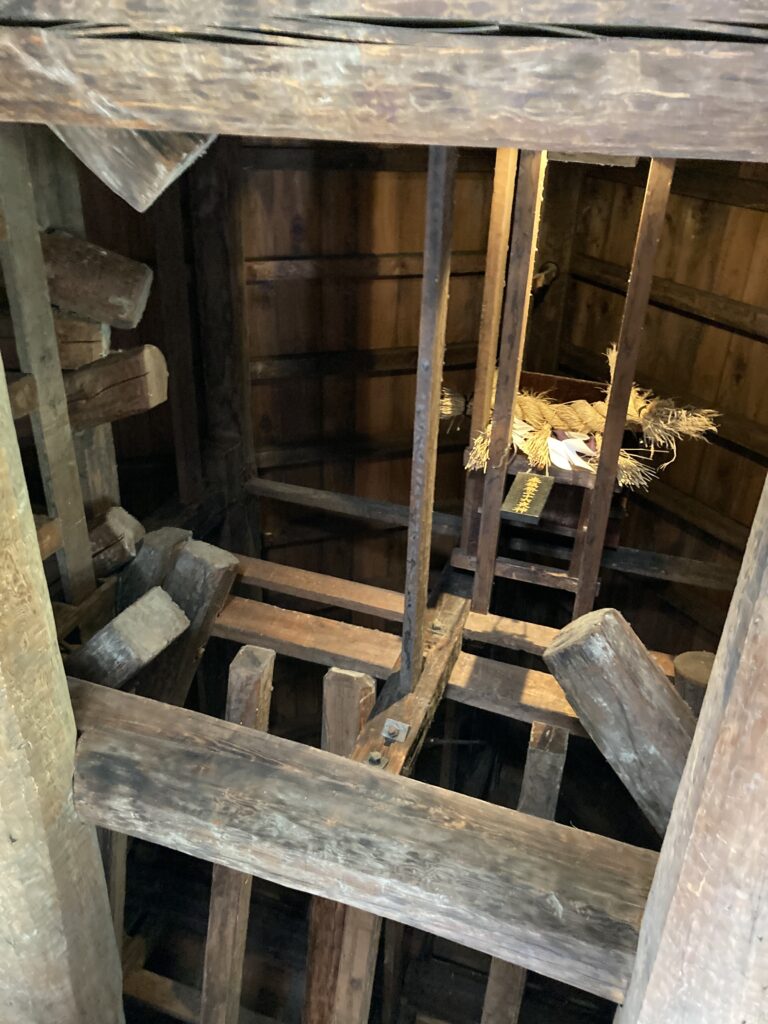
天守閣が混雑していて中で待っている際に、場つなぎに使えるネタとして簡単に纏めてみました。前半(1-6)は説明にも使える真面目パートですが、後半に比べるとかなり長くなるので、5,6は後半のおふざけパートに入れて、今回は1-4を前半パートとしました。(👉英語音声は女神に畏れる侍の雰囲気の米国男性話者)、後半(5-10)は雑談力upの為のおふざけパート(👉英語音声は「二十六」で育った自信たっぷり調の米国女性話者)です。
《日本語》
- あれは、松本城の守り神として、築城後まもなく祀られた連縄(しめなわ)と御神体(ごしんたい)です。
- ご覧の通り、小さな祠ですが、元々は一部地域で信仰されていた「ニ十六夜神(にじゅうろくやがみ)」という女神が祀られています。
- 言い伝えによると、この女神が毎月26日に千人分の餅を供え、それを人々に配るようにという神託を下しました。
- 城主はこの慣習を侍の時代を通して何世紀も続け、これこそが松本城を度重なる火災から守った理由だと信じられています。
- この「26日」の起源については、旧暦の正月と7月の26日の夜明け前に行われた儀式で、細く欠けた月(新月直後の三日月)を拝んでいたという説があります。
- 日本人は古くから月の様々な満ち欠けの様子を愛でてきました。現代でも、十五夜の満月を祝う行事が全国で行われていますね。
- しかし、私はお客様から尋ねられない限り、この小さな祠の説明はしないようにしています。
- なぜなら、俳句を嗜む方や星好きの方は別として、ほとんどの人は—私を含めて—二十六夜の月のことを知りませんし、そもそも「26」という数字自体が日本人にとってはあまり馴染みがないからです。
- ところが、欧米からのお客様は別です。ほとんどのゲストはあの数字を完璧に知っているので、私たちガイドは太刀打ちできません。
- なぜなら、26文字のアルファベットを使う英語圏では、あの数字は絶対的な基礎であり、彼らはそれを「AからZまで」完全に知っているからです!
《英語》
- That is the sacred rope and sacred object installed shortly after the castle’s construction to serve as Matsumoto Castle’s guardian deity.
- As you can see, it is a small shrine originally dedicated to the female deity “Nijurokuya-gami” (The Twenty-Sixth Night Goddess), who was worshipped in certain areas.
- According to legend, the goddess gave an oracle that thousands of portions of rice cakes be offered on the twenty-sixth day of each month, after which they were to be distributed among the people.
- The feudal lord continued this practice for centuries throughout the samurai era, and it is believed that this is how Matsumoto Castle survived numerous fire disasters.
- One theory suggests the origin of the 26th stems from twice-yearly rituals held before dawn on the 26th day of the first and seventh months of the lunar calendar, where a slender, crescent-shaped moon (the waning crescent moon) was worshipped.
- The Japanese have long cherished the moon’s changing phases, and even today, full moon festivals on the fifteenth night are celebrated nationwide.
- Still, I usually don’t explain this little shrine unless guests ask.
- Because, aside from haiku poets and stargazers, most people—including myself—aren’t familiar with the Twenty-Sixth Night, and the number 26 itself doesn’t hold much cultural weight in Japan.
- On the contrary, most guests know that number inside out, so we can’t compete with them.
- In English, which uses a 26-letter alphabet, that number is a basic truth—they know it completely from A to Z!
Glossary:用語集
sacred rope☛しめ縄/ sacred object(object of worship)☛御神体/guardian deity☛守護神/give an oracle(divine oracle)☛神託を授ける/a slender, crescent-shaped moon☛細長い三日月/the waning crescent moon☛下弦(かげん)の三日月 (二十六夜の月、満月→新月へ向かう月)(補足:waxing crescent☛上弦に近い、 新月→満月へ向かう月)/know ~ inside out☛~を熟知している/know ~ from A to Z☛~を全て熟知する
Q5. なぜ、この窓だけがこの形をしているの?
”Why is this window the only one shaped like this?”

実際の現場説明を元に纏めてみました。前半(1-4)は説明にも使える真面目パート(👉英語音声は火の勢いを感じる米国男性話者)、後半(6-10)は雑談力upの為のおふざけパート(👉英語音声はダウンしそうもない元気なオーストラリア女性話者)です。
《日本語》
- これは花頭窓(かとうまど)と呼ばれ、ここだけでなく様々な文化財で見ることができます。
- 元々は中国の禅宗の建築様式で、その高い意匠性から、城郭だけでなく、有名寺院や近代建築にも採用されました。
- そもそもの名称と形は火を表し、文字通りの意味は「火の灯の窓」です。
- しかし、火は城にとって最も忌避すべきものなので、武士たちは機知を利かせ、同じ読み方で「花の頭のような窓」(花頭窓)を表す異なる漢字を使ったのです。
- この説明をゲストにすると、時々ネガティブな反応がありました。以前は、色褪せる花は死を連想させ、火の様に不吉と感じるからだと思っていました。
- 私はよく、武士には伝統的に、炎の中で滅びるよりも、散る花のように美しく死にたいという美意識があった、と説明していました。
- でも、やっと分かりました。この形は、そもそも灯にも花にもあまり似ておらず、視覚的に繋がらないのでゲストの反応が鈍かったのです。
- 以前、私が、この窓は鐘楼(鐘)の形にそっくりです、と何気なく言ったところ、お客様の反応はとても好意的になりました。
- その類似性が非常に印象的で、すぐピンときた(彼らのベルを鳴らした”rang their bell.”)のです。
- そして、まさにそのおかげで、私はノックアウト寸前のボクサーのように、ゴングに救われた “Saved by the bell”、のです!
《英語》
- This feature is called a Katomado, or flower-shaped window, and you can spot it in various cultural properties across Japan.
- Originally a style of Chinese Zen architecture, its sophisticated design led to its adoption not only in castles but also in renowned temples and modern buildings.
- The window’s original name and shape represent fire—literally meaning a window of firelight.
- Yet, because fire was the most dreaded thing in a castle, samurai cleverly adopted a different kanji with the same pronunciation to express a window shaped like a flower’s head (花頭窓).
- When I explain this, guests sometimes react negatively. I used to think it was because the image of a fading flower evokes death, making it inauspicious, much like the fire itself.
- I often explained the samurai aesthetic—their desire to die beautifully, like scattered petals, which is certainly preferable to perishing in flames.
- But I see the problem now. The shape simply doesn’t look much like firelight or a flower head! The reaction was slow because the visual connection just wasn’t there.
- Then, I once remarked to a group that the window strongly resembles a bell tower. Their response was immediately positive!
- The resemblance was so striking, it instantly “rang their bell.”
- And just like that, I was “saved by the bell,” like a boxer on the verge of being knocked out!
Glossary:用語集
Katomado or flower-shaped window☛花頭窓/a fading flower☛しぼみゆく花/evoke death☛死を想起させる/scattered petals☛散りゆく花びら/perishing in flames☛炎に包まれながら滅びゆく/ring one’s bell☛(慣用句)ピンとくる/saved by the bell☛(慣用句:ボクシングの用法から)ゴングに救われる
2.3 天守閣(展示物)
Q1.この魚のようなものは何でしょう?
”What is this fish-like thing?”
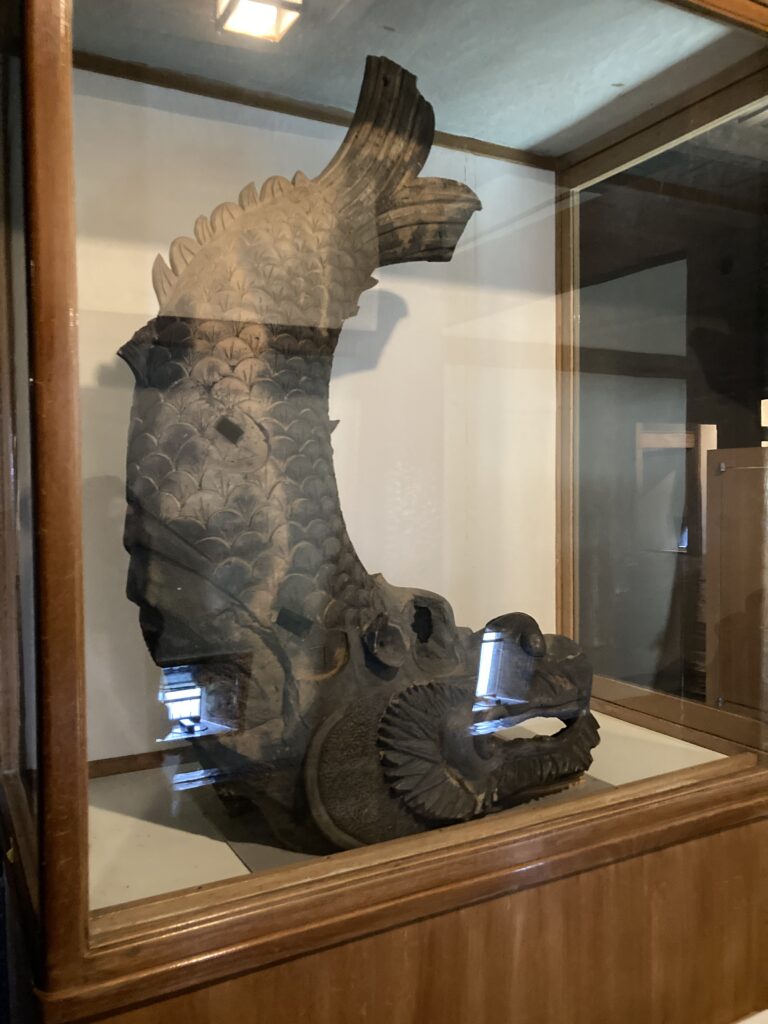
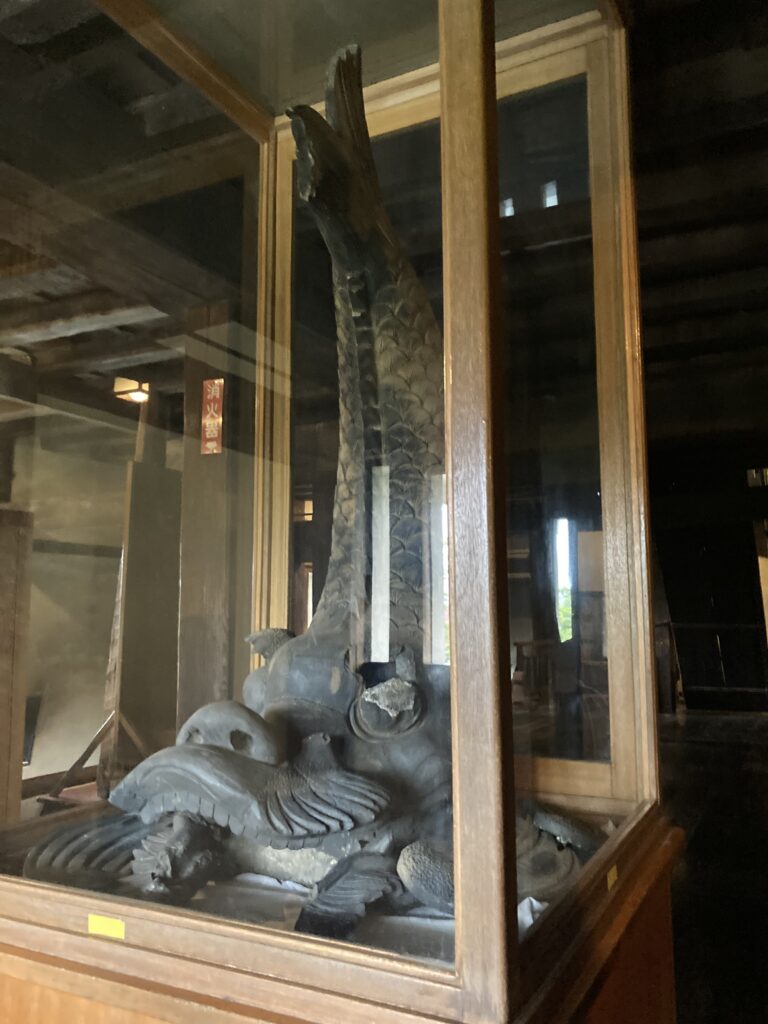
松本城に限らず天守閣の中は陳列展示物が多いので、どこでもよく見られる光景ですが、それをネタに纏めてみました。前半(1-5)は説明にも使える真面目パート(👉英語音声は金鯱に少し興奮気味の米国女性話者)、後半(6-10)は雑談力upの為のおふざけパート(👉英語音声は老兵なんて関係ない元気調の米国男性話者)です。
《日本語》
- これはシャチホコ(または単にshachi)で、天守閣屋根の棟の両端に置かれた印象的な飾りです。
- 魚の体に竜の頭を持つ想像上の生き物で、古くから火災から建物を守る守護神として使われました。
- シャチホコは実際すべての城で見られますが、素材は通常焼かれた瓦で、有名な城の中には輝く金箔製のものもあります。
- シャチホコはペアだってご存知でしたか?オスは口を開け、メスは口を閉じて、メスは一般的に、オスよりも少し小さいのです。
- このシャチホコは、直近の修理で取り外され、間近でじっくり見学できるのは貴重な機会です。日本の歴史的天守閣の殆どは、武士の争いと落雷、近代の空襲による火災で失われました。
- しかし、松本城のシャチは築城以来、今日に至るまで火災から建物を守り続けてきました。その実績は、まさに金メダルに値するものです。
- この素晴らしいシャチを、一目も見ずに通り過ぎてしまう人がこれほど多いのは、本当に残念なことです。
- まるで、ハイテクな火災警報器が完備された現代では、こうした「古臭い」守護神に頼る必要などもうない、とでも思われているかのようです。
- そう考えてみると、このシャチホコは、デジタル革命に取り残されたと感じている多くの退職者たちの悲しい運命と重なるところがあります。
- 格言にある通り、「老兵は死なず、ただ消え去るのみ」……そして、私たちのオンラインの世界では、彼らはただ「検索結果」から消え去っていくのみなのです!
《英語》
- This is a Shachihoko (or just shachi), the striking ornament placed at both ends of the main ridge on the castle tower’s roof.
- A mythical creature with the body of a fish and the head of a dragon, it served as a guardian deity against fire.
- While you’ll find shachi on virtually every castle, the roofing material is typically baked clay—though some famous examples feature dazzling gold leaf.
- Did you know they come in pairs? The male has its mouth open, while the female keeps its mouth closed and is often slightly smaller.
- This particular shachi was removed during the most recent repairs, offering a rare opportunity to see it up close. Most of Japan’s historic castle towers were lost to fires caused by samurai wars, lightning strikes, or modern air raids.
- However, since its construction, the shachi of Matsumoto Castle have stood guard and kept the structure safe from fire to this day—a track record truly worthy of a gold medal.
- It’s a real shame that so many people walk right by this magnificent shachi without a second glance.
- It’s as if people think that in this modern age of high-tech fire alarms, we no longer need to rely on such “old-school”guardians.
- When you think about it, the shachihoko shares the sad fate of many retirees who feel left behind by the digital revolution.
- As the saying goes, “Old soldiers never die; they just fade away”—and in our online world, they just fade out of the search results!”
Glossary:用語集
ends of the main ridge☛(屋根の)棟の両端/a mythical creature☛神話の生き物/come in pairs☛対で現れる/ It’s a real shame ☛残念だ/without a second glance☛振り返ることなく/“Old soldiers never die, they just fade away”☛「老兵は死なず、ただ消え去るのみ」(補足:マッカーサーの言葉)
Q2.何故こんなに沢山の鉄砲が展示されてるの?
“Why are there so many guns on display?”
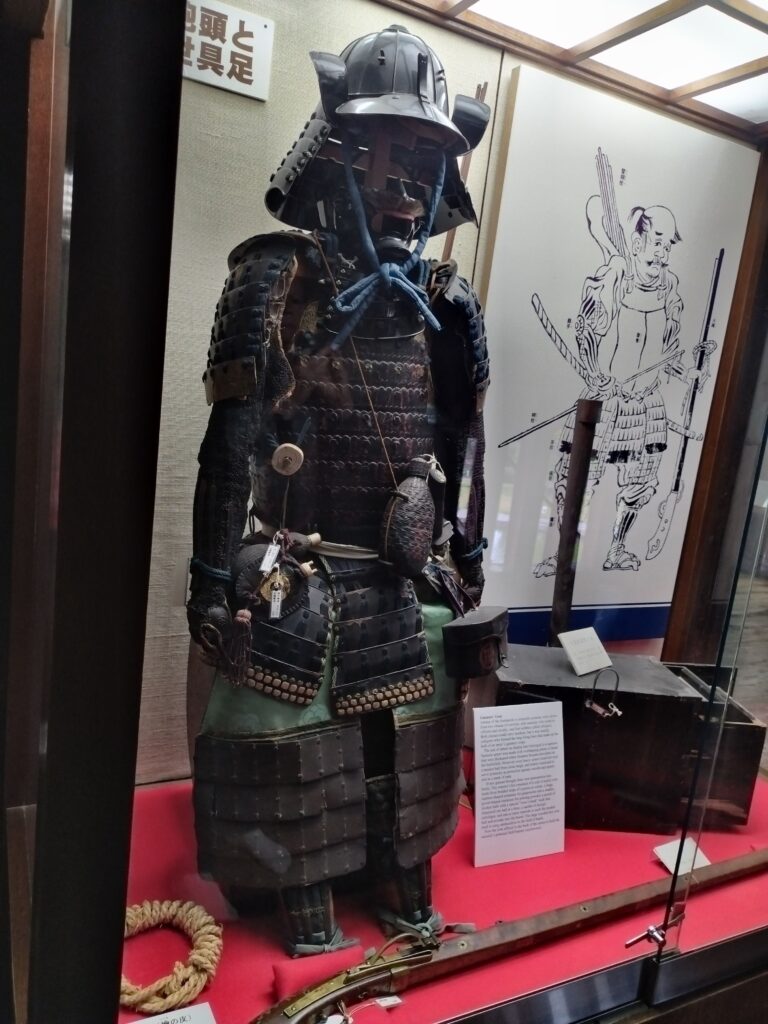
陳列展示物が多い場所では(礼儀としてしばしば事前に)詳細すぎるのでご質問があれば個々にお知らせくださいといいますが、その経験を元に纏めてみました。前半(1-5)は説明にも使える真面目パート(👉英語音声はコレクターの様に冷静ぶに語る米国男性話者)、後半(6-10)は雑談力upの為のおふざけパート(👉英語音声は最新銃に比べれば昔の銃は全然怖くないって感じの米国女性話者)です。
《日本語》
- この膨大なコレクションは、数十年前にある個人収集家の方から松本市に寄贈されたものです。実は、松本城とこれらの火縄銃に直接的なつながりはありません。
- 松本城が築城されたのは、ヨーロッパから鉄砲が伝来してからおよそ50年後であり、城の設計はこの点を考慮して行われました。
- 特に、銃眼(鉄砲狭間)の配置や天守の壁の厚さにそれが反映されています。
- 再建された多くの城とは異なり、松本城は創建当時のままの姿を留めており、その点が極めて貴重で歴史的に重要なのです。
- 寄贈した収集家の方は、長年かけて集めたコレクションにとって、松本城が最もふさわしい場所だと感じたそうです。
- 通常、私たちガイドは、この膨大な数の展示品一つひとつについて個別の解説はしていません。
- 熱心なファンでない方にとっては、詳細が専門的すぎますし、質問もせずに説明を聞き続けるのはかなり疲れるからです。
- そのため、ご質問があったときだけ解説をするようにしています。
事前にこのことをご説明すると、ほとんどのお客様はご理解くださいますが、時折、どうしても納得してくれない火器マニアの方がいらっしゃいます。 - 文字通り、彼は「自分の銃に固執して(sticking to his guns)」、鉄砲展示の前から動こうとしません。私たちガイドにとって、一日のスケジュールを組む上で、これが最も避けたいシナリオなのです。
- 私たちは「銃を突きつけられた状態(under the gun)」、つまり、まさにあの鉄砲展示の前で時間に追われることになるわけですから!
《英語》
- This extensive collection was a donation to Matsumoto City decades ago by a private collector. There is no direct connection between Matsumoto Castle and these firearms.
- Matsumoto Castle was built approximately fifty years after firearms were introduced to Japan from Europe, and the castle was designed under this consideration.
- The placement of the gun-shooting holes and the thickness of the keep walls particularly reflect this.
- Unlike many reconstructed castles, Matsumoto Castle remains in its original state, making it extremely valuable and historically significant.
- The collector who donated the collection felt that Matsumoto Castle was the most fitting destination for the collection he had spent many years gathering.
- Generally, most guides don’t offer individual explanations for the vast number of exhibits. For non-enthusiasts, the details are too technical, and listening without asking questions can be quite tiring.
- Therefore, I only provide explanations when questions arise.
- When I explain this in advance, most guests understand, but occasionally there are enthusiasts who just won’t accept this.
- He’s literally sticking to his guns, refusing to leave the gun display.
- For us guides planning the day’s schedule, this is the one scenario we want to avoid most—it leaves us under the gun… right in front of the gun display!”
Glossary:用語集
extensive collection☛膨大なコレクション/gun-shooting holes☛射撃用の穴(補足:Gun loopholes ☛狭間: 建築用語として=loopholes ・ gun ports)/sticking to one’s guns☛(慣用句)自分の主張を貫く/under the gun☛(慣用句)時間に追われる・プレッシャーを感じる
御礼&後書き
お忙しい中、今回も最後までご覧いただき大変ありがとうございました。今回テーマ含め今後も定期的にブラッシュアップして参りますので、引き続きご参照のほど宜しくお願い致します。🔶Gold🔶v.4b.4b.4a/S1