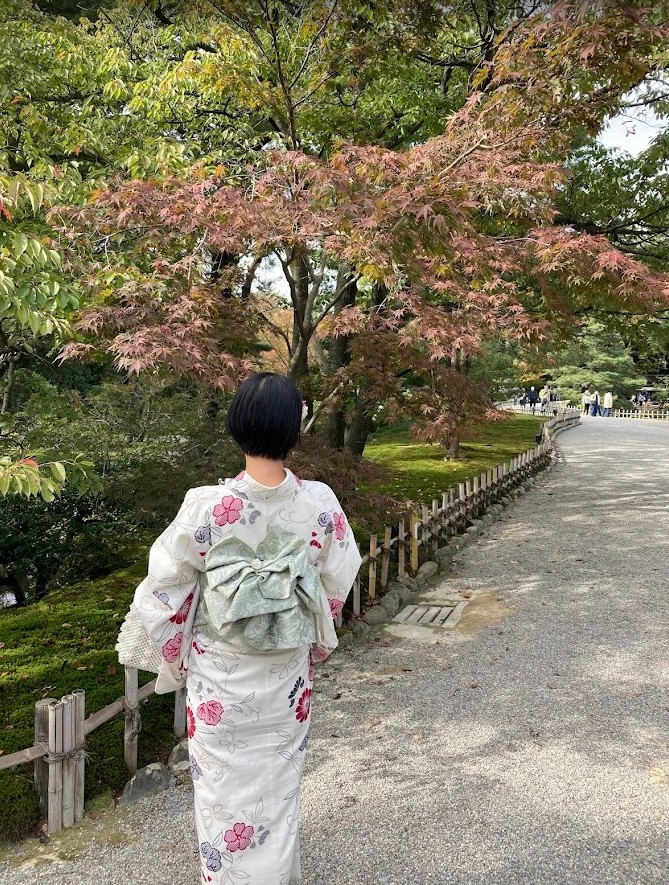
「She is putting on a kimono.(彼女は今、着物を着ているところです)」
 👘 峰 (Mine):ブログ和服ガイド
もし、お客様の目の前に「既に着付けが終わして、美しく佇む女性」がいたら……。そのガイドは、実は少しだけ「ズレた」印象を与えてしまうかもしれません。
日本語では「履く・被る・つける」と呼び分けますが、英語のポイントはもっとシンプル!
「動作」なのか「状態」なのか、はたまた「気合の入った儀式」なのか。そのニュアンスで言葉を選びます。
本記事では、多忙な皆様に代わって、着物からコスプレ(!)まで即座に対応できる「身につける6表現」をギュッと整理しました。
「旅館の浴衣をサッと羽織る(Slip on)」のか、「式典で正装をピシッと纏う(Don)」のか。
状況に合うスマートな英語を味方につけて、ガイドに磨きをかけていきましょう!
ちなみに、「笑顔」も英語では “Wear” するもの。さあ、Wear a smile! 👘 本日は私が最後までご案内します。
⚡ お急ぎの方は気になるフレーズを10秒チェック!
※表内の表現をクリックすると、それぞれの詳しい解説(H3)へ直接ジャンプして確認できます。
| 表現 | 主なニュアンス |
|---|---|
| Wear | 「状態」 すでに着ている |
| Put on | 「動作」 今から着る・履く |
| Slip / Throw on | 「軽快」 さっと羽織る、つっかける |
| Don | 「格式」 厳かに・儀式的に纏う |
| Dress in | 「全体」 姿全体のスタイル・色 |
| Have on | 「日常」 Wearのより口語的な表現 |
旅館の浴衣をさっと羽織るなら Slip on、式典の正装なら Don。状況に合わせた一言で、ガイドに磨き(Wear a smile!)をかけましょう。
【A】各表現の意味&違い
まずは今回フレーズの夫々の意味と違いをご紹介します。
1. Wear = 既に身につけている状態
Definition: 👉 衣類やアクセサリーを身につけている状態を表します。
Difference: 👉 「put on」と違い、着る動作ではなく、着ている結果(状態)を表します。
Common items: 👉 服、靴、眼鏡、帽子、アクセサリー、化粧、香水、制服。
Examples:
- “She is wearing a blue dress.”
彼女は青いドレスを着ています。
- “He wears glasses every day.”
彼は毎日眼鏡をかけています。
- “Are you wearing perfume today?”
今日は香水をつけていますか?
2. Put on = 何かを身につける動作
Definition: 👉 身につけ始める動作を表します。
Difference: 👉 結果を表す「wear」と違い、「put on」はその瞬間の行為に焦点を当てます。
Common items: 👉 服、靴、帽子、眼鏡、アクセサリー、化粧、手袋、香水。
Examples:
- “He put on his jacket before going outside.”
彼は外に出る前にジャケットを着ました。
- “She put on some lipstick.”
彼女は口紅を塗りました。
- “Please put on your shoes.”
靴を履いてください。
3. Slip on / Throw on= カジュアル/素早く身につける
Definition: 👉 さっと(quickly)または気軽に(casually)身につける時に使われます。
Difference: 👉 「put on」よりカジュアルで、手軽さや急いでいる感じを含みます。
Common items: 👉 靴、サンダル、ジャケット、セーター、Tシャツ。
Examples:
- “I just slipped on my sneakers.”
私はスニーカーをさっと履きました。
- “She threw on a sweater before leaving.”
彼女は出かける前にセーターをぱっと羽織りました。
- “He slipped on his coat and went out the door.”
彼はコートをさっと着て外に出ました。
4. Don= フォーマル/文学的に装う
Definition: 👉 「put on(着る)」を表すフォーマルまたは古風な言い方です。
Difference: 👉 厳粛・文学的・儀式的な響きがあり、日常会話では使いません。
Common items: 👉 衣装、制服、儀式用の服、鎧、伝統衣装。
Examples:
- “The actor donned a samurai costume for the play.”
その俳優は芝居のために侍の衣装を身につけました。
- “He donned his armor before battle.”
彼は戦いの前に鎧を着ました。
- “She donned a white coat at the hospital.”
彼女は病院で白衣を着ました。
5. Dress in= 何かを身につけている姿全体
Definition: 👉 特定のスタイル・色・種類の服を着ている時に使います。
Difference: 👉 個別のアイテムではなく、全体的な外見やスタイルを強調します。
Common items: 👉 色(黒い服など)、衣装、制服、フォーマルウェア。
Examples:
- “She was dressed in red.”
彼女は赤い服を着ていました。
- “The children were dressed in traditional festival clothes.”
子どもたちは伝統的な祭りの衣装を着ていました。
- “He was dressed in a business suit.”
彼はビジネススーツを着ていました。
6. Have on= “wear”のカジュアル日常用語
Definition: 👉 「wear」と同じ意味ですが、よりくだけた日常会話で使います。
Difference: 👉 「wear」より口語的(conversational)で、特にアメリカ英語でよく使われます。
Common items: 👉 日常会話での服やアクセサリー全般。
Examples:
- “What do you have on today?” (= What are you wearing?)
今日は何を着ていますか?
- “He had on a pair of old jeans.”
彼は古いジーンズを履いていました。
- “She has on a big smile and a summer dress.”
彼女は大きな笑顔と夏のドレスを身につけています。
【B】 日常会話例文
ここでは日常生活(プライベート&ビジネスシーン)で使われる会話例文で夫々の違いをチェックできます。👥英語音声は米国話者です。
1. Wear – (Friends)
A: “I like the jacket you’re wearing. Where did you buy it?”
B: “Thanks! I wear it almost every day in winter.”
A: 「そのジャケットいいね。どこで買ったの?」
B: 「ありがとう!冬はほとんど毎日着てるんだ。」
2. Put on – (Mother & Child)
Mom: “It’s cold outside. Put on your coat.”
Child: “Okay, Mom.”
母: 「外は寒いよ。コートを着なさい。」
子: 「わかった、お母さん。」
3. Slip on / Throw on – (Roommates)
A: “We’re late! Just slip on your shoes.”
B: “Okay, I’ll throw on a hoodie too.”
A: 「遅刻するよ!靴をさっと履いて。」
B: 「わかった。パーカーもぱっと羽織るね。」
4. Don – (Boss & Employee, formal context)
Boss: “For tonight’s ceremony, please don your formal uniform.”
Employee: “Understood, sir.”
上司: 「今夜の式典では、正装の制服を着用してください。」
部下: 「承知しました。」
5. Dress in – (Couple)
A: “Wow, you’re dressed in all black today. Any reason?”
B: “No special reason. I just like the look.”
A: 「おお、今日は全身黒でコーデしてるね。何か理由あるの?」
B: 「特にないよ。見た目が好きなだけ。」
6. Have on – (Clerk & Customer, casual)
Clerk: “I love the sneakers you have on. Are they new?”
Customer: “Yes, I just bought them yesterday.”
店員: 「そのスニーカー素敵ですね。今履いてるの、新品ですか?」
客: 「はい、昨日買ったばかりなんです。」
C: 訪日外国人案内例文
ここでは、インバウンドへの説明例文で今回用語の再チェックできます。今回は案内先で何かを身につけるトピックをご説明するイメージで纏めてみました。
1. Wear:観光地の夏祭りで
“In this festival, many people wear yukata, which are light cotton kimonos for summer.”
「この祭りでは、多くの人が浴衣を着ています。浴衣は夏用の軽い木綿の着物です。」
2. Put on:茶道教室で
“Before entering the tea room, guests usually put on white tabi socks as a sign of cleanliness.”
「茶室に入る前に、客は清浄の印として白い足袋を履きます。」
3. Slip on / Throw on:宿泊先の旅館で
“At hot spring resorts, visitors can easily slip on a yukata provided by the inn.”
「温泉旅館では、宿から用意された浴衣を気軽に羽織ることができます。」
4. Don:着物の着付け教室で
“For formal occasions, women often don a Kaga Yuzen kimono, famous for its delicate hand-painted designs.”
「正式な場では、女性が加賀友禅の着物を身につけることがあります。加賀友禅は繊細な手描き模様で有名です。」
5. Dress in:秋葉原の歩行者天国で
“During cosplay events in Akihabara, many fans are dressed in costumes of their favorite anime characters.”
「秋葉原のコスプレイベントでは、多くのファンが好きなアニメキャラクターの衣装を着ています。」
6. Have on:国宝のお城イベントで
“Many younger tourists love having on ninja costumes and taking photos around historic castles.”
「多くの若者の観光客は忍者衣装を着て、歴史ある城の周りで写真を撮るのが大好きです。」
御礼🔶後書き
🌸 峰 (Mine):ブログ貴婦人ガイド
今回も最後までお読みいただき、ありがとうございます!
皆様の優雅な着せ方のご案内が、ゲストの心に深く、美しく浸透することを願っています。
本ブログへのご意見は、下記よりお気軽にお寄せくださいませ。