 峰(Mine)
皆さん、こんにちは!日本庭園・和服ウオッチャー&ガイドのミネです。加賀百万石の歴史と文化を今に伝える『兼六園』英語紹介ブログへようこそ。
このブログでは、大切な海外ゲストから、この週末、兼六園に行ってみたい!と急に言われた場合でも、現場で『すぐに使える英語表現』をご紹介しています。
AIで公式情報が簡単に得られる昨今、ゲストは美しい景色や公式説明だけでなく、現場でしか聞けない「驚きと笑いの裏話」にもとても興味があります。多忙でなかなか準備のお時間が取れない皆さまの為に、ピンポイントでアクセスできるボタンもご用意していますので、皆さんのご興味やニーズに合わせて、ご気軽にご利用くださいませ。このシリーズでは私が最後まで分かりやすくご案内します。
📍 兼六園 英語案内 目次(クリックで各章へ移動)
👉タイトル各語について! 「石灯籠(いしとうろう)」”stone lantern”、「雪吊り(ゆきつり)」”the work of stringing ropes for snow”という言い方が可能です。
👉直接インバウンドに向けてまとめた英語版ご参照の際はこちらからどうぞ!
0. 本ブログの全体ガイド 🌸
本ブログは大きく分けて3つの階層で構成しております。皆様のその時々のニーズや目の前のゲストの様子に合わせて、目次からお好きな場所へアクセスしてくださいませ。
🔰 【Step 1】基本用語
まずは「これを知らなきゃ始まらない」庭園案内の必須ワードからご紹介いたします。「雪吊り」を英語で優しく説明するには?「徽軫灯籠」や「六勝」のニュアンスは? 混雑した現場でもパッと口から出るよう、使い勝手の良い単語を厳選いたしました。
🧭 【Step 2】スポット別の解説
各名所(兼六園全体、徽軫灯籠、霞ヶ池、唐崎松など)ごとに、状況に応じた切り口をご用意いたしました。現在の案内シーンに合わせてお選びくださいませ。
- 📚 基本情報(10項目)
「兼六園の歴史や背景を深く理解したい」方向けに、成り立ちや設計思想をまとめたパートです。 - 🗣️ 口頭説明用(10項目)
「混雑した庭園内を歩きながらテンポ良く伝えたい」という方に。思考を止めず、リズムよく話せる短めの表現集です。 - 🤣 インバウンド視点!笑いが取れるかも?(Mine’s Special)
「普通のガイドじゃ物足りない」というゲスト向けに。案内現場で磨いた、ゲストを唸らせ、時にクスッと微笑ませる「粋な裏話」と「比喩」を詰め込んでおります。
1. 押さえておきたい基本用語
現場でスムーズに言葉が出てくるよう、基本用語からご紹介します。日常会話で使える単語から、他の日本庭園んでも応用できる専門用語、兼六園ならではのキーワードまで3段階でまとめています。以下のボタンからご希望のレベルへジャンプできます。
1.1 庭園基本用語(日常会話レベル)
日常会話で良く使われる代表例として。
- Three Great Gardens(日本3大庭園)
- auspicious occasion(慶事)
- waterfall(滝)
- fountain(噴水)
- pond(池)
- stone bridge(石橋)
- tea house(茶室)
- seasonal view(四季の景色)
- pine tree(松の木)
- cherry blossom / autumn leaves(桜 / 紅葉)
1.2 庭園関連用語(庭園愛好家レベル)
日常それほど使われませんが、庭愛好家で使われる代表例として。
- 回遊式庭園(複数)!stroll-style gardens
- 石灯籠!stone lantern/ a kind of traditional Japanese lighting fixture
- 縮景!‘reduced landscape’
- 見どころ!must-see feature
- 借景!‘borrowed scenery’ / incorporating surrounding natural scenery
- 枯山水!dry landscape garden / Zen garden
- 造園技法!landscape gardening technique
- 人工の滝/池!artificial waterfall / man-made pond
- 曲水(小川)!meandering stream / winding stream
- 石組み(配石)!stone arrangement / rock placement
1.3 兼六園特有用語(高頻度使用)
他でも使われる用語もありますが、兼六園のイメージが強い代表例として。
- 雪吊り!the work of stringing ropes for snow/gardening methods using ropes for snow / ropes to protect branches from snow
- 👉全国各地の庭園毎に色々な英語表現がありますのであくまで一例として。日本語の「雪吊り」自体、正確な意味を表現できてませんので、直訳では当然通じず、日英共に補足が必要になります。
- 根上松(根が露出した松)!a pine tree with exposed roots,
- 繁栄と不滅を願って!with the hope of prosperity and eternal life.
- 👉前田家の兼六園に込めた願いです。
- 六勝「宏大、幽邃、人力、蒼古、水泉、眺望」!’spaciousness’, ‘seclusion’, ‘artifice’, ‘antiquity’, ‘water features’, and ‘panoramas’.
- 👉公式HPの兼六園の6条件の用語で、日本人でも口頭では中々伝わりにくいので、ネイティブには補足説明が必要です。
- 「日本三大庭園」の1つ!one of the ‘Three Great Gardens in Japan’
- 👉よく使われる表現ですが、もし他の2つを聞かれたら「後楽園」「偕楽園」言えるように。
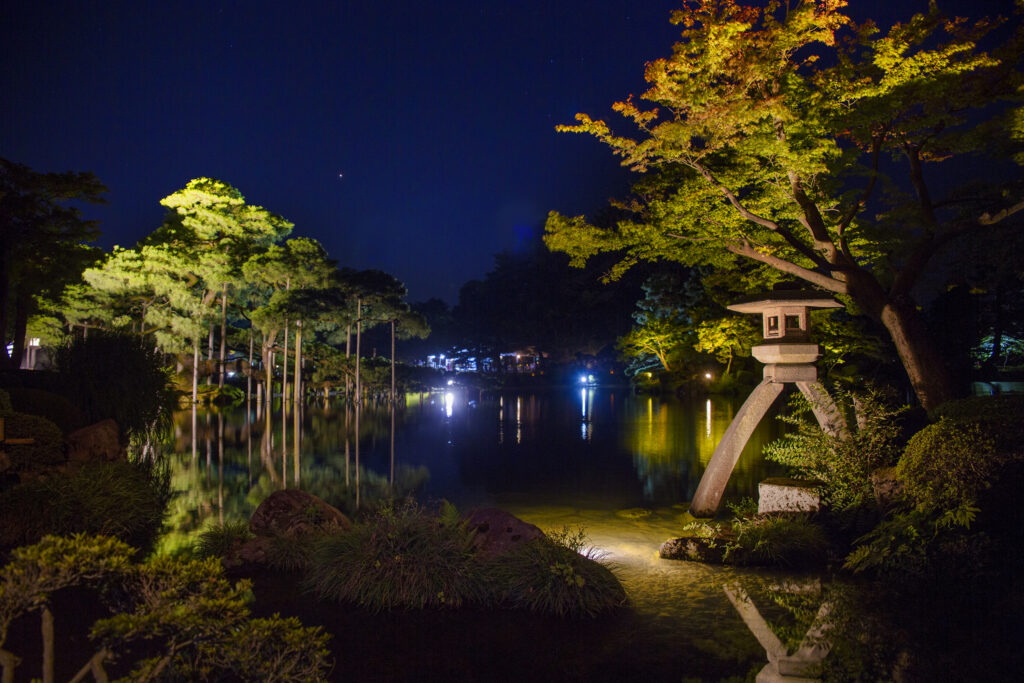
- 徽軫灯籠!Kotoji Stone Lantern (two-legged stone lantern)
- 👉二股の脚が琴の弦を支える「琴柱」に似ていることから名付けられた兼六園のシンボルです。
- 唐崎松!Karasaki Pine Tree
- 👉琵琶湖畔から種を取り寄せて育てられた、兼六園の中で最も枝ぶりの見事な黒松です。
- 霞ヶ池!Kasumiga-ike Pond
- 👉兼六園のほぼ中心に位置する最も大きな池で、蓬莱島が浮かんでいます。
- 蓬莱島(亀島)!Horai Island (a sacred island symbolizing longevity)
- 👉不老不死の願いが込められた、カメの形を模した霞ヶ池内の中島です。
- サイフォンの原理(日本最古の噴水)!siphon principle (Japan’s oldest natural-pressure fountain)
- 👉動力を使わず、霞ヶ池との高低差(自然水圧)だけで吹き上がる仕組みです。
2.兼六園全体
”About Kenrokuen Garden”
ここでは兼六園全体をカバーします。用途に合わせて以下のボタンから直接アクセスできます。
2.1 基本情報(10項目)
インバウンド対応の前に押さえておきたい兼六園全体の深い成り立ちや解説ポイントです。🎧米国話者
- It Began as a Small Villa Garden / 始まりは小さな別荘庭園
EN: Kenroku-en began as a private villa for the feudal lord, surrounded by a small garden. Traces of this original garden can still be seen around present-day Hisago-ike Pond.
JP: 兼六園は、藩主が静かに過ごすための別荘と、その周辺に造られた小さな庭から始まりました。現在の瓢池(ひさごいけ)周辺には、初期の庭園の面影が残っています。 - Gradual Expansion Over Several Centuries / 数百年かけた段階的な拡張
EN: The garden was not completed overnight. Successive feudal lords expanded the grounds bit by bit over centuries, adding ponds, streams, and artificial hills to develop its current form.
JP: 一度に完成させた庭園ではありません。歴代の藩主が数百年かけて少しずつ敷地を広げ、池や曲水、築山などを加えながら、現在の姿へと発展させました。 - Fire and Reconstruction / 火災と再建
EN: Although parts of the garden were destroyed in a major fire during the Edo period, key features such as the pond, waterfall, and tea houses were later restored, allowing the garden to regain its beauty.
JP: 江戸時代の大火で庭園の一部が焼失しましたが、その後、池や滝、茶亭などが再整備され、庭園は再び美しさを取り戻していきました。 - A Name Embodying the “Six Beauties” / 「6つの美」を兼ね備えた名前
EN: The name “Kenroku-en” derives from six traditional attributes used to evaluate a garden’s perfection. Its true charm lies in combining qualities that are usually hard to reconcile—such as vastness and seclusion, or artifice and natural beauty.
JP: 「兼六園」という名前は、庭園の美しさを評価する6つの要素(六勝)に由来します。広大さと静けさ、人工美と自然の趣など、通常は両立しにくい特徴を兼ね備えている点が魅力です。 - Named by Renowned Scholars / 知識人による命名
EN: The garden was named by the renowned scholar(Matsudaira Sadanobu) at the request of the feudal lord. Drawing on a classic Chinese text on garden design, he chose a name reflecting the garden’s ability to combine all six seemingly incompatible landscape qualities.
JP: 庭園の名前は、藩主の依頼を受けた当時の知識人(松平定信)によって付けられました。中国の庭園論に記された「六勝」の考え方を踏まえ、相反する6つの景観美を兼ね備えていることに由来します。 - Located Adjacent to Kanazawa Castle / 金沢城に隣接する立地
EN: Kenroku-en is situated on a hill right next to Kanazawa Castle, connected by structures like the Ishikawa Bridge. The castle and garden are closely intertwined, offering insight into the lord’s lifestyle and castle town culture.
JP: 兼六園は金沢城のすぐ隣の高台に位置しています。城と庭園は石川橋などを介して行き来でき、藩主の暮らしや城下町の文化を理解するうえで密接な関係にあります。 - The Tatsumi Canal: Bringing Water from Afar / 遠くから水を引いた辰巳用水
EN: The ponds and streams are fed by the Tatsumi Canal, which draws water from the upper reaches of the Sai River. Built using advanced engineering techniques, including tunnels through the hills, this nearly 400-year-old waterway still supplies water to the garden and parts of the historic city.
JP: 兼六園の池や曲水には、犀川上流から水を引く辰巳用水が利用されています。山を貫くトンネルなどの高度な土木技術で造られたこの用水は、約400年経った現在も現役で金沢の街や暮らしを支えています。 - Designed to Be Enjoyed While Strolling / 歩きながら景色を楽しむ回遊式庭園
EN: Rather than being viewed from a fixed spot, Kenroku-en was designed as a strolling garden. As you walk among the ponds, bridges, hills, and tea houses, the changing perspectives continually reveal new facets of its beauty.
JP: 同じ場所から眺めるだけでなく、池や橋、築山、茶亭などを巡り歩きながら景色を楽しむ「回遊式」に造られています。歩くにつれて視点が変わり、庭園の異なる表情を発見できます。 - Dual Purpose: Water as Castle Defense / 庭園の水が城を守る防衛の役割
EN: It is said that the ponds were designed with a mechanism to discharge water outward during emergencies, raising the water level in Kanazawa Castle’s moat. The idea that this serene water feature was also integral to castle defense adds a fascinating dimension to its story.
JP: 兼六園の池には、非常時に水を流し出して金沢城の堀の水位を上げる仕掛けがあったともいわれています。美しい水景が城の防御機能も兼ねていたという説は、庭園と城の深いつながりを示す興味深いストーリーです。 - From Private Sanctuary to World-Famous Garden / 藩主の私邸から一般公開の名園へ
EN: Once an exclusive sanctuary reserved for feudal lords and distinguished guests, the garden was opened to the public in the Meiji era. Today, it is designated as a National Special Place of Scenic Beauty, welcoming visitors from all over the world.
JP: かつては藩主や限られた貴賓だけが利用するプライベートな場所でしたが、明治時代に一般公開されました。現在は国の特別名勝に指定され、国内外から多くの人が訪れる日本庭園となっています。
👤連続音声;1-5
👥連続音声;6-10
Glossary:用語集
private villa ☛ 別荘 / feudal lord ☛ 藩主 / be surrounded by ☛ ~に囲まれている / trace ☛ 痕跡・名残 / original garden ☛ 初期の庭園 / Hisago-ike Pond ☛ 瓢池 / gradual expansion ☛ 段階的な拡張 / successive ☛ 歴代の / grounds ☛ 敷地 / bit by bit ☛ 少しずつ / pond ☛ 池 / stream ☛ 曲水・小川 / artificial hill ☛ 築山 / develop its current form ☛ 現在の姿へ発展する / century ☛ 世紀
major fire ☛ 大火 / destroy ☛ 破壊する・焼失させる / key feature ☛ 主要な要素 / waterfall ☛ 滝 / tea house ☛ 茶亭・茶屋 / restore ☛ 復元する / regain ☛ 取り戻す / beauty ☛ 美しさ
derive from ☛ ~に由来する / traditional attribute ☛ 伝統的な要素 / evaluate ☛ 評価する / perfection ☛ 完璧さ / true charm ☛ 真の魅力 / combine ☛ 兼ね備える / quality ☛ 特徴・性質 / reconcile ☛ 両立させる / vastness ☛ 広大さ / seclusion ☛ 静けさ・隔絶性 / artifice ☛ 人工美 / natural beauty ☛ 自然美
renowned scholar ☛ 著名な学者・知識人 / at the request of ☛ ~の依頼で / draw on ☛ ~を参考にする / classic Chinese text ☛ 中国古典 / garden design ☛ 庭園論 / reflect ☛ 反映する / seemingly incompatible ☛ 一見相反する / landscape quality ☛ 景観美
be situated on ☛ ~に位置する / adjacent to ☛ ~に隣接する / hill ☛ 高台 / be connected by ☛ ~で結ばれている / Ishikawa Bridge ☛ 石川橋 / closely intertwined ☛ 密接に結び付いている / offer insight into ☛ ~への理解を深める / lifestyle ☛ 暮らしぶり / castle town culture ☛ 城下町文化
Tatsumi Canal ☛ 辰巳用水 / be fed by ☛ ~から給水される / draw water from ☛ ~から取水する / upper reaches ☛ 上流部 / Sai River ☛ 犀川 / advanced engineering techniques ☛ 高度な土木技術 / tunnel ☛ トンネル / waterway ☛ 用水路 / supply water to ☛ ~へ水を供給する / historic city ☛ 歴史都市
strolling garden ☛ 回遊式庭園 / fixed spot ☛ 決まった場所 / be designed to ☛ ~するよう設計されている / bridge ☛ 橋 / changing perspective ☛ 変化する視点 / continually ☛ 絶えず / reveal ☛ 明らかにする / facet ☛ 側面・表情
dual purpose ☛ 二重の目的 / mechanism ☛ 仕組み / discharge water ☛ 放水する / emergency ☛ 非常時 / raise the water level ☛ 水位を上げる / moat ☛ 堀 / serene ☛ 穏やかな / water feature ☛ 水景施設 / integral to ☛ ~に不可不可な / castle defense ☛ 城の防御 / fascinating dimension ☛ 興味深い側面
private sanctuary ☛ 私的な憩いの場 / exclusive ☛ 限られた人だけの / reserve for ☛ ~専用とする / distinguished guest ☛ 貴賓 / open to the public ☛ 一般公開する / Meiji era ☛ 明治時代 / designate ☛ 指定する / National Special Place of Scenic Beauty ☛ 国指定特別名勝 / welcome visitors ☛ 来訪者を迎える / all over the world ☛ 世界中から
2.2 口頭説明用(10項目)
ゲストと一緒に歩きながら、テンポ良く口頭で伝えるためのシンプルなフレーズ集です。🎧米国話者
- It Began as a Small Villa Garden / 始まりは小さな別荘庭園
EN: Kenroku-en began as a small garden attached to a villa for the lord. Traces of it still remain around Hisago-ike Pond.
JP: もともとは殿様の別荘に付いた小さな庭から始まりました。今の瓢池(ひさごいけ)あたりに、その名残が少し残っています。 - The Garden Grew Over Many Generations / 代々の藩主による拡張
EN: The garden grew slowly over many generations. The lords gradually added ponds, streams, and hills to create its current form.
JP: 一気に造られた庭ではなく、代々の殿様が少しずつ手を加え、池や小川、築山などを増やして今の形になりました。 - Fire and Reconstruction / 火災と再建
EN: Parts of the garden burned in a big fire, but they were later restored.
JP: 昔の大きな火事で庭園の一部が焼けましたが、その後、池や滝、茶亭などが再整備され、美しさを取り戻していきました。 - The Six Qualities of a Garden / 庭園の「六勝」
EN: The name Kenroku-en refers to six traditional qualities of a perfect garden. It uniquely combines features that are usually hard to reconcile, like spaciousness and tranquility.
JP: 兼六園という名前は、理想的な庭園が備えるとされた6つの特徴(六勝)に由来します。広さと静けさなど、普通は両立しにくいものを兼ね備えているのが特徴です。 - Named by a Scholar / 学者による命名
EN: The lord asked a scholar to name the garden, drawing on an old Chinese text about garden design.
JP: 殿様が学者に庭園の命名を依頼し、中国の古い庭園論を参考にして名前が付けられました。 - Right Next to Kanazawa Castle / 金沢城のすぐ隣
EN: The garden sits right next to Kanazawa Castle, on higher ground. It is closely connected to the life of the lord and the culture of the castle town.
JP: 兼六園は金沢城のすぐ横の高台にあります。橋を渡って行き来できるほど近く、藩主の暮らしや城下町の文化と深くつながっていました。 - Water Brought from Far Away / 遠くから水を引いた辰巳用水
EN: Water for the ponds comes from a canal built with advanced engineering, including tunnels through the hills. This canal still supplies water today.
JP: 庭の池や流れは、犀川の上流から水を運ぶ辰巳用水で支えられています。山を貫くトンネルまで使った高度な土木技術で造られ、現在も庭園や街に水を送り続けています。 - A Garden to Enjoy While Walking / 歩きながら楽しむ庭園
EN: The garden is designed to be enjoyed while walking. As you move around, the scenery constantly changes and reveals new views.
JP: 池や橋、築山などを歩きながら、景色の変化を楽しむ「回遊式」に造られています。歩くにつれて、新しい景色が見えてきます。 - Water That May Have Helped Protect the Castle / 城を守ったかもしれない庭園の水
EN: It is said that in an emergency, pond water could be released into the moat to raise its water level and defend the castle.
JP: 非常時には、池の水を城の堀へ流し、堀の水位を上げて城を守る仕掛けがあったと言われています。美しい水景が城の防御にも役立っていたという、興味深い話です。 - From a Private Garden to a Public Attraction / 藩主の庭から一般公開の名園へ
EN: The garden was once reserved for the lord and special guests, but it opened to the public in the Meiji era. Today, it is one of Japan’s most celebrated gardens.
JP: 昔は殿様や特別な客だけが入れる庭でしたが、明治時代に一般公開されました。今では日本を代表する名園として、世界中から多くの人が訪れています。
👥連続音声:1-10
2.3 笑いが取れるかも?
🌸一目みて素朴に思うであろう想定疑問への説明例として、基本的に前半部は説明にも使える真面目パート、後半部は雑談力UPの為のおふざけパートの2部構成になっています。以下のボタンから各ストーリーへ直接飛べます。
Q1: この目の前の兼六園って何?
“What Is This Garden, Kenroku-en, in Front of Us?”
👉とてもよく聞かれる質問をベースに纏めたお笑いネタです。前半(1-5)は説明につかえる真面目パート、後半(6-10)は雑談力upを意図したおふざけパートです。🎧英国話者
- This is Kenroku-en, a garden created by the lords of Kanazawa Castle for their enjoyment and to entertain their guests.
JP: ここは兼六園です。金沢城の藩主たちが、自ら楽しみ、客人をもてなすために造った庭園です。 - But it was more than just a beautiful garden.
JP: でも、単に美しいだけの庭ではありませんでした。 - Some of its features are said to reflect the lords’ wishes for prosperity and long life.
JP: 庭園の造形の中には、一族の繁栄や長寿への願いが込められているともいわれています。 - You can discover these wishes by looking closely at the garden’s individual features.
JP: 庭園のさまざまな造形をよく見ると、そうした願いを読み取ることができます。 - For example, even the stone lanterns, stone bridges, and simple rocks and pine trees—which are common features in other Japanese gardens—hold an incredible number of mysteries.
JP: 例えば、他の日本庭園にもよくある石灯篭や石橋や、ただの石や松の形には信じられないくらいの謎があるのです。 - Of course, simply looking at them won’t reveal their hidden meanings.
JP: 勿論、ただ眺めているだけでは、その隠された意味までは分かりません。 - The clues are right in front of you, but you need someone to explain them.
JP: 手掛かりは目の前にあるのに、その意味を解き明かす人が必要なのです。 - That’s exactly why we guides are here—to help you crack the code.
JP: だからこそ、私たちガイドがいるわけです。皆さんが、その謎を解き明かすために。 - It’s a bit like The Da Vinci Code, isn’t it?
JP: まるで『ダ・ヴィンチ・コード』みたいでしょう? - But don’t worry, unlike the Da Vinci Code, no one has died, and there is no danger to you.
JP: でもご安心ください。ダビンチコードのように誰も死んでいませんし、皆さんに危険はありませんので。
Glossary:用語集
lord ☛ 藩主 / for one’s enjoyment ☛ 自ら楽しむために / entertain guests ☛ 客人をもてなす / beautiful garden ☛ 美しい庭園 / feature ☛ 特徴・造形 / be said to ☛ ~と言われている / reflect ☛ 反映する / wish ☛ 願い / prosperity ☛ 繁栄 / long life ☛ 長寿 / discover ☛ 発見する / look closely at ☛ ~をよく観察する / individual feature ☛ 個々の特徴・造形
stone lantern ☛ 石灯籠 / stone bridge ☛ 石橋 / pine tree ☛ 松 / common feature ☛ よく見られる要素 / incredible ☛ 信じられないほどの / mystery ☛ 謎 / of course ☛ もちろん / hidden meaning ☛ 隠された意味 / reveal ☛ 明らかにする / clue ☛ 手掛かり / right in front of ☛ ~の目の前に / explain ☛ 説明する / crack the code ☛ 謎を解く・暗号を解読する / guide ☛ ガイド
exactly why ☛ まさにその理由で / help A do B ☛ AがBするのを助ける / a bit like ☛ ~に少し似ている / The Da Vinci Code ☛ ダ・ヴィンチ・コード / don’t worry ☛ 心配しないでください / unlike ☛ ~とは違って / danger ☛ 危険 / no danger to you ☛ あなたに危険はない
Q2: 日本の三大名園とは何でしょうか?
“What Are the Three Great Gardens of Japan?”
👉頻繁に聞かれるわけではありませんが、歴史好きのゲストから時々聞かれる質問です。前半(1-7)は説明につかえる真面目パート、後半(8-10)は雑談力upを意図したおふざけパートです。🎧米国話者
- They refer to what are widely regarded as three of Japan’s most celebrated gardens.
JP: 日本で特に名園として知られている三つの庭園のことを指します。 - Of course, Japan is home to countless beautiful gardens, but these three hold a special place in the nation’s gardening tradition.
JP: もちろん日本には美しい庭が無数にありますが、この三つは特に伝統の中で特別な位置づけになっています。 - In Japan, the label “Three Great” is used in many fields, not just gardens.
JP: 日本では「三大〜」という呼び方は庭園だけでなく、いろいろな分野で使われます。 - For example, we have the Three Great Scenic Spots, the Three Great Hot Springs, and the Three Great Festivals, to name a few.
JP: たとえば「三景」「三名泉」「三大祭」など、いろいろな“三大シリーズ”があります。 - There are no official government criteria for selecting Japan’s Three Great Gardens, and the exact origins of the title remain unclear.
JP: 三名園を選ぶ公式な基準は国にもなく、その呼び名がいつ定着したかもはっきりしていません。 - What’s fascinating is how such labels, despite the lack of clear selection criteria, gradually gained nationwide recognition.
JP: 面白いのは、明確な基準がないのに、こうした呼び名が全国的に広まっていったことです。 - Today, “Japan’s Three Great Gardens” is so well established that it even appears in official tourism databases.
JP: 今では「日本三名園」という言葉はとても定着していて、公式の観光情報にも載っています。 - But if you think about it, it’s a bit cheeky, isn’t it? After all, there are magnificent gardens all across the country.
JP: でもよく考えると、ちょっと図々しい感じもしますよね。日本中に素晴らしい庭園がたくさんあるわけですから。 - That’s why, as a tour guide, the only time I can drop the phrase “Three Great Gardens” with total confidence is when I’m talking to international visitors.
JP: だからガイドとして「三名園です!」と胸を張って言えるのは、海外のお客様に説明するときだけなんです。 - After all, they have absolutely no competitive or financial interests in which gardens make the list.
JP: というのも、どの庭園が選ばれても、海外のお客様には競争心も利害関係もまったくありませんから。
Glossary:用語集
be widely regarded as ☛ 広く~と認識されている / celebrated garden ☛ 名園 / hold a special place ☛ 特別な地位を占める / gardening tradition ☛ 庭園文化・庭園の伝統 / countless ☛ 無数の
Three Great Gardens ☛ 三名園 / label ☛ 呼び名・称号 / field ☛ 分野 / Scenic Spot ☛ 景勝地 / Hot Spring ☛ 温泉 / Festival ☛ 祭り / to name a few ☛ ほんの一例を挙げると
official government criteria ☛ 公式な選定基準 / select ☛ 選定する / exact origins ☛ 正確な起源 / remain unclear ☛ はっきりしていない / fascinating ☛ 興味深い / despite ☛ ~にもかかわらず / lack ☛ 欠如 / selection criteria ☛ 選考基準 / gradually ☛ 徐々に / gain recognition ☛ 認知される / nationwide ☛ 全国的に
well established ☛ 広く定着している / official tourism database ☛ 公式観光データベース / appear in ☛ ~に掲載される / cheeky ☛ 図々しい・少し生意気な / after all ☛ よく考えれば・だって / magnificent ☛ 素晴らしい・壮大な / all across the country ☛ 全国各地に
tour guide ☛ 観光ガイド / drop a phrase ☛ 言葉を口にする・使う / with total confidence ☛ 自信満々に / international visitor ☛ 海外からの観光客 / absolutely no ☛ 全くない / competitive interest ☛ 競争意識 / financial interest ☛ 利害関係 / make the list ☛ ランキング・選定に入る
Q3: なぜ『兼六園』と呼ばれるようになったの?
“Why is this garden called Kenrokuen?”
👉これも時々聞かれる質問なので、6条件の内容を織り込んで纏めました。前半(1-6)の説明パートには公式サイトの6表現も織り込みました。音も付けてますので、すらすら言えるようになりたい方はご活用ください。後半(7-10)はいつものおふざけパートです。🎧インド話者
- The name Kenrokuen means “an ideal garden that possesses six beauties.”
JP: それは『六つの美を備えた理想的な庭園』という意味です。 - In ancient China, six essential features were required for a perfect garden.
JP: 古代中国では、完全な庭園には六つの必須条件が必要とされていました。 - Each condition contradicts the others, making it extremely difficult to satisfy them all.
JP: 六つの条件は互いに矛盾しているため、同時に満たすのは非常に難しいのです。 - It was actually almost impossible, but the castle lords tried to create a perfect garden.
JP: 実際にはほぼ不可能ですが、城主たちはその“完全な庭園”を目指して造ったのです。 - And a renowned scholar, asked by the lord, named the garden, drawing on an old Chinese text about garden design.
JP: そして或る著名な学者が、中国の古い庭園論を参考にして名前が付けたのです、殿様に頼まれてね。 - On the official website, these six conditions are described with difficult terms: “spaciousness,” “seclusion,” “artifice,” “antiquity,” “water-courses,” and “panoramas.”
JP: 公式HPでは、この六条件を「宏大・幽邃・人力・蒼古・水泉・眺望」と難しい言葉で表現しています。 - These are not words people in Japan use in daily life, so it’s hard to understand them just by hearing them.
JP: 普段使わない単語なので、日本人でも聞いただけで理解するのは難しいです。 - So, as a guide, I try to give explanations that people can understand just by listening.
JP: だから私もガイドとして、聞いただけで分かるように、できるだけ分かりやすく説明しています。 - For example, I sometimes explain it by focusing on the contradictions—“big and small,” “natural and man-made,” and “far and near.”
JP: 例えば、矛盾した要素にフォーカスして、「大きいものと小さいもの」「自然物と人工物」「遠いものと近いもの」の美がある、と説明したりします。 - And if such an over‑simplified explanation helps foreign visitors understand, does that mean I’ve achieved the difficult seventh criterion and become a truly great guide?
JP: もしこんな超デフォルメした説明で外国客にご理解いただければ、私は六条件の完璧な名園を説明する“困難な七条件”を達成した、偉大なガイドということになりますかね?
Glossary:用語集
ideal garden ☛ 理想的な庭園 / possess ☛ 備える・持つ / six beauties ☛ 六つの美 / ancient China ☛ 古代中国 / essential feature ☛ 必須条件 / perfect garden ☛ 完全な庭園 / condition ☛ 条件 / contradict ☛ 矛盾する / satisfy ☛ 満たす / almost impossible ☛ ほぼ不可能な / castle lord ☛ 城主・藩主 / create ☛ 作り上げる
renowned scholar ☛ 著名な学者 / draw on ☛ ~を参考にする / old Chinese text ☛ 中国の古典書 / garden design ☛ 庭園論 / official website ☛ 公式ウェブサイト / describe ☛ 説明する / spaciousness ☛ 広大さ(宏大) / seclusion ☛ 静けさ・奥深さ(幽邃) / artifice ☛ 人工美(人力) / antiquity ☛ 古雅さ・古さ(蒼古) / water-course ☛ 水の流れ・水泉 / panorama ☛ 眺望・見晴らし
daily life ☛ 日常生活 / just by hearing ☛ 聞いただけで / understand ☛ 理解する / as a guide ☛ ガイドとして / explanation ☛ 説明 / focus on ☛ ~に焦点を当てる / contradiction ☛ 矛盾 / natural ☛ 自然の / man-made ☛ 人工の / far and near ☛ 遠景と近景
over-simplified ☛ 極端に単純化した / foreign visitor ☛ 海外からの訪問者 / achieve ☛ 達成する / criterion ☛ 基準・条件 / seventh criterion ☛ 七つ目の条件 / truly great guide ☛ 本当に優れたガイド
Q4: 他の庭園とどこが違うの?
“What makes Kenrokuen Garden different from other Japanese gardens?”
👉これも時々聞かれる質問ですか、その美しさについて、他の庭園と比較する客観データは当然ありませんので、現場でも使える例文を交えてまとめてみました。前半(No1~5)は説明に使える真面目パート、後半部(No6~10)は雑談力upのおふざけパートです。但し、具体的な庭園名は控えておりますのでご利用の際は少しだけご注意くださいませ。(笑) 🎧米国話者
- Kenrokuen Garden is one of the “Three Great Gardens in Japan.”
JP: 兼六園は日本三大庭園の1つです。 - Many people consider this garden to be highly perfected as a Japanese garden.
JP: 多くの人が、日本庭園として完成度が高いと評価しています。 - Here, “perfection” refers to scenery that looks like a carefully crafted painting.
JP: ここでいう完成度とは、人が作り出した絵画のような美しさのことです。 - The garden designers tried to create many beautiful scenes based on the lords’ intentions.
JP: 庭園の設計者は、領主の意図を踏まえ、さまざまな美しい景色を描こうとしました。 - Here, you can see various garden techniques that were used to create that beauty.
JP: ここでは、その美しさを生み出すための多様な庭園技術を見ることができます。 - Other gardens are equally beautiful, but there is one big difference.
JP: 他の庭園も同じように美しいですが、一つ大きな違いがあります。 - Other gardens often have names that sound pleasant and are easy to use.
JP: 他の庭園は、名前の響きもよく、使いやすい単語なのです。 - So those names are often used for baseball fields, Chinese restaurants, yakiniku restaurants, ramen shops, and so on.
JP: そのため、野球場や中華料理店、焼肉店、ラーメン屋などで同じ名前がよく使われます。 - However, the name “Kenrokuen” is rarely used.
JP: しかし、「兼六園」という名前だけは、ほとんど使われません。 - Probably, no one feels confident enough to offer entertainment or cuisine that satisfies all six criteria.
JP: 6つの条件をすべて満たす“完璧な娯楽や料理”を提供する自信は、どこにもないのでしょうね。
Glossary:用語集
Three Great Gardens in Japan ☛ 日本三名園 / consider A to be B ☛ AをBだと考える / highly perfected ☛ 完成度が高い / Japanese garden ☛ 日本庭園 / perfection ☛ 完成度・完成美 / scenery ☛ 景観・景色 / carefully crafted ☛ 丹念に作られた / painting ☛ 絵画
garden designer ☛ 庭園設計者 / lord’s intention ☛ 藩主の意図 / create beautiful scenes ☛ 美しい景観を作り出す / garden technique ☛ 庭園技法 / produce beauty ☛ 美しさを生み出す / various ☛ 多様な
equally beautiful ☛ 同じように美しい / big difference ☛ 大きな違い / sound pleasant ☛ 響きが良い / easy to use ☛ 使いやすい / baseball field ☛ 野球場 / Chinese restaurant ☛ 中華料理店 / yakiniku restaurant ☛ 焼肉店 / ramen shop ☛ ラーメン店 / and so on ☛ など
rarely used ☛ ほとんど使われない / probably ☛ おそらく / feel confident enough to ☛ ~するだけの自信がある / offer ☛ 提供する / entertainment ☛ 娯楽 / cuisine ☛ 料理 / satisfy ☛ 満たす / criterion ☛ 条件・基準 / all six criteria ☛ 六つの条件すべて
Q5: 日本3大庭園ってどの様に決まったの?
“How Were the Three Great Gardens of Japan Chosen?”
👉日本三名園を使った時によく聞かれる質問です。今回は「しまった!」と思う前に読んでおきたい内容です。前半部(1-6)が真面目パート、後半(7-10)がおふざけパートです。🎧米国話者
- There was no official committee that selected Japan’s Three Great Gardens.
JP: 日本三大庭園を選定した公式な委員会があったわけではありません。 - The three gardens are Kenrokuen in Kanazawa, Kairakuen in Mito, and Korakuen in Okayama.
JP: 三つの庭園とは、金沢の兼六園、水戸の偕楽園、岡山の後楽園です。 - All three were created by feudal lords during the Edo period.
JP: いずれも江戸時代に大名によって造られた庭園です。 - After the Meiji Restoration, the feudal system disappeared, and these gardens gradually became public parks and popular attractions.
JP: 明治維新後、封建制度がなくなると、これらの庭園は徐々に公園として一般に開放され、人気の名所となりました。 - By the Meiji era, they were already being referred to as Japan’s Three Great Parks, although no one knows exactly who first grouped them together or why.
JP: 明治時代には、すでに「日本三公園」と呼ばれていましたが、誰が最初にこの三つを一組として選んだのか、その理由も正確には分かっていません。 - Over time, they came to be widely recognized as Japan’s Three Great Gardens.
JP: 時代とともに、日本三大庭園として広く認知されるようになりました。 - But there was no official committee or clear selection criteria, unlike UNESCO’s World Heritage system.
JP: しかし、公式な選定委員会も明確な選定基準もありませんでした。明確な基準があるユネスコの世界遺産制度とは対照的ですね。 - Well, that sounds like a very traditional Japanese way of doing things. Throughout Japanese history, there have been many important decisions whose details remain unclear.
JP: まあ、いかにも日本の伝統的なやり方らしいですね。日本の歴史には、誰がどのように決めたのか、詳細が分からない重要な決定が数多くあります。 - Why not nominate the name “Japan’s Three Great Gardens” for UNESCO World Heritage status?
JP: いっそのこと、「日本三大庭園」というネーミング自体を、ユネスコ世界遺産に申請したらどうでしょう? - “Japan’s Three Great Gardens: A Thousand-Year Tradition of Decisions Behind Closed Doors!” How about that? (Laughs.)
JP: 「日本三大庭園――千年続く密室決定文化の象徴!」なんてね(笑)。
Glossary:用語集
official committee ☛ 公式委員会 / select ☛ 選定する / Three Great Gardens ☛ 三大庭園・三名園 / feudal lord ☛ 大名・藩主 / Edo period ☛ 江戸時代 / Meiji Restoration ☛ 明治維新 / feudal system ☛ 封建制度 / disappear ☛ 消滅する・なくなる / gradually ☛ 徐々に / public park ☛ 公園 / popular attraction ☛ 人気の観光名所
Meiji era ☛ 明治時代 / refer to A as B ☛ AをBと呼ぶ / group together ☛ 一まとめにする・セットにする / proposal ☛ 提案・説 / prove ☛ 証明する / link A to B ☛ AをBに結び付ける/
selection criteria ☛ 選定基準 / unlike ☛ ~とは違って / World Heritage system ☛ 世界遺産制度 / traditional Japanese way ☛ 日本の伝統的なやり方 / throughout history ☛ 歴史を通じて / important decision ☛ 重要な決定 / remain unclear ☛ 不明確なままである / details ☛ 詳細
nominate ☛ 申請する・推薦する / status ☛ 資格・ステータス / thousand-year tradition ☛ 千年の伝統 / decisions behind closed doors ☛ 密室決定 / how about that ☛ いかがでしょうか / laughs ☛ (笑)
Q6.兼六園の広さはどれくらいあるの?
“How big is Kenroku-en?”
今回は特別版です!
兼六園の広さは、海外ゲストからもよく聞かれる質問です。少しでもそのスケールを伝えたいという思いを込めて、今回は特別に「真面目パート10文+おふざけパート10文」の全20セットでまとめてみました。
実体験をふんだんに織り込んでいます。読まれる方の腑に落ちる箇所が少しでもあれば幸いです。
[1] 真面目(ゲスト説明)パート:How Do You Explain the Size?
- EN: Kenroku-en covers an area of about 11.4 hectares (114,000 square meters). When visitors ask about its size, I often use different comparisons depending on the visitor to help them picture it.
JP: 兼六園の面積は約11.4ヘクタール(114,000平方メートル)です。広さについて質問された際は、相手にイメージしやすいように様々な例えを使って説明しています。 - EN: In Japan, people often compare it to Tokyo Dome, a famous baseball stadium in Tokyo, saying that Kenroku-en is about 2.4 times its building area. However, that reference may not mean much to visitors from overseas.
JP: 日本人は、しばしば東京にある有名な野球場「東京ドーム」を使って、建築面積の約2.4倍と言います。ただし、この例えは海外の方にはあまり馴染みがないかもしれません。 - EN: For international visitors, I sometimes compare it to soccer fields. Kenroku-en is equivalent to about 16 soccer fields, although that comparison may not resonate with everyone either.
JP: 海外の方には、サッカー場で例えることもあります。兼六園は約16面分ですが、この説明も人によってはピンと来ないかもしれません。 - EN: The other day, an American guest asked me for the area in acres, so I looked it up and told them it was about 28 acres. They seemed very satisfied with that answer.
JP: 先日、アメリカのゲストからエーカーで聞かれたので、調べて約28エーカーとお答えしたところ、とても満足されました。 - EN: That’s when it dawned on me: the best way to explain an area’s size isn’t by comparing it to landmarks, but by using units that guests are familiar with.
JP: そこでハッと気が付いたのです。広さを説明する最善の方法は、ランドマークと比較することではなく、ゲストが慣れ親しんだ単位を使うことなのだと。 - EN: For Americans, it’s acres; for Europeans, hectares; for many others, square meters; and for Japanese people, tsubo.
JP: アメリカ人ならエーカー、ヨーロッパ人ならヘクタール、その他多くの人々なら平方メートル、そして日本人なら坪です。 - EN: Kenroku-en is about 34,500 tsubo, which is equivalent to roughly 690 plots of land measuring 50 tsubo each. Many Japanese people can easily picture a large-scale housing development with nearly 700 plots.
JP: 兼六園は約34,500坪なので、50坪の土地なら約690区画分です。多くの日本人は約700区画もある大住宅地が想像できます。 - EN: For Japanese people who grow rice, the traditional unit tan might be easier to relate to.
JP: 米作りをしている日本人にとっては、伝統的な面積単位である「反」の方が分かりやすいかもしれません。 - EN: One tan is about 0.1 hectares (1,000 square meters), so Kenroku-en could be pictured as a large rice farm made up of about 114 rice fields, each measuring one tan.
JP: 1反は約0.1ヘクタール(1,000平方メートル)なので、兼六園は1反の田んぼ約114枚からなる大きな農地としてイメージすることもできます。 - EN: Looking back, that American guest may simply have been visualizing Kenroku-en in a unit that felt familiar to them. In the end, people understand size best through comparisons they can relate to.
JP: 今振り返ると、そのアメリカのゲストは単に自分に馴染みのある単位で兼六園の広さをイメージしていたのかもしれません。結局のところ、人は自分に馴染みのある比較を通して広さを理解するものなのでしょう。
[2] おふざけ(最後は激白調)パート:My Sense of Scale!
- EN: That said, to be honest, the question about “acres” surprised me and left a strong impression.
JP: とはいえ、正直なところ、「エーカー」という質問には驚き、強く印象に残るものがありました。 - EN: In the United States, residential lot sizes are often measured in square feet or acres.
JP: 米国では住宅用敷地の面積は、多くの場合、平方フィートまたはエーカーで表されます。 - EN: According to a recent statistic, the average lot size for newly built single-family homes sold was approximately 8,500 square feet, or about 0.20 acres.
JP: ある最近の統計によると、販売された新築一戸建て住宅の敷地面積の平均は、約8,500平方フィート、つまりおよそ0.20エーカーでした。 - EN: When I hear that word, images of vast open spaces and a leisurely lifestyle come to mind.
JP: この言葉を聞くと、広大な空間、そしてゆったりとしたライフスタイルといったイメージが浮かびます。 - EN: It makes me feel as though everything is happening on a much grander scale.
JP: すべてがはるかに大きなスケールで展開されているような気分にさせられます。 - EN: By the way, 0.20 acres is about 245 tsubo. That’s roughly the size of five 50-tsubo plots of land.
JP: ちなみに、0.20エーカーは約245坪です。日本の感覚でいうと、50坪の土地の約5区画分ですね。 - EN: Sadly, when it comes to 28 acres, I simply can’t picture how vast that is.
JP: 悲しいかな、28エーカーになると、どんな広さなのか、私にはさっぱりイメージが湧きません。 - EN: I guess my sense of scale is pretty limited.
JP: つくづく自分のスケールの小ささを感じます。 - EN: I know this might sound disrespectful to both you and Kenroku-en, but I have to admit it. What really resonates with me is the tiny six-tatami room I lived in when I was a poor college student. And there were plenty of students just like me.
JP: お客様と兼六園には失礼とは思いつつ、告白します。ピンと来るのは、貧乏学生だった頃に住んでいた、たった6畳の部屋なのです。そして、私のような学生はたくさんいました。 - EN: That’s about 12,000 rooms! Sorry, Kenroku-en. So apparently more than 10,000 of my old six-tatami student rooms could fit in here. (Laughter)
JP: その数、約1万2千室!ごめんね、兼六園。貧乏学生時代の6畳間が1万室以上も入るんだね!(笑)
Glossary:用語集
cover an area of ☛ ~の面積を占める・覆う / hectare ☛ ヘクタール / square meter ☛ 平方メートル / comparison ☛ 比較・例え / Tokyo Dome ☛ 東京ドーム / building area ☛ 建築面積 / equivalent to ☛ ~に相当する / soccer field ☛ サッカー場 / acre ☛ エーカー / look up ☛ 調べる / dawn on ☛ ~にハッと気づく / landmark ☛ ランドマーク / unit ☛ 単位 / familiar with ☛ ~に慣れ親しんでいる / tsubo ☛ 坪 / plot of land ☛ 土地の区画 / resonate with ☛ ~にピンとくる・響く / housing development ☛ 住宅地 / grow rice ☛ 米作りをする / traditional unit ☛ 伝統的な単位 / tan ☛ 反(面積の単位) / relate to ☛ ~に親近感を持つ・理解しやすい / rice farm ☛ 農地・田んぼ / rice field ☛ 田んぼ / visualize ☛ イメージする・思い描く
to be honest ☛ 正直なところ / leave a strong impression ☛ 強い印象を残す / residential lot size ☛ 住宅の敷地面積 / square feet ☛ 平方フィート / statistic ☛ 統計 / average ☛ 平均 / single-family home ☛ 一戸建て住宅 / roughly ☛ およそ / vast open space ☛ 広大な空間 / leisurely ☛ ゆったりとした / come to mind ☛ 浮かぶ / grander scale ☛ はるかに大きなスケール / picture ☛ イメージする / limited ☛ 限られている / disrespectful ☛ 失礼な / admit ☛ 認める・告白する / six-tatami room ☛ 6畳間 / poor college student ☛ 貧乏学生 / fit in ☛ 収まる・入る / laughter ☛ (笑)
0-1. Appendix / あわせて読みたい記事&旅の備え
🧭 あわせて読みたい!笑える通訳ガイド解説術シリーズ(クリックで展開)
💡 兼六園ガイドの後に特におすすめの3選:
- 🏯 金沢城を英語案内・笑いも取れる解説(兼六園の隣!前田家の居城へ)
- 🏮 成巽閣を英語案内・笑いも取れる解説(兼六園に隣接する奥様方のための優美な御殿)
- 🍵 茶道を英語で案内|笑いも取れる解説術(兼六園内の茶室・文化解説をさらに深く)
📋 エリア・テーマ別 全リスト:
- 兼六園を英語案内・笑いも取れる解説
- 金沢城を英語案内・笑いも取れる解説
- 成巽閣を英語案内・笑いも取れる解説
- ひがし茶屋街を英語案内・笑いも取れる解説
- 野村家を英語案内・笑いも取れる解説
- 鈴木大拙館を英語案内・笑いも取れる解説
- 茶道を英語で案内|笑いも取れる解説術
- お寺を英語で案内|笑いも取れる解説術
- 神社を英語で案内|笑いも取れる解説術
- 日本の城を英語案内・笑いも取れる解説
- 九谷焼を英語案内・笑いも取れる解説
- 山中漆器で笑いも取れる解説術
- 白川郷を英語案内・笑いも取れる解説
- 五箇山を英語案内・笑いも取れる解説
- 松本城を英語案内・笑いも取れる解説
- 高山陣屋を英語案内・笑いも取れる解説
- 二条城を英語案内・笑いも取れる解説
- 日本の地震を英語で・笑いも少しだけ?解説
🛡️ 広い庭園の飛び石や坂道も安心して散策するために
兼六園をはじめとする日本庭園や歴史的スポットは見どころが多い反面、美しい景観に気を取られ、段差や石畳で足元をすくわれるなど、思わぬ事故のリスクも隣り合わせです。海外ゲストが日本全国の歴史探訪を安心して楽しめるよう、急なケガや体調不良をカバーする旅行保険の準備を事前にお勧めしておくと安心です。
0-2. 公式HPのご紹介
本ブログではインバウンドと混雑した雑踏の中を歩きながら、極力思考力を相手に求めない簡単な表現を心掛けておりますので、詳細情報や高度な描写をご要望の場合は下記の公式サイトで直接ご参照下さいませ。(いずれもトップメニューの言語でEnglish版に設定できます。)
兼六園|観光・体験|【公式】金沢の観光・旅行情報サイト|金沢旅物語 (kanazawa-kankoukyoukai.or.jp)
御礼&後書き

👆 今回も最後までお読みいただき、ありがとうございます。 本ブログに関するご意見やご要望がございましたら、下記より、お気軽にお声がけくださいね。