 峰(Mine)
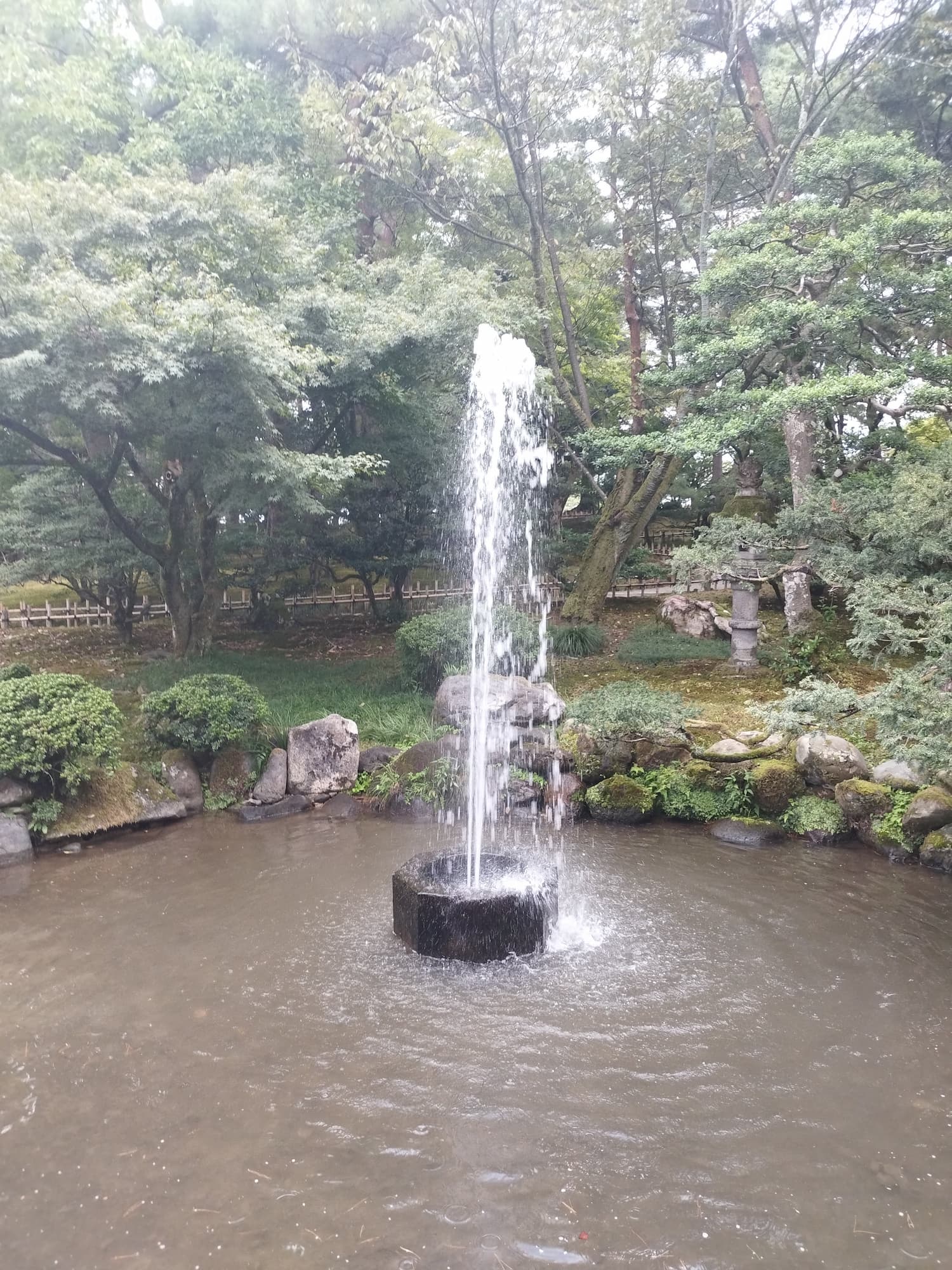
皆さん、こんにちは!日本庭園・和服ウオッチャー&ガイドのミネです。日本最古の噴水とされ、ポンプなどの機械動力を一切使わずに自然の水圧(サイフォンの原理)だけで吹き上がる『噴水(ふんすい)』の英語案内ページへようこそ!
霞ヶ池との高低差を利用して噴き出す高さ約3.5メートルの水柱は、江戸時代の優れた水利技術「辰巳用水」の叡智を今に伝える兼六園屈指の技術的見どころです。
現場でサッと使える短文フレーズから、ゲストをクスッと笑わせる裏話まで網羅しました。目的の項目ボタンからご自由にご活用ください。
📍 Quick Navigation: 各章へジャンプ
8.噴水(ふんすい)
“Fountain”
ここでは兼六園の名所・日本最古の噴水をカバーします。下記ボタンからも直接アクセスできます。
笑いも取れるかも各トーク
8.1 基本情報
このスポットで最低限押えておきたいポイントです。
-
Japan’s Oldest Surviving Fountain / 現存最古の噴水
EN: Built in 1861 during the late Edo period, this is considered the oldest surviving fountain in Japan.
JP: 1861年(江戸末期)に造られた現存最古の噴水で、日本で最も早い時期の噴水とされています。
-
Prototype for Kanazawa Castle Water System / 金沢城の給水計画の試作
EN: It was reportedly created as a prototype for a water‑supply system planned for Kanazawa Castle, including the idea of installing a fountain inside the castle.
JP: 金沢城の給水設備(城内に噴水を設ける案を含む)の試作として造られたと伝えられています。
-
Gravity-Powered Fountain Without Electricity / 電気もポンプもない時代の重力式噴水
EN: Since electricity and pumps did not exist at the time, the fountain was designed to operate entirely by gravity using water from Kasumiga Pond, located about five meters higher.
JP: 当時は電気もポンプもなかったため、ここより約5メートル高い霞ヶ池の水だけで動く重力式の噴水として設計されました。
-
Reverse-Siphon Hydraulic Engineering / 伏せ越し(逆サイフォン)構造の歴史的実例
EN: It uses a reverse‑siphon “fusegoshi” system, where water flows through a pipe that dips once before rising—an important example of hydraulic engineering from the period.
JP: 配管が一度沈んでから上がる「伏せ越し(逆サイフォン)」構造で、当時の水路技術を示す貴重な実例です。
-
Height Controlled by Natural Water Pressure / 水位で高さが変わる自然水圧噴水
EN: Because it relies solely on natural water pressure, the fountain’s height changes with the water level of Kasumiga Pond, making it a rare surviving example of pre‑modern engineering.
JP: 自然水圧だけで動くため、霞ヶ池の水位によって噴水の高さが変わる、近代以前の技術を今に伝える貴重な例です。
8.2 口頭説明
基本情報をベースにしたゲストと歩きながら使える口頭説明例です。
-
Japan’s Oldest Fountain / 日本最古の噴水
EN: This is Japan’s oldest surviving fountain from the late Edo period.
JP: これは江戸時代末期に造られた、日本最古の噴水です。
-
Tested for Kanazawa Castle / 金沢城の試作と言われている
EN: It’s said to have been a test for Kanazawa Castle’s water system.
JP: 金沢城の給水計画の試作だったと言われています。
-
Powered Without Electricity / 電気のない時代の仕組み
EN: There were no pumps back then, so it works only with water from Kasumiga Pond.
JP: 当時はポンプがないので、霞ヶ池の水だけで動いています。
-
Driven by Natural Pressure / 自然の水圧で吹き上がる
EN: The water rises here by natural pressure.
JP: 自然の水圧で水が吹き上がっています。
-
Fountain Height Varies with Water Level / 水位で高さが変わる
EN: When the pond’s water level changes, the fountain’s height changes too.
JP: 霞ヶ池の水位が変わると、噴水の高さも変わります。
8.3 笑いが取れるかも?説明例
このパートでは、噴水の前でよく聞かれる質問に対する説明例をご紹介しています。前半部は説明にも使える真面目パート、後半部は雑談力UPの為のおふざけパートの2部構成になっています。
Q1: なぜ噴水がこの歴史ある公園にあるんですか?
“Why is there a fountain in this historic garden?”
-
EN: As you say, a fountain might seem out of place in a garden with more than three hundred years of history.
JP: 仰る通り、三百年以上の歴史がある庭園に噴水は少し場違いに見えるかもしれません。
-
EN: It’s said that this fountain is a remnant of a trial project carried out about 150 years ago to test a fountain for Kanazawa Castle.
JP: この噴水は約150年前、金沢城に噴水を作るための試作の名残りと言われています。
-
EN: That was during the samurai era, long before electricity, so they had to test whether water could really be raised using only physical mechanisms.
JP: 当時はサムライ時代で電気もポンプもありませんので、物理的な仕組みだけで水が上がるか実験する必要があったわけです。
-
EN: Fortunately, four hundred years earlier, water had been channelled from the upper river through an underground tunnel to Kenroku-en, so they knew it was possible.
JP: 幸い、四百年前に川の上流から地下トンネルで兼六園まで水を引いた実績がありました。
-
EN: If there is an elevation difference between the water source and the destination, water can be conveyed using the inverted‑siphon principle, so they applied that idea.
JP: 水源と目的地に高低差があれば逆サイフォンの原理で水を送れますので、その原理を使ったわけです。
-
EN: So the water here is pushed upward by the pressure created by the height difference between this fountain and the pond above it.
JP: この噴水の水は、ここより高い池との高低差による水圧で上がっているわけですね。
-
EN: The information board says this is Japan’s oldest fountain, and while that’s true, as a guide I sometimes find myself at a loss for words.
JP: 説明看板には日本最古の噴水と書いてありますが、事実ではあっても、ガイドとしては時々言葉に詰まることがあります。
-
EN: Even if it’s the oldest in Japan, at only about 150 years, I wonder if it really resonates with Western visitors who have enjoyed fountains since the Roman Empire.
JP: 日本最古といっても150年ほどでは、ローマ帝国の時代から噴水を楽しんできた西洋のゲストの心に響くのかどうか…。
-
EN: So every now and then, I feel like explaining it this way.
JP: なので、時々こう説明したくなるのです。
-
EN: This is the most profitable fountain in Japanese history—after all, it earns admission fees from millions of visitors every year without paying for an electric pump!
JP: これは日本史上もっとも利益率の高い噴水です。なんたって電気ポンプのコストなしで、毎年数百万人のゲストから入場料を稼いでいるのですから!
Q2: 水圧で上がる仕組みをもう少しわかりやすく説明して。
“Could you explain the mechanism that uses water pressure to lift things a little more clearly?”
- EN: The secret is that the pond above us is about five meters higher than this fountain.
JP: 秘密は、上にある霞ヶ池が、この噴水より約5メートル高い位置にあることです。 - EN: Water flows from the pond through underground pipes, and gravity creates pressure as it moves downward.
JP: 池の水が地下の管を通って流れ落ちる際、重力によって水圧が生まれます。 - EN: That pressure is strong enough to push the water back up through this fountain nozzle.
JP: その水圧によって、水が再びこの噴水のノズルから上に押し上げられるのです。 - EN: In other words, the fountain doesn’t need a pump or electricity. Gravity does all the work.
JP: つまり、この噴水にはポンプも電気も必要ありません。重力がすべての仕事をしてくれるわけです。 - EN: This kind of engineering was not new to the people of Kanazawa.
JP: こうした技術は、当時の金沢の人々にとって決して目新しいものではありませんでした。 - EN: Back in 1632, they had already built an 11-kilometer waterway, including more than four kilometers of underground tunnels.
JP: 1632年には、すでに4キロ以上の地下トンネルを含む、全長11キロの用水路を造っていたのです。 - EN: They even used specially made underground stone pipes to carry water across a moat and up into Kanazawa Castle.
JP: さらに、堀の下を通して金沢城まで水を引くために、専用の石製の地下水道管まで使っていました。 - EN: So you could say that the people of Kanazawa were quite advanced in hydraulic engineering, even 400 years ago.
JP: つまり、400年も前から金沢の人々は水利技術にかなり長けていたと言えるでしょう。 - EN: Even so, the height of the fountain varies depending on the water level in the pond above—that is, the water pressure.
JP: それでも、噴水の高さは上の池の水位、つまり水圧によって変わります。 - EN: I sometimes think this fountain is just like a company employee. It works under constantly changing pressure. But sometimes I do feel a little envious. It doesn’t have a boss constantly nagging it! (laughs)
JP: 私は時々、この噴水は会社員と同じだと思います。絶えず変わるプレッシャーの下で働いているんです。でも、時々ちょっとうらやましくなります。だって、この噴水にはいつも小言を言う上司がいませんからね!(笑)
🌸 峰(Mine)|日本庭園・和服ウオッチャー&ガイド噴水の解説はお楽しみいただけたでしょうか?
他のスポット(翠滝、日本武尊像など)の解説へ移動する際は、冒頭の緑色ナビゲーションボタンをご活用くださいませ!