 峰(Mine)
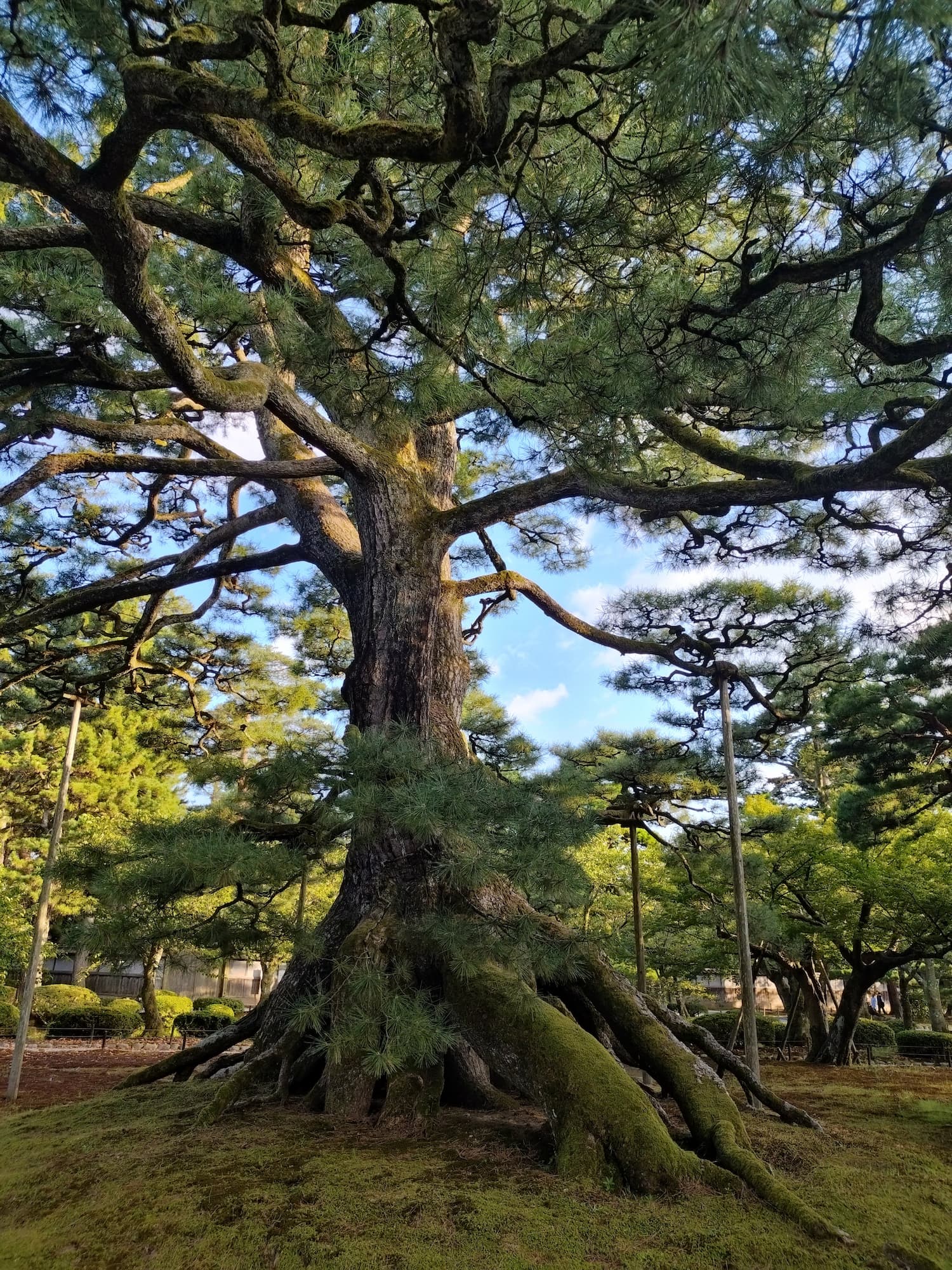
皆さん、こんにちは!日本庭園・和服ウオッチャー&ガイドのミネです。約40本もの根が地上約2メートルにまで大きくせり上がった奇観を誇る『根上松(ねあがりのまつ)』の英語案内ページへようこそ!
高さ約15メートルという根上りとしては日本最大級のスケールを誇り、盆栽技法を大木に応用して意図的に仕込められた歴史と庭師の執念を感じさせる兼六園屈指の名木です。
現場でサッと使える短文フレーズから、根上り技法の仕組み、ハイヒールやつま先立ちに例えてゲストをクスッと笑わせる裏話まで網羅しました。目的の項目ボタンからご自由にご活用ください。
📍 Quick Navigation: 各章へジャンプ
7.根上松(ねあがりのまつ)
“Neagari Pine Tree”
ここでは兼六園の名木・根上松をカバーします。下記ボタンからも直接アクセスできます。
7.1 基本情報
このスポットで最低限押えておきたいポイントです。
- Artificially Created Raised Roots / 人工的に作られた根上り
EN: The exposed roots were intentionally created by gardeners, using a method similar to “neagari,” a traditional Japanese root‑training style.
JP: 露出した根は庭師が意図的に作ったもので、日本の伝統的な根上り(ねあがり)技法の応用です。 - One of the Largest Raised-Root Pines in Japan / 日本の根上松の中で非常に大きい
EN: It’s one of the largest raised‑root pines in Japan, standing about fifteen meters tall, which is unusually tall for this style.
JP: 高さ約15メートルあり、日本の根上松の中でも特に大きく、この高さは根上りとしては非常に珍しいものです。 - Bonsai Technique Applied to a Full-Size Tree / 盆栽技法の大型化
EN: Its raised‑root appearance comes from bonsai techniques applied to a full‑size tree: the soil around the base is removed after the tree matures, exposing the roots.
JP: 根上りの形は盆栽技法を大木に応用したもので、木が十分に育った後に根元の土を取り除き、根を露出させる方法です。 - Supported by Around 40 Underground Roots / 約40本の根で支えられている
EN: Although some roots are visible, around forty roots remain underground, a typical feature of mature black pines with wide lateral root systems.
JP: 根は露出していますが、地下には約40本の根が残っており、横に広がる根を多く持つクロマツの特徴がよく表れています。 - A Relatively Young Pine at 200 Years Old / 約200歳の若木
EN: It’s about two hundred years old, which is still young for a black pine, as some can live close to a thousand years in Japan.
JP: 樹齢は約200年ですが、黒松は千年近く生きる例もあるため、まだ若木の段階にあります。
7.2 口頭説明
基本情報をベースにしたゲストと歩きながら使える口頭説明例です。
- Artificially Trained Roots / 人工的な根上り
EN: These exposed roots were intentionally trained by gardeners.
JP: この根は、庭師が意図的に見せるように育てたものです。 - Impressive Size for a Raised-Root Pine / 日本の根上松の中で大きい
EN: It’s one of the largest raised‑root pines in Japan, about fifteen meters tall.
JP: 日本の根上松の中でも大きく、高さは約15メートルあります。 - Bonsai Technique on a Large Scale / 盆栽の技法を応用
EN: The style comes from bonsai techniques used on a full‑size tree.
JP: この形は、盆栽の技法を大きな木に応用したものです。 - Over 40 Roots Keep It Strong / 地下に40本以上の根
EN: More than forty roots remain underground, so the tree stays strong.
JP: 地下に40本以上の根が残っているので、木はしっかり生きています。 - Still Young for a Black Pine / まだ若い松
EN: It looks old, but for a black pine, two hundred years is still young.
JP: 古そうに見えますが、黒松としては200年んでもまだ若い方です。
7.3 笑いが取れるかも?説明例
このパートでは、根上がり松の前で、よく聞かれる質問に対する説明例をご紹介しています。前半部は説明にも使える真面目パート、後半部は雑談力UPの為のおふざけパートの2部構成になっています。
Q1: この松がどうかしたのですか?
“Is there anything special about this pine tree?”
- EN: This pine tree is very unusual in Japan showing more than 40 roots raised about 2m on the ground.
JP: 40数本もの根が地上2mにまでせり上がった国内でもたいへん珍しい松です。 - EN: This pine tree has been intentionally grown with exposed roots.
JP: この松は意図的に根を露出させたものです。 - EN: This type of tree is often seen in bonsai.
JP: このような根上松は盆栽でよく見られるものです。 - EN: Bonsai is a Japanese art form of growing and training miniature trees in containers.
JP: 盆栽とは日本式のミニチュア樹の育成法です。 - EN: There is also another technique of wrapping wire around trees to grow them into unique shapes besides this way.
JP: この手法の他にも、木に針金を巻いて珍しい形に育てる手法もあります。 - EN: But it seems cruel to twist the natural growth of trees for human convenience.
JP: でも、人間の都合で自然の成長を捻じ曲げられるなんて木が可哀そうな気もします。 - EN: This uprooted pine tree seems to have been forced to stand on its tiptoes for years suffering greatly.
JP: この根上がりの松も無理やりつま先立ちをさせられて大変かもしれません。 - EN: In another perspective, this pine tree might be happy to stand out and look beautiful.
JP: 逆に、美しく際立ってみられてこの松も喜んでいるかもしれませんが。 - EN: Humans are also willing to stand on their tiptoes in high heels for long time to look more beautiful!
JP: 人間だって美しく見せるため自らハイヒールでずっとつま先立ちしているではありませんか。 - EN: So, that means high heels might be more pitiable than this pine tree.
JP: ということは、この松よりハイヒールの方が可哀そうかもしれませんね。
🌸 峰(Mine)|日本庭園・和服ウオッチャー&ガイド
根上松の解説はお楽しみいただけたでしょうか?
他のスポット(噴水、翠滝など)の解説へ移動する際は、冒頭の緑色ナビゲーションボタンをご活用くださいませ!