 峰(Mine)
皆さん、こんにちは!日本庭園・和服ウオッチャー&ガイドのミネです。兼六園で最も美しく見事な枝ぶりを誇り、冬の風物詩「雪吊り」のスタート地点でもある『唐崎松(からさきのまつ)』の英語案内ページへようこそ!
霞ヶ池のほとりで約20メートルにもわたって横へダイナミックに枝を広げる唐崎松は、加賀藩主のこだわりや職人たちの長年の手入れが結実したまさに兼六園の主役です。
現場でサッと使える短文フレーズから、琵琶湖の神木由来のストーリー、庭師の忍耐やダジャレ(Fine tree / Pain tree)を交えた笑えるトークまで網羅しました。目的の項目ボタンからご自由にご活用ください。
📍 Quick Navigation: 各章へジャンプ
6.唐崎松(からさきのまつ)
“Karasaki Pine Tree”
ここでは兼六園の名木・唐崎松をカバーします。下記ボタンからも直接アクセスできます。
6.1 基本情報
このスポットで最低限押えておきたいポイントです。
- A Pine Tree Symbolizing Kenroku-en / 兼六園を代表する松
EN: The Karasaki Pine is a black pine known for its distinctive branching within Kenroku-en, and it stands as one of the garden’s best-known trees.
JP: 唐崎松は、兼六園の中でも見事な枝ぶりを誇る黒松で、兼六園を代表する名木の一つとなっています。 - The Garden’s Centerpiece / 庭園の主役となる存在
EN: The Karasaki Pine is not merely one element of the garden; standing on the shore of Kasumi Pond with its wide-spreading branches, it makes a striking impression on the entire landscape.
JP: 唐崎松は、単なる庭園の構成要素でなく、霞ヶ池のほとりで大きく枝を広げ、周囲の景観に強い印象を与える存在です。 - Branches Spreading Dynamically Sideways / 横へダイナミックに広がる枝
EN: While many pine trees grow upward in a triangular cone shape, the Karasaki Pine has a unique form in which its branches spread outward horizontally as if flowing.
JP: 多くの松は三角錐状に上へ伸びますが、唐崎松は枝が横へ流れるように広がるという独特の形状を持ちます。 - Overwhelming Scale and Sculptural Beauty / 圧倒的なスケールと造形美
EN: Although there are other pine trees in the garden with horizontally spreading branches, the Karasaki Pine’s impressive 20‑meter span stands out from all the rest.
JP: 園内には他にも横に広がる松がありますが、唐崎松の約20メートルに及ぶ枝張りは他と一線を画しています。 - A Pine with a Sacred Heritage / 神木に由来する松
EN: The Karasaki Pine is not a native species of Kanazawa; it was grown from seeds specially obtained from the sacred pine at Karasaki Shrine, a scenic site on the shores of Lake Biwa.
JP: 唐崎松は地元の松でなく、日本最大の琵琶湖畔の景勝地「唐崎神社」にある神木から、わざわざ種を取り寄せて育てた特別な松です。 - Born from the Lord’s Passion / 藩主のこだわりから誕生
EN: The 13th lord of the Kaga Domain, Maeda Nariyasu, obtained seeds from Karasaki and had them carefully cultivated into the pine we see today.
JP: 種を取り寄せたのは13代藩主(なりやす)で、見所のひとつとして種から大切に育てられました。 - A Landscape Cherished in History and Culture / 歴史と文化に愛された景観
EN: The original pine at Karasaki, on the shore of Lake Biwa, has a long cultural history. The famous scenic spot has been celebrated in classical waka poetry and depicted in ukiyo-e prints.
JP: オリジナルの唐崎松は、その神性と美しさから、浮世絵や和歌の題材として古来より愛されてきました。 - The Skill Behind Maintaining the Pine / 松の姿を支える庭師の技術
EN: The pine’s shape is maintained through years of careful pruning and other gardening work. Its present beautiful form reflects not only natural growth but also the work of the gardeners who care for it.
JP: 松の樹形は、自然に成長するだけでなく、長年の手入れによって維持されています。現在の美しい姿には、庭師たちの仕事も反映されています。 - The Traditional Starting Point for Yukitsuri / 雪吊りの作業開始地点
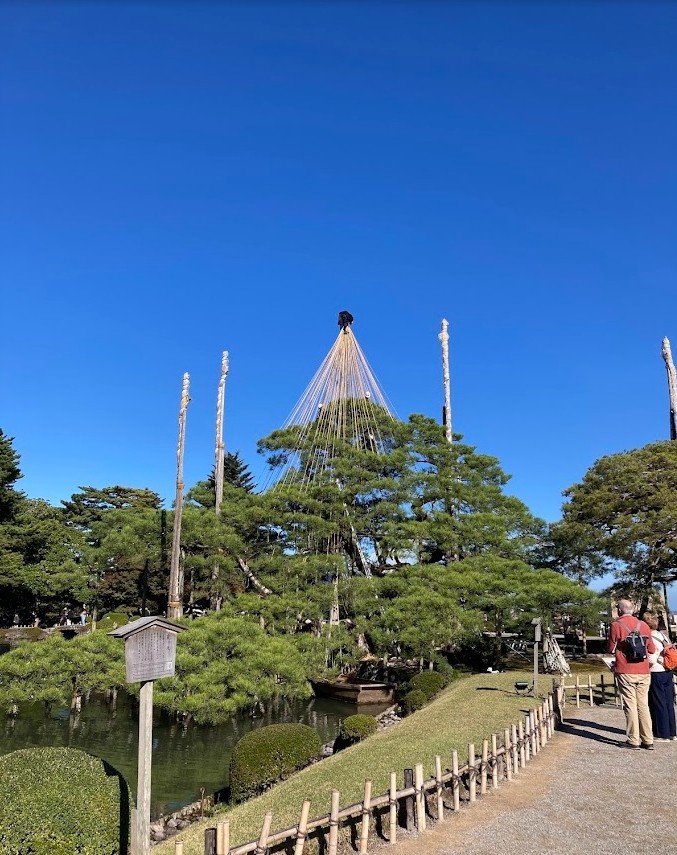
EN: Yukitsuri is the practice of supporting tree branches with ropes to protect them from heavy snow. The work normally begins with the Karasaki Pine on November 1.
JP: 雪吊りは、雪の重みで枝が折れるのを防ぐために縄で枝を支える作業です。兼六園では、例年11月1日に唐崎松から作業が始まります。 - A Sign of Winter’s Arrival / 冬の訪れを告げる風物詩
EN: The start of yukitsuri on November 1 is a seasonal tradition in Kanazawa. Watching gardeners work on the Karasaki Pine offers a glimpse of the skills involved in preparing the garden for winter.
JP: 11月1日に始まる雪吊りは、金沢に冬の訪れを告げる恒例の風物詩です。唐崎松の雪吊り作業を見ると、冬支度を支える庭師の技術にも注目できます。
6.2 口頭説明
基本情報をベースにしたゲストと歩きながら使える口頭説明例です。
- A Pine Symbolizing Kenroku-en / 兼六園を代表する松
EN: This pine is one of the most iconic trees in Kenroku-en, known for its beautiful branching.
JP: この松は兼六園を象徴する一本で、特に美しい枝ぶりで知られています。 - The Centerpiece of the Garden / 庭園の主役となる存在
EN: Standing by Kasumi Pond, its wide branches shape the entire view of the garden.
JP: 霞ヶ池のほとりで大きく枝を広げ、庭全体の景観を決める存在です。 - Branches Flowing Sideways / 横へ流れるように広がる枝
EN: Unlike most pines that grow upward, its branches spread out horizontally, almost like flowing water.
JP: 多くの松が上へ伸びるのに対し、この松は枝が横へ流れるように広がります。 - A Stunning 20‑Meter Spread / 約20メートルの圧倒的な枝張り
EN: Its branch span reaches about 20 meters, far larger and more elegant than any other pine in the garden.
JP: 約20メートルに広がる枝張りは、園内のどの松よりも圧倒的です。 - A Pine with a Sacred Heritage / 神木に由来する松
EN: It was grown from seeds taken from the sacred pine at Karasaki Shrine by Lake Biwa.
JP: 琵琶湖畔の唐崎神社の神木から取り寄せた種で育てられた特別な松です。 - A Lord’s Special Project / 藩主のこだわりから誕生
EN: Lord Nariyasu obtained the seeds and had them carefully cultivated into the pine we see today.
JP: 13代藩主・斉泰が種を取り寄せ、兼六園整備の見所として大切に育てました。 - A Landscape Loved in Art and Poetry / 歴史と文化に愛された景観
EN: The original pine at Karasaki has long appeared in ukiyo-e prints and classical poetry.
JP: オリジナルの唐崎松は、浮世絵や和歌に描かれてきた名景です。 - A Symbol of Skill and Tradition / 庭師の技術が支える美しい姿
EN: Its beautiful shape reflects years of careful pruning and the skill of the gardeners.
JP: 現在の美しい姿は、長年の手入れと庭師の技術の賜物です。 - The First Tree for Winter Yukitsuri / 冬の雪吊りはこの松から
EN: Every year on November 1st, winter preparations begin with yukitsuri on this pine.
JP: 毎年11月1日、冬支度の雪吊りは必ずこの松から始まります。 - A Winter Tradition That Draws Crowds / 冬の訪れを告げる風物詩
EN: Media and visitors gather here on the first day, marking the arrival of winter in Kanazawa.
JP: 初日は多くのメディアや観光客が集まり、冬の到来を告げる一大イベントになります。
6.3 笑いが取れるかも?説明例
このパートでは、唐崎の松を一緒に見上げながら、よく聞かれる質問に対する説明例をご紹介しています。前半部は説明にも使える真面目パート、後半部は雑談力UPの為のおふざけパートの2部構成になっています。
Q1: 他も吊るされてますが、この木は何か特別なの?
“Is there something special about this tree? Other trees’ branches are also hung like this.”
- EN: Certainly, this snow‑protection method can be seen in other Japanese gardens, but there is something different here.
JP: 確かにこの雪対策は他の日本庭園んでも見られますが、ここには他とは違うところがあります。 - EN: This is special black pine that the lord brought all the way from a distant pine forest famous for its scenic beauty.
JP: これは特別な黒松で、領主がわざわざ名勝で有名な遠方の松林から持ち込んだものです。 - EN: Its meandering branches spread out like the petals of a large flower, creating a beautifully balanced shape loved by many visitors.
JP: 蛇行した枝を大輪の花のように張り巡らせる様は均衡が取れていて、多くの人に愛されています。 - EN: Every year, this pine is the first tree to receive the ropes, so many people come to photograph the moment.
JP: 毎年ロープがかけられるのはこの松が最初で、多くの人がその瞬間を撮影しに訪れます。 - EN: Starting with this pine, around 800 trees in the garden undergo the snow‑support work.
JP: この松を皮切りに、庭園内の約800本の木に雪吊り作業が行われます。 - EN: The entire operation involves about 500 workers over a period of roughly one and a half months.
JP: この作業は延べ約500人が約1カ月半かけて行います。 - EN: The core team of gardeners performing the most delicate work are directly employed by Ishikawa Prefecture.
JP: 繊細な作業を担う中心の庭師たちは、石川県に直接雇用されている職員です。 - EN: As a public servant, being able to flatter pine trees instead of people sounds like a rather enviable job, doesn’t it?
JP: 公務員の仕事として、松のお世辞ができるなんて、ずいぶん羨ましい話ですよねえ。 - EN: Did you think it was because they can look after beautiful pine trees like the ones in Karasaki?
JP: 唐崎のような美しい松の世話ができるからって思われました? - EN: No! After all, pine trees never complain.
JP: いいえ!だって松は苦情をいいませんもの。
Q2: 松は強い木なのに何故そんなに世話するの?
“Why do people take so much care of pine trees when they are so vital and strong?”
- EN: As you say, pine trees are vigorous trees that can grow on sandy beaches and rocks.
JP: おっしゃる通り、松は砂浜や岩の上でも生育する生命力の強い木です。 - EN: For this reason, it has been cherished since ancient times as a symbol of “patience,” a virtue of the Japanese people.
JP: その為、日本人の美徳である「忍耐」の象徴として古来より大切にされてきました。 - EN: However, the pine’s unique tree shape and beautiful, artfully arranged evergreen foliage are the result of human collaboration.
JP: ただ、松の個性的な樹形と芸術的に整えられた美しい常緑の葉は、人間とのコラボによるものです。 - EN: Many people also mistakenly believe that the pine groves lining the sandy coastline are naturally this way.
JP: また、多くの人が、海岸の砂浜に並ぶ松原は自然にこうなったものだと勘違いしています。 - EN: The beautiful pine forest landscape of the coast as well as the gardens is the result of many centuries of labor by the Japanese.
JP: 庭園だけでなく、海岸の美しい松林の景観も、日本人の数世紀にわたる労力の成果です。 - EN: If the pine tree is a symbol of patience, then the Japanese who spare no effort in taking care of it may be said to be patience itself.
JP: 松が忍耐の象徴なら、その世話に労力を惜しまない日本人は、忍耐そのものと言えるかもしれませんね。 - EN: Black pines, in particular, grow rapidly and, if left unmaintained, take on a wild, untamed appearance; therefore, not only patience but also a high level of skill is essential.
JP: 特に黒松は成長が早く、放置すると荒々しい姿になるため、忍耐だけでなく高度な技術が必須です。 - EN: For example, even the basic tasks—such as protecting branches from snow damage, thinning out branches, pruning shoots and removing old leaves—require more effort with pines than with other trees.
JP: 例えば、雪から枝を守る作業、枝透かし、芽摘み、古葉取りなど、基本的な作業だけでも松は他の樹木より手間が多いのです。 - EN: Therefore, the pine trees in Kenrokuen, the product of many years of gardeners’ skill and patience, are not just pine trees, but perhaps should be called truly “fine trees.”
JP: それ故、長年の庭師の技と忍耐の結晶である兼六園の松は、単なるパインツリー(松の木)ではなく、まさに“ファインツリー(素晴らしい木)”と呼ぶべきかもしれません。 - EN: But for those who feel they are forced to take care of pine trees as their job, it may be a “pain tree” that requires a great deal of patience!
JP: でも、松の世話を仕事としてやらされている感のある人には、多大な忍耐を強いられる“ペインツリー(苦痛の木)”かもしれません!
唐崎松の解説はお楽しみいただけたでしょうか?
他のスポット(根上松、噴水など)の解説へ移動する際は、冒頭の緑色ナビゲーションボタンをご活用くださいませ!