 峰(Mine)
皆さん、こんにちは!日本庭園・和服ウオッチャー&ガイドのミネです。兼六園のシンボルであり、金沢の顔としても知られる『徽軫灯籠(ことじとうろう)』の英語案内ページへようこそ!
兼六園を訪れる海外ゲストが最も楽しみにしているスポットの一つが、この「徽軫灯籠」です。霞ヶ池のほとりに立ち、手前の虹橋や周囲の自然と見事な調和を見せるこの石灯籠は、まさに金沢観光のハイライトと言えます。
現場でサッと使える短文フレーズから、二本足の逸話、ゲストをクスッと笑わせる裏話まで網羅しました。目的の項目ボタンからご自由にご活用ください。

兼六園のシンボル@徽軫灯籠
📍 Quick Navigation: 各章へジャンプ
3.徽軫灯籠(ことじとうろう)
“Kotoji-toro / Kotoji Stone Lantern”
ここでは兼六園だけでなく金沢のアイコンとしても使われている、琴柱灯篭をカバーします。ここもお好みで下記ボタンからも直接アクセスできます。
3.1 基本情報(10項目)
インバウンド対応の前に押さえておきたい徽軫灯籠の深い背景や歴史的エピソードです。🎧米国話者
- Kenroku-en’s Top Attraction / 兼六園の最大の見どころ
EN: The Kotoji Stone Lantern is the most famous landmark in Kenroku-en, and many visitors come specifically to see it.
JP: 琴柱灯籠は、兼六園の中の最大の見どころで多くの観光客はこれを目当てに兼六園を訪問する特別な人気スポット。 - The Iconic Symbol of Kanazawa / 金沢の象徴
EN: Stone lanterns are common in Japanese gardens, but this one is known nationwide as the symbol of both Kenroku-en and Kanazawa, often appearing in travel brochures and social media posts.
JP: 日本庭園でよく見られる石灯籠だけれど、兼六園と金沢の象徴として全国に知られ、様々な媒体で、両者の紹介画像として使われている。 - Classic Photo Spot with Long Lines / 定番の記念写真スポット
EN: As the classic photo spot in Kenroku-en, long lines often form as visitors wait to have their photo taken while standing on the stone bridge, with the lantern and pond in the background.
JP: 兼六園の記念写真の定番スポットとして、石灯籠と池を背景に、手前の石橋の上に立った姿を写真に納める為に、多くの人々が行列に並ぶ。 - Unique Two-Legged Design / 珍しい二本足の構造
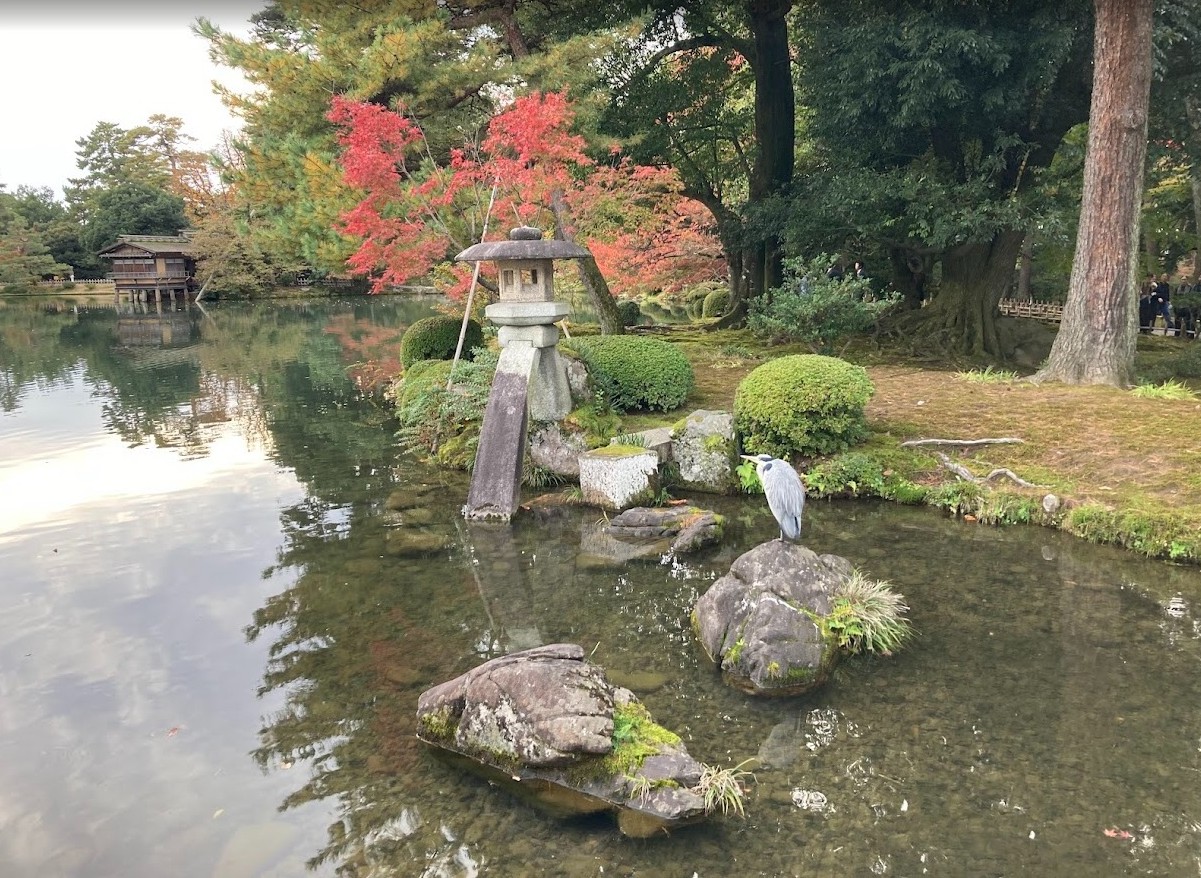
EN: While many garden lanterns (such as yukimi-toro) have three or four legs, the Kotoji Lantern stands on two legs of different lengths, inspiring various stories over time.
JP: 琴柱灯籠の様な庭園の石灯籠(雪見灯籠!ゆきみとうろう)の多くは3本や4本の足で構成されるが、琴柱灯籠は2本足である上に、両足の長さが違うので、色々な逸話が作られている。 - Name Derived from a Koto Bridge / 琴柱に由来する名前
EN: Its unique name, “Kotoji,” refers to the small bridge-like piece that supports the strings of a traditional koto harp.
JP: 最高の逸話は琴柱灯籠という他では使われないユニークな呼称で、伝統的弦楽器の琴の弦の糸を支える駒(琴柱=ことじ)を指している。 - The Two-Legged Frame and Stone Bridge / 二股の姿と石橋の見立て
EN: Because its two-legged stance resembles the koto’s string support, the stone bridge in front was likened to the body of the koto, giving the lantern its name.
JP: その二股で立つ姿が琴の糸を支える駒に似ていることから、その前にある石橋を琴に見立てて、琴柱灯籠と呼ばれる様になった。 - Tales Behind the Damaged Leg / 脚にまつわる様々な説
EN: Records show that both legs were originally the same length, but later stories claim one leg was damaged—either by vandalism or intentionally altered for aesthetic effect.
JP: 灯籠の両脚は元々同じ長さだった記録が残っているが、イタズラで壊された説や殿様が趣向を凝らす為に意図的に壊した説もある。 - Asymmetrical Wabi-Sabi Aesthetics / 非対称が引き出す独特の趣
EN: Shortening one leg and placing it on a stone beside the pond creates an asymmetrical look, giving the lantern a unique charm not found in other garden lanterns.
JP: 片側の足を短くして、池横の石の上に乗せることで、左右対称の単調な印象から脱し、他の灯籠には見られない非対称の独特の趣を出しているとも言われる。 - Differing Choices Among Visitors / 訪問客による行動の違い
EN: Many visitors wait in line to take a commemorative photo, while others choose to pass by without taking pictures when they see the long queue.
JP: 琴柱灯籠では記念写真を撮る為に列に並ぶ人はとても多いが、長蛇の列を見て、写真も撮らず行き過ぎる訪問客も少なくない。 - Quiet Times for Picturesque Views / 静かに絵画的景観を楽しむ時間帯
EN: Those who want to simply enjoy the picturesque view of the lantern, the maple tree, and the pond often visit early in the morning, near closing time, or during winter when the garden is quieter.
JP: 純粋に灯籠とモミジの古木と池からなる絵画的な美を楽しみたい人は人混みを避ける為、早朝や閉園間際の夕刻、冬季などに訪れる。
👤連続音声:1-5
👥連続音声:6-10
Glossary:用語集
top attraction ☛ 最大の見どころ / Kotoji Stone Lantern ☛ 琴柱灯籠 / famous landmark ☛ 有名なランドマーク / visitor ☛ 訪問客・観光客 / specifically ☛ わざわざ・特にそれを目的として
iconic symbol ☛ 象徴的存在 / stone lantern ☛ 石灯籠 / common ☛ 一般的な / nationwide ☛ 全国的に / travel brochure ☛ 観光パンフレット / social media post ☛ SNS投稿
classic photo spot ☛ 定番の撮影スポット / long line ☛ 長い行列 / form ☛ 形成される / wait to have one’s photo taken ☛ 写真を撮ってもらうために待つ / stone bridge ☛ 石橋 / background ☛ 背景
unique ☛ 珍しい / two-legged design ☛ 二本足の構造 / garden lantern ☛ 庭園灯籠 / yukimi-toro ☛ 雪見灯籠 / stand on ☛ ~の上に立つ / different lengths ☛ 長さが異なる / inspire ☛ 生み出す・触発する / various stories ☛ 様々な逸話
derive from ☛ ~に由来する / Kotoji ☛ 琴柱 / bridge-like piece ☛ 橋のような形の部品 / support ☛ 支える / string ☛ 弦 / traditional koto harp ☛ 伝統的な琴
two-legged stance ☛ 二股で立つ姿 / resemble ☛ ~に似ている / string support ☛ 弦を支える駒 / liken A to B ☛ AをBに見立てる / body of the koto ☛ 琴本体
record ☛ 記録 / originally ☛ 元々は / same length ☛ 同じ長さ / later story ☛ 後世の逸話 / damaged ☛ 壊された / vandalism ☛ いたずら・器物損壊 / intentionally ☛ 意図的に / aesthetic effect ☛ 美的効果
asymmetrical ☛ 非対称の / wabi-sabi aesthetics ☛ わびさびの美意識 / shorten ☛ 短くする / beside ☛ ~のそばに / unique charm ☛ 独特の魅力 / not found in ☛ ~には見られない
differing choices ☛ 異なる選択 / wait in line ☛ 列に並ぶ / commemorative photo ☛ 記念写真 / pass by ☛ 通り過ぎる / long queue ☛ 長蛇の列
picturesque view ☛ 絵画のような景観 / maple tree ☛ モミジ / early in the morning ☛ 早朝に / closing time ☛ 閉園時間 / quieter ☛ より静かな / winter ☛ 冬季
3.2 口頭説明用(10項目)
ガイドが歩きながら説明することを想定した、短く・覚えやすく・聞きやすい口頭用フレーズです。🎧英国話者
- Kenroku-en’s Top Attraction / 兼六園で一番有名な場所
EN: This is Kenroku-en’s most famous landmark. Many visitors come just to see this lantern.
JP: ここが兼六園で一番有名な場所で、これを見るために来る人も多いです。 - Symbol of Kanazawa / 金沢の象徴
EN: It’s the symbol of Kanazawa and appears everywhere—from brochures to social media.
JP: 金沢の象徴で、パンフレットやSNSでも必ず登場します。 - Popular Photo Spot / 人気の写真スポット
EN: People line up here to have their photo taken while standing on the stone bridge, with the lantern behind them.
JP: ここでは石橋の上で灯籠を背景に写真を撮るため、よく行列ができます。 - Two-Legged Lantern / 珍しい二本足
EN: Unlike most lanterns, this one has two legs—and they’re different lengths.
JP: 普通の灯籠と違って、これは二本足で、しかも長さが違います。 - Named After the Koto / 琴柱に由来する名前
EN: Its name comes from the small piece that supports the strings of a koto harp.
JP: 名前は、琴の糸を支える小さな部品「琴柱」に由来します。 - Koto Motif / 琴の見立て
EN: People later imagined the bridge here as the body of the koto.
JP: 後になって、この石橋を琴の胴に見立てるようになりました。 - The Short Leg Story / 短い足のストーリー
EN: Records say both legs were once the same length, but many believe one was damaged or changed later.
JP: 昔は両足が同じ長さでしたが、後に壊れたり、変えられたりしたようです。 - Asymmetrical Beauty / 非対称の美
EN: The uneven legs give it a unique, asymmetrical charm.
JP: 足の長さが違うことで、独特の非対称の美しさが生まれています。 - Photo or Pass / 写真か見送りか
EN: Some people wait for a photo, others skip it when they see the long line.
JP: 写真を撮る人もいれば、行列を見て通り過ぎる人もいます。 - Best Time for Quiet Views / 静かに楽しむ時間帯
EN: For a quiet view, early morning or late afternoon is recommended.
JP: 静かに楽しむなら、早朝か夕方が一番おすすめです。
👥連続音声:1-10
3.3 笑いが取れるかも?
このパートでは、琴柱灯篭を前にして、よく聞かれる質問に対する説明例をご紹介しています。前半部は説明にも使える真面目パート、後半部は雑談力UPの為のおふざけパートの2部構成になっています。以下のボタンから各ストーリーへ直接飛べます。
Q1: この琴柱灯籠って何?
“What is this lantern?” / “What is special about it?”
この様にストレートに言われることはあまりありませんが、その表情からは「これ何?」という思いがくみ取れるのです。前半(No1~5)は真面目パート、後半(No6~10)はおふざけパートです。🎧米国話者
- This is not just an ordinary stone lantern.
- これはただの石灯籠ではありません。
- Here, a symbolic scene wishing for happiness is expressed.
- ここでは、幸せを願うおめでたい場面が表現されています。
- It represents a koto performance, using a traditional Japanese instrument.
- それは日本の伝統楽器「琴」の演奏会です。
- The koto is often played on auspicious occasions, such as New Year’s Day and weddings.
- 琴はお正月や結婚式など、おめでたい席でよく演奏されます。
- The curved stone bridge resembles the body of a koto, and the lantern represents the “koto-ji,” the small piece that supports and tunes the strings.
- 手前の石橋が琴の胴体、そして灯籠は琴の弦を支える「琴柱(ことじ)」を表しているのです。
- However, after explaining this many times, my impression of the lantern has gradually changed.
- しかし、そんなおめでたい説明を何度もしているうちに、だんだんあの灯籠の印象が変わってきたのです。
- It’s far too big for a real koto bridge, and standing on two legs, it almost looks human.
- というのも、琴柱にしては大きすぎますし、二本足で立っている姿はまるで人間のようにも見えます。
- For many people, it may look like a gentle matchmaker or parents watching over a wedding.
- 多くの方にとっては、結婚式を見守る仲人や両親のような優しいイメージなのかもしれません。
- But perhaps I’m the only one who finds it a little intimidating.
- でも、この灯籠にどこか怖い印象を抱いているのは、きっと私だけなのでしょうね。
- To me, it looks like a strict music teacher watching over someone who can’t even play basic do-re-mi, let alone complex koto music!
- 難しい琴の演奏どころか、簡単なドレミすら弾けない私を見守る、厳しい音楽の先生のようにね!
Glossary:用語集
ordinary stone lantern ☛ 普通の石灯籠 / symbolic scene ☛ 象徴的な場面 / wish for happiness ☛ 幸せを願う / be expressed ☛ 表現されている / represent ☛ 表している / koto performance ☛ 琴の演奏会 / traditional Japanese instrument ☛ 日本の伝統楽器
auspicious occasion ☛ おめでたい席・吉事 / New Year’s Day ☛ 元日・お正月 / wedding ☛ 結婚式 / be played ☛ 演奏される / curved stone bridge ☛ 曲線を描く石橋 / resemble ☛ ~に似ている / body of a koto ☛ 琴の胴体 / koto-ji ☛ 琴柱 / support the strings ☛ 弦を支える / tune the strings ☛ 弦の音程を調整する
impression ☛ 印象 / gradually ☛ 徐々に / change ☛ 変わる / far too ☛ あまりにも~すぎる / real koto bridge ☛ 本物の琴柱 / stand on two legs ☛ 二本足で立つ / almost ☛ まるで・ほとんど / human ☛ 人間
matchmaker ☛ 仲人 / watch over ☛ 見守る / gentle ☛ 優しい / wedding ☛ 結婚式 / perhaps ☛ ひょっとすると / the only one ☛ 唯一の人 / intimidating ☛ 威圧的な・少し怖い
strict ☛ 厳しい / music teacher ☛ 音楽の先生 / let alone ☛ ~はもちろんのこと / basic ☛ 基本的な / do-re-mi ☛ ドレミ / complex ☛ 難しい・複雑な / koto music ☛ 琴の演奏曲
Q2: どうしてこんなに並んでいるの?
“Why is everyone lined up like this?”
これも、直接言われることはあまりありませんが、その表情からは「この行列、一体何?」という思いもくみ取れるのです。前半(No1~4)は真面目パート、後半(No5~10)はおふざけパートです。🎧シンガポール話者
- This is a famous spot where many people take pictures as a memory and proof of their visit to Kanazawa.
- これは金沢を訪れた思い出と証として、多くの人が写真を撮る有名スポットなんです。
- It is similar to the Little Mermaid statue in Denmark, the Merlion in Singapore, or Big Ben in England.
- デンマークの人魚姫像やシンガポールのマーライオン、イギリスのビッグベンに似ていますね。
- Japanese people have always appreciated the simplicity of landscapes, and the stone lanterns and pond in the background perfectly match their aesthetic preferences.
- 日本人はいつもシンプルな風景を好むので、石灯籠と背景の池は日本人の好みにぴったりはまるんです。
- Over the years, this view has become a symbol of Kanazawa, and many visitors now line up to walk on the stone bridge and have their photo taken here.
- 長年にわたり、この景色は金沢の象徴となり、今では多くの観光客が石橋の上を歩いてここで写真を撮るために列を作っています。
- I often tell my guests, “If you think it’s worth it, why not join the line? It will be a memory that lasts a lifetime.”
- 私はよくゲストに「待つ価値があるとお思いでしたら、列に加わられたら如何でしょう? 一生の思い出になりますよ」とお伝えしているんです。
- Many tourists line up for this experience, while some move on to the next spot—for instance, those who aren’t interested in trends, prefer to avoid crowds, or don’t like having their picture taken usually pass by without waiting.
- 多くの観光客は列に並んでこれを体験しますが、流行に興味がない人、人混みを避けたい人、写真を撮られるのが嫌いな人は、たいてい待たずに通過します。
- There are many different types of people, and after years of guiding visitors to this popular spot, I’ve noticed that their personalities often come through here. And, I discovered a particular type of personality—like myself.
- いろいろなタイプの人がいまして、この人気スポットを何年もご案内していますと、それぞれ個性がよく出ていることに気がつきます。そして、私は自分が当てはまる新しいタイプを見つけたんです。
- Probably they would wonder if the stone bridge has accumulated structural fatigue from the countless people who have crossed or lingered on it over the years.
- 長年、数え切れないほどの人々が渡ったり立ち止まったりしてきたため、この石橋には構造的疲労がたまっているのではと心配する人もいるでしょう。
- Being worried that the bridge might collapse one day, just by chance, this cautious type will never cross it, no matter how much I recommend it.
- ある日突然、橋が崩れてしまうのではないかと心配する用心深いタイプの人は、私がいくら勧めても決して渡らないんですね。
- It’s like the saying: ‘knocking on a stone bridge before crossing it—and then never crossing it at all!’
- まさにこの諺通り。「石橋を叩いて渡る、でも、決して渡らない」。
Glossary:用語集
famous spot ☛ 有名スポット / take pictures ☛ 写真を撮る / memory ☛ 思い出 / proof of one’s visit ☛ 訪問した証し / visit Kanazawa ☛ 金沢を訪れる
Little Mermaid statue ☛ 人魚姫像 / Merlion ☛ マーライオン / Big Ben ☛ ビッグベン / be similar to ☛ ~に似ている
appreciate ☛ 良さを理解する・好む / simplicity ☛ シンプルさ / landscape ☛ 風景 / stone lantern ☛ 石灯籠 / pond ☛ 池 / background ☛ 背景 / perfectly match ☛ ぴったり合う / aesthetic preference ☛ 美的感覚・美意識
over the years ☛ 長年にわたり / symbol ☛ 象徴 / visitor ☛ 観光客 / line up ☛ 列に並ぶ / stone bridge ☛ 石橋 / have one’s photo taken ☛ 写真を撮ってもらう
think it’s worth it ☛ 価値があると思う / join the line ☛ 列に加わる / last a lifetime ☛ 一生続く・一生ものになる / lifetime memory ☛ 一生の思い出
tourist ☛ 観光客 / experience ☛ 体験 / move on to ☛ 次の場所へ進む / trend ☛ 流行 / avoid crowds ☛ 人混みを避ける / have one’s picture taken ☛ 写真を撮られる / pass by ☛ 通り過ぎる / without waiting ☛ 待たずに
different types of people ☛ さまざまなタイプの人々 / guide visitors ☛ 観光客を案内する / personality ☛ 性格・個性 / come through ☛ 表れる / discover ☛ 発見する / particular type ☛ 特定のタイプ
structural fatigue ☛ 構造疲労 / countless ☛ 数え切れないほどの / cross ☛ 渡る / linger ☛ 立ち止まる / over the years ☛ 長年にわたり / collapse ☛ 崩落する・崩れる / by chance ☛ 偶然に / cautious type ☛ 用心深いタイプ / no matter how much ☛ どれだけ~しても
saying ☛ ことわざ / knock on a stone bridge before crossing it ☛ 石橋を叩いて渡る / cross it at all ☛ まったく渡らない
徽軫灯籠の解説はお楽しみいただけたでしょうか?
他のスポット(眺望台、霞ヶ池など)の解説へ移動する際は、冒頭の緑色ナビゲーションボタンをご活用くださいませ!