現場でサッと使える短文フレーズから、十二支による方向の数え方(Zodiac Directions)、本丸の展望ロケーション、天守代わりとして機能した歴史、ゲストをクスッと笑わせる裏話まで網羅しました。目的の項目ボタンからご自由にご活用ください。
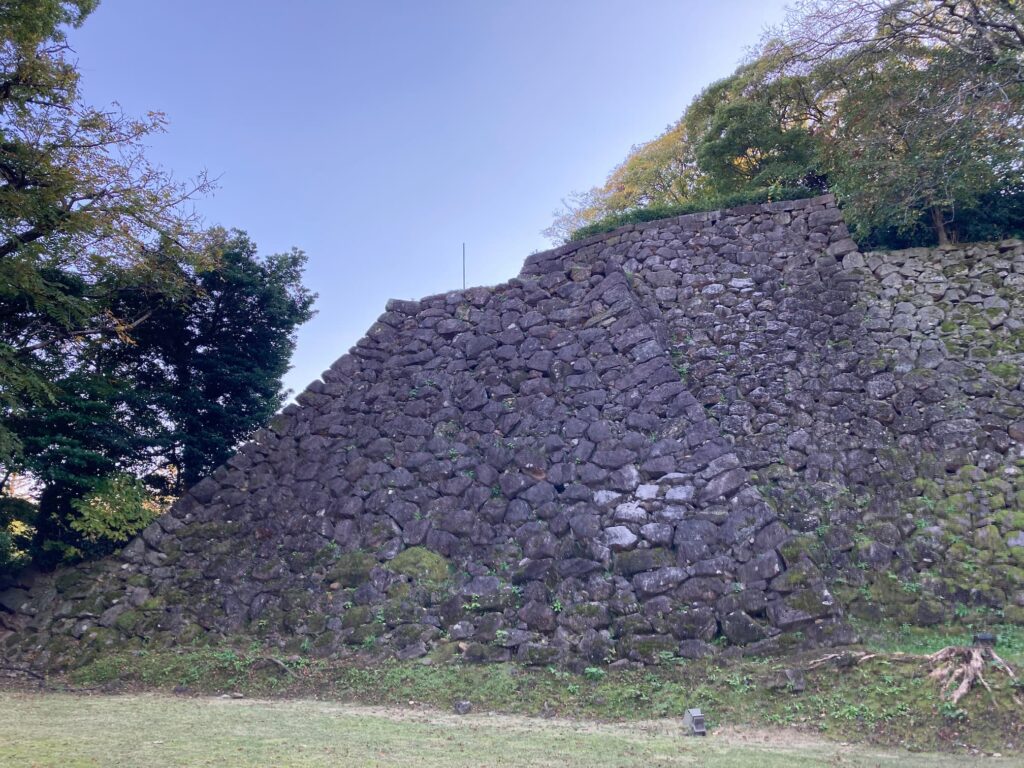
丑寅櫓を支えた初期の石垣@鶴丸倉庫裏から
📍 Quick Navigation: 各章へジャンプ
-
13. 櫓跡(丑寅櫓・辰巳櫓・戌亥櫓)
13.1 基本情報(5項目)— The Three Turret Sites
背景知識として押さえておきたいポイントを単なる史跡の説明ではなく、外からの敵への備えと、城内の監視という対比を中心に構成しました。
Set 1: Defensive Positions / 防御上の配置
The three turret sites remind us that the castle’s defenses depended not only on its walls, but also on where its watchtowers stood.
3つの櫓跡を見ると、城の防御は石垣だけでなく、櫓をどこに配置するかも重要だったことが分かります。
Set 2: Watching for External Threats / 外からの敵への警戒
The Ushitora and Tatsumi turrets stood on the eastern and southern sides of the Honmaru, helping guard approaches from the Kenrokuen and Kodatsuno areas, which were considered vulnerable routes for an attack.
丑寅櫓と辰巳櫓は本丸の東側・南側に位置し、敵の侵入経路として警戒された兼六園・小立野方面などへの備えを担っていました。
Set 3: The Inui Turret / 戌亥櫓の役割
Unlike the turrets watching for threats from outside, the Inui Turret was used to keep watch over the castle itself, including the Ninomaru.
外からの敵を警戒する櫓とは異なり、戌亥櫓は二の丸を含む城内全体を監視する役割を担っていました。
Set 4: The Meaning of the Names / 櫓の名前と方角
The names Ushitora, Tatsumi, and Inui refer to traditional Japanese compass directions: northeast, southeast, and northwest, respectively.
丑寅・辰巳・戌亥は、それぞれ北東・南東・北西を表す伝統的な方角の呼び名です。
Set 5: A Lesson in Security / 防御から学べること
History offers many examples of kingdoms and organizations brought down by betrayal from within. The Inui Turret reminds us that protecting a castle meant watching not only the enemy outside, but also what was happening inside.
歴史上、内部の裏切りによって滅びた国や組織は数多くあります。戌亥櫓は、城を守るには外の敵だけでなく、内部の動きにも目を配る必要があったことを考えさせてくれます。
13.2 口頭説明(5項目)
案内中に歩きながらテンポよく説明できるよう、3つの櫓跡の特徴を5項目にまとめました。
Set 1: Defense / 防御
EN: The three turret sites remind us that a castle’s defense depended not only on its walls, but also on where its turrets were placed.
JP: この3つの櫓跡を見ると、城の防御は石垣だけでなく、櫓をどこに配置するかも重要だったことが分かります。
Set 2: External Threats / 外敵への備え
EN: The Ushitora Turret stood on the northeast side of the Honmaru. Turrets in this area helpedWhat was this watchtower used for? guard against attacks from the Kenrokuen and Kodatsuno directions.
JP: 丑寅櫓は本丸の北東側にありました。この一帯の櫓は、兼六園や小立野方面からの攻撃に備える役割を担っていました。
Set 3: Internal Surveillance / 城内の監視
EN: Unlike the turrets guarding against outside threats, the Inui Turret was used to watch over the castle itself, including the Ninomaru.
JP: 外からの敵を警戒する櫓とは異なり、戌亥櫓は二の丸を含む城内を監視するために使われていました。
Set 4: Compass Directions / 方角を表す名前
EN: The names Ushitora, Tatsumi, and Inui refer to traditional Japanese compass directions: northeast, southeast, and northwest, respectively.
JP: 丑寅・辰巳・戌亥は、それぞれ北東・南東・北西を表す伝統的な方角の呼び名です。
Set 5: A Lesson in Security / 防御から学べること
EN: History is full of kingdoms and organizations that fell because of betrayal from within. Protecting a castle meant watching not only the enemy outside, but also what was happening inside.
JP: 歴史上、内部の裏切りによって滅びた国や組織は数多くあります。城を守るには、外の敵だけでなく、内部の動きにも目を配る必要があったのです。
13.3 笑いが取れるかも?説明例
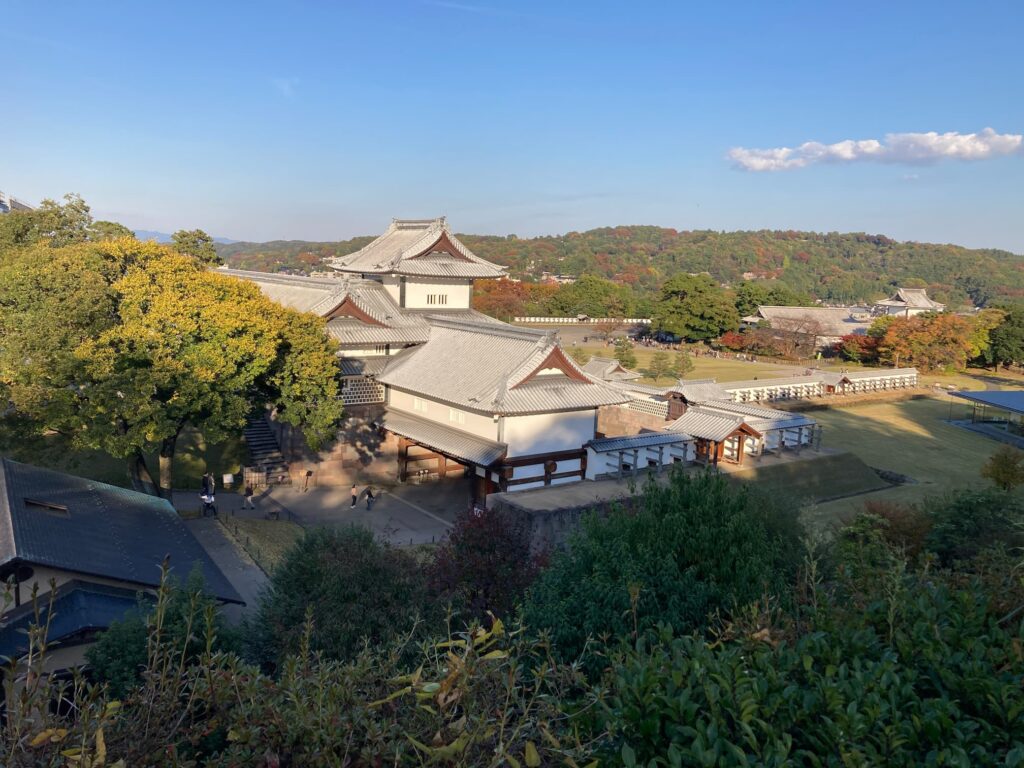
この影は夫を見張る奥様の怒りの炎?@戌亥櫓跡から橋爪門
-
Q1. この展望台は何のために使われていたの?
“What was this observation deck used for?”
戌亥櫓跡(いぬいやぐらあと)に一緒立つとよく聞かれる質問を元に歴史説明を織り込んで纏めてみました。前半(1-5)が真面目パート、後半(6-10)がおふざけパートです。🎧米国話者
❶EN: Today, this spot is used as an observation deck, but there used to be a two-story turret here.
JP: 今は展望台として使われていますが、かつてここには二層の櫓がありました。
❷EN: Many castle turrets were built to watch for enemies outside, but I think this one also played an important role in keeping an eye on what was happening inside the castle.
JP: 多くの城の櫓は外敵を監視するために建てられましたが、ここは城内の動きを監視する上でも重要な役割を果たしていたのではないかと思います。
❸EN: After all, throughout history, many kingdoms and governments have fallen not because of foreign enemies, but because of betrayal from within.
JP: 何しろ歴史上、多くの国や政権が滅びた原因は、外国の敵よりも内部の裏切りだったからです。
❹EN: Unfortunately, this turret was destroyed in the great fire of 1759 and was never rebuilt.
JP: 残念ながら、この櫓は1759年の大火で焼失し、その後再建されませんでした。
❺EN: By that time, the castle’s political center had already moved from the main enclosure to the second enclosure, so there was less need to rebuild it.
JP: その頃には城の政治の中心がすでに本丸から二の丸に移っていたため、再建する必要性も小さくなっていたのでしょう。
❻EN: But perhaps this place was still used for keeping an eye on things, even after the turret disappeared.
JP: でも,櫓がなくなった後も、ここは何かを監視する場所として使われていたかもしれません。
❼EN: By then, Japan was enjoying a long period of peace, so perhaps the biggest thing to watch out for was fire!
JP: その頃には日本は長い平和な時代を迎えていましたから、最大の監視対象は火事だったかもしれませんね!
❽EN: Or perhaps it was used by wives to keep an eye on their husbands and make sure they weren’t having affairs!
JP: あるいは、夫が浮気をしていないか監視するために、奥様たちが使っていたのかもしれません!
❾EN: When I tell this joke, many female guests burst out laughing. That’s when I realize that this surveillance system is truly universal!
JP: この冗談を言うと、多くの女性ゲストが大笑いします。そのとき、これは本当に世界共通の監視システムだと気づくのです!
❿EN: After all, wives watching like hawks to make sure their husbands aren’t playing with fire are probably scarier than any actual fire, anywhere in the world!
JP: 結局のところ、夫が火遊びをしていないかと目を光らせる奥様たちは、世界中どこでも、本物の火事より怖い存在なのです!(笑)
Glossary:用語集
observation deck ☛ 展望台 / two-story ☛ 二層の・2階建ての / turret ☛ 櫓(やぐら) / watch for ☛ ~を見張る・警戒する / play an important role in ☛ ~において重要な役割を果たす / keep an eye on ☛ ~を監視する・目を光らせる / after all ☛ 何しろ・結局のところ / throughout history ☛ 歴史を通じて / kingdom ☛ 王国 / government ☛ 政権・政府 / fall ☛ 滅びる・崩壊する / foreign enemy ☛ 外敵 / betrayal ☛ 裏切り / from within ☛ 内部からの
unfortunately ☛ 残念ながら / be destroyed ☛ 焼失する・破壊される / great fire ☛ 大火 / rebuild ☛ 再建する / political center ☛ 政治の中心 / main enclosure ☛ 本丸 / second enclosure ☛ 二の丸 / disappear ☛ 消える・なくなる / period of peace ☛ 平和な時代 / watch out for ☛ ~に気をつける・警戒する
have an affair ☛ 浮気をする・不倫する / burst out laughing ☛ 大笑いする・吹き出す / realize ☛ 気づく / surveillance system ☛ 監視システム / universal ☛ 世界共通の・普遍的な / watch like a hawk ☛ 鷹のように鋭く目を光らせる / play with fire ☛ 火遊びをする・危険なことに手を出す / actual fire ☛ 本物の火事
Q2. この場所は何に使われてたの?(丑寅櫓)
”What was this place used for”
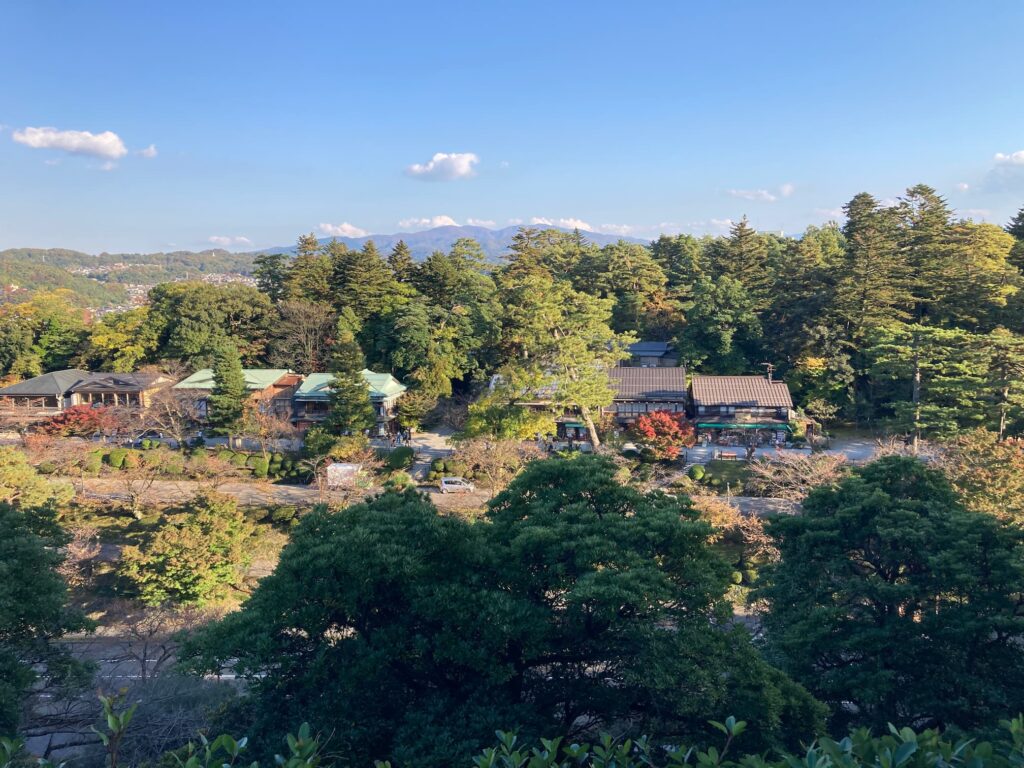
「歴史を書くのは訪問者?」@丑寅櫓跡から兼六園
丑寅櫓跡(うしとらやぐらあと)から、兼六園や車道を見下ろしながらよく聞かれる質問を元に当時の金沢城の置かれた状況を織り込んでみました。
前半(1-6)が真面目パート、後半(7-10)がおふざけパートです。🎧オーストラリア話者- EN: This is the site of a turret that once stood at the northeastern corner of the Honmaru, the main enclosure where Kanazawa Castle’s main keep once stood.
JP: ここは金沢城の天守がかつて存在した本丸の北東角に建っていた櫓の跡です。 - EN: This turret was strategically positioned to keep watch over the approaches to the castle from the direction of what is now Kenrokuen Garden.
JP: この櫓は、現在の兼六園方面から城に接近する敵を監視するための戦略的に重要な場所にありました。 - EN: The elevated ground where Kanazawa Castle and Kenrokuen Garden now stand was once part of a single, gently sloping plateau, with no major natural barrier between them.
JP: 現在の金沢城と兼六園がある高台は、かつては一続きのなだらかな台地で、両者の間には大きな自然の障壁がありませんでした。 - EN: To strengthen the castle’s defenses, a wide moat was created between the castle and what is now Kenrokuen Garden.
JP: 城の防御力を高めるため、金沢城と現在の兼六園の間に幅の広い堀が造られました。 - EN: Looking down from here, you can see what looks like a gorge, but this road was once a wide moat filled with water.
JP: ここから見下ろすと峡谷のように見えますが、この道路はかつて水を湛えた幅の広い堀だったのです。 - EN: The Maeda family had to be prepared for a possible attack by the Tokugawa shogunate, which was wary of powerful regional lords like them.
JP: 前田家は、彼らのような有力大名を警戒していた徳川幕府からの攻撃に備える必要があったのです。 - EN: Interestingly, many guests often ask me, “Did a war actually happen here?”
JP: 面白いことに、多くのゲストから「実際にここで戦争はあったの?」とよく聞かれます。 - EN: I suppose they simply cannot imagine that such a tense history existed, given the incredibly peaceful scenery we see here today.
JP: きっと、現在ここから見えるあまりにも平和な風景からは、そんな緊張した歴史があったとは想像できないのでしょうね。 - EN: It is often said that “History is written by the victors.” But since no battle was fought here between the Maeda clan and the Tokugawa shogunate, there were no victors here.
JP: 「歴史は勝者によって書かれる」とよく言われます。しかし、ここでは前田家と徳川幕府の間で実際の戦闘は起きなかったので、勝者はいないのです。 - EN: There are no victors here—only visitors like you!
JP: ここにいるのは勝者ではなく、あなたのような訪問者ばかりです!
Glossary:用語集
site ☛ 跡地・場所 / turret ☛ 櫓(やぐら) / northeastern corner ☛ 北東角 / Honmaru ☛ 本丸 / main enclosure ☛ 本丸・主郭 / main keep ☛ 天守・天守閣 / strategically positioned ☛ 戦略的に配置された / keep watch over ☛ ~を監視する・見張る / approach ☛ 接近路・進入経路 / direction ☛ 方向・方面
elevated ground ☛ 高台 / gently sloping ☛ なだらかに傾斜した / plateau ☛ 台地・高原 / natural barrier ☛ 自然の障壁 / strengthen ☛ 強化する / defense ☛ 防御 / wide moat ☛ 幅の広い堀 / look down ☛ 見下ろす / gorge ☛ 峡谷・深い谷 / filled with water ☛ 水を湛えた・水で満たされた
be prepared for ☛ ~に備えている / possible attack ☛ 起こりうる攻撃 / Tokugawa shogunate ☛ 徳川幕府 / be wary of ☛ ~を警戒している / powerful regional lord ☛ 有力大名 / interestingly ☛ 面白いことに / actually happen ☛ 実際に起こる / suppose ☛ ~だと思う・推測する / tense history ☛ 緊張した歴史 / given ☛ ~を考慮すると / incredibly peaceful ☛ あまりにも平和な / scenery ☛ 風景・景色
be written by ☛ ~によって書かれる / victor ☛ 勝者 / battle ☛ 戦闘・合戦 / fight a battle ☛ 戦う / Maeda clan ☛ 前田家・前田一族 / visitor ☛ 訪問者・観光客
Q3. この櫓は何のため?(辰巳櫓)
What was this watchtower used for?
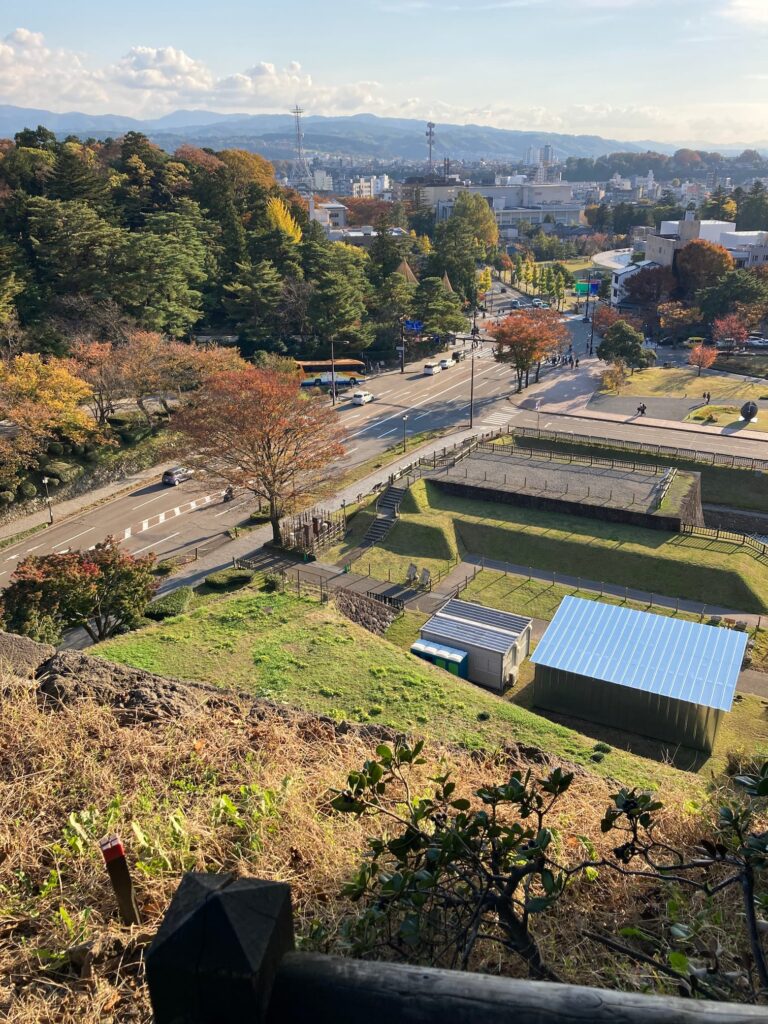
民の声が聞こえるかも?@辰巳櫓から美術館
これも度々体験したことを元に、前半(1-5)は辰巳櫓の特徴を織り込んで、後半(6-10)のおふざけパートに落とし込んでみました。
- EN: This is the site of a turret that once stood at the southeastern corner of the Honmaru, where Kanazawa Castle’s main keep once stood.
JP: ここは金沢城の天守がかつて存在した本丸の南東角に建っていた櫓の跡です。 - EN: It was one of several important turrets surrounding the Honmaru, and stood at one of the highest points within the castle.
JP: 本丸を取り囲む重要な櫓の一つで、城内でも最も高い場所の一つに建っていました。 - EN: From here, the turret commanded a wide view of the southern part of the castle town, making it a strategic observation point.
JP: ここからは城下町の南側を広く見渡すことができ、戦略的な監視地点だったと考えられます。 - EN: It was also a prominent structure that could be seen from the castle town below, symbolizing the authority and prestige of the Maeda lords.
JP: また、城下町からもよく見える目立つ建物で、前田家の領主の権威や威厳を象徴する存在でもありました。 - EN: We don’t know exactly what they were monitoring, but perhaps the turret was also used to keep an eye on the lives of ordinary people living in the castle town.
JP: 実際に何を監視していたのかは分かっていませんが、城下町に暮らす庶民の生活を見守るためにも使われていたのかもしれません。 - EN: The Maeda lords were respected by their subjects, and perhaps they wanted to know how ordinary people were doing.
JP: 前田家の領主たちは領民から敬愛されていましたから、庶民がどのように暮らしているか知りたかったのかもしれません。 - EN: Perhaps they were practicing the old saying, “The voice of the people is the voice of God,” by occasionally looking down on the town and listening to the people’s voices.
JP: もしかすると、「民の声は神の声」という格言を実践し、時々城下町を見下ろして、民の声に耳を傾けていたのかもしれませんね。 - EN: Actually, as a tour guide, there are times when I feel exactly the same way.
JP: 実は、ガイドである私も、まさに同じように感じることがあります。 - EN: Looking down from here, you can see the modern art museum, one of Kanazawa’s most popular attractions and a source of pride for the city. But surprisingly, quite a few international guests tell me they aren’t really into modern art!
JP: ここから見下ろすと、金沢が誇る人気観光スポットの現代美術館が見えます。しかし驚いたことに、実は現代美術にはあまり興味がないという海外ゲストもかなり多いのです! - EN: “Oh, I had no idea! I’ll have to rethink our afternoon plans!” I sometimes find myself thinking. After all, for a tour guide, the guest’s voice is the voice of God!
JP: 「えっ、そうだったんですか!午後の予定を考え直さなければ!」と、思わず慌ててしまうことがあります。何しろ、ガイドにとってゲストの声は神の声なのですから!
Glossary:用語集
watchtower ☛ 物見櫓・監視塔 / site ☛ 跡地・場所 / turret ☛ 櫓(やぐら) / southeastern corner ☛ 南東角 / Honmaru ☛ 本丸 / main keep ☛ 天守・天守閣 / surround ☛ 取り囲む / command a wide view of ☛ ~を一望する・広く見渡す / castle town ☛ 城下町 / strategic observation point ☛ 戦略的な監視地点
prominent structure ☛ 目立つ建造物 / symbolize ☛ 象徴する / authority and prestige ☛ 権威と威厳 / monitor ☛ 監視する / keep an eye on ☛ ~を見守る・目を光らせる / ordinary people ☛ 庶民・一般の人々 / subject ☛ 領民・家臣 / practice ☛ 実践する / old saying ☛ 古い格言・ことわざ / occasionally ☛ 時々 / look down on ☛ ~を見下ろす / listen to ☛ ~に耳を傾ける
modern art museum ☛ 現代美術館 / popular attraction ☛ 人気観光スポット / source of pride ☛ 誇りの源・自慢のもの / surprisingly ☛ 驚いたことに / quite a few ☛ かなり多くの / be into ☛ ~に夢中である・興味がある / have no idea ☛ 全く知らない・思いもよらない / rethink ☛ 考え直す・再検討する / afternoon plans ☛ 午後の予定 / find oneself thinking ☛ ふと~と思う・思わず~と考えてしまう
 🏯 源氏(Genji)|日本の城郭建築&庭園ガイド
全13ユニット(派生全12記事)にわたる金沢城英語ガイド解説はお楽しみいただけましたか?
他のスポットの解説へ戻る際は、冒頭の緑色ナビゲーションボタンをご活用ください! - EN: This is the site of a turret that once stood at the northeastern corner of the Honmaru, the main enclosure where Kanazawa Castle’s main keep once stood.
 源氏(Genji)
皆さん、こんにちは!Genjiです。金沢城本丸の四隅を固めた展望と防衛の要所であり、十二支の方位名(十二支方位)を冠したロマン溢れる重要遺構『櫓跡(丑寅・辰巳・戌亥櫓跡)』の英語案内ページへようこそ!
本丸の高台の角々に位置する「櫓跡(やぐらあと)」。かつてここには、城内を見下ろし遠方の敵や火災を早期発見する三層の超高層展望櫓がそびえ立っていました。方位を示す「丑寅(北東)」「辰巳(南東)」「戌亥(北西)」という名前に込められた江戸時代の空間認識を学ぶスポットです。
現場でサッと使える短文フレーズから、十二支による方向の数え方(Zodiac Directions)、本丸の展望ロケーション、天守代わりとして機能した歴史、ゲストをクスッと笑わせる裏話まで網羅しました。目的の項目ボタンからご自由にご活用ください。
丑寅櫓を支えた初期の石垣@鶴丸倉庫裏から
📍 Quick Navigation: 各章へジャンプ
-
13. 櫓跡(丑寅櫓・辰巳櫓・戌亥櫓)
13.1 基本情報(5項目)— The Three Turret Sites
背景知識として押さえておきたいポイントを単なる史跡の説明ではなく、外からの敵への備えと、城内の監視という対比を中心に構成しました。
Set 1: Defensive Positions / 防御上の配置
The three turret sites remind us that the castle’s defenses depended not only on its walls, but also on where its watchtowers stood.
3つの櫓跡を見ると、城の防御は石垣だけでなく、櫓をどこに配置するかも重要だったことが分かります。
Set 2: Watching for External Threats / 外からの敵への警戒
The Ushitora and Tatsumi turrets stood on the eastern and southern sides of the Honmaru, helping guard approaches from the Kenrokuen and Kodatsuno areas, which were considered vulnerable routes for an attack.
丑寅櫓と辰巳櫓は本丸の東側・南側に位置し、敵の侵入経路として警戒された兼六園・小立野方面などへの備えを担っていました。
Set 3: The Inui Turret / 戌亥櫓の役割
Unlike the turrets watching for threats from outside, the Inui Turret was used to keep watch over the castle itself, including the Ninomaru.
外からの敵を警戒する櫓とは異なり、戌亥櫓は二の丸を含む城内全体を監視する役割を担っていました。
Set 4: The Meaning of the Names / 櫓の名前と方角
The names Ushitora, Tatsumi, and Inui refer to traditional Japanese compass directions: northeast, southeast, and northwest, respectively.
丑寅・辰巳・戌亥は、それぞれ北東・南東・北西を表す伝統的な方角の呼び名です。
Set 5: A Lesson in Security / 防御から学べること
History offers many examples of kingdoms and organizations brought down by betrayal from within. The Inui Turret reminds us that protecting a castle meant watching not only the enemy outside, but also what was happening inside.
歴史上、内部の裏切りによって滅びた国や組織は数多くあります。戌亥櫓は、城を守るには外の敵だけでなく、内部の動きにも目を配る必要があったことを考えさせてくれます。
13.2 口頭説明(5項目)
案内中に歩きながらテンポよく説明できるよう、3つの櫓跡の特徴を5項目にまとめました。
Set 1: Defense / 防御
EN: The three turret sites remind us that a castle’s defense depended not only on its walls, but also on where its turrets were placed.
JP: この3つの櫓跡を見ると、城の防御は石垣だけでなく、櫓をどこに配置するかも重要だったことが分かります。
Set 2: External Threats / 外敵への備え
EN: The Ushitora Turret stood on the northeast side of the Honmaru. Turrets in this area helpedWhat was this watchtower used for? guard against attacks from the Kenrokuen and Kodatsuno directions.
JP: 丑寅櫓は本丸の北東側にありました。この一帯の櫓は、兼六園や小立野方面からの攻撃に備える役割を担っていました。
Set 3: Internal Surveillance / 城内の監視
EN: Unlike the turrets guarding against outside threats, the Inui Turret was used to watch over the castle itself, including the Ninomaru.
JP: 外からの敵を警戒する櫓とは異なり、戌亥櫓は二の丸を含む城内を監視するために使われていました。
Set 4: Compass Directions / 方角を表す名前
EN: The names Ushitora, Tatsumi, and Inui refer to traditional Japanese compass directions: northeast, southeast, and northwest, respectively.
JP: 丑寅・辰巳・戌亥は、それぞれ北東・南東・北西を表す伝統的な方角の呼び名です。
Set 5: A Lesson in Security / 防御から学べること
EN: History is full of kingdoms and organizations that fell because of betrayal from within. Protecting a castle meant watching not only the enemy outside, but also what was happening inside.
JP: 歴史上、内部の裏切りによって滅びた国や組織は数多くあります。城を守るには、外の敵だけでなく、内部の動きにも目を配る必要があったのです。
13.3 笑いが取れるかも?説明例
この影は夫を見張る奥様の怒りの炎?@戌亥櫓跡から橋爪門
-
Q1. この展望台は何のために使われていたの?
“What was this observation deck used for?”
戌亥櫓跡(いぬいやぐらあと)に一緒立つとよく聞かれる質問を元に歴史説明を織り込んで纏めてみました。前半(1-5)が真面目パート、後半(6-10)がおふざけパートです。🎧米国話者
❶EN: Today, this spot is used as an observation deck, but there used to be a two-story turret here.
JP: 今は展望台として使われていますが、かつてここには二層の櫓がありました。
❷EN: Many castle turrets were built to watch for enemies outside, but I think this one also played an important role in keeping an eye on what was happening inside the castle.
JP: 多くの城の櫓は外敵を監視するために建てられましたが、ここは城内の動きを監視する上でも重要な役割を果たしていたのではないかと思います。
❸EN: After all, throughout history, many kingdoms and governments have fallen not because of foreign enemies, but because of betrayal from within.
JP: 何しろ歴史上、多くの国や政権が滅びた原因は、外国の敵よりも内部の裏切りだったからです。
❹EN: Unfortunately, this turret was destroyed in the great fire of 1759 and was never rebuilt.
JP: 残念ながら、この櫓は1759年の大火で焼失し、その後再建されませんでした。
❺EN: By that time, the castle’s political center had already moved from the main enclosure to the second enclosure, so there was less need to rebuild it.
JP: その頃には城の政治の中心がすでに本丸から二の丸に移っていたため、再建する必要性も小さくなっていたのでしょう。
❻EN: But perhaps this place was still used for keeping an eye on things, even after the turret disappeared.
JP: でも,櫓がなくなった後も、ここは何かを監視する場所として使われていたかもしれません。
❼EN: By then, Japan was enjoying a long period of peace, so perhaps the biggest thing to watch out for was fire!
JP: その頃には日本は長い平和な時代を迎えていましたから、最大の監視対象は火事だったかもしれませんね!
❽EN: Or perhaps it was used by wives to keep an eye on their husbands and make sure they weren’t having affairs!
JP: あるいは、夫が浮気をしていないか監視するために、奥様たちが使っていたのかもしれません!
❾EN: When I tell this joke, many female guests burst out laughing. That’s when I realize that this surveillance system is truly universal!
JP: この冗談を言うと、多くの女性ゲストが大笑いします。そのとき、これは本当に世界共通の監視システムだと気づくのです!
❿EN: After all, wives watching like hawks to make sure their husbands aren’t playing with fire are probably scarier than any actual fire, anywhere in the world!
JP: 結局のところ、夫が火遊びをしていないかと目を光らせる奥様たちは、世界中どこでも、本物の火事より怖い存在なのです!(笑)
Glossary:用語集
observation deck ☛ 展望台 / two-story ☛ 二層の・2階建ての / turret ☛ 櫓(やぐら) / watch for ☛ ~を見張る・警戒する / play an important role in ☛ ~において重要な役割を果たす / keep an eye on ☛ ~を監視する・目を光らせる / after all ☛ 何しろ・結局のところ / throughout history ☛ 歴史を通じて / kingdom ☛ 王国 / government ☛ 政権・政府 / fall ☛ 滅びる・崩壊する / foreign enemy ☛ 外敵 / betrayal ☛ 裏切り / from within ☛ 内部からの
unfortunately ☛ 残念ながら / be destroyed ☛ 焼失する・破壊される / great fire ☛ 大火 / rebuild ☛ 再建する / political center ☛ 政治の中心 / main enclosure ☛ 本丸 / second enclosure ☛ 二の丸 / disappear ☛ 消える・なくなる / period of peace ☛ 平和な時代 / watch out for ☛ ~に気をつける・警戒する
have an affair ☛ 浮気をする・不倫する / burst out laughing ☛ 大笑いする・吹き出す / realize ☛ 気づく / surveillance system ☛ 監視システム / universal ☛ 世界共通の・普遍的な / watch like a hawk ☛ 鷹のように鋭く目を光らせる / play with fire ☛ 火遊びをする・危険なことに手を出す / actual fire ☛ 本物の火事
Q2. この場所は何に使われてたの?(丑寅櫓)
”What was this place used for”
「歴史を書くのは訪問者?」@丑寅櫓跡から兼六園
丑寅櫓跡(うしとらやぐらあと)から、兼六園や車道を見下ろしながらよく聞かれる質問を元に当時の金沢城の置かれた状況を織り込んでみました。
前半(1-6)が真面目パート、後半(7-10)がおふざけパートです。🎧オーストラリア話者- EN: This is the site of a turret that once stood at the northeastern corner of the Honmaru, the main enclosure where Kanazawa Castle’s main keep once stood.
JP: ここは金沢城の天守がかつて存在した本丸の北東角に建っていた櫓の跡です。 - EN: This turret was strategically positioned to keep watch over the approaches to the castle from the direction of what is now Kenrokuen Garden.
JP: この櫓は、現在の兼六園方面から城に接近する敵を監視するための戦略的に重要な場所にありました。 - EN: The elevated ground where Kanazawa Castle and Kenrokuen Garden now stand was once part of a single, gently sloping plateau, with no major natural barrier between them.
JP: 現在の金沢城と兼六園がある高台は、かつては一続きのなだらかな台地で、両者の間には大きな自然の障壁がありませんでした。 - EN: To strengthen the castle’s defenses, a wide moat was created between the castle and what is now Kenrokuen Garden.
JP: 城の防御力を高めるため、金沢城と現在の兼六園の間に幅の広い堀が造られました。 - EN: Looking down from here, you can see what looks like a gorge, but this road was once a wide moat filled with water.
JP: ここから見下ろすと峡谷のように見えますが、この道路はかつて水を湛えた幅の広い堀だったのです。 - EN: The Maeda family had to be prepared for a possible attack by the Tokugawa shogunate, which was wary of powerful regional lords like them.
JP: 前田家は、彼らのような有力大名を警戒していた徳川幕府からの攻撃に備える必要があったのです。 - EN: Interestingly, many guests often ask me, “Did a war actually happen here?”
JP: 面白いことに、多くのゲストから「実際にここで戦争はあったの?」とよく聞かれます。 - EN: I suppose they simply cannot imagine that such a tense history existed, given the incredibly peaceful scenery we see here today.
JP: きっと、現在ここから見えるあまりにも平和な風景からは、そんな緊張した歴史があったとは想像できないのでしょうね。 - EN: It is often said that “History is written by the victors.” But since no battle was fought here between the Maeda clan and the Tokugawa shogunate, there were no victors here.
JP: 「歴史は勝者によって書かれる」とよく言われます。しかし、ここでは前田家と徳川幕府の間で実際の戦闘は起きなかったので、勝者はいないのです。 - EN: There are no victors here—only visitors like you!
JP: ここにいるのは勝者ではなく、あなたのような訪問者ばかりです!
Glossary:用語集
site ☛ 跡地・場所 / turret ☛ 櫓(やぐら) / northeastern corner ☛ 北東角 / Honmaru ☛ 本丸 / main enclosure ☛ 本丸・主郭 / main keep ☛ 天守・天守閣 / strategically positioned ☛ 戦略的に配置された / keep watch over ☛ ~を監視する・見張る / approach ☛ 接近路・進入経路 / direction ☛ 方向・方面
elevated ground ☛ 高台 / gently sloping ☛ なだらかに傾斜した / plateau ☛ 台地・高原 / natural barrier ☛ 自然の障壁 / strengthen ☛ 強化する / defense ☛ 防御 / wide moat ☛ 幅の広い堀 / look down ☛ 見下ろす / gorge ☛ 峡谷・深い谷 / filled with water ☛ 水を湛えた・水で満たされた
be prepared for ☛ ~に備えている / possible attack ☛ 起こりうる攻撃 / Tokugawa shogunate ☛ 徳川幕府 / be wary of ☛ ~を警戒している / powerful regional lord ☛ 有力大名 / interestingly ☛ 面白いことに / actually happen ☛ 実際に起こる / suppose ☛ ~だと思う・推測する / tense history ☛ 緊張した歴史 / given ☛ ~を考慮すると / incredibly peaceful ☛ あまりにも平和な / scenery ☛ 風景・景色
be written by ☛ ~によって書かれる / victor ☛ 勝者 / battle ☛ 戦闘・合戦 / fight a battle ☛ 戦う / Maeda clan ☛ 前田家・前田一族 / visitor ☛ 訪問者・観光客
Q3. この櫓は何のため?(辰巳櫓)
What was this watchtower used for?
民の声が聞こえるかも?@辰巳櫓から美術館
これも度々体験したことを元に、前半(1-5)は辰巳櫓の特徴を織り込んで、後半(6-10)のおふざけパートに落とし込んでみました。
- EN: This is the site of a turret that once stood at the southeastern corner of the Honmaru, where Kanazawa Castle’s main keep once stood.
JP: ここは金沢城の天守がかつて存在した本丸の南東角に建っていた櫓の跡です。 - EN: It was one of several important turrets surrounding the Honmaru, and stood at one of the highest points within the castle.
JP: 本丸を取り囲む重要な櫓の一つで、城内でも最も高い場所の一つに建っていました。 - EN: From here, the turret commanded a wide view of the southern part of the castle town, making it a strategic observation point.
JP: ここからは城下町の南側を広く見渡すことができ、戦略的な監視地点だったと考えられます。 - EN: It was also a prominent structure that could be seen from the castle town below, symbolizing the authority and prestige of the Maeda lords.
JP: また、城下町からもよく見える目立つ建物で、前田家の領主の権威や威厳を象徴する存在でもありました。 - EN: We don’t know exactly what they were monitoring, but perhaps the turret was also used to keep an eye on the lives of ordinary people living in the castle town.
JP: 実際に何を監視していたのかは分かっていませんが、城下町に暮らす庶民の生活を見守るためにも使われていたのかもしれません。 - EN: The Maeda lords were respected by their subjects, and perhaps they wanted to know how ordinary people were doing.
JP: 前田家の領主たちは領民から敬愛されていましたから、庶民がどのように暮らしているか知りたかったのかもしれません。 - EN: Perhaps they were practicing the old saying, “The voice of the people is the voice of God,” by occasionally looking down on the town and listening to the people’s voices.
JP: もしかすると、「民の声は神の声」という格言を実践し、時々城下町を見下ろして、民の声に耳を傾けていたのかもしれませんね。 - EN: Actually, as a tour guide, there are times when I feel exactly the same way.
JP: 実は、ガイドである私も、まさに同じように感じることがあります。 - EN: Looking down from here, you can see the modern art museum, one of Kanazawa’s most popular attractions and a source of pride for the city. But surprisingly, quite a few international guests tell me they aren’t really into modern art!
JP: ここから見下ろすと、金沢が誇る人気観光スポットの現代美術館が見えます。しかし驚いたことに、実は現代美術にはあまり興味がないという海外ゲストもかなり多いのです! - EN: “Oh, I had no idea! I’ll have to rethink our afternoon plans!” I sometimes find myself thinking. After all, for a tour guide, the guest’s voice is the voice of God!
JP: 「えっ、そうだったんですか!午後の予定を考え直さなければ!」と、思わず慌ててしまうことがあります。何しろ、ガイドにとってゲストの声は神の声なのですから!
Glossary:用語集
watchtower ☛ 物見櫓・監視塔 / site ☛ 跡地・場所 / turret ☛ 櫓(やぐら) / southeastern corner ☛ 南東角 / Honmaru ☛ 本丸 / main keep ☛ 天守・天守閣 / surround ☛ 取り囲む / command a wide view of ☛ ~を一望する・広く見渡す / castle town ☛ 城下町 / strategic observation point ☛ 戦略的な監視地点
prominent structure ☛ 目立つ建造物 / symbolize ☛ 象徴する / authority and prestige ☛ 権威と威厳 / monitor ☛ 監視する / keep an eye on ☛ ~を見守る・目を光らせる / ordinary people ☛ 庶民・一般の人々 / subject ☛ 領民・家臣 / practice ☛ 実践する / old saying ☛ 古い格言・ことわざ / occasionally ☛ 時々 / look down on ☛ ~を見下ろす / listen to ☛ ~に耳を傾ける
modern art museum ☛ 現代美術館 / popular attraction ☛ 人気観光スポット / source of pride ☛ 誇りの源・自慢のもの / surprisingly ☛ 驚いたことに / quite a few ☛ かなり多くの / be into ☛ ~に夢中である・興味がある / have no idea ☛ 全く知らない・思いもよらない / rethink ☛ 考え直す・再検討する / afternoon plans ☛ 午後の予定 / find oneself thinking ☛ ふと~と思う・思わず~と考えてしまう
🏯 源氏(Genji)|日本の城郭建築&庭園ガイド全13ユニット(派生全12記事)にわたる金沢城英語ガイド解説はお楽しみいただけましたか?
他のスポットの解説へ戻る際は、冒頭の緑色ナビゲーションボタンをご活用ください! - EN: This is the site of a turret that once stood at the northeastern corner of the Honmaru, the main enclosure where Kanazawa Castle’s main keep once stood.