 源氏(Genji)
皆さん、こんにちは!Genjiです。日本の城郭建築を美しく象徴し、権威と防衛の知恵が詰まった『屋根(Roof)』の英語案内ページへようこそ!
このページでは、入母屋造りや各種の破風(ハフ)、鬼瓦や鯱(しゃちほこ)といった屋根装飾から、重量・耐震性の仕組み、現場で使えるFAQ即答フレーズ、探究心をくすぐる「鉛瓦」の裏話まで網羅しています。
目的の項目ボタンから自由にジャンプしてご活用ください。
📍 Quick Navigation: 各章へジャンプ
7. 屋根
7.1 基本情報
日本の屋根は多くのインバウンドに珍しいので、実際の関心点も踏まえ10項目にまとめてみました。屋根の形式の日本語の名前は現場では殆ど使いません(建築専門家以外は不要)が、ご自身の理解の為(日本語んでも紛らわしいので)付記しました。英語音声は前半(1-5)米国女性話者、後半(6-10)米国男性話者の2ファイルです。

《日本語》
- 城の屋根は、雨風から建物を守るだけでなく、遠くから際立って見えることで、城主の権力と権威を示すよう設計されている。
- 天守閣や櫓の屋根は、複数の屋根様式を組み合わせることで、より美しく立体的に見えるよう設計されている。
- 屋根様式には主に2種類あります。「切妻造り(きりづまづくり)」は開いた本のような三角形の屋根で、「寄棟造り(よせむねづくり)」は四方向に傾斜がある(ピラミッド型とも表現される)屋根である。
- 多くの天守閣は「入母屋造り(いりもやづくり)」という屋根構造を特徴としており、上部が二方向に傾斜する切妻屋根、下部が四方向に傾斜する寄棟屋根となっている。
- 多くの城には、屋根の妻側にある三角形の装飾的な要素である「破風(はふ)」があります。その中には、特徴的な曲線を描く屋根を持つ「唐破風(からはふ)」もある。
- 多くの城には通気と装飾を目的として「千鳥破風(ちどりはふ)」という、主屋根の傾斜部分に配置された小さく、複数の破風が組み込まれている。ある説によると、それらの配置は、まるで何羽もの鳥が羽ばたいているような姿を連想させるとのこと。
- 屋根の棟の端には、顔の形をした装飾瓦「鬼瓦(おにがわら)」が置かれている。これらは悪霊や火災を遠ざけると信じられており、城によってデザインが異なる。
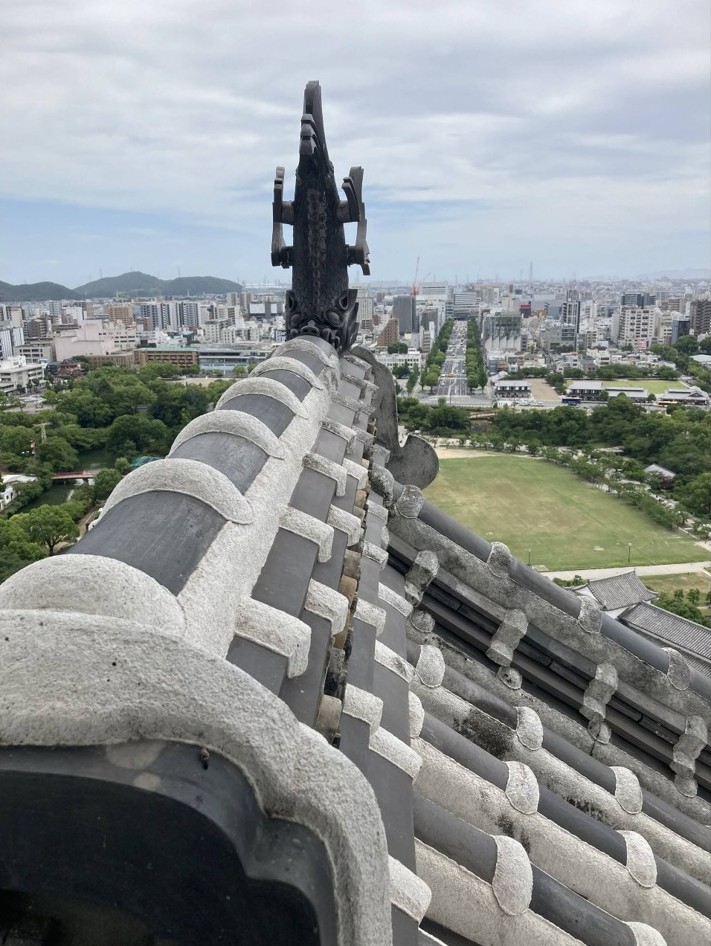
- 天守閣の屋根の最上部には、「鯱(しゃちほこ)」と呼ばれる想像上の生き物がいる。これらは魚の体に虎の顔を持ち、火災に対する守り神としての役割を果たしている。
- ほとんどの屋根瓦は、高温で焼かれた土や粘土でできており、非常に耐火性が高く丈夫で、何世紀にもわたって使われてきた。
- 屋根全体を美しく、独特な白い外観にするために、一部の城では木造屋根の表面を鉛の板で覆った「鉛瓦(なまりがわら)」も使われた。

《英語》
- The roof of a castle is designed not only to protect against rain and wind, but also to assert the lord’s power and authority by standing out prominently from a distance.
- The roofs of the castle tower and turrets are designed to look more beautiful and three-dimensional through the combination of multiple roof styles.
- There are two main types of roof style: Kirizuma-zukuri, a gabled roof with a triangular surface resembling an open book, and Yosemune-zukuri, a hipped roof with slopes on all four sides (sometimes described as pyramid-shaped).
- Many castle towers feature an irimoya-zukuri roof structure, with a gabled roof at the top (sloping in two directions) and a hipped roof at the bottom (sloping in four directions).
- Many castles feature hafu (gables), which are the triangular decorative elements at the ends of the roof ridges. Among these are Karahafu (Chinese-style gables), known for their distinctive curved roofs.
- Many castles incorporate chidori hafu, which are smaller, often multiple gables placed on the main roof slope for air circulation and decoration. One theory says their arrangement can sometimes evoke the image of many birds flapping their wings in flight.
- At the ends of the roof ridges, decorative tiles shaped like faces, known as oni-gawara (demon-face roof tiles), are placed. They are believed to ward off evil spirits and fire, with their designs varying from castle to castle.
- At the peak of the castle tower roof, you’ll find imaginary creatures called ‘shachihoko’. These beings, with the body of a fish and the face of a tiger, serve as guardian deities against fire.
- Most roof tiles, made from soil or clay baked at high temperatures, are highly fire-resistant and durable, having been used for centuries.
- To achieve a beautiful and distinctively white appearance for the entire roof, some castles also used lead tiles, where the wooden roof structure was covered with sheets of lead.
7.2 インバウンドの視点
屋根はお城の内部の展示物を見ながら、その構造や素材についてよく雑談にもなりますので、その辺りのネタを考慮して回答はかなり長くなっています。現場での即答は最初の文だけで十分ですが、後は反応を見ながら雑談的に付け足す、そんな感じでチェックされるのがよろしい様に思います。英語音声については、質問は短いので10文1ファイル(インド男性話者)、回答は前半(1-5)は英国女性話者、後半(6-10)はオーストラリア男性話者の2ファイルです。

《日本語》
- Q: この屋根は何でできていますか?
- A: 主に「瓦(かわら)」と呼ばれる粘土を焼いて作ったタイルでできています。瓦の下には、屋根構造全体を支えるために木材が注意深く組まれています。
- Q: 屋根瓦はどれくらいの重さがありますか?
- A: 瓦一枚一枚は数キログラムですが、屋根全体では数トンもの重さになります!このかなりの重さが屋根を安定させ、強風にも非常に強くしています。
- Q: どうしてこんなにたくさんの瓦が屋根に使われているのですか?
- A: たくさんの瓦を積み重ねることで、効果的な層構造が作られます。この設計により雨水が効率的に流れ落ち、建物の中に水が入るのを防ぎます。さらに、これらの瓦の厚みが建物の断熱性を著しく向上させ、火災からも守る役割も果しています。
- Q: これらの瓦は一枚一枚手作りなのですか?
- A: 歴史的に見て、城で使われた瓦はすべて熟練した職人によって丹念に作られました。今日でも、修復プロジェクトに使われる瓦の多くは、依然として伝統的な方法で手作りされており、本当に高度な技術と職人技が必要です。
- Q: 屋根の端にある鬼の顔のようなものは何ですか?
- A: それは「鬼瓦(おにがわら)」と呼ばれるものです。城の屋根を守る守り神と考えられています。悪霊や火災を遠ざけると言い伝えられており、城によってその表情やデザインが異なるので、ぜひ独特な芸術的な違いを鑑賞してみてください!
- Q: 屋根の上の金色の魚のようなもの(鯱)は何ですか?
- A: それは「鯱(しゃちほこ)」という、城の屋根によく見られる伝説上の生き物です。魚の体に虎の顔を持つと言われています。口から水を噴き出して火を消すと信じられており、強力な防火のお守りとしての役割を果たしています。かつては権力と富の象徴として金箔が施されることもありましたが、その価値ゆえに残念ながら盗まれることもありました。
- Q: 屋根の形がとても複雑ですが、何か特別な意味がありますか?
- A: もちろんです!屋根の複雑な形は、城の威厳と美しさを強調するだけでなく、効率的な雨水排水のような実用的な考慮もされています。例えば、金沢城の石川門にある**唐破風(からはふ)**は、複雑な美しさと水流のための巧みな設計の両方を示しています。
- Q: この種類の屋根はどれくらい持ちますか?
- A: 粘土瓦は信じられないほど耐久性があります。適切にメンテナンスされていれば、100年以上もつことも珍しくありません。実際、多くの城の屋根は何世紀にもわたってその印象的な姿を保ってきました!
- Q: (素材を考えると)落とすと割れますか?
- A: はい。屋根瓦は陶磁器と同じ素材でできているため、落としたり強い衝撃が加わったりすると、確かにひびが入ったり割れたりすることがあります。しかし、屋根瓦は一枚一枚が独立して固定され、互いに少しずつ重なるように設計されています。これにより、構造全体が一度に壊れるのを防ぎ、適切に葺かれていれば非常に高い耐久性を発揮するのです。
- Q: 地震が来ても大丈夫ですか?
- A: 重い瓦屋根は地震の揺れに弱いと思われがちですが、城のような日本の伝統的な木造建築は、揺れを吸収し耐えるように特別に設計された柔軟な構造を持っています。壊れるのではなく、しなるように造られているのです。
《英語》
- Q: What is this roof made of?
- A: It’s mainly made of “kawara,” a type of tile baked from clay. Beneath these tiles, a wooden framework is carefully assembled to support the entire roof structure.
- Q: How heavy are the roof tiles?
- A: Each individual tile weighs a few kilograms, but when you consider the entire roof, the total weight can be several tons! This significant weight helps stabilize the roof, making it very resistant to strong winds.
- Q: Why are so many tiles used on the roof?
- A: Stacking so many tiles creates an effective layering system. This design efficiently drains rainwater away, preventing any water from entering the building. Plus, the thickness of these layered tiles significantly improves the building’s thermal insulation and offers protection against fire.
- Q: Are each of these tiles handmade?
- A: Historically, every single tile used on the castle was meticulously crafted by skilled artisans. Even today, for restoration projects, many tiles are still handmade using these traditional methods, which truly requires a high level of skill and craftsmanship.
- Q: What are those demon-face-like figures at the end of the roof?
- A: Those are called “oni-gawara” (demon-face roof tiles). They’re considered guardian deities that protect the castle roof. They’re believed to ward off evil spirits and fire. The cool thing is, their expressions and designs vary from castle to castle, so you can really appreciate the unique artistic differences!
- Q: What are those golden fish-like figures [shachihoko] on the roof?
- A: That’s a “shachihoko,” a mythical creature often seen on castle roofs. It’s said to have the body of a fish and the face of a tiger. They’re believed to extinguish fires by spouting water from their mouths, so they act as powerful fire prevention talismans. While some had gold leaf to symbolize power and wealth, they were unfortunately sometimes stolen due to their value.
- Q: The roof shape is very complex; does it have any special meaning?
- A: Absolutely! The complex roof shapes not only emphasize the castle’s dignity and beauty but are also designed with practical considerations like efficient rainwater drainage.
- Q: How long does this type of roof last?
- A: Clay tiles are incredibly durable. With proper maintenance, it’s not uncommon for them to last well over 100 years. In fact, many castle roofs have retained their impressive appearance for centuries!
- Q: Do they break when they fall, considering the material?
- A: Yes. As roof tiles are made from the same material as ceramics, they can certainly crack or break when dropped or subjected to a strong force. However, roof tiles are fixed independently and designed to overlap slightly with each other. This prevents the entire roof structure from breaking all at once, making them quite resilient when properly laid.
- Q: Is it safe even during an earthquake?
- A: While heavy tile roofs might seem vulnerable to earthquake shaking, traditional Japanese wooden buildings, like castles, have a flexible structure specifically designed to absorb and withstand seismic forces. They’re built to flex, not break.
7.3 笑いが取れるかも?説明例
一緒に屋根を見ながら素朴に思うであろう想定疑問への笑いも意図した説明例です。
Q1:城の屋根はすべて瓦でできているのですか?
“ Are all the roofs of the castle made of tiles?”
ここでは実際よく話題になる「江戸城」「皇居」を交えた話に纏めました。前半(1-6)(米国男性話者)が説明にも使える真面目パート、後半(7-14)(米国女性話者)が雑談力UPを意図したおふざけパートです。


《日本語》
- ほとんどの屋根は瓦で覆われていますが、将軍家が住んでいた江戸城、のちに現在の皇居となりましたが、では鉛瓦を使用していました。
- 鉛は長い間、雨や日光にさらされることで白く変色し、天候によっては屋根に雪が積もったように見えることもあります。
- 当時の史料では「白く輝いて美しい」と記録されていますが、非常に高価だったため、他の城では使われることはありませんでした。
- 唯一、金沢城も鉛瓦を使用しており、非常時にはそれを溶かして弾丸として使うためだった、という説があります。
- 加賀藩の藩主は幕府に次ぐほどの財力を持っており、常に反乱の疑いをかけられていました。
- 実際に、幕府との戦争に備えて秘密裏に準備をしていたのも事実です。
- しかし冷静に考えると、この説は現実的とは言えません。
- 緊急時に鉛瓦を溶かして弾丸を作る時間などありません。
- 事前に準備していたとしても瓦を外してしまえば屋根は木の骨組みだけとなり、城の基本的な防御力が大きく損なわれてしまいます。
- それでも、そうした鉛瓦の存在は、城下の兵士や町人たちに「いざという時の備えと覚悟」を感じさせる効果があったのかもしれません。
- 悲しいことに、日本が過去に経験した最後の大きな戦争では、政府から竹槍で戦う準備を強いられた時代もありました。
- それに比べれば、鉛瓦によって備えるという発想の方が、日本の伝統的な美意識や工夫に近いものでした。
- 当時、全国の芸者たちは美しく白く見せるために、鉛を含む危険な白粉を使用していたほどです。
- 城に大量の鉛瓦が敷かれているというだけで、莫大な費用と特別な備えを象徴し、それが城の住民や町の人々にとって安心感や誇りをもたらしたのかもしれません。
- まさに…文字通り自信が「鉛(Lead)」につながった、と言えるかもしれませんね!
《英語》
- Most roofs are covered with roof tiles, but Edo Castle—where the shogunate lived and which later became the current Imperial Palace—used lead tiles.
- Lead turns white after long exposure to rain and sunlight, and depending on the weather, it can look as if snow has accumulated on the roof.
- Historical documents from that time describe it as beautiful and shining white, but it was so expensive that it wasn’t used on other castles.
- Kanazawa Castle was the only other castle that also used lead tiles, and there’s a theory these were intended to be melted down for bullets in times of emergency.
- The wealthy lords of Kanazawa Castle, second only to the shogunate in power, were constantly under suspicion of rebellion.
- And it’s true they were secretly preparing for a potential war with the shogunate.
- However, upon reflection, this theory is not realistic.
- In an emergency, there would be no time to melt lead tiles and make bullets.
- Even if prepared in advance, removing the lead tiles would leave the roof with just its wooden framework, severely compromising the castle’s basic defensive capabilities.
- However, it may have served to instill a sense of preparedness and resolve in the soldiers and commoners of the castle town in times of crisis.
- Sadly, during Japan’s last major wars, the people were tragically forced by the government to prepare to fight with mere bamboo spears.
- In contrast, the idea of preparing with lead tiles offered a sense of preparedness that was more aligned with traditional Japanese aesthetic values and ingenuity.
- At that time, geisha all over Japan used dangerous white powder containing lead just to make sleeves look white and beautiful.
- Perhaps, the sheer presence of so many lead tiles, representing such immense cost and unique readiness, might have instilled a deeper sense of security and confidence among the castle’s inhabitants and the people of the castle town!
- You might say… confidence led to lead. Literally!
屋根の解説はお楽しみいただけたかな?
他のスポット(天守閣、城門、石垣、堀など)の解説へ移動する際は、冒頭の緑色ナビゲーションボタンをご活用くだされ!