 ユイ(Yui)
皆さん、こんにちは!日本の自然・里山ウオッチャー&ガイドのユイです。合掌造りの暮らしと建物を支える命の源『囲炉裏(Irori / Sunken hearth)』英語案内ページへようこそ!
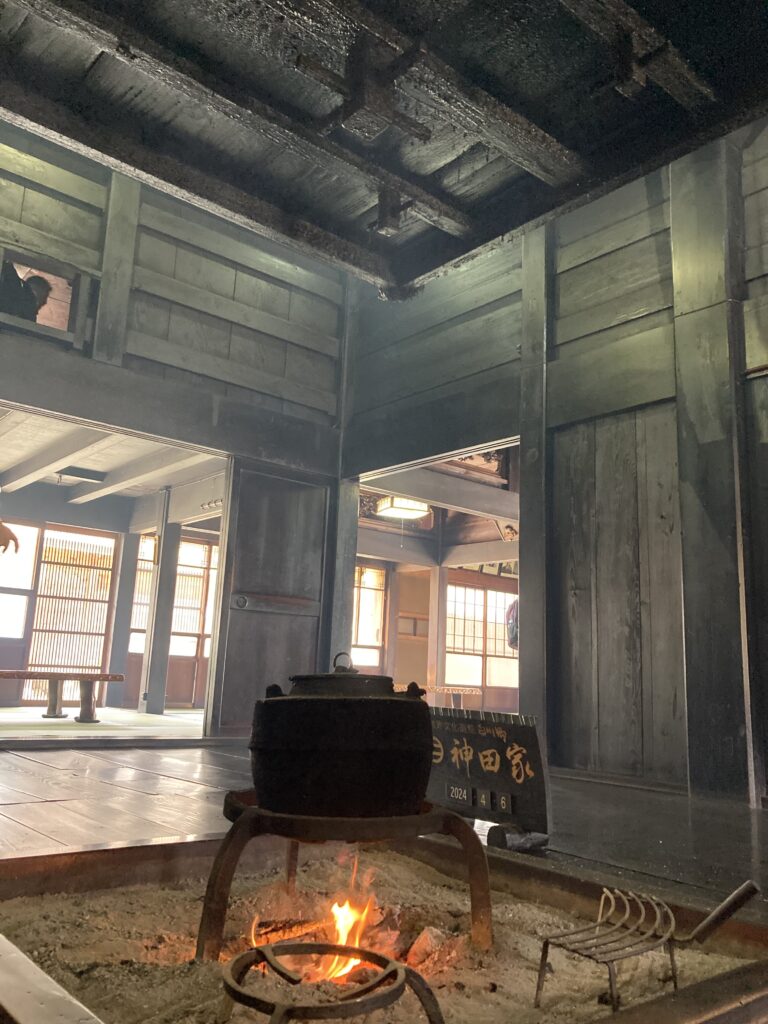
白川郷の家屋に入ると、中央で優しく火を灯しているのが「囲炉裏」です。単なる暖房や調理器具にとどまらず、家全体へ煙を行き渡らせて柱や茅葺き屋根を燻蒸・防虫・乾燥させ、建物の耐久性を飛躍的に高めるという驚くべき建築的役割を果たしています。
現場でサッと使える短文フレーズから、燻蒸の仕組み、ゲストをクスッと笑わせる裏話まで網羅しました。目的の項目ボタンからご自由にご活用ください。
📍 Quick Navigation: 各章へジャンプ
5. 囲炉裏(Sunken hearth)
ここでは囲炉裏の機能と役割、建築への効果をカバーします。用途に合わせて以下のボタンから直接アクセスできます。
5.1 基本情報
案内用の表現ではありませんが説明前に押さえておきたい基本ポイントを10項目(日英)でご紹介します。英語サンプルは前半(1-5)(英国女性話者)と後半(6-10)(米国男性話者)の2ファイルに分けました。👉下記表現の習得用音声ツールをご利用の際はこちらへ!
《日本語ポイント》
- 囲炉裏は合掌造りに限らず伝統的日本家屋においてよく見られる、床を四角く切り下げて灰を敷いて薪や炭火などを燃やすために設けられた一角。
- 天井から吊した鉤に鍋や鉄瓶を掛けて調理・炊事に使うとともに、暖房や照明の役割を担ったため囲炉裏の周りは家族団欒の場となった
- 調理は鍋を火にかけて炊飯やあらゆる煮炊き、魚などの食材を串に刺して火の周囲の灰に立てて焼かれた。
- 囲炉裏は転倒する心配のない安全に部屋を照らす設備で、夜間な冬季、この周辺で工具の補修作業や裁縫等の手元作業をした。
- 当時はライターやマッチのような近代的な発火物がなかったため、何度も火をおこす手間を省くため、囲炉裏の火は常に維持されていた。
- 囲炉裏は、家族が集まったり、客をもてなしたりする場所であり、一家の長が囲炉裏に最も近い中央に座り、女性や子供たちは離れた場所に座った。
- 白川郷の囲炉裏の最大の特徴として、煙と熱が合掌造りの建物全体に行き渡るように設計されている。
- 白川郷では、煙突や大きな排煙口を意図的に設けないことで、柱や梁、茅葺き屋根を常に燻蒸し、虫や腐敗に対する耐久性を高めていた。
- 囲炉裏の火を長時間安定して効率よく維持するために、燃料となる薪は太くし、細かく刻まず、強い火力が必要なとき以外はゆっくりとくすぶるようにした。
- 囲炉裏の真上に吊るされた多目的格子棚は、煙と熱を受け止め拡散させながらフィルターの役割を果たし、煤とタールで黒光りしている。
《英訳例》
- 1. Irori is a hearth commonly found in traditional Japanese houses, including gassho-zukuri, where the floor is recessed into a square or rectangular shape and wood or charcoal is burned on ashes placed at the bottom.
- 2. Pots and kettles were hung from hooks suspended from the ceiling for cooking, while the hearth also served as a source of heating and lighting, making the sunken area a central gathering place for the family to enjoy together.
- 3. Cooking was generally done using pots over the fire to prepare rice and stews, while fish and other ingredients were skewered and roasted over the ashes around the fire.
- 4. The hearth was used to safely light the room without the risk of tipping over, making it a good place for small tasks such as repairing tools and sewing, especially in winter and at night.
- 5. The fire in the sunken hearth was maintained at all times to avoid the burden of repeatedly making fire, as modern fire-starting devices like lighters and matches were not available at that time.
- 👥連続音声1-5
- 6. Around the hearth, which served as a place for family gatherings and hosting guests, the family head sat at the center, closest to the hearth, while the women and children sat farther away.
- 7. The most unique feature of Shirakawa-go’s hearth is its design, which ensures that smoke and heat are distributed throughout the gassho-zukuri building.
- 8. In Shirakawa-go, the intentional lack of chimneys or large smoke openings allowed the houses to improve their durability by constantly fumigating the pillars, beams, and thatched roofs, which increased their resilience to insects and rot.
- 9. To maintain the fire in the hearth stably and efficiently over a long period, the fuel wood was kept thick and not chopped into small pieces, allowing it to smolder slowly, except when intense heat was needed.
- 10. A multi-purpose lattice shelf suspended directly above the hearth receives and diffuses smoke and heat while acting as a filter, causing it to glow black with soot and tar.
- 👥連続音声6-10
5.2 口頭用簡略説明
ここではお相手と歩きながら使える簡略文に置き換えています。各文短いので英日セットで英語音声は(米国女性話者)1ファイルです。
- 1.The irori is a traditional hearth in old Japanese houses, like gassho-zukuri homes. It’s a sunken area in the floor where wood or charcoal burns on ash.(囲炉裏は、合掌造りのような古い日本家屋にある伝統的な囲炉裏で、薪や炭を灰の上で燃やす、床のくぼんだ部分です。)
- 2. Pots and kettles hang from hooks above the hearth for cooking. It also gives heat and light, making it a cozy gathering spot for families.(鍋ややかんは囲炉裏の上のフックに掛けて調理して、また、暖房や照明ともなるので、家族が集まる居心地のよい場所になっています。)
- 3. People cook rice and stews in pots over the fire, while fish and other foods are roasted on skewers around the hearth.(米や煮物を鍋で炊き、魚などを串に刺して囲炉裏で焼きます。)
- 4. The hearth safely lights the room, allowing family members to do small tasks, like fixing tools or sewing, especially on winter nights.(囲炉裏はまた、部屋を安全に照らすので、特に冬の夜、家族が道具を直したり、裁縫をしたりといったちょっとした作業をすることができます。)
- 5. The fire was kept burning constantly because they didn’t have lighters or matches, and starting a new fire was difficult.(ライターもマッチもなかったので、新しく火を起こすのは難しかったでしょう。)
- 6. The hearth was a gathering place for family and guests, with the family head sitting closest to the fire, while women and children sat farther away.(囲炉裏は家族や客が集まる場所で、一家の主が火の近くに座り、女性や子供は少し離れた場所に座りました。)
- 7. The unique feature of Shirakawa-go’s hearth is its design, which distributes smoke and heat throughout the entire building.(白川郷の囲炉裏は、合掌造りの家全体に煙と熱が行き渡るように設計されていて、建物を守るのに役立っています。)
- 8. These houses have no chimneys or large smoke openings. The smoke fumigates the pillars, beams, and thatched roofs, protecting them from insects and decay.(これらの家屋には煙突もなければ、大きな排煙口もありません。 煙は柱や梁、藁葺き屋根を燻蒸し、虫や腐敗に強くします。)
- 9. To keep the fire stable and long-lasting, thick wood was used instead of small pieces, allowing it to burn slowly unless intense heat was needed.(火を安定させ、長持ちさせるために、小片ではなく太い薪が使われ、強い熱が必要なとき以外はゆっくりと燃えるようになっていました。)
- 10. Above the hearth is a lattice shelf that spreads smoke and heat like a filter, turning black with soot and tar over time.(囲炉裏の上には格子状の棚があり、煙と熱を拡散すると同時にフィルターの役割も果だし、時間の経過とともに煤とタールで黒く変色します。)
- 👥全文連続音声
5.3 インバウンドの視点:笑いも取れるかも?
Q1 ここで料理をするんですか?
“Do people cook here?”
囲炉裏の前でよく聞かれる質問を元に纏めてみました。前半は囲炉裏の役割と機能を説明する真面目パート(1-6)、後半はおふざけパート(7-10)です。
- Yes, they used the irori for cooking, boiling water, and heating the house. It also served as a source of light before electricity became available. はい、囲炉裏は調理、お湯を沸かすこと、暖房に使われていました。電気が普及する前は照明の役割も果たしていました。
- But it had another important function: the smoke helped protect the house. でも、もう一つ重要な役割がありました。煙が家を守っていたのです。
- The smoke rose through gaps in the floors and spread into the attic and thatched roof. 煙は床の隙間を通って上昇し、屋根裏や茅葺き屋根に広がりました。
- The soot helped protect the wooden beams and posts from insects and moisture, while the heat kept the thatch dry and helped prevent decay. 煤は木の梁や柱を虫や湿気から守り、熱は茅を乾燥させて腐食を防ぐのに役立ちました。
- That’s why they kept the fire burning regularly. It wasn’t just for cooking or keeping warm. It was also part of maintaining the entire house. だからこそ、火を絶やさずに燃やしていたのです。料理や暖房のためだけではなく、家全体を維持するためでもありました。
- As such, the fire in the hearth here burned continuously 24/7, all year round, and the fuel was never allowed to run out, even in summer. このように、ここでは囲炉裏の火は1年365日・24時間ずっと燃やされ続けており、夏でも燃料を絶やすことはありませんでした。
- For modern people, who are accustomed to the convenience of using fire only when necessary, this way of using fire is quite surprising. 必要な時だけに火を使えばよい便利な生活に慣れた現代人にとって、このような火の使い方は驚きです。
- In Buddhism, a home strained by family conflict is metaphorically called a “house of fire,” reflecting how dangerous fire was—something that could even lead to death, requiring the utmost care. 元々、仏教では争いの絶えない険悪な家族の家を比喩的に「火宅」と呼んできたように、火は死にもつながりかねない危険の象徴であり、細心の注意を払って扱うことが最重要でした。
- Perhaps many people today feel a sense of respect for the people of Shirakawa-go, who have masterfully managed such a dangerous fire for centuries. もしかすると、そのような危険な火を何世紀にもわたり見事に使いこなしてきた白川郷の人々に、敬意を抱く現代人も多いのかもしれません。
- People struggling with ice-cold family relationships might want to know how to spark a fire in the first place, rather than how to keep one under control! すっかり冷え切った家族関係に悩む人は、火の扱い方よりも、そもそも火の起こし方を知りたいのかもしれませんね!(笑)
《Glossary!用語集》
照明の役割を果たす👉serve as a source of light!床の隙間👉gaps in the floors!屋根裏👉attic!茅葺き屋根👉thatched roof!煤(すす)👉soot!木の梁や柱👉wooden beams and posts!湿気👉moisture!腐食を防ぐ👉prevent decay!火を絶やさずに燃やす👉keep the fire burning regularly!24時間・年中無休で👉24/7, all year round!燃料を切らす👉run out of fuel!〜に慣れている👉be accustomed to〜!家族間の対立で緊張した(険悪な)👉strained by family conflict!比喩的に👉metaphorically!火宅👉house of fire!細心の注意👉the utmost care!見事に管理する(使いこなす)👉masterfully manage!冷え切った家族関係👉ice-cold family relationships!火を起こす(情熱の火をつける)👉spark a fire!そもそも👉in the first place!制御(管理)下に置く👉keep ~ under control!
Q2. 何を燃やしているの?
What do they use for fuel in the irori?
これもよく出る質問なので、具体的な回答例を前半(1-4)の説明パートに織り込みました。後半(5-10)のおふざけパートでは薪に関連するフレーズをチェックできます。
- They mainly use hardwood for firewood, especially oak, which is called nara in Japanese. ナラなどの広葉樹を主に薪として使います。
- Oak is considered excellent firewood because it burns slowly and produces steady heat. ナラはゆっくり燃えて安定した熱を出すため、優れた薪とされています。
- But freshly cut wood cannot be used right away. It needs to be dried for a long time before burning. ただし、切ったばかりの木はすぐには使えません。燃やす前に長期間乾燥させる必要があります。
- In some traditional firewood preparation practices here, the wood is dried for about two years. この地域の薪の準備方法の一例では、約2年間乾燥させます。
- This length of time seems to surprise many modern people who are used to turning on the heating with the flick of a switch. この長い期間には、スイッチひとつで暖房をつけることに慣れた現代人の多くが驚くようです。
- Some people may be reminded of an old saying: “Old wood best to burn.” これを聞くと、古いことわざを思い出す人もいるかもしれません。「古い薪は燃やすのによい」というものです。
- So, I sometimes use this saying to give my senior guests a little boost. After all, they’re like well-seasoned firewood! そこで私は、シニアのゲストに少しでも元気になってもらおうと、この言葉をよく使います。何といっても、皆さんは十分に熟成された薪のようなものですから!
- However, this joke doesn’t always go over well with younger guests. They take the word “dry” literally, and their response can be pretty dry, too! でも、このジョークは若いゲストには必ずしも受けません。dry という言葉を文字どおりに受け取って、反応までドライになってしまうのです!
- Of course, I’m using “seasoned” in a positive sense: mature and experienced. But younger guests don’t always seem to appreciate the value of that kind of experience. もちろん、ここでの seasoned は、成熟して経験豊富という肯定的な意味です。でも、若いゲストには、そうした経験の価値がなかなかピンとこないようです。
- Maybe that’s because they’re already burning with youthful passion. They’ve got a fire in their belly, so they don’t need any old firewood! おそらく、若い人たちは若さゆえの情熱に燃えているからでしょう。お腹の中にすでに火があるのですから、古い薪なんて必要ないのでしょうね!(笑)
《Glossary!用語集》
広葉樹👉hardwood!薪👉firewood!ナラ(楢)👉oak!安定した熱を出す👉produce steady heat!切ったばかりの木👉freshly cut wood!すぐに👉right away!スイッチひとつで👉with the flick of a switch!〜を思い出す👉be reminded of〜!元気を与える・励ます👉give ~ a boost!十分に乾燥(熟成)した・経験豊富な👉well-seasoned!受ける・好評を得る👉go over well!文字どおりに受け取る👉take ~ literally!肯定的な意味で👉in a positive sense!成熟して経験豊富な👉mature and experienced!〜の価値がわかる・認める👉appreciate the value of〜!若さゆえの情熱👉youthful passion!強い意欲(情熱)を持っている👉have a fire in one’s belly!
囲炉裏の解説はお楽しみいただけましたか?
他のスポット(一階の生活空間、屋根裏、茅葺き屋根など)の解説へ移動する際は、冒頭の緑色ナビゲーションボタンをご活用くださいね!