 源氏(Genji)
皆さん、こんにちは!Genjiです。一見地味ながら防御の知恵と日本独特の美意識が凝縮された『城壁(Castle Wall)』の英語案内ページへようこそ!
このページでは、多層構造の土壁や狭間(さま)、石落とし、海鼠壁(なまこかべ)といった城壁の仕掛けから、地震国・日本ならではの耐震・耐火性の秘密、現場で役立つ10のFAQ即答フレーズ、そして「ナマコ壁は食べられますか?」という想定外の質問に答えるクスッと笑える雑談ネタまで網羅しています。
目的の項目ボタンから自由にジャンプしてご活用ください。
📍 Quick Navigation: 各章へジャンプ
9. 城壁
9.1 基本情報
日本の城壁は他の目を引く構造物と比較して、存在自体が地味ですが、慣れてくると結構突っ込んでこられますのでそれを踏まえ基本点をまとめてみました。👇英語音声は前半(1-5)米国女性話者、後半(6-10)米国男性話者の2ファイルです。
《日本語》
- 日本の城壁は、単なる防御施設ではなく、敵の侵入を防ぐための重要な要塞だった。通常の壁にはない、様々な独自の工夫が凝らされていた。
- 城壁の強みは、その構造だけでなく、配置にもあった。複数の櫓(やぐら)を繋ぐ多聞櫓(たもんやぐら)という横長の建物も、重要な城壁の一部だった。
- 城壁は美観も重視された。漆喰壁の白と瓦の黒のコントラスト、複雑な石垣と組み合わせた曲線など、日本の美意識が随所に反映されていた。
- 城壁は防御のために設計されていたが、狭間(さま)と呼ばれる無数の小さな穴を通じて反撃も可能だった。これらの多くは外部の壁で覆われており、外からは見えないようになっていた。
- 狭間は、外側から狙われにくいように狭く、内側からは広い視野が確保できるよう漏斗(ろうと)のような形をしていた。
- さらなる防御力向上のため、石落とし(いしおとし)という張り出しが設けられた。これは、城壁の下にいる敵に石や熱湯を落とすための仕掛だった。
- この仕掛けは、単純な構造にもかかわらず、非常に効果的で費用対効果が高かった。物を落とすだけで、ほとんどメンテナンスが不要だったため、ほとんどの城で一般的な特徴となった。
- 漆喰(しっくい)は、防火・防水効果が高かっただけでなく、城を白く美しく見せることで、その権威を高める役割も果した。
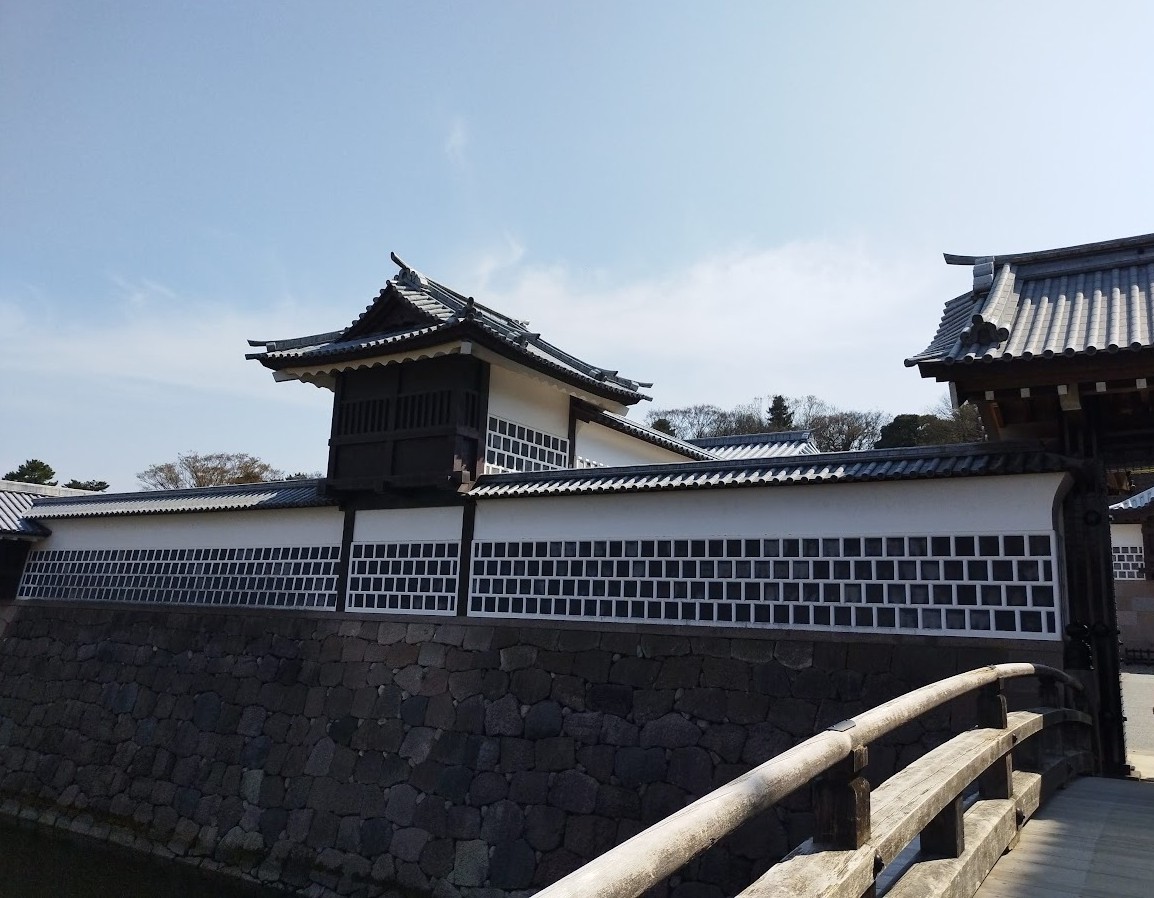
- 瓦を並べ、その継ぎ目をナマコのように漆喰で盛り上げた海鼠壁(なまこかべ)は、装飾性が高く、城だけでなく商家や土蔵にも広く使われた。
- 近代の鉄筋コンクリートが強度を追求して生まれたのに対し、日本の城壁は、木や竹の骨組みに地元の土や漆喰を塗り重ねて作られた。これは、地元で調達できる材料と、日本の多湿な気候に適応した結果だった。
《英語》
- Japanese castle walls were a critical part of the defensive fortifications, featuring unique innovations not found in ordinary walls.
- The strength of the walls wasn’t just in their construction; their placement was also strategic. A great example is the tamon-yagura, a long turret that connects multiple sections of the wall.
- The walls also emphasized aesthetics, with the contrast of the white plaster and black tiles and the flowing curves of the stone foundations reflecting the Japanese sense of beauty.
- While the walls were designed for defense, they also allowed for counterattacks through numerous small holes called sama. Many of these were hidden or covered, making them invisible from the outside.
- The sama holes were designed to be narrow on the outside, making them difficult for attackers to target, while a funnel-like shape on the inside provided a wider field of vision for defenders.
- To further boost defense, ishi otoshi (stone drop-offs) were added. These overhangs allowed defenders to drop stones or boiling water on enemies directly below the walls.
- Despite its simple mechanism, this feature was highly effective and cost-efficient. It required almost no maintenance—defenders simply needed to drop objects—making it a common addition to most castles.
- Plaster was widely used for its fire and water-resistant properties, as well as for its aesthetic appeal, making the castles appear pristine and a symbol of power.
- Namako walls, a decorative style where raised plaster joints resemble a sea cucumber, were popular in castles but were also widely used on merchant houses and storehouses because of their high decorative value and durability.
- Unlike reinforced concrete, a modern material born from the need for strength, a castle wall’s construction—layered with local soil and plaster over a wood and bamboo frame—was a response to the availability of local resources and Japan’s humid climate.
9.2 インバウンドの視点
城内を歩きながら、又、城の内部で壁に関する展示物を一緒に見ながら、実際によく聞かれる質問をベースに纏めてみました。お相手の知識や関心度に合わせた対応ができますよう、回答例は少し長めに雑談ネタも適当にはさみました。👇英語音声は、質問は短いので10文ともインド女性話者、回答は前半(1-5)はオーストラリア男性話者、後半(6-10)は英国女性話者の2ファイルです。
《日本語》
- そもそも城の壁は何でできているのですか?
- 回答: 日本の城壁は、主に土、木、漆喰(しっくい)といった自然素材でできています。石垣の上に、木や竹の骨組みを組んで土を固めた壁を立て、その表面を漆喰で仕上げるのが一般的な構造です。
- なぜ城の壁は白いのですか?
- 回答: 白い壁は漆喰(しっくい)で塗られているからです。漆喰は火に強く、水を弾く効果があり、城を火災や湿気から守る役割を果たしました。また、その白く輝く外観は、城主の権威と力を象徴するものでもありました。
- なぜ白と黒の網目デザインの壁があるのですか?
- 回答: 美しい模様に見えますが、これはとても機能的なデザインです。黒い瓦と白い漆喰を組み合わせることで、壁の防火・防水性を高める工夫がなされています。
- その白黒デザインは何で出来ているのですか?
- 回答: 黒い部分は瓦で、盛り上がった白い部分は**漆喰(しっくい)**です。盛り上がった漆喰が海の生物であるナマコに似ていることから、海鼠壁と呼ばれています。
- 壁の素材はどこから調達していたのですか?
- 回答: 主に地元の素材が使われました。しかし、良質な土や特定の材料が近くで手に入らない場合は、遠くの山から運び込まれることもありました。
- (展示物を見て)なぜ壁の断面は何層もあるのですか?
- 回答: この多層構造は巧妙な防御戦略でした。内部に木や竹の骨組みを組み、その上から何層にも土や漆喰を塗り重ねることで、壁の強度と耐久性を高めています。中には、鉄砲の弾丸を通さないように小石の層を挟んでいるものもありました。
- なぜ日本の城の壁は耐火性のある石製ではないのですか?
- 回答: 頑丈で重い石の壁は、地震の多い日本には適していませんでした。地震の揺れで崩れやすかったからです。木と土を使った柔軟な構造と、ある程度の耐火性がある漆喰を組み合わせる方が、より効果的な解決策でした。
- 城の壁は通常の日本家屋の壁と同じですか?
- 回答: 見た目は似ていますが、構造は全く違います。城壁は防御のために、より厚く、複数の素材の層を重ねて頑丈に作られています。
- 城の壁は当時のままのものですか?
- 回答: 国宝級の城であっても、壁は当時のままではありません。風雨にさらされるため、数十年ごとに定期的なメンテナンスが必要だからです。現在見られる城の壁は、何世代にもわたる継続的な修復の結果なのです。
- 城の壁に耐震性はあるのですか?
- 回答: はい、あります。日本の城壁は、異なる素材を組み合わせた柔軟な多層構造によって、地震の揺れを吸収・分散することができます。これは、石造りの城が一般的な西洋では見られない、地震国である日本で独自に発展した特徴です。
《英語》
- What are the walls of the castle made of?
- Answer: The walls of Japanese castles were mainly built from natural materials like earth, wood, and plaster. They were generally constructed on top of stone foundations, using a framework of wood or bamboo, which was then layered with hardened earth and finished with a coat of plaster.
- Why are the walls of the castle white?
- Answer: The white walls are coated in plaster, which served a dual purpose. It protected the castle from fire and moisture, and its brilliant white color symbolized the owner’s power and authority.
- Why is there a black and white mesh design on the walls?
- Answer: While it looks like a beautiful pattern, it’s a highly functional design. This was created by combining black tiles and white plaster to increase the walls’ resistance to fire and water.
- What is the black and white design made of?
- Answer: The black parts are tiles, and the raised white areas are plaster. This style is called the namako wall because the raised plaster joints resemble a sea cucumber.
- Where were the wall materials sourced?
- Answer: Materials were primarily sourced locally. However, if high-quality soil or other specific materials were not available nearby, they were transported from distant mountains to ensure the wall’s durability and quality.
- (Looking at the exhibits) Why are there many layers in the cross section of the walls?
- Answer: The multi-layered structure was a clever defensive strategy. A framework of wood or bamboo was built inside, then covered with multiple layers of earth and plaster to increase the wall’s strength and durability. Some walls were even filled with layers of pebbles to stop bullets.
- Why aren’t the walls of Japanese castles made of fire-resistant stone?
- Answer: Sturdy but heavy stone walls were not suitable for earthquake-prone Japan because they were prone to collapse. The flexible, multi-layered design of Japanese castle walls, which used materials like plaster with some fire resistance, was a more effective solution.
- Are the walls of a castle the same as those of a regular Japanese house?
- Answer: They might look similar, but their construction is completely different. Castle walls were built for defense, so they are thicker and much stronger, with multiple layers of different materials to withstand attacks.
- Are the walls of a castle still the same as they were in those days?
- Answer: Even the walls of national treasure castles are not exactly as they were in the past. They require regular maintenance every few decades to prevent decay. Therefore, the walls you see today, whether in original or restored castles, are the result of continuous upkeep over many generations.
- Are castle walls earthquake resistant?
- Answer: Yes, they are. Japanese castle walls have a flexible, multi-layered structure combining different materials, which allows them to absorb and disperse seismic energy. This unique feature developed in Japan as a way to cope with frequent earthquakes, and it’s not typically seen in the stone castles of the West.
9.3 笑いが取れるかも?説明例
一緒に城内を歩きながら素朴に思うであろう想定疑問への笑いも意図した説明例です。今回はナマコの時事ネタを織り込んでみました。👇前半(1-7)(米国男性話者)が説明にも使える真面目パート、後半(8-16)(オーストラリア女性話者)が雑談力UPを意図したおふざけパートです。
Q1:ナマコ壁は食べられますか?
“Can this sea cucumber wall be eaten?”
日本人には信じられないかもしれませんが、実際に(特にナマコの美味しさを説明をしていると)時々聞かれる質問を元に纏めてみました。
《日本語》
- 残念ながら、この壁は食べられません。
- 先ほどご説明した通り、この壁の呼び名はその外見から来ています。
- この工法では、壁に平瓦を並べて貼り、その隙間を半円形に盛り上げた漆喰で埋めます。
- この盛り上がった漆喰が、海にいる軟体動物のナマコに似ているため、この壁は通称「ナマコ壁」と呼ばれるようになったのです。
- 日本では、古くからナマコは珍味として食され、コリコリした独特の食感で今でも人気があります。
- また、中国では滋養強壮に良い漢方薬や高級食材として重宝されてきました。
- 近年では健康志向の高まりから、粉末状に加工されたナマコがオンラインで人気となり、日本からの輸出も増えています。
- このことを考えると、私たち地元のガイドも、近いうちに外国人観光客をご案内する際に注意が必要かもしれません。
- あの不気味な色と、芋虫のような形から、ナマコを食べず嫌いな人はたくさんいます。
- 私自身も、初めてナマコを食べた人は相当お腹が空いていたのだろうと思います。
- しかし、健康のために粉末状のナマコを食べる人が増えると、本物のナマコを見たことがない多くの人が、粉末が本物のナマコだと勘違いするかもしれません。
- もしそんな人が、日本の城にある「ナマコ壁」を見て、粉末のナマコでできていると勘違いする可能性もゼロではありません。
- 昔、シャワー後の猫を電子レンジで乾かそうとして、猫を死なせてしまった悲しい事件をご知ですか?
- その事件以来、電子レンジの製造元は「電子レンジで猫を乾かさないでください」という注意書きの表示を義務付けられました。
- もしかしたら、いつかこのナマコ壁にも注意書きが必要になるかもしれませんね。
- 「このナマコ壁は食べられません」って!
《英語》
- Unfortunately, this wall is not edible.
- As I explained earlier, the name comes entirely from its appearance.
- In this building method, flat tiles are laid side by side on the wall, and the gaps between them are filled with plaster in a raised, semicircular shape.
- The raised plaster resembles a sea cucumber, a mollusk that lives in the ocean, which is why the wall is commonly called “sea cucumber wall.”
- In Japan, sea cucumbers have been consumed as a delicacy since ancient times and are still popular today for their unique crunchy texture.
- In China, they have long been prized as a tonic and a luxury food for their purported health benefits.
- Because of this, powdered sea cucumber has become a popular health food sold online in recent years, and exports from Japan are on the rise.
- This means we local tour guides might have to be more careful when guiding foreign guests in the near future.
- Many people dislike eating sea cucumbers due to their grotesque, caterpillar-like shape and eerie color.
- I personally believe the first person to eat one must have been incredibly hungry!
- But as more people consume powdered sea cucumber for health reasons, many who have never seen a real one might mistake the powder for the actual thing.
- If these people see a white wall called a “sea cucumber wall” in a Japanese castle, they might mistakenly think it’s made of powdered sea cucumber.
- Do you remember that old, tragic story about the cat that was killed after its owner tried to dry it in a microwave?
- Since then, microwave manufacturers have been required to put a label on their products saying, “Do not dry cats in a microwave oven.”
- Maybe someday, our sea cucumber walls will be required to have a similar label that says:
- “This sea cucumber wall is not edible.
城壁の解説はお楽しみいただけたかな?
他のスポット(天守閣、城門、石垣、堀、屋根、御殿など)の解説へ移動する際は、冒頭の緑色ナビゲーションボタンをご活用くだされ!