 源氏(Genji)
皆さん、こんにちは!Genjiです。金沢城のシンボルであり、建物の角が「100度と80度」の内角で歪んだ珍しい菱形構造を持つ『菱櫓(Hishi Yagura)』の英語案内ページへようこそ!
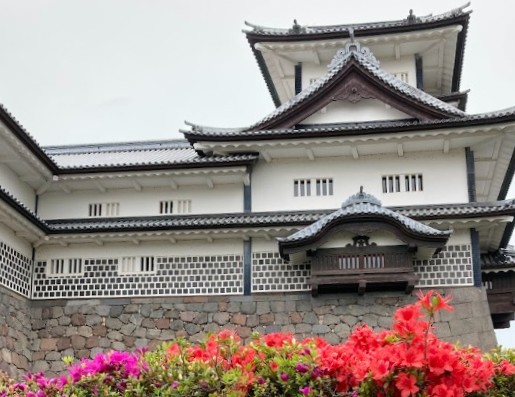
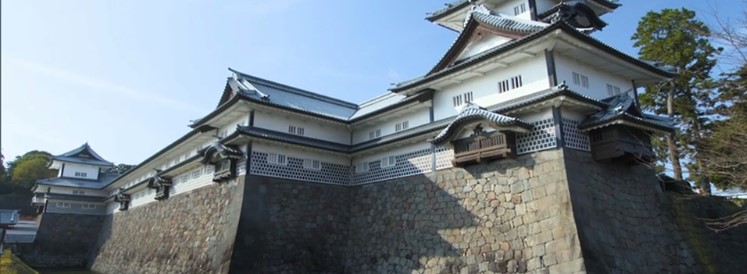
三の丸広場から見上げる三層三階の美しい「菱櫓」。大手門方面や石川門方面を見張る物見櫓としての機能美と、建物全体が正方形ではなく「菱形」に歪んでいるという驚愕の建築幾何学が隠されています。
現場でサッと使える短文フレーズから、菱形構造の謎(100度・80度の内角)、ゲストをクスッと笑わせる裏話まで網羅しました。目的の項目ボタンからご自由にご活用ください。

歪みの美学@菱櫓
📍 Quick Navigation: 各章へジャンプ
6.菱櫓(ひしやぐら)
“Hishi Yagura / Diamond shaped tower”
ここでは菱櫓をカバーします。用途に合わせて以下のボタンから直接アクセスできます。
6.1 基本情報(5項目)
菱櫓の建築的特徴、防御機能、歴史的背景、およびガイド現場で役立つ知識をまとめた基本情報です。
Set 1: Architecture / 建築的特徴
EN: An Unusual Diamond-Shaped Structure
The Hishi Yagura is named after its unusual diamond-shaped floor plan, with interior angles of 80 and 100 degrees rather than the usual right angles. Its pillars are also shaped and arranged to fit this distinctive geometry, demonstrating the advanced carpentry skills required to construct the building.
JP:菱形の平面を持つ珍しい建築
菱櫓の名前は、一般的な建物のような直角ではなく、内角が80度と100度の菱形の平面に由来します。柱もこの独特な形状に合わせて加工・配置されており、建物の構造からは当時の高度な木造建築技術を知ることができます。
Set 2: Role / 役割
EN: A Watchtower with a Prominent Presence
The Hishi Yagura served as a watchtower for monitoring the castle grounds and its approaches. Although it is not a substitute for the original main keep in terms of function, the Hishi Yagura serves as a prominent landmark within the castle grounds.
JP:存在感のある物見櫓
菱櫓は、城内や城への接近経路を監視するための物見櫓として機能しました。本来の天守と機能的に同じものではありませんが、菱櫓は現在の金沢城を象徴する建物の一つとなっています。
Set 3: Defensive Features / 防御機能
EN: A Tower Equipped for Defense
The Hishi Yagura was not merely a lookout point. It incorporated defensive features, including stone-dropping openings that allowed defenders to attack enemies approaching the stone walls below. Its design reflects the practical military role of castle towers.
JP:防御機能を備えた櫓
菱櫓は、単に周囲を見張るだけの施設ではありません。石垣の下に接近する敵に対して攻撃するための石落としなど、防御のための工夫も備えていました。城の櫓が実戦的な役割を担っていたことを示しています。
Set 4: Historical Background / 歴史的背景
EN: Destroyed by Fire and Later Reconstructed
The original Hishi Yagura was destroyed by fire in the late nineteenth century. The present structure was reconstructed in 2001, based on historical materials, old photographs, and archaeological research. It is therefore a modern reconstruction rather than an original Edo-period building.
JP:焼失後に復元された建物
かつての菱櫓は、明治時代の火災で焼失しました。現在の建物は、古写真や歴史資料、発掘調査などをもとに2001年に復元されたものです。そのため、江戸時代から現存する建物ではなく、歴史的な資料に基づいて再現された木造建築です。
Set 5: Architectural Complex / 建築群としての特徴
EN: Part of a Larger Defensive Complex
The Hishi Yagura is connected to the Gojukken Nagaya, a long building that links it with the Hashizume-mon Tsuzuki Yagura. Together, these structures formed part of the castle’s defensive system. The Gojukken Nagaya also served as a storehouse, illustrating how castle buildings could combine practical and military functions.
JP:防御施設を構成する建築群の一部
菱櫓は、長大な建物である五十間長屋を介して橋爪門続櫓につながっています。これらは一体となって金沢城の防御施設を構成していました。五十間長屋は倉庫としても利用されており、城内の建物が実用性と防御機能を兼ね備えていたことが分かります。
6.2 口頭説明用(5項目)
案内中に歩きながらテンポよく説明できるよう、コア要素を短くまとめたフレーズ集です。
Set 1: Architecture / 建築的特徴
EN
The Hishi Yagura is named after its unusual diamond-shaped floor plan, with angles of 80 and 100 degrees instead of right angles. Even its pillars are shaped to fit this distinctive design.
JP
菱櫓の名前は、一般的な直角ではなく、80度と100度の角を持つ菱形の平面に由来します。柱もこの独特な形に合わせて加工されています。
Set 2: Role / 役割
EN
This tower was used to watch over the castle grounds and its approaches. Although it is not a substitute for the main keep in function, it is one of the most prominent structures in Kanazawa Castle today.
JP
この櫓は、城内や城への接近経路を監視するための物見櫓でした。天守と機能は異なりますが、現在の金沢城を代表する建物の一つです。
Set 3: Defensive Features / 防御機能
EN
The Hishi Yagura was more than a lookout point. It had stone-dropping openings that allowed defenders to attack enemies approaching the stone walls below.
JP
菱櫓は単なる物見櫓ではありません。石垣の下に接近する敵を攻撃するための石落としも備えていました。
Set 4: Historical Background / 歴史的背景
EN
The original tower was destroyed by fire in the Meiji period. The present structure was reconstructed in 2001 based on historical materials, old photographs, and archaeological research.
JP
かつての櫓は明治時代の火災で焼失しました。現在の建物は、歴史資料や古写真、発掘調査などをもとに2001年に復元されたものです。
Set 5: Architectural Complex / 建築群としての特徴
EN
The Hishi Yagura is connected to the Hashizume-mon Tsuzuki Yagura by the long Gojukken Nagaya. This building also served as a storehouse and formed part of the castle’s defensive system.
JP
菱櫓は、長い五十間長屋を介して橋爪門続櫓につながっています。五十間長屋は倉庫としても使われ、金沢城の防御施設の一部を構成していました。
6.3 笑いが取れるかも?
🌸一目みて素朴に思うであろう想定疑問への説明例として、基本的に前半部は(様々な表現を織り込んだ)説明にも使える真面目パート、後半部は雑談力UPの為のおふざけパートの2部構成になっています。
Q1.この菱櫓って何か特別なの?
”Is there anything special about this Hishi-yagura?”
ゲストと一緒に菱櫓を見上げながら、時々このような質問をされます。前半(1-5)が真面目パートで、後半(6-10)がおふざけパートですが、今回は鈍角、鋭角の英語表現が身に付きますよ!
❶ Although it is not obvious from the outside, this Hishi-yagura has a unique structure.
外から見ただけでは分かりませんが、この菱櫓はとてもユニークな構造をしています。
❷ As its name suggests, it is diamond-shaped rather than square or rectangular.
名前のとおり、この櫓は正方形や長方形ではなく菱形をしています。
❸ When viewed from above, one of its corners forms an obtuse angle of 100 degrees rather than a right angle.
上空から見ると、その角の一つは直角ではなく100度の鈍角になっています。
❹ This unusual design faces the north-east side of the castle.
この独特な構造は城の北東側を向いています。
❺ One theory is that the wider angle improved visibility for surveillance.
その広い角度によって見張りの視界を広げたという説があります。
❻ But would an extra 10 degrees really make that much difference?
でも、たった10度広がるだけで、そんなに違いがあるのでしょうか?
❼ Another theory relates to the north-east, traditionally known in Japan as the “demon gate.”
もう一つの説は、日本で古くから「鬼門」と呼ばれてきた北東の方角に関係しています。
❽ Perhaps they wanted to reinforce that unlucky direction.
その不吉な方角を強化したかったのかもしれません。
❾ If so, that certainly sounds like samurai spirit. I admire their courage.
もしそうなら、まさに侍スピリットですね。その勇気には敬服します。
❿ After all, most people today would probably use an acute angle to deflect bad luck rather than an obtuse angle to face it head-on!
だって現代人なら、不運に真っ向から立ち向かうために鈍角を使うのではなく、鋭角でうまくかわそうとするでしょうから!
Glossary:用語集
obvious ☛ 明らかな、分かりやすい / unique structure ☛ ユニークな(独特な)構造 / as its name suggests ☛ その名が示す通り / diamond-shaped ☛ 菱形の / square ☛ 正方形の / rectangular ☛ 長方形の / view from above ☛ 上から見る / right angle ☛ 直角 / unusual design ☛ 独特なデザイン / one theory is… ☛ 一説には〜である / wide angle ☛ 広い角度 / visibility ☛ 視界、見通し / surveillance ☛ 監視、見張り / make a difference ☛ 違いを生む、影響する / relate to ☛ 〜に関連する / traditionally ☛ 伝統的に、古くから / demon gate ☛ 鬼門 / reinforce ☛ 強化する / unlucky direction ☛ 不吉な方角 / admire ☛ 敬服する、感心する / acute angle ☛ 鋭角 / deflect ☛ かわす、逸らす / bad luck ☛ 不運、厄 / obtuse angle ☛ 鈍角 / face head-on ☛ 正面から立ち向かう
Q2. 菱櫓の中はどうなっているのですか?
“What is the interior of the Hishi-yagura like?”
これもゲストと一緒に菱櫓の前を歩きながら、このような質問をされます。前半(1-6)が真面目パートで、後半(7-10)がおふざけパートですが、今回は角度の英語表現の応用編です!
❶ Once inside the Hishi-yagura, you can see that the floorboards near the corner form an obtuse angle—that is, an angle wider than 90 degrees.
菱櫓の中に入ると、隅にある床板が90度より広い、つまり鈍角になっていることがわかります。
❷ Of course, you can’t tell the exact angle just by looking. However, the information board shows diagrams of the floor plan, with angles of 100 and 80 degrees.
もちろん、見ただけで正確な角度まではわかりません。しかし案内板には平面図が掲示されており、100度と80度の角度を持つ構造であることが示されています。
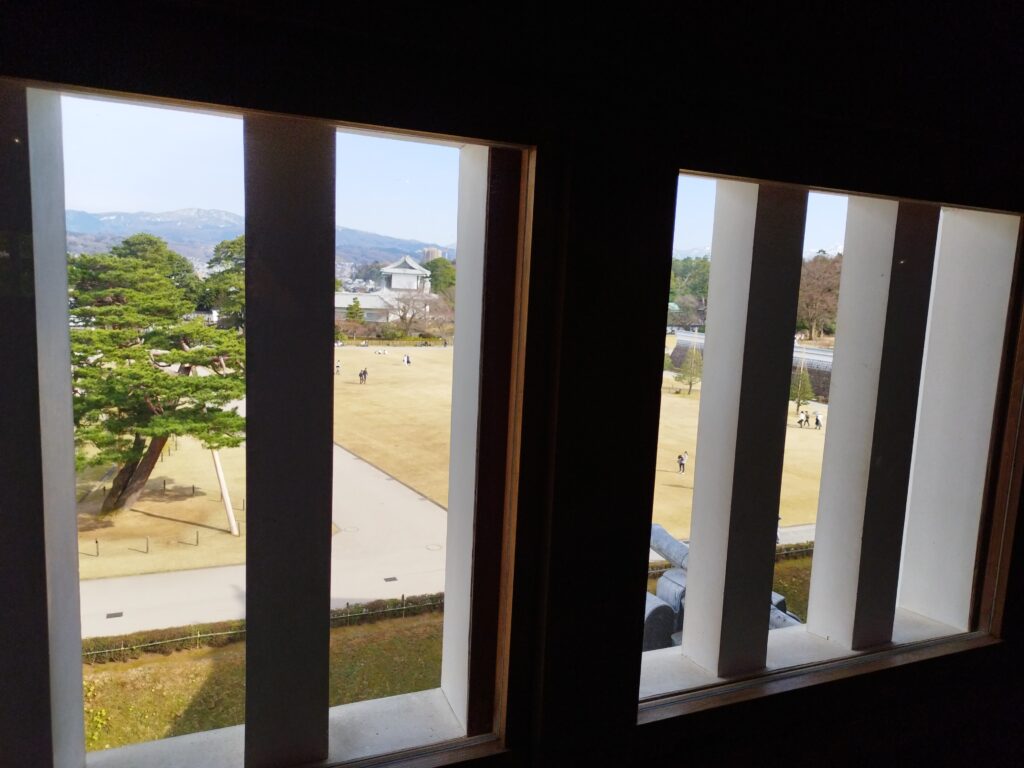
❸ You can also go up to the second floor and look out in two directions to appreciate how the unusual shape of the tower provides a wider field of view.
また、2階へ上がって二方向を見渡すことで、この独特な形状がより広い視界を生み出していることを実感できます。
❹ On the ground floor, there is also an exhibition explaining the tower’s architectural features, which is well worth a look if you’re interested in traditional Japanese architecture.
1階には菱櫓の建築的な特徴を解説する展示もあり、日本の伝統建築に興味のある方には特におすすめです。
❺ For example, you can see a diagonal reinforcing beam inserted where the beams intersect—a feature you wouldn’t normally expect to see in a building with conventional right-angled corners.
例えば、梁と梁が交差する部分には斜めの補強梁が入れられています。これは通常の直角の建物ではあまり見られない特徴です。
❻ And, naturally, the angles at these intersections are 80 and 100 degrees.
そして当然ながら、その交差部分の角度も80度と100度になっています。
❼ I suppose the unusual geometry requires some extra reinforcement. (The exact structural reason would need to be confirmed.)
この独特な形状のため、通常よりも補強が必要だったのかもしれません。(正確な構造上の理由については確認が必要ですが。)
❽ I’ve always wondered why a 90-degree angle is called a “right angle” in English. Now I think I understand!
私は昔から、なぜ英語で90度を「ライトアングル(right angle)」と呼ぶのだろうと不思議に思っていました。顔でも今なら納得できます!
❾ A right angle must be the right angle, then!
やはり直角こそが、本当に「正しい(right)」角度だったのですね!
❿ Just as this obtuse angle has been reinforced by a diagonal beam, my obtuse mind has finally been reinforced by the right angle!
この鈍角が斜めの梁によって補強されているように、鈍角並みに鈍かった私の頭も、ついに「正しい角度」のおかげで補強されたようです!
Glossary:用語集
interior ☛ 内観、内部 / floorboard ☛ 床板 / form an angle ☛ 角度をなす、角度を作る / obtuse angle ☛ 鈍角 / exact angle ☛ 正確な角度 / information board ☛ 案内板 / diagram ☛ 図解、平面図 / floor plan ☛ 床面図、平面図 / appreciate ☛ 実感する、味わう、感謝する / field of view ☛ 視界、視野 / exhibition ☛ 展示 / architectural feature ☛ 建築的特徴 / worth a look ☛ 見る価値がある / diagonal ☛ 斜めの / reinforcing beam ☛ 補強梁(はり) / intersect ☛ 交差する / conventional ☛ 従来の、通常の / intersection ☛ 交差点、交差部分 / geometry ☛ 幾何学構造、形状 / extra reinforcement ☛ 追加の補強 / structural reason ☛ 構造上の理由 / confirm ☛ 確認する / wonder ☛ 不審に思う、不思議に思う / right angle ☛ 直角(「正しい角度」との掛け言葉) / obtuse mind ☛ 鈍い頭、頭の回転が遅いこと
Q3. 建物の鬼門はどう対処するのですか?
“How do people deal with the unlucky direction in a building?”
菱櫓で鬼門の説明をしている際に、時々出る質問です。前半(1-5)が真面目パート、後半(6-10)がいつものおふざけパートです。不吉な鬼門、邪気払う非対称等の英語表現が身に付きますよ。
❶ In Japan, the northeast direction is called “Kimon”, and this diamond-shaped turret was built to face that direction.
日本では北東方向を鬼門と呼び、この菱型櫓はその方向を向いて建てられています。
❷ It is also known as the “demon’s gate” and is considered an unlucky direction in Japanese culture.
それは鬼の門としても知られ、日本文化では不吉な方角と考えられています。
❸ Japanese buildings sometimes have L-shaped indentations at the northeast to ward off evil spirits.
日本建築では時々、北東の場所にL型の凹みを設けて邪気を払おうとしました。
❹ In Japan, there has been a tendency to dislike complete symmetry, as it is believed to invite evil spirits since ancient times.
日本では、完全な対称性を嫌う傾向がありますが、それは古来より、邪気を招くと信じられた為です。
❺ Therefore, for example, shrines and temples were often intentionally designed to be asymmetrical, avoiding perfect left-right symmetry.
なので、例えば神社やお寺では、しばしば意図的に非対称で作られ、完全な左右対称性を避けました。
❻ If you think about it, humans too can invite a lot of unhappiness when they fall into perfectionism.
考えてみれば、人間も多くの不幸を招くことがあるのは完全主義に陥るときです。
❼ That’s why Kanazawa Castle had a L-shaped indentation near the diamond-shaped turret.
それで金沢城ではひし形櫓のところにL型の凹みを設けていました。
❽ Thanks to that, Kanazawa didn’t experience air raids during World War II.
そのおかげか、金沢には第二次世界大戦中、空襲がありませんでした。
❾ However, recently, I have a slight concern after Kanazawa Castle was completely restored.
でも最近、金沢城が完全に復元されてから少し心配な事があります。
❿ The concern is that this indentation area too has been restored so perfectly and beautifully that it might invite evil spirits.
それはですね、この凹みの部分もあまりに完全で美しく復元されたので邪気を呼び込むのではないかと。
Glossary:用語集
deal with ☛ 対処する、扱う / unlucky direction ☛ 不吉な方角 / face ☛ 〜に直面する、向く / demon’s gate ☛ 鬼門 / consider ☛ 〜と考える / L-shaped ☛ L字型の / indentation ☛ 凹み、窪み / ward off ☛ 追い払う、払う / evil spirits ☛ 邪気、悪霊 / tendency ☛ 傾向 / dislike ☛ 嫌う / complete symmetry ☛ 完全な対称性 / invite ☛ 招く、引き起こす / ancient times ☛ 古代、古来 / intentionally ☛ 意図的に / asymmetrical ☛ 非対称の / avoid ☛ 避ける / perfectionism ☛ 完璧主義、完全主義 / air raid ☛ 空襲 / World War II ☛ 第二次世界大戦 / slight concern ☛ わずかな懸念、少しの心配 / completely restored ☛ 完全に復元された

菱櫓の解説はお楽しみいただけましたか?
他のスポット(五十間長屋、橋爪門など)の解説へ移動する際は、冒頭の緑色ナビゲーションボタンをご活用ください!