 峰(Mine)
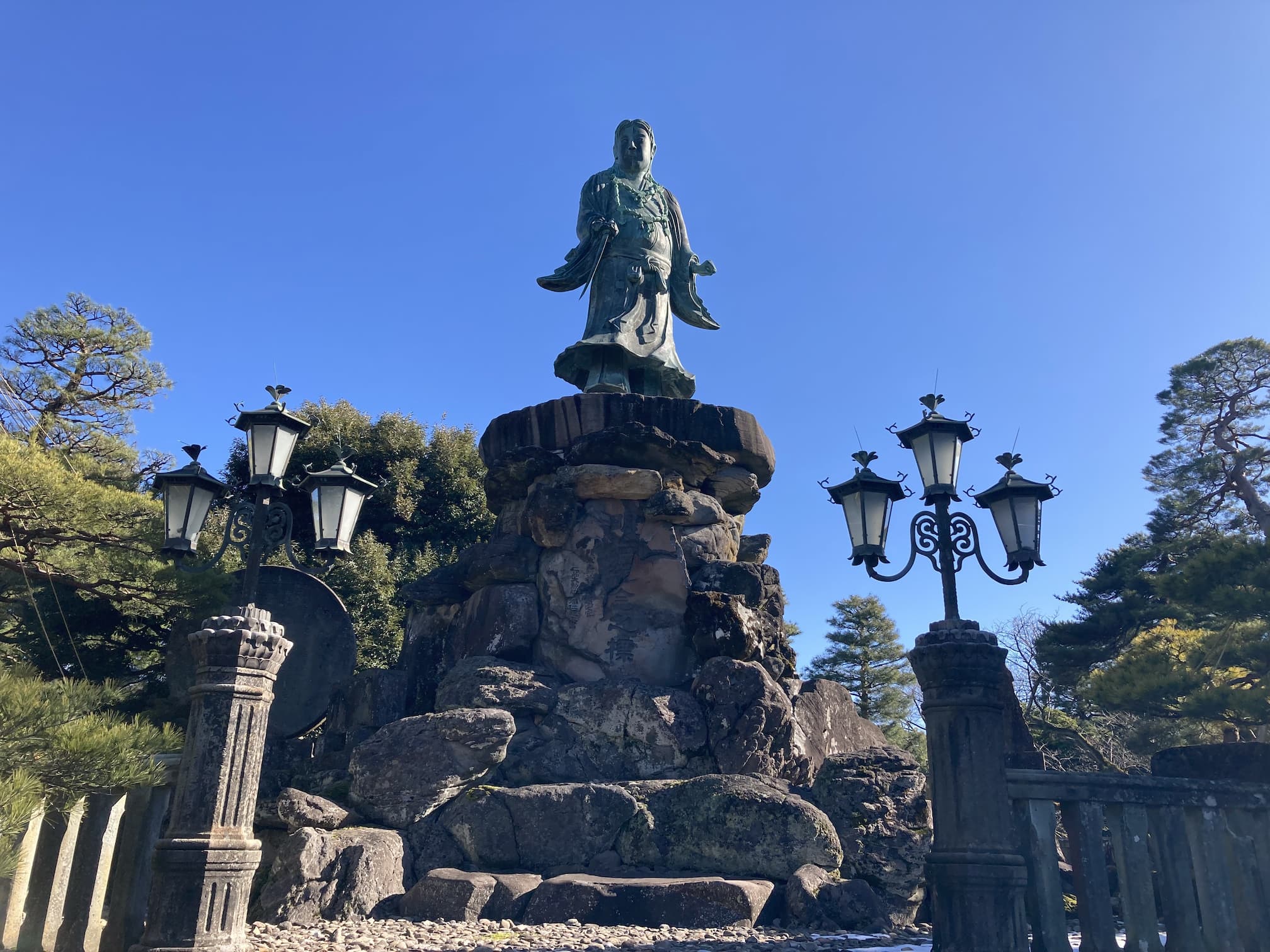
皆さん、こんにちは!日本庭園・和服ウオッチャー&ガイドのミネです。明治維新期の内戦(西南戦争)で亡くなった地元戦没者を慰霊するために建てられ、イグノーベル賞の「鳥が止まらない銅像」としても知られる『日本武尊像(やまとたけるのみことぞう)』の英語案内ページへようこそ!
日本神話の英雄をかたどった日本最古級の野外銅像であり、台座の「三すくみ(蛇・蛙・蛞蝓)」の構造や、戦後のGHQによる撤去要請を乗り越えた歴史など、ガイドで語れる奥深いエピソードが満載のスポットです。
現場でサッと使える短文フレーズから、インバウンドからの素朴な疑問への即答Q&A、ユーモアトークまで網羅しました。目的の項目ボタンからご自由にご活用ください。
📍 Quick Navigation: 各章へジャンプ
10. 日本武尊像(やまとたけるのみことぞう)
”Statue of Yamato Takeru”
ここでは兼六園内の見どころ・日本武尊像をカバーします。ここもお好みで下記ボタンからも直接アクセスできます。
10.1 基本情報(5項目)
このスポットで最低限押えておきたいポイントです。
- Historical Purpose(歴史的目的)
EN: The statue was erected about 150 years ago to honor local soldiers from Ishikawa who died in the Satsuma Rebellion, the largest civil conflict in Japanese history.
JP: この像は約150年前、日本史上最大の内戦である西南戦争で亡くなった石川県出身の兵士を慰霊するために建てられました。 - Hero Depicted(モデルとなった英雄)
EN: It portrays Yamato Takeru, a legendary hero from ancient Japanese mythology who symbolizes bravery and national origins.
JP: 古代日本の神話に登場し、勇気と国家の起源を象徴する英雄・日本武尊(ヤマトタケル)がモデルになっています。 - Stone Base Design(台座の構造)
EN: The stone base uses snake-, frog-, and slug‑shaped stones arranged in a “three‑way standoff,” a traditional motif said to keep the structure stable because none can overpower the others.
JP: 台座にはヘビ・カエル・ナメクジに似た石が使われ、互いに動けず崩れないとされる“三すくみ”の配置が施されています。 - Arsenic & Ig Nobel Prize(ヒ素とイグノーベル賞)
EN: Later research revealed that the bronze contains arsenic, leading to an Ig Nobel Prize for the discovery that “birds won’t land on the statue.”
JP: 後の研究で銅像にヒ素が含まれていることが判明し、「鳥が止まらない銅像の科学的研究」としてイグノーベル賞を受賞しました。 - Postwar Survival(戦後の存続)
EN: After World War II, the occupying forces ordered its removal as a militaristic symbol, but strong local opposition succeeded in preserving it.
JP: 戦後、進駐軍から「軍国主義的」として撤去命令が出ましたが、地元の強い働きかけによって残されました。
10.2 口頭説明(5項目)
基本情報をベースにしたゲストと歩きながら使える口頭説明例です。
- Why it was built(建てられた理由)
EN: This statue was made to honor local soldiers who died in the Satsuma Rebellion about 150 years ago.
JP: この像は、約150年前の西南戦争で亡くなった地元の兵士を慰霊するために作られました。 - Who he is(誰の像か)
EN: It shows Yamato Takeru, a famous hero from ancient Japanese myths.
JP: 古代日本の神話に登場する有名な英雄、日本武尊の像です。 - The special stone base(台座の特徴)
EN: The base uses stones shaped like a snake, a frog, and a slug—placed so none can move or beat the others, keeping it stable.
JP: 台座にはヘビ・カエル・ナメクジの形の石が使われ、互いに動けず崩れない“三すくみ”の配置になっています。 - Birds won’t land on it(鳥が止まらない理由)
EN: Researchers later found arsenic in the bronze, and the study won an Ig Nobel Prize because birds won’t land on the statue.
JP: 後の研究で銅像にヒ素が含まれていることが分かり、鳥が止まらない理由の研究としてイグノーベル賞を受賞しました。 - Why it still stands today(今も残っている理由)
EN: After World War II, the occupying forces tried to remove it, but local people protected it and it stayed.
JP: 戦後、進駐軍が撤去しようとしましたが、地元の人々が守り、残されました。
10.3 インバウンドの視点(Q&A)
何も知らないインバウンドが像を見て素朴に思う想定疑問とその回答例です。特に➁はよく聞かれますが、固有名詞より、どのような人なのかが重要ですので、この例に拘らず、この章やネット情報を参考にご自分なりに即答しやすいセリフを用意しておくことをお勧めします。
- ① なんでこんなに大きい像なんですか?
Why is this statue so big?
日本語回答: この像は、亡くなった兵士たちをたたえるために建てられた記念碑なので、強い存在感を持たせるために大きく作られています。
English Answer: It was built as a memorial to honor fallen soldiers, so the large size was chosen to give it a strong and dignified presence. - ② これ、誰のつもりなんでしょうか?(意図している人物は誰?)
Who is this person supposed to be?
日本語回答: 日本武尊(ヤマトタケル)という、古代の神話に登場する日本の英雄です。
English Answer: He is Yamato Takeru, a legendary hero from ancient Japanese mythology.
※補足:質問は“Who is this person?”が自然ですが、ここではユーモラスに「これ、誰のつもりなんでしょうね?」と少しひねってみました。 - ③ どうしてここに立っているんですか?
Why is this statue placed here?
日本語回答: ここは兼六園の中心で、明治時代にこの場所が慰霊の場として選ばれたためです。
English Answer: This spot is the center of Kenrokuen, and it was chosen in the Meiji era as a place to honor the fallen soldiers. - ④ 手に持っているのは剣ですか?
Is that a sword he’s holding?
日本語回答: はい、剣です。伝説によると、日本武尊が危機を切り抜けた「草薙の剣」と呼ばれる名剣を表しています。
English Answer: Yes, it is a sword. It represents the legendary “Kusanagi Sword,” which Yamato Takeru is said to have used to escape danger.
※補足:“Kusanagi Sword” では通じない場合もありますので”mowing sword,”とコメントするのも一策です。 - ⑤ 台座の石って何か意味があるんですか?
Do the stones under the statue mean something?
日本語回答: ヘビ・カエル・ナメクジに見える石が組み合わされていて、互いに動けず崩れないという縁起の良い伝承があります。
English Answer: The stones resemble a snake, a frog, and a slug. According to local legend, they balance each other so none can move, symbolizing stability and good fortune.

Do the stones under the statue mean something?
10.4 笑いが取れるかも?
このパートでは、日本武尊像を見上げながらよく聞かれる質問に対する説明例をご紹介しています。前半部は説明にも使える真面目パート、後半部は雑談力UPの為のおふざけパートの2部構成になっています。
Q1: この像はいったい誰ですか。
”Who is this statue?”
とてもよく聞かれる質問ですが、(歩きながら理解いただけるように)シンプルに説明するのは結構大変なので、その辺りの経験を踏まえてまとめてみました。前半(1-7)が真面目パート、後半(8-10)がおふざけパートです。
- EN: This is a legendary hero from mythology who is said to have subdued the whole of Japan about two thousand years ago.
JP: これは約二千年前に日本全土を平定したとされる、神話に登場する伝説的な英雄です。 - EN: It’s easier to understand if you think of him as the Japanese equivalent of Hercules, or similar to the heroic figures found in King Arthur legends around the world.
JP: 日本版ヘラクレス、あるいは世界各地にあるアーサー王伝説の英雄のような存在だと考えると分かりやすいでしょう。 - EN: He appears in Japan’s oldest historical texts and is even sometimes described as an ancestor of the current Emperor.
JP: 日本最古の歴史書にも登場し、現在の天皇の祖先として語られることさえあります。 - EN: His name is Yamato Takeru. It’s a long name, but it is made up of three parts, each with its own meaning.
JP: 名前は日本武尊(ヤマトタケル)です。長いですが、三つの意味から成り立っています。 - EN: “Yamato” refers to ancient Japan, “Takeru” means a brave warrior, and “Mikoto” is an honorific title meaning “one who is revered.”
JP: 「ヤマト」は古代日本を指し、「タケル」は勇敢な戦士を意味し、「ミコト」は「尊ばれる方」を表す敬称です。 - EN: This statue was erected to commemorate roughly four hundred local soldiers who lost their lives in a major civil war during the early years of modern Japan.
JP: この像は、近代日本の初期に起きた大規模な内戦で亡くなった、約四百名の地元兵士を慰霊するために建てられました。 - EN: Since he himself was a hero who died in battle—one who “gave his life” to “bring peace” in ancient times—he may have been considered the ideal figure to honor their memory.
JP: 彼自身、戦いの中で命を落とした英雄であり、古代に「命を犠牲にして」「平和をもたらした」人物だったため、慰霊の象徴として最適だったのかもしれません。 - EN: But to be honest, I always felt a strange hesitation about explaining this statue, for reasons I couldn’t quite identify.
JP: でも正直なところ、この像については昔からどこか説明しづらい気持ちがあり、その理由が自分でもよく分かりませんでした。 - EN: When guests asked, “Who is this?”, I only gave the opening explanation. Recently, I finally realized why I had been avoiding the rest.
JP: 「これは誰?」とよく聞かれるので冒頭だけ説明していたのですが、最近ようやく、なぜ残りを避けていたのか気づいたのです。 - EN: It was because I couldn’t use my favorite joke here. Joking about the Emperor’s ancestors? Now that would be brave!
JP: ここでは私の好きなジョークが使えないんです。天皇のご先祖をネタにするなんて、さすがに“勇者”すぎますからね。
日本武尊像の解説はお楽しみいただけたでしょうか?
他のスポットの解説や兼六園全体のハブ記事へ移動する際は、冒頭の緑色ナビゲーションボタンをご活用くださいませ!