 源氏(Genji)
皆さん、こんにちは!Genjiです。二の丸御殿のすぐ下に広がり、立体的な石垣群と池が織りなす独創的な大名庭園『玉泉院丸庭園(Gyokusen’inmaru Garden)』の英語案内ページへようこそ!
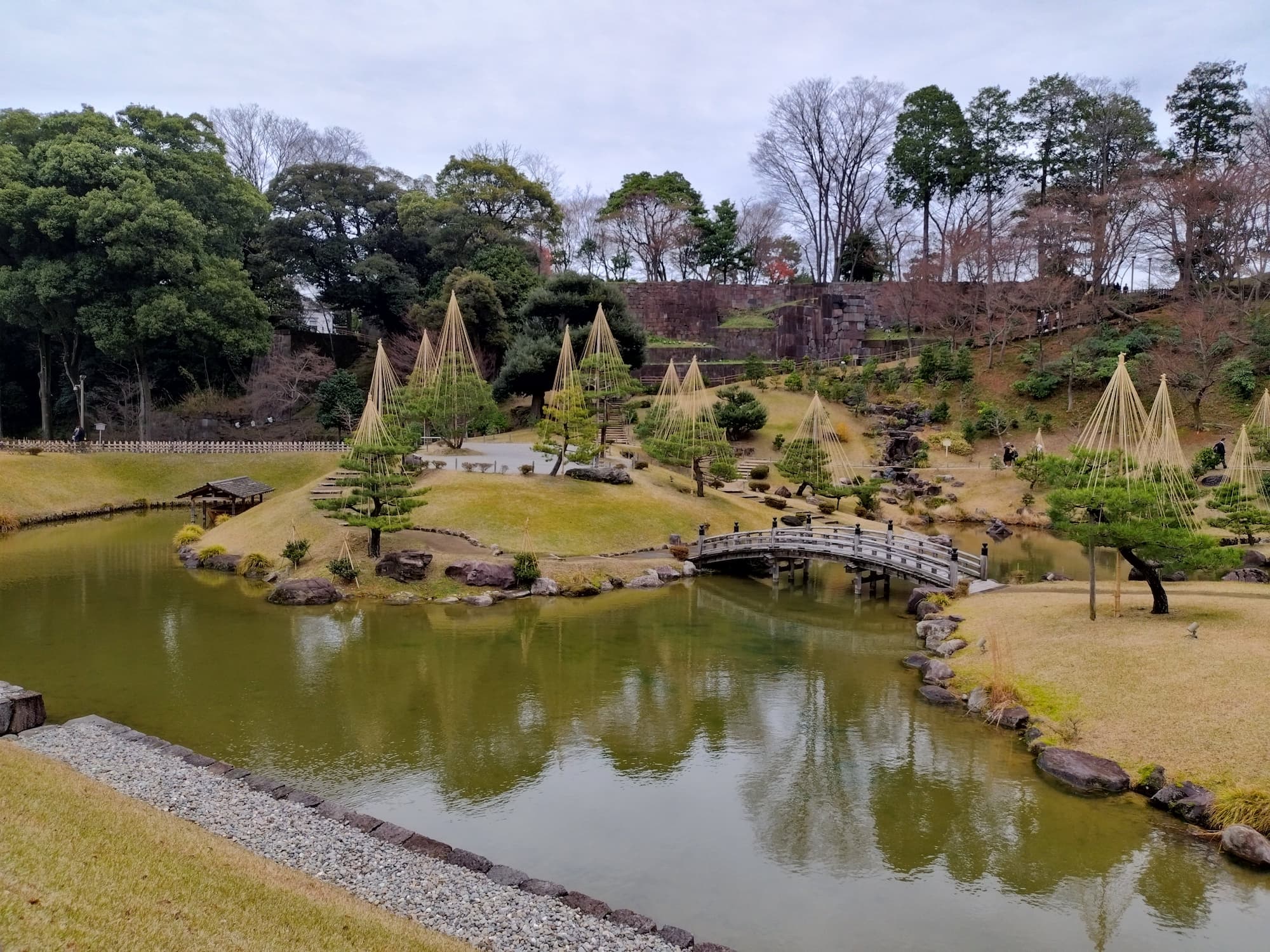
金沢城の西側に位置する「玉泉院丸庭園」。加賀藩二代藩主・前田利長公の正室である玉泉院(織田信長の娘・永姫)の屋敷跡に造営された、石垣をデザインの一部に取り入れた極めて稀有な水陸鑑賞式庭園です。
現場でサッと使える短文フレーズから、色紙短冊積石垣の謎、玉泉庵での抹茶体験の魅力、ゲストをクスッと笑わせる裏話まで網羅しました。目的の項目ボタンからご自由にご活用ください。

石垣と水の意匠美@玉泉院丸庭園
📍 Quick Navigation: 各章へジャンプ
10. 玉泉院丸庭園
ここでは玉泉院丸庭園をカバーします。用途に合わせて以下のボタンから直接アクセスできます。
10.1 基本情報(5項目)
玉泉院丸庭園の歴史的背景、造園の特徴、およびガイド現場で役立つ背景知識をまとめた基本情報です。
① 藩主のために造られた庭園
EN: A Former Daimyo Garden
Gyokusen-inmaru Garden was first created in the early 17th century for the Maeda lords of Kanazawa Castle. Its name comes from Gyokusen-in, the wife of a former lord. The garden disappeared in modern times and was later reconstructed based on historical drawings, documents, and archaeological findings.
JP:藩主のために造られた庭園
玉泉院丸庭園は17世紀前半、金沢城の前田家の藩主のために造られました。その名前は、前田家の藩主の妻である玉泉院に由来します。明治期に廃絶しましたが、古絵図や文献、発掘調査の成果をもとに復元されました。
② 城内に設けられた内庭
EN: A Private Garden Within the Castle
Unlike Kenrokuen Garden, which became famous as a garden for entertaining guests, Gyokusen-inmaru Garden was primarily an inner garden for the lord of the domain. Its location within the castle reflects its more private character.
JP:城内に設けられた内庭
来客のもてなしの場として知られる兼六園とは異なり、玉泉院丸庭園は主に藩主のための内庭としての性格を持っていました。城内という立地にも、その性格が表れています。
③ 池と滝を中心とした回遊式庭園
EN: A Strolling Garden with a Pond and Waterfall
The garden follows the traditional Japanese strolling-garden style, with a central pond, small islands, paths, and a waterfall. Visitors can enjoy changing views as they move around the garden rather than viewing it from a single fixed position.
JP:池と滝を中心とした回遊式庭園
玉泉院丸庭園は、池や中島、園路、滝などで構成された回遊式庭園です。一か所から全体を眺めるだけでなく、歩くにつれて変化する景色を楽しめるように設計されています。
④ 庭園の景観に組み込まれた石垣
EN: Stone Walls as Part of the Garden Design
One of the garden’s most distinctive features is the integration of castle stone walls into the garden scenery. The colorful Shikishi Tanzaku-zumi stone wall, combining square and rectangular stones, incorporates a waterfall and demonstrates how defensive structures could also serve as decorative elements.
JP:庭園の景観に組み込まれた石垣
最大の特徴は、城の防御施設である石垣が庭園の景観の一部になっていることです。正方形や縦長の石材を組み合わせた色紙短冊積石垣には滝も組み込まれ、防御施設と装飾的な造形が融合しています。
⑤ 水がつくる庭園の景観
EN: A Garden Shaped by Water
Water plays an essential role in the garden’s design, connecting the pond, waterfall, and surrounding landscape. The original garden made use of water from the Tatsumi Canal, which supplied water to Kanazawa Castle. The reconstructed garden also incorporates a water supply system linked to this historic canal.
JP:水がつくる庭園の景観
池や滝、周囲の景観をつなぐ水の流れは、庭園の重要な要素です。江戸時代の庭園では、金沢城に水を引いていた辰巳用水が利用されていました。現在の庭園にも、この歴史的な用水につながる水の供給システムが取り入れられています。
10.2 口頭説明(5項目)
案内中に歩きながらテンポよく説明できるよう、玉泉院丸庭園のコア要素を短くまとめたフレーズ集です。
① 歴史
EN This garden was created in the early 17th century and named after a lord’s wife. It was reconstructed in recent years based on historical records.
JP この庭園は17世紀前半に作られた、藩主の妻の名を付した庭園です。歴史資料に基づき近年復元されました。
② 役割
EN:Unlike Kenrokuen Garden, this was mainly a private garden for the lord. It was located inside the castle grounds.
JP:兼六園とは異なり、ここは主に藩主のための内庭でした。城の敷地内に設けられていたんです。
③ 造園様式
EN:This is a traditional Japanese strolling garden, with a pond, small islands, and a waterfall. The scenery changes as you walk around.
JP:ここは池や中島、滝を備えた伝統的な回遊式庭園です。歩くにつれて景色が変わるのが特徴です。
④ 石垣の特徴
EN:One of the most striking features is this unusual stone wall with a waterfall built into it. Here, the castle’s defensive structures are also part of the garden’s beauty.
JP:最も目を引く特徴の一つが、滝を組み込んだ珍しい石垣です。ここでは、城の防御施設も庭園の美しさの一部になっているんです。
⑤ 水の仕組み
EN:Water was essential to this garden. In the past, water from the Tatsumi Canal supplied the garden, helping create its ponds and waterfalls.
JP:この庭園では水が重要な役割を果たしていました。かつては辰巳用水から水を引き、池や滝の景観を生み出していたんです。
10.3 笑いが取れるかも?説明例
一目みて素朴に思うであろう想定疑問への説明例として、基本的に前半部は説明にも使える真面目パート、後半部は雑談力UPの為のおふざけパートの2部構成になっています。
Q1. この庭園の名前の意味は何ですか?
“What does the name “Gyokusen-inmaru” mean?”
- The name “Gyokusen-inmaru” is associated with a woman named Gyokusen-in.
- 「玉泉院丸」という名前は、玉泉院という女性に由来します。
- She was the wife of the second lord of the Kaga Domain.
- 彼女は加賀藩二代藩主の正室でした。
- She once had a residence here, inside Kanazawa Castle.
- かつて彼女は、金沢城内のこの場所に屋敷を構えていました。
- After she passed away, the residence was removed, and the area came to be known as Gyokusen-inmaru.
- 彼女が亡くなった後、屋敷は取り壊され、この一帯は玉泉院丸と呼ばれるようになりました。
- Later, the third lord created a garden here, around the early 17th century.
- その後、三代藩主が17世紀前半にここに庭園を造りました。
- So, the garden itself was created after her death, but her name has remained here for centuries.
- つまり、庭園そのものは彼女の死後に造られましたが、彼女の名前は何世紀にもわたってこの場所に残っています。
- Unlike Kenrokuen Garden, this was mainly a private garden for the lord and his family.
- 兼六園とは異なり、ここは主に藩主とその家族のための内庭でした。
- It is a traditional strolling garden, with a pond, small islands, and a waterfall.
- 池や中島、滝を備えた伝統的な回遊式庭園です。
- One unusual feature is the stone wall with a waterfall built into it, combining the castle’s defensive architecture with the beauty of a garden.
- 特徴の一つは、滝を組み込んだ石垣です。城の防御建築と庭園の美しさが融合しています。
- It was good for her! She wouldn’t have been happy if this had been a dry landscape garden. “I wouldn’t want to be ‘dry’ even in the afterlife!”
- 良かったですね!もし枯山水だったら、彼女は喜ばなかったでしょうね。「死後まで枯れたくはないわ!」ってね。
Q2. この庭園の見どころは何ですか?
“What are the highlights of this garden?”
- Unlike Kenrokuen Garden, which was used for entertaining guests, this garden was mainly a private retreat for the lords and their families.
- 来客をもてなすために使われた兼六園とは異なり、ここは主に藩主やその家族のための内庭でした。
- One of its most distinctive features is the unusual stone wall known as *Shikishi Tanzaku-zumi*.
- この庭園の最も特徴的な見どころの一つが、「色紙短冊積み」と呼ばれる珍しい石垣です。
- The name comes from the shapes of the stones, which resemble square pieces of paper and long, narrow strips of paper.
- この名前は、正方形の色紙と細長い短冊に似た石の形に由来します。
- In Japan, these strips of paper, called *tanzaku*, have traditionally been used for writing poems and wishes.
- 日本では昔から、短冊に詩や願い事を書
- Unlike Kenrokuen Garden, which was used for entertaining guests, this garden was mainly a private retreat for the lords and their families.
- 来客をもてなすために使われた兼六園とは異なり、ここは主に藩主やその家族のための内庭でした。
- One of its most distinctive features is the unusual stone wall known as *Shikishi Tanzaku-zumi*.
- この庭園の最も特徴的な見どころの一つが、「色紙短冊積み」と呼ばれる珍しい石垣です。
- The name comes from the shapes of the stones, which resemble square pieces of paper and long, narrow strips of paper.
- この名前は、正方形の色紙と細長い短冊に似た石の形に由来します。
- In Japan, these strips of paper, called *tanzaku*, have traditionally been used for writing poems and wishes.
- 日本では昔から、短冊に詩や願い事を書く習慣がありました。
- But here, the strips are made of stone rather than paper.
- しかし、ここでは紙ではなく石で短冊が表現されています。
- Castle stone walls were originally built for defence, but here, they were also designed to be appreciated as works of art.
- 城の石垣は本来、防御のために造られましたが、ここでは美術作品のように鑑賞するための工夫も凝らされています。
- The long, narrow stones are arranged vertically, creating a striking decorative pattern.
- 細長い石を縦に配置することで、印象的な装飾模様を生み出しています。
- This is an unusual approach because arranging stones in this way requires considerable care and skill.
- このような石の配置は、かなりの注意と技術を要するため、珍しいものです。
- However, the lords did not think to write their wishes for the prosperity of their family on these stone strips.
- しかし、藩主たちは一族の繁栄を願う言葉を、この石の短冊に書こうとはしませんでした。
- They might not have wanted them to be mistaken for tombstones, you know.
- 墓石と間違えられたくなかったからかもしれませんね。
 🏯 源氏(Genji)|日本の城郭建築&庭園ガイド
玉泉院丸庭園の解説はお楽しみいただけましたか?
他のスポット(三十間長屋、鶴丸倉庫など)の解説へ移動する際は、冒頭の緑色ナビゲーションボタンをご活用ください! - Unlike Kenrokuen Garden, which was used for entertaining guests, this garden was mainly a private retreat for the lords and their families.
- 日本では昔から、短冊に詩や願い事を書