EN: The Political Center of Kaga Domain Kanazawa Castle’s Ninomaru Palace became the political center of the Kaga Domain following the great fire of 1631. It was rebuilt several times after subsequent fires, but the final structure was destroyed by fire in 1881, during the Meiji period. JP: 加賀藩の政治の中心 金沢城の二の丸御殿は、1631年の大火を契機に、加賀藩の政治の中心となりました。その後、火災のたびに再建されましたが、最終的な建物は明治時代の1881年に焼失しました。
Set 2: Role / 役割
EN: More Than a Residence for the Lord The Ninomaru Palace was not simply the lord’s residence. It was also where the lord conducted official business, met important visitors, and held formal ceremonies. It served as the administrative and ceremonial heart of the Kaga Domain. JP: 藩主の住まい以上の役割 二の丸御殿は、単なる藩主の住まいではありませんでした。藩主が政務を行い、重要な来客と対面し、公式な儀式を執り行う場所でもありました。加賀藩の行政と儀礼の中心を担っていたのです。
Set 3: Layout / 空間構成
EN: Separate Areas for Different Functions The palace was divided into three main areas: Omote-muki for official business and formal receptions, Oima-mawari for the lord’s daily life and work, and Okumuki for private living quarters, including the women’s quarters. JP: 用途に応じた空間の使い分け 御殿は大きく3つの区域に分かれていました。「表向」は公式な政務や来客の接待、「御居間廻り」は藩主の日常生活や執務、「奥向」は女性たちの居住空間などに使われました。
Set 4: Architecture and Decoration / 建築と装飾
EN: Architecture Reflecting the Lord’s Status The palace featured rooms of different ranks and purposes, with elaborate sliding-door paintings, decorative fittings, and other fine details. These features reflected the status and wealth of the Maeda family, as well as the high level of craftsmanship in Kaga Domain. JP: 藩主の格式を示す建築と装飾 御殿には、格式や用途の異なる部屋が設けられ、襖絵や飾金具など、細部にも精緻な装飾が施されていました。こうした特徴は、前田家の格式と財力、そして加賀藩の高い工芸技術を反映しています。
Set 5: Restoration / 復元整備
EN: Bringing the Lost Palace Back to Life Ishikawa Prefecture is working to reconstruct parts of the Ninomaru Palace based on historical drawings, documents, old photographs, and archaeological research. The project aims not only to recreate the palace’s historic appearance but also to pass on traditional building techniques to future generations. JP: 失われた御殿の復元 石川県は、古絵図、文献、古写真、発掘調査などの成果をもとに、二の丸御殿の一部を復元する事業を進めています。この事業は、御殿の歴史的な姿を再現するだけでなく、伝統的な建築技術を次世代に継承することも目的としています。
9.2 口頭説明(5項目)
案内中に歩きながらテンポよく説明できるよう、コア要素を短くまとめたフレーズ集です。
Set 1: History / 歴史
EN There used to be a huge palace here. Unfortunately, it was destroyed by fire in 1881. JP かつてここには大きな御殿がありました。残念ながら1881年の火災で焼失しました。
Set 2: Role / 役割
EN This wasn’t just a home for the lord. It was the government office of the Kaga Domain. JP ここは藩主の家というだけではありません。加賀藩の役所でもありました。
Set 3: Layout / 空間構成
EN Different areas had different functions. Government business and private life were kept separate. JP 区域ごとに役割が違いました。政務と私生活はしっかり分けられていたんです。
Set 4: Prestige / 権威と財力
EN This palace was designed to impress people. It showed the power and wealth of the Kaga lords. JP この御殿は人々を感心させるための建物でもありました。加賀藩の権威と財力を示していたんです。
Set 5: Reconstruction / 復元事業
EN Parts of the palace are being reconstructed today. Traditional carpentry skills are also being passed on through the project. JP 現在、一部の御殿が復元されています。この事業を通して伝統的な大工技術も受け継がれています。
‘Ninomaru Palace’ means the palace located in the Ninomaru enclosure.
二の丸御殿とは、二の丸という区画にある御殿という意味です。
‘Ninomaru’ is a common term used for Japanese castles, not a name unique to Kanazawa Castle.
二の丸は金沢城だけの固有名詞ではなく、日本の城で使われる一般的な用語です。
In Japanese castles, the central enclosure is traditionally called the ‘Honmaru’. ‘Hon’ means ‘main’ or ‘central’, while ‘maru’ refers to an enclosed area.
Although the main keep in the Honmaru was destroyed by fire in 1602, the Ninomaru later became the political and administrative heart of Kanazawa Castle, with its magnificent palace.
After all, the Ninomaru was originally designed to protect the Honmaru. Even today, it seems to have a Honmaru to protect—and this time, it’s City Hall!
“Was this Noh stage any different from the ones we see today?”
Although we cannot see what the Noh stage inside the original palace looked like, the basic structure of Noh stages has been standardized over several centuries, so there are no major differences from modern ones.
That said, there are subtle differences, such as the details of the pine tree painted on the back panel (kagami-ita), reflecting the preferences of the patron.
とはいえ、鏡板に描かれた松の意匠などには、後援者の好みが反映されており、細かな違いも見られます。
In fact, a Noh stage from that era still survives in Kanazawa, so you can see its actual structure for yourself.
実は、その時代の能舞台が金沢市内に現存しており、その実際の姿を見ることができます。
When the feudal era ended and the Maeda family left this Ninomaru Palace, the former castle grounds came under military control.
武士の時代が終わり、前田家がこの二の丸御殿を離れると、旧城郭地は軍の管理下に置かれました。
The military probably had little use for a Noh stage, so it was moved to another location in 1870.
軍にとって能舞台はあまり必要な施設ではなかったのでしょう。1870年に別の場所へ移されました。
Just eleven years later, a fire destroyed most of the Ninomaru Palace. Fortunately, the Noh stage had already been moved, so it escaped the fire.
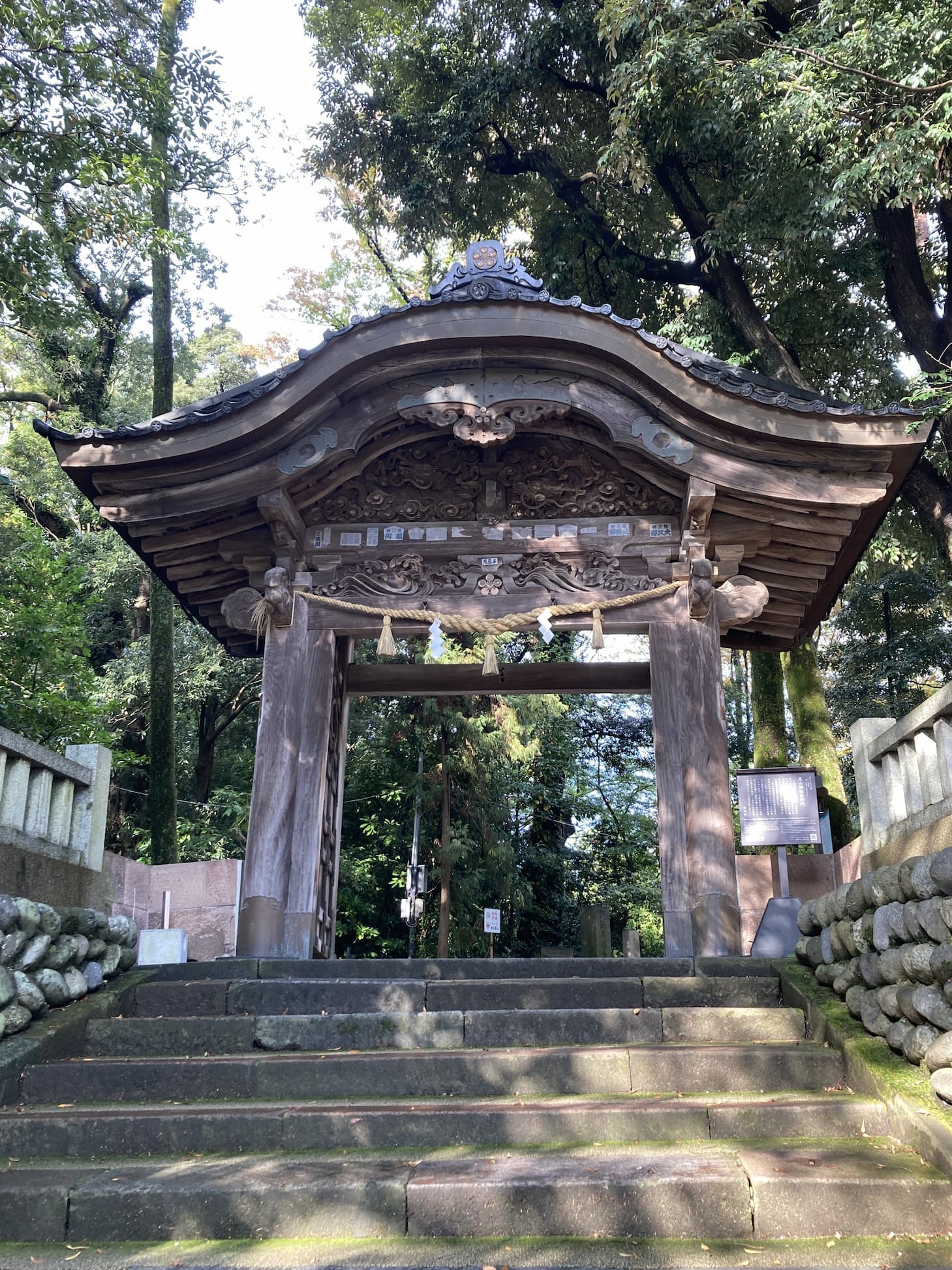
It survived the turbulent years that followed, including World War II. Although few people know about its history, it now serves as the worship hall of Nakamura Shrine.
So, if you’re hoping to make a comeback, you might want to pay a visit to Nakamura Shrine.
捲土重来を期す人には、この中村神社に参拝してみるとよいかもしれません。
In Japanese, the idiom hinoki-butai (literally, “a cypress stage”) refers to a prestigious stage where someone gets their big moment in the spotlight.
日本語の慣用句「檜舞台」は、人が晴れの舞台に立ち、大きな活躍をする場面を意味します。
After all, its worship hall is actually a Noh stage made of Japanese cypress. This might be the only place in Japan where you can literally say you’ve stood on a hinoki-butai just by visiting a shrine!
 源氏(Genji)