 源氏(Genji)
皆さん、こんにちは!Genjiです。菱櫓と橋爪門続櫓を東西に結ぶ、全長約260尺(約90メートル)の圧倒的スケールを誇る多目的兵車庫『五十間長屋(Gojuken Nagaya)』の英語案内ページへようこそ!
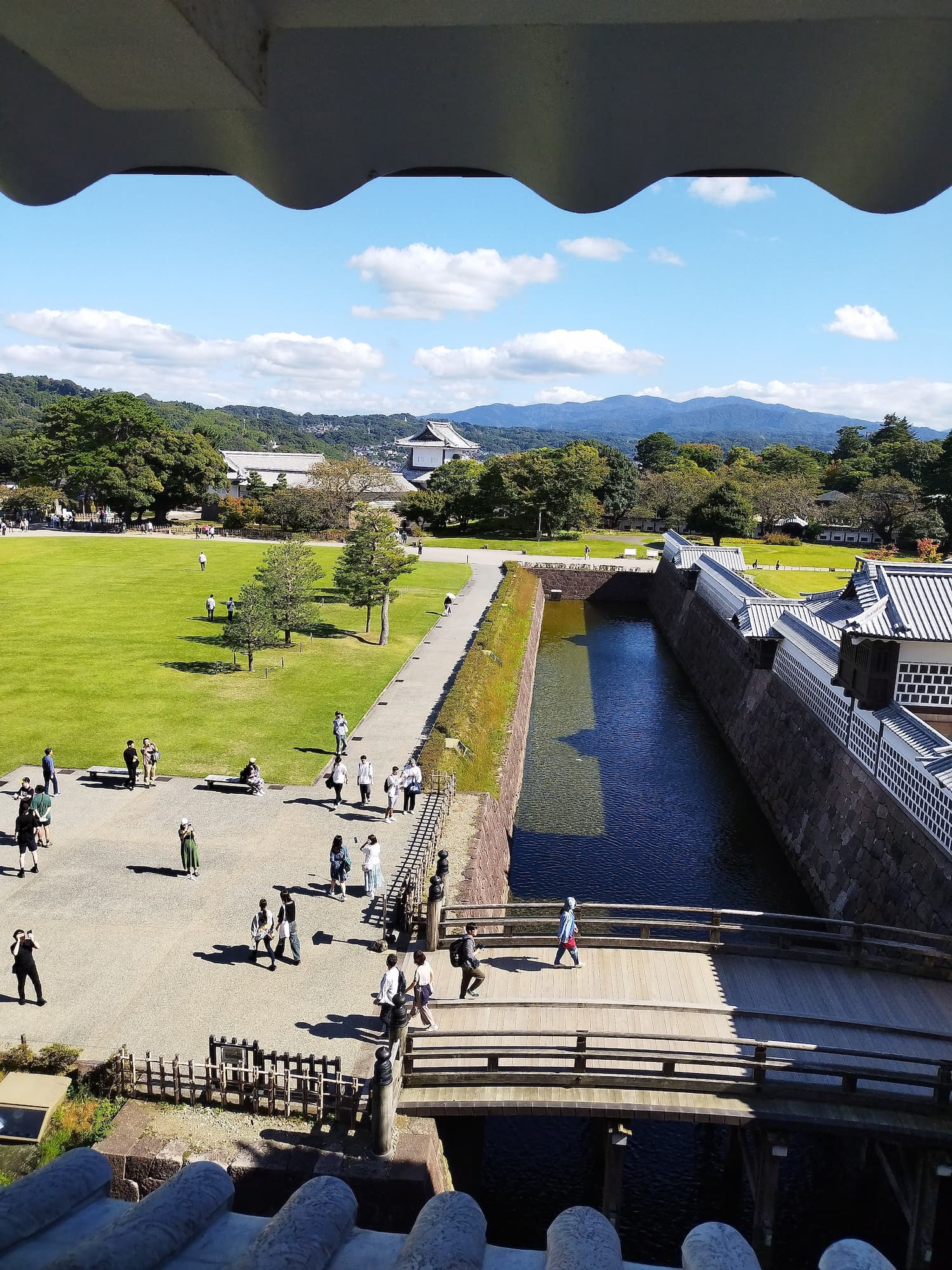
三の丸広場の中央に堂々と横たわる「五十間長屋」。平時は武器や備品を格納する2階建ての巨大な倉庫(多聞櫓)であり、有事の際には二の丸防衛の要塞(巨大な城壁)として機能するよう設計された、金沢城建築の傑作です。
現場でサッと使える短文フレーズから、名前の由来(五十間=約90メートル)、無柱の大空間と耐震壁の構造、ゲストをクスッと笑わせる裏話まで網羅しました。目的の項目ボタンからご自由にご活用ください。

長大な要塞倉庫@五十間長屋
📍 Quick Navigation: 各章へジャンプ
7. 五十間長屋(Gojuken Nagaya)
“Gojukken Nagaya”
ここでは五十間長屋をカバーします。用途に合わせて以下のボタンから直接アクセスできます。
7.1 基本情報(3項目)
Set 1: Architecture / 建築様式
EN: A Classic Feature of Japanese Castles
The Gojikken Nagaya is a type of tamon-yagura, a long, roofed defensive building commonly found in Japanese castles. It connects Hishi-yagura and Hashizume-mon Tsuzuki-yagura.
JP:日本の城の定番建築
五十間長屋は、日本の城によく見られる多聞櫓の一種です。菱櫓と橋爪門続櫓をつなぐ長い建物です。
Set 2: Restoration / 復元技術
EN: A Faithful Reconstruction
Reconstructed in 2001, the building was based on historical drawings, old photographs, and archaeological findings. Traditional Japanese wooden construction techniques were used to recreate the historic structure.
JP:史料と伝統工法に基づく復元
2001年に復元された建物で、古絵図・古写真・発掘調査の成果などを参考に、伝統的な木造建築技術を用いて再現されています。
Set 3: Learning from the Reconstruction / 復元から学ぶ
EN: More Than Just Looking at a Castle
Inside, you can see detailed displays explaining how the building was reconstructed, including traditional carpentry techniques. This makes it possible to learn not only what the building looked like, but also how it was built.
JP:建物を見るだけでなく、造り方を学ぶ
内部では、伝統的な大工技術を含め、復元工事の詳細を紹介する展示を見ることができます。建物の外観だけでなく、どのように造られたのかまで学べます。
7.2 口頭説明(3項目)
案内中に歩きながらテンポよく説明できるよう、コア要素を短くまとめたフレーズ集です。
❶ Architecture
EN: This is called a tamon-yagura, a common type of defensive building in Japanese castles. It connects the two turrets on either side.
JP: これは多聞櫓と呼ばれる、日本の城によくある防御用の建物です。両側の二つの櫓をつないでいます。
❷ Restoration
EN: This building was reconstructed in 2001, based on historical records and traditional construction techniques.
JP: この建物は、史料と伝統的な建築技術に基づいて、2001年に復元されました。
❸ Learning from the Reconstruction
EN: Inside, you can see how it was reconstructed, including traditional carpentry techniques. It’s a chance to learn how these historic wooden buildings were actually built.
JP: 内部では、伝統的な大工技術を含め、どのように復元されたのかを見ることができます。昔の木造建築が実際にどのように造られたのかを学べる機会です。
7.3 笑いが取れるかも?説明例
一目みて素朴に思うであろう想定疑問への説明例として、基本的に前半部は(様々な表現を織り込んだ)説明にも使える真面目パート、後半部は雑談力UPの為のおふざけパートの2部構成になっています。
Q1 この横長の建物は何ですか?
Q1. What is the purpose of this long, horizontal building?
❶ This long, wall-like structure is called a tamon-yagura or nagaya, a common feature of Japanese castles. これは多門櫓(たもんやぐら)、または長屋と呼ばれる、 日本の城によく見られる長い壁のような建物です。
❷ It connects the turrets at either end, forming part of the castle’s defences. 両端の櫓をつなぎ、城の防御施設の一部を構成しています。
❸ Its spacious interior also served as a storehouse for weapons and food, and could accommodate soldiers when necessary. 広い内部は武器や食料の倉庫としても使われ、必要に応じて兵士を収容することもできました。
❹ It could also be used to attack the enemy, although it has few openings for firing firearms. 敵を攻撃するためにも使われましたが、銃を撃つための開口部はあまり多くありません。
❺ Like many such structures, it has stone-dropping openings, known as ishiochi, for attacking enemies trying to climb the stone walls. このような建物の多くと同様に、石垣をよじ登ろうとする敵に石を落として攻撃するための「石落とし」も設けられています。
❻ Put simply, it was a long, fortress-like structure built to defend the castle. As it now hosts various exhibitions, much like an art gallery, I sometimes wonder whether we are properly conveying the true nature of this defensive structure. 簡単に言えば、城を守るために造られた、長い砦のような建物です。現在は美術館のようにさまざまな展示を行っているので、私たちはこの防御施設の本来の姿をきちんと伝えられているのだろうか、と時々思います。
❼ Occasionally, some visitors mistakenly believe that samurai used to sleep here, so I do wonder whether it might be better to recreate life in the castle more realistically. 時々、侍がここで寝泊まりしていたと勘違いする訪問者もいます。そこで、城での暮らしをもっとリアルに再現した方がよいのではないか、と考えることもあります。
❽ But that wouldn’t do! Although it was built for wartime, peace prevailed for so long that it must have served little more than as a storeroom. 駄目ですね!戦時に備えて造られたものの、あまりにも長く平和が続いたため、倉庫として使われるくらいのことしかなかったはずです。
❾ Of course, we can’t very well show visitors around a mere storeroom—that wouldn’t fulfil its defensive function. もちろん、ただの倉庫を見学してもらうわけにもいきません。それでは、この建物の防御機能を果たせませんからね。
❿ What kind of defence, you ask? That’s the job of the guiding staff here! どんな防御か、ですって?それは、ここのガイドスタッフの仕事ですよ!
Q2 この建物は何が面白いの?
“What is interesting about this building?”
言葉にすることはなくても、そのようなことを考えているような顔をしているゲストを見たら、お試しあれ。
❶ This is called the Gojukken Nagaya, a long building that connected two turrets and served both as a storehouse and a defensive structure. これは五十間長屋と呼ばれる建物で、二つの櫓をつなぎ、倉庫としての役割と防御施設としての役割を兼ねていました。
❷ “Gojukken” refers to a length of about 90 metres, while “nagaya” means a long, connected building. 「五十間」は約90メートルの長さを表し、「長屋」は長く連なった建物という意味です。
❸ One of the distinctive features of this building is the authenticity of its reconstruction. この建物の際立った特徴の一つは、復元のリアルさにあります。
❹ Although the original building was destroyed by fire in 1881, it was reconstructed in 2001 based on historical documents, old photographs and other evidence. 元の建物は1881年に火災で焼失しましたが、歴史的な文書や古写真などの資料に基づいて、2001年に復元されました。
❺ Traditional materials and carpentry techniques were used as faithfully as possible, allowing visitors to appreciate the craftsmanship firsthand. 伝統的な資材や大工の技法が、できる限り忠実に用いられており、訪問者はその職人技を自分の目で確かめることができます。
❻ But if we’re talking about authenticity, you might think, “Surely buildings that have survived in their original form at other castles are more authentic than this, aren’t they?” でも、リアルさという点で言えば、「他のお城に現存している、昔のままの建物の方が、これよりも本物らしいんじゃない?」と思われるかもしれませんね。
❼ Well, the authenticity I’m talking about has another dimension. Unfortunately, Kanazawa Castle, with its many wooden buildings, suffered repeated fires and reconstructions over the centuries. そうですね。私が言っているリアルさには、もう一つ別の側面があるのです。残念ながら、木造建築の多い金沢城は、何世紀にもわたって火災と再建を繰り返してきました。
❽ I imagine that whenever a building was rebuilt, people would have come to see it, much as visitors do today. That’s the kind of historical realism I want to highlight. 建物が再建されるたびに、今の観光客と同じように、人々が見物に訪れたのではないかと想像します。私が強調したいのは、そういう歴史的なリアリティなのです。
❾ And perhaps some of you can even see a bit of historical realism in me, your guide. そして、もしかすると、皆さんはここでご案内している私にも、ちょっとした歴史的なリアリティを感じるかもしれませんね。
❿ You might be thinking, “He looks just like a low-ranking samurai—or maybe a foot soldier!” 「この人、昔の下級武士、いや、足軽なんかにそっくりだな!」なんて思っているかもしれませんね。
Q3. この床は何でできているのですか?
“What is this floor made of?”
- The floorboards are made of two types of wood: cedar and Noto Hiba, depending on the location.
- 床板には、場所によって杉と能登ヒバという2種類の木材が使われています。
- Noto Hiba is a Japanese conifer known as Hinoki-asunaro. The same tree is called Aomori Hiba in Aomori Prefecture.
- 能登ヒバはヒノキアスナロと呼ばれる日本の針葉樹です。同じ木でも、青森県では青森ヒバと呼ばれています。
- It is known for its durability, resistance to moisture, and natural protection against insects and decay.
- 耐久性や耐湿性に優れ、虫や腐食から木材を守る天然成分も含んでいます。
- These qualities make it an excellent material for traditional wooden buildings.
- こうした特性から、伝統的な木造建築に非常に適した素材です。
- In other words, it is not just beautiful wood; it is also highly practical and valuable.
- つまり、単に美しい木材というだけでなく、高い実用性と価値を兼ね備えています。
- So, when I explain this building, I often mention that the Maeda family used such high-quality materials even for a storehouse.
- ですから、この建物を説明するとき、私は前田家が倉庫にまでこのような高品質な材料を使っていたことをよく紹介します。
- But the more I talk about these expensive materials, the more pressure I feel!
- でも、高級素材だと強調すればするほど、私自身もプレッシャーを感じるようになります!
- I used to keep my distance from people who were expensive to socialize with, even when I was young.
- 若い頃から、交際費のかかる人たちとは距離を置いてきました。
- But who knew that at my age, I would end up paying such a high social cost?
- それなのに、まさかこの年になって、こんなに高い交際費を払うことになるとは!
- In order to create even a little space between my feet and the floorboards, I have to wear two pairs of socks! What a waste of money!
- 自分の足と床板の間に距離を少しでも置くために、靴下を2枚も重ねてはかなくちゃ!とんだ出費だ!
Q4. この大きな梁の素材は何?
“What kind of wood is this large beam made of?”
- As you saw in the earlier display, different types of wood were selected for different parts of this building.
- 先ほどの展示で見たように、この建物では場所に応じて異なる種類の木材が選ばれています。
- These large beams are mainly made of pine.
- これらの大きな梁には、主に松が使われています。
- Pine is strong and flexible, making it suitable for supporting heavy structures.
- 松は強度と粘りがあり、重い構造物を支えるのに適しています。
- It can also be used in long, thick sections, which makes it particularly useful for traditional wooden buildings.
- また、長く太い材を確保できるため、日本の伝統的な木造建築で特に重宝されてきました。
- For these reasons, pine has been widely used for structural beams in Japanese architecture.
- こうした理由から、松は日本建築の構造用の梁として広く使われてきました。
- However, as a guide who often talks about the beautiful pine trees in Kenrokuen Garden, I sometimes feel something doesn’t quite fit.
- ところが、兼六園の美しい松についてよく説明するガイドとして、私は時々、何かしっくりこないものを感じるのです。
- Perhaps it’s because the image of pine trees in the garden—with their elegant, delicate, twisting branches—is so different from these thick, straight beams.
- おそらく、庭園の松の優雅で繊細に曲がりくねった枝ぶりのイメージと、ここにある太く真っ直ぐな梁の姿があまりにも違うからでしょう。
- But recently, I finally realized what was bothering me.
- でも最近、ようやくその違和感の正体が分かりました。
- You know that peculiar feeling you get when you have a cute pet Java sparrow playing in your room, and then you’re served chicken wings for dinner?
- 部屋で可愛い手乗り文鳥が遊んでいるのを見た後、夕食に手羽先が出てきたときの、あの独特の気持ち、分かりますか?
- Looking up at these beams, I feel exactly the same way. How could they cut up and skewer such beautiful pine trees to make these beams!
- これらの梁を見上げると、文字どおり同じ気持ちになります。あんなに美しい松を切り刻んで、串刺しにして梁にするなんて!

五十間長屋の解説はお楽しみいただけましたか? 他のスポット(橋爪門、二ノ丸御殿など)の解説へ移動する際は、冒頭の緑色ナビゲーションボタンをご活用ください!