こんにちは!日本の歴史建築&景観ウオッチャーのGenjiです。
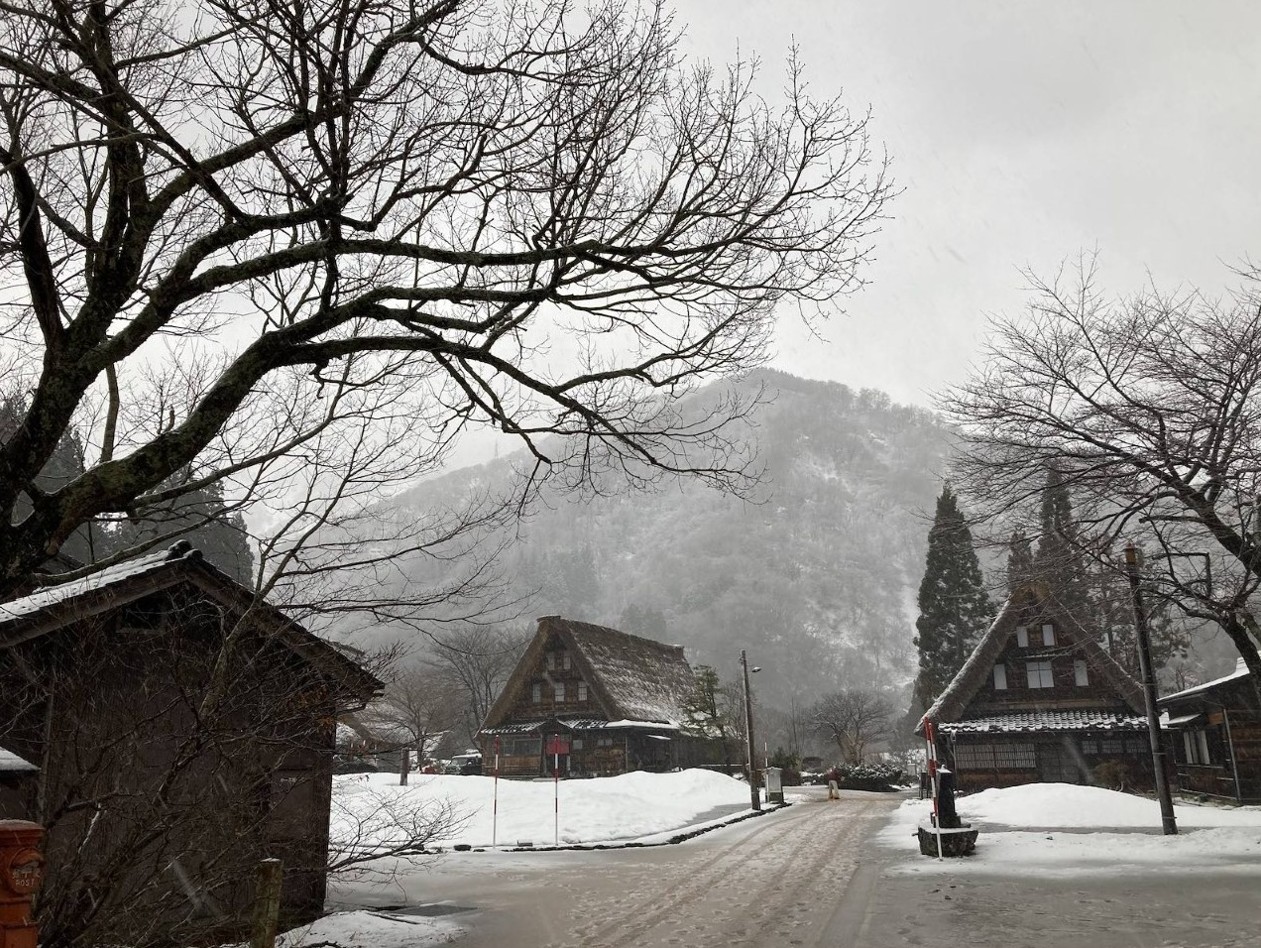
今回は富山県が誇る世界遺産「五箇山(相倉・菅沼合掌造り集落)」へ、インバウンドのゲストをご案内する際の英語表現やトークネタをご紹介します。
隣県の有名な「白川郷」と比べると、五箇山は観光地化されすぎておらず、日本の原風景と人々の温かい生活がそのまま息づいているのが最大の特徴です。豪雪地帯ならではの知恵や、加賀藩を支えた隠れた産業(塩硝・生糸)など、ここでしか語れない深みのあるトークネタをギュッとまとめました。目次やジャンプボタンからご活用ください!
📍 Quick Navigation: 各章へジャンプ
0. 本ブログの全体ガイド 🌲
このブログは大きく分けて3つの階層で構成してます。
🔰 【Step 1】押さえておきたい基本用語
まずは「これを知らなきゃ始まらない」必須ワードをお相手のご興味のレベルに合わせて3段階でご紹介します。
🧭 【Step 2】そもそもこの五箇山って何?「三段構え」即答術
「白川郷と何が違うの?」と頻出の質問へのシンプルな答え方を、お相手の知識レベルにあわせて3段階でご紹介します。
🧭 【Step 3】スポット別の英語説明パート
相倉(あいのくら)・菅沼(すがぬま)の各集落や合掌造り内部、伝統産業(和紙・塩硝)など、スポットごとの説明に使える真面目パートとおふざけパートの2部構成になっています。
1. 押さえておきたい基本用語
🌱 1.1 基本用語(日常会話レベル)
👉 五箇山の景観や茅葺き屋根の基本的な特徴を説明する日常会話レベルの単語です。
- 合掌造り(がっしょうづくり) ☛ Gassho-style house / steep-pitched thatched roof house
- 茅葺き屋根(かやぶきやね) ☛ thatched roof
- 世界文化遺産 ☛ World Cultural Heritage site
- 豪雪地帯(ごうせつちたい) ☛ heavy snowfall area / region with heavy snow
- 相倉(あいのくら)集落 ☛ Ainokura Village
- 菅沼(すがぬま)集落 ☛ Suganuma Village
- いろり(囲炉裏) ☛ sunken hearth / traditional indoor fireplace
- 屋根葺き替え(やねふきかえ) ☛ re-thatching the roof / replacing the thatch
- 結(ゆい:相互扶助) ☛ Yui (traditional community mutual-aid system)
- 原風景(げんふうけい) ☛ traditional rural scenery / idyllic rural scenery
🔥 1.2 関連用語(愛好家レベル)
👉 建築構造の深掘りや白川郷との違い、歴史的背景を少し深めに説明するための言葉です。
- 切妻造り(きりづまづくり) ☛ gabled roof construction
- 急勾配屋根(60度) ☛ steep roof slope (60-degree incline)
- 養蚕(ようさん) ☛ sericulture / silkworm farming
- 塩硝(えんしょう:黒色火薬の原料) ☛ saltpeter / potassium nitrate (for gunpowder)
- 加賀藩(かがはん)の秘密産業 ☛ secret industry of the Kaga Clan
- 五箇山和紙(ごかやまわし) ☛ Gokayama Japanese paper / traditional handmade paper
- こきりこ節(日本最古の民謡) ☛ Kokiriko-bushi (Japan’s oldest folk song)
- ささら(伝統楽器) ☛ Sasara (a traditional wooden percussion instrument)
- 流刑地(るけいち) ☛ place of exile
- 雪崩(なだれ)防止林 ☛ avalanche protection forest/avalanche-prevention forest
👑 1.3 《五箇山》特有用語(必殺ワード)
👉 今回のトークストーリー(Q1〜Q6)に登場した五箇山独自のキーワード・専門用語です。
- 刈安(カリヤス/コガヤ) ☛ Kariyasu (fine-stemmed grass preferred for thatching in Gokayama)
- 軒先(のきさき)/ eaves ☛ eaves (the lower edge of the thatched roof)
- 流刑小屋(るけいごや) ☛ prison hut for exiles (the only surviving exile hut in Japan)
- 籠の渡し(かごのわたし) ☛ rope-cable cage transport (suspended wooden basket used to cross the river gorge)
- 板ささら(いたささら) ☛ slat clapper (traditional wooden percussion instrument made of 108 slats)
- 108の煩悩(ぼんのう) ☛ 108 worldly desires / passions (afflictions in Buddhism dispelled by the Sasara)
- 綾編笠(あやあみがさ) ☛ braided straw hat (traditional hat worn during the Kokiriko dance)
- 床下の穴(とこしたのあな) ☛ underfloor pits (pit under the hearth used for secret saltpeter production)
- 地産地消サイクル ☛ locally sourced cycle (tradition of cultivating thatching materials within the village)
- 河岸段丘(かがんだんきゅう) ☛ river terrace (geographical feature comparing Shirakawa-go and Gokayama)
2. そもそもこの五箇山って何? 「三段構え」即答術
まずは、現地に向かう途中や到着直後にとてもよく聞かれる「白川郷と何が違うの?」「五箇山って何がすごいの?」という質問について、シンプルな腑に落ちる即答例をご案内します。日本語→英語の順です。
1.1 かいつまんで言うなら(標準的インバウンド向け)
👉標準的な説明ですが、「過度な観光地化を免れた静寂」と「歴史的背景」を伝えるのがコツです。
- 豪雪に耐えるため合掌(手を合わせる)の形に建てられた、築200〜300年の茅葺き集落(世界遺産)。
- 有名な「白川郷」と比べると規模は小さく静かで、今も地元住民が普通に暮らす「生の生活空間」が残っている。
- かつては加賀藩の秘密兵器である「黒色火薬(塩硝)」や「和紙」「絹糸」を極秘で生産していた隠れ里。
- 釘を使わず、ロープや植物のツル、木材の組み合わせだけで作られた先人の知恵の結晶。
👉その英訳例です。
- A UNESCO World Heritage village featuring 200 to 300-year-old thatched houses built like “hands folded in prayer” to withstand heavy snow.
- Compared to the famous Shirakawa-go, Gokayama is smaller, quieter, and preserves an authentic “living village” where locals actually reside.
- Historically, it was a secret mountain enclave that produced saltpeter (for gunpowder), high-quality paper, and silk for the powerful Kaga Clan.
- The houses were constructed without a single nail, held together solely by ropes, vines, and clever wooden joinery.
1.2 もっと簡略化するなら(英語が第二言語の方向け)
👉英語が母国語でない方や、シンプルに特徴を掴みたい方向けの表現です。
- 白川郷の「静かで素朴な隠れ家バージョン」。混雑が少なく静かに楽しめる世界遺産。
- お祈りをする手のような急角度の茅葺き屋根が特徴の、美しい日本の田園風景。
- 雪深い山の中で、人々が何百年も助け合って生きてきた歴史を実感できる場所。
👉その英訳例です。
- It is like a peaceful, hidden version of Shirakawa-go—far less crowded and very authentic.
- It features triangular thatched roofs resembling hands in prayer, set against a stunning mountain backdrop.
- A place where you can feel how villagers have helped each other survive harsh, snowy winters for centuries.
1.3 一言で済ませるなら(米国人向け2例)
👉一言でパッと印象に残したい場合におすすめのフレーズです。
- 白川郷が「テーマパーク的な楽しさ」なら、五箇山は「本物の生きているタイムカプセル」だ。
- かつてサムライの「秘密火薬工場」だった、雪山の美しい隠れ里。
- If Shirakawa-go is a popular theme park, Gokayama is a peaceful, authentic living time capsule.
- It’s a tranquil mountain hideaway that was once the samurai’s secret gunpowder factory!
3.基本情報
ここでは、個々のスポットをご案内する前に、最低限押さえておきたい五箇山の基本情報を10のポイントでチェックできます。口頭で説明しやすいよう、不要な固有名詞を削ってシンプルにまとめています。日本語→英語の順です。
《日本語》
- 1995年のユネスコ世界文化遺産登録: 五箇山は、隣県の白川郷とともに「白川郷・五箇山の合掌造り集落」として世界遺産に登録されました。五箇山からは「相倉(あいのくら)」と「菅沼(すがぬま)」の2つの集落が含まれています。
- 約60度の急勾配の屋根: 五箇山の合掌造りの屋根は、約60度という非常に急な斜面を持っています。これは豪雪を滑り落とすためだけでなく、屋根裏に広い空間を確保して「養蚕(蚕の飼育)」の作業場として利用するためでした。
- 五箇山独特の丸みを帯びた屋根: 基本構造は屋根の両端が尖った「切妻(きりづま)造り」ですが、五箇山では屋根の端を円筒状に葺きあげる独特の技術により、どこか柔らかく丸みを帯びた表情に仕上げられています。
- 加賀藩を支えた「塩硝(えんしょう)」: 江戸時代、五箇山では黒色火薬の最重要原料である「塩硝(硝酸カリウム)」が極秘で生産され、金沢の加賀藩を軍事・経済面で支えていました。
- 多層構造の合理性: 急勾配の屋根裏には2〜4階もの広大な多層空間があり、主に養蚕の作業場として使われました。1階の囲炉裏から上がる熱と煙が、冬場でも屋根裏を暖かく乾燥した状態に保っていました。
- 伝統の「結(ゆい)」システム: 茅葺き屋根の葺き替えを地域全員で助け合う「結」という相互扶助が今も受け継がれています。五箇山では一度に全部を葺き替えるのではなく、数年ごとに屋根をいくつかの区画に分けて部分的に葺き替える独自のスタイルが発達しました。
- 五箇山和紙: 古くから高品質な手漉き和紙が作られており、加賀藩への重要な献上品でした。養蚕や塩硝と並んで、雪深い山村の貴重な現金収入源となっていました。
- 日本最古の民謡「こきりこ節」: 五箇山に伝わる「こきりこ節」は、約1,400年前の古代の稲作儀礼に由来する日本最古の民謡とされています。伝統楽器「ささら」を打ち鳴らしながら舞う優雅な踊りが有名です。
- 加賀藩の流刑地: 急流と深い谷に囲まれ外部から途絶された五箇山は、加賀藩の「流刑地(刑務所)」でもありました。現地には当時の姿を復元した「流刑小屋」が今も残っています。
- 観光地であると同時に「生活の場」: 五箇山は観光テーマパークではなく、現在も地元住民が農業を営み普通に暮らすコミュニティです。見学の際は住民のプライバシーや静かな環境への配慮が求められます。
《英語》
- UNESCO World Heritage Site (1995): Gokayama was designated as a UNESCO World Heritage site alongside Shirakawa-go. Gokayama consists of two historic villages: Ainokura and Suganuma.
- Steep Roof Pitch (Approx. 60 Degrees): The thatched roofs have an extremely steep 60-degree incline. This was essential not only to shed heavy snow quickly, but also to create spacious attic floors for sericulture (silkworm farming).
- Distinctive Rounded Roof Edges: While basically gabled in structure, Gokayama’s roofs feature a unique thatching technique at the gable ends, giving the edges a softer, slightly rounded appearance compared to Shirakawa-go.
- Secret Saltpetre Industry: During the Edo period, Gokayama secretly produced saltpetre (potassium nitrate)—the most critical ingredient of black gunpowder—to military and economic support the ruling Kaga Clan in Kanazawa.
- Functionality of Multi-Story Interiors: Beneath the steep roof were 2 to 4 spacious upper levels used mainly for silkworm farming. Heat and smoke rising from the 1st-floor hearth kept these upper floors warm and preserved.
- Traditional “Yui” Mutual-Aid System: “Yui” is a community tradition where villagers help each other re-thatch roofs. In Gokayama, rather than re-thatching an entire roof at once, villagers developed a method of replacing thatch section by section over several years.
- Gokayama Washi Paper: High-quality handmade paper has been produced here since ancient times and was presented as a tribute to the ruling samurai clan. Along with silk and saltpetre, it was a crucial income source for the isolated village.
- “Kokiriko-bushi” (Japan’s Oldest Folk Song): Originating from ancient rice-planting rituals around 1,400 years ago, “Kokiriko” is considered Japan’s oldest surviving folk song, famous for its elegant dance using the traditional “Sasara” clapper.
- Place of Exile for Samurai Prisoners: Isolated by rushing rivers and deep ravines, Gokayama served as a penal colony for political prisoners of the Kaga Clan. A reconstructed “prison hut from that era” still stands today.
- A Living Community, Not a Theme Park: Gokayama is an active residential village where locals reside and farm, not a theme park. Visitors are encouraged to respect the privacy and peaceful environment of the residents.
4. インバウンドの視点・笑いがとれるかも
ここからは一緒に見ているインバウンドからの素朴な質問を想定した色々なトークをご紹介します。
Q1. 同じ世界遺産の白川郷と何か違うの?
“Is there any difference between it and Shirakawa-go, which is also a World Heritage Site?”
両方をご案内したゲストからよく出る質問を元に纏めてみました。前半(1-6)は説明にも使える真面目パート(地形の違いとその影響)、後半(7-10)は雑談力アップを意図したおふざけパートです。
- From the perspective of UNESCO World Heritage, there is little difference between the two designated villages.
ユネスコ世界遺産の視点でみれば、指定対象とされた2つの村に大きな違いはありません。 - However, as the topography surrounding the two villages differs slightly, some interesting distinctions can be observed.
でも、2つの村を取り巻く地形が微妙に異なることから、興味深い違いも見られます。 - Shirakawa-go (Ogimachi), as its name suggests with the character for ‘river’, is situated along a river, with around a hundred houses clustered together on a wide, crescent-shaped river terrace.
白川郷(荻町)はその名に「川」が含まれるように、川に沿った三日月型の広い河岸段丘の上に100軒ほどの家屋が固まって立っています。 - In Gokayama, as the name—which means ‘five mountains’—suggests, around thirty houses are scattered across small, flat patches of land amidst the rugged mountains.
片や五箇山はその名が「5つの山(谷)」を意味する通り、険しい山の中に散在する小さな平地に30軒ほどの家屋が分散しています。 - In Shirakawa-go, where a constant breeze blows along the river and sunlight falls evenly, most of the houses face in the same direction to reduce wind resistance and maximize sunlight.
常時川に沿って流れる風と均等に日光が射す白川郷では、ほとんどの家屋が風と光の通り道に合わせて同じ方向を向いています。 - In Gokayama, however, where the wind patterns and hours of sunlight vary greatly depending on the valley, each house faces in a different direction as its occupants see fit.
一方、風の流れも日照時間もバラバラな五箇山では、個々の家屋はそれぞれ好きなように違う方向を向いています。 - When viewed from high ground, Shirakawa-go possesses an orderly beauty, much like a harmonious orchestra.
高台から見下ろすと、白川郷は調和の取れたオーケストラの絵画のような整然とした美しさがあります。 - Put like that, Gokayama might sound as though it were a village rife with discord, as if its inhabitants were at loggerheads!
そういった言い方をすると、五箇山はまるで不協和音のある、不仲な村のように聞こえるかもしれませんね(笑)。 - However, whilst many visitors unanimously praise Gokayama’s tranquility, this may not be due solely to the small number of houses there.
多くの訪問客が声を揃えて称賛するのは五箇山の静けさですが、それは単に家屋数が少ないからだけではないのかもしれません。 - After all, as it takes over 30 minutes to walk from most houses to the next one, there’s never been any chance of any discord arising in the first place!
なんたって、多くの家は隣の家まで歩いて30分以上かかるので、昔から不協和音なんて発生しようがないのです!
Glossary:用語集
crescent-shaped river terrace ☛ 三日月型の河岸段丘 / scattered across ☛ 〜に散在している / amidst the rugged mountains ☛ 険しい山々の中に / constant breeze ☛ 常時流れる風 / as its occupants see fit ☛ 住人が適切と思うように(好きなように) / orderly beauty ☛ 整然とした美しさ / rife with discord ☛ 不和・不協和音に満ちた / at loggerheads ☛ 激しく対立して(不仲で) / unanimously praise ☛ 満場一致で(口を揃えて)称賛する / tranquility ☛ 静寂
Q2. 屋根の素材は何でできているの?
“What are the roofs made of?”
茅葺屋根を歩きながらゲストからよく出る質問です。前半は説明(1-5)にも使える真面目パート(屋根素材の違い)、後半(6-10)は雑談力アップを意図したおふざけパートです。(ただし、7, 8は説明としても使えます。)
- Generally speaking, these gasshō-zukuri roofs are known as “thatched roofs,” but the specific type of plant used varies from region to region.
一般的にこの合掌造りの屋根は「茅葺き屋根」と呼ばれますが、使われる具体的な植物の種類は地域によって異なります。 - “Kaya” is not the name of a specific plant, but a general term for grasses used as roofing material; in Gokayama, a grass known as “Kariyasu” is primarily used.
「茅(カヤ)」は特定の植物の名前ではなく、屋根材として使われる草の総称で、五箇山では主に「カリヤス(コガヤ)」と呼ばれる植物が使われています。 - In rural communities of the past, it was standard practice to source daily necessities locally; for thatching, people would create “thatching fields” on mountain slopes to grow the grass.
昔の農村コミュニティでは生活必需品の「地元調達」が基本であり、屋根葺きに関しても山の斜面に「茅場」を作って草を育てていました。 - Kariyasu has relatively slender stems and is considered well suited to thatching, which is one reason it has traditionally been cultivated in Gokayama.
カリヤスは茎が比較的細く、屋根を葺くのに非常に適していると考えられており、これが昔から五箇山で栽培されてきた理由の一つです。 - However, in Shirakawa-go, roofs are replaced every 20 to 30 years, whilst in Gokayama this occurs every 15 to 20 years; the lifespan of a roof is not determined by the material alone.
しかし、屋根の葺き替え周期は白川郷で20〜30年ほどであるのに対し、五箇山では15〜20年ほどであり、屋根の寿命は素材だけで決まるわけではありません。 - Ultimately, as is the case with most things, choices have been made based on value for money.
結局のところ、世の中のほとんどの事柄がそうであるように、これまで何を選択するかは「コスパ(費用対効果)」に基づいて決められてきました。 - However, the tradition of sourcing locally is now facing challenges due to labour shortages and the decline of traditional thatching fields, making it increasingly difficult to maintain thatched roofs and the local supply of materials.
しかし今日では、人手不足や伝統的な茅場の衰退により「地元で調達する」という伝統そのものが課題に直面しており、茅葺き屋根の維持や資材の地元供給が益々難しくなっています。 - From an economic efficiency perspective, it would naturally make sense to source materials from outside the region; however, in Gokayama, efforts are being made to preserve and revitalise the traditional cycle of locally sourced thatching materials.
経済効率の観点だけから見れば、地域の外から素材を調達するのが当然合理的ですが、五箇山では伝統的な「素材の地産地消サイクル」を守り、再生させようとする取り組みが行われています。 - Many people would probably think that, regardless of where it comes from, as long as the thatched roof is maintained, that’s enough—but I suppose those in the know will understand.
多くの人は「どこから買ってきた素材であれ、茅葺き屋根さえ維持できればそれで十分じゃないか」と思うでしょうが……まあ、「分かる人には分かる」世界なのでしょうね。 - Just as there are those who, when invited into a tea room, can appreciate the host’s spirit of hospitality in the authentic materials used, whilst others—like myself—fail to appreciate it!
ちょうど、茶室に招かれたときに、本物の素材に込められたホストの「おもてなしの心」を感じ取れる人と、私のように何も気づかない人間がいるのと同じようにね!(笑)
Glossary:用語集
slender stems ☛ 細い茎 / value for money ☛ コスパ(費用対効果) / facing challenges ☛ 課題に直面している / labour shortages ☛ 人手不足 / economic efficiency ☛ 経済効率 / preserve and revitalise ☛ 保存し再生させる / locally sourced ☛ 地元調達の(地産地消の) / those in the know ☛ 通の人、事情が分かる人 / spirit of hospitality ☛ おもてなしの心 / fail to appreciate ☛ 理解できない、価値が分からない
Q3. なぜ屋根の上部と下部で色が違うの?
“Why are the top and bottom parts of the roof different colours?”
頻繁に出る質問ではありませんが、鋭いゲストは時々素朴感じるようです。前半(1-5)は説明にも使える真面目パート(屋根の葺き方)、後半(6-10)は雑談力アップを意図したおふざけパートです。(7,8は説明としても使えます。)
- It’s partly because different materials and thatching techniques are used for different sections of the roof.
ひとつには、屋根の部位によって異なる素材や葺き方の技術が使い分けられているからです。 - To begin with, the roof is not made entirely of the same thatch.
そもそも、屋根全体が全く同じ茅で作られているわけではありません。 - In Gokayama, the type, length and thickness of the thatch, as well as the thatching technique, vary depending on where it is used.
五箇山では、使う場所に応じて茅の種類、長さ、太さ、そして葺き方の技法を変えています。 - At the lower edge of the roof—the eaves—short, evenly trimmed bundles are laid in multiple layers to help support the weight of the thatched roof.
屋根の下端(軒先)では、重い茅葺き屋根全体の重量を支えやすくするため、短く揃えた茅の束を何層にも重ねて葺いています。 - As a result, this lower section becomes thicker and has a somewhat different appearance from the upper part.
その結果、この下部はより厚みが増し、上部とは少し異なった独特の外観(見え方)になります。 - What’s interesting is that this is not just about function. Care is also taken to make the roof look attractive.
興味深いのは、色が異なるのは単なる機能上の理由だけではないということです。見た目を美しく見せるための配慮もなされているのです。 - At first glance, it may look like a simple thatched roof from centuries ago, but when you look closely, you can see that a great deal of care has gone into even the smallest details.
一見すると何百年も昔の素朴な茅葺き屋根に見えますが、細かく観察すると、極めて細かい部分にまで職人の細やかな配慮が行き届いていることが分かります。 - Interestingly, in my experience, it’s often visitors from overseas, rather than Japanese visitors, who ask about this difference in colour.
面白いことに、私の経験上、この「色の違い」について質問してくるのは日本人観光客よりも、圧倒的に海外からのゲストの方が多いのです。 - In English, we use the phrase “under the same roof” to talk about people who share a common environment or perspective.
英語では、同じ環境や価値観を共有する人々や事柄について「under the same roof(同じ屋根の下で)」というフレーズを使いますよね。 - So in Gokayama, even “on the same roof” of a gasshō-zukuri house, you can make a similar interesting discovery!
ですからここ五箇山では、合掌造りの「同じ屋根の上(on the same roof)」においても、似たような面白い発見(共通の視点)ができるというわけです!(笑)
Glossary:用語集
thatching techniques ☛ 屋根を葺く技術 / To begin with ☛ そもそも、まず第一に / eaves ☛ 軒先、軒下 / evenly trimmed ☛ 均等に切り揃えられた / multiple layers ☛ 何層もの重ね / function ☛ 機能、役割 / at first glance ☛ 一見すると / a great deal of care ☛ 多大な配慮・労力 / under the same roof ☛ 同じ屋根の下で(同じ環境・価値観で) / perspectives ☛ 視点、見方
Q4. この(流刑者を運ぶための)籠は何ですか?
“What is this basket (used to transport exiles)?”
屋根裏の展示で非常によく出る話題なので、説明ポイントを整理してみました。前半(1-7)は説明用の真面目パート(流刑地の歴史)、後半(8-10)は雑談力アップの為のおふざけパートです。
- This is a basket used to transport exiles to the opposite bank of the river in the gorge.
これは、渓谷を流れる川の対岸へ流刑者を運ぶために使われた「籠(かご)」です。 - As Gokayama is situated deep in the mountains and was difficult to access, it was used as a place of exile during the samurai era.
五箇山は山深く、外部からのアクセスが困難だったため、江戸時代には流刑地として利用されていました。 - Although this area was under the control of the Maeda Domain of Kanazawa, some of those exiled here were political prisoners, including samurai involved in political conflicts within the domain.
ここは加賀前田藩の支配領域でしたが、ここへ送られた流刑者の中には、藩内の政治的な争いに関わった武士など、いわゆる政治犯もいました。 - At that time, there was no bridge across the river in the gorge, and prisoners had to cross the river by a basket suspended from a rope.
当時は渓谷の川に橋が架けられておらず、流刑者はロープで吊るされた籠に乗って川を渡らなければなりませんでした。 - The prison huts themselves have been reconstructed, but they still stand today, so you can simply cross the bridge and take a look.
流刑小屋そのものは復元されたものですが、現在も残っています。今では橋を渡って気軽に見学できます。 - At first glance, being sent to such a remote place with no bridge might sound like a life of complete isolation and despair. But there was a twist: some of the less serious exiles were allowed to move around within the village.
橋もないこんな山奥に送られるのですから、完全な孤立と絶望の生活を想像しますよね。でも、ちょっと意外なことに、比較的罪の軽い流刑者は集落内を自由に出歩くことが許されていたそうです。 - Many guests who see this basket ask me what happened when the samurai era came to an end.
この籠を見た海外のゲストからは、「侍の時代が終わったとき、彼らはどうなったの?」とよく聞かれます。 - Well, naturally, when the samurai era came to an end, they must have been set free!
まあ、当然、侍の時代が終わったのですから、彼らも自由の身になったはずですよね! - They must have been delighted. But then I started wondering: did freedom really make them happier?
きっと大喜びしたことでしょう。でも、ふと思うんです。自由になって、本当に幸せだったのでしょうか? - After all, the end of the samurai era also meant the end of the privileges and status of the samurai. So perhaps being a relatively comfortable exile in Gokayama wasn’t such a bad deal after all!
何しろ、侍の時代が終わるということは、武士としての特権やステータスもなくなるということですから。もしかすると、五箇山で比較的のんびり暮らせる流刑者のままの方が、案外悪くなかったのかもしれませんね!(笑)
Glossary:用語集
opposite bank ☛ 対岸 / gorge ☛ 渓谷、峡谷 / place of exile ☛ 流刑地 / Maeda Domain ☛ 前田藩(加賀藩) / political conflicts ☛ 政治的対立・争い / suspended from a rope ☛ ロープから吊り下げられた / prison huts ☛ 流刑小屋 / complete isolation and despair ☛ 完全な孤立と絶望 / there was a twist ☛ ひねり(意外な展開)があった / less serious exiles ☛ 比較的罪の軽い流刑者 / came to an end ☛ 終焉を迎えた、終わった / set free ☛ 解放された、自由の身になった / privileges and status ☛ 特権とステイタス(身分) / comfortable exile ☛ 快適な・のんびりとした流刑者生活
Q5. このジャバラの物体は何ですか?
“What is this accordion-like object?”
展示館だけでなく土産物屋にも置いてある伝統楽器「ささら」に目が留まったゲストからよく聞かれる質問をベースに纏めてみました。前半(1-8)は構造や名前の由来をカバーした真面目パート、後半(9-10)は雑談力アップの為のおふざけパートです。
- This is a traditional Japanese percussion instrument called “Sasara” (slat clapper).
これは「ささら(板ささら)」と呼ばれる、日本の伝統的なパーカッション(打楽器)です。 - It is used in the dance for Japan’s oldest folk song handed down in Gokayama, making it a unique item found only here.
五箇山に伝わる日本最古の民謡の踊りで使われるもので、ここでしか見られない極めてユニークな道具です。 - It consists of 108 thin wooden slats bound together with cord; when flexed by holding the handles at both ends, it produces a distinctive, crisp rattling sound.
薄いヒノキの木片を108枚紐で繋ぎ合わせたもので、両端の持ち手を握ってしならせることで「ザッ、ザッ」という独特の爽快な音を奏でます。 - There are various theories about the origin of the name “Sasara,” including the idea that it imitates the rustling “sara-sara” sound of wooden slats, or golden rice stalks swaying in the autumn breeze.
「ささら」という名前の由来には諸説あり、板同士が擦れあう音や、収穫時期に風になびく稲穂が「サラサラ」と擦れあう音に似ているからとも言われています。 - At the festival held during the September harvest, you can see dancers wearing traditional braided straw hats, dancing elegantly while snapping this instrument.
9月の収穫時期に開かれるお祭りでは、踊り手たちが「綾編笠(あやあみがさ)」を深くかぶり、この楽器を打ち鳴らしながら舞う美しい姿が見られます。 - The 108 wooden slats represent the 108 worldly desires or passions in Buddhism, and snapping it is believed to dispel these mental afflictions.
この楽器に使われている108枚の木片は、仏教で言う人間の「108の煩悩(欲望や執着)」を表しており、打ち鳴らすことで煩悩を振り払う願いが込められています。 - In practice, you hold both ends with your hands and give one hand a quick, light flick.
【実演しながら】実際の動かし方は、この楽器の両端を両手で持ち、片方の手を軽く素早く振るように動かします。 - This creates a small wave motion that travels instantly to the other hand, generating a sound like a refreshing gust of wind passing through.
そうすると、それが小さな波動となって反対側の手へと瞬時に伝わり、まるで一陣の爽やかな風が吹き抜けるような音が鳴るのです! - At a temple, you have to strike a heavy bell 108 times to cleanse your desires, but with this instrument, a single wave motion dispels all 108 in a fraction of a second—how efficient is that!
お寺で煩悩を払うには鐘を108回も突かなければなりませんでしたが、この楽器なら一瞬の波(ひと振り)で108の煩悩を一気に吹き飛ばせるんですよ。なんて素晴らしいんでしょう!(笑) - But do be careful—if you fail to make a good sound and get frustrated, that frustration itself will become your 109th desire!
でも気をつけてくださいね!うまく鳴らせずにイラッとしてしまうと、それが「109番目の煩悩」になってしまいますからね!(笑)
Glossary:用語集
slat clapper ☛ 板ささら / bound together with cord ☛ 紐で繋ぎ合わされた / crisp rattling sound ☛ サクサクとした(心地よい)ラトル音 / golden rice stalks ☛ 金色の稲穂 / braided straw hats ☛ 編み笠 / 108 worldly desires ☛ 108の煩悩 / dispel ☛ 追い払う、払拭する / afflictions ☛ 苦しみ、病魔、煩悩 / give one hand a quick, light flick ☛ 片手で軽快にサッと振る / wave motion ☛ 波動、波状の動き / gust of wind ☛ 一陣の風 / in a fraction of a second ☛ 一瞬のうちに、わずかコンマ数秒で / 109th desire ☛ 109番目の煩悩・欲
Q6. この硝塩って、何がそんなに特別だったの?
“What was so special about this saltpetre?”
民俗館で「硝塩(えんしょう)」展示で使えるトークネタです。前半(1-5)は合掌造りの床下で行われた極秘生産について、説明にも使える真面目パート、後半(6-10)は雑談力アップの為のおふざけパートです。
- The exhibition here shows how this essential element for firearms was produced right here in Gokayama.
ここでは、鉄砲(火薬)に不可欠だったこの物質が、まさにここ五箇山で作られていたことを展示・説明しています。 - Although often simply called “gunpowder,” saltpetre was actually its most critical ingredient.
一般に「火薬」と一括りにされますが、この硝塩(硝酸カリウム)こそがその最重要成分でした。 - Remarkably, this tranquil World Heritage village was once home to a secret gunpowder factory.
驚くことに、この長閑な世界遺産集落は、かつて加賀藩の秘密の火薬工場だったのです。 - What’s more, that secret factory was located directly beneath the gassho-zukuri houses—the very buildings renowned for their impressive height and unique architecture.
さらにその秘密工場は、高さと威容で目を奪われる合掌造り家屋の「床下」にありました。 - Instead of modern chemicals, locals created it by mixing wild plants, soil, and organic matter in underfloor pits.
現代の化学薬品の代わりに、村人たちは山菜や土、有機物(人尿など)を床下の穴で混ぜ合わせて硝塩を作っていました。 - It was a brilliant form of “pre-industrial biotechnology”—using natural fermentation long before chemical factories existed.
化学工場などなかった時代に自然の発酵力を活かした、見事な「江戸時代のバイオ技術」だったのです。 - Since this area was ruled by the Kaga Domain in Kanazawa, producing and stockpiling this secret material was a matter of survival.
ここは金沢の加賀藩の領地であり、この秘密物質の生産と蓄積は藩の生存をかけた至上命令でした。 - The ruling Tokugawa Shogunate was constantly looking for excuses to dismantle the wealthy Maeda clan.
当時の政権・徳川幕府は、幕府に次ぐ財力を持つ前田家(加賀藩)を警戒し、取り潰す隙を常に狙っていたからです。 - As a guide, I often notice a quiet hush fall over our visitors when they realize how the villagers maintained a calm facade while running this covert operation.
表向きは恭順を装いながら、裏でこのような極秘作戦を推し進めていた歴史を知ったとき、多くのゲストがハッとして静まり返るのを私はよく目にします。 - “What about my seemingly devoted spouse? My obedient children? My loyal coworkers? …And what about this smiling guide standing right in front of you?”
「見た目献身的な私のパートナーは?従順そうな子どもたちは?忠実そうな同僚は?…そして、あなたの目の前にいるこの笑顔のガイドは…?」(笑)
Glossary:用語集
saltpetre ☛ 硝塩(硝酸カリウム) / essential element for firearms ☛ 鉄砲に不可欠な要素 / critical ingredient ☛ 最重要成分 / tranquil ☛ 長閑な、静かな / directly beneath ☛ 〜の真下に / underfloor pits ☛ 床下の穴 / pre-industrial biotechnology ☛ 工業化以前(江戸時代)のバイオ技術 / natural fermentation ☛ 自然発酵 / Kaga Domain ☛ 加賀藩 / Tokugawa Shogunate ☛ 徳川幕府 / dismantle ☛ 取り潰す、解体する / calm facade ☛ 平穏な表面上の顔・体裁 / covert operation ☛ 極秘作戦 / devoted spouse ☛ 献身的な配偶者
Q7. なぜこの川はこんな深緑色なのですか?
“Why is the river here this colour—dark green?”
これは、海外ゲストとの車での移動中や、村内散策で、自然と目に入る庄川(ダム湖)の水の色について、非常に頻繁にされる質問ですが、前半(1-4)は説明にも使える真面目パート、後半(5-10)は定番のおふざけパートです。今回はダム湖に関するフレーズにフォーカスしています。
- The deep green colour is probably caused by a combination of factors, including the depth of the water, the surrounding mountains, and the way light is reflected and absorbed in the water.
この濃い緑色は、水深の深さ、周囲を囲む山々、そして光が水中で反射・吸収される仕組みなど、いくつかの要因が組み合わさったものと考えられます。 - Although this is the Shogawa River, some sections are part of reservoirs created by dams.
ここは庄川という川ですが、一部の区間はダムによって作られたダム湖(貯水池)になっています。 - The colour may also be influenced by microscopic organisms such as phytoplankton.
また、植物プランクトンなどの微小な生物の影響も受けている可能性があります。 - However, we cannot say that they are the main cause without water-quality data.
ただし、水質データがない以上、それらが決定的な主因であると断定することはできません。 - Whatever the exact scientific explanation, the mysterious deep green colour invites not only frequent questions but also my imagination.
科学的な正確な説明がどうであれ、この神秘的な深緑色は多くの質問を生むだけでなく、私の想像力をもかき立ててくれます。 - I like to imagine that microscopic organisms such as phytoplankton are active under the surface, supporting a food web full of life.
水面の下では植物プランクトンなどの微小な生命が活動し、豊かな生命の食物連鎖を支えているのではないかと想像するのが好きなんです。 - Perhaps the reservoirs created by dams—even though dams are often seen as symbols of environmental destruction—have also created a new ecosystem.
一般的にダムは「自然破壊の象徴」と見なされがちですが、もしかするとダム湖は「新しい生態系(エコシステム)」を生み出したのかもしれません。 - And if overseas visitors become fascinated by this mysterious deep green colour, perhaps it could attract even more visitors.
アンド、もし海外からの旅行者がこの神秘的な深緑色に魅了されれば、さらに多くの観光客を惹きつけることになるでしょう。 - That could create a new economic ecosystem—and maybe even help local guides like me benefit from it.
それは新しい「経済のエコシステム」を作り出し、私のような地元のガイドもその恩恵を受けられるかもしれません。 - But after all, perhaps that’s just my own “ego-system,” rather than an eco-system, driven purely by a desire to make money. The worst kind of environmental destruction!
でも結局のところ、それは生態系(エコシステム)ではなく、単にお金を稼ぎたいという私自身の欲に基づく「エゴシステム」に過ぎないのかもしれませんね。これこそ最悪の環境破壊です!(笑)
Glossary:用語集
deep green colour ☛ 濃い緑色(深緑色) / combination of factors ☛ 複数の要因の組み合わせ / depth of the water ☛ 水深 / reflected and absorbed ☛ 反射と吸収 / Shogawa River ☛ 庄川 / reservoirs created by dams ☛ ダムによって作られた貯水池(ダム湖) / microscopic organisms ☛ 微小な生物(微生物) / phytoplankton ☛ 植物プランクトン / water-quality data ☛ 水質データ / invites my imagination ☛ 想像力をかき立てる / food web ☛ 食物連鎖(食物網) / symbols of environmental destruction ☛ 環境破壊の象徴 / new ecosystem ☛ 新しい生態系 / overseas visitors ☛ 海外からの旅行者(インバウンド客) / economic ecosystem ☛ 経済のエコシステム(経済圏) / ego-system ☛ エゴシステム(利己心・欲望の仕組み) / driven purely by a desire to make money ☛ 純粋にお金を稼ぎたいという欲求に駆られた
🏯 今回も最後までお読みいただきありがとうございます。!
本記事についてご意見・ご要望等ございましたら、下記よりお気軽にお声がけください!