 源氏(Genji)
皆さん、こんにちは!Genjiです。金沢城の表玄関であり、国の重要文化財にも指定されている『石川門(Ishikawa Gate)』の英語案内ページへようこそ!
兼六園から石川橋を渡って城内へ足を踏み入れる際、最初に海外ゲストを圧倒するのがこの「石川門」です。宝暦の大火(1759年)を生き延び、天明8年(1788年)に再建された現存最古の建造物であり、二重の桝形(ますがた)構造、なまこ壁、鉛瓦といった金沢城建築のエッセンスが凝縮されています。
現場でサッと使える短文フレーズから、フランス革命と同時代の歴史ロマン、ゲストをクスッと笑わせる裏話まで網羅しました。目的の項目ボタンからご自由にご活用ください。
金沢城の顔@石川門
📍 Quick Navigation: 各章へジャンプ
3. 石川門(Ishikawa Gate)
ここでは石川門をカバーします。用途に合わせて以下のボタンから直接アクセスできます。
3.1 基本情報(5項目)
石川門の歴史的背景、建築美、およびガイド現場で役立つ背景知識をまとめた基本情報です。
Set 1: History / 歴史
EN: One of the Oldest Surviving Structures in Kanazawa Castle
The current gate is not the original structure. It was rebuilt in 1788, the year before the French Revolution. It is one of the oldest surviving structures in Kanazawa Castle and is designated as an Important Cultural Property of Japan.
JP:金沢城に残る最古級の建造物
現在の門は創建当初の建物ではありません。フランス革命の前年にあたる1788年に再建されました。金沢城に現存する最古級の建造物で、国の重要文化財に指定されています。
Set 2: Role / 役割
EN: From a Rear Gate to an Iconic Entrance
Ishikawa-mon was originally a rear gate (karamete-mon) of Kanazawa Castle. Today, it serves as a main entrance for visitors coming from Kenrokuen Garden. Its distinctive appearance has also made it one of the most recognizable symbols of Kanazawa.
JP:かつての裏門、現在は金沢を象徴する入口
石川門は、もともと金沢城の搦手門(裏門)でした。現在では、兼六園から訪れる人々を迎える金沢城の入口となっています。その特徴的な姿は、金沢を代表する景観の一つとして広く知られています。
Set 3: Architecture / 防御構造
EN: The Defensive Design of Ishikawa-mon
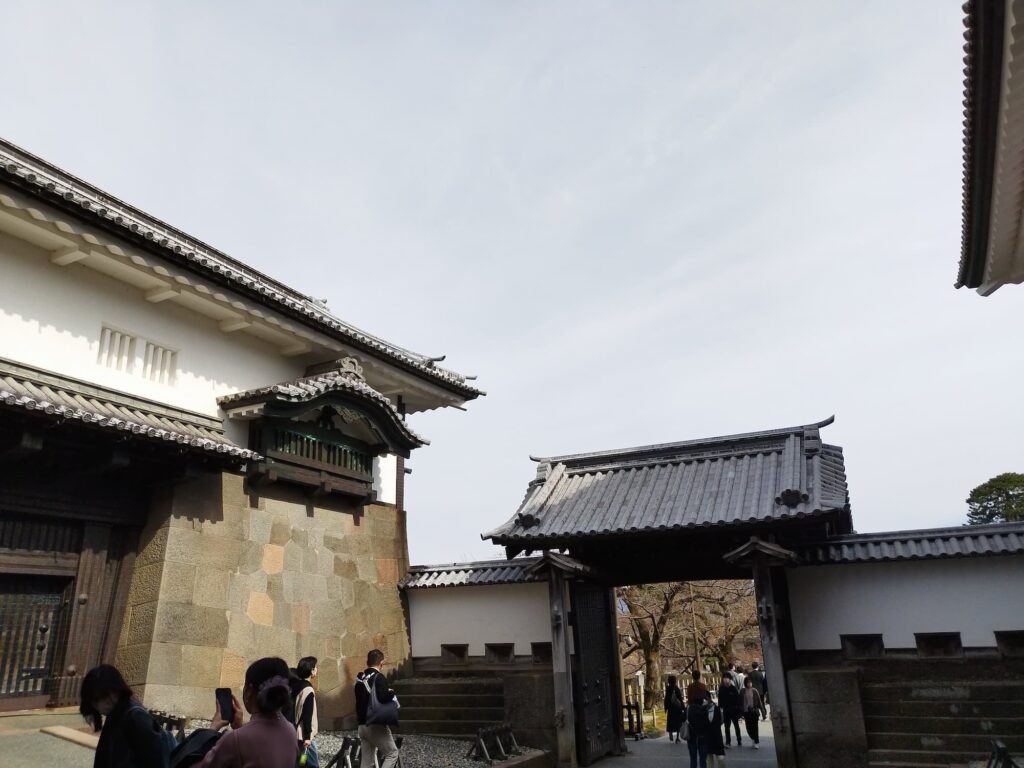
The Ishikawa Gate is a typical masugata gate, with the first and second gates positioned at right angles to each other. This prevented enemies from advancing straight through the gate. The connecting turrets allowed defenders to attack enemies from multiple directions.
JP:石川門の防御構造
石川門は、典型的な枡形門です。第一の門と第二の門が直角に配置され、侵入した敵がまっすぐ進めない構造になっています。両門をつなぐ櫓からは、複数の方向から敵を攻撃できました。
Set 4: Stone Walls / 石垣の特徴
EN: Two Different Styles of Stone Walls
As you enter the Ishikawa Gate, you can see two different styles of stone walls. One is made of roughly shaped natural stones stacked together, while the other is made of carefully cut stones fitted closely together, with almost no gaps. It is unclear why these two techniques were used in the same gate complex.
JP:2種類の石垣
石川門を入ると、異なる2種類の石垣を見ることができます。一方は自然石を粗く加工して積み上げたもので、もう一方は石を丁寧に切りそろえ、隙間がほとんどないように組み合わせたものです。同じ門の一角で、なぜこの2つの技法が使われたのかは、明確には分かっていません。
Set 5: Scenery / 季節の景観
EN: A Popular Cherry-Blossom View
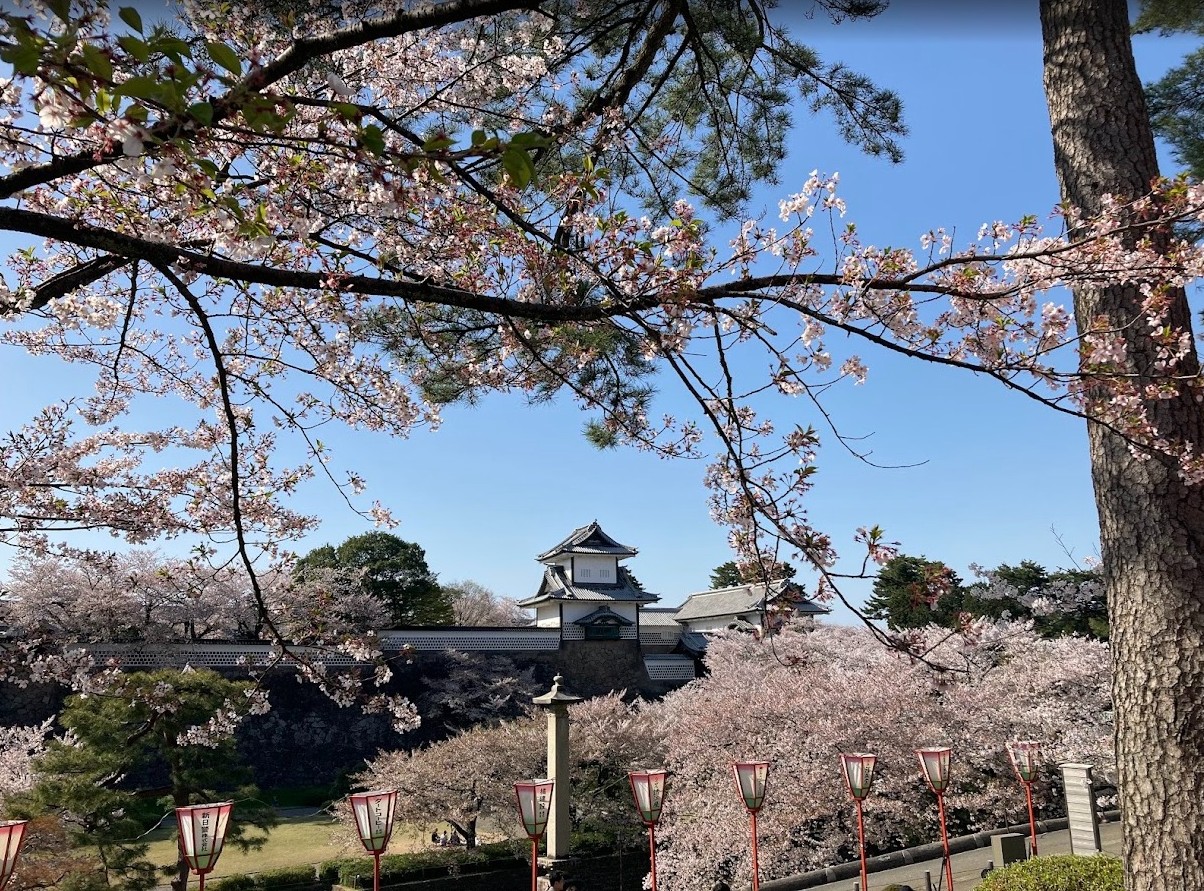
In spring, you can enjoy the beautiful contrast between the cherry blossoms near Ishikawa Bridge and the white walls of Ishikawa Gate. This is one of Kanazawa’s most popular spots for cherry-blossom viewing, attracting many visitors during the day and for the nighttime illuminations.
JP:人気の桜の名所
春には、石川橋付近の桜と石川門の白壁が織りなす美しい対比を楽しめます。金沢でも人気の桜の名所の一つで、昼間はもちろん、夜間のライトアップにも多くの人が訪れます。
👤連続音声:1-5🎧❶標準速度❷85%低速
3.2 口頭説明用(5項目)
案内中に歩きながらテンポよく説明できるよう、コア要素を短くまとめたフレーズ集です。
Set 1: History / 歴史
EN:This gate was rebuilt in 1788, just before the French Revolution. It is one of the oldest surviving structures in Kanazawa Castle.
JP:この門はフランス革命の前年にあたる1788年に再建されました。金沢城に残る最古級の建造物の一つです。
Set 2: Role / 役割
EN:This was originally a rear gate of the castle. Today, it serves as a main entrance for visitors from Kenrokuen Garden.
JP:この門はもともと城の裏門でした。現在では、兼六園側から来る人々の主要な入口の一つになっています。
Set 3: Architecture / 防御構造
EN:The two gates are set at right angles. This design prevented enemies from moving straight into the castle.
JP:二つの門は直角に配置されています。この構造によって、敵がまっすぐ城内へ侵入できないようになっていました。
Set 4: Stone Walls / 石垣の特徴
EN:You can see two different styles of stone walls here. It is still unclear why both styles were used in the same gate complex.
JP:ここでは2種類の石垣を見ることができます。同じ門の一角で、両方の技法が使われた理由は、今も明確には分かっていません。
Set 5: Scenery / 季節の景観
EN:In spring, this area becomes a popular cherry-blossom spot in Kanazawa. The contrast between the pink flowers and the white gate is especially beautiful.
JP:春になると、この周辺は金沢でも人気の桜の名所になります。桜のピンク色と門の白壁の対比が特に美しいです。
👤連続音声:1-5 🎧❶標準速度❷85%低速
3.3 笑いがとれるかも?
🌸一目みて素朴に思うであろう想定疑問への説明例として、基本的に前半部は(様々な表現を織り込んだ)説明にも使える真面目パート、後半部は雑談力UPの為のおふざけパートの2部構成になっています。
Q1. What are the highlights of this gate? / この門は何が見どころ?
“What are the highlights of this gate?”
👉実際に口頭で頻繁に質問される質問ではありませんが、皆さんよくキョロキョロされますので、それを想定した説明例です。前半(1-5)が真面目パートで、後半(6-10)がおふざけパートですが、no7,8も説明に使えます。
1. It is the famous Ishikawa Gate, the oldest gate at Kanazawa Castle, with a history stretching back over 200 years.
・金沢城で最も古い、200年以上の歴史を持つ有名な石川門です。
2. As the main gate leading from the castle to Kenroku-en Garden, it is also the busiest gate.
・お城から兼六園へ通じる主要な門として、最も人通りの多い門でもあります。
3. During the cherry blossom season in particular, the area around the gate is packed with people taking souvenir photos against the backdrop of the gate and the cherry trees in full bloom.
・特に桜のシーズンには、門とその周辺に広がる満開の桜を背景に記念写真を撮る人々であふれます。
4. Images of the Ishikawa Gate can be seen in various media, not only as a symbol of Kanazawa Castle but also as a symbol of Kanazawa City itself.
・石川門の画像は、金沢城だけでなく金沢市そのものの象徴として、さまざまな媒体で見ることができます。
5. It is beautifully decorated, featuring elements such as a karahafu-style roof, as if to showcase the authority and aesthetic sensibilities of the lords of Kanazawa Castle.
・金沢城の歴代藩主の権威と美意識を示すかのように、唐破風屋根などの美しい装飾が施されています。
6. Many people are so captivated by these beautiful features that they may well forget that this gate was built for defence in times of war.
・多くの人々はこうした美しい特徴に見とれて、この門が戦時の防御のために築かれたことを忘れてしまうかもしれません。
7. This gate is a typical masugata gate, commonly found in Japanese castles, and is said to be one of the most advanced and robust gate designs.
・この門は日本の城によく見られる典型的な枡形門で、最も進歩的で堅牢な門の構造の一つといわれています。
8. For example, just when an enemy force thinks it has passed through the first gate with ease, there is another gate to its right; if the first gate is then closed, there is no escape.
・例えば、敵軍が最初の門を難なく通過したと思ったその時、右手にはもう一つの門があります。そこで最初の門を閉じられると、もはや逃げ場はありません。
9. It is just like a rat trapped in a mousetrap. By the time they realise their mistake, it is already too late.
・まるでネズミ捕りに閉じ込められたネズミのようです。自分たちの失敗に気づいた時には、すでに手遅れです。
10. You must never be deceived by outward appearances, especially when you get married!
・何事も見た目の良さに惑わされてはいけません。特に結婚の時は!
Glossary:用語集
Ishikawa Gate ☛ 石川門 / oldest gate ☛ 最も古い門 / history stretching back over 200 years ☛ 200年以上の歴史 / main gate ☛ 主要な門 / lead from A to B ☛ AからBへ通じる / busiest gate ☛ 最も人通りの多い門 / cherry blossom season ☛ 桜の季節 / be packed with ☛ ~であふれている / souvenir photo ☛ 記念写真 / backdrop ☛ 背景 / in full bloom ☛ 満開の / various media ☛ さまざまな媒体 / symbol ☛ 象徴 / Kanazawa City itself ☛ 金沢市そのもの / beautifully decorated ☛ 美しく装飾された / feature ☛ 備えている・特徴とする / karahafu-style roof ☛ 唐破風屋根 / showcase ☛ 示す・誇示する / authority ☛ 権威 / aesthetic sensibility ☛ 美意識 / lord ☛ 藩主・領主 / be captivated by ☛ ~に魅了される / defence ☛ 防御 / in times of war ☛ 戦時に / masugata gate ☛ 枡形門 / commonly found ☛ よく見られる / advanced ☛ 先進的な / robust ☛ 堅牢な / gate design ☛ 門の構造 / enemy force ☛ 敵軍 / pass through ☛ 通過する / with ease ☛ 容易に / no escape ☛ 逃げ場がない / rat ☛ ネズミ / mousetrap ☛ ネズミ捕り / realise one’s mistake ☛ 自分の失敗に気づく / too late ☛ 手遅れである / be deceived by ☛ ~に惑わされる / outward appearance ☛ 外見・見た目 / get married ☛ 結婚する
Q2.この門は他の城門と何か違うの?
“Is there anything special about this gate compared with other castle gates?”
👉既に他の城を経験されたゲストに使えるネタです。前半(1-7)が真面目パートで、後半(8-10)がおふざけパートです。
1. Structurally, there’s nothing particularly unusual about it. It’s similar to other gates at Kanazawa Castle and at many other Japanese castles.
・構造的には、特に珍しいものではありません。金沢城の他の門や、多くの日本の城の門と似ています。
2. It’s called a masugata-mon, a type of defensive gate that became common in Japanese castles in the early modern period.
・これは「枡形門」と呼ばれ、近世の日本の城で普及した防御形式の一つです。
3. Two gates and the surrounding walls and turrets form a square enclosure. This makes it difficult for enemies to charge straight in and allows defenders to attack them from several directions.
・二つの門と周囲の塀や櫓で、四角い空間が形成されています。敵がまっすぐ攻め込むのを難しくし、守る側が複数の方向から攻撃できる構造です。
4. So, what makes Ishikawa-mon stand out from all those other castle gates? Probably its fame!
・では、石川門が数ある城門の中で際立っているのはなぜでしょう? おそらく、その知名度でしょう!
5. One reason may be that Kanazawa University was located inside the castle grounds for nearly half a century after the war.
・その理由の一つは、戦後およそ半世紀にわたって、金沢大学が城内に置かれていたことかもしれません。
6. After the war, the former military site became a university campus. Kanazawa University, a national university, opened in 1949.
・戦後、かつて陸軍が使用していた城跡は大学のキャンパスになりました。国立大学の金沢大学は1949年に開学しました。
7. It was one of the few universities in Japan to have a campus inside an actual castle. At the time, Kanazawa University was very popular.
・実際の城跡にキャンパスを置く、全国でも珍しい大学の一つでした。当時、金沢大学はとても人気がありました。
8. The gate was often seen in images introducing the university, which may have helped make it even more famous.
・大学を紹介する写真などにも石川門がよく登場し、その知名度をさらに高めたのかもしれません。
9. Many students dreamed of getting into Kanazawa University and took its entrance exams. But getting into this popular national university was no easy task, just like getting through this gate!
・多くの学生が金沢大学への入学を夢見て、入学試験を受けました。しかし、人気の国立大学に合格するのは簡単ではありませんでした。ちょうど、この門を突破するのと同じように!
10. Both then and now, getting through the Ishikawa Gate could feel like a matter of life and death!
・今も昔も、この石川門を突破するのは命がけだったのかもしれません!
Glossary:用語集
structurally ☛ 構造的には / particularly unusual ☛ 特に珍しい / similar to ☛ ~に似ている / masugata-mon ☛ 枡形門 / defensive gate ☛ 防御用の門 / early modern period ☛ 近世 / surrounding wall ☛ 周囲の塀 / turret ☛ 櫓(やぐら) / square enclosure ☛ 四角い囲い空間 / charge straight in ☛ まっすぐ突入する / defender ☛ 守備側・防御側 / attack from several directions ☛ 複数方向から攻撃する / stand out ☛ 際立つ / fame ☛ 知名度 / castle grounds ☛ 城の敷地 / nearly half a century ☛ およそ半世紀 / former military site ☛ 旧軍用地 / university campus ☛ 大学キャンパス / national university ☛ 国立大学 / actual castle ☛ 本物の城 / at the time ☛ 当時 / popular ☛ 人気のある / image ☛ 写真・画像 / introduce ☛ 紹介する / make A famous ☛ Aを有名にする / dream of ☛ ~を夢見る / get into ☛ ~に入学する / entrance exam ☛ 入試試験 / no easy task ☛ 簡単なことではない / get through ☛ 突破する・通り抜ける / both then and now ☛ 今も昔も / a matter of life and death ☛ 生死に関わる問題・命がけ
Q3. What is this roofed bay window? / この屋根のある出窓は何でしょう?
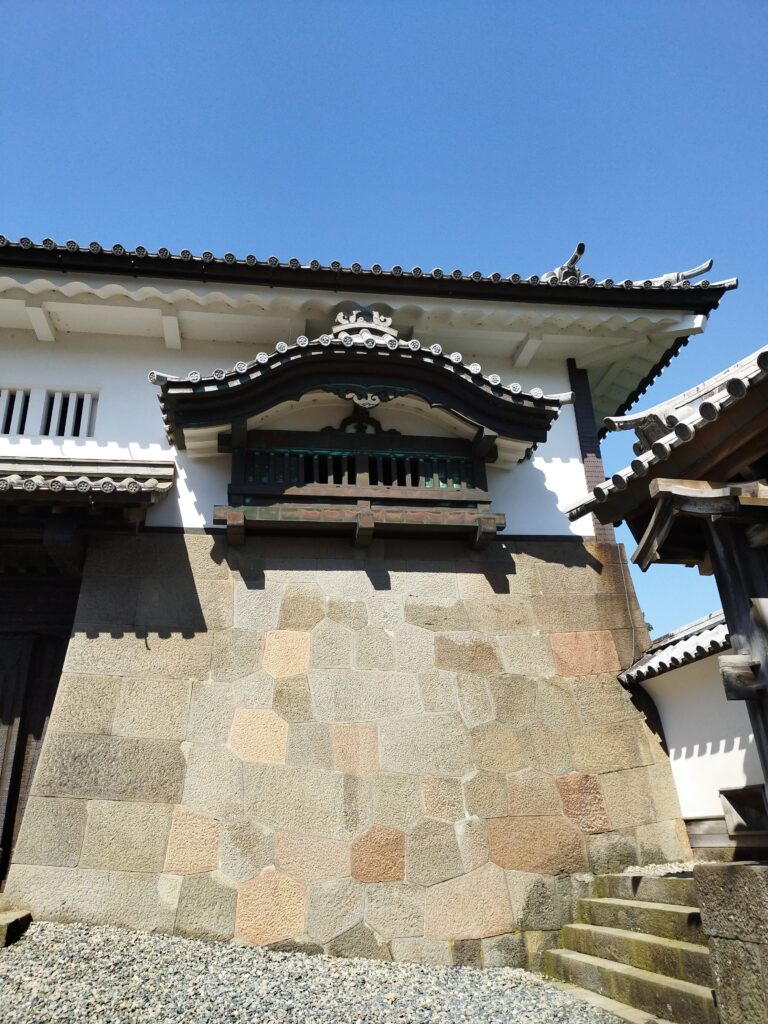
城内に沢山ありますが、最初に見る破風なので、石川門で質問されることがあります。前半(1-7)の真面目パートでは唐破風の特徴をカバーしています。後半(8-10)がいつものおふざけパートです。
1. This is a traditional Japanese architectural feature known as a karahafu. It can be seen not only on castles but also on temples, shrines, and other traditional buildings.
・これは唐破風と呼ばれる日本の伝統建築の意匠です。城だけでなく、寺社などの伝統建築にも見られます。
2. Strictly speaking, karahafu refers to this distinctive curved gable, not to the bay window itself.
・厳密には、唐破風とはこの独特の曲線を持つ破風のことで、出窓そのものを指す言葉ではありません。
3. A more conventional triangular gable is simply called a hafu. You can see this type of gable on many Japanese castles, too.
・もっと一般的な三角形の破風は、単に「破風」と呼ばれます。このタイプも日本の城でよく見られます。
4. Both designs can help shelter the space below from the rain, but the karahafu serves a purpose beyond its practical function.
・どちらも下の空間を雨から守る役割を果たすことがありますが、唐破風には実用面以外の意味もあります。
5. The word kara is associated with China, particularly the Tang dynasty, but the karahafu is a distinctive feature of Japanese architecture rather than simply a copy of a Chinese design.
・「唐」という言葉は中国、特に唐王朝を連想させますが、唐破風は中国建築を単純に模倣したものではなく、日本建築の特徴的な意匠です。
6. The karahafu was often used as a decorative feature to give a building a grand appearance and symbolize the lord’s authority and wealth.
・唐破風は建物を豪華に見せ、城主の権威や財力を象徴する装飾としてよく使われました。
7. Its shape is basically symmetrical when viewed from the front, although its three-dimensional appearance changes depending on the viewing angle. Intricate wood carvings can add even more decorative detail.
・正面から見ると基本的に左右対称ですが、見る角度によって立体的な見え方が変わります。さらに、精巧な木彫りを施して装飾性を高めることもあります。
8. Kanazawa Castle has no surviving main keep, so it may seem rather modest at first glance. But when you look at details like this, you can see how much money and effort went into its construction.
・金沢城には現存する天守がないため、第一印象では地味に感じられるかもしれません。しかし、このような細部を見ると、建築に多くのお金と手間がかけられたことが分かります。
9. The Maeda clan, one of the wealthiest daimyo families in Japan, had good reason to be wary of attracting the shogunate’s suspicion. Perhaps that’s why they might have avoided spending too conspicuously.
・日本でも屈指の財力を持っていた前田家は、幕府から警戒されないよう気を配る必要がありました。だから、あまり目立つお金の使い方を避けていたのかもしれません。
10. Come to think of it, truly wealthy people often spend money on the details rather than showing off. Unfortunately, I can’t afford either.
・考えてみれば、本当に裕福な人は、見栄を張るよりも、細かいところにお金を使います。残念ながら、私にはどちらも不可!
Glossary:用語集
karahafu ☛ 唐破風 / traditional Japanese architecture ☛ 日本の伝統建築 / architectural feature ☛ 建築様式・意匠 / castle ☛ 城 / temple ☛ 寺 / shrine ☛ 神社 / traditional building ☛ 伝統建築 / strictly speaking ☛ 厳密に言えば / refer to ☛ ~を指す / distinctive ☛ 独特の / curved gable ☛ 曲線を持つ破風 / bay window ☛ 出窓 / conventional ☛ 一般的な / triangular gable ☛ 三角破風 / hafu ☛ 破風 / shelter ☛ 守る / practical function ☛ 実用的な機能 / serve a purpose ☛ 役割を果たす / beyond ☛ ~を超えて / be associated with ☛ ~と関連づけられる / Tang dynasty ☛ 唐王朝 / distinctive feature ☛ 特徴的な要素 / architecture ☛ 建築 / copy ☛ 模倣 / decorative feature ☛ 装飾的要素 / grand appearance ☛ 壮麗な外観 / symbolize ☛ 象徴する / wealth ☛ 財力・富 / symmetrical ☛ 左右対称の / viewed from the front ☛ 正面から見ると / three-dimensional ☛ 立体的な / viewing angle ☛ 見る角度 / intricate ☛ 精巧な / wood carving ☛ 木彫り / decorative detail ☛ 装飾的な細部 / surviving main keep ☛ 現存天守 / modest ☛ 地味な / at first glance ☛ 一見すると / detail ☛ 細部 / effort ☛ 手間 / construction ☛ 建設・建築 / Maeda clan ☛ 前田家 / wealthiest daimyo families ☛ 屈指の大名家 / be wary of ☛ ~を警戒する / attract suspicion ☛ 疑いを招く / shogunate ☛ 幕府 / conspicuously ☛ 目立つように / come to think of it ☛ そういえば / truly wealthy people ☛ 本当の金持ち / spend money on ☛ ~にお金をかける / showing off ☛ 見栄を張ること / unfortunately ☛ 残念ながら / afford ☛ ~する余裕がある / either ☛ どちらも
Q4. ここに大学があったって本当?
”Is it true that there used to be a university here? ”
ネットや説明看板を見た海外ゲストから時々聞かれる質問です。前半(1-5)の真面目パートの内容は金沢大学があった経緯に関する雑談に使えます。後半(8-10)がいつものおふざけパートです。
1. Yes. For nearly half a century after the war, Kanazawa University was located here, and many students passed through this Ishikawa Gate on their way to class.
・はい。戦後、約半世紀にわたって金沢大学がここにあり、多くの学生が授業に向かうために、この石川門を通っていました。
2. At the time, it was famous as “a university inside a castle,” and students often referred to the campus as jōnai, meaning “inside the castle.”
・当時は「お城の中の大学」として有名で、学生たちはキャンパスを「城内」と呼んでいました。
3. Although the castle grounds may look vast, they proved too small to accommodate all the faculties of a growing comprehensive university.
・金沢城の敷地は広大に見えますが、発展する総合大学のすべての学部を収容するには手狭でした。
4. The university headquarters and several faculties, including Arts, Law and Economics, were located within the castle grounds, while Engineering and Medicine were based outside the castle.
・大学本部や文学部・法学部・経済学部などは城内に置かれ、工学部と医学部は城外にありました。
5. As student numbers grew and the university expanded its undergraduate and postgraduate programmes, the campus became increasingly cramped. The university completed its relocation to the suburbs by 1995.
・学生数が増え、学部や大学院が拡充されるにつれて、キャンパスはますます手狭になりました。そして1995年までに郊外への移転が完了しました。
6. In any case, Kanazawa University was famous for its unique location inside the castle. This unusual setting added to its appeal, and admission was highly competitive.
・いずれにしても、金沢大学は城の中にあるというユニークな立地で有名でした。この珍しい環境も人気の一因となり、入試の競争率も高かったのです。
7. For students and their families, passing the entrance exam and walking through the Ishikawa Gate must have been a source of great pride. They probably had something to boast about to their neighbours, too!
・受験に合格して石川門をくぐることは、学生本人だけでなく家族にとっても誇らしいことだったでしょう。ご近所にも自慢できたかもしれませんね!
8. However, as is often the case in any walk of life, one incident changed everything.
・しかし、どこの世界にもよくあることですが、ある出来事がすべてを変えました。
9. On the day the Kahoku Gate was restored as the castle’s main gate, a shocking truth came to light: the Ishikawa Gate had actually been the rear gate all along.
・河北門が金沢城の正門として復元された日、衝撃の事実が明らかになったのです。実は石川門は、ずっと裏門だったのでした。
10. You thought you’d entered through the main gate in all glory, but in reality, it was a back-door entry? Just kidding.
・堂々と正門から入学したと思っていたら、実は裏口入学だった? なーんちゃして。
Glossary:用語集
for nearly half a century ☛ およそ半世紀にわたって / on one’s way to class ☛ 授業へ向かう途中で / pass through ☛ 通り抜ける / university inside a castle ☛ 城の中の大学 / refer to A as B ☛ AをBと呼ぶ / jōnai ☛ 城内 / castle grounds ☛ 城の敷地 / vast ☛ 広大な / prove to be ☛ ~であることが分かる / accommodate ☛ 収容する / faculty ☛ 学部 / growing ☛ 発展する・拡大する / comprehensive university ☛ 総合大学 / university headquarters ☛ 大学本部 / Arts ☛ 文学部 / Law ☛ 法学部 / Economics ☛ 経済学部 / Engineering ☛ 工学部 / Medicine ☛ 医学部 / be based in ☛ ~に置かれる / undergraduate programme ☛ 学部課程 / postgraduate programme ☛ 大学院課程 / increasingly ☛ ますます / cramped ☛ 手狭な / relocation ☛ 移転 / suburb ☛ 郊外 / unique location ☛ ユニークな立地 / unusual setting ☛ 珍しい環境 / add to ☛ ~を高める / appeal ☛ 魅力 / admission ☛ 入学・入学許可 / highly competitive ☛ 競争率が高い / entrance exam ☛ 入学試験 / a source of great pride ☛ 大きな誇りの源 / boast about ☛ ~を自慢する / neighbour ☛ 近所の人 / as is often the case ☛ よくあることだが / in any walk of life ☛ どんな世界でも / incident ☛ 出来事 / change everything ☛ すべてを変える / come to light ☛ 明らかになる / shocking truth ☛ 衝撃的な事実 / restore ☛ 復元する / main gate ☛ 正門 / rear gate ☛ 裏門 / all along ☛ ずっと・実は最初から / in all glory ☛ 堂々と・誇らしげに / in reality ☛ 実際には / back-door entry ☛ 裏口入学・裏口経由 / just kidding ☛ 冗談ですよ
石川門の解説はお楽しみいただけましたか?
他のスポット(河北門、菱櫓など)の解説へ移動する際は、冒頭の緑色ナビゲーションボタンをご活用ください!