 源氏(Genji)
皆さん、こんにちは!Genjiです。二の丸御殿へと通じる最も格式の高い門であり、城内最大の枡形(ますがた)空間を誇る『橋爪門(Hashizume Gate)』の英語案内ページへようこそ!
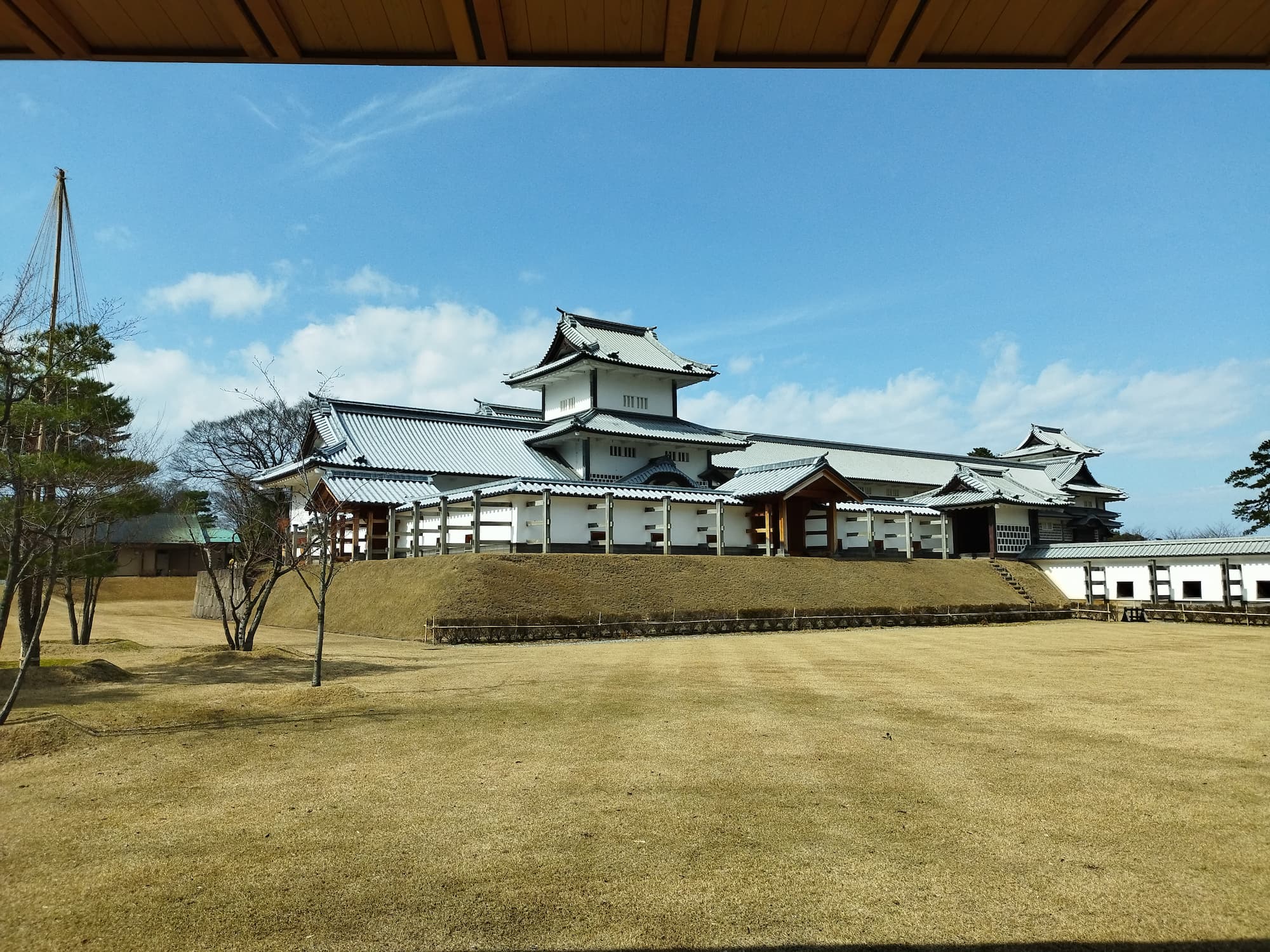
三の丸広場から橋爪橋を渡って二の丸へ入る要衝「橋爪門」。一の門(表門)、二の門(櫓門)、そして見張りの橋爪門続櫓(つづきやぐら)で囲まれた桝形構造は、金沢城の中で最も強固で厳しいセキュリティを誇った場所です。
現場でサッと使える短文フレーズから、二の丸正門としての格調高い建築様式、ゲストをクスッと笑わせる裏話まで網羅しました。目的の項目ボタンからご自由にご活用ください。

最上格の城門@橋爪門
📍 Quick Navigation: 各章へジャンプ
8. 橋爪門
“Hashizume-mon”
ここでは橋爪門をカバーします。用途に合わせて以下のボタンから直接アクセスできます。
8.1 基本情報(3項目)— 橋爪門
橋爪門の歴史的な格式、警備機能、および二の丸御殿との関係についての基本概要です。
Set 1: Historical Role / 歴史的な役割
EN: The Most Prestigious Gate in Kanazawa Castle
Hashizume-mon was the main gate to the Ninomaru, where the feudal lord’s palace was located. As the final gateway to the palace, it was considered the most prestigious gate in Kanazawa Castle, and access through it was strictly controlled.
JP: 金沢城で最も格式の高い門
橋爪門は、藩主の御殿があった二の丸の正門でした。御殿へ至る最後の門であったことから、金沢城内で最も格式の高い門とされ、通行も厳しく制限されていました。
Set 2: Security / 警備機能
EN: A Guard Station Inside the Gate
A guard station was located on the ground floor of the inner gate. It served as a critical checkpoint for monitoring people entering the lord’s private and administrative domain.
JP: 門の内部に設けられた番所
橋爪門の二の門の1階には番所が設けられていました。藩主の御殿へ至る重要な入口として、門を通る人々を監視する役割を担っていました。
Set 3: Flooring / 床の特徴
EN: Stone Flooring Reflecting the Gate’s Prestige
The floor of the inner gate is paved with Tomuro stone, laid in the same pattern as the stone paving in front of the Ninomaru Palace. This distinctive feature reflects the high status of Hashizume-mon as the main entrance to the lord’s palace.
JP: 門の格式を示す床石
橋爪門の二の門の床には、戸室石が敷かれています。その敷き方は二の丸御殿の玄関前と同じで、藩主の御殿の正門にふさわしい格式を示しています。
8.2 口頭説明(3項目)— 橋爪門
現地案内中に歩きながら短く簡潔に伝えられる口頭用フレーズです。
Set 1: Main Entrance to the Palace / 御殿への正門
EN
This was the entrance to the lord’s palace. Because of its importance, it had the highest status in the castle, and entry was strictly regulated.
JP
ここは藩主の御殿へと続く正門でした。最も重要な門だったため、城内で最高の格式を誇り、通行規制も大変厳格でした。
Set 2: Watchful Eye / 24時間体制の監視
EN
Inside the gate, there was a guardhouse where guards stayed on duty 24/7 to check anyone entering the palace grounds.
JP
門の内側には番所があり、御殿へ向かう人々を昼夜を問わず24時間体制で厳しく監視していました。
Set 3: Palace-Style Paving / 御殿同等の石畳
EN
Notice the stone floor under your feet? It’s paved in the exact same luxury style as the palace entrance, showing just how special this gate was.
JP
足元の石畳にご注目ください。実は御殿の玄関前とまったく同じ高級な工法で敷かれており、この門の特別な格式の高さを表しています。
8.3 笑いが取れるかも?
一目みて素朴に思うであろう想定疑問への説明例として、基本的に前半部は説明にも使える真面目パート、後半部は雑談力UPのためのクスッと笑えるパートの2部構成になっています。
Q1.この門はこれまでの門と何がちがうのですか?
“What is the difference between this gate and the previous two gates?”
👉石川門以上に防御力と格式が意識されていますので、その辺りはしっかり伝えたいですね。
- Hashizume-mon was the main gate to the Ninomaru, where the feudal lord’s palace stood. It had a particularly high status and several distinctive features.
- 橋爪門は、藩主の御殿があった二の丸の正門でした。特に格式が高く、いくつかの際立った特徴があります。
- Like the other two gates, it has a masugata layout, but its defensive enclosure is the largest of the three. It also had a guard station inside the inner gate.
- 他の二つの門と同じく枡形構造ですが、防御用の空間は三御門の中で最大です。また、内側の門の内部には番所も設けられていました。
- Another distinctive feature is the stone flooring inside the inner gate, made of Tomuro-ishi, a local stone quarried in the nearby mountains.
- もう一つの特徴は、二の門の内部に敷かれた床石です。近くの山で採掘された地元の石、戸室石が使われています。
- Tomuro-ishi comes in two varieties, reddish-grey and bluish-grey, and its quarrying and use were controlled by the Kaga Domain.
- 戸室石には赤みがかった灰色と青みがかった灰色の2種類があり、採掘や使用は加賀藩によって管理されていました。
- The stone was also used for the castle’s stone walls, where the two colours create a distinctive appearance.
- この石は金沢城の石垣にも使われており、2種類の色が独特の景観を生み出しています。
- At Hashizume-mon, the paving stones are laid in the same pattern as those in front of the Ninomaru Palace, reflecting the gate’s high status.
- 橋爪門の床石は、二の丸御殿の玄関前と同じ様式で敷かれており、門の格式の高さを表しています。
- Unfortunately, although many people pass through this gate every day, most are so captivated by its heavy doors and timber framework that they hardly notice the stone flooring.
- 残念ながら、毎日多くの人がこの門を通りますが、重厚な扉や木組みに目を奪われ、床石にはほとんど気づきません。
- I used to point it out from time to time, but I’ve gradually stopped mentioning it.
- 私も以前は時々紹介していましたが、最近はだんだん説明しなくなりました。
- You see, some overseas visitors are already tired of having to take their shoes off at one exhibition hall after another. They often say, “If I have to take my shoes off one more time, that’s it!”
- というのも、海外からのお客様の中には、あちこちの展示施設で靴を脱ぐことに、すでにうんざりしている人もいるからです。「また靴を脱がなきゃいけないなら、もう結構!」とよくおっしゃいます。
- So if I tell them that these paving stones are as prestigious as those in front of the lord’s palace, they might well say, “Wait a minute! Do I have to take my shoes off here, too? In that case, I’m going home!”
- そこで、床石が藩主の御殿の玄関前と同じくらい格式の高いものだと説明したら、こう言われかねません。「ちょっと待って! ここでも靴を脱がなきゃいけないの? それなら帰る!」
Q2. この穴/狭間(さま)は何ですか?(何のために?)
“What are these holes /sama (for)?”
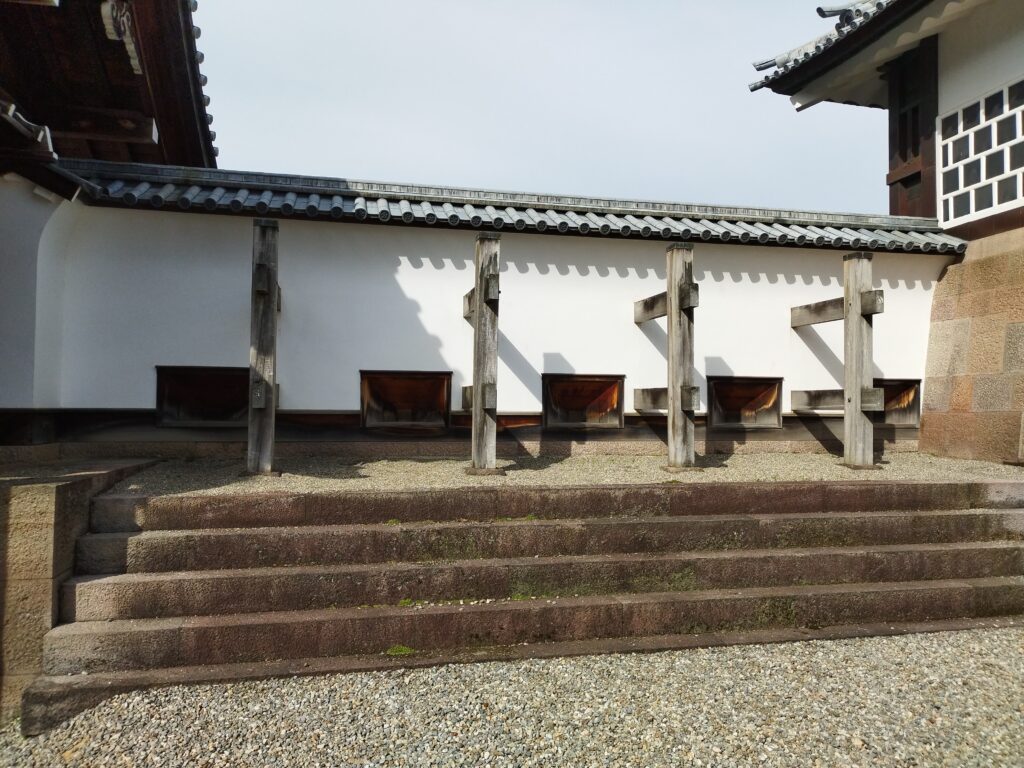
- These openings are known as ‘samā’ (loopholes), which were installed in various locations within Japanese castles for defensive purposes.
- その穴は日本の城の様々な場所に防御の為に設置されている狭間(さま)です。
- They were typically built into castle walls or ramparts and used to attack enemies with bows and arrows or firearms.
- 通常は城の壁や塀などに設けられ弓矢や鉄砲で敵を攻撃するために使われます。
- The ‘yazama’ (arrow slit) is generally elongated and rectangular in shape, and was primarily designed for firing arrows.
- 矢狭間(やざま)は縦長の長方形が基本形で、主に弓矢を射るために設けられました。
- Consequently, vertical space is provided to allow the archer to draw their bow and shoot.
- その為、弓を構えて射るための縦方向の空間が確保されています。
- The ‘teppōzama’ (musket slit) is an opening designed for aiming and firing matchlock guns, and comes in various shapes, such as circular, triangular and square.
- 鉄砲狭間(てっぽうざま)は火縄銃を構えて射撃するための開口部で、円形、三角形、正方形など、さまざまな形があります。
- Although the loopholes in the Hashizume Gate appear to be arrow slits in shape, they are not distinguished solely by their shape.
- 橋爪門の狭間は形状的には矢狭間に見えますが、形状だけで区別されるわけではありません。
- As you can see, the outer side of the loopholes is narrow whilst the inner side is wide, thereby enhancing their defensive capabilities.
- ご覧の様に、狭間の外側は狭く内側は広くして、防御力を高めています。
- Here, we have restored a mechanism known as a ‘hidden loophole’ (kakushi-zama), which is covered by the surface of the wall so that the loophole cannot be seen from the outside in peacetime.
- ここでは隠し狭間(かくしざま)と言って 平時には外から狭間が見えないよう、壁の表面で覆った仕掛けを復元しています。
- After explaining this feature to overseas guests time and time again, I sometimes worry they might start to see Japanese people as a little too cunning.
- この仕掛けを海外ゲストに何度も説明していると、日本人はちょっとずる賢すぎると思われないか、と心配になることがあります。
- “Watch out in Japan! Walls have ears—and some even have traps!”
- 「日本では気をつけて! 壁には耳があるし、罠まで仕掛けられていることもあるんです!」
橋爪門の解説はお楽しみいただけましたか?
他のスポット(二ノ丸御殿、玉泉院丸庭園など)の解説へ移動する際は、冒頭の緑色ナビゲーションボタンをご活用ください!