静かな空間へようこそ!虎徹です。このブログでは、商談や観光の合間に、海外ゲストから「禅で有名な鈴木大拙館に行ってみたい!」と急にリクエストされた場面を想定して、現場で『すぐに使える英語表現』を紹介しています。
AIの公式情報だけでは得られない、現場でしか聞けない『真面目な解説』と『クスッと笑える裏話』を用意しました。目次やダイレクトボタンから必要に合わせて活用してください。最後まで私がナビゲートします。
🧭 現場で直行!エリア・ストーリー別クイックジャンプ
0. 本ブログの全体ガイド 🌲
このブログは大きく分けて3つのステップ(基本用語・即答術・基本情報)+ スポット別Q&Aで構成しています。
🔰 【Step 1】押さえておきたい基本用語(1.1)
まずは説明の負荷を下げるために、禅哲学の基本用語および鈴木大拙・谷口吉生両氏の代表的な形容表現を整理してご紹介します。
🧭 【Step 2】そもそも鈴木大拙館ってどんな場所?「三段構え」即答術(1.2)
「どんな展示があるの?」という質問にパッと答えられるよう、お相手のレベルや時間に合わせて3段階(かいつまんで・簡略化・一言)で即答フレーズを用意しました。
💡 【Step 3】最低限押さえておきたい基本情報(1.3)
現地到着前の事前レクチャーや、全体のツアー構成の把握に使える10の重要ポイント(日英対比)です。
💬 【Step 4】インバウンドの視点!笑いが取れるかも?(スポット別Q&A)
現地で自然と湧き上がる疑問(入館ガイドライン、名前の由来、廊下のくぼみ、○△□の掛け軸、水鏡など)に答えるショートストーリーです。真面目な解説パートと、おふざけパートの2部構成になっています。
1.1 押さえておきたい基本用語
👉 本館案内の大前提となる基本用語です。ガイド中の重複や聞き手の負荷を減らすため、本文中では「大拙」「谷口氏」とシンプルに表現していますが、ゲストの関心度に合わせて以下の形容表現を適宜補ってご活用ください。
🌱 1.1.A 禅哲学に関する基本用語(必修10選)
👉 鈴木大拙館の解説で必ず登場する、禅と思想に関する核心キーワード10選です。
- 仏教哲学者 ☛ Buddhist philosopher
- 禅思想 ☛ Zen philosophy
- 瞑想 / 思索 ☛ contemplation / meditation
- 無(無の境地) ☛ nothingness / absolute nothingness
- あるがまま(自然体) ☛ ‘No mending, just being’ / as it is
- 悟り ☛ enlightenment / awakening
- 禅問答(公案) ☛ Zen question and answer / koan
- 霊性(日本の精神性) ☛ spirituality / Japanese spirituality
- 東洋と西洋の融合 ☛ bridging East and West / fusion of Eastern and Western thought
- 静謐(せいひつ)な空間 ☛ serene space / tranquil environment
🧘 1.1.B 鈴木大拙の主な形容表現
👉 鈴木大拙の世界的功績や人間性を一言で称える際のバリエーションです。
- 高名な哲学者 ☛ a renowned philosopher
- 世界的な仏教哲学者 ☛ a world-renowned Buddhist philosopher
- 世界的に著名な禅学者 ☛ a world-renowned Zen scholar
- 傑出した仏教学者 ☛ an eminent Buddhist scholar
- 国際的な仏教思想家 ☛ an international Buddhist thinker
- 禅の世界的権威 ☛ a world authority on Zen
- 日本の精神性を世界に紹介した人物 ☛ a figure who introduced Japanese spirituality to the world
- 東洋と西洋の懸け橋となった哲学者 ☛ a philosopher who bridged East and West
- 比較思想研究の先駆者 ☛ a pioneer in comparative thought studies
- 鈴木大拙哲学 ☛ the philosophy of D.T. Suzuki
🏛️ 1.1.C 建築家(谷口吉生)の主な形容表現
👉 鈴木大拙館のミニマリズム建築を手掛けた谷口吉生氏を称える表現です。
- 著名な建築家 ☛ a renowned architect
- 世界的に著名な現代建築家 ☛ a world-renowned modern architect
- 国際的な評価の高い建築家 ☛ an internationally acclaimed architect
- 建築界の重鎮 ☛ a leading figure in the architectural world
- モダニズム建築の巨匠 ☛ a master of modernist architecture
- 日本の美意識を体現する建築家 ☛ an architect embodying Japanese aesthetics
- 静謐な空間を創造する建築家 ☛ an architect who creates serene spaces
- ミニマリズムの追求者 ☛ a pursuer of minimalism
- 美術館建築の第一人者 ☛ a leading figure in museum architecture
- 空間の詩人 ☛ a poet of architectural space
1.2 そもそも鈴木大拙館ってどんな場所?「三段構え」即答術
入館前や移動中にゲストから「ここはどんな美術館なの?」と聞かれた際、お相手の知識レベルや残された時間に合わせて即答できる3段階のフレーズ集です。日本語→英語の順で整理しています。
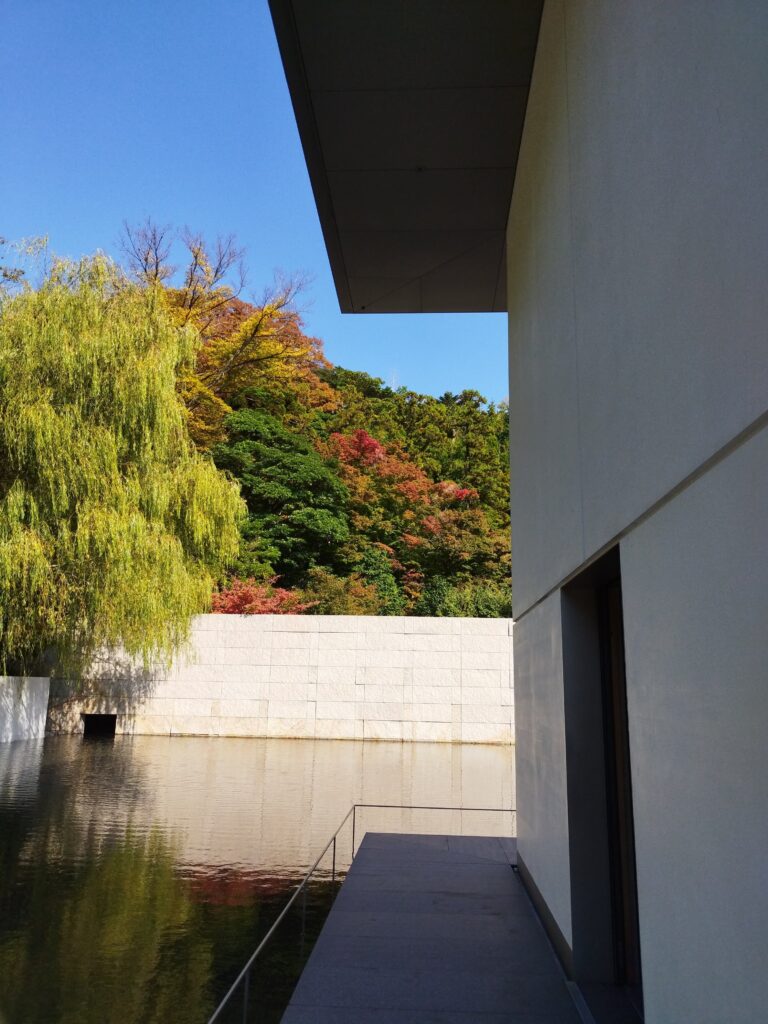
1.2.A かいつまんで言うなら(標準的インバウンド向け4例)
👉 建築と思想の融合、ミニマリズムという核心をしっかり伝えたい場合の標準的な解説です。
- 当館は、最小限の展示を通して、鈴木大拙の禅哲学を最大限に伝えようと努めています。
☛ The museum endeavors to convey his Zen philosophy as fully as possible through a minimalist approach to exhibits. - 建物は、彼の生誕地からインスピレーションを得て、この偉大な禅思想家を育んだ静かで瞑想的な環境を表現し、哲学的な雰囲気を見事に作り出しています。
☛ The building successfully creates a philosophical atmosphere, drawing inspiration from his birthplace and the quiet, contemplative environment that nurtured this great Zen philosopher. - 約10年前に建てられたこの美術館は、世界的に著名な建築家と禅思想家が、共にシンプルさとミニマリズムへの深い共感を共有していたことから生まれた、歴史的に重要な融合を体現しています。
☛ This museum, created about ten years ago, represents a historically significant fusion by a globally renowned architect for this Zen philosopher, both of whom shared a profound appreciation for simplicity and minimalism. - このユニークな美術館は、鈴木大拙が禅において目指した無の境地をまさに体現するかのように、彼のとらえどころのない「無」という概念を具体的な建築で表現しています。
☛ This unique museum embodies his intangible concept of ‘nothingness’ through tangible architecture, perfectly reflecting his Zen pursuit of that very state.
1.2.B もっと簡略化するなら(英語が第二言語・初心者向け3例)
👉 難解な歴史・建築用語を削り、「見るのではなく体験する空間」であることをストレートに伝えるスッキリ表現です。
- この美術館は、多くの物を展示するのではなく、むしろ禅寺のように、来館者が瞑想するための空間を提供しています。
☛ This museum doesn’t display many objects. Instead, it offers a space for visitors to meditate, much like a Zen temple. - 鈴木大拙について多くの事実を知りたいと思っている方は、もしかしたら物足りなさを感じるかもしれません。しかし、彼の核となる「無」の思想を、最小限の展示を通して直接体験できるでしょう。
☛ Visitors hoping to learn many facts about him might be disappointed. However, they may experience his core idea of ‘nothingness’ directly through the minimal displays. - この美術館は、あなた自身の内なる価値を考察する機会を与えてくれます。深く意義深いと感じるかもしれませんし、そうでないと感じるかもしれませんが、それは個人的な発見となります。
☛ This museum invites you to reflect on its value. You might find the experience deeply meaningful, or perhaps less so, which can be a personal discovery.
1.2.C 一言で済ませるなら(多忙なゲスト・米国人向け2例)
👉 移動中や、ワンフレーズで印象を残したい場面で使える短文表現です。
- この補強されたコンクリートの建物は、通常の美術館というよりも一種の禅寺のようなもので、禅に関心のある方には必見です。
☛ More like a Zen temple than a typical museum, this reinforced concrete building is a must-visit for Zen enthusiasts. - 一見するとシンプルなこの美術館は、彼の禅における理想である「無」を見事に表現しています。
☛ This simple-looking museum beautifully expresses his Zen ideal of ‘nothingness’.
1.3 最低限押さえておきたい基本情報
個々のスポットをご案内する前に、鈴木大拙館に関して最低限押さえておきたい10の基本情報を整理しました。現地到着前の事前レクチャーや、全体のツアー構成の把握にご活用ください。
《日本語&英語 対比10選》
- 世界的な禅研究者の顕彰施設: 金沢出身で、日本の「禅(Zen)」や仏教精神を世界に広めた第一人者・鈴木大拙の業績と思想を伝える施設である。
☛ Honoring a Global Zen Scholar: Dedicated to the life and philosophy of D.T. Suzuki, a Kanazawa native who pioneered the introduction of Zen and Japanese spirituality to the Western world. - 巨匠・谷口吉生による建築デザイン: ニューヨーク近代美術館(MoMA)の新館なども手掛けた世界的な建築家・谷口吉生氏による、極限まで削ぎ落とされたモダニズム建築である。
☛ Masterpiece by Yoshio Taniguchi: Designed by the world-renowned architect behind MoMA’s expansion, showcasing a streamlined, minimalist modernist structure. - 「見る」のではなく「考える」空間: 一般的な美術館のような大量の展示物はなく、静かに自分自身と向き合い思索を深めるための特別な空間設計がなされている。
☛ A Space for Reflection over Viewing: Unlike conventional museums with dense exhibits, it offers an intentional environment for quiet meditation and self-reflection. - 「3つの玄関」と「3つの庭」の構成: 敷地内は「玄関棟」「展示棟」「思索空間棟」の3つの回廊と、「玄関の庭」「水鏡の庭」「露地の庭」から立体的に構成されている。
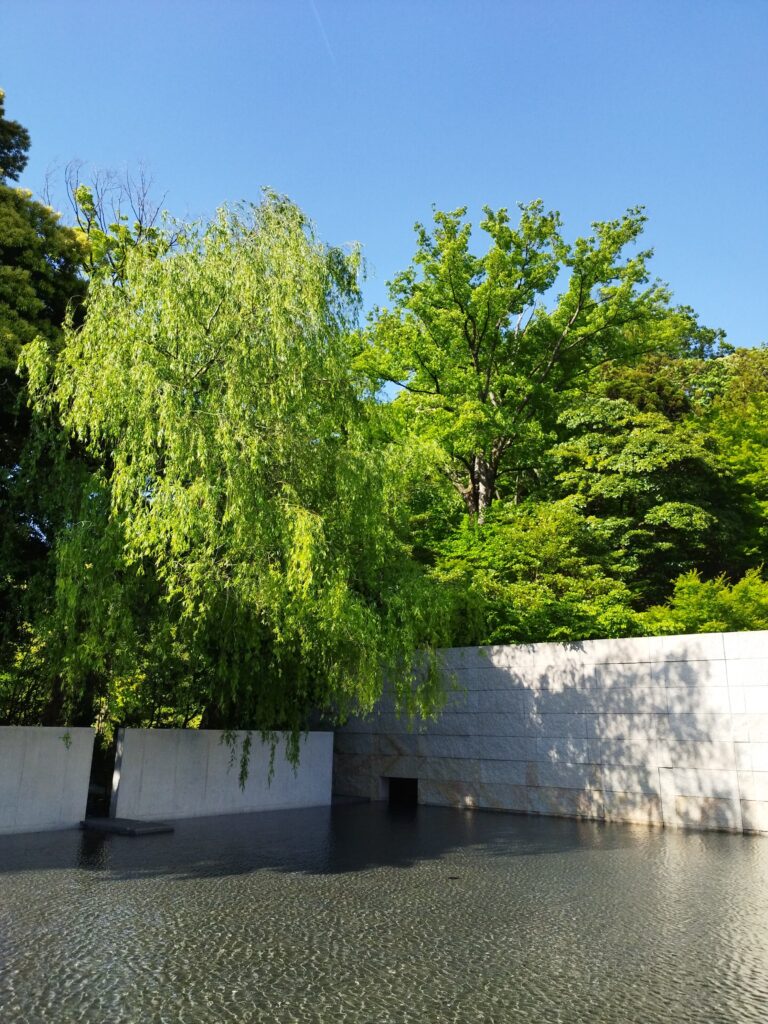
☛ Three Wings and Three Gardens: The spatial design seamlessly connects three wings (Entrance, Exhibition, Contemplative) with three distinct garden areas. - シンボルとなる「水鏡の庭」: 四方を浅い水盤で満たした広大な庭園で、水面に映る四季折々の風景や静かな波紋が「無」の境地を象徴している。
☛ The Iconic Water Mirror Garden: A expansive shallow pool that reflects surrounding foliage and sky, symbolizing the Zen concept of ‘nothingness’ through ripples and stillness. - 静寂の中に浮かぶ「思索空間」: 水鏡の庭の上にポツンと浮かぶように建てられた立方体の小部屋で、座って静かに水面を眺めながら瞑想することができる。
☛ The Floating Contemplative Space: A cubic structure positioned over the water mirror, offering a peaceful sanctuary to sit and contemplate the water’s surface. - 緑豊かな本多の森との調和: 加賀藩重臣・本多家の裏山(金沢の豊かな自然)を自然の借景として取り入れ、建築と自然が一体となった美しい景観を創出している。
☛ Harmonizing with Honda Forest: Incorporates the lush, historic Honda Forest as ‘borrowed scenery,’ blending refined architecture naturally into its environment. - 禅のモチーフ「○△□」の意匠: 禅画に描かれる○△□の図形が、建物の影、屋根の直線、角の構造など、建築全体の幾何学的な要素として密かに散りばめられている。
☛ The ○△□ Zen Motif: Geometric shapes representing the Zen cosmos are subtly embedded throughout the architecture’s lines, corners, and light patterns. - 大拙生誕の地近郊という歴史的文脈: 鈴木大拙が生まれ育った金沢市本多町の静かな環境に位置し、彼の幼少期の原風景を感じ取ることができる。
☛ Historical Context near His Birthplace: Situated in Honda-machi near his actual birthplace, evoking the peaceful environment that nurtured young Suzuki. - 撮影制限とマインドフルネスの実践: 展示エリアや静寂を保つべき空間では撮影が制限されており、レンズ越しではなく「今この瞬間」を肌で体感する工夫がなされている。
☛ Mindfulness and Photo Restrictions: Photography is restricted in specified spaces to encourage guests to disconnect from devices and fully engage ‘in the moment.’
2.インバウンドの視点!笑いが取れるかも?(スポット別Q&A)
ここからは、館内を歩きながら各スポットを目の前にした際、海外ゲストから自然と湧き上がる疑問や好奇心を想定したショートストーリー集です。ガイドでそのまま説明に使える「真面目パート」と、雑談力upの為の「おふざけパート」の2部構成になっています。
Q0. 入館時:ここではどんなものが見られますか?(ガイドラインネタ)
“What kind of things can we see at this museum?”
👉 入館時の注意書きや「写真撮影の制限」を逆手にとり、現代人の「スマホ依存・シャッター中毒」を風刺しながら禅の精神(今、この瞬間に集中する)へと繋げる掴みトークです。前半(1〜6)が説明に使える真面目パート、後半(7〜10)が雑談用のおふざけパートです。
- The museum displays Suzuki’s personal writings and photographs, but the exhibition itself isn’t particularly extensive.
(当館では鈴木大拙ゆかりの書や写真を展示していますが、展示物そのものはそれほど多くありません。) - Since he wasn’t a visual artist, this isn’t a place where you simply come to look at things for passive enjoyment.
(彼は視覚芸術家(美術家)ではないため、ここはただ受動的に作品を見て楽しむような場所ではないのです。) - As he was a Buddhist philosopher, the museum features a unique concept designed to encourage visitors to reflect on his spiritual perspective.
(仏教哲学者であった彼の精神的な世界観に思いを馳せていただくため、当館は非常にユニークなコンセプトで創られています。) - Therefore, there are some unique entry guidelines that differ from standard notices at typical art museums, which I’d like to explain to you in advance.
(そのため、一般的な美術館の注意事項とは少し異なる独自の入館ルールがありますので、あらかじめご説明しておきますね。) - First, since this museum is a space for contemplation and learning, please view the exhibits as quietly as possible.
(まず、当館は思索と学びのための空間ですので、館内ではできる限りお静かにご鑑賞ください。) - We hope your time here will serve as a quiet catalyst for new personal discoveries.
(ここでの時間が、皆さんにとって新しい自分なりの気づきを得る静かなきっかけとなれば幸いです。) - We also ask that you refrain from taking photographs in certain areas—and there’s a reason for this that you won’t find in official guidebooks.
(また、一部のエリアでは写真撮影をご遠慮いただいておりますが、それには公式ガイドブックには載っていない理由があるのです。) - Of course, camera shutter sounds can disturb those lost in thought… but there may actually be another, hidden Zen reason.
(もちろん、シャッター音が思索にふける方の邪魔になるから……でもありますが、実はその裏に隠された「禅的な理由」があるのかもしれません。) - As mentioned, this is a place to experience the spirit of Zen firsthand, rather than just being taught about it.
(お伝えした通り、ここは禅の精神について「教わる」のではなく、自ら「体感する」場所だからです。) - For modern travelers who feel compelled to photograph everything, the real challenge is overcoming your “shutter-addiction”—and learning to put down the camera to truly “be in the moment.”
(何でもカメラに収めずにはいられない現代の旅行者にとって、真の試練は「シャッター中毒」を克服し、カメラを置いて「今、この瞬間」に集中することなのです。)
Q1 名前 のD.T. Suzukiはどういう意味ですか?
“What does the name D.T. Suzuki mean?”
👉 入館時に限りませんが、案内中にD.T. Suzukiの名前の意味を聞かれることがありますので、それを想定したネタです。前半(1〜5)が説明に使える真面目パート、後半(6〜10)がおふざけパートです。👄本パートの英語表現習得用音声ツールはこちらへ!
- His real name is “Suzuki” as a family name and his first name is “Teitaro”.
(彼の本名はファミリーネームが「鈴木」、ファーストネームが「貞太郎」と言います。) - He has the added Dharma name “Dai-setz,” which is given to a top-class Buddhist layman, and is said to have been named by his Buddhist mentor.
(彼には「大拙」という、トップクラスの仏教信徒に付けられる法名が加わっていて、彼の仏教の師匠が名付けたと言われています。) - The literal meaning of “Dai-setz” is “very unskilled,” but his mentor’s intention was “No mending, just being”.
(「大拙」の文字通りの意味は「とても拙い」(very unskilled)ですが、彼の師匠の意図は「繕わない」(No mending, just being).) - In other words, he was said to mean “very skillful” with this Dharma name.
(つまり「とても巧い」(very skillful)の意味を込めたそうです。) - Therefore, in English, it is called “Daisetz Teitaro Suzuki,” or “D.T. Suzuki” for short.
(なので、英語では〈Daisetz Teitaro Suzuki〉、略してD.T. Suzuki と呼ばれています。) - But if you don’t pronounce it well, it can sound like Diety Suzuki (God! Suzuki).
(でも、発音が良くないと、Diety Suzuki (神様!鈴木)に聞こえてしまうことがあります。) - Because of the spiritual significance with which he enlightened the world about Zen, some may mistakenly assume ‘Deity Suzuki’ as his correct name.
(彼の禅を世界に啓蒙した精神性の高さから、Diety Suzuki が正しい名前と勘違いしている人もいるかもしれません。) - Come to think of it, sometimes we see people bowing as they enter the D.T. Suzuki Museum, so for them, this building may be akin to a shrine dedicated to him.
(そういえば、たまにお辞儀をして本館に入る人も見たりしますので、その人にとって、この鈴木大拙館は、彼を祭る神社のようなものかもしれません。) - However, as a Buddhist philosopher, he might be displeased in the afterlife at being treated as a shrine and seeing visitors bending their heads when entering his museum.
(打破、仏教哲学者の彼にしてみれば、神社扱いされて, 来場者が頭を下げて彼の美術館に中に入るのを見てあの世で怒っているかも。) - Before his death, he often used to say that “No mending, just being”, so perhaps he would be displeased, saying, ‘No bending, just seeing’?
(生前、全ては「あるがまま、ただ在るだけ」(No mending, just being)とよく言ってたので、もしかしたら「曲げない、見るだけにしろ」(No bending, just seeing)って怒りですかネ?)
Q2 この三角のくぼみは何のためにあるのですか?
“What is the purpose of this triangular alcove?”
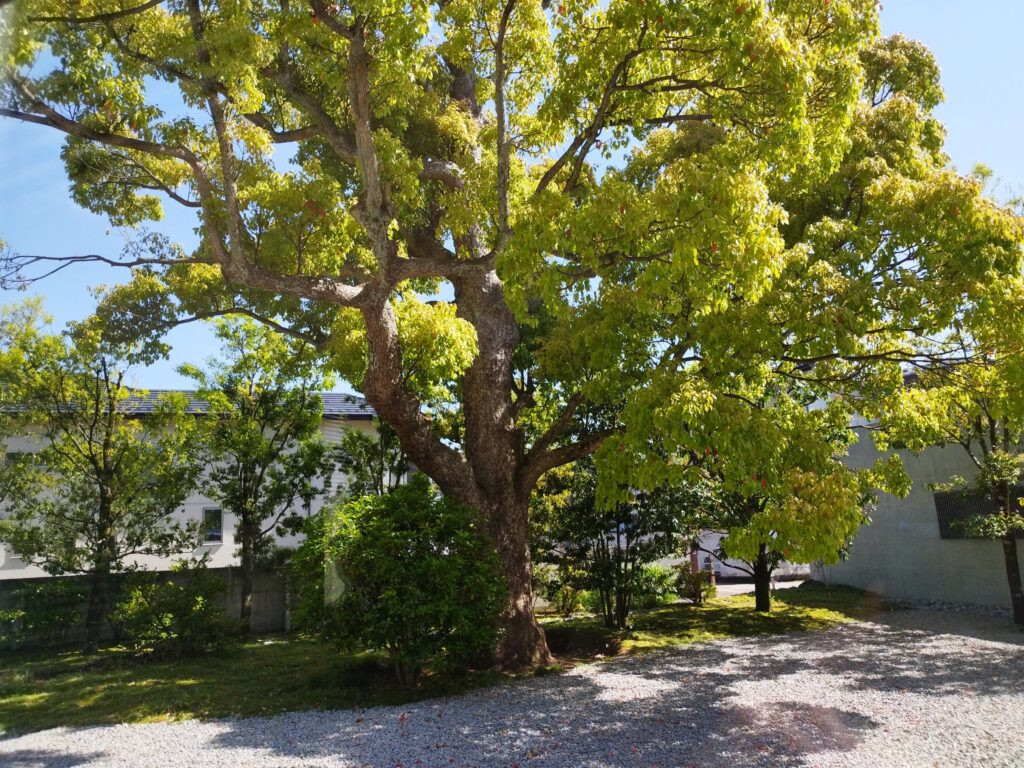
👉 入場すると、真っ直ぐの通路の半ばに意図的に作られた三角の出っ張り箇所がありますので、それをネタに、楠や他の木に係る英語表現を織り込んでみました。前半の真面目パート(1〜7)と後半のおふざけパート(8〜13)で話者とトーンが変わります。
- This alcove was made to appreciate the garden in front of you and especially that camphor tree.
(このくぼみは、眼の前の庭と、指して特にあのくすのきを鑑賞するために作られました。) - Surprisingly, that camphor tree was already there when D.T. Suzuki was a child, and it is said that he grew up looking at it.
(驚いたことにあの楠の木は鈴木大拙が子供の頃から既にあったもので、彼はこの木を見ながら育ったそうです。) - Camphor trees were also planted artificially and cherished since ancient times because people can extract camphor, which is used as medicine.
(楠の木は防虫剤や薬として使われるショウノウが抽出できる為、古来より人工的にも植えられて大切にされました。) - Camphor, used as a drug, was specifically injected to stimulate the heart and increase blood pressure.
(薬のカンフル剤として、心臓を刺激して血圧を上げるために注射されました。) - It’s intriguing to imagine that the young Suzuki may have drawn inspiration from this tree, using Zen as a mental camphor for weary modern individuals.
(もしかして鈴木少年がこの木に刺激を受けて、疲れた現代人に禅で心のカンフル剤を打ったのではと想像すると面白いですね。) - Above all, extracting camphor medicine from camphor wood include a distillation process, which requires a great deal of time and patience.
(何より楠木からカンフル剤を抽出するには蒸留工程も必要で大変な手間と忍耐が必要です。) - Maybe the patience with which he spread Zen worldwide was also influenced by that camphor tree.
(彼が禅を世界に広めた忍耐力もその楠木から自然と身についたのかもしれませんね。) - Come to think of it, not only D.T. Suzuki but every person’s personality is, to some extent, influenced by the trees they grew up looking at in childhood.
(考えてみると、鈴木大拙だけでなく、人の性格は幼少期にどんな木を見て育ったかによって、ある程度影響を受けると言えるかもしれません。) - For example, a close friend of mine had a persimmon tree and a fig tree in his garden when he was young. He always had a tendency to seek immediate and effortless rewards.
(例えば、私の親しい友人の庭には、子供の頃に柿の木とイチジクの木がありました。彼はいつも簡単にすぐに美味しい結果を得ようとする傾向がありました。) - Perhaps because he could simply pluck the fruit whenever he wanted, enjoying its delicious taste with no effort or patience?
(もしかすると、それは食べたいと思った時に、何の手間もかけずにすぐに果実をもぎ取って味わうことができたからなのかもしれません。) - If trees do shape our early tendencies, maybe his easy access to persimmons and figs set him up to expect life’s rewards to be equally effortless!
(幼少期の木々が人に影響を与えるのだとしたら、彼の柿とイチジクの木の経験が「人生の報酬も楽に手に入るものだ」と思わせた可能性もあるかもしれませんね。) - As the concept of forest bathing suggests, trees don’t just affect childhood development—they also influence the people who view them.
(また、「森林浴」が示すように、木々は子供の成長だけでなく、それを眺める人々にも影響を与えるものです。) - That’s why, when I guide guests, I always make sure to explain this camphor tree—so they can cultivate a little more patience during my ‘incredibly fascinating yet surprisingly long’ tour!
(だからこそ、私はガイドをする際に、この楠について必ず説明するようにしています。そうすれば、ゲストの皆さんも、私の素晴らしくも驚くほど長いツアーに少し忍耐力を養えるかもしれませんので。)
Q3 この掛け軸に描いてある○△□はどんな意味ですか?
“What do the ○△□ on this hanging scroll mean?”

👉 展示コーナーの掛け軸を一緒に観ながら、よく聞かれる質問をベースに、日本の伝統フードに関する英語表現を盛り込んで纏めてみました。前半真面目パート(1〜7)と後半おふざけパート(8〜15)で話者とトーンが変わります。
- This drawing on the hanging scroll is by D.T.’s hand, but the figures—a circle (○), a triangle (△), and a square (□)—are not his original creation.
(この掛け軸は大拙の直筆ですが、○△□自体は彼のオリジナルではありません。) - Originally, this was painted during the samurai era by a Zen monk who was also a painter, and it has been interpreted in many ways, with its true meaning remaining unresolved.
(元々これはサムライ時代の画家でもあった禅僧が描いたもので、真意不明で色々な意味で解釈されています。) - Zen teaches the principle of not using words to instruct, but instead letting people realize truths by themselves, often using the traditional method of Zen questions and answers.
(禅には言葉で教えるのでなく自ら悟らせるという基本思想とその為の禅問答という伝統的手法があります。) - The aim is to encourage people to think independently and discover some form of truth by presenting them with various riddles that have no clear answers, and this painting is considered an example of a Zen question and answer.
(答えがない色々な謎掛けをして自ら考えさせて何らかの真理を悟られせようとする狙いがあり、この絵も禅問答と考えられています。) - Daisetz interpreted this as a representation of the universe and referenced it in various places beyond just hanging scrolls.
(大拙はこれを宇宙を表現していると解釈し、掛け軸以外でも色々な場所で言及しています。) - According to him, the circle (○) represents infinity, the triangle (△) is the source of everything, and the square (□) is formed by two triangles (△) stacked together.
(彼によると「○」は無限、「△」は「形の元」、「□」は△を2つ重ねたものだそうです。) - His interpretation is that the universe is an endless series of these stacking processes with triangles, leading to an infinite array of events.
(この二重過程が無限に続き、無数の事象が生じるものが宇宙であるというのが彼の解釈です。) - But for laymen like us, such esoteric Zen questions and answers are far beyond our comprehension.
(自由私達の様な俗人には、このような、難解な禅問答には遠く理解が及びません。) - Perhaps many people, especially when they are hungry, might associate oden, traditional Japanese simmered vegetables, with this figure—○△□—on a skewer.
(もしかして、多くの人は特にお腹が空いている時は「○△□」を串に刺したおでんを連想するかもしれません。) - A famous Japanese anime features a character who always walks around with this skewered oden.
(日本の有名なアニメにはこの串刺しおでんをいつも持って歩くキャラクターがいます。) - The circle (○) looks like a sliced radish or boiled egg, the triangle (△) looks like konjac (Devil’s Tongue), and the square (□) looks like kamaboko, a fish cake.
(○は輪切りの大根か、茹で卵、△はこんにゃく、□はかまぼこに見えます。) - Can we assume that the circle (○) represents the never-ending appetite, and the triangle (△) constitutes the basis of food, like trial tasting in daily life?
(○は無限に終わらない食欲を表し、△は食の基本、試食を構成するのですかね?) - The square (□) literally seems to mean ‘square meals,’ decent meals that can be completed with repeated, everlasting trial tastings.
(□は試食を重ねたてできる文字通りまともな食事(square meal)の意味のように見えます。) - The ascetic Zen monk who associates the figure with the universe is in stark contrast to us mere mortals who associate it with our appetites.
(その図形から宇宙を連想するその無欲の禅僧と食欲を連想する我々凡人はあまりに対照的ですね。) - But after eating delicious meals, of course, there is nothing left afterward, so we may be able to achieve the Zen ideal of ‘nothingness’!
(ガイドを終えて美味しく食べた後は、後には何も残らないので、禅の理想の「無」の世界を実現しているかも!)
Q4 この水は何を意味しているのですか?
“What Does This Water Mean?”
👉 鈴木大拙館の目玉である水鏡ネタです。ここでも重要モチーフの「○△□」ネタに慣れる意図でそれに絡めてまとめてみました。前半は説明にも使える真面目パート(1〜5)と後半は雑談力UPの為のおふざけパート(6〜10)の2構成で話者が変わります。
- This is called the Water Mirror Garden, and according to those involved, it reflects D.T. Suzuki’s view of the universe: ○△□.
(これは「水鏡の庭」と呼ばれ、関係者によると、鈴木大拙の宇宙観「○△□」を表現しているそうです。) - The ripples on the water surface signify ○ (circles), the simplified eaves and floor corners represent △ (triangles), and the garden’s outline and paving stones embody □ (squares).
(水面の波紋は○(円)を示し、簡素化された軒や床の角は△(三角形)を、庭の輪郭と敷石は□(四角形)を象徴しています。) - The renowned architect who designed this building also has a famous museum in Tokyo that features a similar water mirror—widely considered his signature motif.
(この建物を設計した世界的な建築家は、東京にも有名な美術館を手がけており、そこにも同様の水鏡が使われています。彼の代表的なモチーフといえるでしょう。) - His philosophy shines through in this minimalist design, stripped down to its purest form, much like a water mirror itself.
(極限まで削ぎ落とされたミニマルなデザインこそが、まるで水鏡のように彼の本質を映し出しているのです。) - The building’s presence is emphasized by a simple interplay of lines and surfaces, free from unnecessary ornamentation.
(この建物は、余計な装飾を排し、線と面によるシンプルな構成によって存在感を際立たせています。) - But I always make a point not to dwell too much on expert interpretations.
(しかし、私はこうした専門家の解説にはあまり深入りしないことにしています。) - Some guests who initially enjoyed the water mirror simply as it was later found themselves uneasy with such analyses.
(というのも、水鏡をありのまま楽しんでいたお客様の中には、こうした説明を聞いて逆に戸惑う方もいらっしゃるからです。) - Additionally, as the D.T. Suzuki Museum is a place for meditation and learning, normal guided explanations are not allowed.
(また、鈴木大拙館は瞑想と学びの場であるため、通常のガイドによる説明は許可されていません。) - And beyond that, there’s another reason I don’t explain much:
(そしてもう一つ、積極的に説明しないことには別の理由があります。) - In keeping with the spirit of this great thinker and architect, my explanations as a guide follow the same philosophy—pared down to the bare minimum!
(この偉大な思想家と建築家が掲げたミニマリズムの精神に倣い、私の説明もまた——限界までミニマルなのです!)


Appendix / あわせて読みたい記事&旅の備え
🧭 あわせて読みたい!笑える通訳ガイド解説術シリーズ
💡 鈴木大拙館ガイドの後に特におすすめの3選:
- 🍵 茶道を英語で案内|笑いも取れる解説術(禅の精神とも深くつながるお茶の世界へ)
- ⚔️ 野村家を英語案内・笑いも取れる解説(上級武士の豊かな暮らしと美意識を体感)
- 🌳 兼六園を英語案内・笑いも取れる解説(鈴木大拙館からも徒歩圏内の金沢王道ルート)
📋 エリア・テーマ別 全リスト:
- 茶道を英語で案内|笑いも取れる解説術
- お寺を英語で案内|笑いも取れる解説術
- 神社を英語で案内|笑いも取れる解説術
- 日本の城を英語案内・笑いも取れる解説
- 九谷焼を英語案内・笑いも取れる解説
- 山中漆器で笑いも取れる解説術
- 兼六園を英語案内・笑いも取れる解説
- ひがし茶屋街を英語案内・笑いも取れる解説
- 野村家を英語案内・笑いも取れる解説
- 金沢城を英語案内・笑いも取れる解説
- 白川郷を英語案内・笑いも取れる解説
- 五箇山を英語案内・笑いも取れる解説
- 松本城を英語案内・笑いも取れる解説
- 高山陣屋を英語案内・笑いも取れる解説
- 鈴木大拙館を英語案内・笑いも取れる解説
- 成巽閣を英語案内・笑いも取れる解説
- 二条城を英語案内・笑いも取れる解説
- 日本の地震を英語で・笑いも少しだけ?解説
🛡️ 静かな思索と金沢散策を安心して楽しむために
鈴木大拙館をはじめとする静謐な空間や水鏡の庭、周辺の石畳の小路は見どころが多い反面、段差や濡れた飛び石などで足元をとられ、思わぬ事故やケガのリスクも隣り合わせです。海外ゲストが日本での滞在を心から楽しむため、急なケガや体調不良をカバーする旅行保険の事前確認をお勧めしておくと安心です。

☝ 今回も最後までご覧いただき、誠にありがとうございました!本ブログに関するご意見やご要望がございましたら、下記より、お気軽にお声がけください。