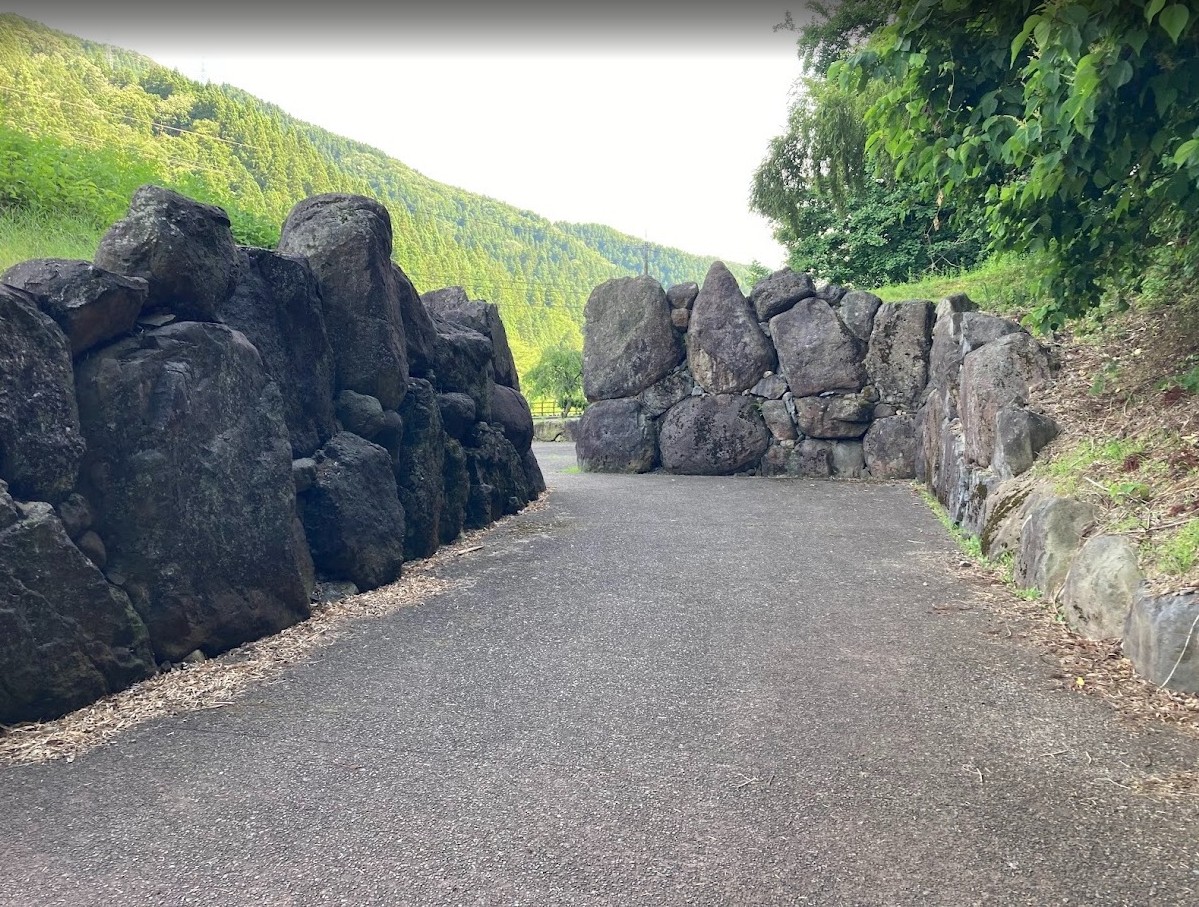
Welcome back! I’m Genji, your local Japanese castle and samurai heritage insider. In Part #4 of our virtual tour, we’re examining the massive foundations that hold every Japanese castle aloft: the Stone Walls (Ishigaki)!
Towering up to 100 feet high without a single drop of mortar, Japanese castle stone walls are seismic engineering marvels—and living records of samurai politics. Use the quick-jump buttons below to explore how master stonemasons split boulders with iron wedges, curved walls like open fans, and even recycled temple tombstones!
📍 Quick Navigation: Explore the 8-Part Japanese Castle Series
⚡ Direct Jump Within This Article (#4: Stone Walls)
Stone Walls (Ishigaki): Mortar-Free Engineering Marvels
1. Essential History & Key Facts (Deep Facts)
From mortar-free dry masonry and hidden gravel drainage to the legendary Ano-shu stonemason guild, here are 10 essential facts about Japanese castle stone walls:
- Why Are Japanese Castle Stone Walls Different from Western Ones?
Japanese castle stone walls were generally built without mortar, using carefully arranged stones. Unlike many Western castle walls, which were often built using mortar, Japanese stone walls relied on the arrangement and balance of individual stones. - What Was the Purpose of Stone Walls?
Stone walls served several purposes. They supported earthen embankments, formed defensive barriers, and provided foundations for structures such as gates and turrets. They also helped make castles more difficult to approach and attack. - When Did Japanese Castle Stone Walls Develop?
Japanese castle stone walls developed significantly during the late Sengoku period, when large-scale castle construction became increasingly important. As warfare and castle-building techniques evolved, stone walls became larger and more sophisticated. - What Are the Different Types of Stone Walls?
You can see various types of stone walls, ranging from rough walls made of natural stones to more refined walls made of carefully cut stones. Three major styles are known as Nozura-zumi, Uchi-komi-hagi, and Kiri-komi-hagi, reflecting the development of stone-cutting and construction techniques over time. - What Were Stone Walls Used for Besides Defense?
Stone walls were primarily defensive structures, but they also served as symbols of a daimyo’s wealth, authority, and prestige. In some cases, powerful daimyo assigned the costs or construction responsibilities of large-scale castle projects to their subordinate daimyo, sometimes encouraging them to demonstrate their loyalty through these contributions. - Was Building Stone Walls a Difficult Job?
Yes. Building stone walls required considerable skill, from selecting and shaping stones to arranging them in a stable structure. It was a highly specialized job. - Who Built Japanese Castle Stone Walls?
Specialized stonemasons were involved in building castle walls. Various skilled craftsmen and groups from across the country, including the Ano-shu, worked on stone-wall construction projects for different daimyo. - How Were Stone-Wall Construction Techniques Passed Down?
Throughout the Edo period, stone-wall construction techniques were passed down from skilled craftsmen to their apprentices. However, with modernization, the demand for castle stone walls declined significantly, making it increasingly difficult to preserve and pass on these traditional techniques. In some cases, stone walls repaired or rebuilt in modern times have suffered significant earthquake damage, highlighting the challenges of preserving traditional construction methods. - Why Do Stone Walls Have Curved Slopes?
Some Japanese castle stone walls have a curved slope that becomes steeper toward the top. This shape made it more difficult for attackers to climb the wall. The shape of the slope varied depending on the period, construction technique, and location. - How Were Stone Walls Made Stable?
The stability of a stone wall depended on the arrangement and shape of the stones, the slope of the wall, and the structure behind it. Smaller stones and gravel placed behind the facing stones helped support the wall and facilitate drainage. At the corners, techniques such as Sangi-zumi were used to reinforce the structure.
2. Visitor Perspectives: 10 Common Q&As 👀
Standing beneath a 100-foot wall of interlocking granite boulders almost always leaves visitors wondering how it was built—and why it doesn’t collapse during earthquakes. Here are clear answers to the top 10 questions travelers ask on-site:
- How did they manage to move such huge stones?
- Builders constructed special transport ships, cleared dedicated roads, and used wooden sleds, rollers, and teams of hundreds of workers over many months to haul the stones into place.
- How did they stack those massive stones?
- They placed the largest foundation stones at the base and stacked succeeding layers carefully in order, using earthen ramps and wooden levers to maneuver heavy boulders upward.
- How did they cut out so many stones?
- Stonemasons chiseled rows of small holes along a stone’s natural grain, inserted iron wedges, and hammered them in unison to split massive boulders cleanly apart.
- Why did they choose to use such big stones?
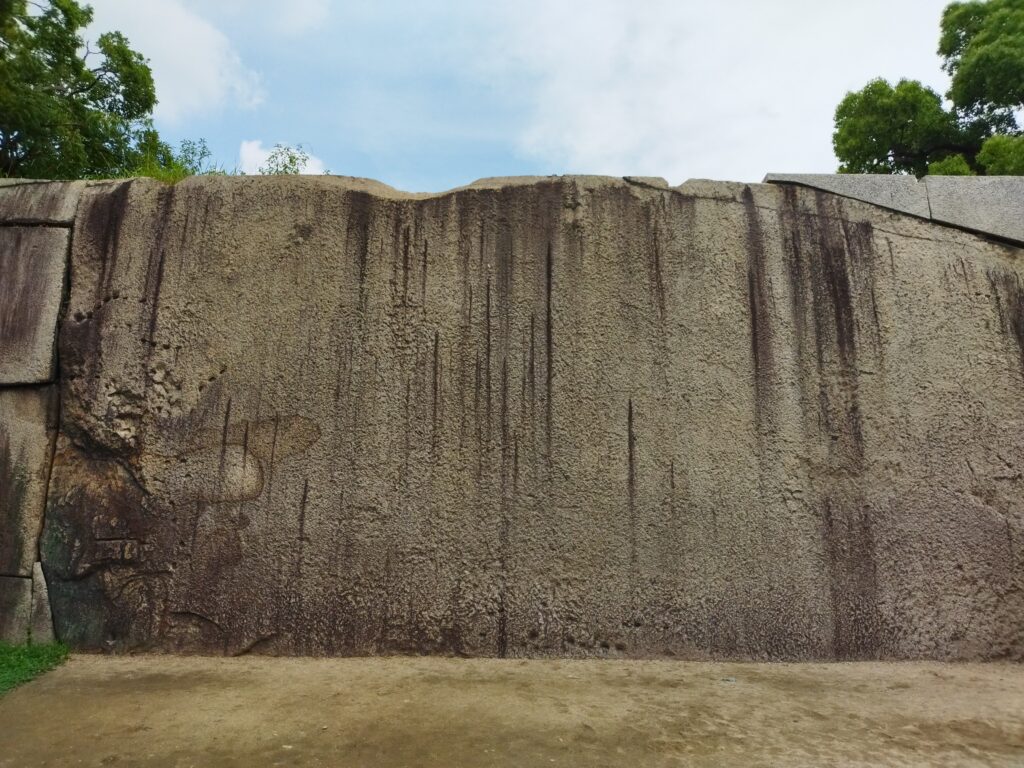
- To demonstrate the wealth and power of the lord overseeing construction, rival daimyo competed to install the largest, most awe-inspiring megaliths near main castle gates.
- How tall is the stone wall?
- The tallest castle stone walls reach roughly 30 meters (nearly 100 feet)—about the height of a modern 10-story apartment building.
- How long ago was it built?
- Unlike wooden keeps and palaces that frequently burned down, many stone walls still standing today date back 400 years to the original castle construction.
- Why doesn’t it fall apart? Is it earthquake-proof?
- Because the stones are stacked without rigid mortar, they can shift slightly to absorb seismic energy, while alternating long-and-short corner stones (Sangi-zumi) lock the corners tightly together.
- What type of stones have been used in Japanese stone walls?
- Builders favored granite—a dense, weather-resistant stone that could still be split and shaped cleanly by skilled masons—alongside local volcanic stones such as andesite.
- Where were the stones for the stone wall brought from?
- Stones were quarried from nearby mountains or shipped across the sea from renowned stone-producing regions prized for their durability and prestige.
- How did they achieve such a smooth surface without any gaps?
- As peaceful eras allowed lords to invest more time and resources, stone-dressing techniques advanced to the point where blocks could be chiseled flat and fitted together like precision masonry.
3. Ready to Crack a Smile? Secret Backstories 🤣
👉 Eager to uncover the human drama carved into these giant boulders? Each of these two short stories begins with genuine historical facts (1–5) before taking a playful local-guide twist (6–10) that always brings a smile on my tours!
Q1: How Did They Manage to Build It Without Trucks or Heavy Machinery?
When samurai warlords needed stones in a hurry without modern cranes or trucks, nothing nearby was off-limits—not even local cemeteries! (1–5: Emergency Stone Recycling / 6–10: Digging Their Own Graves)
- It seems that everything was sourced locally in the beginning, as it was a labor-intensive age.
- Even the biggest castles in Japan at that time were constructed by gathering materials from nearby areas.
- They brought in any usable stones they could find, from tombstones in temples to foundation stones from neighboring ancient palaces.
- They particularly valued high-quality granite tombstones.
- But I wonder if they didn’t worry about curses or bad luck when using tombstones as the foundation for castles?
- We can understand that when the lord gave orders, there was no choice but to follow without thinking about the consequences.
- However, many lords and their families eventually met their downfall along with their castles.
- Maybe it was because they used tombstones as foundation stones, showing no respect.
- Ironically, they may have dug their own grave by digging up other people’s tombstones!
- That’s why most guides steer clear of this grave topic—they don’t want to dig their own grave by being misunderstood as raising grave issues!
Q2: Why Do the Stone Walls Look Different Depending on the Area?
Walk around a Japanese castle and you’ll spot rough natural stones right next to razor-sharp cut blocks. Look closely, and you might just see the story of human life! (1–5: Three Stages of Masonry / 6–10: The Art of Compromise)
- They were built in different periods. The techniques used to build stone walls evolved over time, as stone-cutting skills and construction methods improved.
- The earliest style, called Nozura-zumi, uses mostly natural stones with little processing. Because the stones are irregular in shape, smaller stones are used to fill the gaps, giving the walls a rough, natural appearance.
- Later, Uchi-komi-hagi became popular, in which stones were roughly shaped to fit more closely together, reducing the gaps between them.
- Finally, Kiri-komi-hagi uses carefully cut stones with flat, square faces, allowing them to fit together much more tightly.
- These developments generally made stone walls more orderly in appearance and allowed builders to construct more sophisticated and steeper walls.
- Interestingly, you can almost feel the atmosphere of each period in these stone walls. During the early Sengoku period, daimyo were struggling to survive, and the rough appearance of the walls seems to reflect their sense of urgency.
- By the middle of the period, the walls look more refined and efficient, as if they reflect the growing power and resources of the daimyo.
- In the later period, some walls seem to show a greater appreciation for aesthetics, as well as defense. And during the Edo period, some stone walls were built almost as works of art, with their beauty becoming an important part of their purpose.
- Actually, whenever I explain this history to my guests, I can’t help feeling that these stones are just like human beings. Human growth, you ask? Well, yes—it’s certainly similar to human growth: a rough-and-tumble young man matures, gains experience, and eventually learns to live an artistic life.
- Yet don’t you think there’s another side to it? Out in the mountains, those stones lived completely free. But once they’re recruited into an organization, their rough edges get chiseled off, and they can barely move an inch! No matter how artistic we look on the outside, the only art we really end up mastering is… the art of compromise!
Thank You & Message from Genji
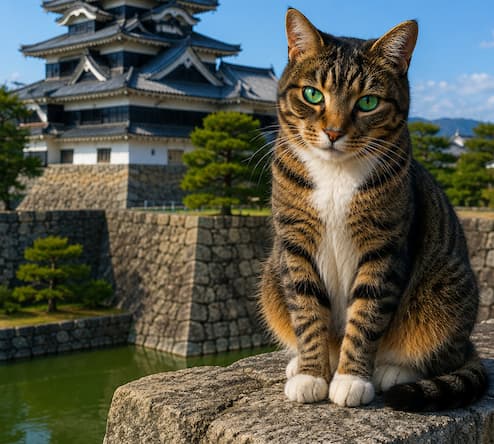
👆 Did you enjoy uncovering the secrets of Japan’s mortar-free stone walls? Next time you visit a Japanese castle, look closely at the corners and stone shapes to spot which era built them! To explore moats, roofs, palaces, and castle walls, use the green navigation buttons at the top of the page.
🛡️ Travel Safety Notice: Enjoying Historical Paths with Peace of Mind
Japanese castle stone walls often rise along steep paths, open ledges without modern guardrails, and uneven stone steps. Please watch your footing while admiring the stonework and taking photos. For international visitors exploring Japan’s castle sites, securing real-time travel health insurance is strongly recommended for smooth medical support during your trip.
⚔️ SafetyWing – Real-Time Travel Insurance for Global Travelers (Check Details)