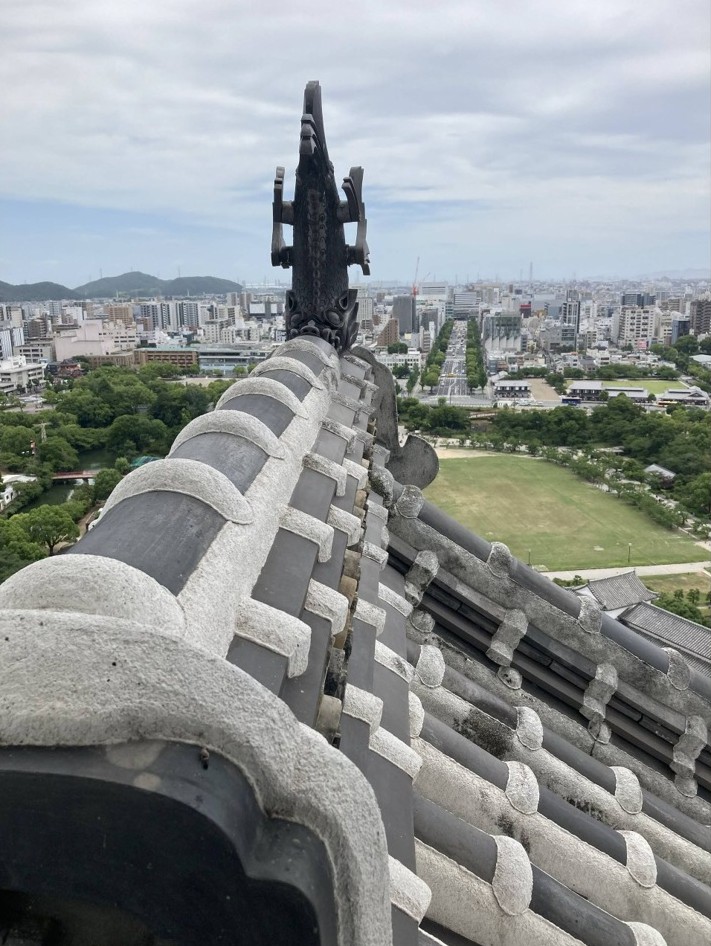
Welcome back! I’m Genji, your local Japanese castle and samurai heritage insider. In Part #6 of our virtual tour, we’re looking skyward at the sweeping silhouettes and mythical guardians crowning every Japanese fortress: the Castle Roofs (Yane)!
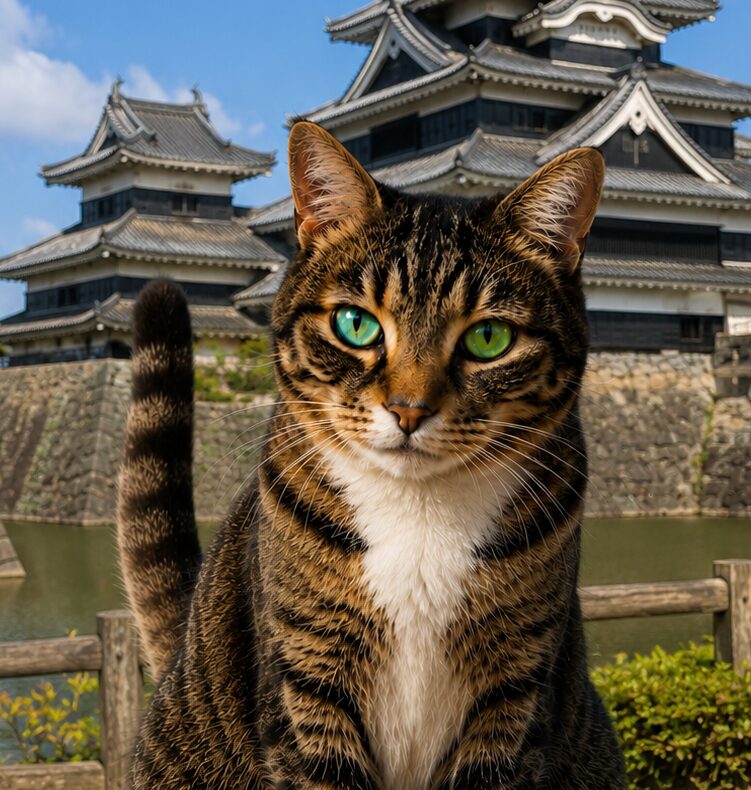
Far more than shelter from wind and rain, Japanese castle roofs combine layered gables, demon-faced ridge tiles, and tiger-headed carp guardians (shachihoko) to project samurai authority and ward off fire. Use the quick-jump buttons below to explore their architectural secrets—and see how samurai family crests became Japan’s original luxury branding!
📍 Quick Navigation: Explore the 8-Part Japanese Castle Series
⚡ Direct Jump Within This Article (#6: Castle Roofs)
Castle Roofs (Yane): Sweeping Gables, Kawara Tiles & Mythical Guardians
1. Essential History & Key Facts (Deep Facts)
From Irimoya-zukuri hip-and-gable roofs and undulating Karahafu curves to fire-guarding shachihoko and white lead tiles, here are 10 essential facts about Japanese castle roofs:
- The roof of a castle is designed not only to protect against rain and wind, but also to assert the lord’s power and authority by standing out prominently from a distance.
- The roofs of the castle tower and turrets are designed to look more beautiful and three-dimensional through the combination of multiple roof styles.
- There are two main types of roof style: Kirizuma-zukuri, a gabled roof with a triangular surface resembling an open book, and Yosemune-zukuri, a hipped roof with slopes on all four sides (sometimes described as pyramid-shaped).
- Many castle towers feature an Irimoya-zukuri roof structure, with a gabled roof at the top (sloping in two directions) and a hipped roof at the bottom (sloping in four directions).
- Many castles feature hafu (gables), which are the triangular decorative elements at the ends of the roof ridges. Among these are Karahafu (Chinese-style gables), known for their distinctive curved roofs.
- Many castles incorporate chidori-hafu, which are smaller, often multiple gables placed on the main roof slope for air circulation and decoration. One theory says their arrangement can sometimes evoke the image of many birds flapping their wings in flight.
- At the ends of the roof ridges, decorative tiles shaped like faces, known as oni-gawara (demon-face roof tiles), are placed. They are believed to ward off evil spirits and fire, with their designs varying from castle to castle.
- At the peak of the castle tower roof, you’ll find imaginary creatures called shachihoko. These beings, with the body of a fish and the face of a tiger, serve as guardian deities against fire.
- Most roof tiles, made from soil or clay baked at high temperatures, are highly fire-resistant and durable, having been used for centuries.
- To achieve a beautiful and distinctively white appearance for the entire roof, some castles also used lead tiles, where the wooden roof structure was covered with sheets of lead.
2. Visitor Perspectives: 10 Common Q&As 👀
Looking up at overlapping clay tiles, fierce demon faces, and gleaming roof ornaments always sparks curiosity—especially when visitors examine sample tiles inside a castle keep. Here are clear answers to the top 10 questions travelers ask on-site:

- What is this roof made of?
- It’s mainly made of “kawara,” a type of tile baked from clay. Beneath these tiles, a wooden framework is carefully assembled to support the entire roof structure.
- How heavy are the roof tiles?
- Each individual tile weighs a few kilograms, but when you consider the entire roof, the total weight can be several tons! This significant weight helps stabilize the roof, making it very resistant to strong winds.
- Why are so many tiles used on the roof?
- Stacking so many tiles creates an effective layering system. This design efficiently drains rainwater away, preventing any water from entering the building. Plus, the thickness of these layered tiles significantly improves the building’s thermal insulation and offers protection against fire.
- Are each of these tiles handmade?
- Historically, every single tile used on the castle was meticulously crafted by skilled artisans. Even today, for restoration projects, many tiles are still handmade using these traditional methods, which truly requires a high level of skill and craftsmanship.
- What are those demon-face-like figures at the end of the roof?
- Those are called “oni-gawara” (demon-face roof tiles). They’re considered guardian deities that protect the castle roof. They’re believed to ward off evil spirits and fire. The cool thing is, their expressions and designs vary from castle to castle, so you can really appreciate the unique artistic differences!
- What are those golden fish-like figures (shachihoko) on the roof?
- That’s a “shachihoko,” a mythical creature often seen on castle roofs. It’s said to have the body of a fish and the face of a tiger. They’re believed to extinguish fires by spouting water from their mouths, so they act as powerful fire prevention talismans. While some had gold leaf to symbolize power and wealth, they were unfortunately sometimes stolen due to their value.
- The roof shape is very complex; does it have any special meaning?
- Absolutely! The complex roof shapes not only emphasize the castle’s dignity and beauty but are also designed with practical considerations like efficient rainwater drainage—such as the graceful curved Karahafu gables seen at Kanazawa Castle’s Ishikawa-mon Gate.
- How long does this type of roof last?
- Clay tiles are incredibly durable. With proper maintenance, it’s not uncommon for them to last well over 100 years. In fact, many castle roofs have retained their impressive appearance for centuries!
- Do they break when they fall, considering the material?
- Yes. As roof tiles are made from the same material as ceramics, they can certainly crack or break when dropped or subjected to a strong force. However, roof tiles are fixed independently and designed to overlap slightly with each other. This prevents the entire roof structure from breaking all at once, making them quite resilient when properly laid.
- Is it safe even during an earthquake?
- While heavy tile roofs might seem vulnerable to earthquake shaking, traditional Japanese wooden buildings, like castles, have a flexible structure specifically designed to absorb and withstand seismic forces. They’re built to flex, not break.
3. Ready to Crack a Smile? Secret Backstories 🤣
👉 Eager to hear the stories hidden up among the rafters and ridge tiles? Each of these two short Q&As starts with genuine architectural facts (1–5) before taking a playful local-guide twist (6–10) that always gets a smile on my tours!
Q1: What Are Japanese Castle Roof Tiles Made Of?
Kiln-fired clay tiles and fierce demon faces once protected samurai lords from curses and bad luck—until modern science turned “bad vibes” into a playful pun! (1–5: Clay Tiles & Oni-gawara / 6–10: Good Vibes vs. Earth’s Vibrations)
- What Are Japanese Castle Roof Tiles Made Of?
Most Japanese castle roofs are covered with tiles made from clay, which is shaped and fired in a kiln. These are commonly called ceramic roof tiles. - Are They Different from Those Used on Ordinary Houses?
These tiles are similar to those used on traditional Japanese houses. However, castle roofs tend to have larger and more elaborate designs, with various types of tiles used for different parts of the roof. - Do Castle Roof Tiles Have Any Special Designs?
Castle roofs also have decorative elements, such as ridge ornaments and tiles bearing family crests. These are not only decorative but also reflect the status and identity of the lord who ruled the castle. - What Are Oni-gawara?
Particularly unique are the decorative roof tiles called oni-gawara (demon tiles), which are placed at the ends of roof ridges and other prominent parts of the roof. - What Are They Supposed to Do?
They were believed to ward off evil spirits and bad luck, and you can enjoy seeing demons with all kinds of expressions. - I suppose we’re lucky to live in an age when we can simply appreciate their designs.
- In the past, warding off evil was a serious matter. Natural disasters, infectious diseases, famines, and many other things were beyond people’s control, so they tried to ward off bad vibes in this way.
- Thanks to advances in science, we live in such a wonderful age that we can even joke about “bad vibes.” We can easily get “good vibes” like this.
- But there’s one “vibration” that even modern Japanese people absolutely can’t laugh at. What do you think it is?
- That’s what really shakes Japan—the Earth’s vibration!
Q2: Does That Decoration on the Roof Have Any Meaning?
Spot a repeating floral emblem along the eaves? Those family crests were the Apple and Louis Vuitton logos of the samurai world—just don’t confuse them with cattle ranching! (1–5: Samurai Family Crests / 6–10: Castle Branding)
- What Are Those Decorative Tiles?
These are family crest tiles—tiles featuring a family crest on prominent parts of the roof. By incorporating the crests of castle lords or ruling families into the architecture, they served to indicate affiliation and the family’s presence. - What Kind of Family Crests Can We See?
Some well-known examples include the hollyhock crest, the plum blossom crest, and the paulownia crest. The Imperial Family, for example, uses a chrysanthemum crest. - Did the Designs Differ from One Lord to Another?
Interestingly, even these decorative designs differed subtly from one lord to another. Some castle enthusiasts can identify the lord or clan simply by looking at the roof tiles. - How Did Japanese Family Crests Develop?
Family crests originally developed among aristocrats during the Heian period. They were later adopted by samurai families, who used them to identify their clans, particularly on the battlefield. Over time, their use spread to ordinary people as well. - Are Family Crests Still Used Today?
Even today, some Japanese families still have their own family crests, which may be worn on formal kimono or used at family ceremonies, such as weddings and funerals. - Did You Notice the Crests Right Away?
Over the years, I’ve guided many guests through Japanese castles, and those who notice the family crests on the roof tiles usually have a keen eye for detail. When the same crest is repeated across an entire roof, even many Japanese people simply see it as part of the decoration rather than recognizing it as a family crest. - Why Do Family Crests Matter?
For the families who used them, crests represented their history, identity, and pride. As a guide, I’m always happy when I have the opportunity to introduce those stories to guests from around the world. - A Timeless Brand
In a way, family crests were the brands of their time. Just as people around the world instantly recognize the logos of Apple, Nike, Gucci, or Louis Vuitton today, I hope the crests of Japan’s great castles will become more widely recognized as well. - Just to Be Clear…
And don’t worry. I’m not being paid a commission by any of the families who used these crests. I simply enjoy helping people discover another fascinating part of Japanese culture. - From Cattle Branding to Castle Branding
To put it another way, a family crest is like a brand. In English, branding originally referred to marking cattle with a hot iron. But this isn’t cattle branding—it’s castle branding!
Thank You & Message from Genji
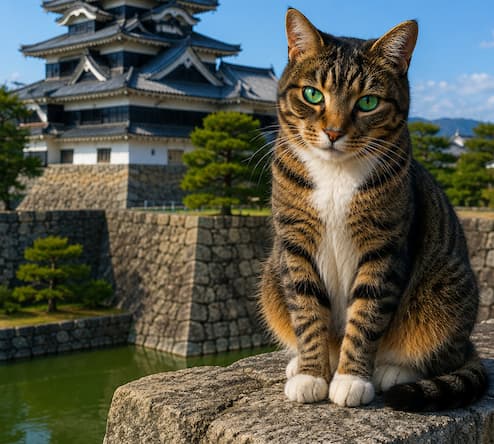
👆 Did you enjoy looking up at the craftsmanship of Japanese castle roofs? Next time you visit a castle, keep an eye out for the family crests stamped into the edge tiles! To explore the lord’s palace and defensive castle walls, use the green navigation buttons at the top of the page.
🛡️ Travel Safety Notice: Enjoying Historical Paths with Peace of Mind
Looking up to photograph castle roofs and gables while walking across stone courtyards or steep steps makes it easy to miss uneven footing. Please pause and stand still before aiming your camera skyward. For international visitors exploring Japan’s castle sites, securing real-time travel health insurance is strongly recommended for smooth medical support during your trip.
⚔️ SafetyWing – Real-Time Travel Insurance for Global Travelers (Check Details)