Welcome back! I’m Genji, your local Japanese castle and samurai heritage insider. In Part #3 of our virtual tour, we’re stepping straight into the jaws of a samurai fortress: the Castle Gates (Jōmon)!

Most travelers treat castle gates like the entrance to a theme park—walking right through without a second glance. Yet Japanese castle gates were ingenious combinations of checkpoints, status symbols, and deadly 90-degree ambush traps! Use the quick-jump buttons below to uncover the secrets behind these massive wooden guardians.
📍 Quick Navigation: Explore the 8-Part Japanese Castle Series
⚡ Direct Jump Within This Article (#3: Castle Gates)
Castle Gates (Jōmon): The Ultimate Fortress Guardians
1. Essential History & Key Facts (Deep Facts)
From iron-plated wooden doors to double-gate ambush courtyards, here are 10 essential facts about how Japanese castle gates worked:
- The Role of Castle Gates: Defense, Access Control, and Authority
Japanese castle gates served not only as defensive structures but also as checkpoints for controlling access to the castle. Gates leading to important areas, such as the lord’s residence, sometimes featured structures and designs that reflected their importance and status. - Types and Layout of Castle Gates: The Overall Defensive Design
Japanese castles had various types of gates, including yagura-mon (turret gates) and masugata gates. To strengthen the castle’s overall defenses, multiple gates were strategically arranged in combination with stone walls, moats, and castle enclosures to restrict and control the movement of attackers. - Masugata Gates: Double Gates and Enclosed Defensive Spaces
A masugata gate consists of two gates and an enclosed space between them, surrounded by stone walls, fences, or turrets. Attackers had to pass through both gates and sometimes change direction, which slowed their advance and made them vulnerable to attack. - Defensive and Offensive Features: Measures Taken by the Defenders
Castle gates and surrounding structures were equipped with various features for attacking intruders, such as lattice windows for firearms and openings for dropping stones. - Materials Used in Castle Gates: Timber, Iron Plates, Nails, and Fittings
Castle gates were generally made of thick timber and could be reinforced with iron plates, large nails, and other metal fittings to strengthen the doors. Iron plates were sometimes also used on parts such as corner posts. - Gate Structure and Construction Techniques: Columns, Beams, Joinery, and Weight
Large columns and heavy beams supported the gate structures, and traditional woodworking techniques were used to join the timbers securely. Large gates could be extremely heavy and required substantial hardware and manpower to operate. - Gate Operation: Opening and Closing, Wicket Gates, and Guardhouses
Castle gates were not necessarily kept open all day. They could be closed at night or for security reasons. Smaller wicket gates were sometimes used for everyday passage, and some gate complexes included guardhouses. - Timber and Roofs: Choice of Materials and Design
Various types of timber, such as Japanese cypress, cedar, and pine, were used depending on availability and purpose. Castle gates also featured various roof styles, and some, such as karamon gates, were decorated with elaborate ornamentation. - Gate Location and Status: Ote-mon, Karamete-mon, and Important Areas
Castle gates were sometimes classified according to their role and location as ote-mon (main gates) or karamete-mon (rear or secondary gates). Gates protecting important areas, such as the main compound or the lord’s residence, could feature particularly elaborate designs and high-quality materials. - Surviving Castle Gates: Historical Value and Cultural Heritage
Many historic castle gates still survive today. Some are designated as National Treasures or Important Cultural Properties, reflecting their historical and cultural significance.
2. Visitor Perspectives: 10 Common Q&As 👀
When visitors walk beneath these massive wooden beams and iron-studded doors, they often stop in awe and ask how they actually functioned. Here are straightforward answers to the top 10 questions travelers ask on-site:
- What are the features and characteristics of Japanese castle gates?
- Castle gates evolved dramatically over time in response to advancements in warfare technology, blending heavy fortification with architectural elegance.
- How do they differ from the gates of other ancient structures like temples and mansions?
- Unlike temple or mansion gates built mainly for ceremony or privacy, castles developed box-shaped gate complexes combining defense, counterattack capability, and visual grandeur in one structure.
- When did this type of castle gate first pop up?
- They evolved from simple wooden stockades of earlier centuries and reached their best-known fortified form in the 16th century during the Warring States period.
- Are they sturdy enough, being made of wood?
- Yes—the heavy wooden doors were reinforced with iron plates and large studs, and during wartime they were barricaded from the inside with rocks and thick timbers to block intruders.
- What type of wood is used for castle gates?
- Builders used strong, durable woods like Japanese cypress (hinoki), zelkova (keyaki), cedar, and pine for gate pillars, beams, turret walls, and floors so they would last for centuries.
- Are castle gates the same in every castle across Japan?
- Their basic defensive layout is similar, but they vary in size and placement, and many feature decorative elements like karamon (Chinese-style gates) or karahafu (undulating curved gables) to showcase status.
- What was the significance of the main gate of a castle?
- Much like a grand estate, the main front gate (ote-mon) was reserved primarily for the feudal lord and distinguished guests, while retainers and staff used rear or side gates.
- Why do different castle gates have different names?
- Gates were named after their geographical direction, the history of their construction, or auspicious symbols intended to boost defensive prestige and the lord’s authority.
- Were castle gates usually open?
- Even during peacetime, main castle gates were typically kept closed. Everyday entry and exit took place through smaller side doors (wicket gates) watched by guards.
- What kind of defensive measures were implemented at castle gates?
- From the yagura (turret) built directly above the gate, defenders could drop heavy stones through chutes and fire matchlock guns or arrows through hidden lattice windows.
3. Ready to Crack a Smile? Secret Backstories 🤣
👉 Eager to unravel the mysteries behind Japanese castle gates? Each of these two short stories starts with solid historical facts (1–5) before taking a playful local-guide detour (6–10) that always gets a laugh on my tours!
Q1: Is There Anything Special About This Gate?
When guests stop right inside a double-gate courtyard, it’s the ultimate opportunity for a local guide—because nobody can walk away mid-story! (1–5: The Ingenious Trap / 6–10: Trapping Tourists Too)
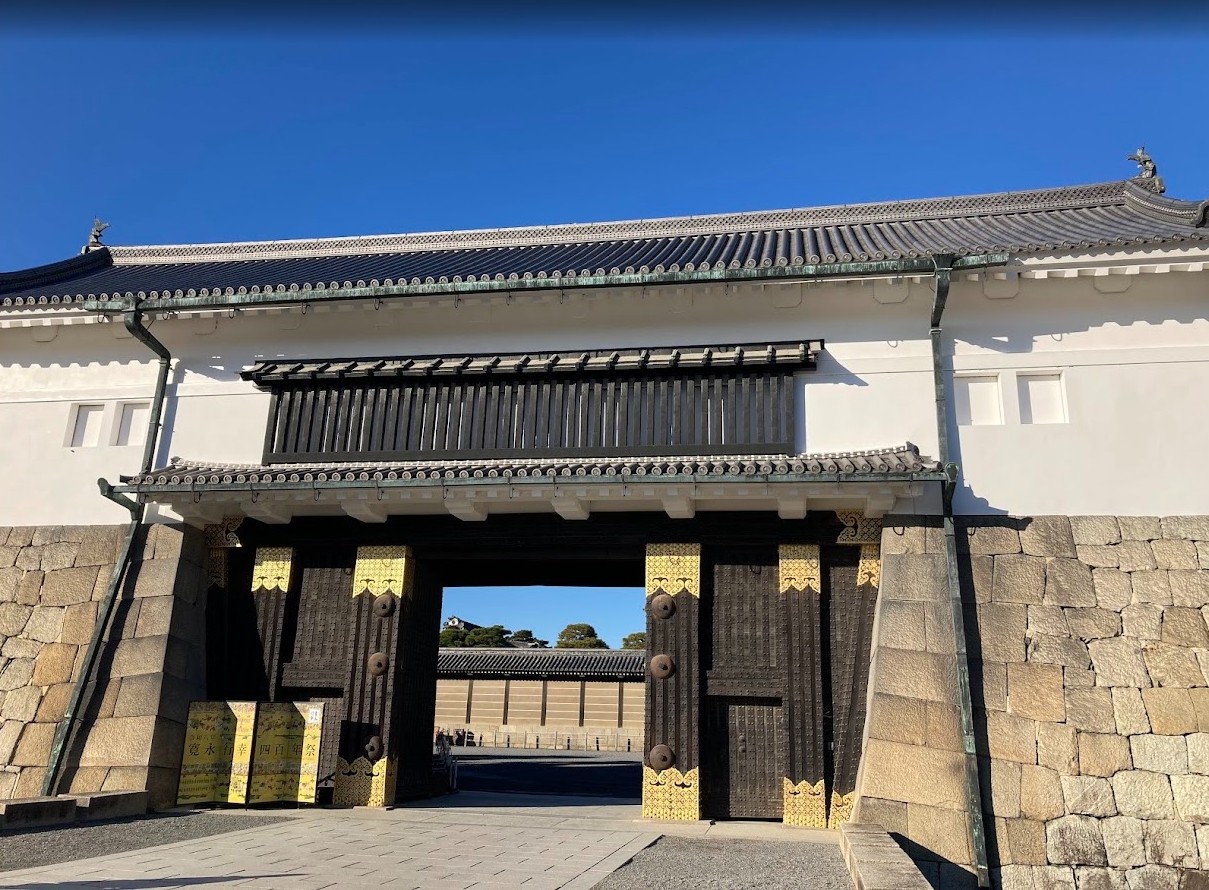
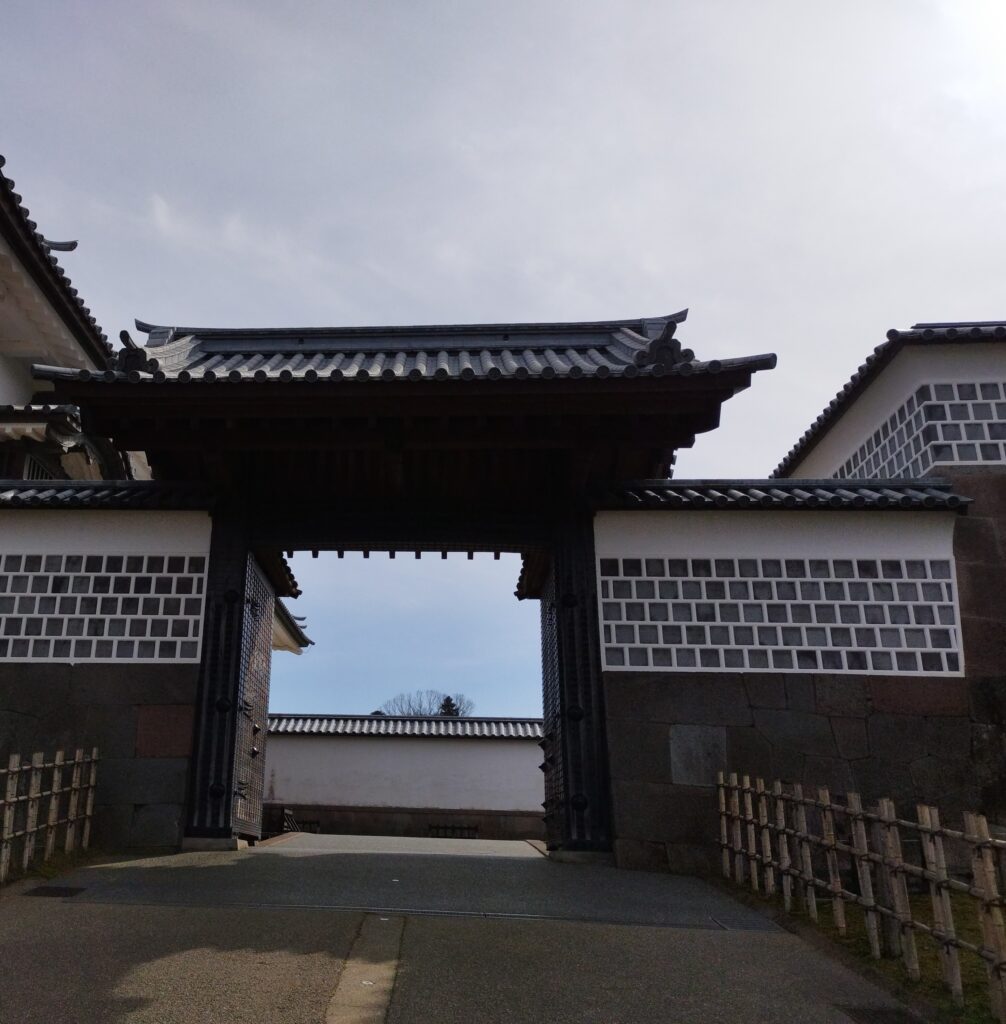
- This is called a masugata gate, a uniquely Japanese castle gate structure. It was designed to make it extremely difficult for attacking soldiers to enter the castle.
- A masugata usually consists of two gates built at right angles to each other, creating an enclosed rectangular space between them. So attackers had to pass through two gates instead of just one.
- Once attackers entered this enclosed space, they could be trapped between the two gates.
- Soldiers could attack those trapped inside from above, including from a tamon-yagura, a long defensive turret built along the stone walls.
- The masugata was one of the most sophisticated defensive gate systems developed in Japanese castles during the late Sengoku period.
- Thank you very much for listening to my lengthy explanation all the way through. I don’t usually go into this much detail!
- Most visitors are eager to see the inside of the castle, so they tend to view castle gates simply as entrances—much like the entrance to Disneyland—and walk right past them.
- Everyone has different interests, so that’s perfectly fine. After all, the most important thing is to tailor my explanation to the interests of the guests I’m speaking with.
- In that sense, this masugata gate is the perfect gateway for gauging a guest’s level of interest right at the entrance.
- After all, even if you find my explanation boring, there’s no easy escape once you’re trapped between two gates, high stone walls, and the tamon-yagura! Congratulations—you’re experiencing the true defensive power of a masugata gate firsthand!
Q2: Why Did the Box-Shaped Gate Become Standard?
If every samurai army knew these box gates were deadly traps, why did soldiers willingly charge inside like mice? The answer leads to a surprising truth about early samurai marriage! (1–5: The Deadly Trap / 6–10: Mice, Honor & Marriage)
- Originally, the castle gate was a simple structure, reinforcing the regular entrance with watchguards. However, as warfare technology advanced, it evolved into a square-shaped structure.
- With two gates and stone walls surrounding them like a trap, enemies would be easily killed.
- But what is intriguing is that this square-shaped gate was the norm at the time, so the enemy should have been aware of it. Why would they willingly fall into such a trap like mice?
- One possible explanation is that soldiers had no choice but to move forward, even if they knew they would die.
- If they didn’t advance, they would be denounced as deserters or cowards, bringing shame upon their descendants for generations.
- However, mice have strong reproductive power, leaving behind 10,000 offspring in a year from a pair of mice. So, perhaps mice might die peacefully in a mousetrap for the sake of their descendants’ honor.
- But most human soldiers are young, unmarried individuals. If they die, they cannot leave behind any descendants or honor, can they?
- So, many samurais married at a young age, often in their early teens.
- Perhaps it was a good time for young people who’d say, “I don’t care about my life as long as I can get married,” a sentiment that remains true throughout history.
- But no one can say whether they’d be happy if, in their early teens, they already understood what marriage really meant—that the castle gate wasn’t the only mousetrap!
Thank You & Message from Genji

👆 Did you enjoy stepping through the secrets of Japanese castle gates? Next time you visit a castle in Japan, look up at the hidden stone chutes and 90-degree turns! To explore stone walls, moats, roofs, and more, use the green navigation buttons at the top of the page.
🛡️ Travel Safety Notice: Enjoying Historical Paths with Peace of Mind
Historic Japanese castle gates feature high wooden thresholds, uneven stone paving, and steep cobbled slopes designed to slow down intruders. While awe-inspiring, stumbles or trips can happen. For international visitors exploring Japan’s castle sites, securing real-time travel health insurance is strongly recommended for smooth medical support during your trip.
⚔️ SafetyWing – Real-Time Travel Insurance for Global Travelers (Check Details)