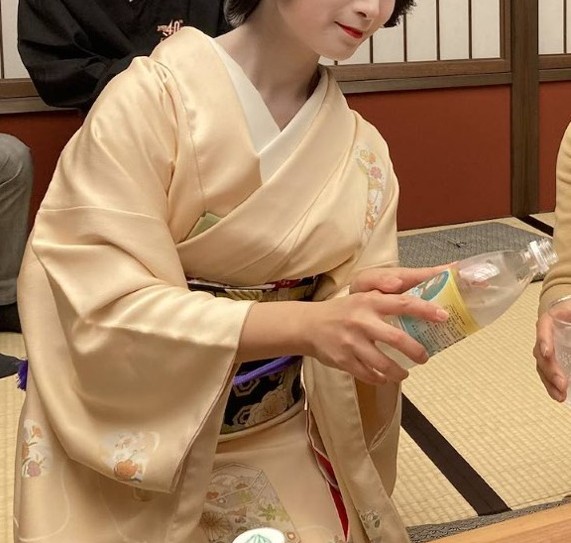
Welcome! I’m Sakura, your local traditional culture insider in Kanazawa. Are you planning a trip to Japan or curious about experiencing authentic Geisha and Ozashiki entertainment?

Forget dry history lessons and official guidebooks! Here, I’m sharing essential facts, common traveler Q&As, and hilarious backstories about traditional Ozashiki games and teahouse nightlife that you won’t find on standard travel sites or AI tours.
✨ Jump Straight to Ozashiki Games, Q&A & Secret Stories!
If these stories make you smile or spark your curiosity, be sure to experience the magic of traditional parlor games during your Kanazawa journey. We’re excited to welcome you—see you in Kanazawa!
📍 Table of Contents (Click to Jump)
4. Ozashiki Games & Nightlife
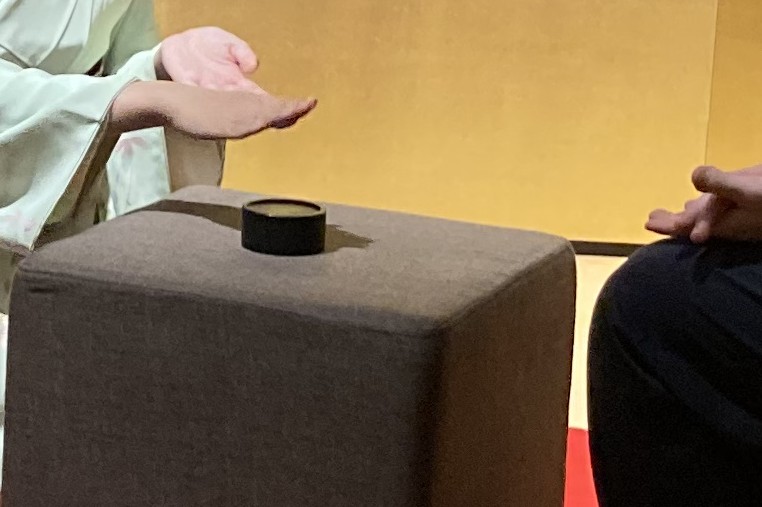
One popular traditional game is Konpira Funabune, where guests face off one-on-one with a geiko to the rhythm of music
4.1a Essential History & Key Facts
- Definition of “Geisha Asobi”
“Geisha asobi,” literally meaning “Playing with Geisha,” refers to the entire banquet and experience where geisha entertain guests, encompassing all time spent with them. It is synonymous with teahouse entertainment (Chaya asobi). - Definition of “Ozashiki-asobi”
“Ozashiki-asobi” (literally, “playing in the guest room”) refers to the specific games and interactive exchanges that are part of the overall Geisha asobi entertainment experience. - A High-Class Venue of Arts and Hospitality
While both terms might evoke images of men and women simply “playing” in a closed room, they refer to an exclusive venue where geisha entertain guests with their professional “arts and hospitality,” having no connection to sexual services. - Up-Close Intimate Arts Performance
At Geisha asobi, you have the rare opportunity to experience traditional performing arts—such as songs, dances, and shamisen music—up close and personal. - Exclusive Origins vs. Modern Tourist Options
While traditional geisha entertainment is typically held in exclusive ochaya (tea houses) that do not accept first-time customers, more open versions catering to tourists have recently become available. - Lively Interactive Atmosphere
During Ozashiki asobi, all participants play unique and humorous traditional games, which are livened up by the geisha’s professional hospitality and skill. - One-on-One Traditional Games
There are over a dozen main types of parlor games, but most involve a geisha and a guest competing one-on-one for victory in front of the other participants. - Lighthearted Penalties for Everyone
While all the games are simple enough for anyone to play, regardless of age or gender, the guests are typically given a fun penalty, such as drinking an extra cup of sake. - Concert-Style vs. Dining Banquet Formats
Aside from traditional exclusive geisha entertainment, most geisha entertainment is primarily divided into open, concert-style events and party-style gatherings with dining. - Demonstration of High-Level Hospitality
In that setting, geisha demonstrate their professional skill and ability to elevate the mood through both entertainment and games.
4.1b Top 10 Traveler Q&As About Ozashiki Entertainment
- Q: What exactly is geisha asobi, geisha entertainment?
A: Geisha entertainment originally began for a privileged class to enjoy the arts of geishas exclusively. - Q: Is traditional Geisha entertainment expensive?
A: There is no standard price, and fees are set based on the client’s status, making it typically one to two orders of magnitude more expensive than what the average person would expect. - Q: Why is the fee so high?
A: This high cost sustains the entire structure: from the expensive interior furnishings of the ochaya (teahouse) to the substantial expenses for geisha training, elaborate costumes, and the specialized jikata (musicians), all supported by a limited client base. - Q: How long does a Geisha entertainment session typically last?
A: Traditional sessions can last several hours, depending on the guests’ mood. However, modern tourist courses generally standardize the experience to two hours, often featuring a one-hour geisha performance plus dining. - Q: How many geisha are typically present during an engagement?
A: The appropriate number of geisha and supporting staff is determined entirely by the guests’ status, number, budget, and specific preferences, regardless of whether the arrangement is traditional or modern. - Q: What can guests see during a Geisha performance?
A: Guests primarily see traditional dances, songs, and instrumental performances (shamisen, etc.), all presented at a uniquely close distance. - Q: Are Geisha performances purely for watching, like a concert?
A: No. For instance, in Kanazawa, guests are often invited to play the taiko drums along with the geisha. Many sessions also include engaging, instrument-free traditional parlor games. - Q: What exactly are these traditional games (Ozashiki Asobi)?
A: Most involve a geisha and a guest competing one-on-one using simple props or body movements, providing a lively spectacle that the surrounding guests enjoy watching and cheering on. - Q: The games seem simple; can adults truly enjoy them?
A: Absolutely. The charm lies in the traditional format: the geisha use their skill to turn simple, accessible games into a lively event. Most guests find themselves returning to their childhood and enjoying the interaction wholeheartedly. - Q: Can you give an example of one of the games?
A: The most famous is Tosenkyo, a game with a thousand-year history where players throw folding fans at a target and compete for points based on the shape the fan forms upon impact.
4.2 Fun Backstories & Mysteries
Q1: What Exactly Do People Do in Geisha Asobi?
- Geisha asobi, or geisha entertainment, refers to a traditional banquet where geisha perform their refined arts and entertain guests.
- While enjoying sake, guests watch elegant dances, listen to songs and shamisen music, and engage in relaxed conversation.
- As the evening draws to a close, the atmosphere is often livened up with playful party games known as ozashiki-asobi.
- The basic structure is similar in both exclusive traditional settings and the more accessible versions available today.
- However, traditional geisha entertainment is flexible and open-ended—the content adapts to the mood, and the party can continue indefinitely.
- There are no fixed prices or set plans, and payment is made after the event, with no clear idea of the final cost.
- Modern geisha entertainment, by contrast, is menu-based, with transparent pricing and advance payment.
- In that sense, one could say the true essence of authentic geisha entertainment lies in deferred payment. Enjoying a night where the cost is unknown naturally requires significant financial means—and trust.
- For wealthy foreign visitors seeking the “real” experience, deferred payment might sound appealing. But in reality, it’s impossible. In English, we say “someone has to pay the price.”
- And if the bill can’t be collected, someone always pays—and it’s never the guest!
Q2: What’s an “Ozashiki Asobi”?
- It’s the game time in geisha entertainment, where guests compete directly with a geisha.
- One popular game is Konpira Funabune. It’s based on a traditional jingle inviting people to take a boat ride to a famous shrine.
- The rhythm gradually speeds up, which makes it perfect for a game.
- A cushion is placed between the guest and the geisha, with a bowl on top. Following the rhythm, players take turns either taking the bowl or touching it—using an open palm.
- When your opponent takes the bowl, you must hit the cushion with a fist. If you mix them up—open palm on the cushion or fist on the bowl—you lose.
- It may look like child’s play, but in this parlor game the geisha—elegantly dressed artists—sit right in front of the audience, who watch the intense showdown.
- Once people realize this is a tradition that goes back centuries, they get surprisingly competitive. This is the essence of geisha asobi.
- But after hosting many international guests, I’ve noticed something interesting.
- People often assume geisha are playing along with the guests—but in reality, it’s usually the guests who end up playing along with the geisha, much like patrons did in the samurai era.
- So… does that mean everyone here is becoming a patron tonight?
Official Links & Resources
Official Website: Higashi Chaya District (Kanazawa Tourism Association)
Shima Teahouse Museum Official Site (Important Cultural Property)
Thank You & Message from Sakura
👆 Thank you for reading to the end! If you have any questions, customized itinerary inquiries, or travel planning feedback, please feel free to reach out anytime.
🛡️ Travel Safety Notice: Enjoying Historical Paths with Peace of Mind
Higashi Chaya District and other historical Japanese landscapes feature ancient stone cobbles, narrow alleys, and wooden steps. While breathtaking, unexpected trips or stumbles can occur. For international visitors exploring Kanazawa and Japan’s heritage sites, securing real-time travel health insurance is strongly recommended for seamless medical support during your trip.
⚔️ SafetyWing – Real-Time Travel Insurance for Global Travelers (Check Details)