Welcome! I’m Sakura, your local traditional culture insider in Kanazawa. Are you planning a trip to Japan or curious about the real lives and heritage of Geisha and Geiko?

Forget dry history lessons and official guidebooks! Here, I’m sharing essential facts, common guest Q&As, and hilarious backstories about Kanazawa’s Geiko culture that you won’t find on standard travel sites or AI tours.
✨ Jump Straight to Geiko Facts, Q&A & Secret Stories!
If these stories make you smile or spark your curiosity, be sure to keep your eyes and ears open for Geiko traditions during your Kanazawa journey. We’re excited to welcome you—see you in Kanazawa!
📍 Table of Contents (Click to Jump)
3. Geiko Culture & Traditions

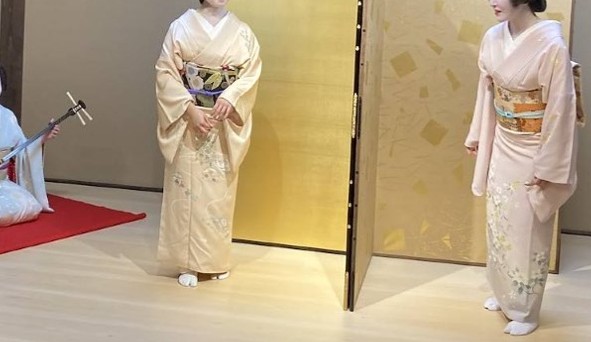
Geisha are professional entertainers who have mastered various traditional arts, such as dance, singing, and the shamisen
3.1a Essential History & Key Facts
- Regional Names: ‘Geisha’ vs. ‘Geiko’
The term ‘Geisha’ is widely recognized internationally, but the name varies by region. For example, in Kyoto and Kanazawa, they are referred to as ‘Geiko.’ - Global Recognition and Cultural Images
Originally, ‘Geisha’ was a term used in the Kanto region, but like ‘Ninja’ and ‘Samurai,’ it has become ingrained in foreign cultures with an image somewhat different from reality. - The Influence of Ukiyo-e Woodblock Prints
One reason the name ‘Geisha’ became known overseas is the exotic image presented in ukiyo-e prints depicting geisha. - Historical Distinction from Courtesans
Since courtesans also operated within geisha districts (teahouse districts or hanamachi), even Japanese people often confuse the two. - Post-War Misconceptions
There is also a theory that many sex workers who presented themselves as ‘Geisha girls’ during the post-war period of confusion influenced this image. - Pop Culture and Global Media Impact
Recent internationally best-selling novels and films featuring geisha as main characters have further propagated a biased perception of geisha. - Dispelling Modern Hostess Myths
Many foreign visitors to Japan mistakenly believe that geisha are simply women who provide services similar to modern-day hostesses. - Masters of Traditional Performing Arts
In reality, geisha are professional entertainers who have mastered various traditional arts, such as dance, the Japanese banjo or shamisen, singing, and, in Kanazawa, playing the drums. - Dedication to Daily Training and Practice
Because each of these arts requires years of rigorous practice, geisha dedicate most of their time to honing their skills when not entertaining guests at banquets. - Echoes of Practice in Historic Alleys
Even in the teahouse districts of Kanazawa, visitors can occasionally hear the sounds of musical instruments being practiced in geisha offices as they prepare for evening performances. - No ‘Maiko’ Apprentice System in Kanazawa
In Kyoto, there is a distinction between ‘Maiko,’ the apprentices, and ‘Geiko,’ the professional geisha. However, in Kanazawa, there are only ‘Geiko,’ as the apprenticeship system of ‘Maiko’ does not exist. - Management Houses (Okiya) and Freelancing
Geisha typically belong to a management office known as an okiya, though some become freelancers independent of the okiya. This arrangement varies by region. - Dispatch System to Private Teahouses
Rather than being employed by teahouses, geisha are dispatched to teahouse banquets upon request to perform and entertain guests. - Performance-Based Revenue and Earnings
Geisha are not salaried; their main source of income comes from each entertainment event, with revenue varying depending on the content of the performance, duration, and the number of guests. - Reinvesting Income in Artistic Value
A significant portion of their earnings goes toward okiya membership fees, costume expenses, and practice costs, which help geisha maintain and enhance their skills and value. - Modern Career Motivations
In the past, many individuals were compelled to become geisha due to economic circumstances. However, today, more people from across the country are applying to join, viewing it as an opportunity to showcase their talents. - Age Requirements and Industry Rules
There is essentially no age limit to becoming a geisha. While some begin their journey in their mid-teens, in many regions, the minimum age is set at 18 due to child labor regulations. - Evolution of Marriage and Patronage Customs
Traditionally, geisha have generally not married, adhering to the custom of remaining single. In the past, there was an idealized pattern where a geisha might be chosen by a specific wealthy patron, marry, and retire from the profession. - Continuing Professional Careers After Marriage
In recent years, however, including among geisha in Kanazawa, many have chosen to continue their careers as geisha even after marriage, viewing it as a profession in its own right. Some geisha have also increased their presence and visibility online. - Lifelong Mastery Without Retirement Age
Since geisha operate as individual businesses, there is no mandatory retirement age. Remarkably, there have been legendary geisha who continued their work well into their 90s. In fact, Kanazawa is home to geiko who are older than the current U.S. President.
3.1b Top 10 Traveler Q&As About Geiko
- Q: What kind of performances did geisha do?
A: They performed various Japanese traditional arts such as dance, shamisen (Japanese banjo), and singing, selecting performances that matched the season and the banquet’s atmosphere. - Q: Did geisha also practice tea ceremony and flower arrangement?
A: Yes, traditional Japanese practices are an important part of expressing hospitality. Geisha also mastered tea ceremony, flower arrangement, and calligraphy, occasionally performing them in front of guests. - Q: How long have jobs like geisha existed?
A: The history of geisha dates back over 300 years to the samurai era. While their roles and styles have evolved with time, the tradition continues today. - Q: What is the difference between a general geisha and a geiko here?
A: Kanazawa’s geiko have a performance style that enhances the atmosphere with drums, reflecting the samurai town’s heritage. They also embody an independent spirit, living self-reliantly. - Q: How do geisha hone their skills?
A: While Kyoto has schools to train geiko and maiko, Kanazawa’s geiko independently hone their skills by studying under masters in each field. - Q: What kind of language do geisha use?
A: They carefully choose their words to avoid offending customers, using polite and refined language rooted in local traditions. - Q: What kind of conversations do geisha have with customers?
A: They discuss a wide range of topics, such as current events, entertainment, and hobbies, tailoring conversations to the guests’ interests and enhancing the atmosphere. - Q: How are geisha’s hairstyles made?
A: In the past, their hairstyles were crafted by professional hairdressers and took considerable time. Nowadays, most geisha use wigs for convenience. - Q: How do geisha do their makeup?
A: Geisha’s makeup is defined by white face makeup. They spend about an hour carefully applying white powder to achieve a flawless finish. - Q: What is a typical day like for a geisha?
A: During the day, they focus on practice and preparation. In the evening, they entertain guests at banquets, but on their days off, they relax and unwind like regular office workers.
3.2 Fun Backstories & Mysteries
Q1: How Many Geisha Are There in Kanazawa Now?
- In the past, when the teahouse districts were thriving, there were many geisha, but their numbers have drastically decreased over the last hundred years.
- According to some records, their numbers dropped to about 10-20% of their peak during the samurai era.
- Recently, however, many foreign tourists have visited, and the Higashi Chaya district appears to have regained some of its former prosperity.
- Today, aspiring geisha come to Kanazawa from faraway places, and there are now enough geisha in Kanazawa that it would take over a month to meet a different one every day.
- However, with the aging of geisha and a declining birthrate, there are concerns about future labor shortages in this industry, making it essential to recruit more geisha.
- Interestingly, Kanazawa has flourishing tea ceremony, flower arrangement, and calligraphy classes—essential skills for geisha—attended by many ordinary women who walk gracefully through the city in kimono.
- Perhaps women who lead culturally rich daily lives similar to geisha could support geisha during busy seasons.
- However, many husbands might object, claiming it’s impossible for a wife who devotes time and effort to refining her beauty and skills to also pour sake for her husband, which is considered an essential aspect of a geisha’s role.
- Some husbands may not understand. A true geisha does not cater to boorish or dull customers.
- Wives who calmly observe their husbands might just have the natural talent of a geisha!
Q2: Why Do Geisha Paint Their Faces White?
- There are several reasons, but one is that it makes their faces stand out during performances on the stage of an ozashiki (banquet room).
- It also enhances their beauty when illuminated by candlelight in a teahouse’s ozashiki at night.
- Geisha performances were originally influenced by kabuki, a popular form of entertainment from the same era, which is reflected in their makeup.
- Moreover, geisha’s ozashiki performances can be viewed as intimate reproductions of grand kabuki stage acts.
- Speaking with a geisha evokes the thrill of conversing with a kabuki actor who has stepped off the stage—an effect heightened by their white makeup.
- Since ancient times, Japan has valued the whiteness of the face, as reflected in the still-common idiom, ‘white skin hides seven flaws.’
- Interestingly, it also carries a nuance similar to the English ‘white lie,’ implying, ‘It’s acceptable to deceive with a white face, even if there are flaws referred to as the seven flaws.’
- In fact, the ‘seven flaws’ originally referred to external disasters like floods and fires, as per Buddhist teachings, rather than personal flaws.
- Ironically, in modern times, the whiteness of the makeup might offer practical benefits, like protecting against harsh sunburn during summer.
- More importantly, it can also serve as a subtle countermeasure against sexual harassment from unpleasant customers—thickly applied makeup can help conceal unwanted expressions from view.
Official Links & Resources
Official Website: Higashi Chaya District (Kanazawa Tourism Association)
Shima Teahouse Museum Official Site (Important Cultural Property)
Thank You & Message from Sakura
👆 Thank you for reading to the end! If you have any questions, customized itinerary inquiries, or travel planning feedback, please feel free to reach out anytime.
🛡️ Travel Safety Notice: Enjoying Historical Paths with Peace of Mind
Higashi Chaya District and other historical Japanese landscapes feature ancient stone cobbles, narrow alleys, and wooden steps. While breathtaking, unexpected trips or stumbles can occur. For international visitors exploring Kanazawa and Japan’s heritage sites, securing real-time travel health insurance is strongly recommended for seamless medical support during your trip.
⚔️ SafetyWing – Real-Time Travel Insurance for Global Travelers (Check Details)