 Sakura
皆さん、こんにちは!金沢の伝統文化&インバウンドガイドのSakuraです。金沢・ひがし茶屋街の文化の華『芸者/芸妓(Geisha / Geiko)』の英語案内ページへようこそ!
ひがし茶屋街を訪れる海外ゲストから最も関心が高く、同時に誤解も多いのがこの「芸者・芸妓」の存在です。舞踊や三味線、太鼓などの芸を極めたプロのエンターテイナーとしての実像や、置屋とのシステム、白塗りの理由、金沢独自の「芸妓」文化まで、現場で役立つ知識が凝縮されています。
現場でサッと使える短文フレーズから、深掘りQA、ゲストをクスッと笑わせる裏話まで網羅しました。目的の項目ボタンからご自由にご活用ください。
📍 Quick Navigation: 各章へジャンプ
4. 芸者/芸妓
🌸ここでは《芸者or芸妓》に関する explanation ネタや英語表現をご紹介します。
4.1 基本情報
🌸ご案内前に押さえておきたい基本ポイントです。実際にインバウンドとよく話題に上がる点も考慮して20項目に纏めてみました。その為、一般的な情報が多くなりましたが金沢の茶屋街に関するネタは中後半に散りばめています。また長い英文となった項目は読み易いように複数文に分けています。英語音声は前半(1-10)はオーストラリア女性話者、後半(11-20)は米国男性話者です。
《日本語》
- 海外で「芸者」はどこでも殆ど通じる国際語であるが、地域よっては呼び名が異なり、例えば京都や金沢では「芸妓(げいこ)」と呼ばれる。
- 元々、「芸者」は関東で使われていた用語だが「忍者」「サムライ」同様、海外では実態と微妙に異なるイメージで浸透している。
- 海外で「芸者」の名前が浸透した理由は様々あるが、一つには芸者を描いた浮世絵のエキゾチックなイメージにある。
- 実際に芸者が活躍する花街には遊女もサービスを提供していたので日本人でも両者を混同している人が多い。
- 戦争後の混乱の時代に多くの性産業従事者が自らを芸者ガールと売り込んだことも影響したとの説もある。
- 芸者を主人公にした近年の海外のベストセラー小説や映画で更に芸者の偏ったイメージが拡散した。
- 訪日外国人にも芸者を現代のホステスの様な接客をするだけの女性と勘違いしている人は多い。
- 芸者は舞踊、三味線、唄など、多岐にわたる芸を習得したプロのエンターテイナーで、金沢の芸妓は太鼓類も扱う。
- それぞれの芸は長年の稽古を要する高度なものなので、芸者は宴席以外の時間は殆ど練習に費やしている。
- 金沢の茶屋街でも歩いていると芸者事務所から夜のお座敷に備えて練習をしている楽器の音が聴こえてくることもある。
- 京都では見習いを指す「舞妓」とプロの「芸妓」と分かれているが、金沢では「芸妓」のみで「舞妓」のような見習いシステムはない。
- 芸者は基本的に置屋という管理事務所に所属するか、置屋から独立してフリーランスになるが、地域によって異なる。
- 芸者はお茶屋に勤務するのでなく要請を受けたお茶屋のお座敷に派遣されて芸を披露したり接客をしたりする。
- 芸者は給与制でなく、宴席での収入が主な収入源となり宴席の金額は、芸の内容や時間、人数などによって異なる。
- 収入の多くは、置屋への所属料や衣装代、稽古代などに充てられるが、そうすることで芸者は自分の価値を維持し高めている。
- かつては経済事情から芸者にされた人が多いが、現在は才能の発揮の場として全国各地から応募する人が増えている。
- 基本的に年齢制限はなく10代半ばでこの世界に入る人もいるが、多くの地域では未成年の就労規則から18歳からとしている。
- 伝統的慣習として芸者は基本的に結婚せず、特定のパトロンに見初められて結婚して辞める理想のパターンがあった。
- 近年では金沢の芸妓を含め、多くの人が自分のキャリアとして結婚後も芸者を続けていて、中にはネットで露出を高めている芸者もいる。
- 個人事業である芸者に定年はなく、90歳を超える伝説的な芸者もいて、実際、金沢にもアメリカ大統領より年上の芸妓もいる。

《英語》
1. The term ‘Geisha’ is widely recognized internationally, but the name varies by region. For example, in Kyoto and Kanazawa, they are referred to as ‘Geiko.’
2. Originally, ‘Geisha’ was a term used in the Kanto region, but like ‘Ninja’ and ‘Samurai,’ it has become ingrained in foreign cultures with an image somewhat different from reality.
3. One reason the name ‘Geisha’ became known overseas is the exotic image presented in ukiyo-e prints depicting geisha.
4. Since courtesans also operated within geisha districts (teahouse districts or hanamachi), even Japanese people often confuse the two.
5. There is also a theory that many sex workers who presented themselves as ‘Geisha girls’ during the post-war period of confusion influenced this image.
6. Recent internationally best-selling novels and films featuring geisha as main characters have further propagated a biased perception of geisha.
7. Many foreign visitors to Japan mistakenly believe that geisha are simply women who provide services similar to modern-day hostesses.
8. In reality, geisha are professional entertainers who have mastered various traditional arts, such as dance, the Japanese banjo or shamisen, singing, and, in Kanazawa, playing the drums.
9. Because each of these arts requires years of rigorous practice, geisha dedicate most of their time to honing their skills when not entertaining guests at banquets.
10. Even in the teahouse districts of Kanazawa, visitors can occasionally hear the sounds of musical instruments being practiced in geisha offices as they prepare for evening performances.
11. In Kyoto, there is a distinction between ‘Maiko,’ the apprentices, and ‘Geiko,’ the professional geisha. However, in Kanazawa, there are only ‘Geiko,’ as the apprenticeship system of ‘Maiko’ does not exist.
12. Geisha typically belong to a management office known as an okiya, though some become freelancers independent of the okiya. This arrangement varies by region.
13. Rather than being employed by teahouses, geisha are dispatched to teahouse banquets upon request to perform and entertain guests.
14. Geisha are not salaried; their main source of income comes from each entertainment event, with revenue varying depending on the content of the performance, duration, and the number of guests.
15. A significant portion of their earnings goes toward okiya membership fees, costume expenses, and practice costs, which help geisha maintain and enhance their skills and value.
16. In the past, many individuals were compelled to become geisha due to economic circumstances. However, today, more people from across the country are applying to join, viewing it as an opportunity to showcase their talents.
17. There is essentially no age limit to becoming a geisha. While some begin their journey in their mid-teens, in many regions, the minimum age is set at 18 due to child labor regulations.
18. Traditionally, geisha have generally not married, adhering to the custom of remaining single. In the past, there was an idealized pattern where a geisha might be chosen by a specific wealthy patron, marry, and retire from the profession.
19. In recent years, however, including among geisha in Kanazawa, many have chosen to continue their careers as geisha even after marriage, viewing it as a profession in its own right. Some geisha have also increased their presence and visibility online.
20. Since geisha operate as individual businesses, there is no mandatory retirement age. Remarkably, there have been legendary geisha who continued their work well into their 90s. In fact, Kanazawa is home to geiko who are older than the current U.S. President.
👥連続音声
4.2 口頭説明
🌸ここではお相手と一緒に歩きながらでも使える様に上記基本20項目を口頭説明用の簡略文に置き換えています。ここもポイントは同じなので英>日セットで、英語音声は(米国女性話者)1ファイルです。
1. The term ‘Geisha’ is known worldwide, but in Kyoto and Kanazawa, they are called ‘Geiko.’ 『芸者』という言葉は世界中で知られていますが、京都や金沢では『芸妓(げいこ)』と呼ばれています。
2. Like ‘Ninja’ and ‘Samurai,’ ‘Geisha’ have their own favorable images overseas. 『忍者』や『侍』のように、『芸者』も海外では独自の好意的なイメージを持たれています。
3. Old Japanese art, ukiyo-e, helped spread the exotic image of Geisha overseas. 日本の古美術、浮世絵が、芸者のエキゾチックなイメージを海外に広める一因となりました。
4. Sometimes, even Japanese people confuse Geisha with courtesans, who also worked in these areas. 時には、日本人でさえも芸者と遊女を混同することがあります。彼女たちも同じ地域で活動していたためです。
5. After the war, some women involved in the sex industry labeled themselves as ‘Geisha girls,’ which might have caused some confusion. 戦後、一部の女性が『芸者ガール』と名乗り性風俗業に従事したことが、この混乱の原因になったかもしれません。
6. Bestselling books and movies about Geisha have given many overseas people the wrong idea about them. 芸者を題材にしたベストセラー本や映画が、海外の多くの人々に誤解を与えています。
7. Many foreigners mistakenly believe Geisha are like modern hostesses at bars, but they are not. 多くの外国人は、芸者を現代のバーのホステスのような存在だと誤解していますが、実際にはそうではありません。
8. Geisha are highly trained entertainers skilled in Japanese traditional dance, music, and singing, with Kanazawa’s Geiko also playing drums. 芸者は、日本伝統の舞踊、音楽、歌などに熟達した高いスキルを持つ芸能のプロで、金沢の芸妓は太鼓も演奏します。
9. Geisha practice for many years to acquire and improve their skills, spending most of their time training. 芸者はその技術を習得し磨くために何年も練習を重ね、ほとんどの時間を訓練に費やしています。
10. In Kanazawa’s teahouse districts, you might hear Geisha practicing music for their evening performances while walking. 金沢の茶屋街を歩いていると、夜のお座敷の為の練習をする芸者の楽器の音が聞こえることがあります。
11. Kyoto has a system with Maiko (trainees) and Geiko (professionals), but Kanazawa only has Geiko. 京都では、舞妓(見習い)と芸妓(プロ)の二つのシステムがありますが、金沢には芸妓しかいません。
12. Geisha usually belong to a management house (okiya), or they work independently after leaving the okiya, though this may vary by area. 芸者は通常、置屋(おきや)と呼ばれる管理事務所に所属していますが、置屋を離れ独立する人もいて、このシステムは地域によって異なります。
13. Geisha are not employed by teahouses but are dispatched to perform at parties on request, like modern temporary workers. 芸者はお茶屋に雇用されているわけではなく、現代の派遣労働者のように宴会でのパフォーマンス依頼を受けて派遣されます。
14. Since they are paid per party and not on a fixed salary, a Geisha’s income depends on the quality and type of performance. 芸者は固定給ではなく、宴会ごとに支払われるため、収入はパフォーマンスの内容やレベルによって異なります。
15. Geisha spend much of their income on training, costumes, and okiya office fees to maintain and improve their value. 芸者は、稽古や衣装、置屋の費用に多くの収入を費やすことで、自分の価値を維持・向上させています。
16. In the past, many became Geisha out of economic necessity, but today, young people join to showcase their talent. かつては多くの人が経済的な理由で芸者になることを強いられていましたが、現在では自分の才能を発揮したいと考える若者が参入しています。
17. There is no age limit to becoming a Geisha, but while some start in their mid-teens, the minimum age is set at 18 in many areas due to child labor laws. 芸者になるための年齢制限は基本的になく、一部は十代半ばで始めますが、多くの地域では労働基準法を考慮して18歳が最低年齢とされています。
18. Traditionally, Geisha did not marry, but it was considered ideal for them to leave the profession to marry a wealthy patron. 伝統的に芸者は結婚しないのが一般的で、裕福なパトロンと結婚して引退することが理想とされていました。
19. Now, many Geisha, including those in Kanazawa, continue working after marriage as part of their artistic careers. 現在では、金沢を含む多くの芸体が、結婚後も芸術的なキャリアとして芸者の仕事を続けています。
20. With no retirement age, many Geisha remain active for years, including Kanazawa’s Geiko, some of whom are older than the U.S. President. 芸者には定年がなく、長い期間現役で活躍する人も多いですが、金沢の芸妓の中には、アメリカ大統領より年上の方もいます。
👥連続音声
4.3 QA#インバウンド視点
🌸《芸者or芸妓》についてインバウンドが素朴に感じるであろう想定問答例です。色々な回答が可能ですが、実際によく聞かれる質問も含め日英順にご紹介ます。英語音声はQ:インド女性話者、A:米国男性話者です。

《日本語》
- 質問: 芸者はどんな芸を披露していたのですか?
- 回答:舞踊、三味線、唄などの様々な日本の伝統芸能を、季節や宴席の雰囲気に合う演目を選んで披露していました。
- 質問: 芸者は茶道や華道もしていたのですか?
- 回答: はい、日本の伝統文化はおもてなしの心を表現する大切な要素で茶道、華道や書道も習得して、宴席で披露することもありました。
- 質問: 芸者の様な仕事はいつ頃からあったのですか?
- 回答: 芸者の歴史は3百年以上前のサムライ時代から始まり、時代により、その役割や芸風は変化しましたが現代に至るまで続いています。
- 質問: 一般的な芸者と、ここの芸妓の違いは何ですか?
- 回答: 金沢の芸妓はサムライの街らしく太鼓で盛り上げる芸風があったり、一人ひとり独立して活動する気風があります。
- 質問: 芸者はどのようにして芸を磨いているのですか?
- 回答: 京都には芸妓や舞妓を育成する学校がありますが、金沢の芸妓はそれぞれの分野の師匠について独自に技術を磨きます。
- 質問: 芸者はどのような言葉遣いをするのですか?
- 回答: 地元で使われている丁寧で上品な言葉遣いでお客様に失礼のないよう慎重に言葉を選びます。
- 質問: 芸者はどのようなお話しをするのですか?
- 回答: ゲストの関心に合わせたりその場の雰囲気を盛り上げるために時事ネタ、芸能、趣味など、幅広い話題に対応します。
- 質問: 芸者の髪型はどのようにして作られているのですか?
- 回答: 昔は専門の髪結い師によって時間をかけて作られましたが現在の芸者は殆どかつらを使います。
- 質問: 芸者の化粧はどのようにしてするのですか?
- 回答: 芸者の化粧は、白塗りが特徴で、白粉を使い丁寧に時間をかけて1時間ほどで顔全体を仕上げます。
- 質問: 芸者はどのような一日を過ごすのですか?
- 回答:日中は稽古や準備に時間を費やし、夕方から夜にかけて、宴席でお客様をもてなしますがオフの日は普通のOLと同じように息抜きして過ごします。
《英語》
1. Q: What kind of performances did geisha do?
A: “They performed various Japanese traditional arts such as dance, shamisen (Japanese banjo), and singing, selecting performances that matched the season and the banquet’s atmosphere.”
2. Q: Did geisha also practice tea ceremony and flower arrangement?
A: “Yes, traditional Japanese practices are an important part of expressing hospitality. Geisha also mastered tea ceremony, flower arrangement, and calligraphy, occasionally performing them in front of guests.”
3. Q: How long have jobs like geisha existed?
A: “The history of geisha dates back over 300 years to the samurai era. While their roles and styles have evolved with time, the tradition continues today.”
4. Q: What is the difference between a general geisha and a geiko here?
A: “Kanazawa’s geiko have a performance style that enhances the atmosphere with drums, reflecting the samurai town’s heritage. They also embody an independent spirit, living self-reliantly.”
5. Q: How do geisha hone their skills?
A: “While Kyoto has schools to train geiko and maiko, Kanazawa’s geiko independently hone their skills by studying under masters in each field.”
6. Q: What kind of language do geisha use?
A: “They carefully choose their words to avoid offending customers, using polite and refined language rooted in local traditions.”
7. Q: What kind of conversations do geisha have with customers?
A: “They discuss a wide range of topics, such as current events, entertainment, and hobbies, tailoring conversations to the guests’ interests and enhancing the atmosphere.”
8. Q: How are geisha’s hairstyles made?
A: “In the past, their hairstyles were crafted by professional hairdressers and took considerable time. Nowadays, most geisha use wigs for convenience.”
9. Q: How do geisha do their makeup?
A: “Geisha’s makeup is defined by white face makeup. They spend about an hour carefully applying white powder to achieve a flawless finish.”
10. Q: What is a typical day like for a geisha?
A: “During the day, they focus on practice and preparation. In the evening, they entertain guests at banquets, but on their days off, they relax and unwind like regular office workers.”
👥連続音声
4.4 笑いが取れるかも?
Q1.金沢の芸妓は今何人位いるのですか?
“How many geisha are there in Kanazawa now?”

🌸ここでは芸者業界に関する表現を織り込んで見ました。前半(1-5)が説明にもつかえる真面目パート、後半(6-10)が雑談力UP用のおふざけパートです。英語音声は前半が英国女性話者、後半は米国男性話者です。
- In the past, when the teahouse districts were thriving, there were many geisha, but their numbers have drastically decreased over the last hundred years. かつてとても賑わって居た頃は大勢の芸妓がいましたがこの百年で激減したそうのです。
- According to some records, their numbers dropped to about 10-20% of their peak during the samurai era. ある記録によるとサムライ時代の全盛期に比べて一時は1から2割くらいになったとか。
- Recently, however, many foreign tourists have visited, and the Higashi Chaya district appears to have regained some of its former prosperity. それでも近年は多くのインバウンドが訪れる様になり、このひがし茶屋街もかつての賑わいを取り戻したと言えるかもしれません。
- Today, aspiring geisha come to Kanazawa from faraway places, and there are now enough geisha in Kanazawa that it would take over a month to meet a different one every day. 今では金沢以外の遠方から芸妓志願者が来るようになり、現在は毎日違う芸姑に会っても1ヶ月以上かかる程の芸姑が金沢にいます。
- However, with the aging of geisha and a declining birthrate, there are concerns about future labor shortages in this industry, making it essential to recruit more geisha. それでも芸妓の高齢化と少子化でこの業界も近い将来の人手不足が懸念されますので更なる新人芸姑の発掘が必要です。
- Interestingly, Kanazawa has flourishing tea ceremony, flower arrangement, and calligraphy classes—essential skills for geisha—attended by many ordinary women who walk gracefully through the city in kimono. 考えてみれば金沢は芸姑の必須科目である茶道、華道、書道教室も盛んで、多くの一般女性が着物を着て美しく街中を歩いています。
- Perhaps women who lead culturally rich daily lives similar to geisha could support geisha during busy seasons. 芸姑に近い文化的な日常生活を送っている女性陣に多忙なシーズンに芸姑の支援をしてもらうってのはどうでしょうか?
- However, many husbands might object, claiming it’s impossible for a wife who devotes time and effort to refining her beauty and skills to also pour sake for her husband, which is considered an essential aspect of a geisha’s role. でも多くの旦那さん達から異論が出るかもしれませんね。妻は自分の美や芸を磨くのに時間も労力も惜しまないけど、亭主の自分にお酒を注ぐこともできない女房に芸者の真似事は無理だと。
- Some husbands may not understand. A true geisha does not cater to boorish or dull customers. でも多く旦那さん達はわかってないのかもしれません。野暮で鈍いお客は相手にしないのが本物の芸者。
- Wives who calmly observe their husbands might just have the natural talent of a geisha! ご自分達のご主人を冷静に見ている奥さま方には芸姑の才能があるって!
Q2.なぜ芸姑の顔は白く塗られるですか?
“Why do geisha paint their faces white?”
🌸ここでは色の白さで使われる諺と仏教用語に関する表現を織り込んでみました。前半(1-5)が説明にもつかえる真面目パート、後半(6-10)が雑談力UP用のおふざけパートです。英語音声は前半オーストラリア女性話者、後半は米国男性話者です。
- There are several reasons, but one is that it makes their faces stand out during performances on the stage of an ozashiki (banquet room). 色々な理由がありますが、一つには、お座敷の舞台の上で芸を披露する時に顔が際立ちます。
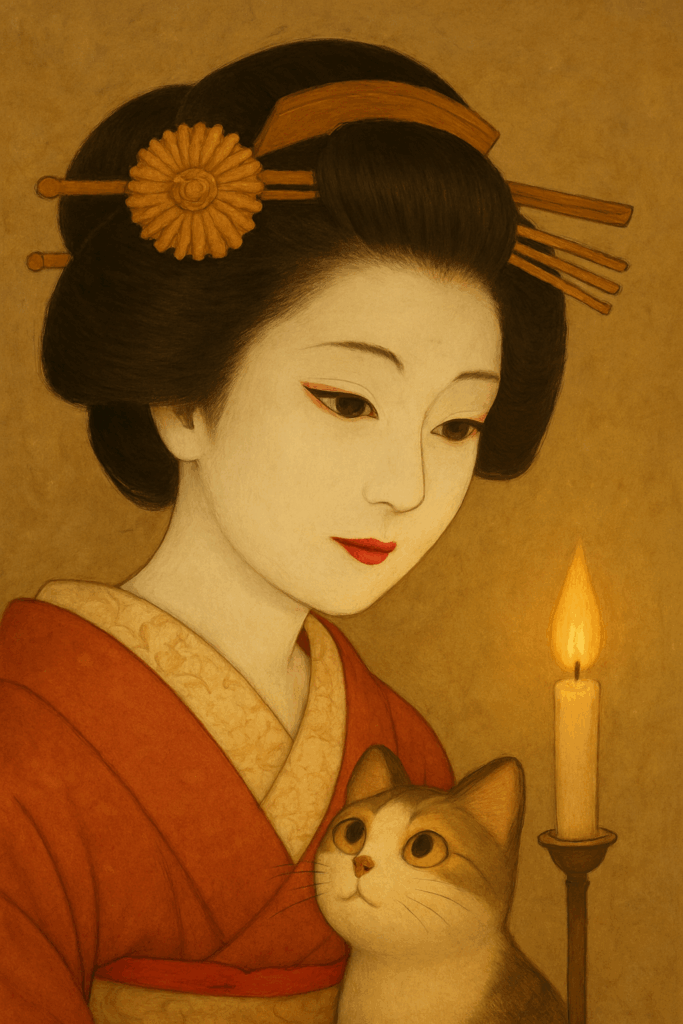
- It also enhances their beauty when illuminated by candlelight in a teahouse’s ozashiki at night. また、夜のお茶屋のお座敷でろうそくに照らされるときに一際美しく見える効果もあります。
- Geisha performances were originally influenced by kabuki, a popular form of entertainment from the same era, which is reflected in their makeup. 元々芸者の芸は同時代にブレイクした大衆芸能の歌舞伎の影響を受けていて化粧にもそれが見られます。
- Moreover, geisha’s ozashiki performances can be viewed as intimate reproductions of grand kabuki stage acts. また芸者のお座敷芸は歌舞伎の大舞台の演技をそのままコンパクトに再現したものと言う見方もできます。
- Speaking with a geisha evokes the thrill of conversing with a kabuki actor who has stepped off the stage—an effect heightened by their white makeup. 更にお客と話しをしている時の芸者には舞台を降りた歌舞伎役者と話す様なドキドキ感があり、それもお白粉による効果と言えるでしょう。
- Since ancient times, Japan has valued the whiteness of the face, as reflected in the still-common idiom, ‘white skin hides seven flaws.’ 元々日本には古来より顔の白さに価値を置き、色の白さは七難隠すと言う慣用語は現代でも頻繁に使われます。
- Interestingly, it also carries a nuance similar to the English ‘white lie,’ implying, ‘It’s acceptable to deceive with a white face, even if there are flaws referred to as the seven flaws. でも、そこには七難と呼ばれる程色々な欠点はあるけど白い顔で誤魔化せて良かったねっていう、英語のホワイトライの様なニュアンスもあるのです。
- In fact, the ‘seven flaws’ originally referred to external disasters like floods and fires, as per Buddhist teachings, rather than personal flaws. でもこの七難は仏教用語で元々は人間の欠点の意味でなく、水難や火難等の外からの災難を意味しました。
- Ironically, in modern times, the whiteness of the makeup might offer practical benefits, like protecting against harsh sunburn during summer. 皮肉な事に現代ではお白粉の白さで外の災難防止にも役に立っていると言えるかもしれません。例えば夏の火難の日焼け防止に。
- More importantly, it can also serve as a subtle countermeasure against sexual harassment from unpleasant customers—thickly applied makeup can help conceal unwanted expressions from view. でもなんと言って嫌なお客のセクハラ災難対策にも使えます。嫌な表情をお客から見えないくらい厚く塗れば良いので。

芸者/芸妓の解説はお楽しみいただけましたか?
他のスポット(お茶屋全般、お座敷遊びなど)の解説へ移動する際は、冒頭のナビゲーションボタンをご活用くださいね!