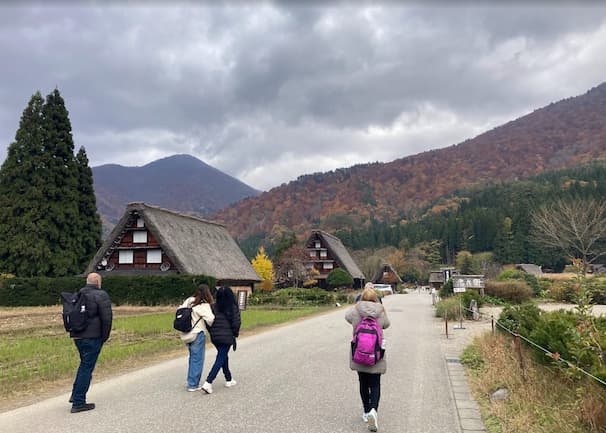
Welcome! I’m Yui, your local satoyama and nature insider in Japan. Behind the postcard image of a UNESCO World Heritage village, Shirakawa-go is a living mountain municipality where roughly 1,400 residents navigate modern life, demographic shifts, and over two million annual visitors.
While travelers admire the 300-year-old thatched farmhouses, local families send their children to a nine-year compulsory school, rely on two local clinics, and balance strict architectural preservation rules with the staggering 10-to-30-million-yen cost of re-thatching a single roof. Here, I’m sharing 10 essential municipal facts and humorous insider stories you won’t find on standard tours!
✨ Jump Straight to Village Life Facts & Secret Stories!
If these stories spark your curiosity, look closely at how modern homes quietly harmonize with historic thatched farmhouses when you stroll through Shirakawa-go. We’re excited to welcome you—see you in Shirakawa-go!
📍 Table of Contents (Click to Jump)
12. Life & Economy in Shirakawa Village (Overview)
12.1 Essential History & Key Facts
- Historical Region vs. Official Municipality of Shirakawa Village
Shirakawa-go is a historical region, not an official municipality. The actual local government is Shirakawa Village in Gifu Prefecture. Ogimachi, the village’s World Heritage settlement, accounts for roughly 20% of all households and about 30% of the population. - Village Population of 1,400 Facing Rural Aging
Shirakawa Village has a population of around 1,400 residents and approximately 600 households. Like many rural communities in Japan, it faces the challenges of an aging population and demographic decline. - Ogimachi’s Living Community of 600 Residents
About 600 people live in around 130 households in the World Heritage settlement of Ogimachi. Although many visitors see it as a tourist destination, it is actually a living community where local residents continue their daily lives. - Nine-Year Compulsory Public School With Over 100 Students
Even in this small mountain village, children attend a local public school that provides nine years of continuous compulsory education. The total enrollment from elementary through junior high school is just over 100 students. - Two Local Clinics and Winter Snowfall Challenges
The village has two local clinics that provide basic healthcare services. For specialized treatment, residents usually travel to larger nearby cities. Heavy snowfall also affects transportation and daily life during winter. - Tourism Alongside Agriculture, Forestry, and Construction
Tourism has become the village’s leading industry since its World Heritage designation. However, agriculture, forestry, construction, and various local businesses also continue to support the community. - Over Two Million Annual Visitors vs. Infrastructure Upkeep
More than two million visitors come to Shirakawa-go each year, and international tourism plays an increasingly important role. However, maintaining historic buildings and local infrastructure requires substantial ongoing investment. - Annual Municipal Budget of 6 to 7 Billion Yen
Despite its small size, the village operates on an annual general budget of roughly 6 to 7 billion yen. Revenue comes from local taxes, government grants, subsidies, and donations. - Recruiting Younger Generations Amid Limited Housing
Securing younger generations to maintain traditions, festivals, and the historic landscape remains an ongoing challenge. The village welcomes new residents, but housing opportunities are limited. - Enduring Spirit of Yui Mutual Cooperation
The traditional labor-sharing system known as Yui helped residents carry out major tasks such as re-thatching roofs. Although professional roofers now play a larger role, the spirit of mutual cooperation remains an important part of village life.
12.2 Fun Backstories & Mysteries
Q1. Won’t Shirakawa-go Lose Its World Heritage Status Because of Modern Houses?
While walking through Ogimachi Village, travelers often notice contemporary homes standing alongside historic thatched farmhouses and wonder if they violate UNESCO rules. The first half (1–8) explains Japan’s strict preservation zoning laws, while the second half (9–10) delivers a pun on why forcing everyone to live without modern heating would leave guests praying—or offering a “gassho.”
- Some visitors wonder if the modern-looking houses here could put Shirakawa-go’s World Heritage status at risk.
- Actually, UNESCO recognized this area as an outstanding example of a traditional village that has adapted to its natural environment and way of life.
- It also values the fact that the local community and its traditional way of life have survived through major social and economic changes.
- That said, residents cannot simply build any kind of modern house they want.
- Ogimachi is protected as an Important Preservation District for Groups of Traditional Buildings under Japan’s Cultural Properties Protection Law.
- New buildings and renovations are subject to local rules on things like building height, design, and colors.
- These rules help modern houses blend into the historic landscape without spoiling its character.
- So, modern life and traditional architecture can coexist here.
- After all, if everyone had to live in a 300-year-old thatched house without modern heating systems, the village might have been abandoned by now.
- Then, instead of visiting a living village, you’d be visiting a place where everyone could only offer a prayer—or a “gassho”!
Q2. How much does it cost to maintain these houses?
Gazing up at the massive thatched roofs, guests often assume local residents must be getting rich from over two million annual tourists. The first half (1–7) breaks down the staggering 10-to-30-million-yen re-thatching costs and day-tripper realities, while the second half (8–10) confesses a tour guide’s temptation to “create smoke where there’s no fire” inside a wooden village.
- Just replacing the thatched roof of a large gassho-style house can cost between 10 and 30 million yen.
- That’s enough to build an ordinary modern house! And these buildings need regular maintenance and repairs, not just roof replacement.
- You might think the villagers are making a fortune because more than two million tourists visit every year. But the reality is not quite that simple.
- Most visitors are day-trippers, and the village has to spend a lot of money managing the crowds.
- Think of parking facilities, traffic control, cleaning, and snow removal in winter. Even running the parking areas requires a considerable workforce, especially during busy periods.
- The village also receives government grants related to local hydroelectric facilities. So its finances are supported by various sources, not simply by tourism.
- In other words, having millions of visitors doesn’t automatically mean that the village or its residents are getting rich. A large part of the money goes toward maintaining the village and welcoming visitors.
- People here have to deal with all these challenges while keeping their everyday lives looking perfectly normal. I really admire their calmness and resilience.
- As a tour guide, however, I’m quite the opposite. I feel I have to make even their ordinary lives sound a little dramatic!
- You could say I’m trying to create smoke where there’s no fire. But don’t worry — I have no intention of actually lighting a fire in this village!
Official Links & Resources
UNESCO World Heritage Centre: Historic Villages of Shirakawa-go and Gokayama
Thank You & Message from Yui
👆 Thank you for reading through our complete 12-part Shirakawa-go Insider Guide! If you have any questions, customized itinerary inquiries, or travel planning feedback, please feel free to reach out anytime.
🛡️ Travel Safety Notice: Enjoying Historical Paths with Peace of Mind
Shirakawa-go and other rural Japanese heritage sites feature uneven stone steps, snow-covered footpaths, and historic steep timber staircases. While breathtaking, unexpected trips or stumbles can occur. For international visitors exploring Japan’s countryside, securing real-time travel health insurance is strongly recommended for seamless medical support during your trip.
⚔️ SafetyWing – Real-Time Travel Insurance for Global Travelers (Check Details)