Welcome! I’m Yui, your local satoyama and nature insider in Japan. Have you ever wondered why a traditional open hearth burns continuously inside Shirakawa-go’s wooden farmhouses—even without a chimney?
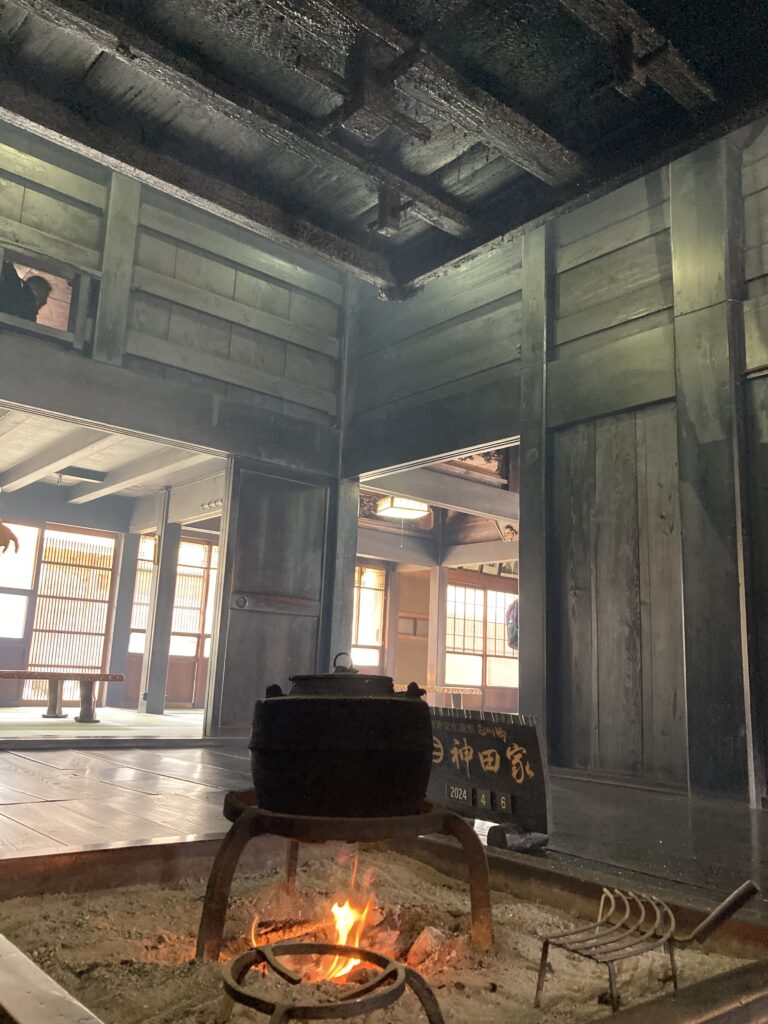
When you step inside a Gassho-zukuri farmhouse, you’ll find a gently burning irori (traditional sunken hearth) at the heart of the home. Far more than just a stove or heater, it plays a vital architectural role—sending warm smoke upward to dry, fumigate, and protect the massive wooden beams and thatched roof from insects and decay. Here, I’m sharing essential facts and humorous insider stories you won’t find on standard tours!
✨ Jump Straight to Irori Hearth Facts & Secret Stories!
If these secrets spark your curiosity, be sure to sit beside a crackling irori hearth and look up at the soot-blackened ceiling beams during your Shirakawa-go visit. We’re excited to welcome you—see you in Shirakawa-go!
📍 Table of Contents (Click to Jump)
4. Irori Sunken Hearth Secrets (Overview)
4.1 Essential History & Key Facts
- Square Ash-Filled Hearth Recessed into the Floor
Irori is a hearth commonly found in traditional Japanese houses, including gassho-zukuri, where the floor is recessed into a square or rectangular shape and wood or charcoal is burned on ashes placed at the bottom. - Heart of the Home for Cooking, Heating & Family Gatherings
Pots and kettles were hung from hooks suspended from the ceiling for cooking, while the hearth also served as a source of heating and lighting, making the sunken area a central gathering place for the family to enjoy together. - Pot Boiling and Skewered Roasting Over Hot Ashes
Cooking was generally done using pots over the fire to prepare rice and stews, while fish and other ingredients were skewered and roasted over the ashes around the fire. - Safe Ambient Light for Winter Nighttime Handwork
The hearth was used to safely light the room without the risk of tipping over, making it a good place for small tasks such as repairing tools and sewing, especially in winter and at night. - Continuous Fire Before Modern Matches or Lighters
The fire in the sunken hearth was maintained at all times to avoid the burden of repeatedly making fire, as modern fire-starting devices like lighters and matches were not available at that time. - Traditional Seating Hierarchy Around the Hearth
Around the hearth, which served as a place for family gatherings and hosting guests, the family head sat at the center, closest to the hearth, while the women and children sat farther away. - Engineered to Circulate Smoke and Warmth Upward
The most unique feature of Shirakawa-go’s hearth is its design, which ensures that smoke and heat are distributed throughout the gassho-zukuri building. - Chimney-Free Fumigation Protecting Beams and Thatch
In Shirakawa-go, the intentional lack of chimneys or large smoke openings allowed the houses to improve their durability by constantly fumigating the pillars, beams, and thatched roofs, which increased their resilience to insects and rot. - Thick Logs for Slow, Steady Smoldering
To maintain the fire in the hearth stably and efficiently over a long period, the fuel wood was kept thick and not chopped into small pieces, allowing it to smolder slowly, except when intense heat was needed. - Soot-Blackened Lattice Shelf Diffusing Heat and Smoke
A multi-purpose lattice shelf suspended directly above the hearth receives and diffuses smoke and heat while acting as a filter, causing it to glow black with soot and tar.
4.2 Fun Backstories & Mysteries
Q1. Do people cook here?
This is one of the most common questions guests ask while standing in front of an irori hearth. The first half (1–7) is the serious part explaining its practical functions in preserving the house, while the second half (8–10) is a playful, humorous take.
- Yes, they used the irori for cooking, boiling water, and heating the house. It also served as a source of light before electricity became available.
- But it had another important function: the smoke helped protect the house.
- The smoke rose through gaps in the floors and spread into the attic and thatched roof.
- The soot helped protect the wooden beams and posts from insects and moisture, while the heat kept the thatch dry and helped prevent decay.
- That’s why they kept the fire burning regularly. It wasn’t just for cooking or keeping warm. It was also part of maintaining the entire house.
- In winter, when villagers had to work outside in the bitter cold, the fire waiting for them at home must have been a great comfort.
- So, the irori helped protect both the house and the people living in it.
- Today, some people introduce an irori into their modern homes simply because they love its traditional appearance.
- But without a real need for it, maintaining a real fire can become quite a burden. It’s not always as romantic as it looks!
- In that case, it’s probably just playing with fire! Still, if all you get is a minor burn, perhaps you should be thankful.
Q2. What do they use for fuel in the irori?
This is another question that comes up all the time. The first half (1–4) covers the specific types of firewood used and how long they are seasoned, while the second half (5–10) is a playful section packed with fire and firewood idioms.
- They mainly use hardwood for firewood, especially oak, which is called nara in Japanese.
- Oak is considered excellent firewood because it burns slowly and produces steady heat.
- But freshly cut wood cannot be used right away. It needs to be dried for a long time before burning.
- In some traditional firewood preparation practices here, the wood is dried for about two years.
- This length of time seems to surprise many modern people who are used to turning on the heating with the flick of a switch.
- Some people may be reminded of an old saying: “Old wood best to burn.”
- So, I sometimes use this saying to give my senior guests a little boost. After all, they’re like well-seasoned firewood!
- However, this joke doesn’t always go over well with younger guests. They take the word “dry” literally, and their response can be pretty dry, too!
- Of course, I’m using “seasoned” in a positive sense: mature and experienced. But younger guests don’t always seem to appreciate the value of that kind of experience.
- Maybe that’s because they’re already burning with youthful passion. They’ve got a fire in their belly, so they don’t need any old firewood!
Official Links & Resources
UNESCO World Heritage Centre: Historic Villages of Shirakawa-go and Gokayama
Thank You & Message from Yui
👆 Thank you for reading to the end! If you have any questions, customized itinerary inquiries, or travel planning feedback, please feel free to reach out anytime.
🛡️ Travel Safety Notice: Enjoying Historical Paths with Peace of Mind
Shirakawa-go and other rural Japanese heritage sites feature uneven stone steps, snow-covered footpaths, and historic steep timber staircases. While breathtaking, unexpected trips or stumbles can occur. For international visitors exploring Japan’s countryside, securing real-time travel health insurance is strongly recommended for seamless medical support during your trip.
⚔️ SafetyWing – Real-Time Travel Insurance for Global Travelers (Check Details)