
KOTETSU:Philosophical Wandering Cat & Blog Navigator
Welcome! I’m Kotetsu, your local Zen & Japanese philosophy insider in Kanazawa. Are you planning a trip to Japan or searching for unique, soul-soothing spots in Kanazawa?
Forget dry textbook explanations and rigid museum audio guides! Here, I’m sharing fascinating Zen philosophy backstories, architectural secrets of minimalism, and subtle humor that you won’t find on standard travel sites or AI-generated tours.
If these stories spark your curiosity or make you smile, be sure to drop by the D.T. Suzuki Museum during your Kanazawa journey. Step into this peaceful space, sit by the Water Mirror Garden, and experience the spirit of Zen for yourself. We’re excited to welcome you—see you in Kanazawa!
🧭 Quick Navigation by Spot & Story
1. Overall Guide to This Blog 🌲
This blog post is organized into three main steps to help you easily explore the philosophy, architecture, and hidden backstories of the D.T. Suzuki Museum before or during your visit:
🧭 【Step 1】 What is D.T. Suzuki Museum? “3-Tier” Quick Answers
Curious about what kind of place this is before you visit? Here are bite-sized overviews structured in 3 tiers—ranging from a quick one-liner to a deeper summary—so you can pick the explanation that best fits your time and interest.
📋 【Step 2】 Essential Basic Information
10 key background facts highlighting the history, spatial design, and unique concepts of the museum to give you a solid foundation before stepping inside.
💬 【Step 3】 Spot-by-Spot Q&A (Inbound Perspective)
Engaging stories answering questions that naturally pop up as visitors walk through the museum (entry guidelines, the mystery of D.T. Suzuki’s name, the hallway alcove, the ○△□ scroll, and the Water Mirror Garden). Each section features a clear explanation followed by a fun, lighthearted take!
- 2. What is D.T. Suzuki Museum? “3-Tier” Quick Answers
- 3. Basic Information
- 4. Spot-by-Spot Q&A (Inbound Perspective)
- Q0. Entry Guidelines: “What kind of things can we see at this museum?”
- Q1. Meaning of Name: “What does ‘D.T.’ stand for in D.T. Suzuki?”
- Q2. Triangular Alcove: “What is this unique triangular space in the hallway?”
- Q3. ○△□ Scroll: “What do the ○△□ on this hanging scroll mean?”
- Q4. Water Mirror Garden: “What Does This Water Mean?”
- Appendix / Recommended Guides & Travel Preparation
2. What is D.T. Suzuki Museum? “3-Tier” Quick Answers
Wondering what makes this museum so special before you arrive or while you’re on the move? Here are three levels of quick summaries to help you capture the essence of this unique Zen space!
2.1 In a Nutshell (Standard Overview)
👉 Here is the standard breakdown if you want to understand the core harmony between modern architecture, Zen philosophy, and ultimate minimalism.
- The museum endeavors to convey his Zen philosophy as fully as possible through a minimalist approach to exhibits.
- The building successfully creates a philosophical atmosphere, drawing inspiration from his birthplace and the quiet, contemplative environment that nurtured this great Zen philosopher.
- This museum, created about ten years ago, represents a historically significant fusion by a globally renowned architect for this Zen philosopher, both of whom shared a profound appreciation for simplicity and minimalism.
- This unique museum embodies his intangible concept of ‘nothingness’ through tangible architecture, perfectly reflecting his Zen pursuit of that very state.
2.2 Simplified Summary (For Non-Native English Speakers)
👉 A clear, easy-to-read summary without complicated jargon, focusing straight on why this is a space to “experience rather than just look at.”
- This museum doesn’t display many objects. Instead, it offers a space for visitors to meditate, much like a Zen temple.
- Visitors hoping to learn many facts about him might be disappointed. However, they may experience his core idea of ‘nothingness’ directly through the minimal displays.
- This museum invites you to reflect on its value. You might find the experience deeply meaningful, or perhaps less so, which can be a personal discovery.
2.3 One-Liner Takeaways (For Busy Visitors / Americans)
👉 Super-short, punchy takeaways for when you’re short on time or just want the main takeaway in a single phrase!
- More like a Zen temple than a typical museum, this reinforced concrete building is a must-visit for Zen enthusiasts.
- This simple-looking museum beautifully expresses his Zen ideal of ‘nothingness’.
3. Basic Information
Here are 10 essential highlights to keep in mind about the D.T. Suzuki Museum as you explore this blog or prepare for your visit to Kanazawa!
- Honoring a Global Zen Scholar: Dedicated to the life and philosophy of D.T. Suzuki, a Kanazawa native who pioneered the introduction of Zen and Japanese spirituality to the Western world.
- Masterpiece by Yoshio Taniguchi: Designed by the world-renowned architect behind MoMA’s expansion, showcasing a streamlined, minimalist modernist structure.
- A Space for Reflection over Viewing: Unlike conventional museums with dense exhibits, it offers an intentional environment for quiet meditation and self-reflection.
- Three Wings and Three Gardens: The spatial design seamlessly connects three wings (Entrance, Exhibition, Contemplative) with three distinct garden areas.
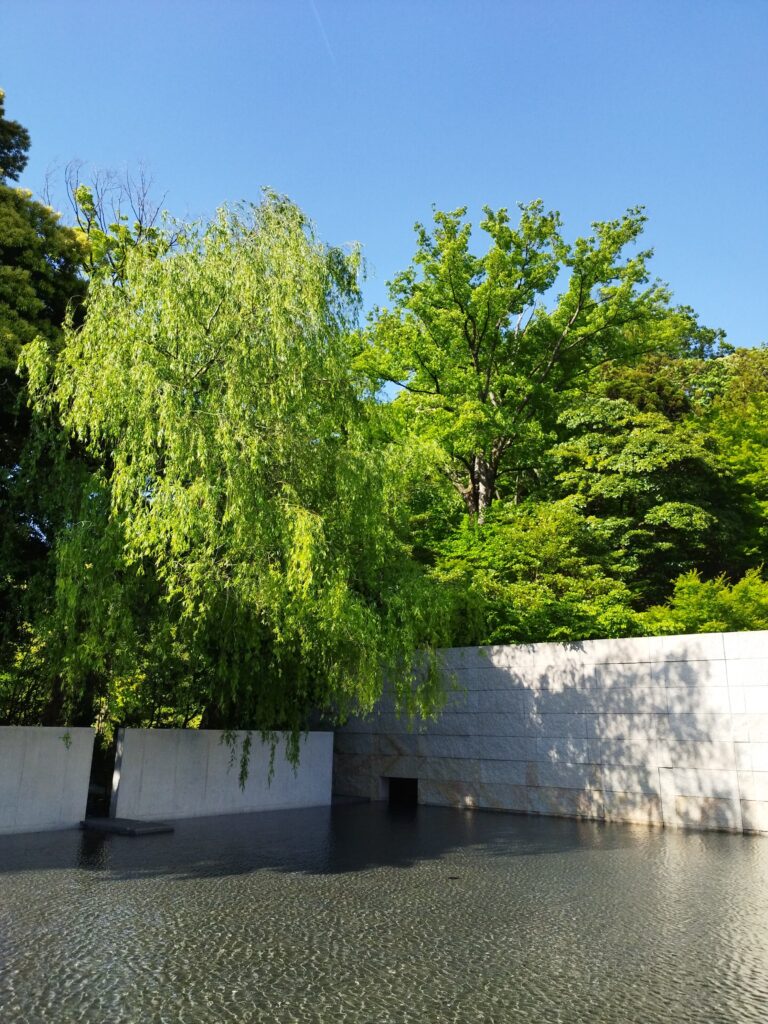
- The Iconic Water Mirror Garden: An expansive shallow pool that reflects surrounding foliage and sky, symbolizing the Zen concept of ‘nothingness’ through ripples and stillness.
- The Floating Contemplative Space: A cubic structure positioned over the water mirror, offering a peaceful sanctuary to sit and contemplate the water’s surface.
- Harmonizing with Honda Forest: Incorporates the lush, historic Honda Forest as ‘borrowed scenery,’ blending refined architecture naturally into its environment.
- The ○△□ Zen Motif: Geometric shapes representing the Zen cosmos are subtly embedded throughout the architecture’s lines, corners, and light patterns.
- Historical Context near His Birthplace: Situated in Honda-machi near his actual birthplace, evoking the peaceful environment that nurtured young Suzuki.
- Mindfulness and Photo Restrictions: Photography is restricted in specified spaces to encourage guests to disconnect from devices and fully engage ‘in the moment.’
4. Spot-by-Spot Q&A (Inbound Perspective)
As visitors stroll through the museum, various questions and moments of curiosity naturally arise at each spot. Here is a collection of engaging short stories exploring these exact spots—combining clear explanations with fun, lighthearted backstories!
Q0. Entry Guidelines: “What kind of things can we see at this museum?”
- The museum displays Suzuki’s personal writings and photographs, but the exhibition itself isn’t particularly extensive.
- Since he wasn’t a visual artist, this isn’t a place where you simply come to look at things for passive enjoyment.
- As he was a Buddhist philosopher, the museum features a unique concept designed to encourage visitors to reflect on his spiritual perspective.
- Therefore, there are some unique entry guidelines that differ from standard notices at typical art museums, which I’d like to explain to you in advance.
- First, since this museum is a space for contemplation and learning, please view the exhibits as quietly as possible.
- We hope your time here will serve as a quiet catalyst for new personal discoveries.
- We also ask that you refrain from taking photographs in certain areas—and there’s a reason for this that you won’t find in official guidebooks.
- Of course, camera shutter sounds can disturb those lost in thought… but there may actually be another, hidden Zen reason.
- As mentioned, this is a place to experience the spirit of Zen firsthand, rather than just being taught about it.
- For modern travelers who feel compelled to photograph everything, the real challenge is overcoming your “shutter-addiction”—and learning to put down the camera to truly “be in the moment.”
Q1. Meaning of Name: “What does ‘D.T.’ stand for in D.T. Suzuki?”
👉 Have you ever wondered what the “D.T.” in D.T. Suzuki actually stands for? While many westerners assume it’s simply a middle name or initials like J.K. Rowling, there is a fascinating cultural and linguistic story behind it. Here is the full backstory exploring his Buddhist origins, Western publishing habits, and a fun look at his spiritual pen name!
- His real name is “Suzuki” as a family name and his first name is “Teitaro”.
- He has the added Dharma name “Dai-setz,” which is given to a top-class Buddhist layman, and is said to have been named by his Buddhist mentor.
- The literal meaning of “Dai-setz” is “very unskilled,” but his mentor’s intention was “No mending, just being”.
- In other words, he was said to mean “very skillful” with this Dharma name.
- Therefore, in English, it is called “Daisetz Teitaro Suzuki,” or “D.T. Suzuki” for short.
- But if you don’t pronounce it well, it can sound like Diety Suzuki (God! Suzuki).
- Because of the spiritual significance with which he enlightened the world about Zen, some may mistakenly assume ‘Deity Suzuki’ as his correct name.
- Come to think of it, sometimes we see people bowing as they enter the D.T. Suzuki Museum, so for them, this building may be akin to a shrine dedicated to him.
- However, as a Buddhist philosopher, he might be displeased in the afterlife at being treated as a shrine and seeing visitors bending their heads when entering his museum.
- Before his death, he often used to say that “No mending, just being”, so perhaps he would be displeased, saying, ‘No bending, just seeing’?
Q2. Triangular Alcove: “What is this unique triangular space in the hallway?”
Photographs are not allowed inside the exhibit area of the museum, so please excuse this imagined image. Does it resemble D.T. Suzuki? Come visit and see the real thing for yourself!
👉 As you walk along the glass corridor connecting the wings, you’ll spot a distinct triangular alcove built right into the structure. Ever wondered why the architect created such an unusual shape? Here is the story behind this clever architectural design!
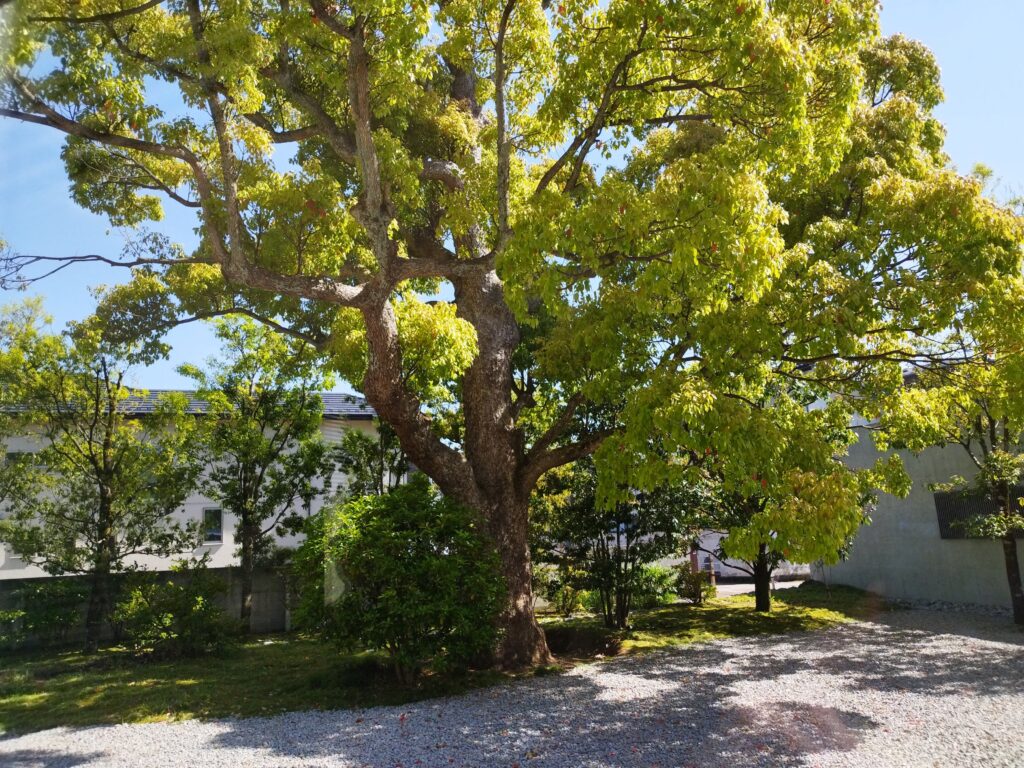
- This alcove was made to appreciate the garden in front of you and especially that camphor tree.
- Surprisingly, that camphor tree was already there when D.T. Suzuki was a child, and it is said that he grew up looking at it.
- Camphor trees were also planted artificially and cherished since ancient times because people can extract camphor, which is used as medicine.
- Camphor, used as a drug, was specifically injected to stimulate the heart and increase blood pressure.
- It’s intriguing to imagine that the young Suzuki may have drawn inspiration from this tree, using Zen as a mental camphor for weary modern individuals.
- Above all, extracting camphor medicine from camphor wood include a distillation process, which requires a great deal of time and patience.
- Maybe the patience with which he spread Zen worldwide was also influenced by that camphor tree.
- Come to think of it, not only D.T. Suzuki but every person’s personality is, to some extent, influenced by the trees they grew up looking at in childhood.
- For example, a close friend of mine had a persimmon tree and a fig tree in his garden when he was young. He always had a tendency to seek immediate and effortless rewards.
- Perhaps because he could simply pluck the fruit whenever he wanted, enjoying its delicious taste with no effort or patience?
- If trees do shape our early tendencies, maybe his easy access to persimmons and figs set him up to expect life’s rewards to be equally effortless!
- As the concept of forest bathing suggests, trees don’t just affect childhood development—they also influence the people who view them.
- That’s why, when I guide guests, I always make sure to explain this camphor tree—so they can cultivate a little more patience during my ‘incredibly fascinating yet surprisingly long’ tour!
Q3. ○△□ Scroll: “What do the ○△□ on this hanging scroll mean?”
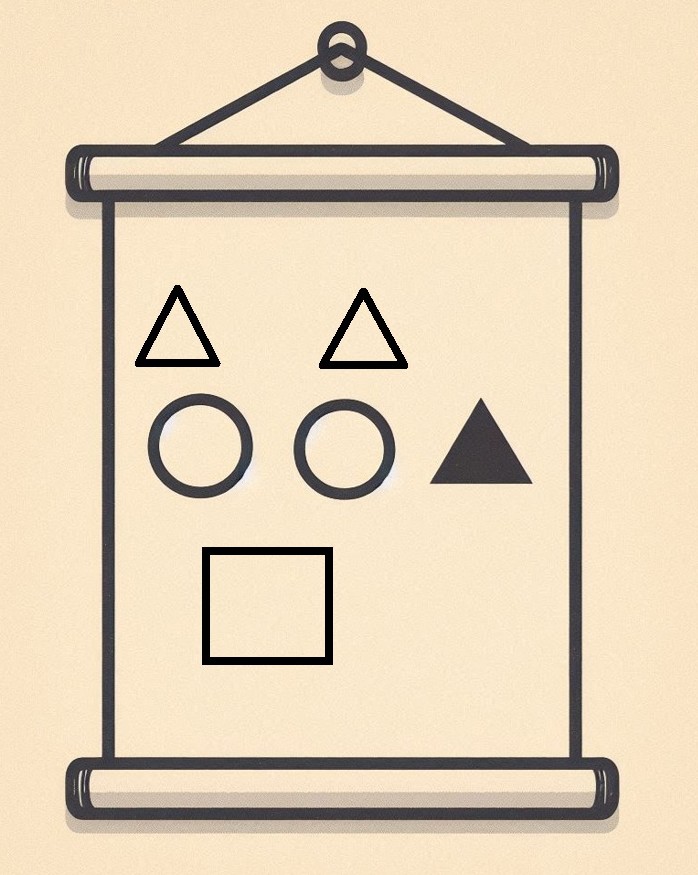
Photographs are not allowed inside the exhibit area of the museum, so please excuse this imagined image. Does it resemble D.T. Suzuki? Come visit and see the real thing for yourself!
👉 Inside the exhibition hall, one of the most striking pieces is a minimalist hanging scroll inscribed with three simple geometric shapes: a circle, a triangle, and a square (○△□). What do these basic shapes represent in Zen philosophy?
- This drawing on the hanging scroll is by D.T.’s hand, but the figures—a circle (○), a triangle (△), and a square (□)—are not his original creation.
- Originally, this was painted during the samurai era by a Zen monk who was also a painter, and it has been interpreted in many ways, with its true meaning remaining unresolved.
- Zen teaches the principle of not using words to instruct, but instead letting people realize truths by themselves, often using the traditional method of Zen questions and answers.
- The aim is to encourage people to think independently and discover some form of truth by presenting them with various riddles that have no clear answers, and this painting is considered an example of a Zen question and answer.
- Daisetz interpreted this as a representation of the universe and referenced it in various places beyond just hanging scrolls.
- According to him, the circle (○) represents infinity, the triangle (△) is the source of everything, and the square (□) is formed by two triangles (△) stacked together.
- His interpretation is that the universe is an endless series of these stacking processes with triangles, leading to an infinite array of events.
- But for laymen like us, such esoteric Zen questions and answers are far beyond our comprehension.
- Perhaps many people, especially when they are hungry, might associate oden, traditional Japanese simmered vegetables, with this figure—○△□—on a skewer.
- A famous Japanese anime features a character who always walks around with this skewered oden.
- The circle (○) looks like a sliced radish or boiled egg, the triangle (△) looks like konjac (Devil’s Tongue), and the square (□) looks like kamaboko, a fish cake.
- Can we assume that the circle (○) represents the never-ending appetite, and the triangle (△) constitutes the basis of food, like trial tasting in daily life?
- The square (□) literally seems to mean ‘square meals,’ decent meals that can be completed with repeated, everlasting trial tastings.
- The ascetic Zen monk who associates the figure with the universe is in stark contrast to us mere mortals who associate it with our appetites.
- But after eating delicious meals, of course, there is nothing left afterward, so we may be able to achieve the Zen ideal of ‘nothingness’!

The circle (○) looks like a sliced radish or boiled egg, the triangle (△) looks like konjac (Devil’s Tongue), and the square (□) looks like kamaboko, a fish cake.
Q4. Water Mirror Garden: “What Does This Water Mean?”
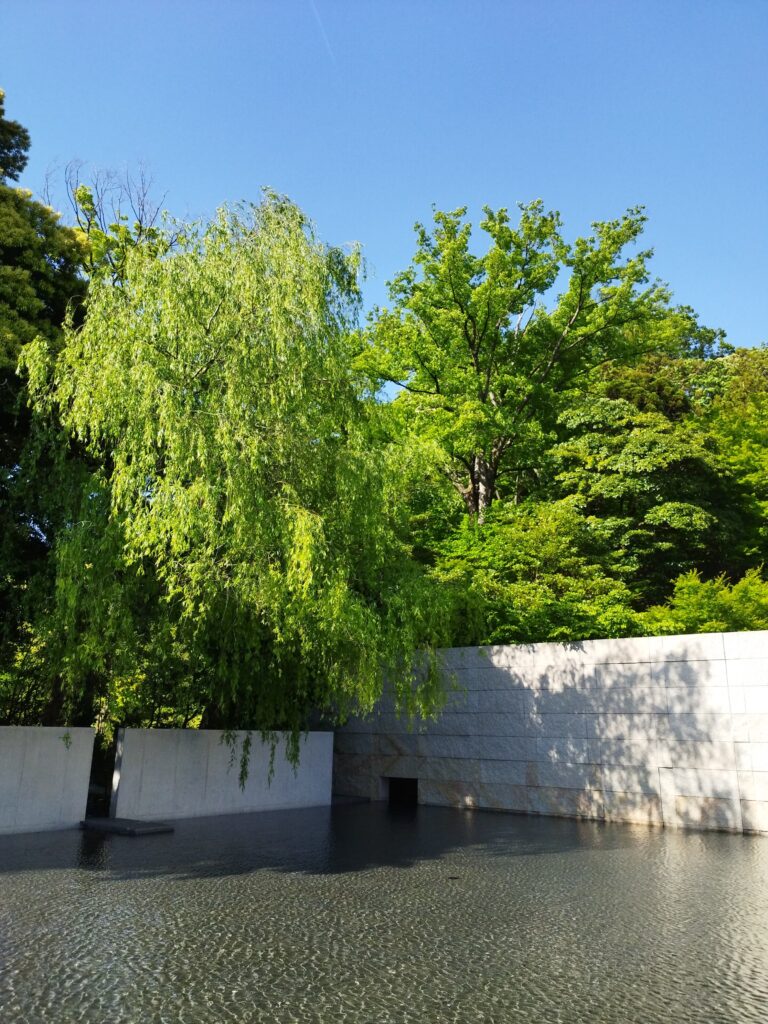
What Does This Water Mean?
👉 Stepping out into the open courtyard reveals the museum’s centerpiece: the stunning Water Mirror Garden. Featuring an expansive shallow pool that reflects the sky, trees, and floating Contemplative Space, it embodies ultimate Zen minimalism. Here is the backstory of how this serene space uses water, silence, and subtle ripples to mirror your mind!
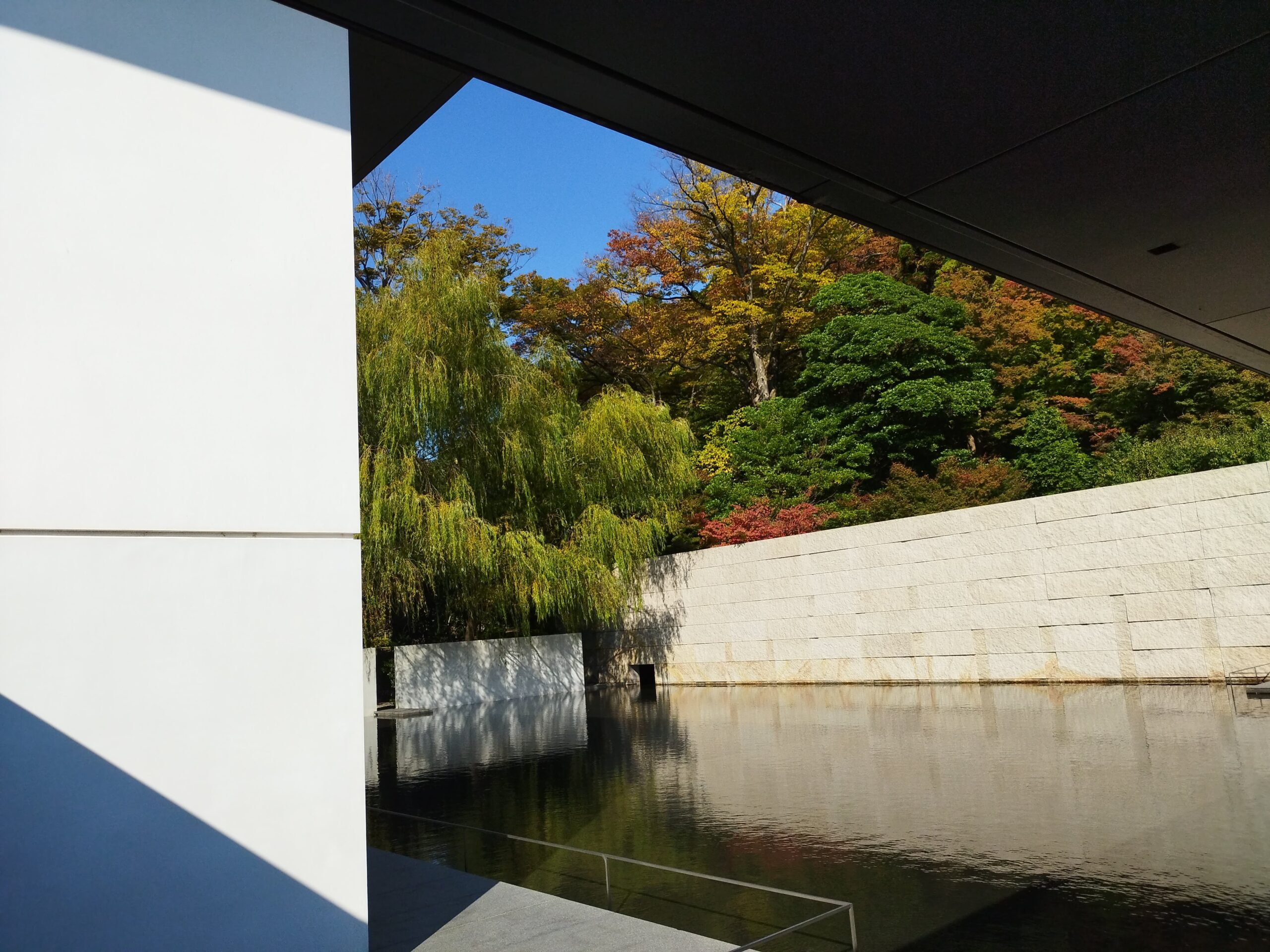
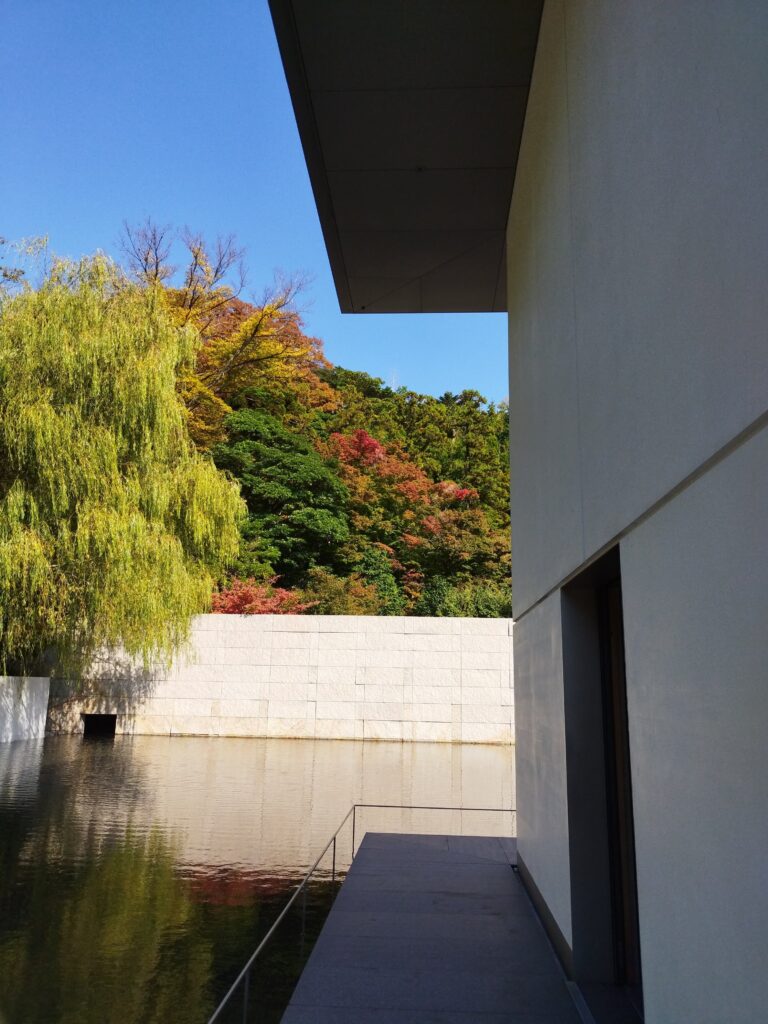
- This is called the Water Mirror Garden, and according to those involved, it reflects D.T. Suzuki’s view of the universe: ○△□.
- The ripples on the water surface signify ○ (circles), the simplified eaves and floor corners represent △ (triangles), and the garden’s outline and paving stones embody □ (squares).
- The renowned architect who designed this building also has a famous museum in Tokyo that features a similar water mirror—widely considered his signature motif.
- His philosophy shines through in this minimalist design, stripped down to its purest form, much like a water mirror itself.
- The building’s presence is emphasized by a simple interplay of lines and surfaces, free from unnecessary ornamentation.
- But I always make a point not to dwell too much on expert interpretations.
- Some guests who initially enjoyed the water mirror simply as it was later found themselves uneasy with such analyses.
- Additionally, as the D.T. Suzuki Museum is a place for meditation and learning, normal guided explanations are not allowed.
- And beyond that, there’s another reason I don’t explain much:
- In keeping with the spirit of this great thinker and architect, my explanations as a guide follow the same philosophy—pared down to the bare minimum!
The Tokyo National Museum in Ueno
by a pursuer of minimalism
Appendix / Recommended Guides & Travel Preparation
🧭 Explore More Kanazawa & Japanese Culture Guides
💡 Recommended 3 Articles to Read After D.T. Suzuki Museum:
- 🍵 Tea Ceremony Guiding in English (Deep dive into Zen & tea room culture)
- ⚔️ Nomura Samurai House Guiding Tips (Experience upper-class samurai lifestyle)
- 🌳 Kenrokuen Garden Guiding Tips (Kanazawa’s premier landscape garden)
📋 Complete Series Directory:
- Tea Ceremony Guiding in English
- Buddhist Temples Guiding Tips
- Shinto Shrines Guiding Tips
- Japanese Castles Guiding Tips
- Kutani Porcelain Guiding Tips
- Yamanaka Lacquerware Guiding Tips
- Kenrokuen Garden Guiding Tips
- Higashi Chaya District Guiding Tips
- Nomura Samurai House Guiding Tips
- Kanazawa Castle Guiding Tips
- Shirakawa-go Guiding Tips
- Gokayama Guiding Tips
- Matsumoto Castle Guiding Tips
- Takayama Jinya Guiding Tips
- D.T. Suzuki Museum Guiding Tips
- Seisonkaku Villa Guiding Tips
- Nijo Castle Guiding Tips
- Earthquake Safety Guiding Tips
🛡️ Explore Quiet Spaces & Kanazawa Streets with Peace of Mind
While the D.T. Suzuki Museum offers a serene, meditative environment, exploring nearby stone paths, wet garden stepping stones, and historic slopes can occasionally bring unexpected slips or trips. Having flexible travel insurance ensures you can relax and fully enjoy your journey across Japan.
⚔️ SafetyWing – Flexible Travel Insurance for International Travelers (Check details here)

☝ Thank you so much for reading all the way to the end! If you have any questions, feedback, or requests regarding this blog, feel free to drop me a message anytime.