Welcome! I’m Yui, your local satoyama and nature insider in Japan. In Shirakawa-go, seasonal festivals and community drills are far more than tourist spectacles—they are living rituals born from mountain agriculture, Shinto reverence, and the urgent need to protect thatched roofs from fire.

From the 1,300-year-old autumn Doburoku Festival—where freshly brewed unfiltered rice wine is offered to the deities and poured for visitors—to spring and autumn water-cannon fire drills that shoot towering arcs of water high above the village, every calendar event strengthens community solidarity. Here, I’m sharing 10 essential facts and humorous insider stories you won’t find on standard tours!
✨ Jump Straight to Festival Facts & Secret Stories!
If these stories spark your curiosity, time your trip for mid-October’s Doburoku Festival or look for the giant water-cannon cabinets tucked beside the farmhouses when you visit Shirakawa-go. We’re excited to welcome you—see you in Shirakawa-go!
📍 Table of Contents (Click to Jump)
13. Annual Events & Festivals in Shirakawa-go (Overview)
13.1 Essential History & Key Facts
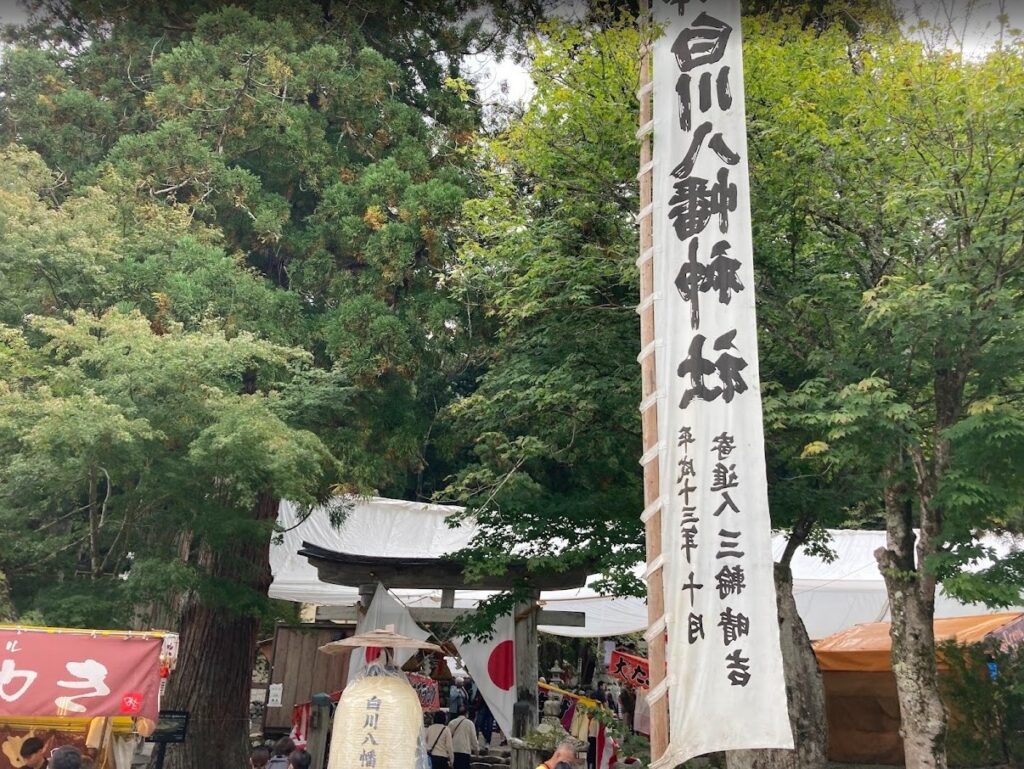
Traditional festival banner (nobori) and giant lantern welcoming visitors
- Three Pillars of Village Events Rooted in Daily Survival
Shirakawa-go’s annual events fall into three main categories: agricultural rituals (such as rice-planting and sericulture), religious festivals (such as the Doburoku Festival and New Year’s Harukoma), and practical community activities like fire-prevention drills. All of them originate from the villagers’ daily lives and survival needs rather than tourism. - October Doburoku Festival Celebrated Across Three Local Shrines
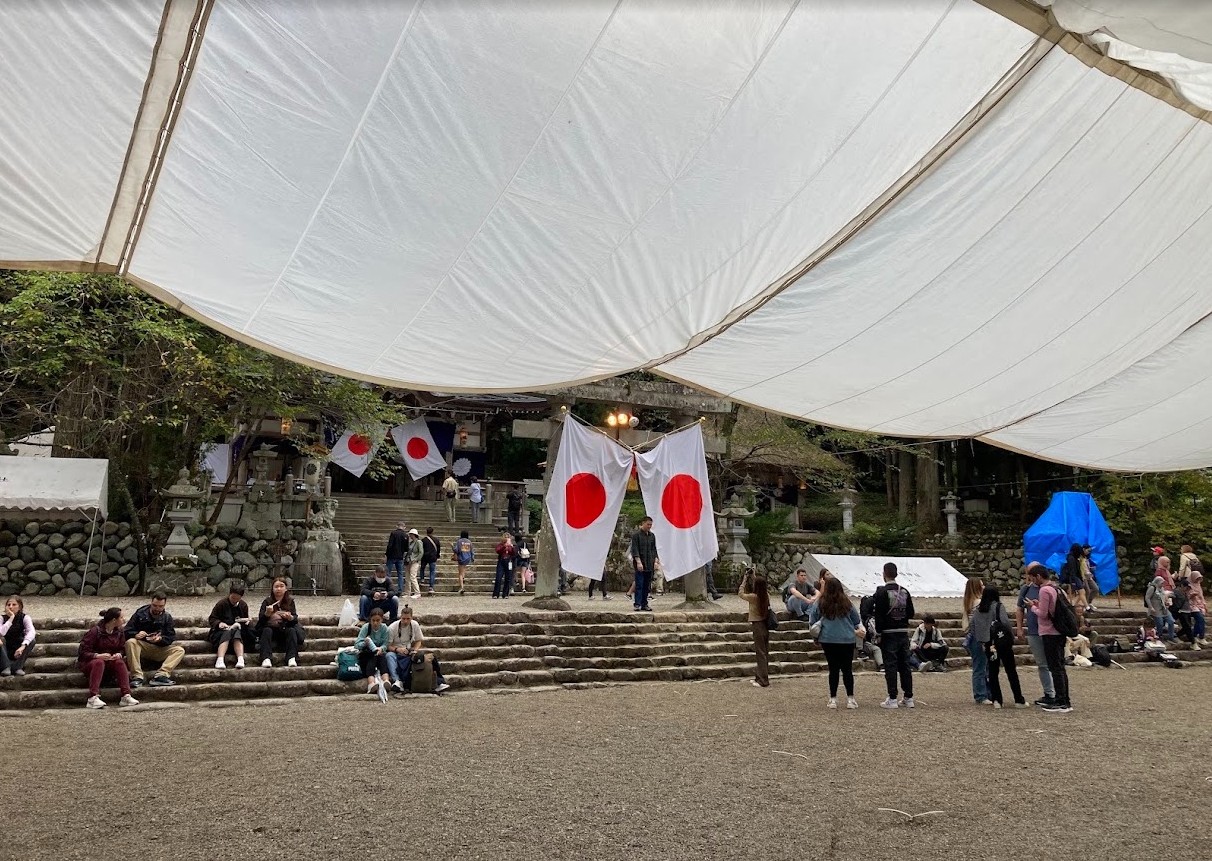
The Doburoku Festival is an autumn festival held annually from October 14 to 19 at three local shrines, with each shrine celebrating on different dates. It is centered around doburoku, an unfiltered rice-based alcoholic beverage traditionally brewed specifically for the occasion. - Harvest Gratitude, Village Safety, and Community Unity
The festival is held to thank the gods for a good harvest and pray for the safety and prosperity of the village. Historically, agriculture was central to local survival, and the event reflects the deep connection between villagers, nature, and religious faith while uniting the community. - Sacred Mikoshi Processions, Lion Dances, and Sake Sharing
Celebrations include sacred processions with a portable shrine (mikoshi) carried through the village, traditional music, folk dances, and lion dances. Doburoku is first offered to the gods in a religious ritual and then served to visitors as part of the festivities. - What Makes Doburoku Unique: Cloudy, Unfiltered Traditional Sake
Doburoku is a traditional alcoholic beverage made by fermenting rice, koji, and water. Unlike clear sake, it is unfiltered, so rice solids remain in the liquid, giving it a cloudy appearance and a somewhat thicker consistency. In Shirakawa-go, it is brewed annually for religious offerings and served to visitors during the festival. - New Year’s Harukoma Horse Dance Blessing Local Homes
Harukoma is a traditional New Year’s dance performed in costume to celebrate the new year and pray for household prosperity and good fortune. Modeled after the movements of a horse, performers visit local homes to entertain residents with celebratory songs and dances. - Kogai Festival Honoring Shirakawa-go’s Historic Silk Legacy
The Kogai Festival (Silkworm Festival) commemorates sericulture, which was once a vital industry in Shirakawa-go. Silkworms were historically raised in the large, well-ventilated attics of gassho-style houses. The festival preserves the history of silk production and its role in local livelihoods. - Spring Rice-Planting Festival Celebrating Rural Traditions
Held in spring, the Rice-Planting Festival celebrates rice cultivation and prays for an abundant harvest. Because rice farming was essential to rural life, this event highlights the villagers’ relationship with agricultural land and nature while demonstrating traditional planting customs. - Biannual Water-Cannon Fire Drills Protecting Thatched Roofs
Because thatched roofs are highly flammable and a single fire could rapidly destroy neighboring historic buildings, villagers conduct fire-prevention drills every spring and autumn. During these drills, residents test firefighting equipment by spraying water high into the air to douse the roofs. - Practical Mutual Support Sustaining the Historic Landscape
Organizing these events requires active cooperation among residents, which functions as a practical mechanism for mutual support in a small mountain village. Through joint preparation and participation, villagers pass down traditional skills, maintain community solidarity despite modern lifestyle changes, and sustain the collective effort needed to protect the historic gassho-style landscape.
13.2 Fun Backstories & Mysteries
Q1. What Is the Doburoku Festival?
Visitors strolling past village shrines and folklore museums frequently ask about Shirakawa-go’s most famous autumn celebration. The first half (1–7) traces its 1,300-year history from mid-winter snow brewing to ceremonial kittate sake pitchers, while the second half (8–10) jokes about why offering watered-down sake to the deities would amount to divine expense fraud.
- The Doburoku Festival is a traditional autumn festival unique to Shirakawa-go.
- It is held in October to pray for a good harvest, family safety, and peace in the village.
- The festival takes place at three shrines in the village, with each shrine holding its own celebration on different dates. During the festival, sacred processions, lion dances, traditional songs, and dances are performed.
- As the name suggests, doburoku, a traditional unfiltered rice wine, plays a central role in the festival. It is made by fermenting rice, koji, and water, and retains much of the rice and fermentation residue, giving it a cloudy appearance.
- The doburoku for the festival is traditionally brewed at the shrine’s sake cellar in late January, when the village is covered in snow. It is carefully managed and matured until the festival season.
- Around three o’clock in the afternoon, a ceremony is held to offer doburoku to the gods. The sake is then transferred from large barrels into smaller serving containers called kittate, and women dressed in aprons serve it to visitors in their sake cups.
- This tradition is said to date back approximately 1,300 years, making it a deeply rooted part of the village’s cultural heritage.
- Considering that sake has historically been offered to the gods, I find it quite fascinating that this festival is named after doburoku, undiluted rice wine.
- Perhaps people back then thought it would be inappropriate to offer watered-down sake to the gods. You thought I was going to make a joke about throwing cold water on a sacred ceremony, didn’t you? Too bad!
- Wouldn’t that be a kind of “padded offering”? Just imagine… a divine version of expense fraud!
Q2. What Are These Photos of?
When guests spot dramatic photos of towering water arcs shooting high above the thatched roofs inside historic farmhouses, they often ask what kind of festival is taking place. The first half (1–6) explains how life-saving fire drills became a popular seasonal spectacle, while the second half (7–10) reflects on the ultimate rationality of hoping a huge show produces “nothing to show for it.”
- These photos show fire-prevention drills held in Shirakawa-go.
- Since many of the houses here have thatched roofs, fire is one of the biggest threats to the village.
- A single fire could spread quickly from one house to another, potentially destroying several historic buildings.
- That’s why the villagers conduct fire-prevention drills in spring and autumn to prepare for emergencies.
- During these drills, villagers practice using fire hoses and other firefighting equipment, often spraying water high into the air.
- However, these drills are so spectacular that they have gradually become popular seasonal events in their own right.
- I suppose this is rather typical of gassho-style houses, which were designed to satisfy both practical needs and aesthetic considerations.
- Perhaps the villagers have become accustomed to visitors who find just about everything in Shirakawa-go fascinating.
- Perhaps they would simply say, “It’s just another fire drill.”
- “Lots of excitement, but hopefully nothing to show for it!” Perhaps that’s the ultimate form of rationality!
Official Links & Resources
UNESCO World Heritage Centre: Historic Villages of Shirakawa-go and Gokayama
Thank You & Message from Yui
👆 Thank you for reading through our complete 13-part Shirakawa-go Insider Guide! If you have any questions, customized itinerary inquiries, or travel planning feedback, please feel free to reach out anytime.
🛡️ Travel Safety Notice: Enjoying Historical Paths with Peace of Mind
Shirakawa-go and other rural Japanese heritage sites feature uneven stone steps, snow-covered footpaths, and historic steep timber staircases. While breathtaking, unexpected trips or stumbles can occur. For international visitors exploring Japan’s countryside, securing real-time travel health insurance is strongly recommended for seamless medical support during your trip.
⚔️ SafetyWing – Real-Time Travel Insurance for Global Travelers (Check Details)