Welcome! I’m Yui, your local satoyama and nature insider in Japan. Behind Shirakawa-go’s fairytale scenery lies a dramatic story of survival—how villagers rescued their disappearing heritage from dam submergence and mass depopulation to become a UNESCO World Heritage Site.
In the late 20th century, roughly 90% of the region’s nearly 2,000 Gassho-zukuri farmhouses vanished as sericulture declined and massive dam projects submerged entire valleys. Refusing to let their way of life disappear, Ogimachi villagers united under a landmark preservation charter, while relocated farmhouses found sanctuary at the Gassho-Zukuri Minka-en open-air museum. Here, I’m sharing 10 essential facts and humorous insider stories you won’t find on standard tours!
✨ Jump Straight to Village History Facts & Secret Stories!
If these stories spark your curiosity, be sure to visit both the living village of Ogimachi and the rescued farmhouses across the river at Minka-en when you come to Shirakawa-go. We’re excited to welcome you—see you in Shirakawa-go!
📍 Table of Contents (Click to Jump)
10. Village History & Yui Spirit (Overview)
10.1 Essential History & Key Facts
- Living Heritage of Japan’s Mountain Architecture
The existing gassho-zukuri villages are a precious cultural heritage that embody the unique architectural style and mountain lifestyle developed in Japan. - Centuries-Old Farmhouses Dating Back Over 300 Years
A pinnacle of functional beauty, gassho-zukuri houses were constructed between the 18th and 20th centuries, with some dating back over 300 years. - Late 20th-Century Mass Exodus and Rapid Decline
However, in the latter half of the 20th century, rapid changes in lifestyles and industrial structures triggered a mass exodus from rural villages, leading to a dramatic decline in the number of gassho-zukuri houses. - Dam Submergence vs. Economic Depopulation
These abandoned villages generally fall into two categories: those evacuated due to dam construction that submerged the land, and those gradually depopulated due to economic shifts. - Loss of Economic Rationale as Sericulture Declined
In particular, the decline in sericulture undermined the economic rationale for maintaining the large, high-maintenance gassho-zukuri houses, which had been developed in tandem with the industry. - Disappearance of 90% of Farmhouses and 20% of Villages
It is said that about 90% of the nearly 2,000 houses that once stood in the region have disappeared, and roughly 20% of the 100 villages have been entirely wiped out. - Local Solidarity Leading to UNESCO World Heritage Status
This loss sparked a sense of urgency and solidarity among local residents, ultimately leading to the adoption of a preservation charter and the designation of the area as a UNESCO World Heritage site. - Relocation to Open-Air Museums and Urban Repurposing
Some gassho-zukuri houses—collectively abandoned by villagers—have been relocated and preserved in open-air museums throughout Japan or repurposed as restaurants and tourist facilities in urban areas. - Founding of Gassho-Zukuri Minka-en Folklore Park in 1972
The Gassho-Zukuri Minka-en, a folklore park opened in 1972, stands as a prime example established to preserve valuable ethnographic heritage. - 25 Relocated Farmhouses Preserving Lost Mountain Lifestyles
Far more than a theme park, it is a vital cultural facility showcasing 25 relocated gassho-zukuri houses, preserving not only their architecture but also the lost ways of life they once embodied.
10.2 Fun Backstories & Mysteries
Q1. What is the Gassho-Zukuri Minka-en?
Standing near the entrance of Minka-en just across the suspension bridge, many travelers wonder how this museum differs from the main village. The first half (1–4) explains its mission as a sanctuary for rescued farmhouses, while the second half (5–10) coins a playful new UNESCO category for this underrated gem.
- The Gassho-Zukuri Minka-en is an open-air museum established in 1972, over 50 years ago, to preserve traditional buildings rescued from abandoned villages in Shirakawa.
- Unlike a conventional tourist attraction, this museum was established primarily to preserve these traditional buildings and their cultural heritage. It serves as a sanctuary—a last refuge—for buildings that might otherwise have been lost. The goal was to preserve as much of their cultural value as possible.
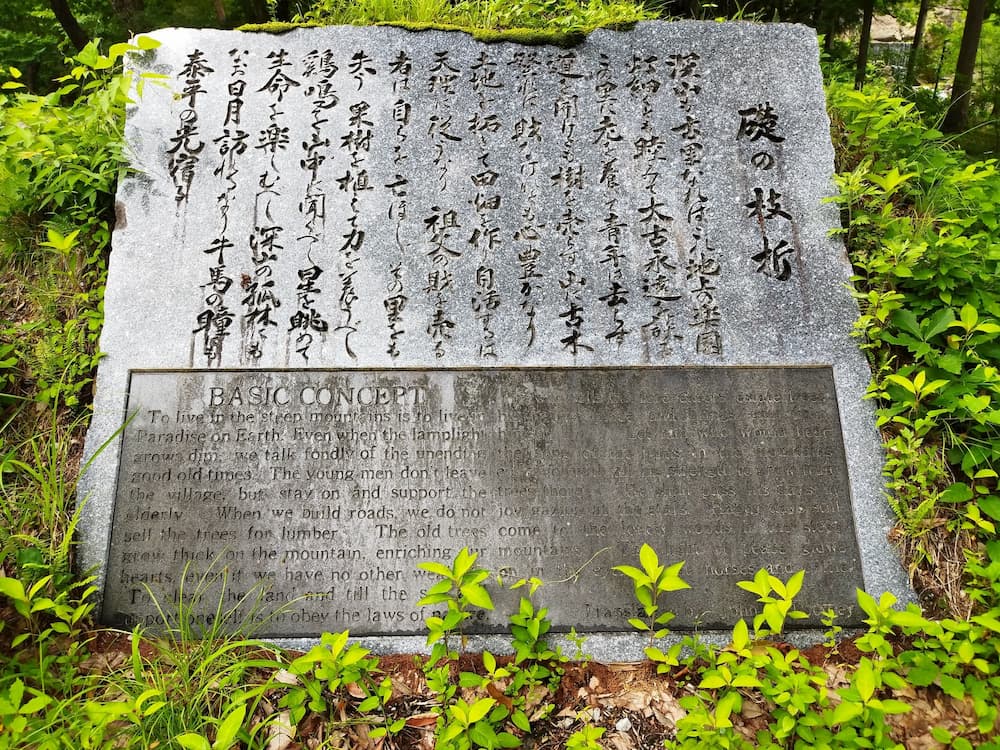
- The disappearance of entire villages and the loss of their traditional way of life were a huge shock to local people. The stone monument here stands as a lasting tribute to the determination of those who worked to protect this vanishing heritage.
- Inside the houses, you’ll find panels showing old newspaper articles about the disappearance of a village with a 700-year history, as well as stories of families being separated.
- Actually, whenever I guide visitors through this museum, I always have mixed feelings.
- Many visitors seem to regard it as little more than an appendix to the World Heritage Site of Shirakawa-go. They don’t realize that this museum was created long before the World Heritage designation, with the wonderful idea of rescuing traditional houses that were rapidly disappearing.
- It also offers visitors another place to explore, helping to spread their attention beyond the main village and ease the concentration of tourists there.
- And yet, ironically, this museum itself is not included in the World Heritage Site.
- Sometimes, I feel like giving this wonderful but somewhat underrated museum another World Heritage designation of its own!
- How about giving it a new category of its own: the world’s first “Mixed-Feelings Heritage Site”! Not to be confused with a “Mixed World Heritage Site,” like Machu Picchu!
Q2. What happened to the people who used to live in these houses?
While strolling down Ogimachi’s main street, guests often ask about the fate of the villagers whose homes were lost or relocated. The first half (1–7) traces their heartbreak and Ogimachi’s 1971 preservation movement, while the second half (8–10) compares these surviving giants to woolly mammoths.
- Not every gassho-zukuri village survived into modern times. When villages were abandoned, the people who lived there had to start new lives elsewhere.
- Some moved to nearby communities, while others left for towns and cities in search of better jobs and more convenient lives.
- For many families, leaving meant far more than changing addresses. They were leaving behind ancestral land, familiar surroundings, and a way of life that had continued for generations.
- Yet not every village disappeared. Here in Ogimachi, local residents decided they would protect their traditional houses and landscape instead of letting them vanish.
- In 1971, local residents began working together to preserve the village. Their efforts gradually stopped the population decline, and young people slowly started returning.
- Those efforts eventually led to Shirakawa-go being designated as a UNESCO World Heritage Site in 1995. The world had finally begun to recognize the value of this unique village.
- In a sense, UNESCO helped save Shirakawa-go. But none of it would have happened without the determination of local residents and the support of many people outside the village.
- Thanks to those efforts, these enormous gassho-zukuri houses have survived into the modern age. Sometimes, they remind me of giant creatures that somehow made it into the modern world.
- At first, I thought they were like dinosaurs brought back to life. But honestly, with their gentle appearance, mammoths seem like a much better comparison.
- I once considered describing Shirakawa-go as a place where mammoths have come back to life. But I eventually gave up on that idea. I didn’t want visitors to think I was bragging about our mammoth tourism market, with over two million visitors every year!
Don’t you think that was a wonderfully modest explanation?
Official Links & Resources
UNESCO World Heritage Centre: Historic Villages of Shirakawa-go and Gokayama
Thank You & Message from Yui
👆 Thank you for reading to the end! If you have any questions, customized itinerary inquiries, or travel planning feedback, please feel free to reach out anytime.
🛡️ Travel Safety Notice: Enjoying Historical Paths with Peace of Mind
Shirakawa-go and other rural Japanese heritage sites feature uneven stone steps, snow-covered footpaths, and historic steep timber staircases. While breathtaking, unexpected trips or stumbles can occur. For international visitors exploring Japan’s countryside, securing real-time travel health insurance is strongly recommended for seamless medical support during your trip.
⚔️ SafetyWing – Real-Time Travel Insurance for Global Travelers (Check Details)