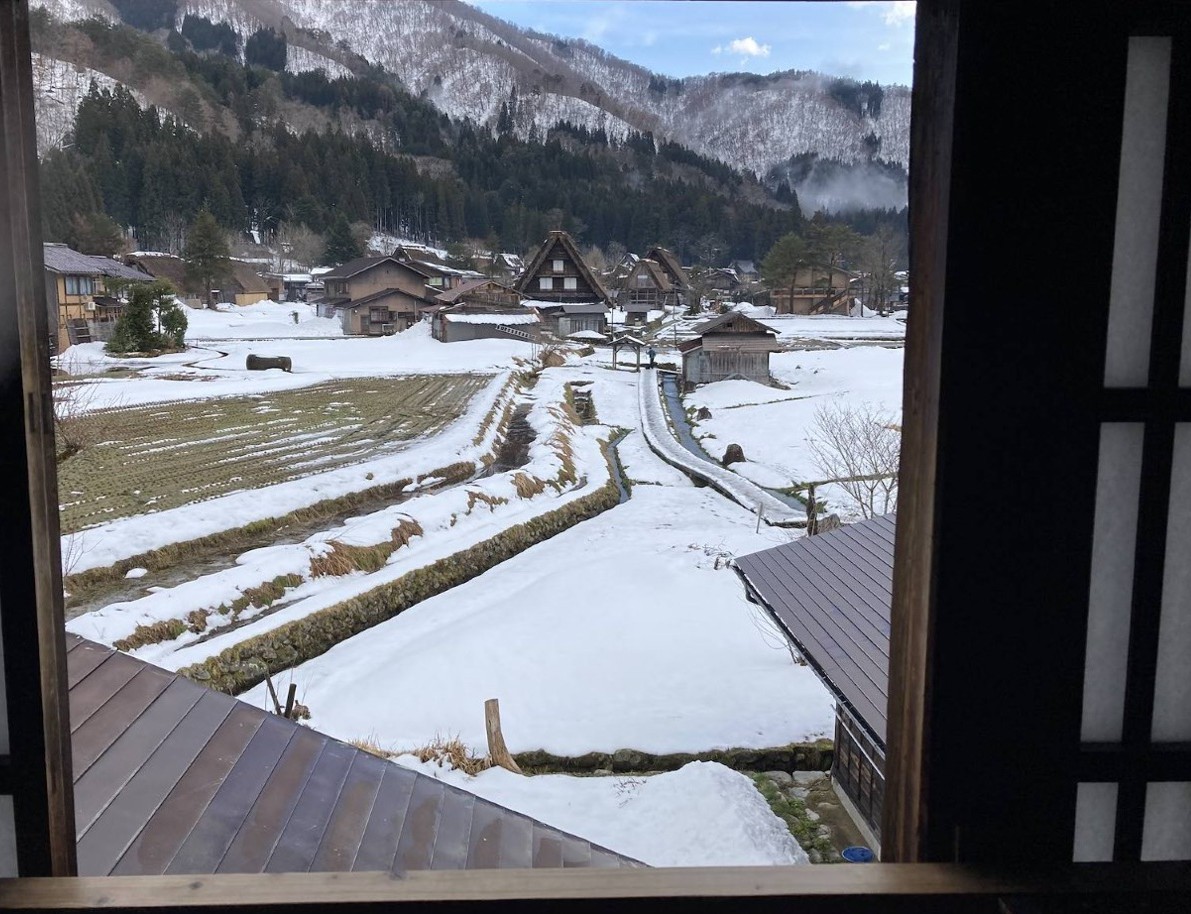
Welcome! I’m Yui, your local satoyama and nature insider in Japan. Are you curious about what life actually looked like inside Shirakawa-go’s iconic, centuries-old Gassho-zukuri farmhouses?
Several historic farmhouses in Shirakawa-go—such as the Wada House, Kanda House, Nagase House, and Myozenji Temple—open their doors to visitors while preserving the authentic atmosphere of rural life. Beyond their shared thatched roofs, each building reveals fascinating architectural differences tailored to the family’s status and profession, from village headmen to local physicians. Here, I’m sharing essential insider facts and amusing stories you won’t find in standard guidebooks!
✨ Jump Straight to Historic House Facts & Secret Stories!
If these stories spark your curiosity, be sure to step inside one or two of these remarkable residences during your Shirakawa-go trip to compare their unique layouts firsthand. We’re excited to welcome you—see you in Shirakawa-go!
📍 Table of Contents (Click to Jump)
3. Historic Houses Open to Public (Overview)
3.1 Essential History & Key Facts
- Living Heritage Farmhouses Open to Visitors
Shirakawa-go has a few gassho-zukuri farmhouses that are open to the public, many of which have been continuously used as residences since they were originally built. - Exploring Preserved Interiors from Within
These open houses allow visitors to explore the unique, well-preserved architectural features and interior showcasing historical significance of the gassho-zukuri style from within. - Shared Foundations with Tailored Structural Designs
While all of them share common features of gassho-zukuri architecture designed to accommodate extended families in an environment with limited land, each house also has distinct structural elements tailored to its own purposes. - Built for Extended Families and 24-Hour Sericulture
In general, these houses needed to be large enough to accommodate multiple generations and relatives, as well as to provide ample space for sericulture work, which required round-the-clock attention, and for the servants involved. - The Wada House: Ceremonial Entrance of the Village Headman
The Wada House is one of the largest houses, and since its owner was the head of the village, it has a formal entrance for receiving local government officials, though this entrance is usually closed except during special events such as festivals. - A Rare Historic Restroom Registered as a Cultural Asset
This house, designated as an important cultural asset with a history of nearly 200 years, includes a storehouse and a rest room next to the house—making it unusual for a rest room to be registered as a historical asset. - The Kanda House: Mezzanine Watch-Window Over a Burning Hearth
Kanda House, a branch of Wada House, features a mezzanine floor with a small window for monitoring the fire in the hearth on the first floor, which is still used and remains continuously burning all day long. - The Nagase House: High-Grade Timber of a Physician’s Residence
The Nagase family residence, once a doctor’s home, was built with centuries-old cypress, horse chestnut, and zelkova, showing their high status. - Myozenji Temple: A Chapel-Like Gassho-Zukuri Complex
At Myozenji Temple, the storehouse and bell tower gate are also built in the gassho-zukuri style, creating a unique atmosphere reminiscent of religious assemblies, similar to churches, which is not found in ordinary houses. - Open-Air Village Museum with Relocated Heritage Buildings
There is an exhibition area where over 20 gassho-zukuri houses, including a shrine and a water mill house, have been relocated, offering visitors a chance to experience the atmosphere of a whole farm village from that time, complete with carp swimming in the stream.
3.2 Fun Backstories & Mysteries
Q1. Why Is the Wada House Open to the Public?
When I explain inside the Wada House that the family’s private living quarters are still right behind the doors, guests often ask why they decided to open their home to visitors. Here is the story behind that decision—the first half (1–6) covers the historical background, while the second half (7–10) is a playful, humorous take.
- Actually, there is an interesting story behind why the Wada House was opened to the public.
- Around the time Shirakawa-go was registered as a World Heritage Site in 1995, the Wada family was apparently asked to open their house to visitors.
- A few years later, they decided to open the main part of their private home, partly for the benefit of the entire village.
- This decision seems to reflect the spirit of Yui, the traditional Japanese custom of helping one another as a community.
- The Wada family had also been a prominent family in the village for centuries, with its members serving as village headmen and playing important roles in local administration.
- In fact, their family history goes back more than 400 years.
- Interestingly, the first character in Wada, “Wa,” means harmony in Japanese.
- Japanese family names sometimes reflect a family’s history or origins. So, I sometimes wonder if the Wada family has always had a strong spirit of helping the community.
- Actually, I share this story only with guests who I feel would appreciate the family’s spirit of public service.
- In other words, even though the Wada House is open to the public, this particular explanation is not! That’s my guiding style. Not everything is open to everyone! (Laughs)
Q2. How Old Is This House? (Kanda House)
This story focuses on the Kanda House. The first half (1–5) introduces the house’s age and unique features, while the second half (6–10) is a playful section packed with idioms about smoke and breathing.
- This house was built around 1850, so it’s nearly 200 years old.
- The Kanda family originally branched off from the Wada family and later started a sake-brewing business.
- That’s why you can also see some exhibits related to traditional sake brewing here.
- Compared with the Wada House, this house focuses more on showing its architectural features in an easy-to-understand way.
- One of its most interesting features is the irori, or traditional sunken hearth. They actually keep a fire burning here, so you can experience the atmosphere of an old Japanese farmhouse more realistically.
- Many visitors ask me, “Did people really live in such a smoky environment?”
- I often explain that their main living spaces were on the first floor, away from the smoke-filled attic.
- However, some guests have asthma, and even the first floor can feel uncomfortable for them. When that happens, my confidence as a guide goes up in smoke!
- I want my guests to enjoy an authentic experience, but I sometimes regret not checking beforehand if they have any breathing difficulties. I end up feeling suffocated myself, gasping for air just like my guests.
- Guests like you can experience that firsthand, too. You might even think, “Oh, so guides are the kind of people who can’t catch their breath unless they’re making their guests happy! Why don’t you take a breather?” (Laughs)
Official Links & Resources
UNESCO World Heritage Centre: Historic Villages of Shirakawa-go and Gokayama
Thank You & Message from Yui
👆 Thank you for reading to the end! If you have any questions, customized itinerary inquiries, or travel planning feedback, please feel free to reach out anytime.
🛡️ Travel Safety Notice: Enjoying Historical Paths with Peace of Mind
Shirakawa-go and other rural Japanese heritage sites feature uneven stone steps, snow-covered footpaths, and historic steep timber staircases. While breathtaking, unexpected trips or stumbles can occur. For international visitors exploring Japan’s countryside, securing real-time travel health insurance is strongly recommended for seamless medical support during your trip.
⚔️ SafetyWing – Real-Time Travel Insurance for Global Travelers (Check Details)