 虎徹
皆さん、こんにちは!武家屋敷跡 野村家の英語案内『二階 茶室(完結編)』ページへようこそ!
野村家のメインアトラクションの一つである「二階 茶室」。全国でも珍しい2階に位置する茶室の秘密から、平等を象徴する狭い入口(にじり口)、神代杉と桐を重ねた二層構造の天井、そして控えの間に使われた樹齢1000年のカエデ一枚板まで、茶道の精神性と建築美が詰まった見逃せないエリアです。現場で即使えるフレーズと音声、クスッと笑える雑談ネタをまとめました。
📍 Quick Navigation: 各章へジャンプ
7. 二階 茶室 エリア
茶室も野村家のメインアトラクションで、多くの訪問客に見たままで楽しんでいただけますものの、やはりある程度はご説明しないとその真意が伝わらない点も多いので、実際によく質問される内容をベースに纏めてみましたので、ここもお相手の反応を見ながら使えそうなフレーズあれば現場でもお試しください。

Q1.茶室の背景:この部屋でお茶はどうやって飲むんですか?
“How do people have tea in this room?”
👉 茶室にご案内すると実際によく聞かれる質問ですが、茶道について何も知識がないとお茶を飲む姿のイメージがわかないのでしょうね。全10文の前半は茶室の説明にも使える真面目パート(1-6)と雑談力upの為の後半おふざけパート(7-10)に分かれています。
- It was fashionable during the time of the daimyo lords and high-ranking samurai to have tea rooms in their residences. 当時、大名や上級武士の間では、自宅に茶室を持つことが流行していました。
- They want to showcase not only their martial arts skills but also their refined intellectual tastes. 武芸だけでなく、洗練された知的な趣味を持っていることを示したかったのです。
- If this tea room is available and you’re interested, you can even experience tea here. この茶室が利用可能で興味があれば、実際にここでお茶を体験することもできます。
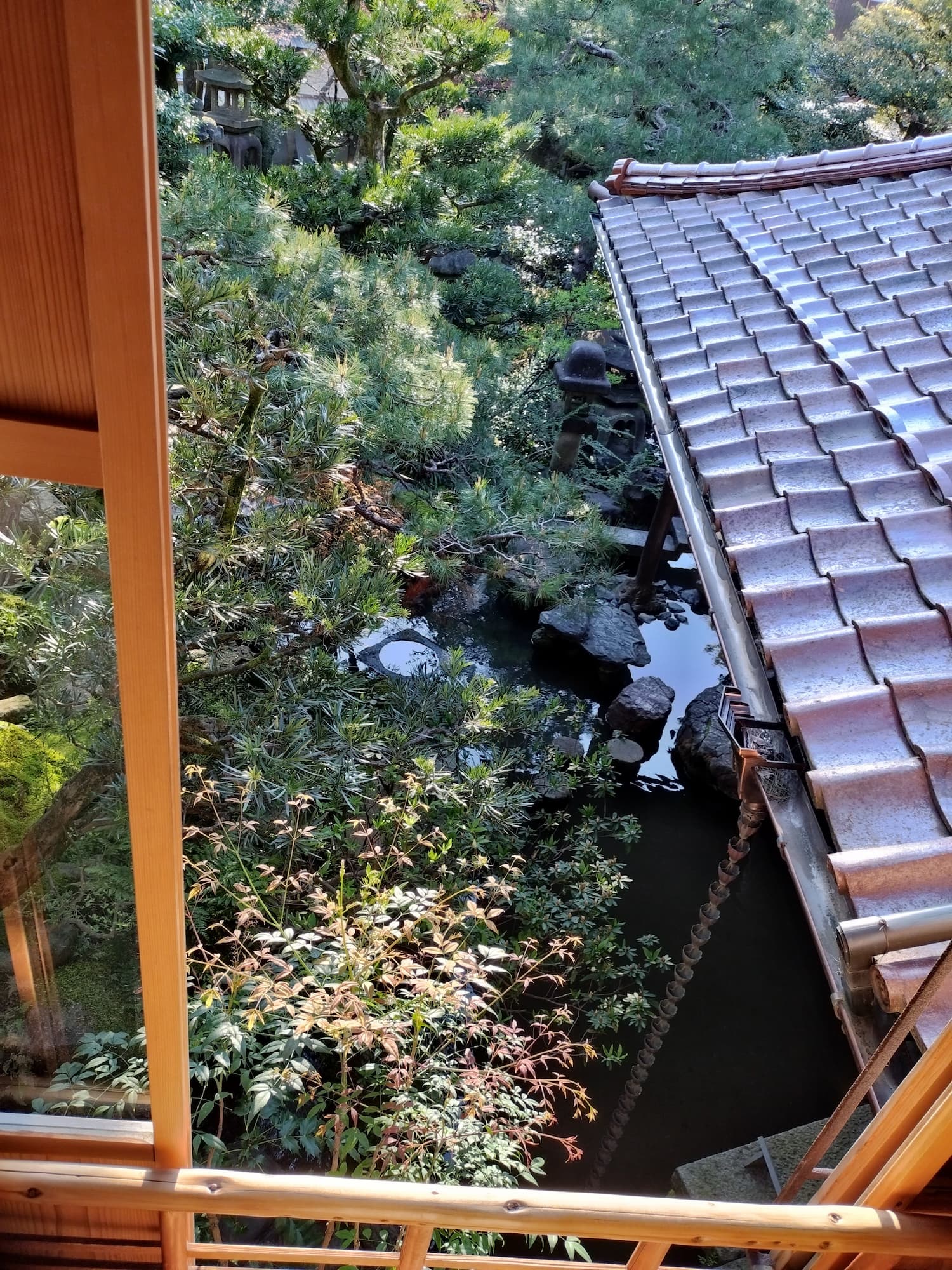
- You can enjoy tea while sitting on the tatami mat and listening to the sound of the curved stream in the garden below. 畳の上に座り、庭の曲水の音を聞きながらお茶を楽しめます。
- If sitting in seiza (the formal Japanese sitting position) is uncomfortable, you’re welcome to sit at ease instead. 正座が苦手な場合は、楽な姿勢で座っていただいて構いません。
- Since this tea room is on the second floor, we also recommend gazing out the window at the serene garden. この茶室は2階にあるので、窓から静かな庭を眺めるのもおすすめです。
- Having a tea room on the second floor is quite rare. In fact, even a famous temple in Kyoto boasts a second-floor tea room as one of its key attractions. 2階に茶室があるのは非常に珍しいことです。実際、京都の有名なお寺にも2階茶室があり、それが目玉の一つとなっています。
- Interestingly, the Nomura house doesn’t actively promote their unique tea room, which might reflect the modesty often associated with samurai. 興味深いことに、野村家はこのユニークな茶室を積極的に宣伝していません。それは、侍に典型的な控えめな態度を反映しているのかもしれません。
- However, samurai were often ridiculed by merchants for lacking business acumen or promotional skills at the time. しかし、当時侍は商人から「ビジネス下手」や「宣伝力に欠ける」と揶揄されることもしばしばでした。
- If the residents of this house had known what merchants thought of them, they might have responded with, “It’s none of your business!” もしこの家の住人が商人たちがどう思っていたか知っていたら、”It’s none of your business!”「余計なお世話だ!」と答えたかもしれませんね。

Q2. 茶室の入口:どうして入口がこんなに狭いんですか?
“Why is the entrance so narrow?”
👉 これよく聞かれる質問で、Q1と同じく茶道の世界を知らないインバウンドには一目見て素朴に思うのですね。全10文の前半(1-6)は説明にも使える真面目パート、後半(7-10)は雑談力UPの為のおふざけパートです。今回は茶道確立時期に日本に伝わったキリスト教に関する表現を織り込んでみました。

- In tea ceremonies, the entrance is deliberately made narrow to ensure that guests do not bring in weapons or belongings and must lower their heads and upper bodies to enter, symbolizing equality. 茶道では、入口が意図的に狭く作られており、ゲストが武器や荷物を持ち込まないようにし、頭や上半身を下げて入る必要があるようになっています。これには平等を象徴する意味が込められています。
- Inside the room, the seating arrangement for hosts and guests is typically determined by roles rather than social class, reflecting an egalitarian philosophy. 部屋の中では、主人と客の席順は通常役割によって決められ、身分に基づくものではありません。このことは平等主義的な思想を反映しているとも言えます。
- The fundamental principle of the tea ceremony ensures that status or wealth is irrelevant, allowing everyone to be treated equally and enjoy tea together. 茶道の基本原則は、身分や財産が関係なく、誰もが平等に扱われ、お茶を楽しむことができるようになっています。
- During the era of the samurai, society was highly stratified, with samurai at the top of the hierarchy. 武士の時代、社会は厳格な身分制度に基づいており、武士はその頂点に位置していました。
- It’s fascinating that the tea ceremony, which disregards social status, became popular among the samurai class. そんな中で、身分を問わない茶道が武士階級に広まったのは非常に興味深いことです。
- Particularly during the civil war period about 500 years ago, when samurai lived with the constant risk of losing their lives in battle, the tea ceremony may have created an extraordinary world of equality and hospitality. 特に約500年前の戦国時代には、武士たちは常に戦で命を落とす危険と隣り合わせでした。そのような中で、茶道は非日常的な平等とおもてなしの世界を生み出したのかもしれません。
- Another theory suggests that the egalitarian ideals of Christianity influenced the tea ceremony. また、別の説では、キリスト教の平等思想が茶道に影響を与えたと言われています。
- Around the time the customs of the tea ceremony were being established, Christianity was first introduced to Japan by Spain and Portugal. ちょうど茶道の習慣が確立される頃、スペインやポルトガルからキリスト教が日本に伝えられました。
- However, the ruling authorities of the time banned Christianity, viewing it as a dangerous ideology. しかし当時の支配者たちは、キリスト教を危険な思想とみなし、禁教令を出しました。
- If that theory is true and Christianity had not been banned, the name of the tea ceremony might have been quite different. Instead of a “Tea Ceremony,” we might be calling it a “Christiani-tea Ceremony”! もしこの説が真実で、キリスト教が禁じられなかったなら、茶道の名前は全く違ったものになっていたかもしれません。「茶道」ではなく、「クリスチャニティーセレモニー」に!
Q3. 茶室の天井:随分変わった造りの天井でないですか?
“Isn’t it a very unusual ceiling structure?”

👉 建築に興味があるインバウンドも多いので、気が付かない場合も含めて、ご説明すると喜ばれる箇所。全10文の前半(1-6)は説明にも使える真面目パート、後半(7-10)は雑談力UPの為のおふざけパートです。今回は茶道、美意識、木に関する表現をできるだけ織り込んでみました。
- You have a keen eye for noticing and appreciating such beauty, as most people overlook its subtle charm. その美に気が付くなんて鋭い眼をお持ちですね、殆どの人は見過ごしますのに。
- The ceiling features a unique construction with two layers, using cedar on top and paulownia wood beneath. この天井は二層に重ねられたユニークな構造で、上が杉で下地が桐板なんです。
- This design allows you to catch glimpses of the beautiful paulownia wood through small knotty holes. それで杉の節穴から下層の美しい桐が見えます。
- Paulownia wood is prized for its resistance to warping and changes in size, ensuring it maintains its exquisite appearance indefinitely. 桐は、反りや寸法変化に強く、いつまでも美しい外観を保つことができるため珍重されています。
- The rare cedar used here is known as “Jindai Sugi,” which means “cedar of ancient times.” ここで使われている希少な杉は「神代杉」と呼ばれています。
- These cedars were buried in the ground like volcanic ash, for hundreds of years. During this time, they lost their moisture and developed a captivating sheen. この杉は何百年もの間、火山灰のように地中に埋もれていました。その間に水分を失い、魅惑的な光沢を放つようになりました。
- In the tea ceremony, there were instances where a guest’s aesthetic sense was sometimes evaluated based on their ability to appreciate unusual materials such as “knotty holes”. 茶道では、この「節穴」のような珍しい素材を観賞できるかどうかで、客の美意識を評価されることがありました。
- Guests who could not grasp the value of this “knotty holes” were sometimes viewed with disdain in Japan as a person with eyes like “knotty holes”. この「節穴」の価値を理解できない客は、日本では「節穴の」ような目をした人、と軽蔑の目で見られることもありました。
- That’s why I’m sharing this explanation with guests who possess a refined aesthetic sense, like you, today. だから今日、あなたのような洗練された審美眼を持つゲストにこの説明をお伝えするのです。
- After all, I wouldn’t want to be considered a “knotty holes-eyed” guide myself. だって私も節穴の目をしたガイドと思われたくありませんので。
Q4. 控えの間:この床板には何か特別な意味や特徴があるのですか?
“Does this floorboard have any special meaning or characteristics?”
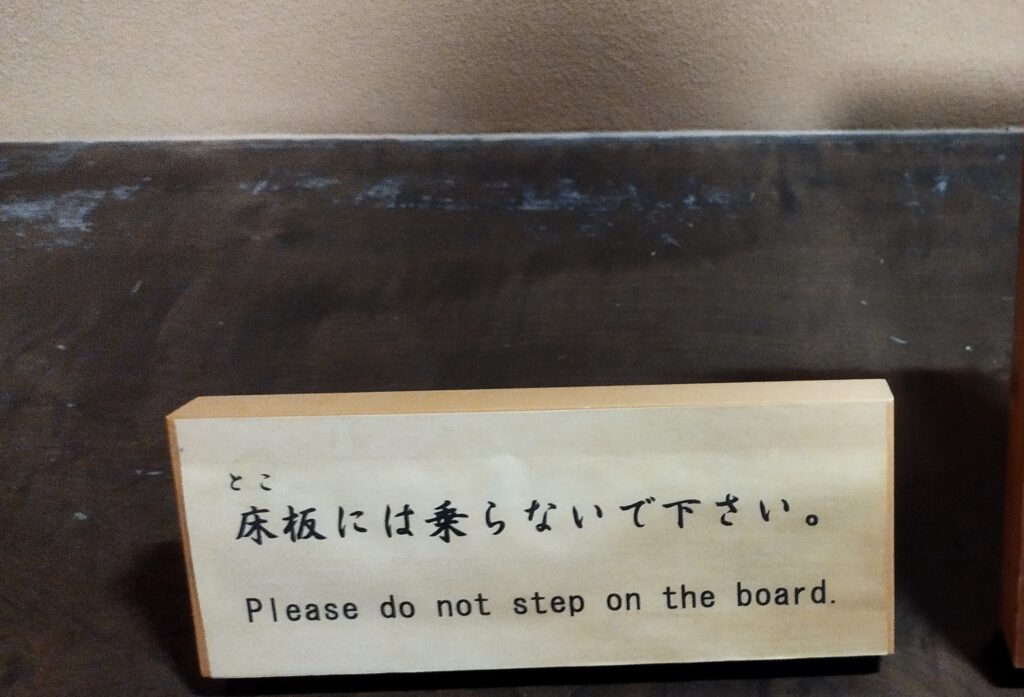
👉 床板も多くのインバウンドは気が付きませんので、建築へ興味がありそうな方を想定した千年楓一枚板の説明ネタです。全10文前半の真面目パート(1-4)と後半のおふざけパート(6-10)に分かれています。今回は茶道、遠慮、気遣い、カエデに関する表現をできるだけ織り込んでみました。👉英語音声は落ちた紅葉なんか関係ない元気いっぱいのオーストラリア女性です。👄下記10文の演習ツールご利用の際はこちらへ!
- The floorboards are made from a single piece of a 1,000-year-old maple tree, which is incredibly precious and rare. 床板は樹齢約千年の紅葉の一枚板を使っていてとても貴重で珍しいものです。
- Maple wood is generally light cream to reddish-brown in color, with a straight, fine, and uniform grain, which gives it a unique beauty. 一般的にカエデの木は明るいクリーム色から赤褐色の木目はまっすぐできめは細かく均一で独特の美しさがあります。
- Maple wood is commonly used due to its hardness, strength, durability, and impact resistance, making it a popular choice for furniture and musical instruments. また硬く、強く、耐久性に優れ、衝撃に強いため、家具、楽器などに使われていて素材としては珍しいものではありません。
- However, this maple board is not only ancient but also precious in a double sense, as it’s rare to find and procure maple trees large enough to craft such an expansive single piece. その樹齢の長さだけでなく、この様な大きな1枚板が取れる紅葉の木はそんなにありませんので二重の意味で貴重です。
- The Nomura family must have been quite wealthy to have such a contraption not only in the tea ceremony room but also in the antechamber. 茶室だけでなく、控えの間にこんな仕掛けをするなんて、野村家は本当にお金持ちだったんですね。
- While wealthy individuals often use rare and expensive materials to show off, the samurai’s way of displaying wealth may have been a bit different. しかもただのお金持ちだと、珍しい高価な材料を使って見せびらかすだけなんですけど、サムライの見せ方は少し違うのかもしれません。
- Example, a maple tree could have been used as a distinctive accent in a ceiling, allowing waiting guests to enjoy the view of imagined autumn leaves. 例えば、カエデの木であれば天井に使って、空想の秋の紅葉を見上げて楽しむ趣向なんかできたかもしれません。
- On the other hand, the use of inconspicuous floorboards may have been intended to evoke the image of autumn leaves falling into the meandering water of the garden. でも、目立たない床板に使ったのは、曲水に落ちた紅葉の葉っぱを見下ろすイメージを意図したのかもしれません。
- Perhaps the maple tree was chosen to avoid being pestered by many visitors, especially the lord’s lieutenants. 多くの来客、特に殿様の近臣達から、ねたまれないように、カエデの木を選んだのかもしれません。
- Since the language of maple flowers symbolizes reservation, could it have been meant to represent a thousand years of restraint, rather than a thousand years of loneliness? カエデの花言葉は遠慮なので千年の孤独ならぬ千年の遠慮を示す為に。
Appendix / あわせて読みたい記事&旅の備え
🧭 あわせて読みたい!笑える通訳ガイド解説術シリーズ
💡 野村家ガイドの後に特におすすめの3選:
- 🍵 茶道を英語で案内|笑いも取れる解説術(野村家の茶室解説から一歩深掘り!)
- 🏯 金沢城を英語案内・笑いも取れる解説(野村家が仕えた前田家の本拠地へ)
- 🌳 兼六園を英語案内・笑いも取れる解説(金沢観光の王道ルートを制覇)
📋 エリア・テーマ別 全リスト:
- 茶道を英語で案内|笑いも取れる解説術
- お寺を英語で案内|笑いも取れる解説術
- 神社を英語で案内|笑いも取れる解説術
- 日本の城を英語案内・笑いも取れる解説
- 九谷焼を英語案内・笑いも取れる解説
- 山中漆器で笑いも取れる解説術
- 兼六園を英語案内・笑いも取れる解説
- ひがし茶屋街を英語案内・笑いも取れる解説
- 野村家を英語案内・笑いも取れる解説
- 金沢城を英語案内・笑いも取れる解説
- 白川郷を英語案内・笑いも取れる解説
- 五箇山を英語案内・笑いも取れる解説
- 松本城を英語案内・笑いも取れる解説
- 高山陣屋を英語案内・笑いも取れる解説
- 鈴木大拙館を英語案内・笑いも取れる解説
- 成巽閣を英語案内・笑いも取れる解説
- 二条城を英語案内・笑いも取れる解説
- 日本の地震を英語で・笑いも少しだけ?解説
🛡️ 急な階段や庭園の飛び石も安心して見学するために
野村家をはじめとする歴史的建造物や日本庭園は見どころが多い反面、周囲に気をとられ、段差に気が付かず、転倒するなど、思わぬ事故のリスクも隣り合わせです。海外ゲストが日本全国の歴史探訪を安心して楽しめるよう、急なケガや体調不良をカバーする旅行保険の準備を事前にお勧めしておくと安心です。
野村家 二階茶室エリアおよび全章のご案内はいかがでしたか?
全体の基本情報に戻る場合や、他の各エリア(玄関・刀剣・庭園・上段の間・座敷)を復習する際は、冒頭のナビゲーションや親記事をご活用くださいね!