 虎徹
皆さん、こんにちは!武家屋敷跡 野村家の英語案内『一階座敷・廊下(美術・工芸)』ページへようこそ!
庭園の濡れ縁に面した一階座敷や廊下には、当時の絵師が描いた水墨山水や牡丹の襖絵、希少な黒柿の手彫り釘隠し、前田家15代藩主の掛け軸、ウグイスのための「聲桶(こうけい)」など、見逃せない美術工芸の意匠が詰まっています。現場で使える実践的英語表現からクスッと笑える裏話までまとめました。目的の項目ボタンからご活用ください。
📍 Quick Navigation: 各章へジャンプ
6. 一階座敷・廊下 エリア
Q1.襖絵&牡丹:この襖絵には何の花が描かれているのですか?
“What kind of flower is depicted in this fusuma painting?”
👉 保護用のガラス越しなので、優雅さそのまま伝えることは難しいかもしれませんが、せめてトークでカバーできれば良いですね。10文の前半(No1-6)は説明にも使える真面目パート、後半(No7-10)は雑談力アップ用のおふざけパートです。ここでは牡丹に関する説明ネタと関連表現が学べます。
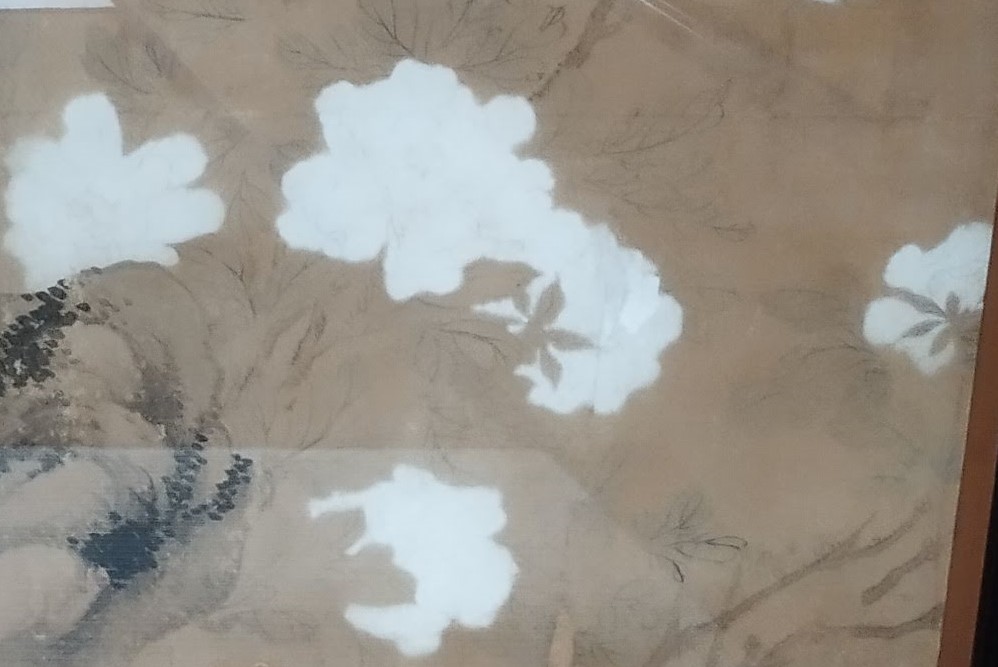
- The fusuma paintings depict traditional monochrome landscapes and white peonies painted by the best painters of the time. 襖絵には、伝統的な水墨山水画と、当時の最高の画家によって描かれた白い牡丹が描かれています。
- Since the symbolic meanings of peonies are “elegance” and “wealth,” they are often depicted on fusuma paintings in the residences of lords. 牡丹の花言葉は「優雅」と「富」であるため、牡丹は大名屋敷の襖絵によく描かれることがありました。
- Interestingly, peonies were considered unlucky flowers among the samurai class. Typically, when most flowers wither, both the flowers and the entire plant gradually decline and die. 興味深いことに、牡丹は侍階級においては不吉な花と考えられていました。通常、多くの花は枯れるとき、花だけでなく植物全体が徐々に衰えていきます。
- Peonies, however, have such heavy petals that they cannot support their weight, causing the flowers to fall off while the stem remains intact. しかし、牡丹は花びらが重すぎて自重を支えきれず、花が落ちる一方で茎はそのまま残ります。
- The sudden and simultaneous shedding of petals reminded people of the severed heads of defeated samurai. 花びらが一斉に散る様子は、敗れた侍の首が落とされる姿を連想させました。
- Yet, the sight of the delicate petals falling together conveys both strength and transience, making peonies a popular subject for paintings. それでも、美しい花びらが一緒に落ちる様子は、強さと儚さの両方を伝え、牡丹を絵画の題材として人気のあるものにしました。
- In China, their country of origin, peonies are called ‘the king of flowers’ or ‘the flower god’ because even a single bloom in a vase can create a luxurious atmosphere. 中国では、牡丹の原産地であり、牡丹は「花の王」または「花神」と呼ばれています。一輪の花だけでも贅沢な雰囲気を作り出すからです。
- Unlike cherry blossoms or plum blossoms, which require many flowers and branches to create a beautiful painting, peonies can create a stunning image with just one flower. 桜や梅のように、多くの花や枝を必要とする絵と異なり、牡丹はたった一輪で美しい絵を作り出すことができます。
- While painters often needed to depict numerous flowers and branches for cherry or plum blossoms, a single peony was sufficient. 画家が桜や梅の花を描く際には、しばしば多くの花や枝を描く必要がありましたが、牡丹の場合は一輪で十分でした。
- This seemingly lighter workload might be why the famous painter, tasked with decorating so many fusuma panels in this house, chose peonies! この見た目が軽そうな作業量が、この家の多くの襖絵を飾ることを任された有名な画家が牡丹を選んだ理由なのかも!
Q2. 釘隠し:この装飾品は何なんですか?
“What are these ornaments?”

👉 座敷の釘隠しの展示は目を引きますので、黒柿情報とその辺りの英語表現を織り込んだ説明ネタです。全10文の前半は説明にも使える真面目パート(1-7)と雑談力upの為の後半おふざけパート(8-10)です。👄下記10文の演習ツールご利用の際はこちらへ!
- These are ornaments used to conceal nail heads. これは、釘の頭を隠すために使用される装飾品です。
- In many Japanese houses, they serve as decorative accents, available in various designs. 多くの日本の家では、さまざまなデザインで室内のアクセントとして使われています。
- Notably, they are made from rare black persimmon wood, not metal. 特に、これらは金属ではなく、希少な黒柿の木で作られています。
- Black persimmon refers to the black-patterned part of persimmon trees that appears after more than a hundred years. 黒柿とは、樹齢100年以上の柿の木に現れる黒い模様の部分を指します。
- Valued for its durability, unique coloration, and beautiful grain, black persimmon is also used in high-end furniture. その耐久性、独特な色合い、美しい木目が評価され、高級家具にも使用されています。
- Ordinary nail head covers are often made from metal, which can be mass-produced using molds at a lower cost. 一般的な釘隠しは、金型を使って低コストで大量生産できる金属材料がよく使用されます。
- However, these wooden ornaments must be individually hand-carved by skilled artisans, enhancing their value. しかし、これらの木製の装飾品は熟練した職人が一つひとつ手彫りで作る必要があり、その価値を高めています。
- In English, the expression “to drive a nail” means to complete a task. 英語では「to drive a nail(釘を打つ)」という表現が、仕事を完了するという意味で使われます。
- However, in Japan, driving a nail doesn’t signify the job is complete. しかし、日本では釘を打つだけでは仕事が完了したとはみなされません。
- The task is only finished when the nail is carefully concealed—not simply by driving it in. 釘が丁寧に隠されて初めて、仕事が完了したとされるのです。to drive a nail(釘を打つ)だけではないのですよ!
Q3. 掛軸:この掛け軸には何と書いてあるんですか。
”What’s written on this hanging scroll?”
👉 この掛け軸の由来(前田家15代筆)をご説明すると、何が書いてあるのかしばしば聞かれますので、その辺りのご説明を15代目のキャリアを含め前半(1-5)パートに、後半(6-10)はいつもの雑談用おふざけパートで置いてみました。(書の正確な内容につきましては、今のところ専門家の裏付けが取れておりませんので、書の意味に関するところは現地ガイドの解釈としてご参考程度に。)
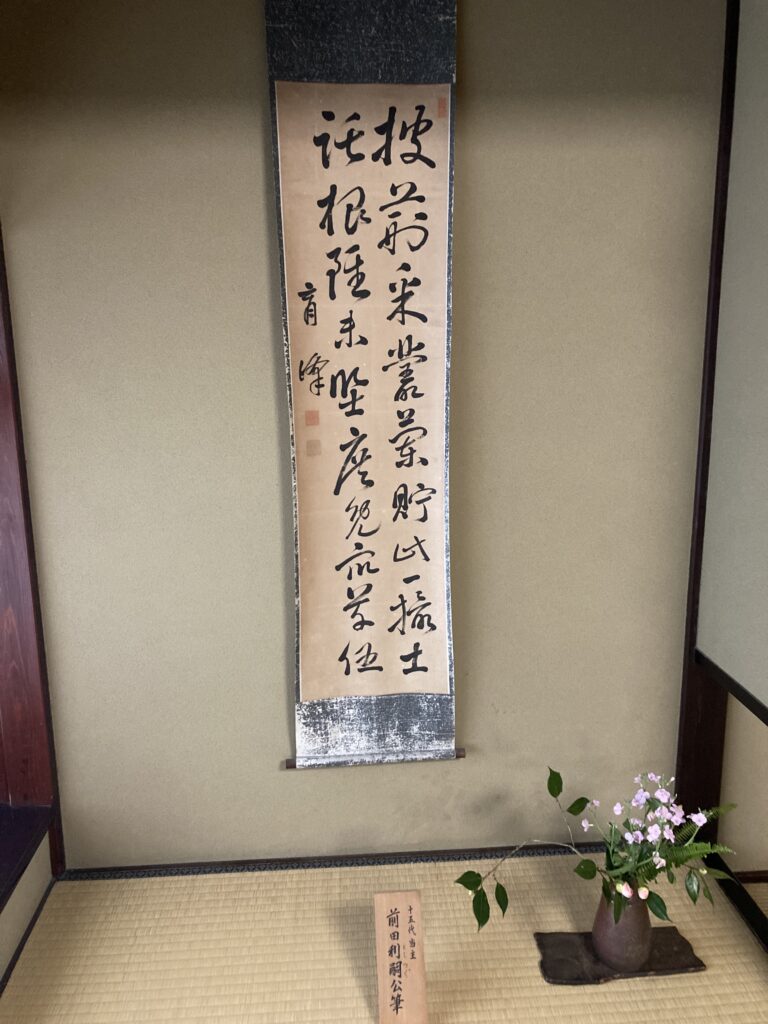
- Well… unless you’re a specialist, it’s almost impossible to read it accurately. But we believe it contains moral teachings for samurai. そうですね……専門家でないと正確に読むのは難しいんですが、どうやら武士のための教えが書かれているようです。
- During the samurai era, it was common to write ethical lessons—blending Shinto, Confucian, and Buddhist ideas—in classical Chinese-style poetry. 武士の時代には、神道・儒教・仏教の道徳を融合させた教えを、漢詩の形式で書くことがよくありました。
- It was a way of reminding warriors to balance everyday life with spiritual cultivation. 日常生活と精神修養のバランスを忘れないように、というわけですね。
- This particular scroll was written by the fifteenth lord of the Kanazawa domain. The signature on the left is his pen name, which makes the piece historically valuable. この掛け軸を書いたのは、加賀藩の十五代藩主です。左側の署名は彼の雅号で、歴史的にも価値があります。
- Ironically, the samurai era ended when he was only ten, and his family had to leave Kanazawa Castle after the fourteenth generation. Even so, he remained part of the nobility and even studied in England in his early teens. ただ、皮肉なことに、彼が十歳のときに武士の時代は終わってしまい、十四代で前田家は金沢城を離れることになりました。それでも彼自身は華族として扱われ、十代前半にはイギリスにも留学しています。
- Because he was both a nobleman and a cultural figure, someone likely commissioned him to write these “words to live by.” 身分も教養も備えた人物でしたから、誰かが「人生訓を書いてほしい」と依頼したのでしょう。
- He was probably influenced by British ideas of knighthood—everything from the heroic “knight in shining armor” to the “carpet knight,” the sort who talks bravely but never sees a battlefield. イギリスで騎士道文化にも触れたはずです。 たとえば、危機から救ってくれる「白馬の騎士」から、戦場を知らない「カーペット・ナイト(絨毯の上の騎士)」まで。
- He must have heard phrases like “chivalry is not dead”… or perhaps “chivalry has gone,” depending on who he met. 「騎士道精神は死んでいない」あるいは「もう失われてしまった」といった言葉にも、きっと心を動かされたでしょう。
- Sadly, many visitors today aren’t very interested in the deep meaning of this scroll. Instead, they’re more fascinated by scrolling their own devices for trivial information. 残念ながら、現代の多くの来館者は、彼の深い“人生の教え”よりも、自分のスマホをスクロールして些細な情報を見るほうに夢中なんです。
- If he could see that from the afterlife, he might sigh and say, “The spirit of the scroll has gone!” もし彼があの世から見ていたら、こう嘆くかもしれません。 「スクロール(掛け軸)の精神は消えてしまった!」
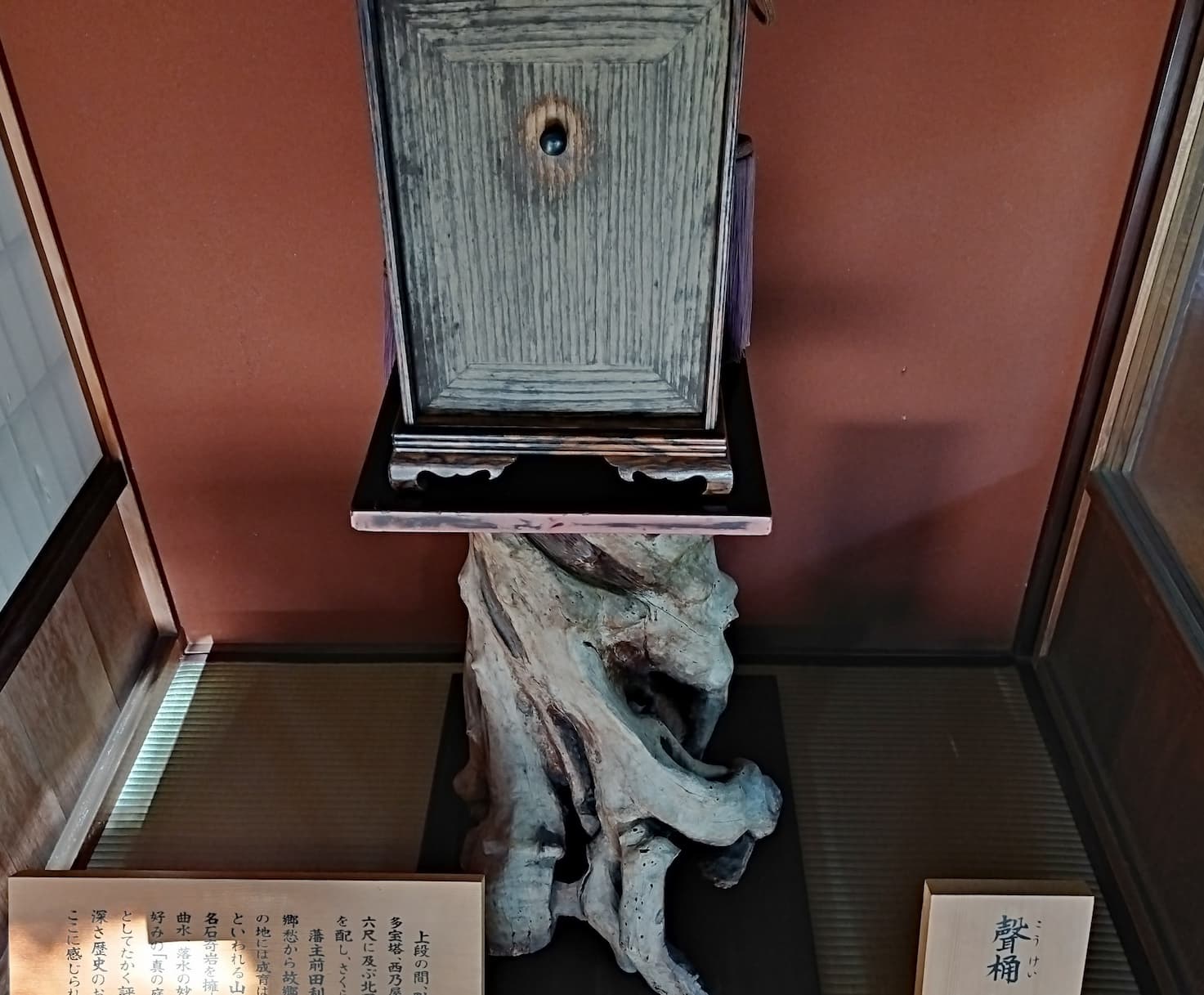
Q4. 聲桶(こうけい)🐤これは何のための箱ですか?
“What is this box for?”
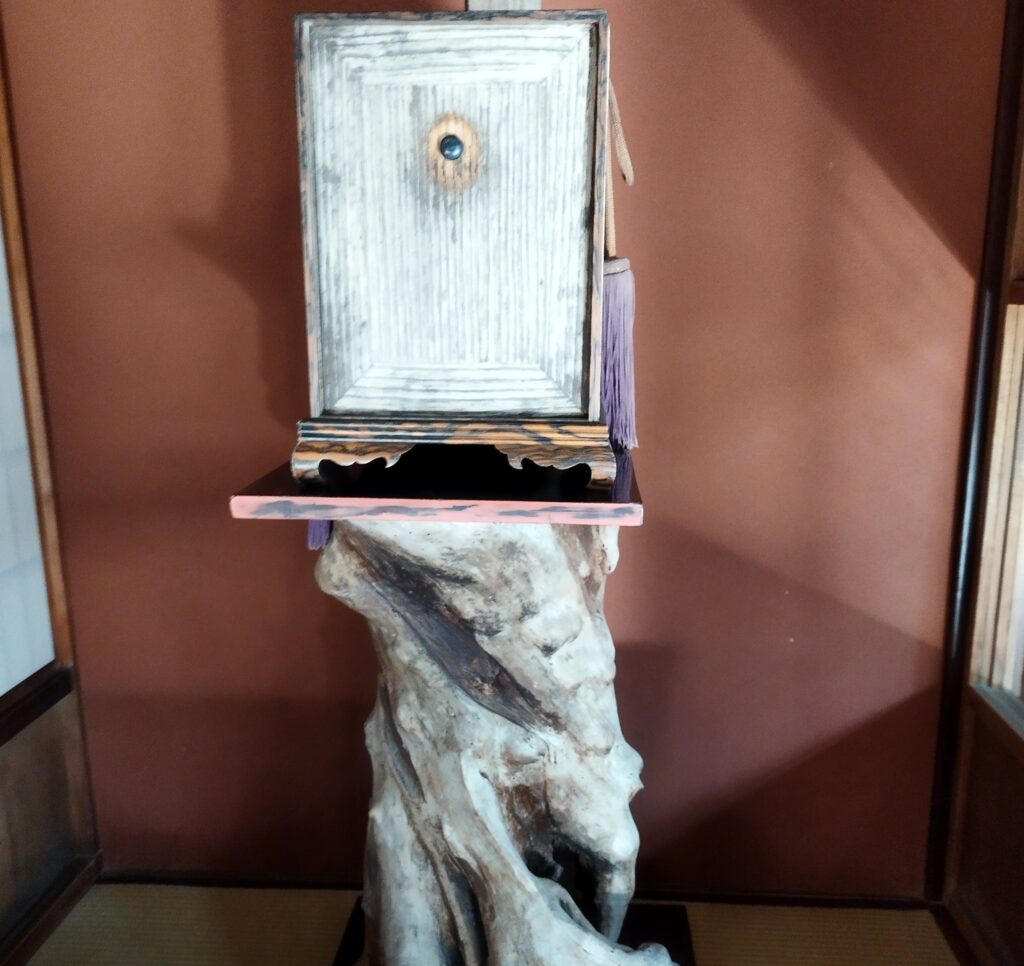
👉 多くの訪問客は庭の縁側に気を取られていますので、その自然な流れを止めない様にこちらから積極的に説明することはありませんが、実際、この箱が気になって質問するゲストも多いのでその辺りを踏まえた、鳥用語も織り込んだ説明ネタです。全10文の前半は説明にも使える真面目パート(1-5)と雑談力upの為の後半おふざけパート(6-10)です。👄本パートの演習用音声ツールはこちらから。
- This is a paulownia wood box designed to hold the birdcages of bush warblers, enhancing the beauty of their songs. これは、ウグイスの鳥かごを収めるために作られた桐の箱です。ウグイスの美しい歌声をより際立たせるためのものでした。
- The Japanese bush warbler has held a special place in the hearts of the Japanese people for centuries, announcing the arrival of spring with its beautiful call. 日本のウグイスは、その美しい鳴き声で春の訪れを告げる鳥として、何世紀にもわたり日本人の心の中で特別な存在でした。
- Dating back over a thousand years to the aristocratic age, the Japanese practiced “Uguisu-awase,” a competition where they would cage bush warblers in spring and vie for the most beautiful songs. 平安貴族の時代に遡ること千年以上前から、日本では「鶯合(うぐいすあわせ)」という遊びが行われていました。これは、春にウグイスをかごに入れ、その歌声の美しさを競い合うものです。
- Moreover, paulownia has been considered a sacred tree for birds since ancient China, so using such a box also reflected a profound respect and affection for these creatures. さらに、桐は古代中国から鳥のための神聖な木とされてきたため、このような箱を用いることは、鳥への深い敬意と愛情の表れでもありました。
- Of course, in modern Japan, this custom has largely disappeared due to animal welfare concerns. もちろん、現代の日本では、動物愛護の観点からこの習慣はほぼなくなりました。
- Indeed, some visitors who see this paulownia box in person may find the practice of caging bush warblers to be cruel or distressing. 実際に、この桐の箱を直接ご覧になる方の中には、ウグイスをかごに入れる行為を残酷だと感じたり、心を痛めたりする方もいらっしゃいます。
- Historically, caretakers ensured the birds had proper ventilation, but it’s understandable how a seemingly closed box might appear distressing to modern visitors. 歴史的には、飼育係が鳥の適切な換気を確保していましたが、一見すると密閉された箱が現代の訪問者にとって心を痛めるように映るのも無理はありません。
- Let’s just say I don’t always volunteer information about this box unless asked. 正直なところ、お客様から尋ねられない限り、この箱について私から積極的にご説明することはあまりありません。
- Part of it is to avoid any impression of cruelty, but there’s also a somewhat inconvenient truth. 一つには、動物虐待のような印象を与えたくないからですが、実はもう一つ、少し不都合な真実があるんです。
- I’m afraid it might simply highlight an unsolved paradox: that we’re here saying the Japanese weren’t abusing birds, while simultaneously enjoying perfectly grilled and skewered yakitori all across the country. それは単に、どうしようもない矛盾を浮き彫りにしてしまうのではないかと心配しているからです。ここで、日本人が鳥を虐待していたわけではないと言っているのに、同時に日本中でしっかり焼かれ串刺しされた焼き鳥を心ゆくまで楽しんでいるという、ね。
野村家 一階座敷・廊下エリアの解説はいかがでしたか?
全体の基本情報に戻る場合や、他のエリア(玄関・刀剣・庭園・上段の間・茶室)をチェックする際は、冒頭のナビゲーションやハブ記事をご活用くださいね!