 虎徹
皆さん、こんにちは!武家屋敷跡 野村家の英語案内『日本庭園』ページへようこそ!
米国庭園専門誌など海外でも非常に高く評価されている野村家の日本庭園。縁側に座ってじっくり鑑賞するゲストも多い人気スポットです。豪快な水の音を立てる曲水の由来から、狭い空間を広く見せる3Dの仕掛け、樹齢400年を超える守護神ヤマモモの逸話まで、現場でサッと使えるフレーズと音声をまとめました。目的の項目ボタンからご活用ください。
📍 Quick Navigation: 各章へジャンプ
4. 日本庭園 エリア
👉多くのインバウンドはネットや口コミでこの庭園の存在は事前に知っていて、これが目当てで来た人も多いようで、ああ、これがそうか、といった感じで、大人しく雑談しながら暫く濡れ縁に座っている風景をよく見ます。ただ黙って一緒に縁側に座っていて宜しいと思いますが、いつも通り、インバウンド視点の質問に備えて、いくつか並べてみました。
Q1.背景:この庭の水はどこから引いているのですか?
“Where does the water for this garden come from?”
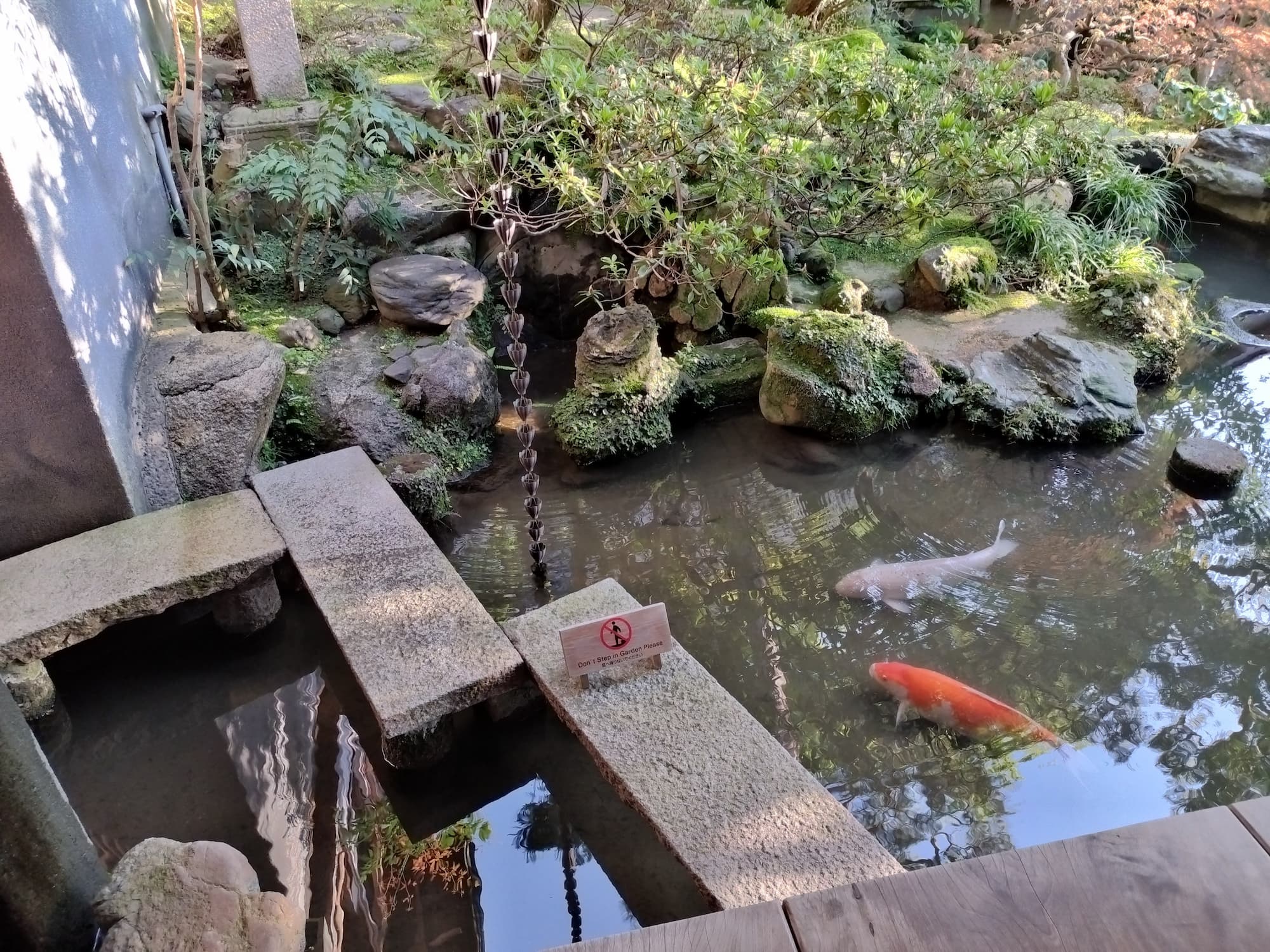
ここの庭の特徴の一つは、日本庭園でよく見るちょろちょろ流れる曲水でなく、大きな音を立てる曲水ですので、その辺りを背景として置いてみました。

前半(No1-5)は長町界隈の説明にも使える真面目パート、後半(No6-10)は雑談力アップ用のおふざけパートになりますが、No.7,8は通常の説明にも使えますので,その辺りはお相手の興味どころに合わせてお試しください。👉英語音声は、武士の栄光を伝えるのに最適な大英帝国の末裔の男性話者です。👄本パート表現の習得用演習ツールご利用はこちらへ!
- A large irrigation canal has been maintained in this former samurai residence area. この、かつての武家屋敷界隈には大きな用水路が整備されてきました。
- Originally, this irrigation canal was used to transport lumber when samurai residences were first constructed in this area. 元々この用水はこの辺りに武家屋敷が作られ始めた頃の木材運搬に使われたそうです。
- Over time, many samurai residences including this one utilized the water from this canal to create their own gardens. その後、その用水から多くの武家屋敷が自らの庭園に水を引いて曲水を作りました。
- The garden here is one such example, and the waterway in front of the house is a remnant of this. ここの庭園もその一つですが、この家の前の水路はその名残と言えます。
- Before the house was restored in this way, it was a large mansion of about 1,000 tsubo (about 3,000 square meters). この家がこのように復元される前は千坪ほど(約3000平米)の大邸宅だったそうです。
- Then the original garden would have been larger than this. そうなると元々の庭はこれより大きいものだったでしょう。
- It is much smaller than the earlier version, but still has a samurai-like power. 初期のものより遥かに小さくなったわけですが、それでも武士らしい迫力を感じますね。
- The design philosophy of this garden came from a prominent samurai who was also a cultural figure, and perhaps this is why. この庭園の設計思想は文化人でもあった著名なサムライから来ているそうで、そのせいかもしれません。
- Unlike the tranquil aristocratic gardens with slow-flowing water, Kyo-ku-sui, featuring a meandering stream, creates a lively ambiance, reminiscent of a samurai’s garden. ちょろちょろ流れる貴族庭園と違った快活な音を立てる曲水はいかにも武家の庭園といった感じです。
- But doesn’t the electrically-powered waterfall evoke the feeling of the lost power of samurai? でも、電気を使った滝は、武士の衰えた力を感じさせませんか?
Q2 濡れ縁(ぬれえん)🌳この小さな庭の何にこんなに惹かれるのでしょうか?
“What is it about this little garden that attracts us so much?”

冒頭で、言葉はなくてもと書きましたが、それでも名画を観て(その人なりに純粋に楽しめば良いわけですが)何が素晴らしいのか、何が評価されているのか、戸惑う人もいるかもしれません。その辺り、何が腑に落ちるかわかりませんが、10文の前半(No1-7)は庭の説明を含む真面目パート、後半(No8-10)は雑談力アップ用のおふざけパートで置いてみました。👉英語部分は日本人と同じくらい庭園好きの英国女性に語っていただきます。👄本パート表現の習得用演習ツールご利用はこちらへ!
- Although the garden is narrow, the dense, three-dimensional arrangement of each component makes it appear larger, thus creating a sense of spaciousness. 庭は狭いですが、各構成要素が密に立体的に配置されているため、広く見え、開放感があります。
- The well-balanced arrangement of components like trees, lanterns, garden stones, and kyo-ku-sui (meandering stream) imparts a feeling of unity and stability. 樹木、灯籠、庭石、曲水の構成物がバランスよく配置されているので統一感、安定感があります。
- The carp glide silently through the stream, their quiet movement harmonizing with the lively cascade of the waterfall. 曲水の中を泳ぐ鯉の静かさと躍動感のある滝の音がお互いを邪魔することなく調和しています。
- Due to its narrowness, it is designed for viewing from the open verandah rather than for strolling, ensuring that the viewer never feels disoriented. 狭さ故、散歩用でなく濡れ縁から観賞できるように作られいて、見ている人に迷いを与えません。
- The large mountain myrtle tree( a kind of myrica)in front of you is over 400 years old. 目の前の大きなヤマモモの樹齢は400年を超えています。
- The first head of the Nomura family tried to plant and grow plants that grew in his hometown at that time. 野村家初代当主は当時、故郷に生えている植物を植えて育てようとしたそうです。
- The harsh climate and unforgiving soil proved a challenge, claiming most of the transplanted species. 気候も土壌も合わず、殆どが上手く育ちませんでした。
- This tree, one of the few that survived, appears to be the guardian deity of this small garden. この木は生き残った数少ない植物の一つですが、この小さな庭の守り神のように見えます。
- Perhaps this modest tree, a survivor of adversity, serves as a silent guardian, reflecting the spirit of its planter. 初代当主の様にこの控え目な木でこの庭園を守ったのかもしれません。
- If he had planted very beautiful and expensive pine trees, this garden would have been sold for a high price and would not exist like this. とても美しい高価な松を植えていればこの庭は高値で売られていてこの様に存在していなかったかも。
Q3:山桃の実🍓公式HPにある400年のヤマモモの木はどれ?
“Which one is the 400-year-old wax myrtle tree featured on the official website?“
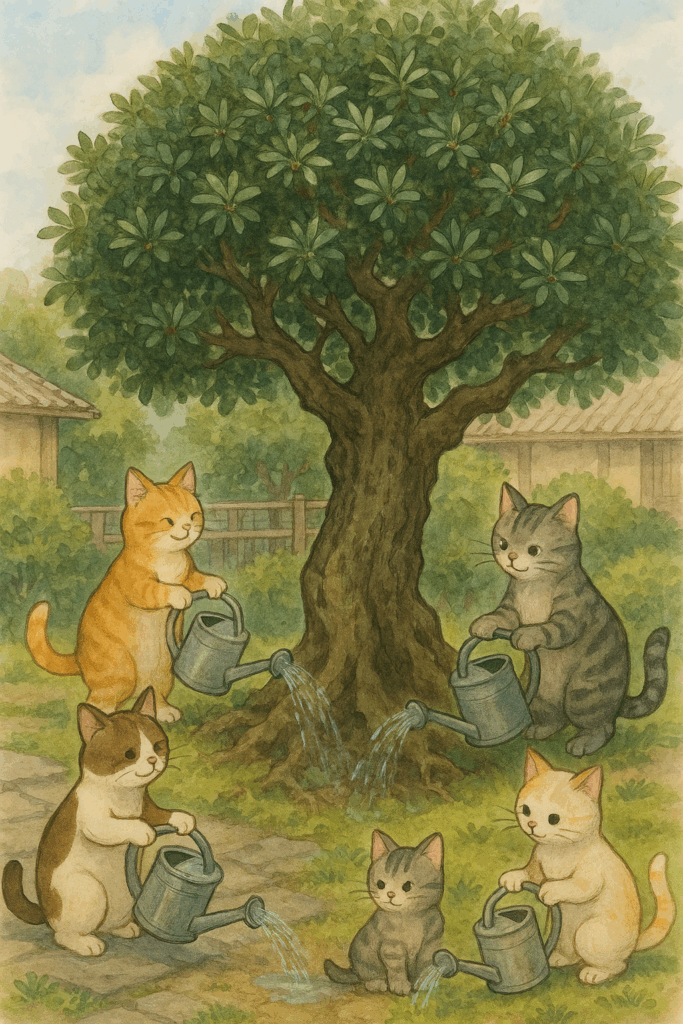
実際によく聞かれる質問をベースに山桃の木に関する表現を織り込んでみました。いつも通り前半(1-5)は説明にも使える真面目パート、後半(6-10)は雑談力upの為のおふざけパートです。👄本パート表現の習得用演習ツールご利用はこちらへ!
- This is the wax myrtle tree, known in Japanese as Yamamomo, which literally means “mountain peach.” こちらがヤマモモの木です。日本語で「山桃」と書き、文字通り「山の桃」と呼ばれています。
- It’s a native Japanese species that grows in the mountains and produces red fruit that resemble oversized strawberries. 日本の山地に自生する在来種で、赤い実(み)は大きなイチゴのような形をしています。
- Botanically, it belongs to the Myrica family—its scientific name is Myrica rubra, and it’s also called Chinese bayberry or wax myrtle. 植物学的にはヤマモモ科に属し、学名は Myrica rubra。中国ヤマモモやワックスマートルとも呼ばれています。
- The fruit is said to be juicy and slightly tart, often enjoyed fresh or made into jam. 実はジューシーでほのかな酸味があり、生のまま食べたりジャムに加工されたりします。
- Typically, these trees live for several decades to a century, depending on climate and care. この木は通常、環境や手入れ次第で数十年から百年以上生きると言われています。
- So it’s quite rare to find one thriving in this garden, given the region’s harsh winter conditions. この地域では冬の寒さが厳しいため、この庭で元気に育っているのは非常に珍しいことです。
- Perhaps generations of this household have lovingly protected it—preserving a precious living legacy brought here long ago by the family’s first head. おそらく、代々の家族がこの木を大切に守り続けてきたのでしょう。初代の当主が故郷から持ち込んだ、唯一現存する生きた遺産なのです。
- I’m not sure if this venerable elder still bears fruit, but that hardly matters. 現在も実をつけるかどうかは分かりませんが、それは重要ではありません。
- Because this tree now offers a different kind of harvest: it moves visitors from all over the world with the quiet beauty of this unpretentious garden. なぜなら、この木は今、別の実りをもたらしてくれているからです。この質素な庭が放つ静かな美に、世界中の訪問者が心を動かされているのです。
- To many, it may even feel as if the intangible fruit—like its spirit—is just as vivid and tart and tender as the real thing. その感動は、まるで実物の果実のように、ジューシーでほろ酸っぱく、やさしく心に染み入るものかもしれません。
野村家 日本庭園エリアの解説はいかがでしたか?
全体の基本情報に戻る場合や、他のエリア(玄関・刀剣・座敷・茶室)をチェックする際は、冒頭のナビゲーションやハブ記事をご活用くださいね!