 ユイ(Yui)
皆さん、こんにちは!日本の自然・里山ウオッチャー&ガイドのユイです。白川郷の経済と大量生産を支えた『屋根裏(仕事空間 / Attic as Work Space)』英語案内ページへようこそ!
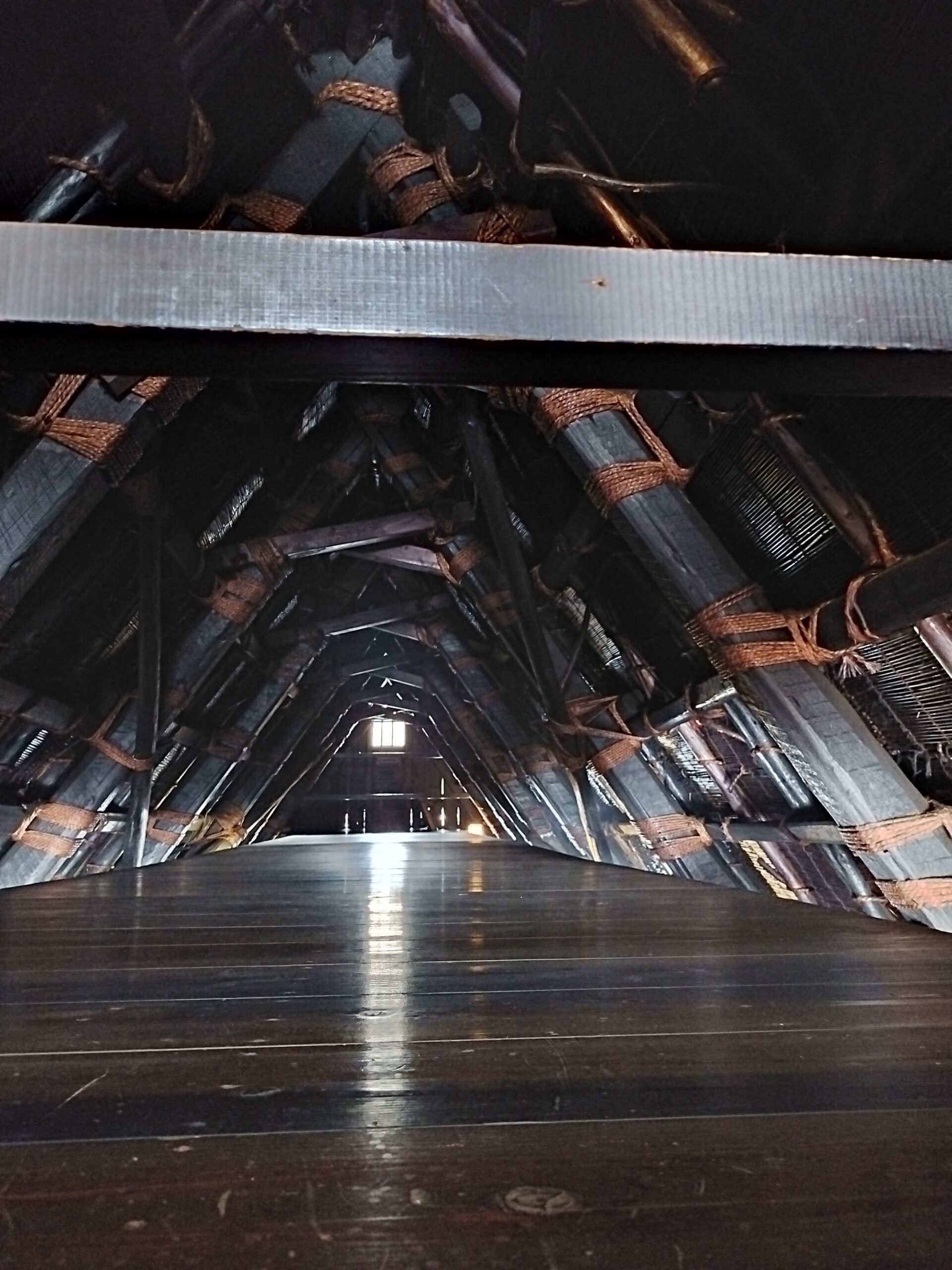
白川郷合掌造りの最大の見どころである巨大な屋根裏空間は、単なる物置ではなく、かつて外貨獲得の要であった「養蚕業(Sericulture)」の巨大な生産工場(ワークスペース)でした。複層階の空間活用、囲炉裏の熱と煙を利用した温湿度の自然調整、切妻屋根による無償の採光・換気など、日本のモノづくりの原点ともいえる画期的な低コストシステムが詰まっています。
現場でサッと使える短文フレーズから、生産効率化の仕組み、ゲストをクスッと笑わせる「日本式ピラミッド」雑談ネタまで網羅しました。目的の項目ボタンからご自由にご活用ください。
📍 Quick Navigation: 各章へジャンプ
7. 合掌造り屋根裏(仕事空間)
ここでは合掌造りの屋根裏(仕事空間・生産工場)の役割と経済的仕組みをカバーします。用途に合わせて以下のボタンから直接アクセスできます。
7.1 基本情報
ここでは合掌造り最大のアトラクションである屋根裏を一緒に見る際に、定番の建築空間でなく仕事空間(日本人の経済感)として押さえておきたい基本ポイントを10項目(日英)でご紹介します。英語サンプルは前半(1-5)(オーストラリア女性話者)と後半(6-10)(米国男性話者)の2ファイルに分けました。👄下記表現の習得用音声ツールをご利用の際はこちらへ!
《日本語ポイント》
- 2階からの上の階は中二階が使用人家族用に使われたこともあるが、全てが仕事スペースとして効率的に設計、運用された。
- 通常の日本家屋の屋根裏は小規模で物置の役割しかないがここの屋根裏は巨大で、更に内部を複層階に区切ることで最大の仕事スペースを確保している。
- ここの屋根裏は収益性の高い養蚕業の生産性を更に高め市場での価格競争力をつけるために進化して出来上がったもので現代ビジネスと同じ経済原理が働いている。
- 屋根裏の内部を2層から5層に分けることで作業スペースは広くなるが、その分、各階の間の移動時間も増える為、少しでも効率化を図る工夫がされている。
- 例えば、若いカイコは目が離せず、手間がかかる為、居住エリアに近い下の階で育て、成虫になった蚕は手数が減るので上の階に移動させたりした。
- さらに、1階の囲炉裏から立ち上る熱と煙によって、各階の湿度が徐々に自然に調整され、蚕の成長段階によって湿度を変えて使用することができた。
- 同じく、その下から上がってくる熱と煙は茅葺き屋根から徐々に時間をかけて外側に排出されながら、屋根裏に滞留して安定的に暖かく乾燥した状態を保つので、寒さと湿気に敏感な蚕を育てる理想的な環境となっている。
- 切妻スタイルを採用することでその切妻の両側の窓から日光と空気が安定的に入り空調設備のコストなしで屋根裏は明るく換気の良い空間となっている。
- ここでしか見られないこの広大でユニークな屋根裏屋は自然環境を巧みに利用した驚くべき独創的な低コストシステムで、当時国内最大の養蚕大量生産体制を作り、後の日本製造業と経済的成功の予兆と見ることができる。
- 公開家屋では養蚕業の蚕育成の為の設備の他に農具、山仕事道具などの展示で当時の生活を垣間見ることができるが、さらに地下では密かに火薬の原料を生産するところもありこれも大きな収入源となっていた。
《英訳例》
- 1. The upper floors, starting from the second, were efficiently designed and utilized as workspaces, with a mezzanine floor sometimes reserved for servants’ families.
- 2. The attic of a typical Japanese house is small and used only for storage, but here, the attic is spacious, and by dividing it into multiple stories, it maximizes the available workspace.
- 3. The attics here have evolved to enhance the productivity of the highly profitable sericulture work, making it more competitive in the marketplace by applying the same economic principles as modern business.
- 4. Dividing the attic into two to five layers creates more workspace, but it also increases the time spent moving between floors, so the workflow layout was carefully arranged to maximize efficiency.
- 5. For example, young silkworms were raised on the lower floor near the living area because they required constant monitoring and care, while adult silkworms were moved to the upper floor as they required less labor.
- 👥連続音声1-5
- 6. Furthermore, the heat and smoke rising from the hearth on the first floor gradually and naturally adjusted the humidity on each floor as one ascended, allowing different floors to be used with varying humidity levels depending on the stage of silkworm growth.
- 7. Likewise, the heat and smoke rising from below are gradually expelled outward through the thatched roof, staying in the attic to maintain a stable warmth and dryness, creating an ideal environment for raising silkworms, which are sensitive to cold and moisture.
- 8. The gable-end design allows sunlight and air to enter the attic through windows on both sides, creating a bright and well-ventilated space without the need for air conditioning equipment.
- 9. This vast and unique attic, seen only here, can be seen as a premonition of Japan’s later manufacturing and economic success, as it developed the nation’s largest mass production system for sericulture at the time, using a remarkably ingenious low-cost system that wisely leveraged the natural environment.
- 10. You can see the equipment used for raising silkworms, as well as tools for farming and mountain work, offering a glimpse into life in those days. Additionally, some families secretly produced raw materials for gunpowder underground, providing another major source of income.
- 👥連続音声
7.2 口頭用簡略説明
ここではお相手との会話の合間や歩きながら使える様に上記基本情報の10項目を口頭説明用の簡略文に置き換えています。日本語の主旨は基本情報のままなので、ここでは英語>日本語の順で置いています。英語音声は各文短いので(オーストラリア女性話者)1ファイルです。
- 1. “Starting from the second floor, the upper levels were workspaces—sometimes even used by servants’ families.” 🧑🔧「2階から上の階はワークスペースであり、使用人の家族が使用することもありました。」
- 2. “Unlike regular Japanese attics, this one is big and divided into levels to make the most of the space.” 🏠 「普通の日本家屋の屋根裏よりずっと広くて、何層にも分かれて有効活用されていました。」
- 3. “It was designed to boost sericulture productivity—like a well-planned factory before modern factories existed.” 🐛 「この構造は、養蚕の生産性を高めるための工夫で、まるで昔の工場のようなんです。」
- 4. “They added multiple layers, but to keep it efficient, the layout minimized moving up and down too much.” 🪜 「階層が多いぶん移動も大変なので、効率を考えて作業の流れがうまく設計されていました。」
- 5. “Young silkworms stayed on lower floors for close care, while adults moved higher since they needed less attention.” 🐣 「手のかかる幼虫は下の階で世話をし、手間が減る成虫は上の階に移しました。」
- 6. “Warmth and humidity from the downstairs hearth rose naturally and created just the right conditions on each floor.” 🔥 「1階的囲炉裏の熱と煙が上に昇り、階ごとにちょうど良い湿度になるよう工夫されていました。」
- 7. “That heat stayed in the attic and helped keep the silkworms warm and dry—perfect for their delicate needs.” 🌬️ 「その熱は屋根裏にとどまり、冷えや湿気に弱い蚕にとって理想的な環境を作っていたんです。」
- 8. “The pointed roof design let in light and air from both sides, so the space stayed bright and breezy without machines.” 🌞 「両側の窓から光と風が入り、機械なしでも明るく風通しの良い空間になっています。」
- 9. “This creative attic system feels like the beginning of Japan’s future success in low-cost, large-scale production.” 🏭 「この仕組みは、のちの日本のものづくりの成功を予感させるような、大規模で賢い生産体制です。」
- 10. “You can still see the old tools for silkworms, farming, and forestry—and some families even made gunpowder underground!” 🧰 「蚕の道具や農具・山仕事の道具も展示されていますし、中には火薬の原料をこっそり作っていた家もあったそうですよ。」
- 👥全文連続音声
7.3 インバウンドの視点:笑いも取れるかも?
Q1. 合掌造りは外観が同じ様に中も同じなんですか?
Is the interior of gassho-zukuri houses the same as the exterior?
合掌造りの続く通りを歩いている際に実際に聞かれる質問を元に、前半(1-6)が真面目パート、後半(7-10)がおふざけパートで纏めてみました。前半部は屋根裏でも使えるフレーズです。
- Yes. Gassho-zukuri houses are built to withstand the harsh natural conditions of Shirakawa-go. はい。合掌造りは、白川郷の厳しい自然環境に耐えられるように造られています。
- Their design also reflects the need to improve the productivity of sericulture, which provided valuable cash income for families in a village with limited farmland. また、農地の少ない村で貴重な現金収入源だった養蚕業の生産性を高める工夫も見られます。
- Both were essential for life here, so the basic structure of these farmhouses is quite similar, although the attic used for sericulture deserves special attention. どちらも生きていくために欠かせなかったため、農家の基本構造はよく似ていますが、養蚕に使われた屋根裏空間は特に見どころです。
- The exposed framework of posts and beams, tied together with rope, gives the building flexibility to withstand strong winds and earthquakes. 縄で結ばれた柱や梁の骨組みは建物に柔軟性を与え、強風や地震にも耐えられるようになっています。
- Over many years, smoke from the hearth has given the wooden beams a dark sheen and a unique luster, creating what feels like a natural work of art. 長い年月をかけて囲炉裏の煙に燻された梁は、独特の黒い艶を帯び、まるで自然が作り出した芸術作品のようです。
- Moreover, the design makes the most of natural light and airflow, creating a bright, open, and relaxing atmosphere, even without electricity. さらに、自然光と風通しを最大限に活かす設計により、電気がなくても明るく開放的で心地よい空間になっています。
- Just put a rustic wooden table by the window, and you could instantly turn this place into a stylish restaurant! 窓辺に素朴な木のテーブルを置けば、それだけで素敵なレストランになりそうですね!
- After all, if this place was designed to provide the perfect environment for delicate creatures like silkworms, surely it must be comfortable enough for humans, too! もともと繊細な蚕のために最適な環境として造られた場所ですから、人間にとっても快適でないはずがありません!
- How about calling it the “Cocoon Restaurant,” with mulberry leaf jam on the menu? 桑の葉ジャムを添えて、「コクーン・レストラン」とでも名付けましょうか。
- And when you return home, I hope you’ll start a few online threads about your visit. After all, producing fine threads has always been the specialty of this house! (laughs) そして帰国したら、ぜひ旅の思い出をオンラインでスレッドにしてください。だって、昔からこの家の得意技は良質な“スレッド”を作ることだったのですから!(笑)
《Glossary!用語集》
厳しい自然環境に耐える👉withstand the harsh natural conditions!養蚕業の生産性👉productivity of sericulture!貴重な現金収入👉valuable cash income!特に注目(見どころ)に値する👉deserve special attention!むき出しの柱や梁の骨組み👉exposed framework of posts and beams!縄で結ばれた👉tied together with rope!柔軟性👉flexibility!黒い艶と独特の輝き👉a dark sheen and a unique luster!自然の芸術作品👉a natural work of art!自然光と風通しを最大限に活かす👉make the most of natural light and airflow!素朴な木のテーブル👉rustic wooden table!繊細な生き物(蚕)👉delicate creatures!桑の葉👉mulberry leaf!オンラインでスレッドを立てる👉start online threads!得意技・専門分野👉specialty!
Q2. この天井裏は倉庫だったの?
Was this attic used for storage?
現在は展示コーナーの印象のある屋根裏で、時々聞かれる質問を元に、前半(1-3)は実際に使える説明パート、後半(4-10)はおふざけパートで纏めてみました。
- This attic is currently used to display traditional work tools, but it was originally used to raise silkworms for the sericulture industry. 現在この屋根裏には昔の仕事道具が展示されていますが、もともとは養蚕業のために蚕を育てる場所でした。
- Over the centuries, it evolved into the large multi-story attic we see today in order to maximize profitability from sericulture. However, as the industry gradually lost its competitive edge, silkworms all but disappeared from this attic over the past hundred years. 養蚕による収益性を最大化するため、この屋根裏は何世紀もかけて現在のような巨大な複層空間へと進化しました。しかし、養蚕業は次第に競争力を失い、この約100年で蚕の姿はほとんど見られなくなりました。
- The items displayed here are reminders of the golden age of sericulture, when the income from this industry was enough to support a large, multi-generational family and maintain this enormous attic. 今展示されている道具は、この産業の収入で大家族の生活と巨大な屋根裏の維持ができた、養蚕業全盛期の名残です。
- Ironically, although Shirakawa-go lost out in the global silk market, it found new life in the global tourism market, preserving its former glory in a different form. 皮肉なことに、世界の絹市場で競争に敗れた白川郷の養蚕業は、世界の観光市場で新たな命を得て、かつての栄光を別の形で守り続けています。
- In a way, it reminds me of the pyramids of Egypt, which still attract visitors from around the world long after the civilization that created them has passed. ある意味、これらはエジプトのピラミッドを思わせます。築いた時代が過ぎ去った後も、今なお世界中の人々を引き付けているからです。
- Both this attic and the pyramids are known for their dramatic slopes and mysterious appearance, making visitors wonder, “What on earth is this?” この屋根裏とピラミッドはどちらも印象的な傾斜と神秘的な姿を持ち、人々に「これは一体何だろう?」と思わせます。
- And when visitors step inside, they may notice another similarity. This attic was once a prosperous kingdom, and what they see today are the remains of its former glory. そして中に入ると、もう一つの共通点に気づくかもしれません。この屋根裏はかつて繁栄した王国であり、今目の前にあるのは、その栄光の名残なのです。
- The forgotten rulers of this vanished kingdom were the moths. Destined to be sacrificed for silk production, they were never allowed to live out their full lives. この消え去った王国の忘れられた支配者は蛾でした。絹を生み出すために犠牲となる運命にあり、最後まで生きることを許されなかった存在です。
- Since the adult stage of a silkworm is called a moth in English, perhaps we could promote this attic as a unique attraction called “The Japanese Pyramid: Mausoleum of Moths.” 蚕の成虫は英語で moth(蛾)と呼ばれるので、この屋根裏をこんなユニークな名称で紹介してみるのはいかがでしょう。「日本のピラミッド:蛾の霊廟」
- During the tour, you may even find yourself naturally putting your hands together in gassho, just as Japanese people do when offering a prayer. このツアーの終わりには、日本人がお祈りをする時のように、自然と手を合わせて合掌している自分に気づくかもしれません。
《Glossary!用語集》
多層(複層)の屋根裏👉multi-story attic!収益性を最大化する👉maximize profitability!競争力を失う👉lose one’s competitive edge!ほとんど〜ない👉all but〜!全盛期・黄金時代の名残👉reminders of the golden age!多世代の大家族👉multi-generational family!皮肉なことに👉ironically!〜に競争で敗れる👉lose out in〜!新たな命を得る👉find new life!かつての栄光を守る👉preserve one’s former glory!印象的な傾斜👉dramatic slopes!神秘的な姿👉mysterious appearance!一体何(強調)👉what on earth〜!繁栄した王国👉prosperous kingdom!〜の運命にある👉be destined to〜!天寿を全うする(最後まで生き切る)👉live out one’s full life!成虫の段階👉adult stage!霊廟👉mausoleum!祈りを捧げる👉offer a prayer!
屋根裏(仕事空間)の解説はお楽しみいただけましたか?
他のスポット(屋根裏の建築空間、養蚕の名残、高台展望台など)の解説へ移動する際は、冒頭の緑色ナビゲーションボタンをご活用くださいね!