こんにちは!日本の城・建築ウオッチャー&ガイドのGenjiです。
皆さん、国宝・松本城の英語案内『【3】天守閣(内部・構造編)』ページへようこそ!
天守閣の内部に足を踏み入れた際、海外ゲストからよく寄せられる素朴な疑問(1階の床の段差・武者走り、60度超の急階段、4階御座所の御簾、6階天井の二十六夜神の縄、花頭窓の謎)に即答するための実戦フレーズ集です。現場で使える真面目な解説からクスッと笑える雑談ネタまで網羅していますので、目的の項目ボタンからご活用ください!
📍 Quick Navigation: 各章へジャンプ
5 天守閣(内部)
Q1.床になぜ段差があるのでしょうか?@F1
”Why is there an elevation difference on the floor?”
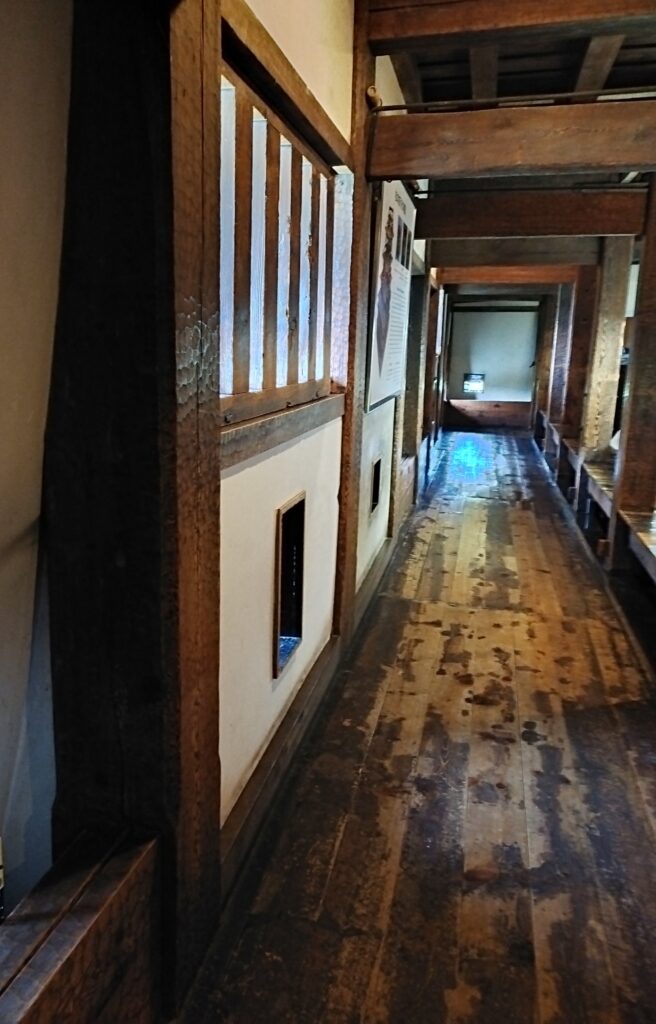
天守閣の中に入ってすぐなので多くの人は(そもそもお城の見所がわからないので)中々気が付きませんが、わかり易いところなので、それを元に纏めました。前半(1-6)は説明にも使える真面目パート(👉英語音声は武者走りの様にアップビート気味の米国男性話者)、後半(7-10)は雑談力upの為のおふざけパート(👉英語音声は武者震いなんか知らないって感じでのクール調米国女性話者)です。
- This low passageway running along the outer wall is called a musha-bashiri, literally meaning a “corridor for soldiers to run.”
外壁に沿って走るこの低い通路は、武者走り(むしゃばしり)と呼ばれ、文字通り「兵士が走るための通路」を意味します。 - In times of war, it was designed to help the movement of soldiers without obstacles, enabling them to easily defend the outer wall.
戦時には、兵士が障害物なく移動し、外壁を容易に防御できるように設計されました。 - Only the inner area has a double foundation beneath the floor, raising it by about 50 centimeters.
内側のエリアにだけ二重の土台があり、床が約50センチメートル高くなっているのです。 - Generally speaking, these passageways weren’t limited to the castle interior; they were also constructed outside the castle walls, for example, on the ramparts.
一般的に、こうした通路は城の内部に限定されず、例えば土塁の上など、城外にも築かれました。 - While not unique to Matsumoto Castle, the defensive strength of the first floor was particularly crucial for preventing enemy intrusion.
松本城特有のものではありませんが、敵の侵入を防ぐために一階の防御力は特に重要でした。 - And stone drop mechanisms can also be seen along the corridors.
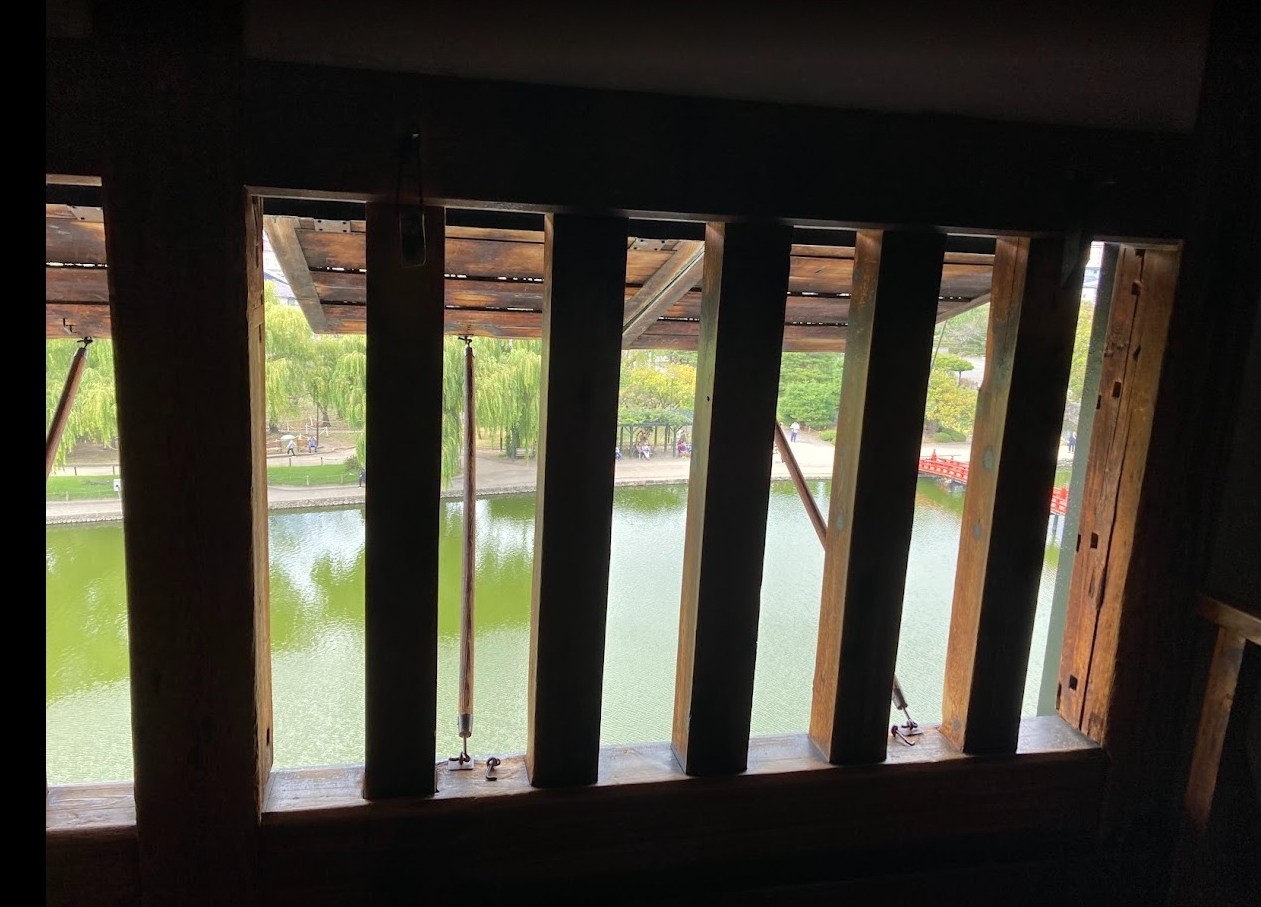
通路に沿って石落としの仕掛けも見ることができます。 - But actually, not many foreign tourists notice this corridor and ask about it.
しかし、実はこの通路に気づいて質問する外国人観光客は多くありません。 - We local guides understand that our guests often have a deep interest in or knowledge of architecture.
私達地元ガイドは、ゲストがしばしば建築に深い関心や知識があること了解しています。 - That’s right. This first floor is a crucial defensive line not only for the warriors of the time but also for the guides.
そうなんです。この一階は、当時の武士だけでなく、ガイドにとっても重要な防衛ラインなのです。 - We guides tremble with tension when we know the guests are particular here and we can’t let our guard down—it’s what we call musha burui, the samurai’s shiver… not musha bashiri, samurai running!
多くのガイドは、こうした特別なゲストに対して気を抜けないとわかると、緊張で震えます。それがガイドの武者震です!
Glossary:用語集
elevation difference ☛ 段差/passageway☛通路/corridor for soldiers to run☛武者走り/rampart☛土塁/tremble with tension☛緊張で震える/let one’s guard down☛気を緩める/samurai’s shiver☛武者震い
Q2.なぜこのお城の階段はこんなに急なの?
”Why Are the Stairs in This Castle So Steep?”

多くのゲストの体感、実感を少し違った視点で展開してみました。前半(1-5)は説明にも使える真面目パート(👉英語音声は階段にない平たん調の英国男性話者)、後半(6-10)は雑談力upの為のおふざけパート(👉英語音声は着実に語るインド女性話者)です。
- It’s not just Matsumoto Castle; the stairs in most Japanese castles are notoriously steep, making climbing up and down quite a challenge. Matsumoto Castle is especially famous for this, featuring five tiers and numerous steep staircases.
松本城に限らず、大抵の日本の城の階段は驚くほど急で、上り下りはかなりの難関です。中でも松本城は五重の天守に多くの急階段で有名です。 - The stairs directly beneath the castle keep have an incline of over 60 degrees, giving you the sensation of navigating a ladder on rocky terrain during a mountain hike.
天守閣の直下の階段は傾斜が60度以上で、まるで登山で岩場の梯子を登っている感じです。 - This extreme steepness even gave rise to a popular theory: that the stairs were built to slow down invaders.
この極端な急勾配は敵の侵入を遅らせるために作られたという人気のある説を生み出しました。 - However, experts dismiss this, pointing out that such an incline hinders the defenders’ movement just as much as the attackers’.
しかし、専門家は、この傾斜は攻める側だけでなく、守る側の動きも同様に妨げるからと退けました。 - Castle keep designs were fundamentally built for siege defense, making stairs designed purely for accessibility entirely irrelevant. Simply put, the correct answer seems to be that, by the construction standards of the time, some of the stairs at Matsumoto Castle simply happened to be that steep.
天守は基本的に籠城の為に設計されていて、動き易さを考慮した階段は全く必要とされなかったのです。端的に言えば、正解は、当時の建築基準では偶々松本城の一部の階段が急になっただけのようです。 - But the spread of these theories online might be welcome news for tourism professionals!
とはいえ、こうした説がオンラインで広まることは、観光業界にとっては朗報かもしれません! - Perhaps a few more tourists will choose Matsumoto Castle specifically to experience those exhilarating stairs.
あのスリル満点の階段を体験するためだけに、松本城を選ぶ観光客が少し増えるかもしれません。 - On the flip side, older individuals or those lacking confidence in their physical strength might avoid it entirely, leading to a flat growth in visitor numbers, quite unlike the steep climb of the stairs themselves.
その反面、高齢者や体力に自信のない人は完全に避けてしまい、階段の急勾配とは裏腹に、訪問者数の伸びは「平坦」になるかもです。 - But perhaps that’s all right. Stairs are a means, not an end.
しかし、それで良いのかもしれません。階段は目的ではなく手段なので。 - So, as guides, we mustn’t let this minor challenge cause us to lose our focus—or, quite literally, lose our footing! We must, quite simply, take the stairs steadily.
ですから、私たちガイドは、このような些末なことで本質を見失ったり、文字通り足元をすくわれてはいけません。私たちは、階段を上る”take the stairs”ように地道に進まねば。
Glossary:用語集
an incline of ~☛~の傾斜/a ladder on rocky terrain☛岩場の梯子/siege defense☛籠城(ろうじょう)の防御/on the flip side☛その反面 (逆に言えば)/flat growth☛横ばいの成長(伸び悩み)/lose one’s footing☛(慣用句)足場を失う(足元を疎かにする)/take the stairs steadily☛(慣用句)階段を着実に登る(基本を忘れない)
Q3.何故この部屋に御簾(すだれ)があるの?@4F
“Why is there a reed screen in this room?”
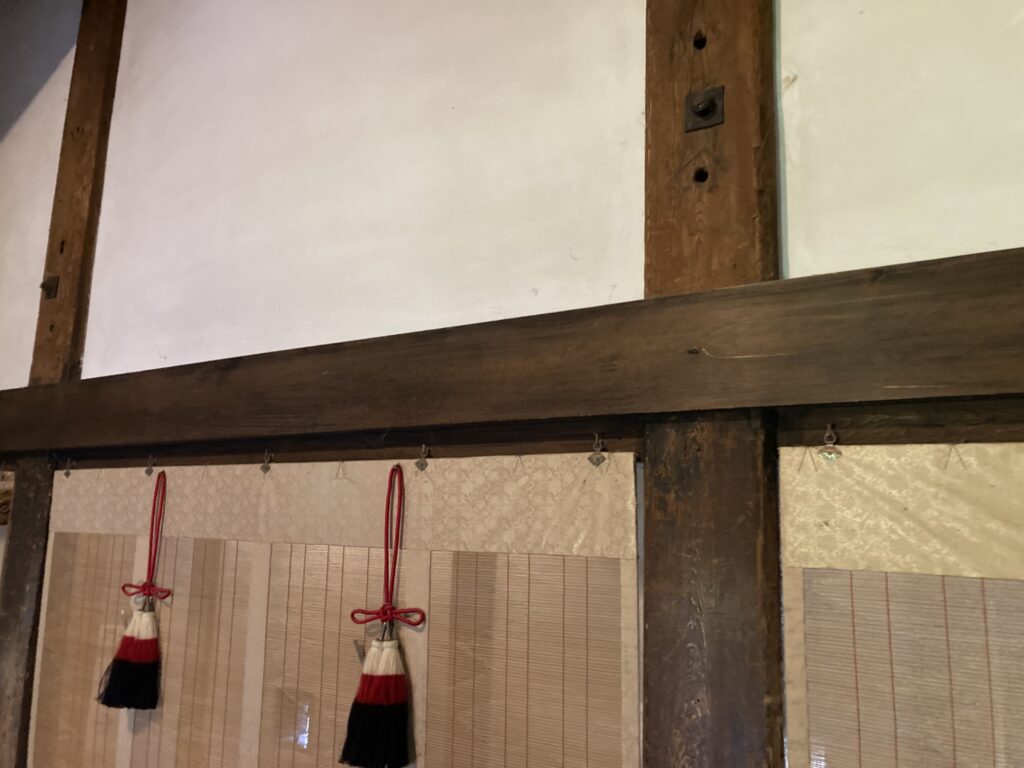
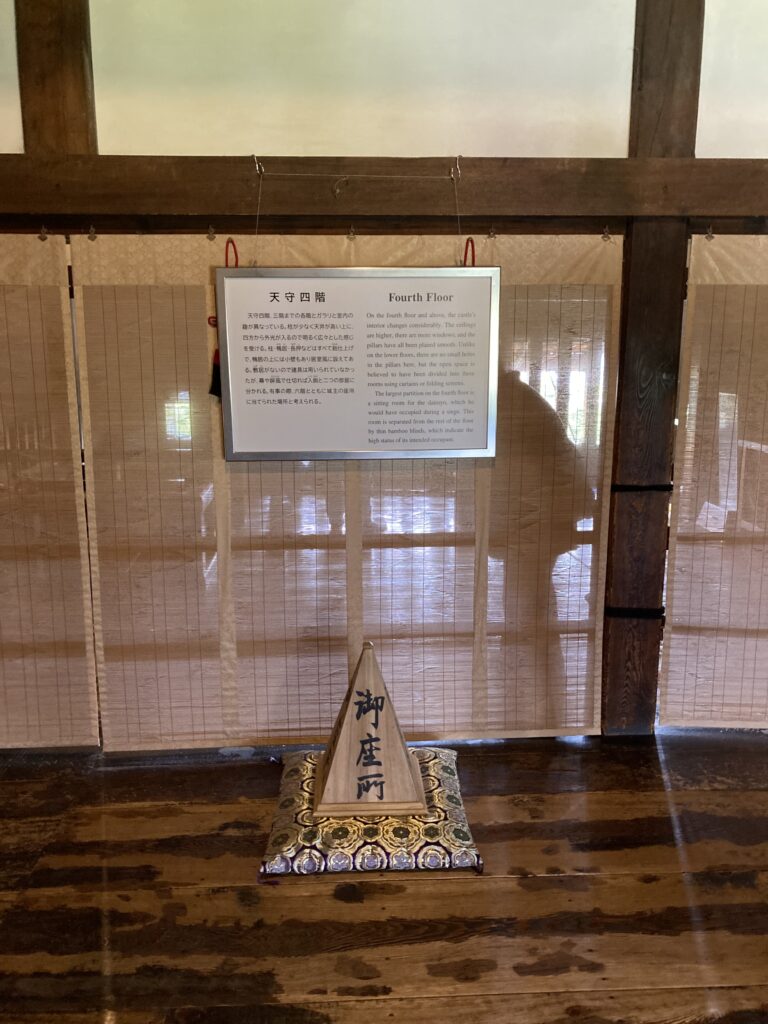
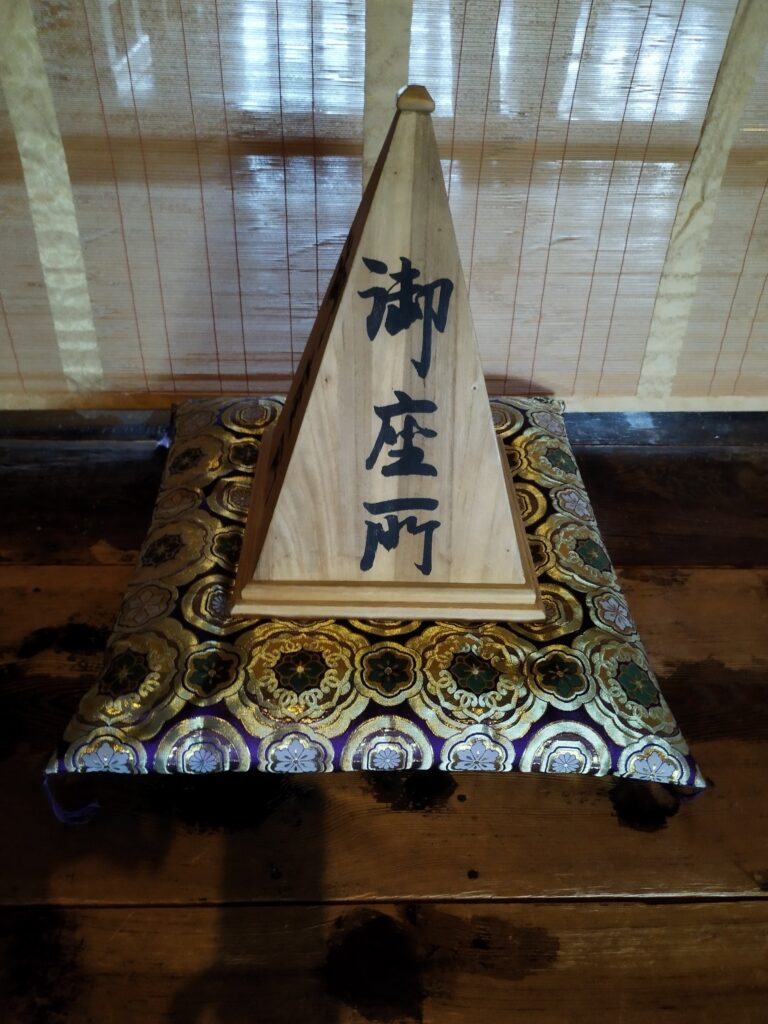
天守閣から難所の階段を下りてきてホッとする箇所で、多くのインバウンドは気持ちが次(外に出て歩きたい)に向いていて、関心は他と比べて高くありませんが、それでも聞かれた場合に備えて簡単に纏めてみました。前半(1-6)は説明にも使える真面目パート(👉英語音声は早く外に行きたい調の米国男性話者)、後半(7-10)は雑談力upの為のおふざけパート(👉英語音声は実際に切腹を見たような気にさせてくれる米国女性話者)です。
- This room was built not for soldiers, but for the lord of the castle.
この部屋は兵士のためではなく、城主のために造られました。 - It was designed primarily with dignity and comfort in mind, rather than defense.
防御機能よりも、主に威厳と居住性を念頭に設計されています。 - Many assume the lord would reside on the top floor of the keep, but he actually used this fourth floor as his quarters.
多くの方は城主が天守の最上階に座っていたと想像しますが、彼は実際にはこの四階を居所として利用していたのです。 - During battle, this room would serve as the command center where orders are issued, functioning as the operation’s brain.
戦時には、この部屋が様々な命令を下すための司令センターとして機能し、作戦の「頭脳」となります。 - Consequently, it possesses an entirely different atmosphere from the lower floors below the third level, which are solely dedicated to defensive functions.
そのため、純粋に防御機能に特化した三階以下の下層階とは、全く異なる雰囲気を持っています。 - It also incorporates the refined architectural style known as shoin-zukuri—a feature commonly found in the residences of high-ranking samurai.
また、上級武士の邸宅によく見られる、洗練された書院造の建築様式も取り入れられています。 - But when defeat seems inevitable, the lord must prepare for the castle’s fall and execute his final decision.
しかし、敗北が避けられなくなったとき、城主は落城に備え、「最終決断」を実行しなければなりません。 - That is, he commits seppuku inside these curtains, hidden from view.
すなわち、この御簾の内側で、人目から隠れて切腹を行うのです。 - This thin reed screen, easily torn by hand, is in a sense more resilient than the thick, sturdy castle walls that can stop a gun bullet.
この手で簡単に引き裂けるほどの薄い葦の御簾は、銃弾をも防ぐ分厚く頑丈な城壁よりも、ある意味で「しなやかで強い」と言えます。 - It ensures the samurai’s supreme ritual of seppuku is performed successfully, and serves as a spiritual defensive wall, protecting the castle lord’s honor.”
それは、武士の最高儀礼である切腹が滞りなく行われることを保証し、城主の「名誉」を守る精神的な防壁として、その役割を見事に果しているのです。
Glossary:用語集
dignity and comfort in mind☛尊厳と快適さを考慮して/operation’s brain☛作戦の司令部/reed screen☛簾(すだれ:葦製)/inevitable ☛ 避けられない/spiritual wall ☛ 精神的な防壁
Q4. あの天井にある縄のようなものは何ですか?@6F
”What is that rope-like thing on the ceiling?”
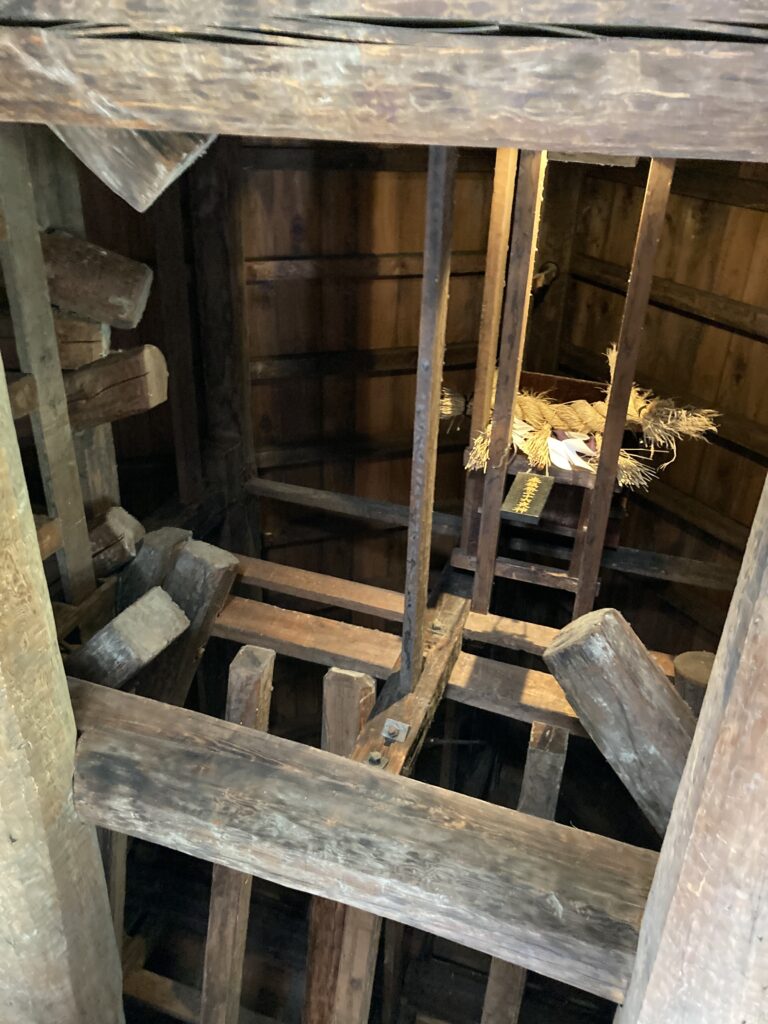
天守閣が混雑していて中で待っている際に、場つなぎに使えるネタとして簡単に纏めてみました。前半(1-4)は説明にも使える真面目パート(👉英語音声は女神に畏れる侍の雰囲気の米国男性話者)、後半(5-10)は雑談力upの為のおふざけパート(👉英語音声は「二十六」で育った自信たっぷり調の米国女性話者)です。
- That is the sacred rope and sacred object installed shortly after the castle’s construction to serve as Matsumoto Castle’s guardian deity.
あれは、松本城の守り神として、築城後まもなく祀られた連縄(しめなわ)と御神体(ごしんたい)です。 - As you can see, it is a small shrine originally dedicated to the female deity “Nijurokuya-gami” (The Twenty-Sixth Night Goddess), who was worshipped in certain areas.
ご覧の通り、小さな祠ですが、元々は一部地域で信仰されていた「ニ十六夜神(にじゅうろくやがみ)」という女神が祀られています。 - According to legend, the goddess gave an oracle that thousands of portions of rice cakes be offered on the twenty-sixth day of each month, after which they were to be distributed among the people.
言い伝えによると、この女神が毎月26日に千人分の餅を供え、それを人々に配るようにという神託を下しました。 - The feudal lord continued this practice for centuries throughout the samurai era, and it is believed that this is how Matsumoto Castle survived numerous fire disasters.
城主はこの慣習を侍の時代を通して何世紀も続け、これこそが松本城を度重なる火災から守った理由だと信じられています。 - One theory suggests the origin of the 26th stems from twice-yearly rituals held before dawn on the 26th day of the first and seventh months of the lunar calendar, where a slender, crescent-shaped moon (the waning crescent moon) was worshipped.
この「26日」の起源については、旧暦の正月と7月の26日の夜明け前に行われた儀式で、細く欠けた月(新月直後の三日月)を拝んでいたという説があります。 - The Japanese have long cherished the moon’s changing phases, and even today, full moon festivals on the fifteenth night are celebrated nationwide.
日本人は古くから月の様々な満ち欠けの様子を愛でてきました。現代でも、十五夜の満月を祝う行事が全国で行われていますね。 - Still, I usually don’t explain this little shrine unless guests ask.
しかし、私はお客様から尋ねられない限り、この小さな祠の説明はしないようにしています。 - Because, aside from haiku poets and stargazers, most people—including myself—aren’t familiar with the Twenty-Sixth Night, and the number 26 itself doesn’t hold much cultural weight in Japan.
なぜなら、俳句を嗜む方や星好きの方は別として、ほとんどの人は—私を含めて—二十六夜の月のことを知りませんし、そもそも「26」という数字自体が日本人にとってはあまり馴染みがないからです。 - On the contrary, most guests know that number inside out, so we can’compecte with them.
ところが、欧米からのお客様は別です。ほとんどのゲストはあの数字を完璧に知っているので、私たちガイドは太刀打ちできません。 - In English, which uses a 26-letter alphabet, that number is a basic truth—they know it completely from A to Z!
なぜなら、26文字のアルファベットを使う英語圏では、あの数字は絶対的な基礎であり、彼らはそれを「AからZまで」完全に知っているからです!
Glossary:用語集
sacred rope☛しめ縄/ sacred object(object of worship)☛御神体/guardian deity☛守護神/give an oracle(divine oracle)☛神託を授ける/a slender, crescent-shaped moon☛細長い三日月/the waning crescent moon☛下弦(かげん)の三日月 (二十六夜の月、満月→新月へ向かう月)(補足:waxing crescent☛上弦に近い、 新月→満月へ向かう月)/know ~ inside out☛~を熟知している/know ~ from A to Z☛~を全て熟知する
Q5. なぜ、この窓だけがこの形をしているの?
”Why is this window the only one shaped like this?”

実際の現場説明を元に纏めてみました。前半(1-4)は説明にも使える真面目パート(👉英語音声は火の勢いを感じる米国男性話者)、後半(5-10)は雑談力upの為のおふざけパート(👉英語音声はダウンしそうもない元気なオーストラリア女性話者)です。
- This feature is called a Katomado, or flower-shaped window, and you can spot it in various cultural properties across Japan.
これは花頭窓(かとうまど)と呼ばれ、ここだけでなく様々な文化財で見ることができます。 - Originally a style of Chinese Zen architecture, its sophisticated design led to its adoption not only in castles but also in renowned temples and modern buildings.
元々は中国の禅宗の建築様式で、その高い意匠性から、城郭だけでなく、有名寺院や近代建築にも採用されました。 - The window’s original name and shape represent fire—literally meaning a window of firelight.
そもそもの名称と形は火を表し、文字通りの意味は「火の灯の窓」です。 - Yet, because fire was the most dreaded thing in a castle, samurai cleverly adopted a different kanji with the same pronunciation to express a window shaped like a flower’s head (花頭窓).
しかし、火は城にとって最も忌避すべきものなので、武士たちは機知を利かせ、同じ読み方で「花の頭のような窓」(花頭窓)を表す異なる漢字を使ったのです。 - When I explain this, guests sometimes react negatively. I used to think it was because the image of a fading flower evokes death, making it inauspicious, much like the fire itself.
この説明をゲストにすると、時々ネガティブな反応がありました。以前は、色褪せる花は死を連想させ、火の様に不吉と感じるからだと思っていました。 - I often explained the samurai aesthetic—their desire to die beautifully, like scattered petals, which is certainly preferable to perishing in flames.
私はよく、武士には伝統的に、炎の中で滅びるよりも、散る花のように美しく死にたいという美意識があった、と説明していました。 - But I see the problem now. The shape simply doesn’t look much like firelight or a flower head! The reaction was slow because the visual connection just wasn’t there.
でも、やっと分かりました。この形は、そもそも灯にも花にもあまり似ておらず、視覚的に繋がらないのでゲストの反応が鈍かったのです。 - Then, I once remarked to a group that the window strongly resembles a bell tower. Their response was immediately positive!
以前、私が、この窓は鐘楼(鐘)の形にそっくりです、と何気なく言ったところ、お客様の反応はとても好意的になりました。 - The resemblance was so striking, it instantly “rang their bell.”
その類似性が非常に印象的で、すぐピンときた(彼らのベルを鳴らした”rang their bell.”)のです。 - And just like that, I was “saved by the bell,” like a boxer on the verge of being knocked out!
そして、まさにそのおかげで、私はノックアウト寸前のボクサーのように、ゴングに救われた “Saved by the bell”、のです!
Glossary:用語集
Katomado or flower-shaped window☛花頭窓/a fading flower☛しぼみゆく花/evoke death☛死を想起させる/scattered petals☛散りゆく花びら/perishing in flames☛炎に包まれながら滅びゆく/ring one’s bell☛(慣用句)ピンとくる/saved by the bell☛(慣用句:ボクシングの用法から)ゴングに救われる
松本城の天守閣(内部・構造)の解説はいかがでしたか?
展示物(火縄銃・鯱など)の解説へ移動する際や全体の基本情報に戻る際は、冒頭の緑色ナビゲーションボタンをご活用くだされ!