
🍵 峰 🍵
日本伝統文化ウオッチャー&ガイド
日本伝統文化ウオッチャー&ガイド
ようこそ茶道体験の世界へ!
商談中のVIPゲストから、車窓から見えた『茶道体験』に後で行きたいと言われる時ってありますよね!今回はわずかな移動時間のうちに、的を射たご案内の準備ができるように、メインのプロセスからそれぞれに掘り下げた細かいステップまで分かり易くご紹介します。ピンポイントでチェックできるようにメニューボタンも配置しましたので必要に合わせてご利用ください。今回は私、峰(Mine)が最後までご案内します。
💡 本シリーズのポイント
- 専門用語は使わずに: 初めて体験するゲストの心に「すんなり伝わる」分かりやすさを最優先しました。
- 略式作法にぎゅっと凝縮: 体験現場でそのまますぐに使えるステップだけを集めています。
- 嬉しい音声サンプル付き: 各章の終わりに、ネイティブによるお手本音声を置いています。
🎯 シリーズ全10ステップ(チェックしたい項目をタップ!)
0. 茶道の背景知識 1. 茶室に入る 2. 席に着く 3. 掛け軸・生け花 4. お菓子を頂く(本記事) 5. お点前を見る 6. お茶を頂く(薄茶) 7. お茶を頂く(濃茶) 8. 茶碗を拝見する 9. 退室する
👥 各ステップの説明と英語音声については、まずは日本語でしっかり流れをイメージできるように、「日本語 > 英語」の順になっていますので、どうぞ安心して読み進めてみてくださいね。
👥
Step 4 お菓子を頂く!(Enjoying the Sweet)

峰
抹茶をより美味しく味わうための大切なプロローグ!美しい和菓子の楽しみ方をご案内しましょう。
本プロセスをステップ毎に列記します。懐紙や黒文字(楊枝)の使い方から、和三盆・小豆といった素材の魅力を伝える表現までまとめました。
案内時のポイント:
西洋のティータイムと違い、茶道では「先にお菓子を食べ終えてから抹茶を頂く」のが基本です。ただし、抹茶の苦味に慣れていないゲストには「少しずつ交互に召し上がっても大丈夫ですよ」とフォローしてあげると喜ばれます。👤本章の英語音声は米国・豪州の男女話者ミックスです。
西洋のティータイムと違い、茶道では「先にお菓子を食べ終えてから抹茶を頂く」のが基本です。ただし、抹茶の苦味に慣れていないゲストには「少しずつ交互に召し上がっても大丈夫ですよ」とフォローしてあげると喜ばれます。👤本章の英語音声は米国・豪州の男女話者ミックスです。
🎯 お急ぎの方は下記からピンポイントで即チェックできます!
《日本語》

4-1 お菓子を頂くフロー
- お菓子を受け取る
- ホストがお菓子を一人ずつ、またはまとめてゲストの前に出されます。
- お菓子を受け取ったら、感謝の気持ちを込めて軽くうなずきます。
- お菓子の見た目に感謝する
- お菓子が美しい意匠を持っている場合、それを正面に向けて鑑賞する為に、その面が自分の方を向くように回転させます。
- お先にいただきます
- 同席している他の客に「お先にいただきます」という意味の挨拶をします。
- もし他の方がいない場合は、心の中で念じても良いでしょう。
- 楊枝(黒文字)や串を使い、一口大に切る。
- 一度に全部を切るのは避け、その場で食べる分だけ切りましょう。
- 串や楊枝の先で口に運びます。
- 甘さを静かに楽しむ
- 味、香り、食感をゆっくり、心を込めて味わいます。
- あまり音を立てないように静かに食べます。
- 懐紙を使う(もしあれば)(Use Kaishi – if provided):
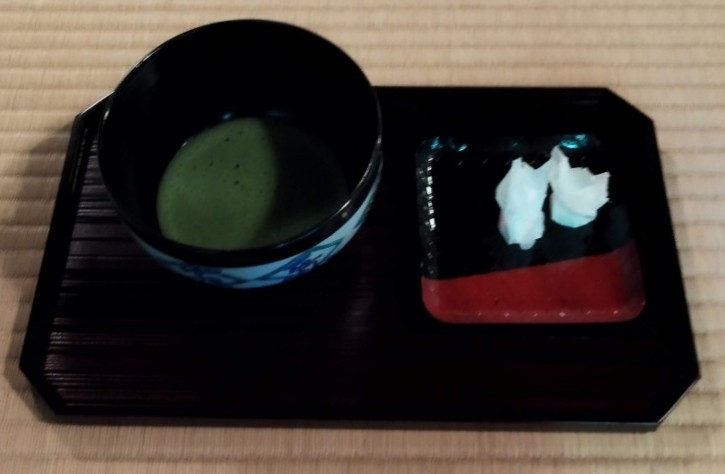
- 懐紙が用意されている場合は、お菓子を受けたり、手を拭いたりするのに使います。
- 串を置く (Place the toothpick):
- 使い終わった串は、お皿の上や懐紙の上に置きます。

4-1a. Flow When Enjoying the Sweet
- 1. Receiving the Sweet
- The host serves the sweets individually or in batches, placing them in front of the guests.
- Upon receiving the sweet, nod slightly as a gesture of appreciation.
- 2. Appreciating the Sweet’s Appearance
- If the sweet has an intricate design, rotate it so the decorative side faces you before eating, as a sign of appreciation.
- 3. Saying “Osaki ni chōdai itashimasu”
- If other guests are present, greet them with this phrase, meaning, “I will enjoy mine before you.”
- If you are alone, you may acknowledge this tradition silently in your mind.
- 4. Cutting the Sweet (If a Kuromoji or Skewer Is Provided)
- Use the wooden toothpick (Kuromoji) or skewer to cut the sweet into bite-sized portions.
- Avoid cutting the entire sweet at once—only cut what you will eat in the moment.
- Use the end of the skewer or toothpick to bring the sweet to your mouth.
- 5. Enjoying the Sweet Quietly
- Savor the taste, aroma, and texture slowly and mindfully.
- Eat quietly, ensuring you do not make unnecessary noise.
- 6. Using Kaishi Paper (If Provided)
- Use the paper Kaishi to receive the sweet and to wipe your fingers if necessary.
- 7. Placing the Toothpick
- After eating, place the used toothpick on the plate or neatly on the Kaishi paper.
👥7文連続 英語音声
4-2 補足表現(必要に合わせて)
フローに入らない表現例です。
4-2-1 フローの補足説明の表現例
- 本来はお茶の前に: 本来、お菓子はお茶をいただく前に全て食べるのが正式な作法です。
- 抹茶に慣れていない場合: しかし、抹茶の苦味に慣れていない方は、お菓子と交互に少しずつ召し上がっていただいても構いません。
4-2-1a. Supplementary Explanation of Flow
- Before Drinking Tea
- It is considered proper etiquette to finish all sweets before the tea is served.
- If You Are Not Accustomed to Matcha
- However, if you are unfamiliar with matcha’s bitter taste, you may take small sips, alternating with bites of the sweet to balance the flavors.
4-2-2 お菓子の説明の表現例
- 和三盆糖
- こちらのお菓子には、口溶けの良い上品な甘さが特徴の和三盆糖を使用しております。 (Explains the type of sugar used)
- 地元産小豆
- 餡子には、地元産の風味豊かな小豆を用いております。 (Highlights the origin of the azuki beans)
- 小豆のそのままの食感をお楽しみいただけるよう、粒餡でご用意いたしました。 (Describes the texture of the azuki bean paste)
- こちらは、丹念にこされた滑らかな舌触りの晒し餡でございます。 (Explains the type of strained azuki bean paste)
- 伝統的な職人技
- このお菓子は数百年の伝統を受け継ぐ老舗で、茶道のお席のために作られたお菓子です。 (Mentions the history and prestige of the confectionery)
- 季節感
- 本日は梅の季節にちなんだ名前のお菓子をご用意いたしました。ほのかな梅の香りが特徴です。 (Connects the sweet to the season and its flavor)
- 地域の特産
- こちらのお菓子は、その地区だけの特別な製法で作られており、独特の食感や風味をお楽しみいただけます。 (Highlights the traditional method and unique characteristics)
- 象徴的な意味合い
- お菓子の形や色は、この季節の風景や自然を表現しております。 (Describes the visual aspect and its connection to nature)
- お菓子の名前には、永遠の安らぎという意味が込められております。 (Explains the meaning or symbolism behind the sweet’s name)
- お茶とのバランス
- お茶の風味を引き立てるよう、甘さ控えめの上品な味わいに仕上げております。 (Explains the balance with the tea)
4-2-2a. Descriptions of Sweets Served in the Tea Ceremony
- Wasanbon Sugar
- These sweets are made with wasanbon, a fine-grained Japanese sugar known for its delicate, melt-in-your-mouth sweetness.
- Locally Grown Azuki Beans
- The red bean paste is made using locally sourced azuki beans, prized for their rich flavor and smooth texture.
- The red bean paste is made from grains so that you can enjoy the texture of azuki beans as they are.
- This is carefully rubbed with a smooth, bleached bean paste.
- Traditional Craftsmanship
- This confectionery is specially crafted for the tea ceremony by a long-established shop with a history spanning several centuries, reflecting refined artistry and heritage.
- Seasonal Inspiration
- Today’s sweet is named after the plum season, carrying a subtle plum essence that harmonizes with the seasonal atmosphere.
- Regional Specialty
- These sweets are made using a unique traditional method from the region, giving them a distinctive texture and depth of flavor.
- Symbolic Meaning
- The name and design of the sweet may carry cultural or seasonal symbolism, connecting it to nature and the aesthetic principles of the tea ceremony.
- The name of the confectionery means eternal peace of mind.
- Balance with Tea
- The flavor profile of the sweet complements the tea’s depth, ensuring a harmonious balance between richness and subtlety.
📘 Glossary / 用語集
- 🍡 Receiving the Sweet / お菓子を受け取る
- Receiving the Sweet☛お菓子を受け取る – ホストが一人ずつ、またはまとめてお菓子を出す。受け取ったら軽くうなずいて感謝を示す。
- Gesture of Appreciation☛感謝のうなずき– 丁寧に受け取るための基本動作。
- 🌸 Appreciating the Appearance / お菓子の見た目に感謝する
- Appreciating the Sweet’s Appearance☛ お菓子の鑑賞 – 美しい意匠がある場合、正面が自分に向くように回して鑑賞する。
- Design Appreciation☛ 意匠への敬意 – 季節や自然を表現した和菓子の美を味わう。
- 🙇♀️ Greeting Others / お先にいただきます
- “Osaki ni chōdai itashimasu”☛お先にいただきます – 同席の客に「先にいただきます」と挨拶する茶道の礼儀。一人の場合は心の中で念じてもよい。
- 🔪 Cutting & Eating the Sweet / 切り分けと食べ方
- Kuromoji / Wooden Pick☛黒文字・串 – 和菓子を一口大に切るための木製の楊枝。
- Cutting into Bite-Sized Pieces☛ 一口大に切る – 一度に全部切らず、食べる分だけその場で切る。
- Bringing to the Mouth☛口に運ぶ – 串や楊枝の先で静かに口へ運ぶ。
- 🍵 Enjoying Quietly / 静かに味わう
- Quiet Appreciation☛ 静かに味わう – 味・香り・食感をゆっくり楽しむ。音を立てないように食べる。
- Mindful Eating☛ 心を込めて味わう – 茶道の精神に沿った食べ方。
- 📄 Using Kaishi / 懐紙の使い方
- Kaishi Paper☛懐紙(かいし)– お菓子を受けたり、指先を拭いたりするのに用いる和紙。
- 🪵 Placing the Toothpick / 串の置き方
- Placing the Toothpick☛串を置く– 食べ終わった串はお皿の上、または懐紙の上に静かに置く。
- 📝 Supplementary Notes / 補足表現
- Finish Sweets Before Tea☛ 本来はお茶の前に食べる– 正式には、お菓子はお茶をいただく前にすべて食べる。
- If You Are Not Used to Matcha☛抹茶に慣れていない場合 – 苦味が強いと感じる場合は、お菓子と交互に少しずつ食べてもよい。
- 🍬 Descriptions of Sweets / 和菓子の説明例
- Wasanbon Sugar ☛和三盆糖 – 口溶けが良く、上品な甘さの砂糖を使用。
- Locally Grown Azuki Beans☛ 地元産小豆 – 風味豊かな小豆を使用した餡。
- Tsubuan / Koshian☛ 粒餡・晒し餡 – 粒の食感を楽しむ餡、または丁寧にこした滑らかな餡。
- Traditional Craftsmanship☛伝統的な職人技 – 数百年続く老舗が茶席のために作る特別な和菓子。
- Seasonal Inspiration☛季節感 – 梅・桜・紅葉など、季節にちなんだ名前や香り。
- Regional Specialty☛ 地域の特産 – その土地独自の製法で作られた特別な和菓子。
- Symbolic Meaning☛象徴的な意味 – 形や色に自然や季節の象徴が込められている(例:「永遠の安らぎ」という意味を持つ名前)。
- Balance with Tea☛お茶との調和 – 抹茶の風味を引き立てる控えめで上品な甘さ。

🍵 峰(Mine)|日本伝統文化ウオッチャー&ガイド
茶道体験の英語案内ポイントはいかがでしたでしょうか?
他のステップ(茶室への入り方から退室まで)や背景知識へ移動する際は、冒頭のメニューボタンをご活用くださいませ!