\ 酒蔵見学ガイド全10シリーズ・現場で即使える情報をチェック /
🎯 本記事(1. 蔵に入る作法)のトピックへジャンプ
1. 蔵に入る(Entering the Brewery)
1-1 蔵に入る際のルールとマナー(Hygiene and Safety Rules)
- 衛生管理: 靴を履き替え、帽子や白衣を着用します。これは外部の菌を持ち込まないためです。
- 香りの制限: 香水や強い香りのあるものは、お酒の繊細な香りを判断する邪魔になるため控えてもらいます。
- 段差と足元: 古い蔵は段差が多く、床が濡れていることもあるため、安全への注意を促します。
- 特記事項(必要時): 伝統的な蔵では、職人が朝食に納豆を食べるのを控えることもあります。納豆菌は非常に強力で、繊細な酒造りに影響を与える可能性があるからです。
1-1a. Hygiene and Safety Rules
- Hygiene Control: Before entering, we will change into dedicated indoor shoes and put on hairnets or caps. This is to prevent any outside bacteria or dust from entering the production area.
- Fragrance Awareness: We ask guests to refrain from wearing strong perfume. Sake has very subtle aromas, and brewers need a “neutral” environment to judge the quality by scent.
- Watch Your Step: Traditional breweries often have uneven floors and can be slippery due to the water used in cleaning. Please be careful as we move through the building.
- Special Note (If necessary): In some traditional breweries, workers even avoid eating Natto (fermented soybeans) in the morning, as the strong bacteria could interfere with the delicate sake-making process.
1-2 杉玉の説明(The Meaning of the Sugidama)
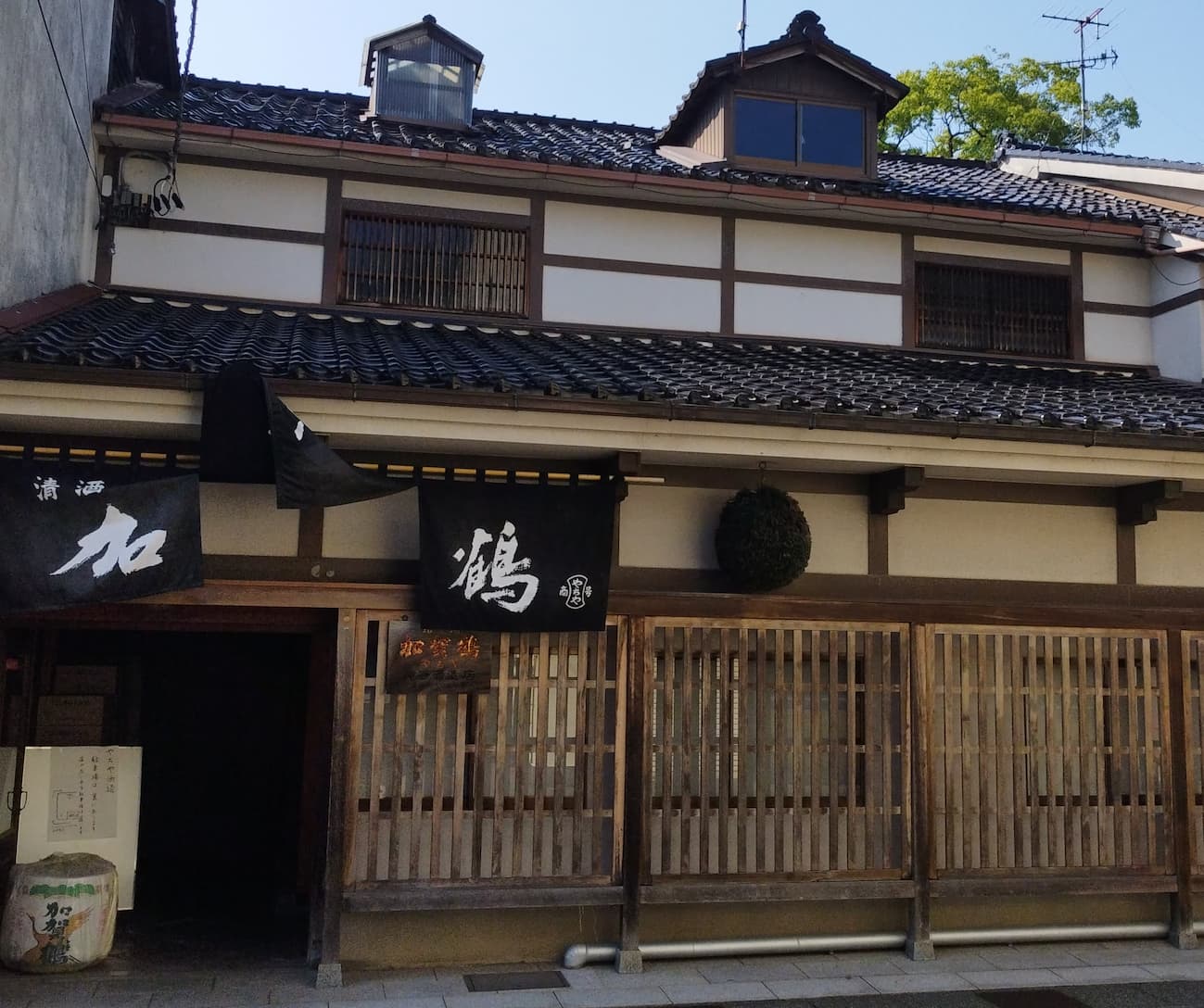
- 新酒の象徴: 軒先に吊るされた緑の杉の玉は、新しいお酒ができた合図です。
- 色の変化: 時間とともに茶色に変わる様子が、お酒の熟成具合を表しています。
- 現在のトレンド: 現在は多くの酒蔵や日本酒専門店の前に日本酒の看板として常時つるされています。
1-2a. The Meaning of the Sugidama (Cedar Ball)
- A Sign of New Sake: The green cedar ball hanging under the eaves is called a Sugidama. When it is freshly hung and green, it signals to the community that the first sake of the season has been pressed.
- Reflecting Maturation: As the seasons pass, the cedar needles turn brown. This change in color beautifully mirrors the maturation of the sake inside the brewery.
- Current Trend: Today, many sake breweries and specialized sake stores display these permanently as a symbolic storefront sign or advertisement for sake.
📘 Glossary / 用語集
- 🦺 Hygiene & Safety Rules / 衛生と安全のルール
- Hygiene Control(衛生管理)– 専用の室内履きに履き替え、帽子や白衣を着用する。– 外部の菌やホコリを蔵に持ち込まないための基本ルール。
- Fragrance Awareness(香りの制限)– 香水や強い香りのあるものは控える。– 日本酒の繊細な香りを判断するため、蔵内は“無香”が原則。
- Watch Your Step(段差と足元)– 伝統的な蔵は段差が多く、床が濡れていることもある。– 安全のため、足元に注意しながら移動する。
- Natto Restriction(納豆の制限)– 一部の伝統蔵では、職人が朝に納豆を食べるのを避ける。– 納豆菌は非常に強力で、酒造りに悪影響を与える可能性があるため。
- 🌲 Sugidama / 杉玉(すぎだま)
- The Meaning of the Sugidama / 杉玉の意味
- Symbol of New Sake(新酒の象徴)– 軒先に吊るされた緑の杉玉は「新酒ができました」という合図。– 地域の人々に醸造開始を知らせる伝統的サイン。
- Color Change & Maturation(色の変化と熟成)– 時間が経つと緑から茶色へ変化。– この色の変化が、蔵の中で進む日本酒の熟成を象徴する。
- Modern Trend(現在のトレンド)– 多くの酒蔵や日本酒専門店が常時掲げる“日本酒の看板”。– 酒文化の象徴として広く親しまれている。
御礼🔶あとがき

🛠️ Takumi(匠)
最後までお読みいただきありがとうございます!本シリーズへのご感想や、現場でのガイド解説に関するご相談などがありましたら、下記よりお気軽にご連絡ください。