
🍵 峰 🍵
日本伝統文化ウオッチャー&ガイド
日本伝統文化ウオッチャー&ガイド
ようこそ茶道体験の世界へ!
商談中のVIPゲストから、車窓から見えた『茶道体験』に後で行きたいと言われる時ってありますよね!今回はわずかな移動時間のうちに、的を射たご案内の準備ができるように、メインのプロセスからそれぞれに掘り下げた細かいステップまで分かり易くご紹介します。ピンポイントでチェックできるようにメニューボタンも配置しましたので必要に合わせてご利用ください。今回は私、峰(Mine)が最後までご案内します。
💡 本シリーズのポイント
- 専門用語は使わずに: 初めて体験するゲストの心に「すんなり伝わる」分かりやすさを最優先しました。
- 略式作法にぎゅっと凝縮: 体験現場でそのまますぐに使えるステップだけを集めています。
- 嬉しい音声サンプル付き: 各章の終わりに、ネイティブによるお手本音声を置いています。
🎯 シリーズ全10ステップ(チェックしたい項目をタップ!)
0. 茶道の背景知識
1. 茶室に入る
2. 席に着く
3. 掛け軸・生け花
4. お菓子を頂く
5. お点前を見る(本記事)
6. お茶を頂く(薄茶)
7. お茶を頂く(濃茶)
8. 茶碗を拝見する
9. 退室する
👥 各ステップの説明と英語音声については、まずは日本語でしっかり流れをイメージできるように、「日本語 > 英語」の順になっていますので、どうぞ安心して読み進めてみてくださいね。
Step 5 お点前を見る!(Viewing the Host Preparing Tea)

峰
茶道体験の最大のハイライト!無駄のない美しい所作と静寂の調和を五感で味わっていただきましょう。
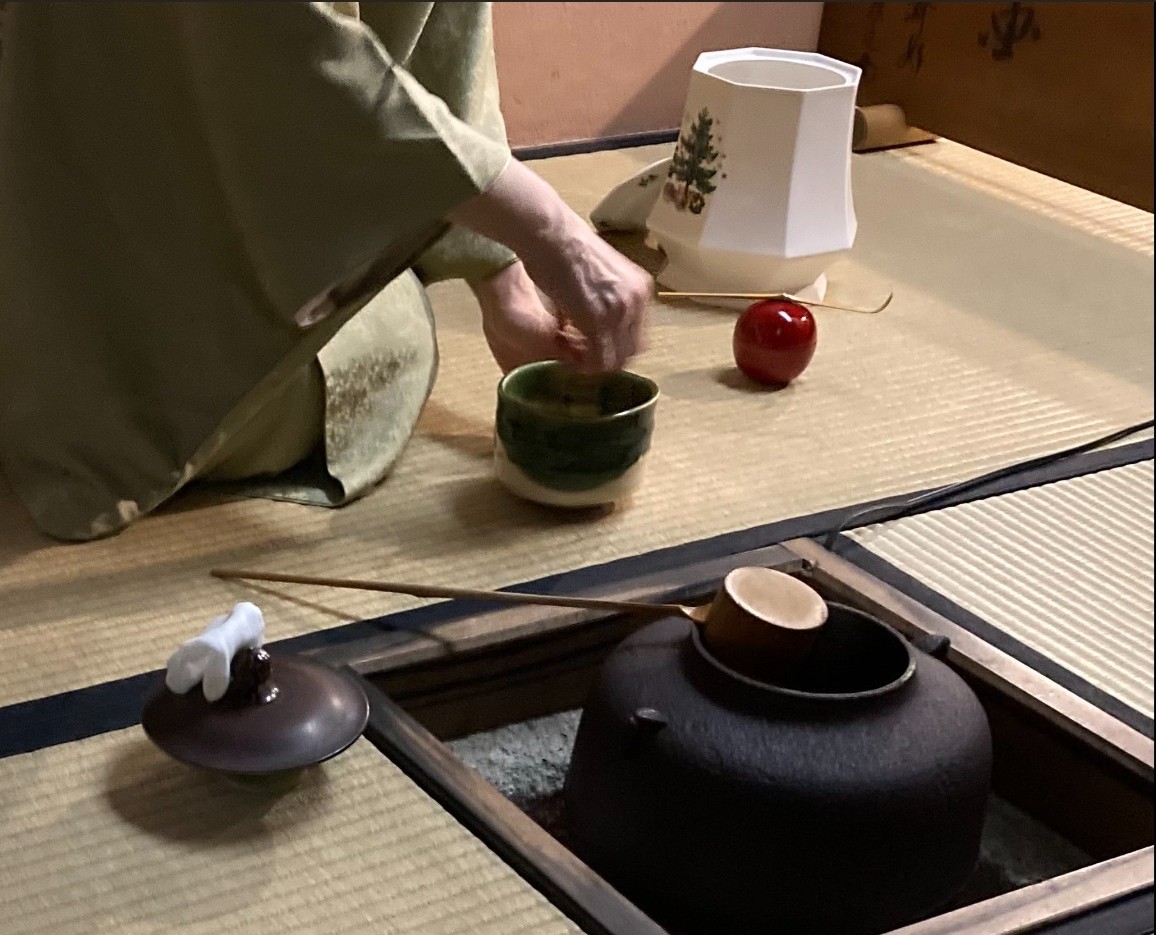
本プロセスをステップ毎に列記します。道具の清めから茶筅でお茶を点てる流れまで、8段階に分けて分かりやすくまとめました。
案内時のポイント:
お点前中はホストの集中を妨げないよう、「質問はお点前が終わってから」とお伝えしておくと安心です。湯が茶碗に注がれる音や茶筅の軽やかなリズムに耳を澄ませるよう促すと、体験の満足度がぐっと高まります。👤本章の英語音声は英国・インド・米国の男女話者ミックスです。
お点前中はホストの集中を妨げないよう、「質問はお点前が終わってから」とお伝えしておくと安心です。湯が茶碗に注がれる音や茶筅の軽やかなリズムに耳を澄ませるよう促すと、体験の満足度がぐっと高まります。👤本章の英語音声は英国・インド・米国の男女話者ミックスです。
🎯 お急ぎの方は下記からピンポイントで即チェックできます!
《日本語》
5-1 お点前を見るフロー
🎤本パート(5-1&5-1a)の演習用ツール(日⇔英)ご利用の際はこちらへ。
- ホストが点前の準備を始める (The host begins preparing for the tea ceremony):
- ホストは、必要な茶道具(茶碗、茶筅、茶杓、棗、柄杓、袱紗など)を清め、所定の位置に配置します。
- 釜の湯加減を確認するなど、点前に必要な準備を静かに行います。
- 道具の清め (Purification of the utensils):
- ホストは、袱紗を使って茶碗、棗、茶杓などを丁寧に清めます。
- 一つ一つの動作に意味があり、無駄のない美しい所作で行われます。
- 清める動作を通して、道具への敬意や客への心遣いが示されます。
- 湯を汲む (Drawing hot water):
- 柄杓を使って釜から湯を汲み、茶碗に入れます。
- 湯の量や温度は、点てるお茶の種類や季節によって調整されます。
- 茶筅を温める (Warming the whisk – Chasen):
- 茶碗に入れた湯で茶筅を静かに温め、穂先を柔らかくします。
- 温めた湯は、建水(けんすい)という器に捨てられます。
- 抹茶を茶碗に入れる (Adding matcha to the tea bowl):
- 棗から茶杓を使って、丁寧に抹茶を茶碗に入れます。
- 抹茶の量は、薄茶か濃茶かによって異なります。
- 湯を注ぐ (Pouring hot water):
- 釜から適温の湯を茶碗に注ぎます。
- 湯の勢いや量に注意しながら、静かに注ぎ入れます。
- 茶筅で点てる (Whisking the tea – Tateru):
- 茶碗の中で、茶筅を素早くリズミカルに動かし、抹茶と湯を混ぜ合わせます。
- 薄茶の場合は泡が立ち、濃茶の場合は滑らかな状態になるように点てられます。
- 茶筅の動かし方や速度は、流派や点前の種類によって異なります。
- 茶碗を客に出す (Presenting the tea bowl to the guest):
- 点てられたお茶が入った茶碗を、両手で丁寧に持ち、客の方へ正面を向けて出します。
- 出す際には、心を込めた所作が伴います。
5-1a. The Host’s Preparation for the Tea Ceremony
- 1. Arranging and Purifying the Utensils
- The host carefully purifies essential tea utensils—including the tea bowl, whisk (chasen), scoop (chashaku), container (natsume), ladle, and silk cloth (fukusa)—arranging them thoughtfully in their proper positions.
- They quietly ensure all preparations are complete, such as checking the water level in the kettle.
- 2. Purification of the Utensil
- The host purifies the tea bowl, container, ladle, and other tools using a fukusa, or silk cloth, performing each movement with precision and grace.
- Every action carries meaning, reflecting respect for the utensils and thoughtful consideration for the guests.
- 3. Drawing Hot Water
- Using the ladle, the host carefully draws hot water from the kettle to fill the tea bowl.
- The water’s quantity and temperature are adjusted according to the type of tea being prepared and the season.
- 4. Warming the Whisk (Chasen)
- The whisk is gently warmed by swirling it in the hot water inside the tea bowl, softening its tips to ensure a smooth and effective whisking process.
- 5. Adding Matcha to the Tea Bowl
- Carefully transfer matcha from the container, or natsume, into the tea bowl using the chashaku, tea scoop.
- The amount of matcha depends on whether thin tea, usucha, or thick tea, koicha, is being prepared.
- 6. Pouring Hot Water
- Gently pour hot water from the kettle into the tea bowl, adjusting both the strength and volume to suit the type of tea.
- 7. Whisking the Tea
- Using the chasen, bamboo whisk, mix the matcha and hot water with quick, rhythmic movements.
- For thin tea, usucha, whisk until a light froth forms; for thick tea, koicha, create a smooth, velvety consistency.
- The whisking technique and speed may vary depending on the school of tea and the preparation style.
- 8. Presenting the Tea Bowl to the Guest
- Holding the tea bowl carefully with both hands, present it to the guest with the design facing forward as a sign of respect.
- Serve the tea with mindfulness and attention, ensuring a gesture of hospitality and care.
👥8文連続 英語音声
5-2 補足表現(必要に合わせて)
フローに入らない表現例です。
- お点前の意味:「お点前を見る」時間は、茶道の美しさや精神性を最も感じられる瞬間の一つです。
- 静かに見守る: お点前中は静かに見守ることが大切です。
- 一つ一つの動作の意味: お点前の袱紗で清めたり、茶碗を回すなどの主要な動作にはそれぞれの意味合いがあります。
- ホストの所作の美しさ: ホストの無駄のない、洗練された所作も鑑賞のポイントです。
- 集中と調和: お点前ではホストが集中して臨んでいる様子や、道具の扱い、音などが織りなす調和を感じることができます。
- 質問は点前後に: 点前中はホストの集中を妨げないようにご質問は点前が終わるまでお待ちください。
- 流派による違い: 体験する茶道の流派によってはお点前の所作に微妙な違いがあります。
5-2a. Key Aspects of Appreciation in the Tea Ceremony
- The Meaning of “Otemae”
- The time spent observing otemae is one of the most profound moments in the tea ceremony, where both its beauty and spiritual depth can be fully appreciated.
- Quiet Observation
- Silence is essential in the tea ceremony, allowing participants to immerse themselves in the atmosphere and appreciate each movement with mindfulness.
- The Meaning Behind Each Action
- Every major action—such as purifying with the fukusa or carefully turning the tea bowl—holds symbolic meaning, contributing to the refined aesthetics and intentionality of the practice.
- The Elegance of the Host’s Gestures
- The host’s graceful and deliberate movements reflect years of refinement, serving as a point of appreciation for guests who observe the quiet beauty of their gestures.
- Concentration and Harmony
- During the tea ceremony, you can feel the harmony of the host’s concentration, the handling of utensils, and the sound of the tea utensils.
- Questions After the Tea Ceremony
- To avoid disturbing the host’s concentration during the tea ceremony, please wait to ask questions until after the tea ceremony is finished.
- Differences Between Schools
- Depending on the school of tea ceremony you are experiencing, there may be subtle differences in the way the tea is prepared.
📘 Glossary / 用語集
- 🍵 Beginning the Preparation / 点前の準備
- Tea Preparation (Otemae)☛お点前(おてまえ)– 茶を点てる一連の所作。美しさと精神性が最も表れる時間。
- Arranging the Utensils☛道具の配置– 茶碗、茶筅、茶杓、棗、柄杓、袱紗などを清め、所定の位置に整える。
- Checking the Kettle☛釜の湯加減を確認 – 湯の温度や量を静かに確認し、点前の準備を整える。
- 🧼 Purification of Utensils / 道具の清め
- Fukusa (Silk Cloth)☛袱紗(ふくさ)– 茶杓・棗などを清めるための絹布。動作には意味が込められている。
- Purifying the Utensils☛道具の清め – 一つ一つの道具を丁寧に清め、道具への敬意と客への心遣いを示す。
- Meaningful Movements☛ 意味のある所作 – 無駄のない動きが茶道の美を象徴する。
- 🔥 Handling Hot Water / 湯を扱う
- Drawing Hot Water☛ 湯を汲む – 柄杓で釜から湯を汲み、茶碗に入れる。湯量・温度は季節や茶の種類で調整。
- Pouring Hot Water☛ 湯を注ぐ – 適温の湯を静かに茶碗へ注ぐ。勢いや量に細心の注意を払う。
- 🌀 Preparing the Whisk / 茶筅の準備
- Chasen (Whisk)☛ 茶筅(ちゃせん)– 抹茶を点てるための竹製の道具。
- Warming the Whisk☛ 茶筅を温める – 茶碗の湯で穂先を柔らかくし、点てやすい状態に整える。
- Kensui☛ 建水(けんすい)– 温めた湯を捨てるための器。
- 🍃 Handling Matcha / 抹茶を扱う
- Natsume (Tea Container)☛ 棗(なつめ)– 薄茶用の抹茶を入れる容器。
- Chashaku (Tea Scoop)☛ 茶杓(ちゃしゃく)– 抹茶をすくう竹製の道具。
- Adding Matcha☛ 抹茶を入れる – 茶杓で丁寧に抹茶を茶碗へ。量は薄茶(うすちゃ)か濃茶(こいちゃ)で異なる。
- 🌬 Whisking the Tea / 茶筅で点てる
- Whisking (Tateru)☛ 点てる – 茶筅を素早くリズミカルに動かし、抹茶と湯を混ぜ合わせる。
- Usucha (Thin Tea)☛ 薄茶(うすちゃ)– 泡が立つように軽やかに点てる。
- Koicha (Thick Tea)☛ 濃茶(こいちゃ)– 泡を立てず、練るように滑らかに仕上げる。
- Variation by School☛流派による違い – 茶筅の動かし方・速度は流派や点前の種類で異なる。
- 🎁 Presenting the Tea / 茶碗を客に出す
- Presenting the Tea Bowl☛茶碗を出す – 点てた茶を両手で丁寧に持ち、正面を客に向けて差し出す。
- Gesture of Hospitality☛もてなしの所作 – 心を込めた動きで茶を提供する。
- 📝 Supplementary Notes / 補足表現
- Meaning of Otemae☛お点前の意味 – 茶道の美しさ・精神性を最も深く感じられる時間。
- Quiet Observation☛静かに見守る – 点前中は音を立てず、集中を妨げない。
- Symbolic Movements☛ 動作の意味 – 袱紗の扱い、茶碗の回し方など、すべてに意図がある。
- Elegance of the Host☛ 所作の美しさ – 無駄のない洗練された動きが鑑賞のポイント。
- Harmony & Concentration☛集中と調和 – 道具の音、湯の音、動作が織りなす静かな調和を味わう。
- Questions After the Ceremony☛ 質問は点前後に– 集中を妨げないため、質問は点前が終わってから。
- Differences Between Schools☛流派による違い– 所作や点て方に微妙な違いがある。

🍵 峰(Mine)|日本伝統文化ウオッチャー&ガイド
茶道体験の英語案内ポイントはいかがでしたでしょうか?
他のステップ(茶室への入り方から退室まで)や背景知識へ移動する際は、冒頭のメニューボタンをご活用くださいませ!