\ 酒蔵見学ガイド全10シリーズ・現場で即使える情報をチェック /
🎯 本記事(6. 上槽:お酒を搾る)のトピックへジャンプ
6. 上槽:お酒を搾る(Pressing the Sake)
6-1 もろみを搾るフロー(The Process of Pressing the Mash)
- 目的: 発酵を終えたもろみを搾り、「清酒」と「酒粕(さけかす)」に分けます。副産物である酒粕は、甘酒、粕汁、粕和えなどの栄養豊富な発酵食品として日本の食卓で広く活用されます。
- 液体と固形分の分離: 約3週間から1ヶ月の発酵を経て熟成した「もろみ」を、圧力をかけて液体(お酒)と固形分(酒粕)に分離させる工程です。
- 生まれたてのお酒: 搾りたてのお酒は「しぼりたて」と呼ばれ、発酵由来の微炭酸を含んでいることが多く、非常にフレッシュで力強い味わいが特徴です。
6-1a. The Process of Pressing the Mash
- Purpose: The goal is to press the fermented mash to separate it into liquid sake and solid sake lees (Sake Kasu). These nutrient-rich lees are a staple in Japanese cuisine, used for Amazake (sweet sake drink), Kasujiru (sake lees soup), and various pickled dishes.
- Separating Liquid from Solids: After 3 to 4 weeks of fermentation, the white mash (Moromi) is pressed to isolate the clear sake from the rice solids.
- Freshly Pressed Sake: Sake at this exact stage is incredibly vibrant and powerful. It often contains a hint of natural carbon dioxide from the fermentation, offering a signature “fresh-pressed” tingle on the palate.
6-2 搾りの方法(Different Pressing Methods)
- 具体的手法: 以下のようないくつかの手法で、もろみを濾過(ろか)します。お酒から細かな固形物や不純物を取り除く大切な作業です。ここで搾られたお酒は、次の「火入れ」工程へと進みます。
- 自動圧搾機(ヤブタ): 現在最も一般的な方法で、アコーディオンのような機械で効率よく、清潔に搾ります。
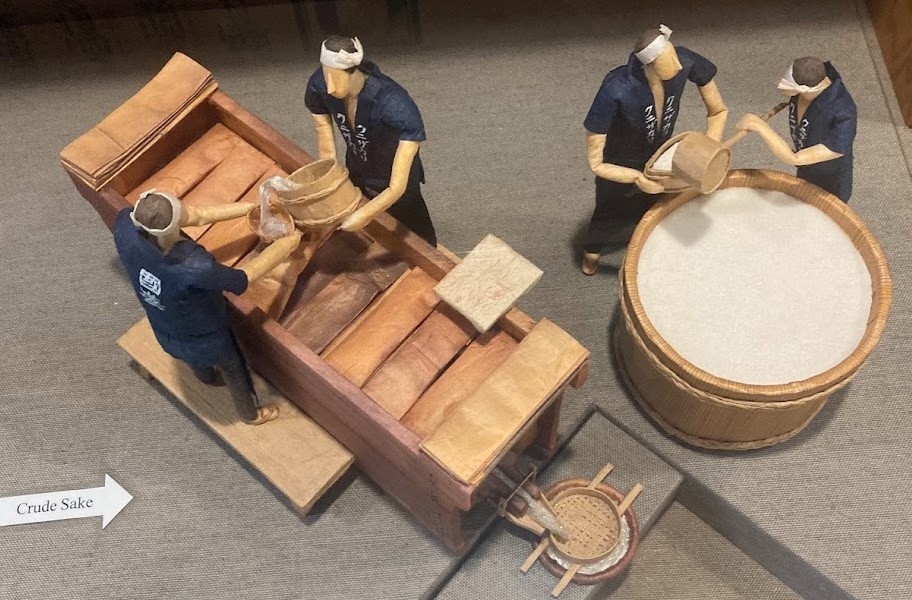
- 槽(ふね)搾り: 布袋に入れたもろみを並べ、上からゆっくり圧力をかける伝統的な方法です。雑味がなく、優しい味に仕上がります。
- 袋吊り(しずく搾り): 圧力をかけず、自重だけで滴り落ちる雫を集める贅沢な方法(大吟醸など)です。
6-2a. Different Pressing Methods
- Specific Methods: The sake is filtered through one of the following methods to remove fine solids and impurities. Once the liquid is separated, it is ready for the next stage: pasteurization.
- The “Yabuta” Press: The most common modern method uses a large accordion-like machine. It is highly efficient and keeps the sake clean and consistent.
- The “Fune” Method (Traditional Vat): In this traditional method, the mash is placed in cloth bags and laid inside a large vat called a Fune. It is pressed slowly and gently, resulting in a subtle and elegant flavor.
- Shizuku (Gravity Drip): For the highest grade of sake (like premium Daiginjo), no mechanical pressure is applied. The bags are simply hung, and the sake is collected drop by drop using only gravity.
📘 Glossary / 用語集
- 🍶 Pressing the Mash / もろみを搾る
- Purpose(目的)– 発酵を終えたもろみを搾り、液体=清酒 と 固形分=酒粕 に分ける工程。– 副産物の 酒粕 は、甘酒・粕汁・粕漬けなど、日本の食文化に欠かせない発酵食品として活用される。
- Separation of Liquid & Solids(液体と固形分の分離)– 約3〜4週間発酵したもろみを圧力で搾り、透明な酒と固形の酒粕に分離する。
- Freshly Pressed Sake(しぼりたて)– 搾りたての酒は微炭酸を含むことが多く、フレッシュ・力強い・生き生きとした味わい が特徴。– 発酵の“息づかい”を感じる特別な状態。
- 🧰 Pressing Methods / 搾りの方法
- Yabuta Press(自動圧搾機 / ヤブタ)– 現在最も一般的な方法。– アコーディオン状の機械で効率よく、衛生的に搾る。– 安定した品質を保ちやすい。
- Fune Method(槽搾り / ふねしぼり)– 伝統的な搾り方。– 布袋に入れたもろみを槽(ふね)に並べ、上からゆっくり圧力をかける。– 雑味が少なく、柔らかく上品な味わい に仕上がる。
- Shizuku Method(袋吊り / しずく搾り)– 圧力をかけず、袋を吊るして自然に滴り落ちる雫だけを集める。– 大吟醸などの最高級酒に用いられる贅沢な手法。– 透明感・繊細さ・エレガンス が際立つ。
御礼🔶あとがき

🛠️ Takumi(匠)
最後までお読みいただきありがとうございます!本シリーズへのご感想や、現場でのガイド解説に関するご相談などがありましたら、下記よりお気軽にご連絡ください。