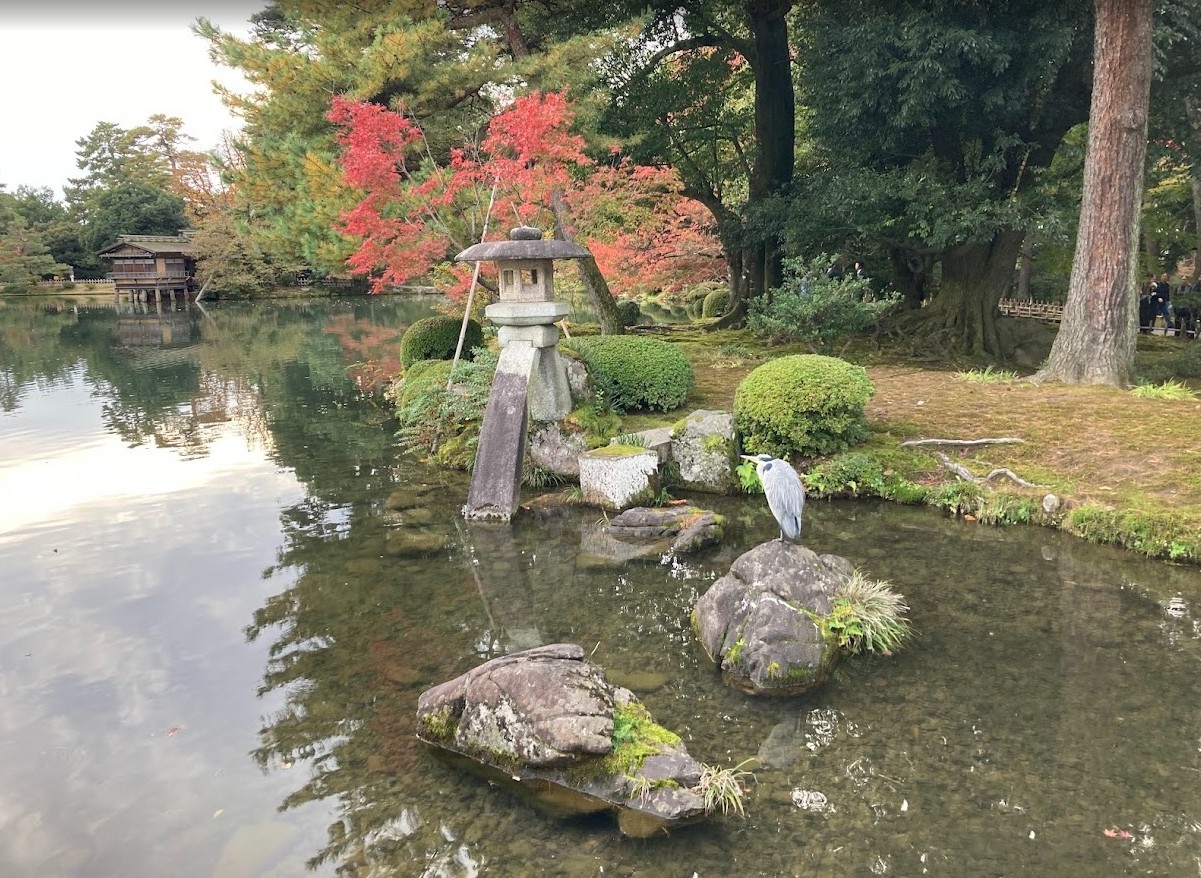
Welcome! I’m Mine, your local Japanese garden insider in Kanazawa. Welcome to the official feature page for the Kotoji Stone Lantern (Kotoji-toro)—the most iconic symbol of Kenrokuen Garden and a famous face of Kanazawa itself!

Standing gracefully on the shores of Kasumiga-ike Pond, framed by the Nijobashi stone bridge and seasonal foliage, this unique stone lantern is an absolute must-see highlight of any trip to Kanazawa.
✨ Jump Straight to the Secrets & Mysteries of Kotoji Lantern!

The Symbol of Kenrokuen Garden: Kotoji Stone Lantern
📍 Quick Navigation: Jump to Other Highlights
2. Kotoji Stone Lantern (Kotoji-toro)
2.1 Essential History & Key Facts
- Kenroku-en’s Top Attraction
The Kotoji Stone Lantern is the most famous landmark in Kenroku-en, and many visitors come specifically to see it. - The Iconic Symbol of Kanazawa
Stone lanterns are common in Japanese gardens, but this one is known nationwide as the symbol of both Kenroku-en and Kanazawa, often appearing in travel brochures and social media posts. - Classic Photo Spot with Long Lines
As the classic photo spot in Kenroku-en, long lines often form as visitors wait to have their photo taken while standing on the stone bridge, with the lantern and pond in the background. - Unique Two-Legged Design
While many garden lanterns (such as yukimi-toro) have three or four legs, the Kotoji Lantern stands on two legs of different lengths, inspiring various stories over time. - Name Derived from a Koto Bridge
Its unique name, “Kotoji,” refers to the small bridge-like piece that supports the strings of a traditional koto harp. - The Two-Legged Frame and Stone Bridge
Because its two-legged stance resembles the koto’s string support, the stone bridge in front was likened to the body of the koto, giving the lantern its name. - Tales Behind the Damaged Leg
Records show that both legs were originally the same length, but later stories claim one leg was damaged—either by vandalism or intentionally altered for aesthetic effect. - Asymmetrical Wabi-Sabi Aesthetics
Shortening one leg and placing it on a stone beside the pond creates an asymmetrical look, giving the lantern a unique charm not found in other garden lanterns. - Differing Choices Among Visitors
Many visitors wait in line to take a commemorative photo, while others choose to pass by without taking pictures when they see the long queue. - Quiet Times for Picturesque Views
Those who want to simply enjoy the picturesque view of the lantern, the maple tree, and the pond often visit early in the morning, near closing time, or during winter when the garden is quieter.
2.2 Fun Backstories & Mysteries
Q1: What Is This Lantern? / What Is Special About It?
- This is not just an ordinary stone lantern.
- Here, a symbolic scene wishing for happiness is expressed.
- It represents a koto performance, using a traditional Japanese instrument.
- The koto is often played on auspicious occasions, such as New Year’s Day and weddings.
- The curved stone bridge resembles the body of a koto, and the lantern represents the “koto-ji,” the small piece that supports and tunes the strings.
- However, after explaining this many times, my impression of the lantern has gradually changed.
- It’s far too big for a real koto bridge, and standing on two legs, it almost looks human.
- For many people, it may look like a gentle matchmaker or parents watching over a wedding.
- But perhaps I’m the only one who finds it a little intimidating.
- To me, it looks like a strict music teacher watching over someone who can’t even play basic do-re-mi, let alone complex koto music!
Q2: Why Is Everyone Lined Up Like This?
- This is a famous spot where many people take pictures as a memory and proof of their visit to Kanazawa.
- It is similar to the Little Mermaid statue in Denmark, the Merlion in Singapore, or Big Ben in England.
- Japanese people have always appreciated the simplicity of landscapes, and the stone lanterns and pond in the background perfectly match their aesthetic preferences.
- Over the years, this view has become a symbol of Kanazawa, and many visitors now line up to walk on the stone bridge and have their photo taken here.
- I often tell my guests, “If you think it’s worth it, why not join the line? It will be a memory that lasts a lifetime.”
- Many tourists line up for this experience, while some move on to the next spot—for instance, those who aren’t interested in trends, prefer to avoid crowds, or don’t like having their picture taken usually pass by without waiting.
- There are many different types of people, and after years of guiding visitors to this popular spot, I’ve noticed that their personalities often come through here. And, I discovered a particular type of personality—like myself.
- Probably they would wonder if the stone bridge has accumulated structural fatigue from the countless people who have crossed or lingered on it over the years.
- Being worried that the bridge might collapse one day, just by chance, this cautious type will never cross it, no matter how much I recommend it.
- It’s like the saying: ‘knocking on a stone bridge before crossing it—and then never crossing it at all!’
Official Links & Resources
Thank You & Message from Mine

👆 Did you enjoy learning about the secrets of Kotoji Stone Lantern? To explore other iconic highlights like Kasumiga-ike Pond or Karasaki Pine, use the navigation buttons above!
🛡️ Travel Safety Notice: Enjoying Historical Paths with Peace of Mind
Kenrokuen and other historical Japanese landscapes feature ancient stone steps, stepping stones, and natural gravel paths. While breathtaking, unexpected trips or stumbles can occur. For international visitors exploring Kanazawa and Japan’s heritage sites, securing real-time travel health insurance is strongly recommended for seamless medical support during your trip.
⚔️ SafetyWing – Real-Time Travel Insurance for Global Travelers (Check Details)