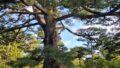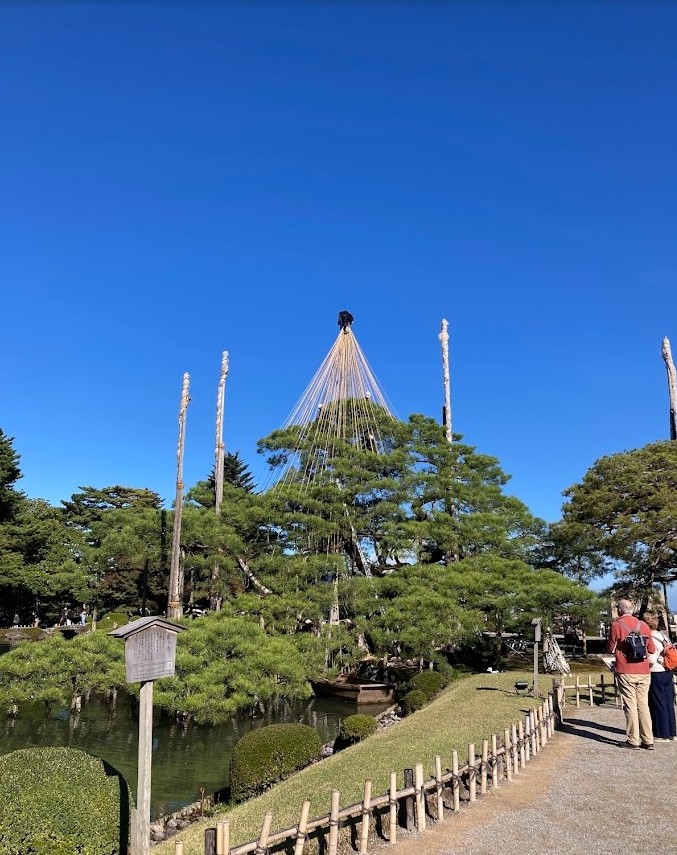
Welcome! I’m Mine, your local Japanese garden insider in Kanazawa. Welcome to the official feature page for the Karasaki Pine Tree (Karasaki-no-matsu)—the most celebrated black pine in Kenrokuen Garden, famous for its magnificent 20-meter branch span and as the traditional starting tree for Kanazawa’s iconic winter yukitsuri rope umbrellas!

Grown from sacred seeds brought from Lake Biwa by the 13th samurai lord, this living masterpiece showcases centuries of master gardening dedication and patience along the shores of Kasumiga-ike Pond.
✨ Jump Straight to the Secrets & Mysteries of Karasaki Pine!
📍 Quick Navigation: Jump to Other Highlights
5. Karasaki Pine Tree (Karasaki-no-matsu)
5.1 Essential History & Key Facts
- A Pine Tree Symbolizing Kenroku-en
The Karasaki Pine is a black pine known for its distinctive branching within Kenroku-en, and it stands as one of the garden’s best-known trees. - The Garden’s Centerpiece
The Karasaki Pine is not merely one element of the garden; standing on the shore of Kasumi Pond with its wide-spreading branches, it makes a striking impression on the entire landscape. - Branches Spreading Dynamically Sideways
While many pine trees grow upward in a triangular cone shape, the Karasaki Pine has a unique form in which its branches spread outward horizontally as if flowing. - Overwhelming Scale and Sculptural Beauty
Although there are other pine trees in the garden with horizontally spreading branches, the Karasaki Pine’s impressive 20‑meter span stands out from all the rest. - A Pine with a Sacred Heritage
The Karasaki Pine is not a native species of Kanazawa; it was grown from seeds specially obtained from the sacred pine at Karasaki Shrine, a scenic site on the shores of Lake Biwa. - Born from the Lord’s Passion
The 13th lord of the Kaga Domain, Maeda Nariyasu, obtained seeds from Karasaki and had them carefully cultivated into the pine we see today. - A Landscape Cherished in History and Culture
The original pine at Karasaki, on the shore of Lake Biwa, has a long cultural history. The famous scenic spot has been celebrated in classical waka poetry and depicted in ukiyo-e prints. - The Skill Behind Maintaining the Pine
The pine’s shape is maintained through years of careful pruning and other gardening work. Its present beautiful form reflects not only natural growth but also the work of the gardeners who care for it. - The Traditional Starting Point for Yukitsuri
Yukitsuri is the practice of supporting tree branches with ropes to protect them from heavy snow. The work normally begins with the Karasaki Pine on November 1. - A Sign of Winter’s Arrival
The start of yukitsuri on November 1 is a seasonal tradition in Kanazawa. Watching gardeners work on the Karasaki Pine offers a glimpse of the skills involved in preparing the garden for winter.
5.2 Fun Backstories & Mysteries
Q1: Is There Something Special About This Tree? Other Trees’ Branches Are Also Hung Like This.
- Certainly, this snow‑protection method can be seen in other Japanese gardens, but there is something different here.
- This is special black pine that the lord brought all the way from a distant pine forest famous for its scenic beauty.
- Its meandering branches spread out like the petals of a large flower, creating a beautifully balanced shape loved by many visitors.
- Every year, this pine is the first tree to receive the ropes, so many people come to photograph the moment.
- Starting with this pine, around 800 trees in the garden undergo the snow‑support work.
- The entire operation involves about 500 workers over a period of roughly one and a half months.
- The core team of gardeners performing the most delicate work are directly employed by Ishikawa Prefecture.
- As a public servant, being able to flatter pine trees instead of people sounds like a rather enviable job, doesn’t it?
- Did you think it was because they can look after beautiful pine trees like the ones in Karasaki?
- No! After all, pine trees never complain.
Q2: Why Do People Take So Much Care of Pine Trees When They Are So Vital and Strong?
- As you say, pine trees are vigorous trees that can grow on sandy beaches and rocks.
- For this reason, it has been cherished since ancient times as a symbol of “patience,” a virtue of the Japanese people.
- However, the pine’s unique tree shape and beautiful, artfully arranged evergreen foliage are the result of human collaboration.
- Many people also mistakenly believe that the pine groves lining the sandy coastline are naturally this way.
- The beautiful pine forest landscape of the coast as well as the gardens is the result of many centuries of labor by the Japanese.
- If the pine tree is a symbol of patience, then the Japanese who spare no effort in taking care of it may be said to be patience itself.
- Black pines, in particular, grow rapidly and, if left unmaintained, take on a wild, untamed appearance; therefore, not only patience but also a high level of skill is essential.
- For example, even the basic tasks—such as protecting branches from snow damage, thinning out branches, pruning shoots and removing old leaves—require more effort with pines than with other trees.
- Therefore, the pine trees in Kenrokuen, the product of many years of gardeners’ skill and patience, are not just pine trees, but perhaps should be called truly “fine trees.”
- But for those who feel they are forced to take care of pine trees as their job, it may be a “pain tree” that requires a great deal of patience!
Official Links & Resources
Thank You & Message from Mine

👆 Did you enjoy discovering the secrets of the Karasaki Pine Tree? To explore other iconic highlights like Neagari Pine or the Historic Fountain, use the navigation buttons above!
🛡️ Travel Safety Notice: Enjoying Historical Paths with Peace of Mind
Kenrokuen and other historical Japanese landscapes feature ancient stone steps, stepping stones, and natural gravel paths. While breathtaking, unexpected trips or stumbles can occur. For international visitors exploring Kanazawa and Japan’s heritage sites, securing real-time travel health insurance is strongly recommended for seamless medical support during your trip.
⚔️ SafetyWing – Real-Time Travel Insurance for Global Travelers (Check Details)