 ユイ(Yui)
皆さん、こんにちは!日本の自然・里山ウオッチャー&ガイドのユイです。合掌造りの屋根裏に息づく『養蚕の名残(Remnants of Silkworm Farming)』英語案内ページへようこそ!
白川郷の暮らしを支えた生命線「養蚕業(Sericulture)」。地元の人々は親愛と感謝を込めて蚕を「お蚕様(o-kaiko-sama)」と呼び、命をかけて育ててきました。屋根裏に整然と展示された道具類や、蚕の習性を巧みに利用した「まぶし(繭を作る足場)」の仕組みから、先人の驚くべき観察眼と知恵を学ぶことができます。
現場でサッと使える短文フレーズから、養蚕のプロセス、ゲストをクスッと笑わせる雑談ネタまで網羅しました。目的の項目ボタンからご自由にご活用ください。
📍 Quick Navigation: 各章へジャンプ
9. 合掌造り屋根裏(養蚕の名残)
ここでは屋根裏に展示されている養蚕の道具類や、命を大切にした地元の精神性をカバーします。用途に合わせて以下のボタンから直接アクセスできます。
9.1 基本情報
ここではインバウンドと一緒に屋根裏を見る際の養蚕業の観点で押さえておきたい基本ポイントを10項目(日英)でご紹介します。屋根裏では多くの人が建物に注意が奪われますので、養蚕に関する長い説明は不要ですが、そもそも養蚕業や生き物としての蚕(かいこ)の知識がないと陳列された道具の意味もよくわからないので、より興味をそそる親しみやすいネタをベースに纏めてみました。英語音声は前半(1-5)(ウェールズ男性話者)と後半(6-10)(英国女性話者)の2ファイルに分けました。👄下記表現の習得用音声ツールをご利用の際はこちらへ!
《日本語ポイント》
- 少ない農業収入をカバーする貴重な現金収入をもたらす蚕をここではお蚕様と敬称をつけて呼び大切にしてきたが、それは与えられるもの全てを自然の恩恵として感謝、崇拝してきた地元の精神性を反映している。
- 生糸生産は卵から蚕が繭になるまで飼育する養蚕業と繭から生糸を製造する製糸業に大きく分けられるがこの屋根裏では前者の工程を請け負っていてその為の作業道具が展示されている。
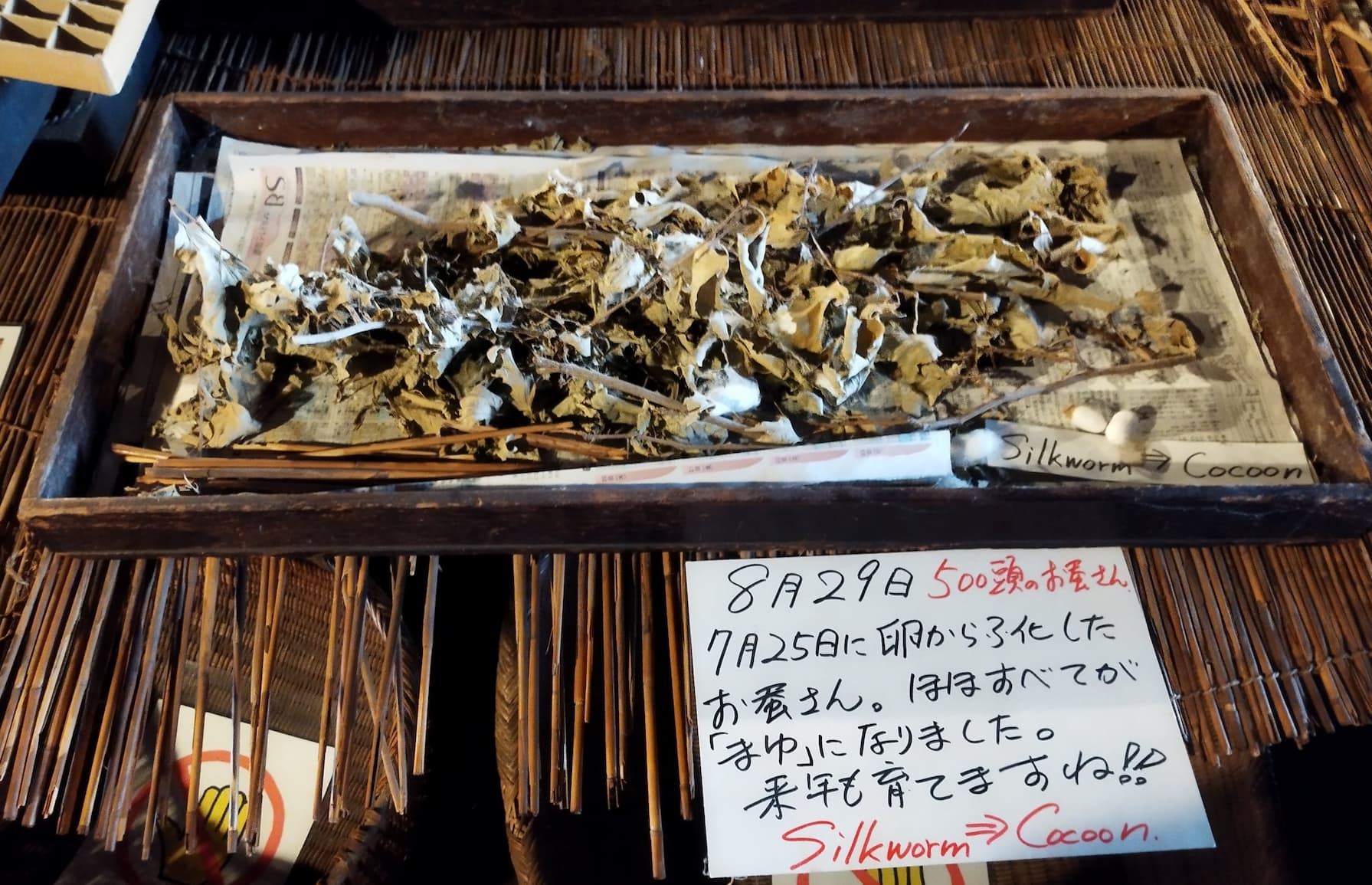
- 蚕は卵から孵化し、桑の葉を食べ、成熟して繭を作り、50日間という短い一生を終えるが、その名残を、パネルやさまざまな道具の展示で見ることができる。
- 絹の品質は蚕の健康状態に大きく影響されるため、蚕は非常に繊細でデリケートなので、屋根裏部屋は適切な桑の葉の量、温度、湿度を保つために24時間注意を払う必要があった。
- 蚕は卵、幼虫、蛹、成虫の4段階で完全変態する。 成虫になる前に4回脱皮し、繭を作ってサナギになった後、成虫になる前に繭は次の製糸業者に出荷される。
- 繭は蒸気の熱で乾燥され、一定期間保管された後、熱湯で解かれ、1つの繭から約1kmの長さの絹糸に生まれ変わる。
- 蚕は生まれてから繭を作るまで体重は約一万倍、絹糸を吐き出す絹糸腺は10万倍以上とサイズも形態もドラマチックに変化するので、映画の怪獣のモデルにもなった。
- 蚕の上に登る習性を利用して2つの特殊な道具が作られた。蚕が登れる穴のある網は糞が網の下に分離され、小さな仕切りがある格子状の板はそれが繭を紡ぐための誘いとなり、労力をかけず綺麗に並んだ繭を入手できる。
- オスの蚕はメスよりも絹の品質が高く、生産量もメスの2割ほど多いが、階級制の武士の時代でも、メスの蚕がそれを理由に避けられていたという記録はない。
- 養蚕業は衰退したが、蚕の飼育は多くの人が主に学校で経験していて、特に蚕が桑の葉を貪り食う音は小雨の音や波の音を遠くで聞くような記憶に残るもので、それを聞いた後何人かの子供は食事を静かに食べた。
《英訳例》
- Silkworms, which provided valuable supplementary income to the modest farm earnings, were respectfully called ‘o-kaiko-sama’ (meaning ‘Mr./Mrs. Silkworm’), reflecting the local mentality of gratitude and reverence for everything nature provides.
- Raw silk production can be divided into two main stages: sericulture, where silkworms are raised from eggs until they form cocoons, with tools for this process displayed here, and spinning, where raw silk is extracted from the cocoons.
- During their short 50-day life, silkworms hatch from eggs, feed on mulberry leaves, and mature to form cocoons, the remnants of which visitors can see through displays of panels and various tools.
- Since the quality of silk was greatly affected by the health of silkworms, the attic required 24-hour attention to maintain the right amount of mulberry leaves, temperature, and humidity, as silkworms were extremely sensitive and delicate.
- The silkworm undergoes complete metamorphosis in four stages: egg, larva, pupa, and adult. After molting four times and forming a cocoon to become a pupa before reaching adulthood, the cocoon is shipped to the next silk manufacturer.
- After the cocoons are dried with steam heat and stored for a certain period, they are unraveled in boiling water and transformed into silk yarn, with each cocoon producing nearly one kilometer of thread.
- Silkworms undergo such dramatic changes in size and form from birth to cocoon-making that they have inspired monster designs in movies. Their weight increases by about 10,000 times, and their silk glands, which produce the silk threads, grow more than 100,000 times.
- Utilizing the silkworms’ natural tendency to climb, two special devices were invented: a net with holes that allows them to climb through, separating their droppings below, and lattice-shaped boards that encourage them to move up into small compartments to spin their cocoons, resulting in neatly aligned cocoons without manual labor.
- Male silkworms produce higher-quality silk and about 20% more than females, but there seems to be no records showing that female silkworms were avoided due to this disadvantage, even during the class-based Samurai period.
- Although the sericulture industry has declined, many people experienced raising silkworms, mainly at school, and vividly remember the sound of silkworms devouring mulberry leaves—much like the sound of light rain or distant waves. Some children even ate their meals quietly after hearing it.
9.2 口頭用簡略説明
ここではお相手との会話の合間や歩きながら使える様に上記基本情報の10項目を口頭説明用の簡略文に置き換えています。各文ごとに【英語 > 日本語】の順で記述しています。英語音声は各文短いので(米国少女話者)1ファイルです。
- Silkworms were a source of income here and were respected so much that people called them “Mr. and Mrs. Silkworm.” This reflected the local mindset of gratitude toward nature.
(カイコは、この地域の人々にとって収入源であり、とても大切にされていたため、「おかいこさま」と呼ばれていました。これは、自然への感謝の気持ちを表す地元の考え方でした。) - Making silk has two main steps: sericulture of raising silkworms and spinning of silk thread. You can see the tools used for raising silkworms here.
(絹を作るには、大きく分けて2つの工程があります。カイコを育てる養蚕と、糸を紡ぐ製糸です。ここでは、カイコを育てるための道具を見ることができます。) - Silkworms live for only about 50 days. They hatch from eggs, eat mulberry leaves, and spin cocoons. Displays showcasing the process of raising silkworms are available here.
(カイコは約50日しか生きません。卵から孵化し、桑の葉を食べ、繭を作ります。カイコを育てる過程を紹介する展示があります。) - People had to watch over them 24/7 to get good silk. Silkworms are very picky and require precise amounts of food, the right temperature, and controlled humidity.
(良質な絹を得るためには、24時間体制でカイコを見守る必要がありました。カイコはとても繊細で、餌の量、温度、湿度を厳密に管理する必要があります。) - Silkworms change a lot! They start as eggs, then become worms, then make cocoons. Before becoming moths, the cocoons are sent to factories to make silk thread.
(カイコは大きく変化します!卵から幼虫になり、繭を作ります。蛾になる前に繭は工場に送られ、絹糸に加工されます。) - The cocoons are dried and stored. Then, they’re boiled to unravel the silk thread. Each cocoon can make almost a kilometer of thread!
(繭は乾燥させて保管されます。その後、茹でられて糸を解きます。1つの繭から約1キロメートルの糸が取れます!) - Silkworms grow huge enough to have inspired movie monsters! They get about 10,000 times heavier and their silk glands grow even more.
(カイコは、映画のモンスターを思わせるほど大きく成長します!体重は約1万倍になり、絹糸を作るための絹糸腺はさらに大きく成長します。) - Silkworms tend to climb. People used special nets separating their droppings below and lattice boards to help them climb and make their cocoons neatly without manual labor.
(カイコは登る習性があります。人々は、糞を下に落とすための特別なネットと、きれいに繭を作るための格子状の板を使って、カイコが登りやすくしました。) - Male silkworms produce more silk of higher quality, but people didn’t seem to mind raising females, even during the class-based Samurai era.
(オスのカイコは、より高品質な絹を多く生産しますが、武士階級の時代でも、メスを育てることに抵抗はなかったようです。) - Even after the sericulture industry declined, many experienced raising silkworms in school. They remember the sound of silkworms eating mulberry leaves—it sounded like rain, which made some kids quiet when eating!
(養蚕業が衰退した後も、多くの人が学校でカイコを育てた経験があります。彼らが覚えているのはカイコが桑の葉を食べる音が雨の音に似ていることで、それである子どもは食べる時には静かになりました。)
9.3 インバウンドの視点:笑いも取れるかも?
Q1 この格子状の板(まぶし)はなんですか?
“What is this lattice-like board (mabushi)?”
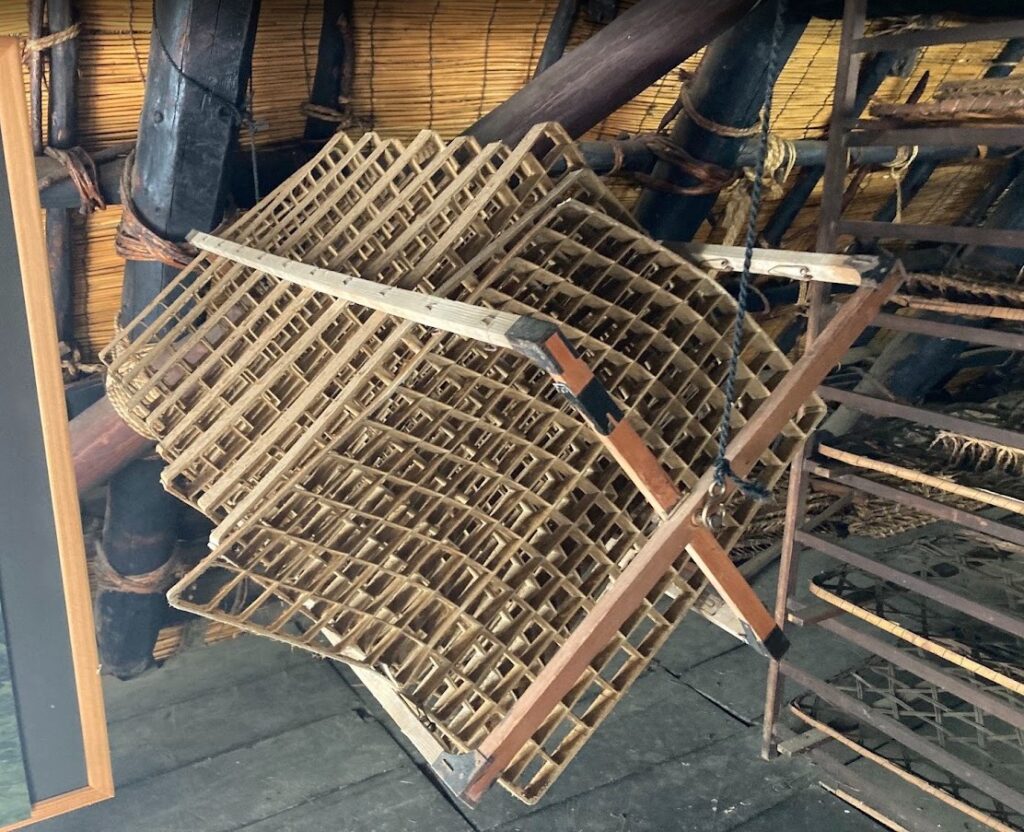
Traditional kaiten-mabushi rotating grid frame
展示物を見てよく聞かれる質問です。前半はまぶしの特徴を織り込んだ真面目パート(1-6)、後半(7-10)はおふざけパートの2構成です。
❶ This frame, called a mabushi, is made of wood or woven straw, with small compartments where silkworms spin their cocoons.
「まぶし(蔟)」と呼ばれるこの枠は、木や編んだ藁で作られており、蚕が繭を作るための小さな仕切りが並んでいます。
❷ Silkworms cannot spin cocoons on a flat surface, so they need the mabushi as a scaffold, much like the scaffolding used in construction.
蚕は平らな面では繭を作ることができないため、建設現場で使われる足場のように、足がかりとなる「まぶし」を必要とします。
❸ Silkworms naturally climb upward. When the frame is placed above them, they climb into the individual compartments and spin their cocoons there.
蚕には本能的に上へ登る習性があります。そのため、蚕の上にこの枠を置いておくと、自ら個々の仕切りの中へ登っていき、そこで繭を作ります。
❹ However, removing the finished cocoons without damaging them is time-consuming and labor-intensive, so a new device was developed. This new type rotates vertically, like a Ferris wheel.
しかし、完成した繭を傷つけずに取り出す作業は手間と時間がかかるため、新しい道具が開発されました。この新型は、観覧車のように縦に回転する仕組みになっています。
❺ Placed among the silkworms, it allows them to climb into the highest available compartments and spin their cocoons there. As the upper compartments fill with silkworms, their weight makes the frame rotate downward, bringing the empty lower compartments to the top.
蚕の中にこれを置くと、蚕は一番高い位置にある空いた仕切りに登って繭を作り始めます。上の仕切りが蚕でいっぱいになると、その重みで枠が下へと回転し、下にあった空の仕切りが上へと押し上げられます。
❻ The other silkworms then fill the new upper compartments, repeating the process until every space is neatly filled with cocoons—with little manual effort.
すると別の蚕たちが新しく上に来た仕切りに入り、これを繰り返すことで、人手をほとんどかけずにすべてのスペースがきれいに繭で埋まるのです。
❼ That’s a brilliant idea! But doesn’t it make you think of human nature—and feel a little sad? Like silkworms, humans have an upward drive. When we see an opportunity, we want to climb up and build a comfortable, cocoon-like home for ourselves.
実に素晴らしいアイデアですよね!でも、これを見ると人間の性(さが)を思い出して、少し切なくなりませんか?蚕と同じように、人間にも向上心(上を目指す本能)があります。チャンスを見つけると上へ登り、自分だけの快適な「繭(マイホーム)」を築きたくなるものです。
❽ But the mortgage on that dream home can gradually push us among the working poor, sometimes making us feel we’ve fallen to the bottom of society—just like the silkworms being carried downward by this rotating mabushi.
ところが、その夢のマイホームの住宅ローンが原因で、次第にワーキングプアへと追い込まれ、まるでこの回転まぶしで下へと運ばれる蚕のように、社会の底辺へ落ちてしまったような気分になることがあります。
❾ What’s more, after working so hard to build our cozy cocoon, we may never get to enjoy living in it. Someone else might take it away from us—just like what happens to silkworms.
さらに、せっかく苦労して居心地の良い繭を築き上げたのに、その中で暮らす喜びを味わえないまま、誰かに奪われてしまうこともあります——まさに蚕の身に起こることと同じように。
❿ We increasingly hear stories of husbands getting divorced later in life, grumbling like this:
“My cozy cocoon-like home is about to be taken over by my tycoon-like wife!”
最近では熟年離婚をする夫たちが、こんなふうにボヤく話をよく耳にします。
「私の居心地の良い『コクーン(繭のようなマイホーム)』が、大君(タイクーン)のような妻に乗っ取られそうなんだ!」
【重要語句・表現(Glossary)】
lattice frame / 格子状の枠 👉️ 「まぶし」の形状を英語で説明する際の基本表現です。
woven straw / 編んだ藁(わら) 👉️ 伝統的なまぶしの素材を表す表現です。
compartment / 仕切り、区画 👉️ まぶしの一つひとつのマス目を指します。
spin a cocoon / 繭を作る(糸を吐いて紡ぐ) 👉️ 養蚕の解説で必須のコロケーションです。
scaffold (scaffolding) / 足場 👉️ 建設現場の足場に例えることで、まぶしの役割が直感的に伝わります。
time-consuming and labor-intensive / 時間と手間がかかる 👉️ 伝統的な手作業の大変さを表す便利な表現です。
Ferris wheel / 観覧車 👉️ 回転まぶし(回転蔟)の動きをイメージさせる比喩です。
manual effort / 人手、手作業の労力 👉️ 機械や工夫によって省力化できたことを対比する際に使えます。
upward drive / 向上心、上を目指す本能 👉️ 蚕の上へ登る習性と人間の出世欲・マイホーム願望を掛けるキーワードです。
mortgage / 住宅ローン 👉️ 発音(tは黙字で「モーゲージ」)に注意が必要な日常重要語です。
grumble / ブツブツ文句を言う、ボヤく 👉️ 熟年離婚の夫の哀愁とユーモアを出す動詞です。
tycoon / 大物実業家、大君 👉️ 「cocoon(繭)」と韻を踏んだオチのキーワードです(語源は日本語の「大君」)。
Q2. (蚕って何?)
What is a silkworm?
蚕を全く知らないゲストから出される質問を元に、前半(1-7)に説明に使える真面目パート、後半(8-10)おふざけパートで纏めました。
❶ Despite its name, a silkworm is not actually a worm, but the caterpillar of a domesticated silkmoth.
その名前とは裏腹に、蚕は実際にはワームではなく、家畜化されたカイコガの幼虫です。
❷ These tiny larvae eat nothing but mulberry leaves and grow rapidly, shedding their skin four times in about a month.
この小さな幼虫は桑の葉だけを食べて急速に成長し、約1か月の間に4回脱皮します。
❸ Once fully grown, each silkworm spins a protective cocoon from a single continuous filament of silk, which can reach up to 1,500 meters in length.
十分に成長すると、1匹の蚕は最長1,500メートルにもなる一本の連続した絹糸で、身を守るための繭を作ります。
❹ Thousands of years ago, people in ancient China discovered how to reel this delicate filament into silk thread and weave it into fine, lustrous fabric.
数千年前、古代中国の人々はこの繊細な糸を繰り取って絹糸にし、美しく光沢のある布に織り上げる方法を発見しました。
❺ Through thousands of years of selective breeding, domesticated silkmoths lost their ability to fly, while silkworms became completely dependent on humans to survive.
何千年にもわたる選択的な交配によって、家畜化されたカイコガは飛翔能力を失い、蚕は生きていくために完全に人間に依存するようになりました。
❻ Eventually, sericulture spread to Japan and became a vital livelihood in snowy mountain regions like Shirakawa-go, where rice farming was limited.
やがて養蚕は日本にも伝わり、稲作が限られていた白川郷のような豪雪の山間地域で、重要な生業となりました。
❼ By the late 19th century, raising these delicate creatures in the attics of gassho-zukuri houses had become the village’s major industry.
19世紀後半までには、合掌造りの屋根裏でこの繊細な生き物を育てることが、村の主要産業となっていました。
❽ Looking at the history of sericulture, I can’t help thinking of modern AI. Interestingly, AI doesn’t have to stand only for Artificial Intelligence; we can also play with words like Agriculture and Artistic.
養蚕の歴史を振り返ると、どうしても現代のAIを連想せずにはいられません。興味深いことに、AIは必ずしも人工知能だけを指すものではなく、Agriculture(農業)やArtistic(芸術的な)といった言葉をもじって楽しむこともできます。
❾ Both silkworms and AI consume enormous amounts of data and mulberry leaves every day, yet provide wonderful things for humanity.
蚕もAIも、毎日膨大な量のデータや桑の葉を消費しながら、人類に素晴らしいものを提供しています。
❿ But don’t you think silkworm AI is better than modern AI? Unlike today’s AI, it never goes out of control. After all, silkworm AI has no wings!
でも、蚕のAIの方が現代のAIより優れていると思いませんか?今日のAIとは異なり、蚕のAIは決して暴走することはありません。何しろ、蚕のAIには羽がないのですから!
【重要語句・表現(Glossary)】
caterpillar / (蝶や蛾の)幼虫、芋虫 👉️ 「worm(ミミズなどの虫)」との違いを説明する際のキーワードです。
domesticated / 家畜化された、飼育された 👉️ 野生ではなく人間の管理下で育てられてきたことを表します。
larvae / 幼虫(larvaの複数形) 👉️ 発音は「ラーヴィー」です。学術的・生物学的なニュアンスで解説する際に便利です。
mulberry leaves / 桑の葉 👉️ 蚕の唯一の餌として、養蚕の解説には欠かせない単語です。
shed one’s skin / 脱皮する 👉️ 蚕が成長過程で4回脱皮する様子を表します。
continuous filament / 連続した長繊維、一本の糸 👉️ 繭から途切れずに取れる絹糸の特徴を表す専門的な表現です。
reel / (糸を)繰り取る、巻き取る 👉️ 繭から糸を引き出して糸枠に巻き取る「製糸」の工程を指します。
lustrous / 光沢のある、つややかな 👉️ 絹織物ならではの美しい輝きを表す形容詞です。
selective breeding / 選択的交配、品種改良 👉️ 人間が都合の良い性質を選んで掛け合わせてきた歴史を示します。
sericulture / 養蚕(ようさん) 👉️ 蚕を育てて繭を生産する産業を指す重要語です。
vital livelihood / 重要な生業(なりわい)、生活の糧 👉️ 稲作が難しい山間部で養蚕が果たした役割を強調できます。
attic / 屋根裏部屋 👉️ 合掌造りの急勾配の屋根裏(ama / アマ)を英語で説明する際の基本語です。
stand for ~ / ~の略である、~を表す 👉️ 「AI」の頭文字をもじるジョークの導入で使える句動詞です。
go out of control / 暴走する、制御不能になる 👉️ 現代のAIへの懸念と、飛べない蚕との対比を作る表現です。
屋根裏(養蚕の名残)の解説はお楽しみいただけましたか?
他のスポット(城跡&高台展望台、歴史、茅葺き屋根など)の解説へ移動する際は、冒頭の緑色ナビゲーションボタンをご活用くださいね!