 ユイ(Yui)
皆さん、こんにちは!日本の自然・里山ウオッチャー&ガイドのユイです。世界遺産の村に息づく伝統と信仰を紐解く『白川郷の年間行事(Annual Events in Shirakawa-go)』英語案内ページへようこそ!
白川郷の年間行事には、厳しい自然の中で培われた農業の伝統、神々への信仰、季節の移り変わり、そして地域共同体の強い結びつきが反映されています。秋の「どぶろく祭り」をはじめ、正月の「春駒」、養蚕の歴史を伝える「蚕飼い祭り」、そして茅葺き屋根を守る「一斉放水(防火訓練)」まで、観光イベントの枠を超えた村の営みを解説します。
現場で歩きながらサッと使える超シンプルな口頭説明フレーズから、通訳ガイドが事前知識として押さえておきたい基本ファクト・用語集まで網羅しました。目的の項目ボタンからご自由にご活用ください。
📍 Quick Navigation: 各章へジャンプ
14. 白川郷の年間行事
ここでは白川郷の農業・信仰・防災に根ざした代表的な年間行事と、それが地域共同体の維持に果たす役割についてカバーします。用途に合わせて以下のボタンから直接アクセスできます。
14.1 基本情報
ここでは通訳ガイドが事前知識として押さえておきたい白川郷の年間行事に関する基本ファクトを10項目(日英)でご紹介します。各行事の時期・目的・背景をゲストへ的確に解説する際にご活用ください。各文【英語 > 日本語】の順で記述しています。
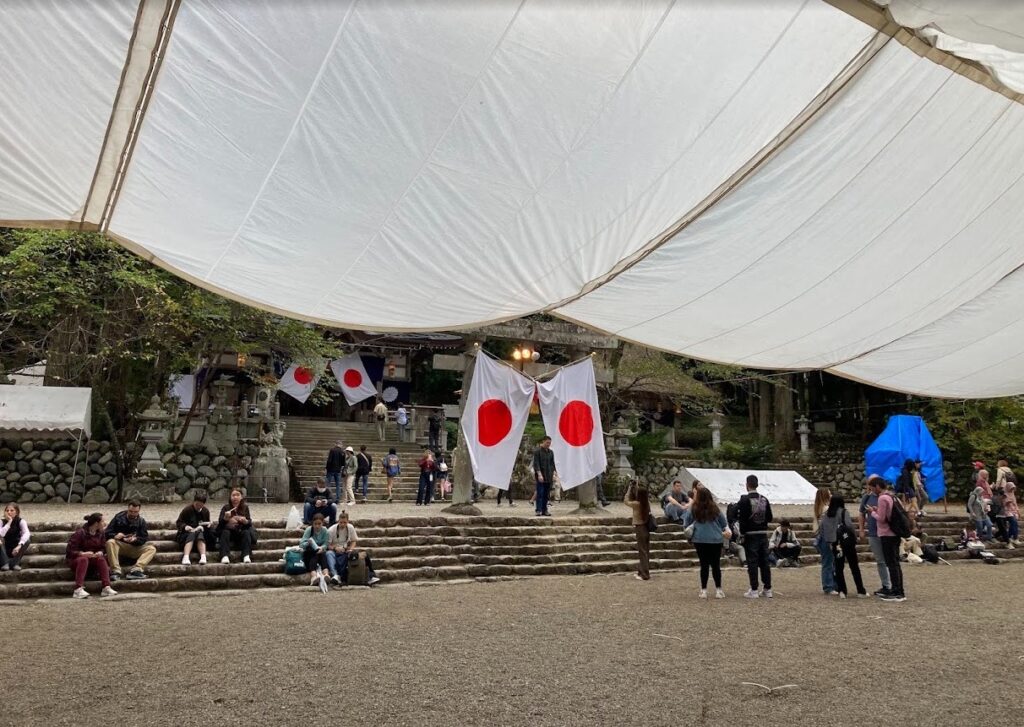
Visitors waiting on stone steps beneath a large white canopy
- Shirakawa-go’s annual events fall into three main categories: agricultural rituals (such as rice-planting and sericulture), religious festivals (such as the Doburoku Festival and New Year’s Harukoma), and practical community activities like fire-prevention drills. All of them originate from the villagers’ daily lives and survival needs rather than tourism.
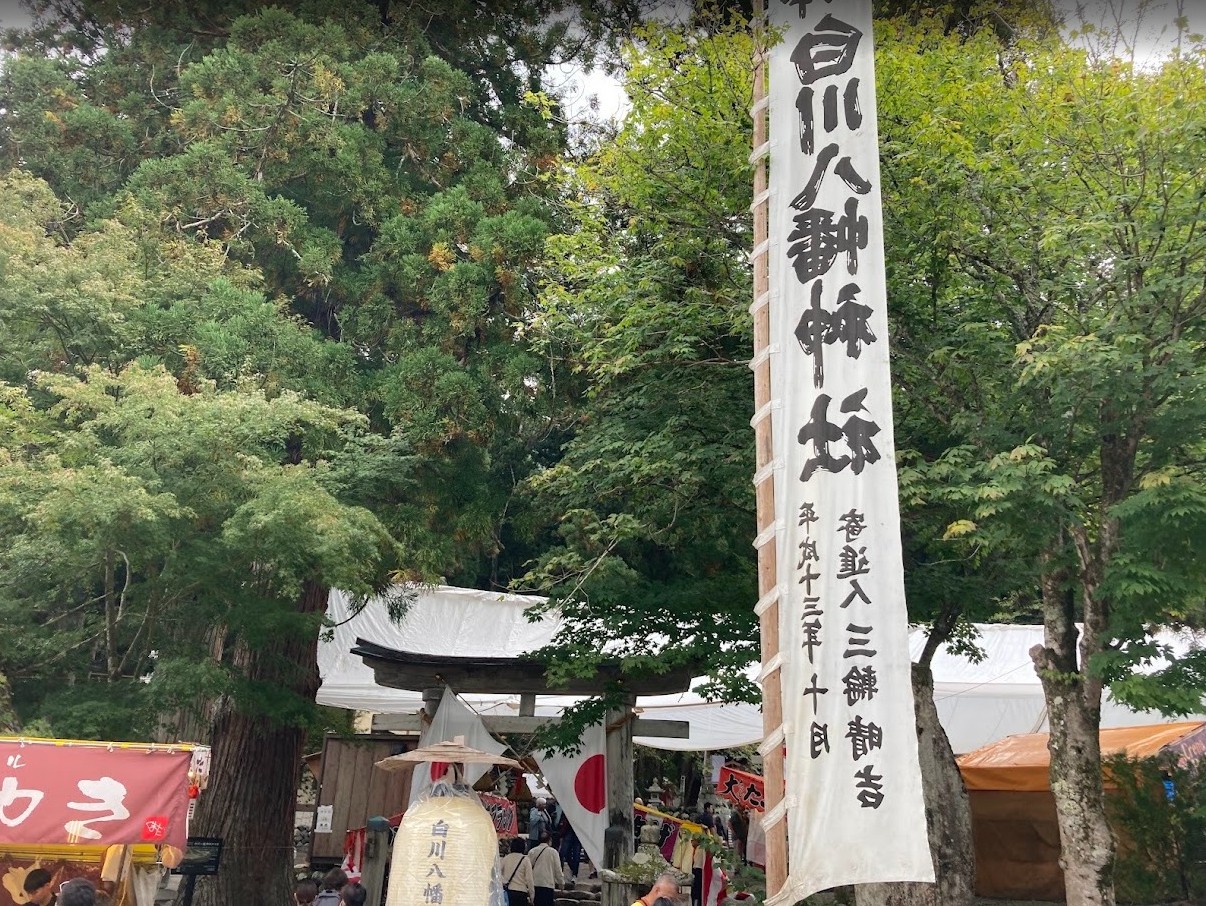
(年間行事の全体像:白川郷の年間行事は、主に「農耕儀礼(田植えや養蚕など)」「宗教的祭礼(どぶろく祭りや正月の春駒など)」「防火訓練のような実生活に即した共同作業」の3つに分類されます。いずれも観光目的ではなく、住民の日常生活や生存上の必要から生まれたものです。) - The Doburoku Festival is an autumn festival held annually from October 14 to 19 at three local shrines, with each shrine celebrating on different dates. It is centered around doburoku, an unfiltered rice-based alcoholic beverage traditionally brewed specifically for the occasion.
(どぶろく祭りの概要:どぶろく祭りは、毎年10月14日から19日にかけて村内の3つの神社が日程を分けて開催する秋祭りです。祭りのために特別に醸造される、米を原料とした濁り酒「どぶろく」を中心としています。) - The festival is held to thank the gods for a good harvest and pray for the safety and prosperity of the village. Historically, agriculture was central to local survival, and the event reflects the deep connection between villagers, nature, and religious faith while uniting the community.
(祭りの目的:豊作への感謝を神々に捧げ、村の安全と繁栄を祈るために行われます。かつて農業は住民の生存に不可欠であり、この行事には人々・自然・信仰の結びつきが表れているとともに、地域社会を結束させる役割があります。) - Celebrations include sacred processions with a portable shrine (mikoshi) carried through the village, traditional music, folk dances, and lion dances. Doburoku is first offered to the gods in a religious ritual and then served to visitors as part of the festivities.
(祭りの様子:神輿が村内を巡る神幸行列や、伝統音楽、民謡踊り、獅子舞などが行われます。どぶろくはまず神事に際して神々に奉納され、その後、参拝客にも振る舞われます。) - Doburoku is a traditional alcoholic beverage fermented from rice, koji (malted rice), and water. Unlike clear sake, it is unfiltered and retains solid rice residues, giving it a cloudy appearance and thick texture. In Shirakawa-go, it is brewed annually for religious offerings and festival hospitality.
(どぶろくの特徴:米・麹・水を発酵させて造る伝統的な酒です。清酒と異なり濾過を行わないため、米の固形分が残り、白く濁った見た目と独特の口当たりがあります。白川郷では毎年の神事への奉納と祭りでの振る舞いのために醸造されます。) - Harukoma is a traditional New Year’s dance performed in costume to celebrate the new year and pray for household prosperity and good fortune. Modeled after the movements of a horse, performers visit local homes to entertain residents with celebratory songs and dances.
(春駒・正月の祝い踊り:春駒は、新年を祝い家庭の繁栄と幸運を祈願して伝統衣装で踊る正月の芸能です。馬の動きを模しており、演者が各家庭を訪れ祝いの歌と踊りを披露します。) - The Kogai Festival (Silkworm Festival) commemorates sericulture, which was once a vital industry in Shirakawa-go. Silkworms were historically raised in the large, well-ventilated attics of gassho-style houses. The festival preserves the history of silk production and its role in local livelihoods.
(蚕飼い祭りと養蚕文化:蚕飼い祭りは、かつて白川郷の主要産業であった養蚕を偲ぶ行事です。かつて蚕は、空間が広く換気に優れた合掌造りの屋根裏で育てられていました。この祭りは、絹の生産の歴史と地域の生計を支えた役割を伝えています。) - Held in spring, the Rice-Planting Festival celebrates rice cultivation and prays for an abundant harvest. Because rice farming was essential to rural life, this event highlights the villagers’ relationship with agricultural land and nature while demonstrating traditional planting customs.
(田植えまつりと農村文化:春に行われる田植えまつりは、稲作を祝い豊作を祈願する行事です。稲作は農村生活の基盤であり、この行事を通じて住民と農地・自然との関わりや、伝統的な田植えの習慣が示されます。) - Because thatched roofs are highly flammable and a single fire could rapidly destroy neighboring historic buildings, villagers conduct fire-prevention drills every spring and autumn. During these drills, residents test firefighting equipment by spraying water high into the air to douse the roofs.
(防火訓練、消防団、文化財保護:茅葺き屋根は燃えやすく、一度火災が起きると隣接する歴史的建造物へ急速に延焼する危険があるため、村では毎年春と秋に防火訓練を実施しています。訓練では消防設備を使用し、屋根へ放水するために水を高く噴き上げます。) - Organizing these events requires active cooperation among residents, which functions as a practical mechanism for mutual support in a small mountain village. Through joint preparation and participation, villagers pass down traditional skills, maintain community solidarity despite modern lifestyle changes, and sustain the collective effort needed to protect the historic gassho-style landscape.
(行事の社会的機能・効果:これらの行事を運営するには住民の積極的な協力が不可欠であり、それが小さな山村における相互扶助の仕組みとして機能しています。共同での準備や参加を通じて、伝統技術の次世代への継承や、生活様式が変化する中での地域結束の維持が図られ、結果として合掌造りの歴史的景観を守る集団的な力につながっています。)
14.2 口頭用簡略説明(Walking Talk)
ここではゲストと集落内を歩きながら短時間で要点だけを伝えられるよう、基本情報を短縮した口頭説明用フレーズです。
- Shirakawa-go’s annual events center on agriculture, religious festivals, and fire-prevention drills—all rooted in daily village life rather than tourism.
(白川郷の年間行事は、農業・祭礼・防火訓練が中心で、すべて観光ではなく村民の生活に根ざしたものです。) - Every autumn from October 14 to 19, three local shrines hold the Doburoku Festival, named after a traditional unfiltered sake brewed for the occasion.
(毎年10月14日〜19日に3つの神社でどぶろく祭りが開かれ、祭りのために特別に造られた濁り酒が主役になります。) - The festival is held to thank the gods for a good harvest and pray for the safety and prosperity of the village.
(豊作への感謝を神々に捧げ、村の安全と繁栄を祈願するために行われます。) - During the festival, a portable shrine parades through the village, and doburoku is first offered to the gods before being served to visitors.
(祭りでは神輿が村を練り歩き、どぶろくはまず神前に供えられた後、参拝客にも振る舞われます。) - Doburoku is an unfiltered, cloudy sake made from rice, koji, and water, retaining solid rice grains and a thick texture.
(どぶろくは米・麹・水から造る無濾過の濁り酒で、米の粒が残り濃厚な口当たりが特徴です。) - Harukoma is a traditional New Year’s dance where performers in costume visit homes to pray for good fortune, mimicking a horse.
(春駒は正月の伝統芸能で、馬を模した衣装の踊り手が各家庭を訪ねて幸運を祈願します。) - The Kogai Festival honors sericulture, commemorating when villagers raised silkworms in the large attics of gassho-style houses.
(蚕飼い祭りは養蚕を偲ぶ行事で、かつて合掌造りの広い屋根裏で蚕を育てていた歴史を伝えています。) - Held in spring, the Rice-Planting Festival celebrates rice farming and prays for an abundant harvest using traditional methods.
(春に行われる田植えまつりは、稲作を祝い伝統的な手法で豊作を祈願する行事です。) - Because thatched roofs catch fire easily, villagers hold fire drills every spring and autumn, spraying water high over the roofs.
(茅葺き屋根は燃えやすいため、毎年春と秋に屋根へ高く放水する防火訓練が行われます。) - Preparing for these events strengthens mutual cooperation, helping villagers pass down traditions and protect the historic landscape together.
(これらの行事の準備を通じて住民同士の協力が深まり、伝統の継承や歴史的景観の保全につながっています。)
📖 14.1・14.2 重要単語・表現(基本編)
- agricultural ritual:農耕儀礼(田植えや収穫祭など農業に根ざした儀式)
- sericulture:養蚕(蚕を育てて生糸を生産すること)
- unfiltered rice-based alcoholic beverage:無濾過の米醸造酒(どぶろくの説明表現)
- sacred procession:神幸行列(神輿などが練り歩く神聖な行列)
- portable shrine (mikoshi):神輿(みこし)
- solid rice residues:米の固形分・残留物(清酒のように濾過しないため残る成分)
- well-ventilated attic:風通しの良い屋根裏空間(合掌造りの養蚕環境を表す表現)
- highly flammable:非常に燃えやすい(茅葺き屋根の火災リスクを説明する語)
- fire-prevention drill:防火訓練・防災訓練
- community solidarity:地域の結束・共同体の連帯感
14.3 インバウンドの視点:現地でよく聞かれる質問と雑談ネタ
Q1 どぶろく祭りって何?
“What Is the Doburoku Festival?”
村内の神社や資料館でよく聞かれる質問を元に、祭りの背景とどぶろくの豆知識を織り込みました。前半(1〜7)が真面目パート、後半(8〜10)がおふざけパートです。各文【英語 > 日本語】の順で記述しています。
- The Doburoku Festival is a traditional autumn festival unique to Shirakawa-go.
(どぶろく祭りは、白川郷ならではの伝統的な秋祭りです。) - It is held in October to pray for a good harvest, family safety, and peace in the village.
(毎年10月に、五穀豊穣、家内安全、そして里の平和を祈願して行われます。) - The festival takes place at three shrines in the village, with each shrine holding its own celebration on different dates. During the festival, sacred processions, lion dances, traditional songs, and dances are performed.
(村内の3つの神社で、それぞれ異なる日程で祭りが行われます。祭りでは、御神幸行列、獅子舞、伝統的な民謡や舞踊などが披露されます。) - As the name suggests, doburoku, a traditional unfiltered rice wine, plays a central role in the festival. It is made by fermenting rice, koji, and water, and retains much of the rice and fermentation residue, giving it a cloudy appearance.
(その名のとおり、伝統的な濁り酒であるどぶろくが祭りの中心的な役割を果たします。米、米麹、水を発酵させて造られ、米や発酵由来の成分が多く残るため、白く濁っています。) - The doburoku for the festival is traditionally brewed at the shrine’s sake cellar in late January, when the village is covered in snow. It is carefully managed and matured until the festival season.
(祭り用のどぶろくは、村が雪に覆われる1月下旬頃に、神社の酒蔵で伝統的に仕込まれます。祭りの時期まで大切に管理され、熟成されます。) - Around three o’clock in the afternoon, a ceremony is held to offer doburoku to the gods. The sake is then transferred from large barrels into smaller serving containers called kittate, and women dressed in aprons serve it to visitors in their sake cups.
(午後3時頃、神様にどぶろくを奉納する儀式が行われます。その後、大きな酒樽から「きったて」と呼ばれるお酌用の容器に移され、割烹着姿の女性たちが参拝者の盃に注いで回ります。) - This tradition is said to date back approximately 1,300 years, making it a deeply rooted part of the village’s cultural heritage.
(この伝統は約1,300年前にまで遡ると伝えられており、村の文化遺産として深く根付いています。) - Considering that sake has historically been offered to the gods, I find it quite fascinating that this festival is named after doburoku, undiluted rice wine.
(日本酒が神様への奉納酒として用いられてきたことを考えると、濃縮酒であるどぶろくの名を冠したこの祭りは、なかなか興味深いものです。) - Perhaps people back then thought it would be inappropriate to offer watered-down sake to the gods. You thought I was going to make a joke about throwing cold water on a sacred ceremony, didn’t you? Too bad!
(昔の人は、神様に水で薄めた酒を捧げるなんて不適切だと思ったのかもしれません。神聖な儀式に水を差すという、この表現を使った冗談を私が言うと思ったでしょう?残念でした!) - Wouldn’t that be a kind of “padded offering”? Just imagine… a divine version of expense fraud!
(それって「水増し奉納」じゃないでしょうか?想像してみてください……神様相手の経費水増しですよ!)
Q2 これは何の写真?(防火訓練の展示写真を見て)
“What Are These Photos of?”
民家の展示パネルなどで一斉放水の写真を見たゲストからよく聞かれる質問を元に、防災の背景とユーモアを織り込みました。前半(1〜6)が真面目パート、後半(7〜10)がおふざけパートです。各文【英語 > 日本語】の順で記述しています。
- These photos show fire-prevention drills held in Shirakawa-go.
(これらの写真は、白川郷で行われる防火訓練の様子です。) - Since many of the houses here have thatched roofs, fire is one of the biggest threats to the village.
(この村には茅葺き屋根の家が多いため、火災は村にとって最大の脅威の一つです。) - A single fire could spread quickly from one house to another, potentially destroying several historic buildings.
(一つの火災が隣の家へ急速に広がり、複数の歴史的建造物を焼失させてしまう可能性があります。) - That’s why the villagers conduct fire-prevention drills in spring and autumn to prepare for emergencies.
(そのため、村人たちは緊急事態に備えて、春と秋に防火訓練を行っています。) - During these drills, villagers practice using fire hoses and other firefighting equipment, often spraying water high into the air.
(訓練では、村人たちは消防ホースなどの消火設備の使用を練習し、時には水を高く噴き上げます。) - However, these drills are so spectacular that they have gradually become popular seasonal events in their own right.
(しかし、これらの訓練はあまりにも見応えがあるため、いつの間にかそれ自体が季節のイベントとして人気を集めるようになりました。) - I suppose this is rather typical of gassho-style houses, which were designed to satisfy both practical needs and aesthetic considerations.
(実用性と美しさの両方を追求してきた合掌造りらしい発想なのかもしれません。) - Perhaps the villagers have become accustomed to visitors who find just about everything in Shirakawa-go fascinating.
(もしかすると、白川郷の人々は、村のあらゆるものに興味を示す訪問客にも慣れてしまっているのかもしれません。) - Perhaps they would simply say, “It’s just another fire drill.”
(多分、こんなふうに言うでしょう。「まあ、いつもの防火訓練ですよ。」) - “Lots of excitement, but hopefully nothing to show for it!” Perhaps that’s the ultimate form of rationality!
(「大騒ぎはするけれど、できれば何も成果を残さないことを願いたい!」それこそ究極の合理性なのかもしれません!)
📖 14.3 重要単語・表現(インバウンド雑談編)
- fermentation residue:発酵の残留物(もろみ成分)
- sake cellar:酒蔵(神社内のどぶろく醸造所)
- mature:熟成させる(1月に仕込み秋まで寝かせる工程)
- undiluted rice wine:原酒・加水していない酒(どぶろくの比喩的説明)
- watered-down:水で薄められた(勢いや純度が落ちた状態にも使う形容詞)
- throw cold water on ~:〜に水を差す・興ざめさせる(イディオム)
- padded offering / expense fraud:水増し奉納/経費の不正水増し(ユーモア表現)
- in one’s own right:それ自体で・立派な独立した存在として
- aesthetic considerations:美的な配慮・外観の美しさへのこだわり
- It’s just another fire drill.:文字通りには「いつもの防火訓練さ」だが、慣用表現としては「いつもの大騒ぎ(でも実際には大事ではないルーチン対応)」のニュアンスがあり、実際の訓練と掛けた表現
- nothing to show for it:(苦労や騒ぎの割に)目に見える成果・結果が何もないこと
白川郷の年間行事の解説はお楽しみいただけましたか?
他の章や全体まとめ記事へ戻る際は、冒頭の緑色ナビゲーションボタンをご活用くださいね!