 ユイ(Yui)
皆さん、こんにちは!日本の自然・里山ウオッチャー&ガイドのユイです。合掌造りの暮らしと建物を支える命の源『囲炉裏(Irori / Sunken hearth)』英語案内ページへようこそ!
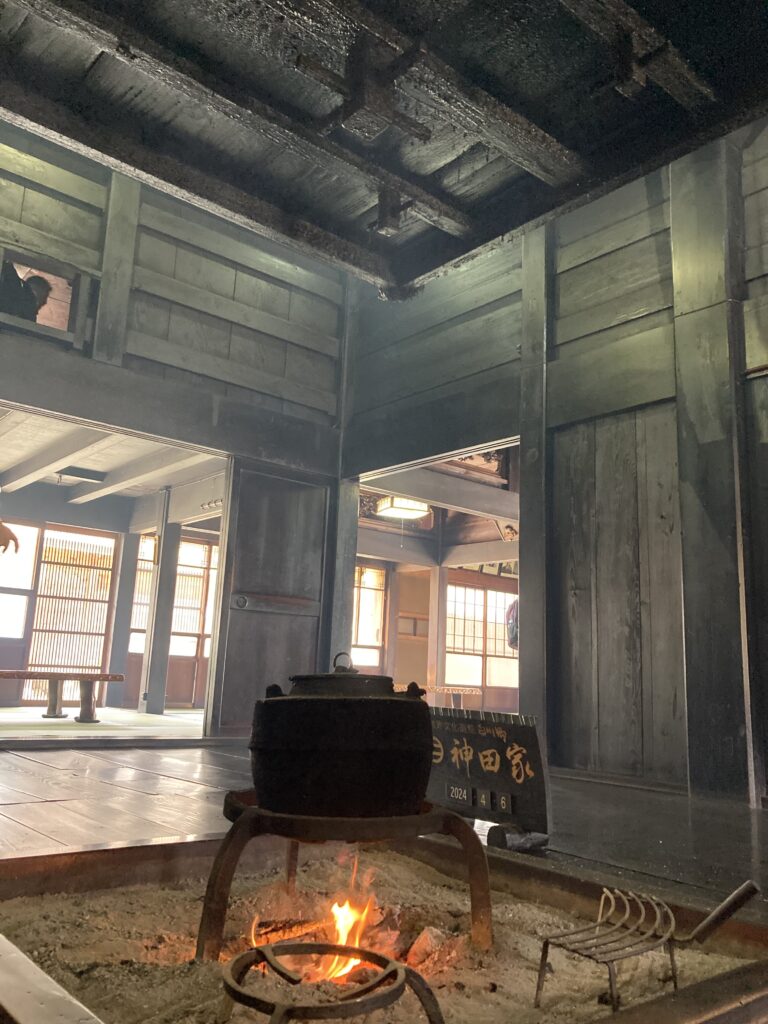
白川郷の家屋に入ると、中央で優しく火を灯しているのが「囲炉裏」です。単なる暖房や調理器具にとどまらず、家全体へ煙を行き渡らせて柱や茅葺き屋根を燻蒸・防虫・乾燥させ、建物の耐久性を飛躍的に高めるという驚くべき建築的役割を果たしています。
現場でサッと使える短文フレーズから、燻蒸の仕組み、ゲストをクスッと笑わせる裏話まで網羅しました。目的の項目ボタンからご自由にご活用ください。
📍 Quick Navigation: 各章へジャンプ
5. 囲炉裏(Sunken hearth)
ここでは囲炉裏の機能と役割、建築への効果をカバーします。用途に合わせて以下のボタンから直接アクセスできます。
5.1 基本情報
案内用の表現ではありませんが説明前に押さえておきたい基本ポイントを10項目(日英)でご紹介します。英語サンプルは前半(1-5)(英国女性話者)と後半(6-10)(米国男性話者)の2ファイルに分けました。👉下記表現の習得用音声ツールをご利用の際はこちらへ!
《日本語ポイント》
- 囲炉裏は合掌造りに限らず伝統的日本家屋においてよく見られる、床を四角く切り下げて灰を敷いて薪や炭火などを燃やすために設けられた一角。
- 天井から吊した鉤に鍋や鉄瓶を掛けて調理・炊事に使うとともに、暖房や照明の役割を担ったため囲炉裏の周りは家族団欒の場となった
- 調理は鍋を火にかけて炊飯やあらゆる煮炊き、魚などの食材を串に刺して火の周囲の灰に立てて焼かれた。
- 囲炉裏は転倒する心配のない安全に部屋を照らす設備で、夜間な冬季、この周辺で工具の補修作業や裁縫等の手元作業をした。
- 当時はライターやマッチのような近代的な発火物がなかったため、何度も火をおこす手間を省くため、囲炉裏の火は常に維持されていた。
- 囲炉裏は、家族が集まったり、客をもてなしたりする場所であり、一家の長が囲炉裏に最も近い中央に座り、女性や子供たちは離れた場所に座った。
- 白川郷の囲炉裏の最大の特徴として、煙と熱が合掌造りの建物全体に行き渡るように設計されている。
- 白川郷では、煙突や大きな排煙口を意図的に設けないことで、柱や梁、茅葺き屋根を常に燻蒸し、虫や腐敗に対する耐久性を高めていた。
- 囲炉裏の火を長時間安定して効率よく維持するために、燃料となる薪は太くし、細かく刻まず、強い火力が必要なとき以外はゆっくりとくすぶるようにした。
- 囲炉裏の真上に吊るされた多目的格子棚は、煙と熱を受け止め拡散させながらフィルターの役割を果たし、煤とタールで黒光りしている。
《英訳例》
- 1. Irori is a hearth commonly found in traditional Japanese houses, including gassho-zukuri, where the floor is recessed into a square or rectangular shape and wood or charcoal is burned on ashes placed at the bottom.
- 2. Pots and kettles were hung from hooks suspended from the ceiling for cooking, while the hearth also served as a source of heating and lighting, making the sunken area a central gathering place for the family to enjoy together.
- 3. Cooking was generally done using pots over the fire to prepare rice and stews, while fish and other ingredients were skewered and roasted over the ashes around the fire.
- 4. The hearth was used to safely light the room without the risk of tipping over, making it a good place for small tasks such as repairing tools and sewing, especially in winter and at night.
- 5. The fire in the sunken hearth was maintained at all times to avoid the burden of repeatedly making fire, as modern fire-starting devices like lighters and matches were not available at that time.
- 👥連続音声1-5
- 6. Around the hearth, which served as a place for family gatherings and hosting guests, the family head sat at the center, closest to the hearth, while the women and children sat farther away.
- 7. The most unique feature of Shirakawa-go’s hearth is its design, which ensures that smoke and heat are distributed throughout the gassho-zukuri building.
- 8. In Shirakawa-go, the intentional lack of chimneys or large smoke openings allowed the houses to improve their durability by constantly fumigating the pillars, beams, and thatched roofs, which increased their resilience to insects and rot.
- 9. To maintain the fire in the hearth stably and efficiently over a long period, the fuel wood was kept thick and not chopped into small pieces, allowing it to smolder slowly, except when intense heat was needed.
- 10. A multi-purpose lattice shelf suspended directly above the hearth receives and diffuses smoke and heat while acting as a filter, causing it to glow black with soot and tar.
- 👥連続音声6-10
5.2 口頭用簡略説明
ここではお相手と歩きながら使える簡略文に置き換えています。各文短いので英日セットで英語音声は(米国女性話者)1ファイルです。
- 1.The irori is a traditional hearth in old Japanese houses, like gassho-zukuri homes. It’s a sunken area in the floor where wood or charcoal burns on ash.(囲炉裏は、合掌造りのような古い日本家屋にある伝統的な囲炉裏で、薪や炭を灰の上で燃やす、床のくぼんだ部分です。)
- 2. Pots and kettles hang from hooks above the hearth for cooking. It also gives heat and light, making it a cozy gathering spot for families.(鍋ややかんは囲炉裏の上のフックに掛けて調理して、また、暖房や照明ともなるので、家族が集まる居心地のよい場所になっています。)
- 3. People cook rice and stews in pots over the fire, while fish and other foods are roasted on skewers around the hearth.(米や煮物を鍋で炊き、魚などを串に刺して囲炉裏で焼きます。)
- 4. The hearth safely lights the room, allowing family members to do small tasks, like fixing tools or sewing, especially on winter nights.(囲炉裏はまた、部屋を安全に照らすので、特に冬の夜、家族が道具を直したり、裁縫をしたりといったちょっとした作業をすることができます。)
- 5. The fire was kept burning constantly because they didn’t have lighters or matches, and starting a new fire was difficult.(ライターもマッチもなかったので、新しく火を起こすのは難しかったでしょう。)
- 6. The hearth was a gathering place for family and guests, with the family head sitting closest to the fire, while women and children sat farther away.(囲炉裏は家族や客が集まる場所で、一家の主が火の近くに座り、女性や子供は少し離れた場所に座りました。)
- 7. The unique feature of Shirakawa-go’s hearth is its design, which distributes smoke and heat throughout the entire building.(白川郷の囲炉裏は、合掌造りの家全体に煙と熱が行き渡るように設計されていて、建物を守るのに役立っています。)
- 8. These houses have no chimneys or large smoke openings. The smoke fumigates the pillars, beams, and thatched roofs, protecting them from insects and decay.(これらの家屋には煙突もなければ、大きな排煙口もありません。 煙は柱や梁、藁葺き屋根を燻蒸し、虫や腐敗に強くします。)
- 9. To keep the fire stable and long-lasting, thick wood was used instead of small pieces, allowing it to burn slowly unless intense heat was needed.(火を安定させ、長持ちさせるために、小片ではなく太い薪が使われ、強い熱が必要なとき以外はゆっくりと燃えるようになっていました。)
- 10. Above the hearth is a lattice shelf that spreads smoke and heat like a filter, turning black with soot and tar over time.(囲炉裏の上には格子状の棚があり、煙と熱を拡散すると同時にフィルターの役割も果だし、時間の経過とともに煤とタールで黒く変色します。)
- 👥全文連続音声
5.3 インバウンドの視点:笑いも取れるかも?
Q1 ここで料理をするんですか?
“Do people cook here?”
囲炉裏の前でよく聞かれる質問を元に纏めてみました。前半は囲炉裏の役割と機能を説明する真面目パート(1-9)(オーストラリア女性話者)、後半は雑談力アップを意図したおふざけパート(10-15)(インド男性話者)です。👉下記表現の習得用音声ツールをご利用の際はこちらへ!
- Yes, the pots were used for cooking over the fire, but they also served as lights in the days before electricity, when only candles were available. はい、ここでは鍋を火にかけて料理もしますが、電気のない蝋燭しかない時代の灯りの役目も果たしました。
- But besides these uses, the hearth also performs other crucial functions that enhance the building’s durability. でもそれら以外にも建物の耐久性を高めるとても重要な働きをしています。
- The heat and smoke from this fire escape through the cracks in the ceiling and eventually through the floor above and the thatched roof. この火から出る熱と煙は天井の隙間から抜けて、上階の床を通して茅葺き屋根から抜けて行きます。
- This fumigation helps to prevent harmful insects and wood rot from damaging the building. その燻蒸により有害な虫や木材が腐って建物のダメージを与えるのを防いだのです。
- Therefore, to maximize the benefits of this hearth fire, it was kept burning continuously, which may have enhanced its effectiveness in other unexpected ways. それでこの囲炉裏の火のメリットを最大限に活用する為に、火は燃やされ続けましたが、それにより想定外の別の効果を上げていたのかもしれません。
- Villagers had to work outside for long hours in the snow, enduring the extreme cold of Shirakawa-go. 白川郷の極寒で雪降る中、村人は長時間も外で仕事をしなければなりませんてした。
- They might have felt overwhelmed or on the verge of tears due to the hard work in such harsh weather. あまりの寒さの中の厳しい仕事に、挫けそうになったり泣きそうになったかもしれません。
- However, they could have persevered, despite their bitterness, knowing that the hearth fire would be burning constantly to warmly welcome them home. でも、家に帰れば、温かく自分を迎えるためにこの囲炉裏の火が常時、燃えていることを思うと、かなりの辛さも辛抱できたかもしれません。
- This fire not only increased the durability of the buildings but also strengthened the resilience of the people, which may be why Shirakawa-go has endured to the present day. この火は建物の耐久性だけでなく、人の心の耐性も高めることで、この白川郷が現代まで残ったのかもしれません。
- People in Shirakawa-go might be considered ultimate fire experts, thanks to the centuries of trial and error experienced by their ancestors. 白川郷の人々は何世紀も祖先が火を使ってきた試行錯誤の結果の究極の火のプロかもしれません。
- In Buddhism, a house of discord and constant strife is referred to as a ‘house of fire,’ symbolizing uncontrollable chaos and human vexation. 仏教では争いの絶えない、不和の家を「火宅」と言い、コントールの効かない混乱状態を指し、人間の煩脳の象徴としています。
- People here understand both the risks and benefits of fire, and it might be the only instance in Japanese history where fire has been so successfully controlled. ここの人々は火のリスクとメリットを知りつくし、最も上手く火をコントールした日本史上唯一の例かもしれません
- However, modern people, who often admire the positive image of the hearth, usually find it regrettable to have introduced one into their homes, as it can cause significant burdens. でも囲炉裏の見た目の良さから自宅に導入してた現代人は、かなり面倒くさくなることもあり後悔することが常です。
- This is because, if we don’t actually need a fire for harsh conditions, introducing an irori might be equivalent to ‘playing with fire.’ なぜなら、もし我々が厳しい環境の為に本当に火を必要としないなら、単に囲炉裏を導入することは、ただの「火遊び」に等しいのかもしれません。
- In that case, we should be thankful that the worst outcome was merely a minor burn from our little regret. 最悪でも後悔くらいの軽い火傷で済めば、感謝すべきなのかもしれませんね。
囲炉裏の解説はお楽しみいただけましたか?
他のスポット(一階の生活空間、屋根裏、茅葺き屋根など)の解説へ移動する際は、冒頭の緑色ナビゲーションボタンをご活用くださいね!