 ユイ(Yui)
皆さん、こんにちは!日本の自然・里山ウオッチャー&ガイドのユイです。合掌造りのシンボル『茅葺き屋根(Thatch Roofing)』英語案内ページへようこそ!
縄文時代の竪穴住居から続く日本の屋根文化の原点「茅葺き(かやぶき)屋根」。白川郷の合掌造りでは、厚さ1メートルにもおよぶススキの層が驚異的な天然断熱材・除湿システムとして機能し、厳しい冬の寒さと夏の暑さから暮らしを守っています。
現場でサッと使える短文フレーズから、茅(ススキ・カリヤス)の特性、サッチャー(Thatcher=茅葺き職人)元首相の語源を使ったクスッと笑える雑談ネタ、茅葺き専門英語用語集まで網羅しました。目的の項目ボタンからご自由にご活用ください。
📍 Quick Navigation: 各章へジャンプ
12. 茅葺き屋根
ここでは合掌造りのシンボルである茅葺き屋根の素材、断熱構造、用語集などをカバーします。用途に合わせて以下のボタンから直接アクセスできます。
12.1 基本情報
ここでは茅葺屋根をご説明する際に押さえておきたい基本ポイントを10項目(日英)でご紹介します。実際に多くのインバウンドは合掌造りを見て屋根の素材等、様々な疑問を持たれますのでお相手の状況に合わせて、使えそうなポイントやフレーズがあればご活用ください。👥英語音声は米国話者です。
《日本語のポイント》
- 茅葺き屋根は縄文時代の竪穴住居に使われていたと考えられており、日本の屋根文化の起源のひとつと考えられている。
- 茅は火に弱いため、日本では徐々に瓦屋根へと移行したが、瓦は贅沢品とされ、農村部では一時禁止されていた地域もあった。
- 「茅」とは特定の植物ではなく、屋根材として使われる植物の総称で、地域の気候や環境に応じて最適な種類が選ばれてきた。
- 白川郷の合掌造り家屋では、かつてはより耐久性のあるカリヤス(苅安)が主要な茅葺き材だったが、今日ではススキ(pampas grass)がより一般的に使用されている。
- ススキは日本各地の陽当たりの良い山野に自生しているが、多くの集落では「茅場」と呼ばれる畑で計画的に栽培されている。
- ススキで葺かれた茅葺き屋根は、ヨシなどで葺かれたものよりやや耐久性が劣り、一般的には20〜30年ごとに葺き替えが必要となる。
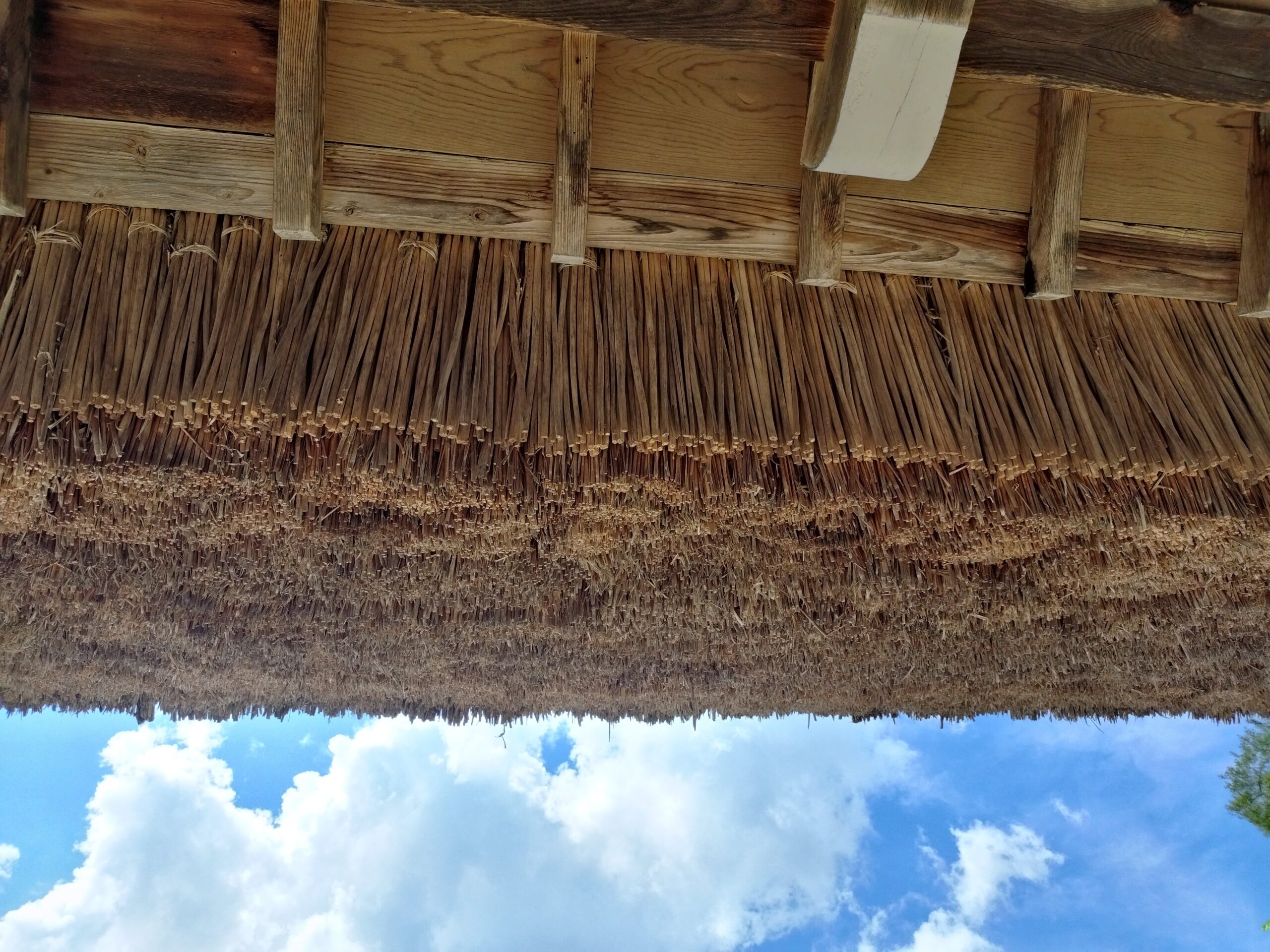
- 地域によっては1メートル近くにもなる厚い茅の層は、自然の断熱材として機能し、冬は暖かく、夏は涼しく室内を保つ。
- 茅束の間にできる自然な隙間は、屋根裏に風を通し、湿気のこもりを防ぐ。
- この通気性は、屋根の構造を長持ちさせる天然の除湿システムとしても機能している。
- 切妻屋根の家のそばに立ち、見上げると、茅の厚みと量に圧倒されるような迫力を感じることができる。
《英訳例》
- 1. Thatch roofing is believed to have been used on pit dwellings in the Jomon period, making it one of the earliest Japanese roof styles.
- 2. Because thatch is highly flammable, many roofs in Japan gradually transitioned to tile, though tile roofs were once prohibited in some rural areas because they were considered a luxury.
- 3. “Thatch” is a general term for plants used as roofing material, and each region chooses the species that best suits its climate.
- 4. In Shirakawa-go’s gassho-zukuri houses, the more durable kariyasu grass was once a major thatch material, but today pampas grass (susuki) is more commonly used.
- 5. Pampas grass grows wild in sunny mountain fields across Japan, yet many villages cultivate it systematically in nearby “thatch fields,” or kayaba.
- 👥連続音声1-5
- 6. Thatch roofs made with pampas grass are slightly less durable than those made with reeds and typically require re-thatching every 20 to 30 years.
- 7. A thick layer of thatch—sometimes nearly one meter deep—acts as natural insulation, keeping homes warm in winter and cool in summer.
- 8. The natural gaps between thatch bundles allow air to circulate through the attic, helping to prevent moisture buildup.
- 9. This ventilation system also acts as a natural moisture-control system, helping preserve the roof’s structure over time.
- 10. Standing beside a gabled house and gazing up at its roof, one can truly appreciate the sheer volume and thickness of the thatch.
- 👥連続音声6-10
12.2 口頭用簡略説明
ここではお相手との会話の合間や歩きながら使える様に上記基本情報の10項目を口頭説明用の簡略文に置き換えています。各文ごとに【英語 > 日本語】の順で記述しています。👤英語音声は英国話者です。
- Thatch roofs have been used in Japan since ancient times, even in Jomon pit houses.
(茅葺き屋根は縄文時代の竪穴住居にも使われた、とても古い屋根です。) - Because thatch burns easily, people later switched to tiles. Some villages even banned tiles as a luxury.
(茅は燃えやすいので、のちに瓦へ変わりました。贅沢だとして瓦を禁止した村もありました。) - “Thatch” simply means plants used for roofing, and each region uses what grows best.
(「茅」は特定の植物ではなく、地域に合った植物を使った屋根材の総称です。) - In the past, they used a plant called Kari‑yasu, but today they mainly use pampas grass.
(昔はカリヤスを使っていましたが、今は主にススキで葺かれています。) - Pampas grass grows wild in sunny hills, but many villages also grow it in special fields called kayaba.
(ススキは日当たりの良い山に自生しますが、多くの村では「茅場」で計画的に育てています。) - Pampas‑grass roofs don’t last as long as reed roofs, so they’re replaced every 20 to 30 years.
(ススキの屋根はヨシより少し短命で、20〜30年ごとに葺き替えます。) - Thick thatch—sometimes almost a meter deep—keeps homes warm in winter and cool in summer.
(茅の層はとても厚く、1メートル近くになることもあり、冬は暖かく、夏は涼しく保ちます。) - Air moves through small gaps in the thatch and helps keep the attic dry.
(茅のすき間を風が通り、屋根裏の湿気を防ぎます。) - This airflow works like a natural dehumidifier and protects the roof.
(この通気性が、屋根を長持ちさせる自然の除湿機のように働きます。) - When you stand beside a gabled house and look up, you can really feel how thick the thatch is.
(切妻屋根の家のそばで見上げると、茅の厚みと迫力を実感できます。)
12.3 インバウンドの視点:笑いも取れるかも?
茅葺屋根を見て最もよく聞かれる質問ですが、お相手によっては即答に戸惑うことが多い質問でもあります。Q1は日頃の悩ましさを元にいつもの2部構成(説明にも使える《Guide Part》&雑談力upの為の 《Joke Part》)でまとめてみました。文章数は多いですが、チェック頂易いように各文短く刻みましたので総ボリュームはそれほどありません。今回は茅葺屋根の技術的な表現、植物としてのカヤに関する表現を多めに織り込んでいます。各文ごとに【英語 > 日本語】の順で記述しています。
Q1 この屋根は何でできているの?
“What are these roofs made of?”
《Guide Part👤インド話者》
- The roofs in Shirakawa-go are primarily made using pampas grass (susuki).
(白川郷の屋根は主にススキを使って葺かれています。) - “Thatch” is a general term for roofing materials, and while it includes pampas grass, other grasses are also used for these roofs.
(「茅(かや)」とは屋根材の総称で、ススキ以外のさまざまな草も使われています。) - Pampas grass grows to a height of about one to two meters and has hollow stems.
(ススキは高さ約1〜2メートルに育ち、中空の茎を持っています。) - When dried, it becomes extremely durable and lightweight.
(乾燥すると、とても丈夫で軽くなります。) - Layering it many times creates a thick, nearly one-meter-deep thatch layer that contains a large volume of air.
(これを何層にも重ねることで、厚さ約1メートルにもなる空気をたっぷり含んだ茅の層ができます。) - This trapped air provides excellent insulation, keeping the house cool in summer and warm in winter.
(この閉じ込められた空気が優れた断熱材となり、夏は涼しく、冬は暖かく保ってくれます。) - However, dried pampas grass is highly flammable, and the village has historically suffered severe damage from fires.
(しかし乾燥したススキは非常に燃えやすく、村は歴史的に何度も大火災の被害を受けてきました。)
《Joke Part👤英国話者》
- If guests are unfamiliar with the term “thatch,” I sometimes explain it using the name of Margaret Thatcher, the former UK Prime Minister.
(お客様が「thatch」という言葉をご存じない場合、私は時々、元イギリス首相マーガレット・サッチャーの名前を使って説明します。) - Like Japan, thatched roofs were historically common in Britain, and there were many thatchers.
(日本と同様に、イギリスでもかつて茅葺き屋根は一般的で、多くの茅葺き職人がいました。) - Her surname, Thatcher, literally means a person who makes or repairs thatched roofs.
(彼女の姓である Thatcher は、文字通り「茅葺き屋根を作ったり修理したりする人」を意味します。) - You can tell what her ancestors did for a living just from the family name.
(つまり、その名字だけでご先祖様の職業が分かるわけです。) - But sometimes the joke doesn’t land.
(でも、このジョークがあまりウケないこともあります。) - I think there’s a disconnect between her image as the “Iron Lady” and the delicate charm of these rustic thatched-roof houses.
(彼女の「鉄の女」というイメージと、この素朴で繊細な茅葺き家屋の魅力との間にギャップがあるのかもしれません。) - Others may just dislike her political stance or track record.
(あるいは、単純に彼女の政治的立場や実績が好きではない人もいるでしょう。) - So these days, I use the Thatcher joke only with the right audience.
(そのため最近は、お相手を見てサッチャーネタを使うようにしています。) - It would be terrible if a guest misunderstood my explanation and wrote a negative comment on social media.
(もしお客様が私の説明を誤解して、SNSに否定的なコメントを書いたら大変です。) - While a real thatched roof is not as easy to set on fire as many people imagine, a misunderstanding online can spread like wildfire! Just kidding.
(本物の茅葺き屋根は多くの人が想像するほど簡単には燃えませんが、ネット上の誤解はあっという間に大炎上するかもしれません!もちろん冗談です。)
📘 12.4 Glossary:用語集(茅葺き屋根編)
thatch ☛ 茅(かや)、茅葺き材 / thatch roofing ☛ 茅葺き屋根 / thatched roof ☛ 茅葺き屋根(完成した屋根) / thatcher ☛ 茅葺き職人 / pampas grass (susuki) ☛ ススキ / kariyasu ☛ カリヤス(苅安) / reed ☛ ヨシ(葦) / hollow stem ☛ 中空の茎 / layering (the thatch) ☛ 茅を重ねること / thatch layer ☛ 茅の層 / one-meter-deep ☛ 約1メートルの厚み / insulation ☛ 断熱材 / thermal insulation ☛ 断熱効果 / thermal conductivity ☛ 熱伝導率 / airflow ☛ 空気の流れ / ventilation ☛ 通気、換気 / moisture buildup ☛ 湿気のこもり / natural dehumidifier ☛ 天然の除湿機 / flammable ☛ 可燃性の、燃えやすい / fire hazard ☛ 火災リスク / pit dwelling ☛ 竪穴住居 / Jomon period ☛ 縄文時代 / gassho-zukuri ☛ 合掌造り / gabled roof ☛ 切妻屋根 / thatch field (kayaba) ☛ 茅場(かやば) / sunny mountain slopes ☛ 日当たりの良い山の斜面 / re-thatching ☛ 葺き替え / every 20 to 30 years ☛ 20〜30年ごと / luxury item ☛ 贅沢品 / prohibited in some villages ☛ 一部の村で禁止されていた / rustic charm ☛ 素朴な魅力 / delicate charm ☛ 繊細な魅力 / ancestor’s trade ☛ 先祖の職業 / the Iron Lady ☛ 鉄の女(サッチャー元首相の異名) / misunderstanding online ☛ ネット上の誤解 / spread like wildfire ☛ あっという間に広がる、大炎上する
茅葺き屋根の解説はお楽しみいただけましたか?
白川郷ガイド解説シリーズの全12章をお届けしました。他スポットの解説へ戻る際は、冒頭の緑色ナビゲーションボタンをご活用くださいね!