 ユイ(Yui)
皆さん、こんにちは!日本の自然・里山ウオッチャー&ガイドのユイです。合掌造りのシンボル『茅葺き屋根(Thatch Roofing)』英語案内ページへようこそ!
縄文時代の竪穴住居から続く日本の屋根文化の原点「茅葺き(かやぶき)屋根」。白川郷の合掌造りでは、厚さ1メートルにもおよぶススキの層が驚異的な天然断熱材・除湿システムとして機能し、厳しい冬の寒さと夏の暑さから暮らしを守っています。
現場でサッと使える短文フレーズから、茅(ススキ・カリヤス)の特性、サッチャー(Thatcher=茅葺き職人)元首相の語源を使ったクスッと笑える雑談ネタ、茅葺き専門英語用語集まで網羅しました。目的の項目ボタンからご自由にご活用ください。
📍 Quick Navigation: 各章へジャンプ
12. 茅葺き屋根
ここでは合掌造りのシンボルである茅葺き屋根の素材、断熱構造、用語集などをカバーします。用途に合わせて以下のボタンから直接アクセスできます。
12.1 基本情報
ここでは茅葺屋根をご説明する際に押さえておきたい基本ポイントを10項目(日英)でご紹介します。実際に多くのインバウンドは合掌造りを見て屋根の素材等、様々な疑問を持たれますのでお相手の状況に合わせて、使えそうなポイントやフレーズがあればご活用ください。👥英語音声は米国話者です。
《日本語のポイント》
- 茅葺き屋根は縄文時代の竪穴住居に使われていたと考えられており、日本の屋根文化の起源のひとつと考えられている。
- 茅は火に弱いため、日本では徐々に瓦屋根へと移行したが、瓦は贅沢品とされ、農村部では一時禁止されていた地域もあった。
- 「茅」とは特定の植物ではなく、屋根材として使われる植物の総称で、地域の気候や環境に応じて最適な種類が選ばれてきた。
- 白川郷の合掌造り家屋では、かつてはより耐久性のあるカリヤス(苅安)が主要な茅葺き材だったが、今日ではススキ(pampas grass)がより一般的に使用されている。
- ススキは日本各地の陽当たりの良い山野に自生しているが、多くの集落では「茅場」と呼ばれる畑で計画的に栽培されている。
- ススキで葺かれた茅葺き屋根は、ヨシなどで葺かれたものよりやや耐久性が劣り、一般的には20〜30年ごとに葺き替えが必要となる。
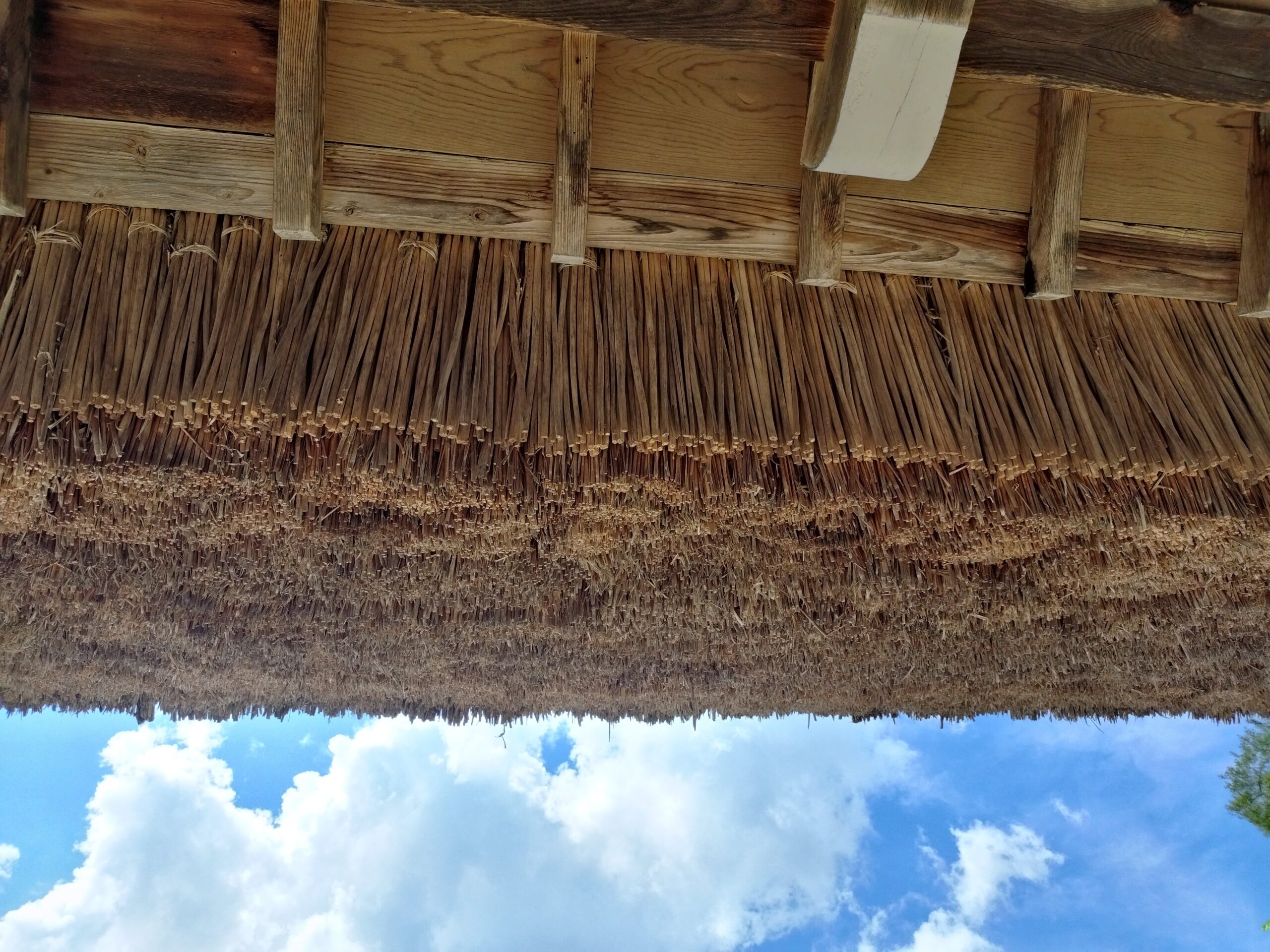
- 地域によっては1メートル近くにもなる厚い茅の層は、自然の断熱材として機能し、冬は暖かく、夏は涼しく室内を保つ。
- 茅束の間にできる自然な隙間は、屋根裏に風を通し、湿気のこもりを防ぐ。
- この通気性は、屋根の構造を長持ちさせる天然の除湿システムとしても機能している。
- 切妻屋根の家のそばに立ち、見上げると、茅の厚みと量に圧倒されるような迫力を感じることができる。
《英訳例》
- 1. Thatch roofing is believed to have been used on pit dwellings in the Jomon period, making it one of the earliest Japanese roof styles.
- 2. Because thatch is highly flammable, many roofs in Japan gradually transitioned to tile, though tile roofs were once prohibited in some rural areas because they were considered a luxury.
- 3. “Thatch” is a general term for plants used as roofing material, and each region chooses the species that best suits its climate.
- 4. In Shirakawa-go’s gassho-zukuri houses, the more durable kariyasu grass was once a major thatch material, but today pampas grass (susuki) is more commonly used.
- 5. Pampas grass grows wild in sunny mountain fields across Japan, yet many villages cultivate it systematically in nearby “thatch fields,” or kayaba.
- 👥連続音声1-5
- 6. Thatch roofs made with pampas grass are slightly less durable than those made with reeds and typically require re-thatching every 20 to 30 years.
- 7. A thick layer of thatch—sometimes nearly one meter deep—acts as natural insulation, keeping homes warm in winter and cool in summer.
- 8. The natural gaps between thatch bundles allow air to circulate through the attic, helping to prevent moisture buildup.
- 9. This ventilation system also acts as a natural moisture-control system, helping preserve the roof’s structure over time.
- 10. Standing beside a gabled house and gazing up at its roof, one can truly appreciate the sheer volume and thickness of the thatch.
- 👥連続音声6-10
12.2 口頭用簡略説明
ここではお相手との会話の合間や歩きながら使える様に上記基本情報の10項目を口頭説明用の簡略文に置き換えています。各文ごとに【英語 > 日本語】の順で記述しています。👤英語音声は英国話者です。
- Thatch roofs have been used in Japan since ancient times, even in Jomon pit houses.
(茅葺き屋根は縄文時代の竪穴住居にも使われた、とても古い屋根です。) - Because thatch burns easily, people later switched to tiles. Some villages even banned tiles as a luxury.
(茅は燃えやすいので、のちに瓦へ変わりました。贅沢だとして瓦を禁止した村もありました。) - “Thatch” simply means plants used for roofing, and each region uses what grows best.
(「茅」は特定の植物ではなく、地域に合った植物を使った屋根材の総称です。) - In the past, they used a plant called Kari‑yasu, but today they mainly use pampas grass.
(昔はカリヤスを使っていましたが、今は主にススキで葺かれています。) - Pampas grass grows wild in sunny hills, but many villages also grow it in special fields called kayaba.
(ススキは日当たりの良い山に自生しますが、多くの村では「茅場」で計画的に育てています。) - Pampas‑grass roofs don’t last as long as reed roofs, so they’re replaced every 20 to 30 years.
(ススキの屋根はヨシより少し短命で、20〜30年ごとに葺き替えます。) - Thick thatch—sometimes almost a meter deep—keeps homes warm in winter and cool in summer.
(茅の層はとても厚く、1メートル近くになることもあり、冬は暖かく、夏は涼しく保ちます。) - Air moves through small gaps in the thatch and helps keep the attic dry.
(茅のすき間を風が通り、屋根裏の湿気を防ぎます。) - This airflow works like a natural dehumidifier and protects the roof.
(この通気性が、屋根を長持ちさせる自然の除湿機のように働きます。) - When you stand beside a gabled house and look up, you can really feel how thick the thatch is.
(切妻屋根の家のそばで見上げると、茅の厚みと迫力を実感できます。)
12.3 インバウンドの視点:笑いも取れるかも?
Q1 この屋根は何でできているの?
“What are these roofs made of?”
茅葺屋根を見て最もよく聞かれる質問ですが、お相手によっては即答に戸惑うことが多い質問でもあります。屋根素材の説明を織り込んだ真面目パート(1-6)とおふざけパート(7-10)の2部構成です。
❶
Today, the roofs in Shirakawa-go are primarily made using pampas grass (susuki). However, this wasn’t always the case. Traditionally, a grass called kariyasu was the main roofing material.
現在、白川郷の屋根は主にパンパスグラス(ススキ)を使って葺かれています。しかし、昔からずっとそうだったわけではありません。伝統的には、「カリヤス(刈安)」と呼ばれる草が主な屋根材でした。
❷
Kariyasu grew in the mountain areas surrounding the village, where local families maintained their own fields to produce roofing materials.
カリヤスは集落を取り巻く山間部に自生しており、地元の各家庭が屋根材を生産するための専用の採草地(茅場)を維持・管理していました。
❸
Over time, as kariyasu became harder to obtain, pampas grass gradually became a more common alternative. It grows quickly and is relatively easy to find.
時が経ち、カリヤスの入手が難しくなるにつれて、ススキが次第に一般的な代替材として使われるようになりました。ススキは成長が早く、比較的見つけやすいという利点があります。
❹
Pampas grass grows to about one to two meters tall and has hollow stems. Once dried, it becomes lightweight and surprisingly durable.
ススキは高さ1〜2メートルほどに育ち、茎の中が空洞になっています。一度乾燥させると非常に軽くなり、驚くほどの耐久性を発揮します。
❺
By layering it many times, they create a thick roof, sometimes nearly one meter thick. It traps a large amount of air, providing excellent insulation and keeping the house cool in summer and warm in winter.
これを何層にも重ねて葺くことで、時には厚さ1メートル近くにもなる分厚い屋根を作り上げます。内部に大量の空気を閉じ込めるため優れた断熱性を発揮し、夏は涼しく冬は暖かい室内環境を保ってくれます。
❻
However, dried pampas grass is highly flammable, and the village has historically suffered severe damage from fires.
一方で、乾燥したススキは非常に燃えやすく、この集落は歴史的に幾度も深刻な火災の被害を受けてきました。
❼
It’s nowhere near that level of damage, of course, but as a guide, I face a new kind of damage risk myself—pronunciation!
それほどの被害ではありませんが、私もガイドとして新たな被害のリスクがあるのです。それは発音です。
❽
Since susuki is often referred to as pampas grass in English—a name derived from the Pampas, the vast grasslands of South America—I always try to pronounce it carefully.
ススキは英語でよく、南米に広がる大草原「パンパス(Pampas)」にちなんで名付けられた「パンパスグラス」と呼ばれるため、私はいつも慎重に発音するよう心がけています。
❾
If I get the pronunciation wrong and say pamper grass, you might imagine a VIP grass getting the royal treatment at a spa! Worse still, if it sounds like Pampers, I have to warn you: Please don’t put this anywhere near your baby! Its leaves are sharp enough to give you a nasty cut!
もし発音を間違えて「パンパー・グラス(pamper grass=甘やかす草)」と言ってしまうと、スパで王様のようなVIP待遇を受けている贅沢な草を想像してしまうかもしれません!さらに悪いことに、紙おむつの「パンパース(Pampers)」に聞こえてしまったら、こう警告しなければなりません。「お願いですから、これを赤ちゃんの近くには絶対に置かないでください!葉っぱが鋭すぎて、ひどい切り傷を負ってしまいますよ!」と。
❿
But when I think about it, all I have to do is pronounce it correctly. Maybe I’m being a little too hard on myself over a blade of grass!
でもよく考えてみれば、要は私が正しく発音さえすればいいだけの話なんですよね。たかが草1本に、ちょっと自分を追い込みすぎかもしれません!
【用語集】
- primarily:主に、第一に(= mainly)
- roofing material:屋根材、屋根を葺く材料
- obtain:入手する、手に入れる
- alternative:代替品、代わりのもの
- hollow stems:中空の茎(中が空洞になった茎)
- durable:耐久性のある、丈夫な
- insulation:断熱(性)、防音
- highly flammable:非常に燃えやすい、可燃性の高い
- be compared to ~:〜に例えられる、〜と比較される
- vast grasslands:広大な草原
- get the royal treatment:手厚いもてなしを受ける、VIP待遇を受ける
- give you a nasty cut:ひどい切り傷を負わせる
- be hard on oneself:自分に厳しくする、自分を追い込む
- a blade of grass:1本の草(※grass は不可算名詞のため、1本と数えるときは a blade of をつける)
Q2. 「茅(かや)」とは何ですか?
“What Is ‘Kaya’?”
パンフレットを見て、しばしば聞かれる質問です。茅の意味に関する説明を織り込んだ真面目パート(1-5)とおふざけパート(6-10)の2部構成です。
❶
First of all, kaya is not the name of a specific plant. It’s a general term for various grasses and other plants traditionally used for roofing.
まず、「茅(かや)」は特定の植物の名前ではありません。屋根材として伝統的に使われてきた、さまざまな草や植物の総称です。
❷
Many people think kaya simply means pampas grass, or susuki. But that’s not quite correct. Susuki is just one of several plants that can be used for thatching.
多くの人は「茅」といえばススキだと思っていますが、正確にはそうではありません。ススキは屋根を葺くために使われる植物の一つにすぎません。
❸
Depending on the region, people have used different materials, such as pampas grass, reeds, rice straw, and other grasses. They chose whatever was available locally and suited the climate.
地域によって、ススキ、ヨシ、稲わら、その他の草など、さまざまな材料が使われてきました。地域で手に入るものや気候に適したものを選んでいたのです。
❹
In English, we use the word thatch for these roofing materials. A roof covered with thatch is called a thatched roof.
英語では、こうした屋根材を thatch と呼びます。茅などの植物で葺かれた屋根は thatched roof といいます。
❺
The process of covering a roof with thatch is called thatching. So, we have thatch, thatching, and thatched roofs. They’re all related, but used in slightly different ways.
植物を使って屋根を葺く作業は thatching と呼ばれます。つまり、thatch、thatching、thatched roof。似ていますが、それぞれ使い方が少し異なります。
❻
If guests are unfamiliar with the word “thatch,” I sometimes introduce Margaret Thatcher, the former British Prime Minister. As in Japan, thatched roofs were once common in Britain, and many people worked as thatchers.
お客様が thatch という単語をご存じない場合、私は時々、元イギリス首相マーガレット・サッチャーの名前を使って説明します。日本と同様に、イギリスでもかつて茅葺き屋根は一般的で、多くの茅葺き職人がいました。
❼
The surname Thatcher literally means “a thatcher”—someone who makes or repairs thatched roofs. In other words, her family name comes from an old occupation.
彼女の姓である Thatcher は、文字どおり「茅葺き職人」、つまり茅葺き屋根を作ったり修理したりする人を意味します。つまり、彼女の姓は昔の職業に由来しているわけです。
❽
The problem is that this joke doesn’t always land. Perhaps there’s a mismatch between her image as the “Iron Lady” and the charming, rustic image of these thatched-roof houses. Or perhaps some people simply don’t like her politics.
問題は、このジョークが必ずしもウケるとは限らないことです。彼女の「鉄の女」というイメージと、この素朴で魅力的な茅葺き家屋のイメージとの間にギャップがあるのかもしれません。あるいは、単純に彼女の政治的立場が好きではない人もいるでしょう。
❾
So these days, I save the Thatcher joke for the right audience. After all, it would be terrible if someone misunderstood my explanation and posted a negative comment about me on social media.
そのため最近は、お相手を見てサッチャーネタを使うようにしています。もしお客様が私の説明を誤解して、SNSに私についての否定的なコメントを書いたら大変ですからね。
❿
Of course, thatched roofs are vulnerable to fire, but a real fire is not quite as simple as people might imagine.But a misunderstanding on the internet? That can spread like wildfire!
もちろん茅葺き屋根は火災に弱いですが、実際の火災は人々が想像するほど単純ではありません。でも、ネット上の誤解はあっという間に大炎上するかもしれません!(笑)
【用語集】
- general term:総称、一般的な呼び名
- reeds:ヨシ(葦)、アシ(水辺に生えるイネ科の植物)
- rice straw:稲わら
- thatch:(名詞)屋根を葺く茅(かや)・わら/(動詞)茅で屋根を葺く
- thatched roof:茅葺き屋根
- thatching:屋根を葺く作業、茅葺き
- thatcher:茅葺き職人
- surname:姓、名字(= family name, last name)
- occupation:職業
- land:(ジョークや発言などが)ウケる、うまく伝わる、的を射る
- Iron Lady:「鉄の女」(マーガレット・サッチャー元英首相の異名)
- rustic:素朴な、田舎風の、味わい深い
- save ~ for the right audience:〜を適切な相手(ウケそうな相手)のために取っておく
- vulnerable to ~:〜に対して脆弱である、〜に弱い・傷つきやすい
- spread like wildfire:野火のように急速に広がる、あっという間に広まる(ネットの「大炎上」にもぴったりのイディオム)
茅葺き屋根の解説はお楽しみいただけましたか?
白川郷ガイド解説シリーズの全12章をお届けしました。他スポットの解説へ戻る際は、冒頭の緑色ナビゲーションボタンをご活用くださいね!